When to Request a woven labels supplier quote for soap makers
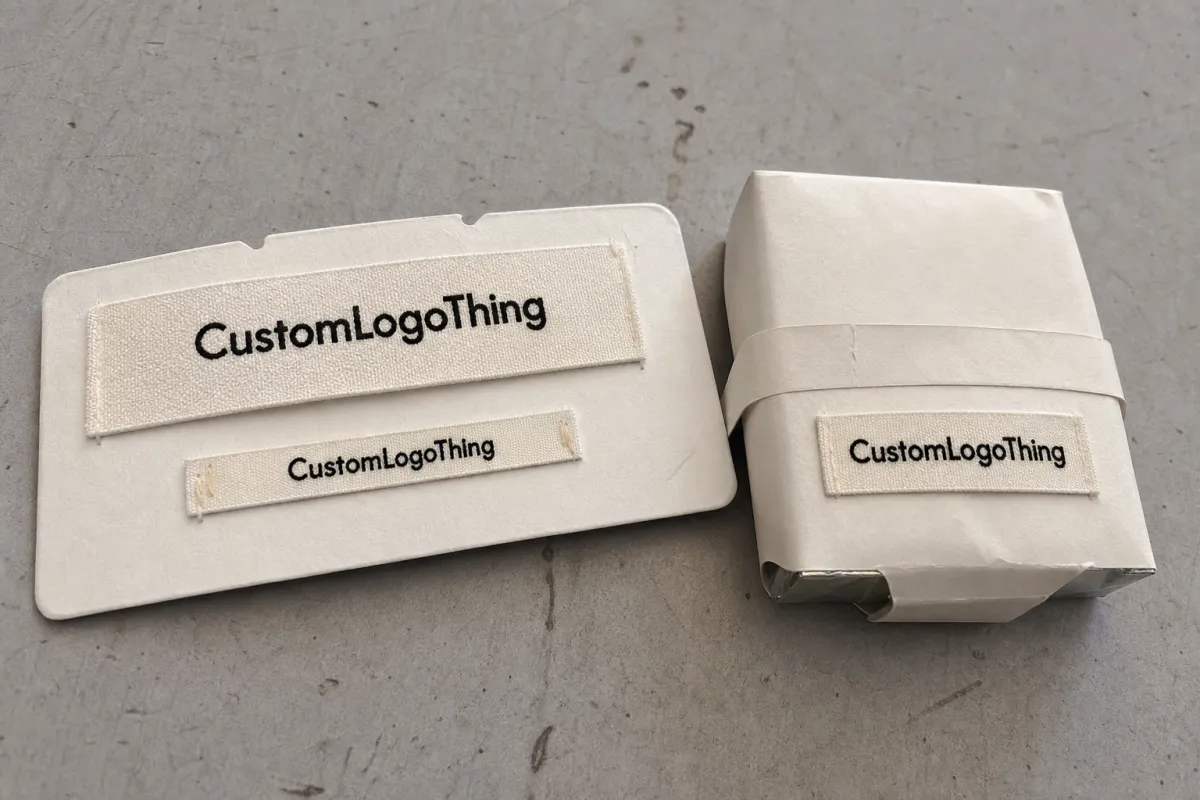
Two handmade soap bars can share the same oil blend, scent load, cure time, and mold. Put one in a plain paper wrap and the other in a linen sleeve with a small woven brand label, and the second bar looks more giftable before the shopper reads a single ingredient. That is the point of the exercise: not decoration for its own sake, but a packaging cue that says the product has been handled with intent.
A Woven Labels Supplier Quote for soap makers is worth requesting once you know where the label will live. Soap saver bag? Muslin pouch? Kraft box? Ribbon-tied bundle? Hotel amenity kit? Wedding favor? Each answer changes the construction.
A label sewn into a cotton soap saver bag does not behave like a flat label attached to kraft board. A loop label tied to a ribbon closure needs different dimensions from an end-fold label stitched to a linen wrap. The supplier is pricing loom setup, thread count, cutting, folding, finishing, and freight. “Small fabric label” is not enough information.
Woven labels are durable brand signals. Soap packaging gets handled hard at farmers markets, boutiques, spas, subscription box packing tables, and wholesale stockrooms. It sits in storage bins. It picks up fragrance. It meets humidity, shelf abrasion, tissue paper, cartons, and repeated customer touch. Paper stickers can scuff, curl, or lift. A woven marker keeps its texture.
Not every soap bar needs one. Stickers are faster for scent changes, batch-specific ingredient updates, barcode revisions, seasonal names, and limited runs. Woven labels earn their place when logo recognition, reusable packaging, gift appeal, and shelf presentation matter more than easy variable data.
Packaging buyer test: if the same label can work across at least three scents, two bundle formats, or one reusable accessory, it is usually worth quoting before you finalize the full packaging set.
The economics improve when the woven element stays constant. One permanent brand label can support many fragrance variants when the scent, ingredients, net weight, and batch information sit on a paper belly band, hang tag, or small regulatory sticker.
Where Woven Labels Fit in Soap Packaging and Gift Sets
Soap packaging has more attachment points than buyers often notice during the first design pass. Common uses include sewn labels on cotton soap saver bags, folded labels on linen wraps, end-fold labels on gift towels, loop labels on ribbon closures, and flat labels on reusable pouches. Each format affects size, fold, edge finish, backing, and production cost.
Brand position matters. Apothecary-style soap makers often lean toward muted damask labels on muslin or natural cotton. Spa brands may prefer satin or fine damask for towel bundles and boxed sets. Zero-waste lines usually get the most value from reusable pouches with one master brand label. Luxury bath collections, hotel amenities, and wedding favors can use woven labels to make a small item feel considered rather than assembled from stock components.
The limit is regulatory content. In the United States, ingredient, net weight, and business identity requirements can apply depending on whether the product is sold as soap, a cosmetic, or a drug. A woven label usually should not carry all required information unless it is large enough, readable enough, and attached in a compliant way. For packaging and labeling expectations, the FDA cosmetics labeling guide is a useful reference.
The cleanest system is often hybrid: woven label for permanent brand identity, plus paper or card for scent, batch code, ingredients, barcode, and net weight. That split lets one woven label work across lavender, charcoal, oatmeal, citrus, unscented, and seasonal gift sets without a new woven setup every time the fragrance changes.
From a purchasing angle, standardization is not boring. It is margin protection. If the permanent logo element stays fixed, packaging demand becomes easier to forecast. A maker can order 2,500 or 5,000 labels with more confidence, then update lower-cost paper pieces as the line changes.
Before requesting pricing, list every format that may use the same label: pouch, sleeve, box, ribbon, towel, sampler set, wholesale display, and refill program. A supplier can then recommend one size and fold style that works across the broadest range of packaging without forcing awkward attachment later.
Product Details: Materials, Weaves, Folds, and Finish Options
A woven label is made by weaving colored threads into the design. It is not ink printed on fabric. That difference affects detail, color, feel, and price. Fine lines can disappear. Tiny lettering can fill in. A solid logo mark often translates better than a delicate illustration with twelve botanical stems.
Damask is the common choice for fine detail and a softer hand feel. Higher-density damask can reproduce cleaner logos and small brand names, which makes it useful for premium soap packaging, boutique displays, spa sets, and reusable pouches. Satin gives a smoother sheen. It can suit wedding favors, hotel amenities, and luxury bath collections, though it may look too glossy against rustic kraft paper. Taffeta is more structured and economical, often suitable for bold marks, simple icons, and larger quantity runs. Recycled yarn options may be available, but color range and performance depend on the supplier’s material program.
Weave density is one of the major quality levers. A higher-density woven label can handle smaller text and sharper logo edges. A lower-density version may be perfectly acceptable for a 1-inch icon, but weak for a tagline under 6 points. Dense claims, full addresses, ingredient lists, and long origin statements rarely belong on small woven labels unless the proof confirms readability.
Fold style changes both appearance and attachment. Straight-cut labels work for stitching or some adhesive applications. End-fold labels hide raw edges and create a cleaner look on fabric wraps or pouch fronts. Center-fold labels are useful at side seams. Manhattan fold gives a more apparel-style presentation with tucked edges. Loop fold works for ribbon, cord, or hang-style use on gift sets.
| Label Option | Best Use for Soap Packaging | Typical Buyer Tradeoff |
|---|---|---|
| High-density damask | Fine logos, boutique pouches, premium gift sets | Cleaner detail, usually higher unit cost |
| Satin woven label | Spa, wedding favor, hotel amenity packaging | Smooth sheen, less rustic texture |
| Taffeta woven label | Bold logos, simple icons, budget-conscious runs | Economical, less refined detail |
| End fold | Linen wraps, pouch fronts, towel bundles | Clean edge, added folding step |
| Loop fold | Ribbon closures, cords, gift tags | Strong presentation, needs attachment planning |
Edges and backs deserve more attention than they usually get. Heat-cut and ultrasonic-cut edges can reduce fraying. Sew-on backing is common for bags, towels, and fabric wraps. Adhesive backing can help with temporary placement, but it should be tested on kraft board, muslin, linen, ribbon, and coated paper because adhesion changes with texture, dust, oil, and humidity. Iron-on backing may work on some receiving materials, but it is not a universal answer for soap packaging.
Color planning affects both cost and legibility. Two to four thread colors usually produce cleaner labels and better pricing than complex gradients. Send vector artwork, Pantone references, and photos of the package surface. The same black-and-cream label can look crisp on white cotton, muted on natural kraft, and overly formal on raw linen.
Specifications That Make or Break Quote Accuracy
A reliable quote starts with specific inputs: label width, height, fold type, quantity, thread colors, material, edge finish, backing, attachment method, artwork format, and shipping destination. Miss two or three of those, and the number can drift far from the final invoice.
Size matters more than buyers expect. A 0.75-inch label and a 1.5-inch label can require different loom setup, thread usage, cutting steps, and fold handling. A 20 mm by 50 mm end-fold damask label is not priced like a 40 mm square straight-cut label, even if both feel “small” in hand.
Design density is the common trap. Small serif fonts, thin botanical drawings, hairline borders, and stacked taglines can blur in woven form. For small labels, keep the brand name large enough to read from shelf distance and in the customer’s hand. If the logo has delicate detail, ask whether simplification is recommended before approving the proof.
Decide what the label must do. Decorative logo labels have more flexibility. Functional labels that mark origin, care, material, or compliance information need stricter proof review. Regulatory copy needs extra caution because woven detail is limited by thread, not pixels.
Before bulk ordering, tape a paper mockup onto the actual wrap, pouch, box, towel, or ribbon. View it from three feet away. Then hold it like a shopper. That five-minute test catches expensive mistakes: labels too large for a soap sleeve, folded edges landing in the wrong place, or a logo that looks elegant on screen but timid on kraft board.
Artwork should be vector whenever possible: AI, EPS, or SVG. A high-resolution PNG can help as a visual reference, but it may slow quoting if the supplier has to rebuild artwork. Include dimensions, color references, and any must-match brand standards.
Here is the investigative part: unclear specs often move cost later. A cheap quote based on missing details is not a real quote. It is a placeholder. If the quote does not identify size, material, fold, color count, backing, quantity, and shipping assumptions, compare it carefully before treating it as the lowest price.
Pricing, MOQ, and Unit Cost Factors for Custom Woven Labels
Woven label pricing is usually driven by quantity, label size, material, weave density, thread color count, fold type, backing, proofing requirements, and shipping method. The unit cost is not just thread. It includes setup, loom time, cutting, folding, inspection, packing, and freight.
MOQ has a reason behind it. Loom setup, thread preparation, and cutting equipment favor batches. A very small order can carry a high unit cost even when the physical label is tiny. A soap maker testing a new gift line may start with 500 pieces. An established brand may order 2,500 or 5,000 labels that work across multiple scents, wholesale cartons, and seasonal bundles.
For budgeting, many custom woven label projects fall in a broad range of about $0.08 to $0.45 per label depending on quantity, size, weave, backing, and finishing. Very small runs, rush production, complex folds, or unusual materials can sit above that range. Larger standardized orders can fall below the top of it. Treat any range as planning guidance, not a formal quote.
| Quantity Break | Common Use Case | Cost Behavior |
|---|---|---|
| 500 pieces | Market test, limited gift bundle, boutique trial | Higher unit cost because setup is spread over fewer labels |
| 1,000 pieces | Small brand packaging refresh or reusable pouch launch | Better balance between test volume and unit price |
| 2,500 pieces | Multi-scent line using one master brand label | Unit cost often improves if specs are standardized |
| 5,000 pieces | Wholesale, subscription, hotel amenity, or seasonal kit program | Stronger cost efficiency, requires demand confidence |
Setup or sample costs may include digitizing, loom setup, physical sampling, rush handling, or freight upgrades. Ask for price breaks at 500, 1,000, 2,500, and 5,000 pieces rather than one quantity. The comparison shows whether a larger order saves enough to justify inventory.
To lower cost without making the label look cheap, simplify colors, standardize one size, avoid unnecessary backing, combine SKUs under one master label, and choose a fold style that matches the real attachment method. A good quote should separate required costs from optional upgrades so margin decisions are visible.
Custom Logo Things supports that kind of comparison through its Custom Labels & Tags sourcing options, including guidance on which specification changes affect price and which ones affect the look of the finished package.
Process and Timeline from Artwork Review to Delivered Labels
The process is straightforward when the inputs are complete: inquiry intake, specification review, artwork check, quote, digital proof, approval, optional physical sample, weaving, cutting and folding, quality control, packing, and shipping. Each step has a decision attached to it.
The first decision is artwork readiness. If the logo is clean, vector-based, and already simplified for weaving, quoting moves faster. If the mark needs fewer colors, thicker lines, or larger text, time is spent before production begins. That delay is not waste. It prevents the finished label from arriving with a blurred tagline or weak icon.
Digital proofing confirms size, fold, thread colors, layout, and edge treatment. A physical sample confirms texture and scale, but it adds time. For a premium gift set or a retail launch involving thousands of units, a sample can be cheaper than discovering a scale problem after the full run is woven.
Lead time depends on order quantity, color availability, weave complexity, sample approval speed, holiday demand, rush capacity, and freight conditions. A practical planning window is often measured in business weeks rather than days, especially if a physical sample is involved. For market launches, wholesale shipments, and subscription box packing dates, start the label process before final packaging assembly. Waiting until cured bars are stacked and ready to ship leaves little room for proof revisions.
Build the schedule backward. Start with the retail launch date, then set the packing date, label arrival date, production approval date, proof deadline, and artwork submission date. That backward calendar makes rush fees less likely and gives the supplier time to flag spec issues.
The fastest projects are not always the simplest designs. They are the projects with complete specs, approved artwork, clear shipping details, and one decision-maker. If three people are still debating thread color after proofing, the calendar will show it.
Buyers preparing cartons for distribution may also want to check transit packaging assumptions. The International Safe Transit Association publishes widely used packaging test procedures that can help teams think about handling, vibration, compression, and shipment risk beyond the label itself.
How to Evaluate a Woven Label Supplier
A useful woven label supplier treats the label as part of a packaging system, not an isolated trim item. That matters for soap makers because the label has to interact with boxes, sleeves, pouches, ribbons, kraft wraps, hang tags, retail displays, and sometimes towels or accessories.
Listen to the questions the supplier asks. Where will the label attach? Is the receiving surface cotton, linen, kraft board, ribbon, coated paper, or a reusable pouch? Does the project need sew-on construction, a clean end fold, or a loop for cord? Will the same label appear on a gift bag and a boxed set? These answers affect price and performance.
A supplier that quotes without asking about attachment may still be able to produce labels, but the buyer is carrying more risk. Adhesive that fails on textured kraft, loop labels sized too small for ribbon, and end folds that land under a seam are not abstract problems. They show up during packing, usually when there is no time to reorder.
Custom Logo Things can help soap brands evaluate material, fold, sizing, MOQ, and Cost tradeoffs without vague premium-brand language. A 35 mm damask end-fold label may be right for one boutique pouch. A larger straight-cut taffeta label may make more sense for a budget-friendly soap saver bag. The better choice depends on sales channel, package surface, order size, and target margin.
Quality checkpoints should be visible before production. The process can include artwork review, proof approval, weave legibility review, fold and cut verification, and pre-shipment inspection. Those checks reduce common failures: labels too large for the package, text too small to weave, wrong fold style, preventable rush charges, or brand colors that clash with the rest of the packaging.
Scalability is another reason to plan early. A maker may begin with a label for gift bags or premium bundles, then extend the same identity across seasonal kits, hotel amenities, subscription packaging, and wholesale displays. One well-specified label can do more work than five disconnected packaging pieces.
For soap makers comparing options, Contact Us with packaging photos, quantity targets, and artwork files. A clear Woven Labels Supplier Quote for soap makers should help you decide, not push the most expensive construction.
What to Send Before You Ask for a Label Quote
Before requesting pricing, gather the core information. Send the logo file, desired label size, fold style, quantity range, product photos, packaging surface, thread color references, target delivery date, shipping address, and whether a physical sample is required. If size is still uncertain, send photos with a ruler or rough mockup dimensions.
- Artwork: vector AI, EPS, or SVG preferred, with PNG or PDF reference if available.
- Size: width and height in inches or millimeters, plus any fold allowance.
- Construction: straight cut, end fold, center fold, Manhattan fold, or loop fold.
- Material direction: damask, satin, taffeta, or recycled yarn option if available.
- Quantity: request breaks such as 500, 1,000, 2,500, and 5,000 pieces.
- Use case: soap saver bag, linen wrap, boxed gift set, ribbon closure, boutique display, or wholesale bundle.
- Deadline: target delivery date, packing date, and any market or wholesale launch date.
Separate fixed requirements from flexible ones. The logo may be non-negotiable, while backing, fold type, exact dimensions, or thread count may be adjustable. That flexibility gives the supplier room to suggest a different construction if the first version is over budget.
Keep regulatory content separate if the woven label is only for branding. Ingredient lists, net weight, batch codes, and barcode information are usually easier to update on paper packaging. That hybrid system reduces woven setup changes and keeps compliance data more manageable.
Ask for multiple quantity breaks and one alternative construction when cost is sensitive. Compare, for example, a high-density damask end-fold label with a simpler straight-cut version. The difference may be a few cents per unit, or it may be enough to change the best packaging plan.
Complete specs lead to better decisions. When soap makers send artwork, dimensions, packaging photos, quantity targets, and deadlines, Custom Logo Things can prepare a more accurate quote with fewer revisions, clearer pricing, and a production timeline that has room to breathe.
FAQ
What information is needed for a woven label quote for soap makers?
Send logo artwork, label size, fold style, quantity, material preference, thread colors, attachment method, packaging photos, target delivery date, and shipping address. If size or fold is uncertain, send product photos and packaging dimensions so the supplier can recommend a practical construction.
Can woven labels be used directly on handmade soap bars?
Usually, they are better attached to wraps, pouches, bags, ribbons, boxes, towels, or gift sets rather than directly to the soap surface. Direct contact may be affected by oils, fragrance, moisture, and handling, so the attachment method should be reviewed before production.
What is the typical MOQ for custom woven labels for soap packaging?
MOQ depends on label size, weave type, fold, color count, and supplier setup requirements. Many projects are quoted at breaks such as 500, 1,000, 2,500, and 5,000 pieces because unit cost often drops as quantity increases.
How can soap makers lower the unit cost of woven labels?
Use one master brand label across multiple scents, reduce thread colors, avoid unnecessary backing, choose a standard fold, and order in larger batches when demand is predictable. Ask for an alternative construction if the first specification is over budget.
How long does woven label production take after quote approval?
Timeline depends on artwork readiness, proof approval speed, order quantity, sample requirements, weave complexity, and shipping method. For market launches or wholesale deadlines, start the quote process before final packaging assembly to avoid rush fees or missed delivery dates.