Woven Labels Supplier Quote for Tea Brands: Request Pricing
A Woven Labels Supplier Quote for tea brands should give more than a unit price. If the estimate only says “woven label, 1,000 pcs, $0.18 each,” the buyer still does not know what has been priced, what has been excluded, or where the order may drift once sampling begins.
Tea packaging has an odd tension built into it. The product is quiet, sensory, and often premium-coded. The production calendar is not. One brand may need labels for retail tins, cotton pouches, gift sets, staff aprons, subscription boxes, and seasonal sampling bags. Each use case changes the label construction. Each construction changes the quote.
That is why the best pricing requests are specific before they are polished. A clean quote should identify the size, weave, color count, fold, backing, setup charges, sample costs, production timing, packing method, and freight assumptions. Without those details, a low number can become expensive with very little warning.
Why Tea Brands Need Quote Clarity Before Sampling
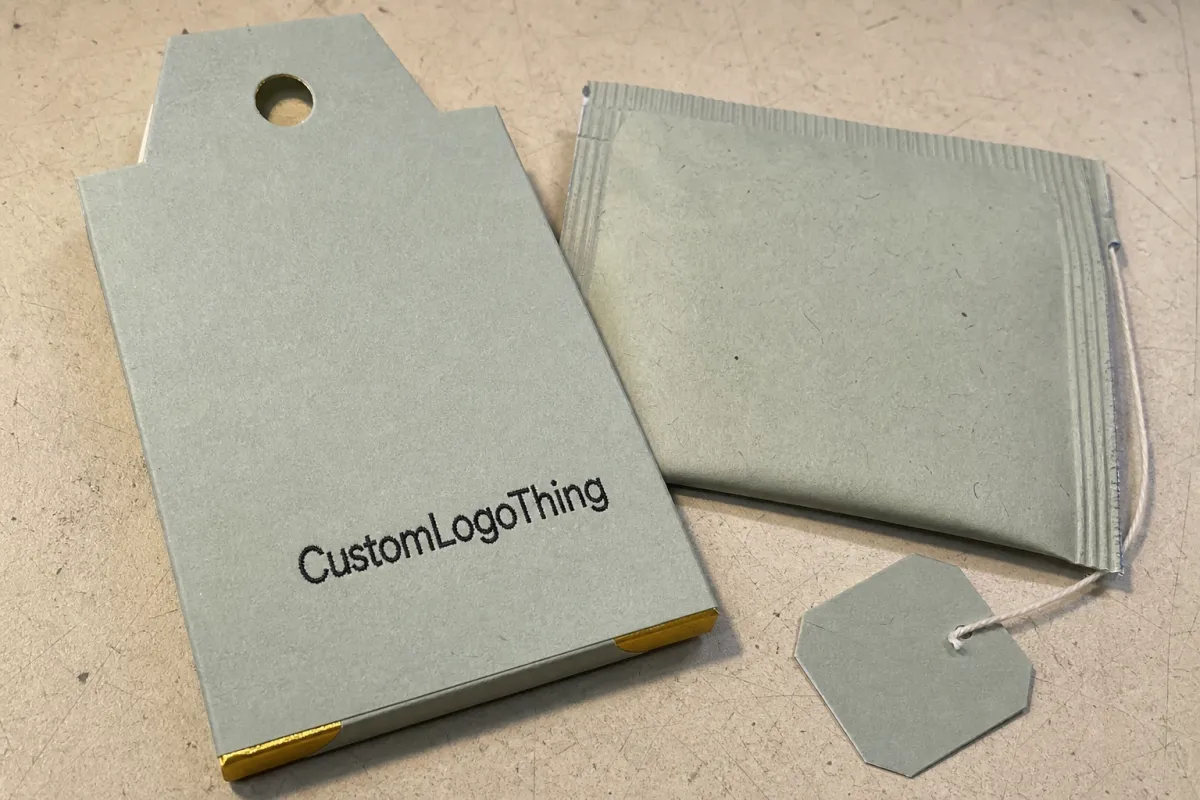
A thin estimate gives you a number. A useful quote gives you control. For woven labels, that difference affects thread choice, edge finish, fold style, adhesive or sew-in backing, carton packing, and final landed cost.
Consider the practical comparison. A weak quote might say: “1,000 woven labels at $0.18 each.” That sounds tidy until setup, sample weaving, adhesive backing, SKU separation, rush production, and freight appear later as separate charges. A stronger quote names the finished label size, weave type, thread-color assumptions, edge finish, fold type, proofing process, quantity breaks, and delivery terms.
Buying rule: if a quote cannot tell you what is included, it cannot tell you what the order will really cost.
Tea brands are especially exposed to vague pricing because the label area is often small. A 45 mm woven patch on a tea tin sleeve gives artwork very little room to recover from poor translation. Thin serif type, delicate botanical drawings, and script logos may look refined in vector artwork, then blur or close up once converted into thread.
There is also SKU pressure. Chamomile, Earl Grey, matcha, chai, breakfast blends, and limited seasonal teas may each carry slightly different color systems. If every artwork adjustment or thread-color change triggers a charge, the single-label price tells only part of the story. The program cost matters more than the cheapest line item.
Quote clarity before sampling saves time, money, and internal credibility. Nobody wants to explain why a modest test run doubled in cost because the fold, backing, or freight was never priced at the start.
Custom Logo Things works best with spec-ready requests, but a good supplier should also help build the spec. Buyers still comparing woven labels with printed tags, hang tags, or other packaging components can review broader Custom Labels & Tags options before locking the quote format.
Materials, Weaves, and Edge Finishes That Change the Look
Woven labels are not a single product. They are a group of constructions, and the differences become obvious beside matte tins, kraft sleeves, textured paper, cotton drawstring bags, or retail gift boxes.
Satin, damask, and taffeta in plain terms
Satin woven labels have a smoother, slightly lustrous surface. They can look polished on gift tea packaging, premium sets, or branded textiles. The tradeoff is shine. A satin label may feel too glossy next to an earthy paperboard system, especially if the brand relies on uncoated stocks, muted ink, or natural fibers.
Damask woven labels use a tighter weave and usually handle finer detail better. Small lettering, narrow leaf illustrations, restrained line marks, and compact logos are safer in damask than in looser constructions. For many tea brands, damask is the practical center: crisp enough for premium packaging, controlled enough for repeat production, and not overly textured.
Taffeta woven labels are typically more economical. The weave is more visible, and fine detail is less forgiving. Taffeta can still work well for internal tags, staff apparel, basic merchandise, event totes, or short promotional runs where budget matters more than tiny line detail.
Edges, folds, and backing choices
Edge style changes the final read. A flat-cut woven label can work for adhesive applications, hangtag accents, packaging inserts, or flat patches. A center-fold label is common for apparel and cloth pouch seams. End-fold labels hide cut edges and give a cleaner sewn finish. Loop-fold labels add dimension on textiles, but they need enough seam allowance to sit correctly.
Backing is not a minor preference. Sew-in labels are durable for aprons, totes, and cotton pouches. Iron-on backing can suit short-run merchandise, although temperature and dwell time must match the fabric. Adhesive backing is convenient for tins, boxes, sample packets, and display kits, but buyers should confirm surface compatibility. A label that bonds well to coated paper may behave differently on a powder-coated tin or rough kraft carton.
For tea brands, restraint often looks more expensive. Heavy texture can overpower subtle packaging. A cleaner weave, controlled thread density, and two to four well-chosen colors often carry more authority than six colors fighting for space on a 30 mm label.
Specifications That Prevent Reprints and Color Drift
Most woven label problems begin before the loom runs. The artwork is too thin. The label size is guessed. The color reference is vague. The fold is missing. Then the first sample arrives and everyone discovers the decision that should have been made earlier.
A reliable Woven Labels Supplier Quote for tea brands starts with exact dimensions. Width and height are only the beginning. The supplier also needs fold style, seam allowance, cut method, and backing choice. A 50 mm x 20 mm flat label is not the same job as a 50 mm x 20 mm end-fold label with 7 mm fold allowance on each side.
- Finished size: width x height after folding, not just total fabric size.
- Fold style: flat cut, end fold, center fold, loop fold, or mitre fold.
- Seam allowance: commonly 5-10 mm, depending on sewing method and fabric.
- Color count: many woven labels perform best at 2-6 thread colors.
- Backing: sew-in, iron-on, adhesive, or no backing.
- Use case: tin, pouch, apron, tote, gift wrap, display kit, or retail accessory.
Artwork review is not paperwork. It is risk control. Script logos, thin botanical lines, small origin text, and delicate certification marks may need simplification before weaving. As a rough production guideline, text under a 5-6 pt equivalent can become difficult to read in thread, especially on lower-density weaves or compact labels. Fine line weights under 0.3 mm may also close up.
Color deserves particular attention because tea brands often coordinate labels with paper sleeves, tin artwork, stickers, cartons, and ecommerce inserts. Pantone references help, but thread is not ink. A supplier should explain the closest available thread match, expected tolerance, and proof approval process. If FSC-certified paperboard, compostable pouches, or recycled mailers are part of the packaging system, keep those materials beside the woven proof during approval. For sourcing claims and chain-of-custody context, the Forest Stewardship Council is a useful reference point for paper-based packaging programs.
Finishing details also affect performance. Soft edges reduce scratchiness on apparel and pouches. Wrinkle resistance matters for gift items handled repeatedly in retail. Adhesive strength matters if labels are attached to curved tins, textured cartons, or kraft surfaces. The strongest finish is not automatically the right finish. The right finish depends on substrate, handling level, storage conditions, and the expected life of the item.
Compare a Woven Labels Supplier Quote for Tea Brands by Pricing and MOQ
A quote should make pricing visible. If setup is buried inside the unit cost, ask for clarification. If freight is excluded, ask for an estimated shipping range. If sampling is optional, get the sample cost and sample timing in writing.
Typical quote components include setup or digitizing, digital proofing, physical sample weaving, unit cost, edge finishing, backing, packing, and freight. For small labels, setup can dominate the first run. That is why a 300-piece test order may look expensive per unit, while a 2,000-piece reorder may look far more reasonable.
| Quantity | Typical Unit Range | Best Use | Buyer Watchout |
|---|---|---|---|
| 300-500 pcs | $0.28-$0.55 each | Sampling, launch kits, seasonal micro-runs | Setup spread over fewer labels raises unit price |
| 1,000-2,000 pcs | $0.16-$0.35 each | Retail packaging, pouches, gift bundles | Color changes across SKUs may add cost |
| 5,000+ pcs | $0.08-$0.22 each | Repeat packaging programs and core blends | Storage, SKU planning, and reorder timing matter |
These ranges are directional, not universal. Size, thread density, backing, fold style, color count, and freight can push pricing outside them. A small damask label with six colors and adhesive backing may cost more than a larger two-color taffeta sew-in label.
MOQ is another place buyers get misled. A low minimum can be useful, but the unit price may be high because proofing, loom setup, and finishing checks still happen. A supplier offering 100 pieces may be attractive for testing, yet the repeat price at 2,000 pieces is often the number finance and operations need.
Line items to compare before approving
- Setup or digitizing: is it one-time, or charged again for future variants?
- Revisions: how many proof revisions are included?
- Samples: is the price for digital proof only, or a physical woven sample?
- Rush service: flat fee, percentage uplift, or case-by-case pricing?
- Freight: estimated, included, or billed after shipment?
- Packing: bulk packed, counted bundles, or SKU-separated cartons?
Ask for pricing at the quantity you expect to reorder, not only the smallest test run. If the brand expects to use 3,000 labels per quarter across core blends, get that tier quoted. The test order proves the look. The repeat order reveals the economics.
Process and Timeline: From Artwork Approval to Delivery
A quote should turn into a schedule. If it cannot, the order is not ready for production.
The normal path is straightforward: inquiry, spec review, digital proof, sample approval if needed, production, finishing, packing, and shipment. The weak link is usually not weaving itself. Delays more often come from incomplete artwork, missing color references, uncertain backing choices, or quantity changes after proofing.
- Inquiry: buyer sends artwork, size, quantity, finish, use case, shipping location, and deadline.
- Spec review: supplier checks whether the design can be woven at the requested size.
- Digital proof: layout, fold, color notes, and scale are confirmed.
- Physical sample: recommended for small type, color-sensitive logos, or premium gift packaging.
- Production: labels are woven, cut, folded, backed, or finished as approved.
- QC and packing: edge quality, color consistency, counts, and SKU separation are checked.
- Shipment: cartons move by standard or expedited freight based on deadline.
For standard jobs, many woven label orders run about 10-18 business days after proof approval. Add time for a physical sample, high thread density, complex finishing, or several SKU variants that need separate approvals. Rush jobs may be possible in roughly 6-10 business days after approval, but that depends on capacity, quantity, and finishing requirements. Treat rush pricing as conditional until the supplier confirms the production slot.
A complete quote should state what the buyer receives at each stage. During proofing, expect a scale layout and color notes. During sampling, expect a representative woven piece, not a generic swatch. Before shipment, expect confirmation of pack counts, carton details, and any SKU separation requested for fulfillment.
Packaging buyers shipping retail products should also think about transit testing and carton performance, especially if labels are part of larger gift kits. The International Safe Transit Association publishes widely used packaged-product testing protocols that can help teams frame distribution risk.
What a Strong Supplier Should Do for Tea Brand Buyers
A strong supplier does more than take the order. It checks the order.
That sounds basic, but it is often the difference between a clean launch and a reprint. Good supplier behavior includes fast spec checks, clear proof markup, concise revision notes, and direct answers about cost tradeoffs. If damask is needed for legibility, say so. If taffeta is good enough for a staff apron tag, say that too. A confident supplier does not need to oversell every detail.
Tea brands benefit from repeatability. Core blends need consistent color from batch to batch. Seasonal runs need smaller quantities without disorder. Gift bundles may need labels packed by variant so fulfillment teams are not sorting cartons before assembly.
Quality control should be visible in the quote or order confirmation. Edge inspection, weave consistency, fold accuracy, backing adhesion, and pack count accuracy are not luxury checks. They are the minimum needed to keep a low quote from becoming an expensive correction.
| Supplier Behavior | Why It Matters for Tea Brands | Question to Ask |
|---|---|---|
| Reviews artwork before quoting | Prevents unreadable small type and weak line detail | “Can this logo be woven at 40 mm wide?” |
| Shows quantity breaks | Helps compare test orders against repeat-buy economics | “What is the price at 500, 1,000, and 3,000 pcs?” |
| Confirms finishing assumptions | Stops surprise charges for folds, backing, or SKU packing | “Is adhesive backing included in this unit price?” |
| Documents proof approvals | Reduces disputes over color, scale, and layout | “Will the proof show final size and fold allowance?” |
Service depth matters. A thin quote simply repeats what the buyer asked for. A useful quote challenges weak assumptions. If a tea brand wants woven labels for both paper tins and cotton pouches, one spec may not serve both. Adhesive labels may suit tins; sew-in labels may suit pouches. Catching that early saves money.
If you want to see how different branded components work across practical applications, the Case Studies page can help frame the decision before you request pricing.
Next Steps for a Spec-Ready Order
Before requesting a quote, gather five things: artwork, dimensions, quantity, finish preference, and delivery date. Add the final use case. That last detail is not optional. A label for a retail tin has different performance needs than a label sewn into a canvas tea tote.
Artwork should be supplied as vector files when possible, such as AI, EPS, or editable PDF. Include Pantone references if your brand system uses them. If only PNG or JPG artwork is available, send it, but expect the supplier to flag possible redraw or simplification work.
Ask for a digital proof and a sample plan. Digital proofing confirms layout, scale, fold position, and approximate colors. Physical sampling confirms hand feel, thread interpretation, weave density, and finish. For premium tea launches, gift packaging, or brand marks with delicate detail, the sample cost is usually cheaper than rework.
Compare two quote formats. First, price the smallest order you can justify for testing. Second, price the repeat quantity the brand will need if the program works. A 500-piece order may help marketing approve the look. A 3,000-piece quote tells operations what the program costs.
To price the job, send artwork, finished label size, target quantity, backing choice, shipping location, and deadline through Contact Us. Ask for a line-item estimate that separates setup, samples, production, finishing, packing, and freight. That is how a Woven Labels Supplier Quote for tea brands becomes an approval-ready buying document rather than a guess.
FAQ
How fast can I get a woven labels quote for tea brands?
A complete request can usually be priced faster than an incomplete one because the supplier does not need to chase basic specs. Artwork clarity, quantity, weave choice, backing, finish details, and shipping location have the biggest effect on quote turnaround. Send final size, use case, artwork, and delivery requirements together to reduce back-and-forth.
What details are needed to price woven labels for tea packaging or merch?
Provide dimensions, fold style, backing, color count, target quantity, and the final use case for the label. Add artwork files and the shipping destination so freight and production assumptions are realistic. For tea packaging, specify whether the label will be applied to paperboard, tins, pouches, aprons, totes, gift items, or display materials.
What MOQ should tea brands expect on woven labels?
MOQ depends on weave complexity, size, finishing, and supplier capacity. Smaller runs usually carry a higher unit cost because setup and proofing are spread over fewer pieces. Ask for pricing at the quantity you will reorder most often, especially if the label will support core retail SKUs.
Can I approve a sample before placing the full order?
Yes. Sampling is the cleaner buying path when color matching, small type, or premium presentation matters. A digital proof confirms layout, scale, and fold placement, while a physical sample helps verify feel, color, weave density, and finish. Sampling adds time, but it can prevent a full production run from carrying a preventable mistake.
How do I compare supplier quotes without missing hidden costs?
Check whether setup, revisions, samples, backing, packing, and freight are included or billed separately. Compare quotes line by line at the same quantity and with the same finish assumptions. A low teaser price can be misleading if it excludes the exact details your tea brand needs. The safest move is to request every cost before approval.


