A textured woven label can make a pet treat pouch feel more deliberate before a shopper reads the back panel. For premium, handmade, organic, limited-batch, or subscription treat lines, that material cue can support the price point and help the product look more finished at retail.
Buyers requesting a Woven Labels Supplier Quote for Pet Treat Brands usually need more than a unit price. They need to know which construction will work on the package, what the minimum order looks like, how long production takes, and what details affect cost or quality.
Why Pet Treat Brands Use Woven Labels as Shelf Signals
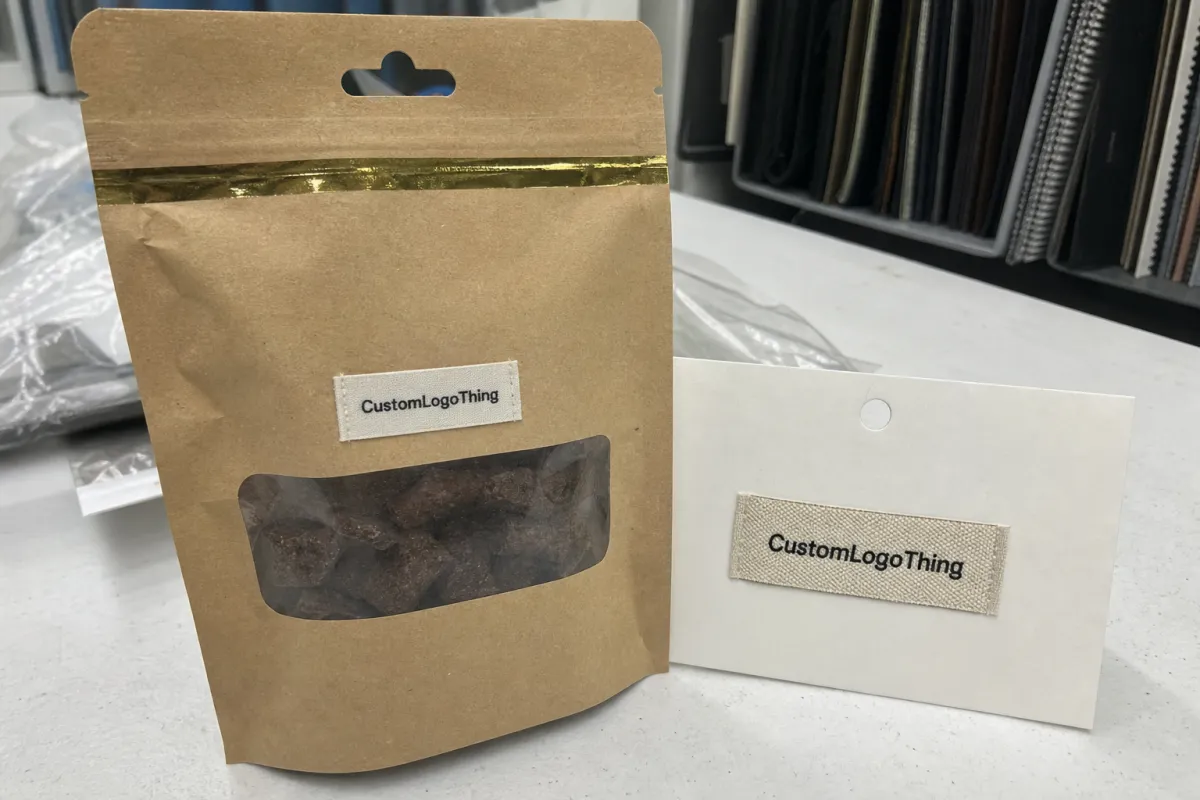
Pet treat packaging has limited space to communicate flavor, ingredient position, treat size, brand personality, and trust. Printed labels remain the right place for regulated information such as ingredients, nutrition facts, feeding directions, lot codes, and allergen declarations. Woven labels play a different role: they add texture, depth, and a more permanent branded feel.
A woven label can also move across several formats without redesigning the whole packaging system. The same brand mark may work on pouch fronts, reusable fabric bags, gift bundles, sampler kits, mailers, and accessory packaging. For growing brands, that consistency helps a product line look organized as new SKUs are added.
The buyer question is practical: does the label improve the package enough to justify setup, application, and inventory? Woven labels usually make the most sense when the brand is selling on presentation, gifting, wholesale shelf impact, repeat recognition, or a premium positioning that benefits from tactile detail.
Practical rule: a useful quote is built from finished size, weave type, fold style, backing, quantity, color count, and delivery deadline. Vague requests usually produce vague numbers.
Woven Labels Supplier Quote for Pet Treat Brands: What It Should Include
A proper quote should read like a production estimate, not a loose guess. It should list finished dimensions, weave construction, fold type, backing, edge finish, quantity, setup cost, sampling cost, unit price, production lead time, and shipping terms. Those details define the total landed cost and how the order will actually be made.
The quote should also address how the label will be used. A label stitched onto a reusable treat pouch has different requirements from one applied to a paperboard sleeve, sealed flexible pouch, kraft bag, or promotional bundle. Adhesive, sew-on, center fold, end fold, loop fold, and straight cut options solve different problems. A supplier that asks about the application is usually protecting the order, not complicating it.
Artwork review is part of the quote process. Tiny certification marks, script fonts, thin borders, and detailed icons may look sharp on screen but lose clarity once translated into thread. A competent supplier should flag those risks before sampling and explain whether the artwork needs simplification, a larger size, higher contrast, or a different label construction.
Ask for a digital proof and, when the order is large enough or timing is critical, a physical sample or pre-production sample. Check color contrast, edge behavior, legibility at actual size, finish feel, and attachment performance on the real packaging material.
The lowest quote is not always the lowest cost. A cheaper bid may hide setup, omit proofing, use lower thread density, exclude freight, or leave remake risk unclear. Compare total landed cost and documented specs, not just the headline unit price.
Materials, Weaves, Folds, and Finishes That Fit Treat Packaging
Damask woven labels are a common choice for premium pet packaging because they hold finer detail and feel denser in hand. Satin woven labels create a smoother, slightly shinier surface for giftable bundles or boutique-style packaging. Taffeta is more utilitarian and can work when the artwork is simple and cost control matters more than texture.
Fold style affects both appearance and application. A straight cut label works well for adhesive placement or flat-facing use on a pouch front. A center fold suits sewn fabric bags. End folds create neat stitched edges. A Manhattan fold gives a more finished look. Loop folds are useful on reusable bags or bundle ties where the label functions like a tab.
Backing should be chosen for the package surface. Options include sew-on only, iron-on, pressure-sensitive adhesive, or loose labels supplied for manual attachment. Matte kraft, glossy film, foil laminate, cotton, and rigid gift boxes all behave differently, so adhesive or sewing assumptions should be tested before a full run.
Durability matters because labels face shelf abrasion, warehouse handling, temperature changes, and pack-out stress. They do not need to perform like the pouch itself, but they should not curl, fray, detach, or look worn before the customer receives the product.
Design discipline improves results. High contrast works better than subtle tone-on-tone art. Bold type survives weaving better than thin script. Small decorative marks often disappear. If the label needs to carry flavor names or claim-style copy, confirm readability at actual size or keep that copy on the printed packaging instead.
| Label Option | Best Fit | Typical Cost Driver | Buyer Watchpoint |
|---|---|---|---|
| Damask woven label | Premium pouch fronts, reusable treat bags, subscription kits | Higher thread density and finer artwork detail | Small text still needs testing at actual size |
| Satin woven label | Gift bundles, boutique bakery bags, branded sleeves | Smoother finish and sheen | Contrast must stay strong enough for shelf reading |
| Straight cut with adhesive | External pouch application | Backing choice, surface compatibility, placement labor | Test adhesion on the actual pouch material |
| Center fold or end fold | Sewn fabric bags and reusable pouches | Folding labor and stitch-ready finishing | Confirm seam allowance before production |
Specifications to Send Before Requesting Pricing
Accurate pricing starts with complete inputs. Send the finished label width and height, quantity, logo file, thread color references, weave type, fold type, backing, edge finish, and packaging application. The request does not need to be long, but it does need to be specific.
Vector artwork is the best starting point. AI, EPS, and PDF files usually give the supplier enough detail to evaluate line weights, spacing, and color blocks. A high-resolution PNG can work for an early estimate, but it is weaker for production because thread conversion depends on crisp paths and shapes.
Size affects both cost and readability. A 1-inch badge and a 2.5-inch front label may look similar in a layout file, but they use different loom time, thread area, and finishing labor. Even a small size change can improve legibility or reduce cost once the art is translated into fabric.
Small text is the most common problem. Below roughly 5 to 6 points, readability depends heavily on font weight, contrast, and weave density. Thin borders, small flavor names, certification-style marks, and delicate icons should be reviewed before proof approval.
Photos or mockups help the supplier recommend the right construction. Include the pouch material, front panel, closure area, and intended placement. Also state how labels should arrive: rolls, cut pieces, bagged sets, or sorted by SKU. A wholesale launch with six flavors may need different packing than a single seasonal bundle.
If the label could contact food directly, disclose that before quoting. Woven labels are usually used as external branding, and food-contact assumptions should never be casual.
Cost, Pricing, MOQ, and Unit Cost Drivers
Pricing is shaped by quantity, size, weave density, number of colors, fold type, backing, proofing, shipping, and finishing. A Woven Labels Supplier Quote for pet treat brands should therefore be reviewed as a full cost structure, not just a unit-price line.
MOQ is usually driven by setup and production efficiency. Small runs can work for simple designs, but setup and finishing are spread across fewer pieces, so the unit cost rises. A 300-piece order may fit a market test or seasonal flavor. A 5,000-piece order is more typical for an established SKU with reorder potential.
Common quote items include setup fee, sample fee, unit cost, rush production, sorting, custom backing, and freight. Buyers should compare total landed cost. One supplier may include proofing and tracked shipping; another may leave those out and appear cheaper until the final invoice.
Predictable cost drivers include dense backgrounds, multiple thread colors, metallic effects, oversized dimensions, specialty folds, adhesive backing, and SKU sorting. To control budget, reduce the finished size, limit thread colors, remove tiny details, use one master brand label across multiple flavors, and keep flavor-specific copy on compliant printed packaging.
Ask for tiered pricing at test, launch, and reorder quantities. That gives marketing, operations, and purchasing a clearer view of how economics change as volume grows.
Process and Timeline from Artwork Review to Delivered Labels
The process starts with artwork, finished size, quantity, packaging use, backing or fold preference, delivery location, and target date. The supplier reviews feasibility, checks small type and contrast, then confirms the construction options that fit the job.
Next comes the quote, usually with unit pricing, setup, proofing, production estimate, and shipping options. If the order moves forward, a digital proof should show dimensions, fold placement, and woven layout. For larger or more sensitive orders, a physical sample can confirm texture, color, adhesion, and legibility before bulk production.
After proof approval, labels are woven, cut, folded or backed, counted, packed, and shipped. The timeline depends on design complexity, finishing method, quantity, and transit method. Treat the label as part of the packaging schedule, not as a last-minute decoration.
- Submit artwork, size, quantity, packaging use, and delivery location.
- Review weave feasibility, small text, colors, folds, and backing.
- Receive pricing, MOQ, setup, proofing, production estimate, and freight options.
- Approve the digital proof at actual size.
- Request a physical sample when texture, adhesion, or readability is critical.
- Move to bulk weaving, finishing, quality checks, packing, and shipment.
Most timeline problems come from incomplete specs, late artwork changes, or unclear attachment methods. Rush freight can help with transit, but it cannot fix a proofing delay.
Supplier Checks That Protect Pet Treat Packaging Quality
A serious supplier asks technical questions, spots artwork risks early, and documents final specs for repeat orders. That matters because woven labels may appear across core SKUs, seasonal drops, wholesale displays, event kits, and mailers.
Quality control should include thread color review, legibility review, edge consistency, fold accuracy, backing alignment, count verification, and final packing checks. These steps help prevent a reorder from drifting away from the approved sample.
Consistency matters across packaging formats. A label used on a pouch front, fabric bag, and bundle tag should still read as one brand system. If color, fold placement, or finish changes too much, the product line can start to look improvised.
Packaging-aware suppliers also understand when woven is not the best answer. In some cases, a printed pressure-sensitive label, hang tag, or direct print on the pouch may be more practical. A useful supplier should be willing to say that before the buyer spends money on the wrong construction.
For shipping and handling concerns, think in terms of transit stress as well as shelf appearance. Packaging testing frameworks from ISTA are useful when labels need to survive longer distribution chains, rough freight, or mixed fulfillment routes.
Evaluate suppliers by proof clarity, quote transparency, communication speed, and whether they document the final approved spec. The best orders are the ones whose second run is easier than the first.
How to Request a Quote Without Rework
Start with five essentials: logo file, finished label size, estimated quantity, packaging photo or mockup, and target delivery date. Those details give a supplier enough context to respond with useful options instead of broad guesses.
Choose the application before asking for pricing. Is the label a sewn tab for a reusable treat bag, an adhesive badge for a pouch, a folded mark for a bundle, or a loose woven piece for a promotional kit? Each path changes construction, labor, and cost.
Ask for tiered pricing at a test quantity, launch quantity, and reorder quantity. Include operational constraints such as hand-application speed, holiday deadlines, wholesale ship dates, subscription box timing, and SKU sorting. If labels need to arrive bagged in sets of 250 by flavor, say that before the quote is issued.
Review the quote line by line. Confirm finished dimensions, fold type, backing, color count, proofing, sample option, lead time, freight, and total landed cost. Approve artwork only after checking it at actual size against the packaging surface.
FAQ
What details do I need for a woven label quote for pet treat packaging?
Send your logo file, finished label size, quantity, fold or backing preference, number of thread colors, packaging application, delivery location, and target deadline. Photos or mockups of the pouch, bag, box, or gift bundle help the supplier recommend the right construction. If the label could contact food directly, disclose that before quoting.
What is the typical MOQ for custom woven labels for pet treat brands?
MOQ depends on label size, weave type, finishing, and the supplier’s setup requirements. Small test runs may be possible, but unit cost usually improves at higher quantities because setup and loom time are spread across more pieces. Ask for tiered pricing so you can compare a test run, launch run, and reorder run.
Are woven labels safe to use on pet treat bags?
Woven labels are generally used as external branding components on sealed packaging, fabric bags, sleeves, bundles, or promotional items. They should not replace required ingredient, nutrition, lot code, or regulatory labeling. Tell the supplier if any label component may touch treats directly, because that changes the material and compliance conversation.
How long does production take after approving a woven label proof?
Timeline depends on artwork complexity, sampling needs, order quantity, finishing method, and shipping method. The process usually includes quote review, digital proof approval, optional sampling, bulk weaving, cutting, folding or backing, quality checks, and transit. Delays usually come from incomplete specs or late artwork changes.
Can one woven label design work across multiple pet treat flavors?
Yes. Many brands use one master woven label for brand identity and keep flavor details on printed packaging or compliant product labels. That can lower unit cost, simplify inventory, and keep the line visually consistent across SKUs. Avoid weaving tiny flavor names or ingredient claims unless the label size and thread detail can support clear readability.


