A zipper bag looks like a minor purchase until it starts fixing problems you were already paying for. For zipper bags wholesale for ecommerce, the value is not abstract. It shows up in fewer scratched items, cleaner kitting, faster pick-and-pack, and less time spent reworking orders because loose components were shipped like somebody gave up halfway through the job. In a typical packout, the bag can cut repacking and re-bundling time by 10-20 seconds per order, which matters once you are shipping hundreds or thousands of units a day.
That is why serious buyers keep coming back to the category. Not because the bag is exciting. Because it is a cheap way to stop avoidable friction. If you ship mixed-SKU orders, subscription kits, small hardware, electronics accessories, beauty samples, or apparel add-ons, the bag is part of the process, not an afterthought. Common programs use 0.03-0.10 mm film for lightweight products, 2.5-4.0 mil for heavier kits, and standard clear PE or LDPE structures when visibility and flexibility matter more than shelf stiffness.
For buyers comparing packaging sources, the right starting point is a clear spec, not a pretty product page. Once the dimensions, film thickness, and closure style are settled, sourcing gets much easier. Before that, everything is just guesswork with better lighting. A usable RFQ should include bag width, height, gusset if any, target thickness, print colors, zipper style, seal type, and whether the bag needs hang holes, writable panels, or anti-static treatment.
What a zipper bag actually solves in ecommerce packout
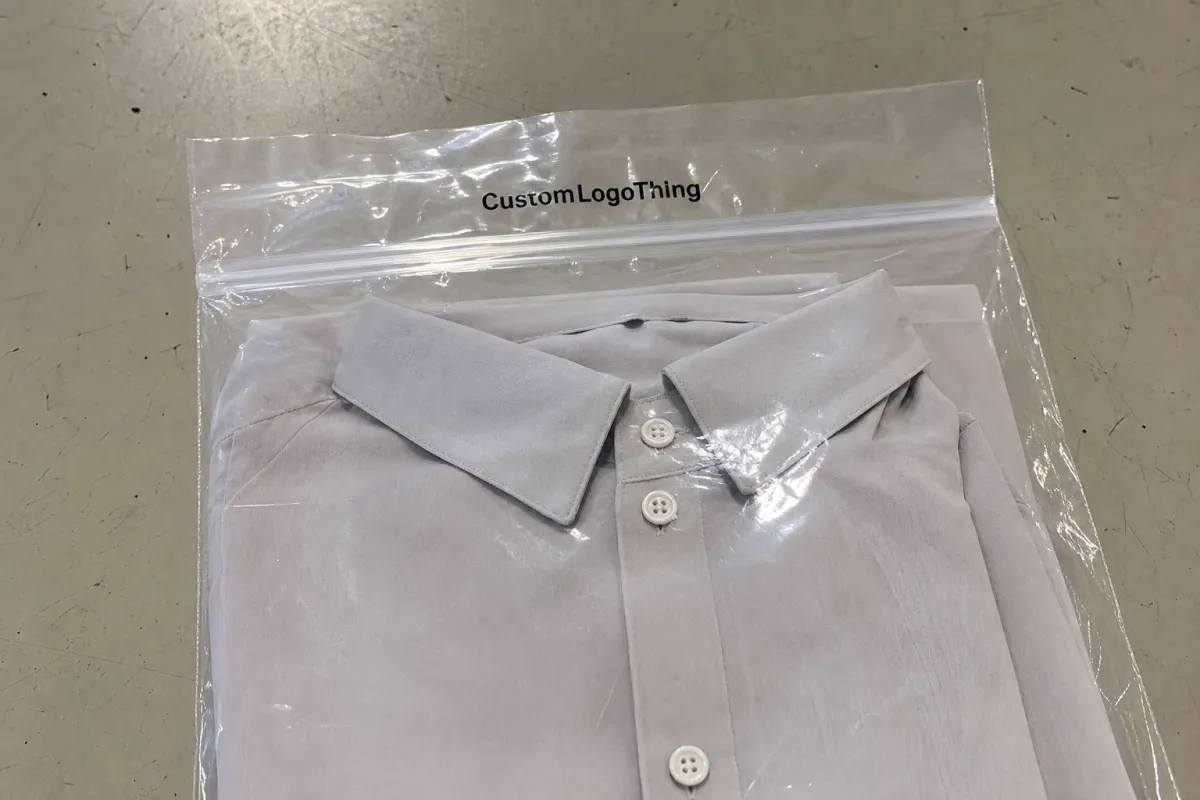
Ecommerce products move around more than people expect. They rub against cartons, collect dust, shift in transit, and lose presentation quality fast. A zipper bag gives the order some structure. It keeps parts together, limits surface wear, and makes the packout look deliberate even if the outer box gets beat up. On fragile or high-touch items, that structure can be the difference between a clean arrival and a return that starts with, “it looked used.”
The best use cases are practical. Small accessories stay grouped. Bundles ship as one unit instead of three loose pieces. Replacement parts arrive sorted. Subscription boxes open cleaner because the contents are already organized. Returns are easier to inspect because the items come back in a single sealed packet instead of scattered across the bottom of a mailer. Bags also help with serial-numbered items and multi-part kits because the warehouse can apply labels to one packet instead of every component.
Most ecommerce teams do not lose money on the bag itself. They lose money on the mess the wrong bag creates: repacking time, damaged presentation, and support emails that could have been avoided.
That is the real job of the package. It keeps the warehouse moving and protects the customer experience at the same time. A team that can grab one bag size, seal it once, and move on will usually pack faster than a team juggling random poly sleeves, tape, and extra inserts. At volume, shaving even 3-5 seconds from each order can save several labor hours per 1,000 shipments.
For retail-ready products, clarity matters almost as much as protection. A clean clear bag gives a better first impression than a cloudy, flimsy film. Customers may not describe the packaging in detail, but they notice when it looks sharp and they notice even faster when it does not. Unboxing judgments are rude, fast, and usually accurate. If the product is meant to be photographed, a high-clarity 90-92% light transmission film will generally look better than a low-grade recycled blend with haze.
Material, seal, and clarity details that affect real use
Material choice should start with the product, not the quote. LDPE is still the most common option because it is flexible, affordable, and easy to seal. It works well for general ecommerce use, especially when the bag needs a little give. Some suppliers label the category more broadly as PE, but the actual performance depends on resin blend, film construction, and thickness more than the marketing label on the carton. If recycled content is part of the brief, GRS is the certification most buyers ask for, while food-contact or skin-contact programs often also request OEKO-TEX Standard 100 on the material side when the application warrants it.
If the bag will be opened and closed repeatedly, do not chase the cheapest film. Better resin and a more reliable closure usually matter more than shaving a fraction of a cent off the unit price. Cheap bags fail in boring ways: weak zips, cloudy film, uneven seals, or corners that split after a few cycles. Boring failures are still failures. A sound spec typically uses virgin LDPE or a controlled blend, 40-60 Shore A flexibility, and a zipper profile matched to the intended opening cycle count.
Closure styles
Standard zip closures work for most ecommerce uses. They are familiar, fast, and easy to close on a busy line without extra training. Double-track zips feel firmer and usually hold up better when the bag gets opened multiple times. Slide closures help on larger formats where finger grip is awkward or the contents are bulky. Tamper-evident options are useful for regulated or high-control products, but they are not necessary for every order just because they sound serious. For heavier contents, ask for a zipper engagement width around 4-8 mm and confirm the lock sound and tactile closure in samples.
Clarity is not just a visual preference. Clear film helps warehouse staff confirm the contents before sealing, which reduces mis-picks and reopens. A glossy finish usually shows the product better on shelf or in photos. A matte finish can hide fingerprints and look more premium in some programs, but it can also dull visibility. If the contents matter, test the film under the lighting your team actually uses, not under a factory sample light where everything looks conveniently perfect. A simple line test should check image clarity at 30-50 cm, barcode readability, and whether print registration stays aligned when the bag is filled.
Before you quote, check the features that affect day-to-day handling:
- Tear resistance for products handled by hand throughout the packing line; ask for a minimum 10-15 N tear strength if the contents have corners or edges.
- Puncture resistance for sharp corners, hardware, and tool parts; 2-4 kg drop and puncture checks are common in pre-production testing.
- Anti-static treatment for electronics, cables, and sensitive components; this is often specified for ESD-sensitive accessories rather than general consumer goods.
- Reseal performance so the closure moves cleanly instead of fighting the user; a good zipper should close smoothly for 10-20 open-close cycles in sampling.
- Seal consistency across the full width of the bag, not just the middle; edge seals should not show weak spots, bubbles, or wandering heat lines.
If the bag protects the product or carries the brand presentation, the closure and film quality deserve attention. Saving a tiny amount per unit is pointless if the bag splits during fulfillment or arrives looking tired. The cost of a cheap spec usually shows up later as labor, rework, or customer complaints. Packaging math has a way of collecting its debt. For quality systems, buyers often ask factories for WRAP or BSCI audit status on the manufacturing side, plus a current material certificate if the order needs GOTS, OEKO-TEX Standard 100, or GRS documentation.
For buyers who want a benchmark on transit performance, ISTA publishes packaging test methods used across shipping categories. See ISTA if you want a real test plan instead of a sample that only survived a desk. If your broader packout uses paper inserts or paper-based outer materials, FSC certification at FSC is worth checking on that side of the bill of materials.
Sizes, thickness, and print specs that affect fit and branding
Size choice should follow the product, not the other way around. Small accessories, spare parts, and sample packs usually need compact bags with enough slack to load easily and close without stress. Apparel items, boxed sets, and bulkier kits need more room, and sometimes a gusset, so the bag does not look overstuffed the second it is sealed. A bag that fits too tightly on paper will usually feel worse once production starts moving. Typical ecommerce zipper bag sizes range from 2 x 3 inches for tiny parts to 12 x 16 inches or larger for apparel and multi-item bundles.
Thickness first, then decoration
Thickness is usually the first spec to balance. Light-duty bags around 2.0-2.5 mil can work for low-risk items, simple inserts, and products that do not get handled much after packing. 3.0-4.0 mil is a more comfortable range for reusable ecommerce packs, heavier contents, or products that move through multiple hands before delivery. Go thicker when the bag is doing real work. Do not pay for extra film just to feel better while reading a quote. A common wholesale range for standard clear zipper bags is 2.5-3.5 mil, with custom heavy-duty programs sometimes going to 4.5 mil or more when puncture resistance matters.
Artwork placement matters more than most buyers expect. A logo printed too large can block visibility. A logo printed too small can disappear once the bag is full. Print coverage should be planned around the contents, because the bag is not a poster. It is a container. If the product is already visually busy, simplify the artwork and leave room for the item to show through. For flexographic printing, one to two colors often keeps plate setup and make-ready simpler, while larger runs may use 4-color process or spot colors if brand consistency is more important than the lowest unit cost.
Practical spec choices that save time later:
- Flat vs gusseted - flat bags are simpler and cheaper; gusseted bags handle bulk better.
- Writable panels - useful for batch numbers, SKUs, or assembly notes.
- Hang holes - helpful for retail display or organized storage.
- Barcode space - keep the scan area clear for warehouse use.
- Panel clarity - match the print layout to the actual contents, not just the mockup.
If you are printing logos, product names, or warehouse codes, keep the design controlled. One or two colors usually keep setup simpler and reduce cost. Full coverage can look good on a screen and still be annoying in production if the artwork ignores the product shape. Ecommerce packaging should read cleanly at a glance, because nobody in the warehouse has time for interpretive design. On larger repeat orders, a standard flexo line with controlled ink viscosity and corona-treated film is usually the most efficient route for consistent adhesion.
A common mistake is buying the bag size before checking the loaded dimensions. A sample should be tested with the actual product, label, insert, and closure step used in production. If the product needs 5 mm of extra clearance at the top for easy sealing, that clearance should be built into the finished spec, not guessed later. A good sample step is: approve the artwork proof, receive blank or printed pre-production samples in 3-7 business days, test fit and seal, then approve the production lot.
Cost, pricing, and MOQ tradeoffs that change unit cost
There is no single fair price for zipper bags because the spec changes everything. A plain clear LDPE bag with a basic zip can land around $0.08-0.22 per unit at higher volumes, while printed or heavier-duty custom bags often move into the $0.18-0.60 per unit range depending on size, thickness, and print count. At a lower custom entry point, buyers may see quotes around $2.50-4.00 per unit at 500 MOQ for highly customized small runs, especially when tooling, print setup, or special materials are included. As volume rises, the price usually drops sharply once setup is spread across the run.
MOQ is where many buyers lose the plot. A supplier quoting 500 pieces and another quoting 5,000 pieces may not be selling the same thing at all. Lower MOQs are convenient for testing, but the unit price is usually higher. Higher MOQs reduce per-unit cost, but they raise inventory risk and tie up cash. For recurring ecommerce programs, a common sweet spot is 1,000-10,000 units per size and print version, with some factories willing to sample at 100-300 units and move to production after approval.
The cost stack usually looks like this:
- Material - resin type, recycled content, thickness, and clarity drive the base price.
- Closure - single-track zips cost less than double-track or slide closures.
- Print - more colors, larger coverage, and tighter registration all add cost.
- Size - larger bags use more film and often need slower line speed.
- Packaging - custom cartons, labels, and master-pack counts affect the landed quote.
If you need one-off samples, expect a separate sample charge plus freight. Many suppliers can produce a pre-production sample after artwork approval in 3-7 business days, while mass production for standard spec bags often runs 18-22 business days after sample signoff and deposit. Rush work is possible, but it usually adds cost and leaves less time for quality checks. Shipping time is separate and depends on the route and service level.
Inspection is part of the economics too. A cheap quote without inspection checkpoints is not cheap once you factor in rework. Ask for in-process checks on film thickness, zipper alignment, seal width, print registration, and carton count. A sensible production flow includes incoming resin check, first-article approval, mid-run inspection at the packing line, final random audit, and photo confirmation before dispatch. If the supplier works to AQL standards, confirm the sampling plan in writing before you place the order.
What to compare before you choose zipper bags wholesale for ecommerce suppliers
At supplier level, the best comparison is not “who is cheapest.” It is who can repeat the same spec without drama. Ask how they control film thickness across the roll, how they verify zipper engagement, and what happens if the print drifts. Consistency matters more than a tiny quote difference. A 2% defect rate on a 50,000-piece order is 1,000 bad bags, which is not a rounding error when fulfillment is the customer-facing side of the business.
Look for a supplier that can show how the bags are made. Common equipment includes blown film extrusion or cast film lines for the base film, flexographic printing machines for logos and product text, heat-sealing equipment for edge seams, and automatic bag-making machines for cutting, zipper insertion, and final conversion. If the factory uses recycled content, ask how they segregate resin batches and how they prevent contamination between production runs.
Credible process control usually includes these checkpoints:
- Incoming material check for resin grade, recycled content claim, and certificate match.
- Film thickness check at multiple points across the roll to catch variation.
- First article approval for size, zipper engagement, color, and print placement.
- Mid-run inspection for seal integrity, cut accuracy, and barcode readability.
- Final QC for quantity, carton packing, and random open-close testing.
Certifications should fit the actual use case. For textile-related applications or branded textile packaging, GOTS may matter if the upstream program touches certified organic fibers. For general consumer packaging, OEKO-TEX Standard 100 can be relevant when the materials contact skin-sensitive products. For ethical manufacturing controls, WRAP and BSCI are the audit names most buyers recognize quickly. For recycled plastic content, GRS is the better question. Do not collect certificates like trophies; ask for current copies and match them to the exact material and order spec.
Ask for a sample pack that includes the exact bag size, thickness, zipper style, and print method you plan to use. A proper sample process should include blank sample review, print proof review, functional test with the real product, and a sealed drop test or compression check before full production. If the bag is for ecommerce, also check whether the finished stack height and carton count fit your receiving shelves and pick bins. Great packaging that does not fit the warehouse is just expensive optimism.
Price is still important, but it should be compared against defect risk, lead time, and the ability to repeat the order later without redesigning everything. The best supplier is usually the one who can hit the same target on the second reorder with minimal correction. That is what keeps packaging from becoming a recurring project instead of a routine input.
Next steps to launch a clean wholesale order
Start with the product in the bag, not the bag on the screen. Measure the item, add clearance for the seal, and decide whether the bag needs to be flat, gusseted, printed, writable, or anti-static. If the order will repeat, lock the spec early so you do not renegotiate the same details every quarter like it is a hobby. Put the final spec in a simple one-page sheet with size, material, thickness, closure, print colors, quantity, carton pack, and approval requirements.
Next, collect samples from at least two suppliers and compare them under real conditions. Check how the bag feels after sealing, whether the zipper closes cleanly, how the print looks with the actual product inside, and whether the film stays clear under warehouse lighting. If the packaging will be handled by multiple people, have the people who pack and receive orders test the sample too. The person who signs the PO is not always the person who fights the carton tape at 5 p.m.
Before production, confirm the paperwork and the inspection plan:
- Artwork proof with approved colors, placement, and bleed.
- Material declaration for LDPE, PE, recycled content, or special additives.
- Certificate copies for GOTS, OEKO-TEX Standard 100, WRAP, BSCI, or GRS if required.
- Sampling plan with AQL target, random sample count, and defect definitions.
- Lead time with sample timing, production timing, and shipping timing separated clearly.
A clean first order usually means fewer surprises later. If the supplier can show stable thickness, consistent zippers, readable print, and documented QC, you have a packaging component you can stop thinking about. That is the goal. Packaging should quietly do its job and never become the reason an order falls apart.
FAQ
What is the most common material for ecommerce zipper bags?
LDPE and general PE are the most common because they are flexible, seal well, and stay reasonably clear. If recycled content is required, ask specifically for GRS-backed material.
What MOQ should I expect?
For custom printed zipper bags, MOQs often start around 500-1,000 units for simple programs and 3,000-10,000 units for better pricing. Blank stock items can be lower, depending on size and supplier inventory.
How long does production usually take?
Many suppliers quote 18-22 business days after sample approval for standard custom runs. First samples often take 3-7 business days, depending on print complexity and material availability.
What certifications matter most?
For material and sustainability claims, GRS is common for recycled content, OEKO-TEX Standard 100 is relevant for product-contact sensitivity, GOTS applies when organic textile programs are involved, and WRAP or BSCI are useful for factory compliance checks.
What should I inspect on the sample?
Check size, seal strength, zipper engagement, clarity, print registration, barcode readability, and whether the bag still closes cleanly with the real product inside. If the sample only works empty, it is not a good sample.

