Pom Pom Beanies Wholesale Pricing for Smart Bulk Orders
Compare Pom Pom Beanies wholesale pricing, MOQ, decoration options, quality checks, and lead times before your winter merch budget gets ambushed.
Cheap Beanies Get Expensive When the Pom Pom Looks Sad
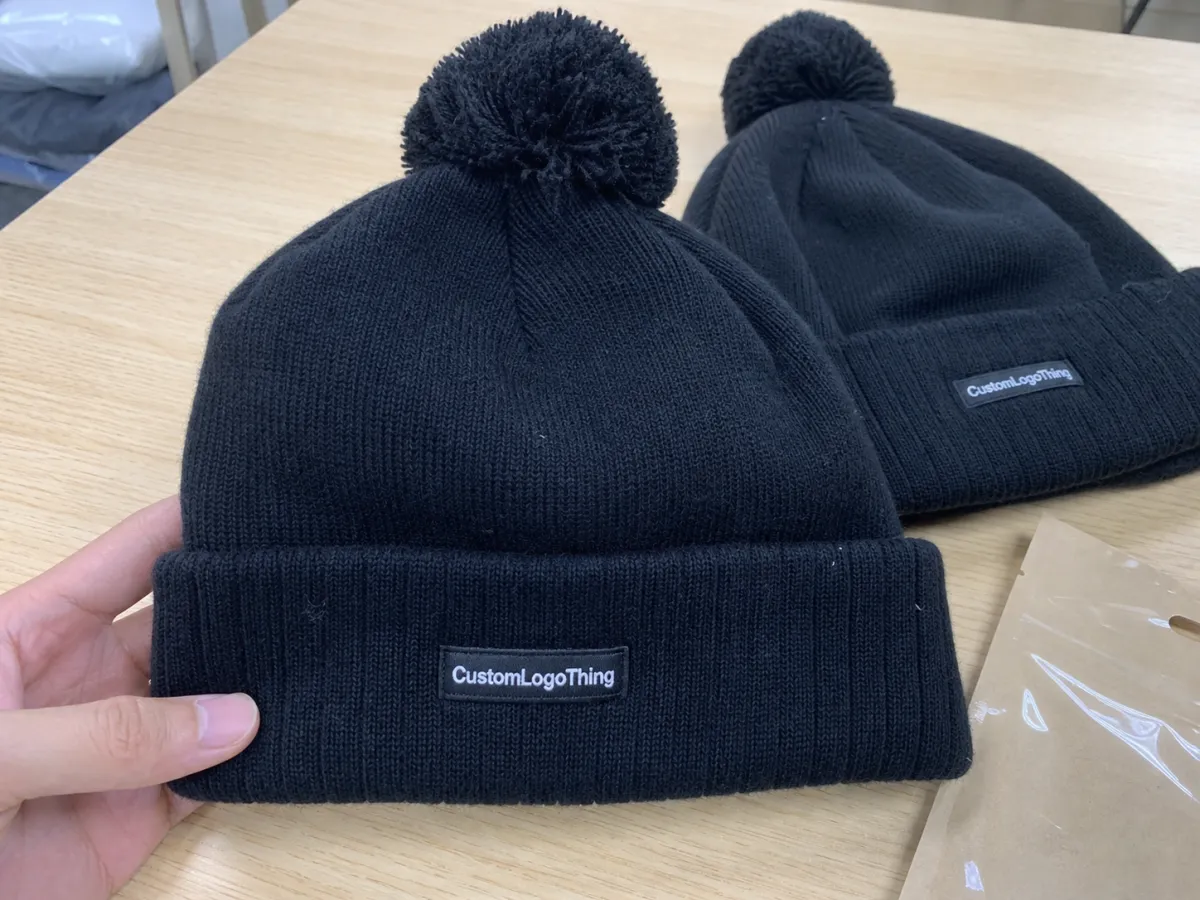
Cheap winter hats can turn expensive fast. Pom Pom Beanies wholesale pricing is not just the blank hat cost. Pom fullness, yarn weight, cuff structure, logo method, packing plan, and freight all push the final unit price up or down.
The usual buyer mistake is boring because it is so preventable. Someone picks the lowest quote, approves a clean-looking mockup, then receives a hat with a limp pom, a cuff that stretches out after one wear, embroidery that puckers, or colors that look nothing like the screen proof. Congratulations. The “cheap” order now needs apology emails.
Pom beanies are still strong seasonal merchandise because people actually wear them. Ski shops, breweries, schools, outdoor brands, resort stores, sports teams, holiday gift programs, and corporate winter kits all use them for the same reason: they are practical, visible, and easy to photograph. That already puts them ahead of half the promotional junk sitting in drawers.
Smart buyers look at total landed value. That means durability, logo quality, sizing consistency, carton efficiency, packaging requirements, delivery timing, and reorder potential. A $4.85 beanie that arrives late or sheds into every gift box is not better than a $6.40 beanie that looks retail-ready and survives the season.
Cold lesson: fixing a bad knit order after production is not a plan. It is damage control with a tracking number.
Custom Logo Things helps buyers define the product before quoting. That part matters. A thin acrylic giveaway hat, a fleece-lined employee uniform beanie, and a retail resort beanie should not be priced like the same item wearing different costumes.
Pick the Right Pom Beanie Style Before You Ask for a Quote
Style selection drives cost before the logo gets involved. The main options are cuffed pom beanies, slouchy pom beanies, rib-knit pom beanies, jacquard pattern beanies, fleece-lined beanies, and eco yarn beanies made with recycled fibers or blended materials.
Cuffed pom beanies are the safest commercial choice. The cuff gives the logo a stable decoration area, which helps with embroidery, woven labels, leatherette patches, and rubber patches. A 2.5-inch to 3.5-inch cuff usually gives enough space for a logo without making the hat look overworked. A tiny cuff with a giant mark is not bold. It is cramped.
Slouchy pom beanies feel more retail and casual. They can work for boutique merch, campus stores, lifestyle brands, and subscription boxes, but the logo position needs more care because the hat shape shifts when worn. Rib-knit styles add stretch and texture. They also punish detailed embroidery if the design is too small or too dense.
Jacquard beanies are useful for team names, resort patterns, stripes, oversized lettering, and repeat graphics. They are not useful for tiny taglines. Yarn does not care that your vector file is technically perfect. Fleece-lined beanies add warmth and perceived value, especially for ski shops, outdoor crews, and employee winter uniforms, but they raise the unit cost and increase carton bulk.
Pom choices matter more than buyers expect. Solid yarn poms are clean and cost-effective. Two-tone poms add color without much drama. Faux fur poms look more premium, but they cost more, pack bulkier, and may need careful carton planning so they do not arrive crushed. Removable poms can help with washing and retail positioning, but they add parts and potential failure points.
Material choice is another tradeoff. Acrylic is common for bulk custom beanies because it is cost-effective, color-stable, and easy to source. Wool blends feel warmer and more premium, but they cost more and can complicate care instructions. Recycled yarn supports sustainability claims when the sourcing is documented. Cotton blends can feel softer, though they usually are not the best choice for wet winter use.
Choose the selling environment first, then the beanie. A giveaway hat for a 500-person winter event, a $28 retail merch piece, and an outdoor employee uniform order need different specs. If you are narrowing the buying lane, review the Wholesale Programs options before building the quote request.
Logo Methods That Actually Work on Knit Beanies
Knit fabric stretches. That one fact ruins plenty of logos. Decoration should be chosen around the fabric, the logo complexity, the order quantity, and the resale goal.
Direct embroidery works well for simple marks, block lettering, small icons, and clean brand names. It is common on stock acrylic cuffed pom beanies because setup is straightforward and the finish is familiar. But embroidery can distort on loose rib knit, especially if the logo has fine lines, small text, gradients, or a wide stitch area. Dense designs can also make the cuff feel stiff.
Woven labels are a strong budget-friendly option for small text and retail-style branding. They usually look cleaner than embroidery for detailed marks, and they can be sewn onto the cuff with a polished finish. For small to mid-size bulk orders, a woven label can control cost while still looking intentional.
Leatherette and faux suede patches work well for outdoor brands, breweries, ranch events, ski shops, and premium corporate gifts. They add perceived value without forcing a huge embroidery stitch count. Common patch sizes land around 1.75 inches by 2.5 inches or 2 inches by 3 inches, depending on cuff height. Too large, and the patch fights the knit. Too small, and the logo disappears.
Rubber patches feel modern and durable. Sports teams, streetwear brands, youth programs, and gym merch often use them well. The tradeoff is setup. Mold or tooling costs can make rubber patches inefficient at low quantities, but they become more attractive as order size increases.
Chenille patches bring texture and a varsity look. They are better for bold shapes, initials, mascots, and simple wordmarks than tiny line art. Jacquard knit-in logos are excellent for large patterns, team names, stripes, and oversized brand treatments. They are terrible for fine typography. Knit-in logos are not magic. Yarn has limits.
| Decoration Method | Best Fit | Watchouts | Typical Cost Impact |
|---|---|---|---|
| Direct embroidery | Simple logos, stock cuffed beanies, smaller runs | Can pucker on stretchy knit; tiny text may fill in | Low to medium |
| Woven label | Retail branding, small text, clean logos | Needs accurate sewing placement | Low to medium |
| Leatherette patch | Outdoor, brewery, resort, premium corporate gifts | Patch size must match cuff height | Medium |
| Rubber patch | Sports, youth merch, streetwear | Mold setup can affect low quantities | Medium to high |
| Jacquard knit-in | Bold names, patterns, team designs | Poor choice for tiny typography | Medium to high |
Match the method to the logo. Paying for detail the knit cannot reproduce is a classic way to burn budget while pretending the problem is “premium branding.” It is not. It is poor production planning.
Pom Pom Beanies Wholesale Pricing, MOQ, and Unit Cost
Pom pom beanies wholesale pricing depends on quantity, yarn type, knit construction, pom style, lining, decoration method, number of colors, packaging, freight, and whether the order uses stock blanks or full custom production. That is the honest answer. Anyone giving one flat number without specs is guessing.
For planning, basic stock acrylic pom beanies with simple embroidery or a woven label may often fall around $4.50-$8.50 per unit at moderate wholesale quantities, depending on decoration and freight. Better retail-style builds with heavier knit, leatherette patches, upgraded labels, or nicer poms may land around $7.50-$13.50 per unit. Fully custom jacquard, fleece-lined, faux fur pom, custom-labeled, or retail-packed orders can move into the $10.00-$18.00+ range.
Those ranges are not promises. Specs change everything. A 144-piece stock run with embroidery will price differently from a 2,500-piece custom knit order with a faux fur pom, recycled yarn claim, hang tag, individual polybag, and carton sorting by color.
MOQ shifts by construction. Stock decorated beanies may start at lower minimums, often around 48-144 pieces depending on style and decoration. Fully custom knit patterns, custom yarn colors, jacquard designs, specialty patches, molded rubber patches, or private-label packaging usually require higher minimums, commonly 300-1,000+ pieces. Custom dyeing can push minimums higher because yarn suppliers do not fire up color matching for twelve hats and a dream.
Setup costs matter most on small orders. Embroidery digitizing, patch molds, woven label setup, custom dyeing, sample fees, and packaging setup spread more efficiently across 500 pieces than 50 pieces. That is why tiered pricing matters. Moving from 144 to 288 pieces, or from 500 to 1,000 pieces, can reduce the unit cost enough to justify a larger buy.
Compare quotes only when the specs match. A fleece-lined faux fur pom beanie with a leather patch is not the same product as a thin acrylic blank with quick embroidery. Shocking, apparently.
Ask for pricing at two or three quantities. A good quote should show where the real breakpoints sit, not just toss out one number and hope it fits the budget.
Specs to Confirm Before Production Starts
A clean spec sheet prevents arguments. Confirm the beanie style, yarn material, knit gauge, cuff height, finished dimensions, pom type, lining, logo method, logo size, logo placement, colors, labels, and packaging before production starts.
Color needs real expectations. Stock yarn colors are faster and cheaper. Custom-dyed yarn improves brand consistency, but it adds lead time, MOQ pressure, and possible lab dip approval steps. If brand color is strict, say that early. If “close enough” is acceptable for a giveaway order, say that too.
Fit deserves attention. Most adult beanies are one-size, but youth sizing, oversized fits, slouchy shapes, and deep-cuff styles need specific finished measurements. Common adult finished lengths may sit around 8.5-9.5 inches for standard cuffed beanies and longer for slouchy styles. If the fit is wrong, a perfect logo will not save the order.
Artwork should be production-ready. Vector files such as AI, EPS, or clean PDF files are preferred for patches, labels, and embroidery setup. Low-resolution screenshots slow quoting and often hide details that fail in production. If the logo has tiny type under 0.15 inches tall, expect a conversation about simplification.
Packaging affects both cost and operations. Bulk polybagging is cheaper. Individual polybags help protect each beanie and make fulfillment easier. Retail hang tags, UPC labels, carton marks, size and color assortment packing, and warehouse labels may be required for retail shelves, event kits, distributors, or third-party logistics centers.
Approve a digital proof for every order. For larger or fully custom orders, approve a physical sample too. That sample helps confirm knit feel, color, patch quality, pom volume, and logo scale. Written specifications reduce disputes. If it is not on the approved spec sheet, do not assume the factory guessed your brand standards through vibes.
For sustainability claims, use careful language and verify the source. FSC is more relevant to paper tags and packaging than yarn, but if you are using hang tags, cartons, or paper wraps, FSC-certified materials can support responsible sourcing claims. Learn more at FSC.
Production Process and Lead Time for Bulk Beanie Orders
The buying process is simple, but each step needs a decision: inquiry, spec review, quote, artwork setup, proofing, sample approval if needed, production, quality control, packing, shipping, and delivery. Skip one and the schedule usually pays for it.
Stock beanies with standard embroidery or labels move faster because the base product already exists. A normal decorated stock order may need 7-15 business days after proof approval, depending on quantity and production load. Larger quantities, custom patches, or special packing can add time.
Fully custom pom beanies take longer. Custom yarn, jacquard patterns, fleece lining, specialty patches, custom labels, physical samples, and retail packaging can push production into a 4-8 week range, sometimes longer during seasonal demand. Holiday orders, school winter launches, resort openings, and year-end corporate gifting should be planned early because winter capacity tightens fast.
Lead time starts after final approvals. Not after the first email asking for a ballpark. If a buyer sits on a proof for a week, that week has been donated to the calendar. Production teams cannot knit, decorate, inspect, and ship an approval that does not exist.
Digital proofs are useful for layout approval. Physical samples are better for confirming hand feel, color, patch quality, pom fullness, and actual scale on the cuff. For a 100-piece internal giveaway, a digital proof may be enough. For a 2,000-piece retail launch, sample approval is cheap insurance.
Freight planning is part of the price. Air shipping can rescue a deadline but raises cost sharply, especially with bulky pom poms and fleece lining. Ocean or consolidated freight is better for larger orders with flexible timing. Carton size matters because beanies are light but can cube out quickly when poms, tags, and individual bags are involved.
Custom Logo Things flags schedule risk early. That is better than smiling through an impossible deadline, missing the ship date, and pretending weather caused the problem.
Quality Checks That Protect Your Winter Merch Budget
Quality control for pom beanies is practical. Check yarn consistency, seam strength, cuff shape, finished size, logo placement, embroidery tension, patch adhesion, pom attachment, lining finish, and packaging accuracy. These are not fancy inspection points. They are the basics that keep a merch drop from embarrassing the buyer.
Pom attachment deserves special attention. A loose pom turns a premium winter hat into a craft project. Not exactly the brand impression most buyers are chasing. Attachment should be secure, centered, and consistent across the run. Removable poms should be tested for snap strength or fastening reliability.
Decoration quality should match the approved proof and sample. Embroidery should not pucker or sink into the rib. Woven labels should be straight. Leatherette patches should be centered and cleanly stitched. Rubber patches should sit flat. Jacquard designs should remain readable at normal viewing distance, not only when someone squints at the hat from six inches away.
Packing checks matter for retail and fulfillment. Orders may require color sorting, individual bagging, barcode labels, hang tags, carton marks, or assortment packing. If a warehouse requires carton labels on two sides, include that in the spec. If an event kit needs one navy beanie and one postcard per box, say it before packing starts.
Knit products have natural variation. Reasonable size tolerances may run around +/- 0.25 to 0.5 inch depending on style and construction. Color can vary slightly between dye lots or stock yarn batches. Buyers should understand tolerances before approving production, not after cartons arrive.
For larger runs, request production photos or inspection reporting before shipment, especially if the order ships directly to an event, distributor, or fulfillment center. ISTA guidelines are also useful when evaluating transit packaging and carton performance for shipped goods; see ISTA for packaging test standards.
Preventing defects before shipment is cheaper than reworking, replacing, or explaining a bad merch drop to customers. Funny how that keeps being true.
Next Steps to Get a Clean Quote Without Wasting a Week
A quote gets better when the request is specific. Send the target quantity, in-hand date, delivery ZIP code or country, preferred beanie style, yarn or warmth requirements, logo file, decoration preference, packaging needs, and budget range.
Also explain how the beanies will be used. Retail resale, employee uniforms, event giveaways, school spirit shops, ski resort merch, corporate gifts, and subscription boxes all point to different specs. A $5 giveaway hat and a $24 retail beanie should not share the same product strategy.
Ask for two or three quote tiers. A budget option, a mid-range retail option, and a premium custom option make tradeoffs clear. The buyer can compare yarn weight, pom style, decoration method, packaging, MOQ, lead time, and landed unit cost without guessing.
Custom Logo Things can review logo complexity, knit feasibility, patch sizing, pom style, color availability, MOQ fit, and timeline risk before quoting. That review is useful because pom pom beanies wholesale pricing can swing quickly once a buyer adds fleece lining, faux fur poms, retail tags, or a custom jacquard pattern.
- Quantity: target order size plus possible reorder volume.
- Deadline: real in-hand date, not the event date minus wishful thinking.
- Artwork: vector logo file when available.
- Style: cuffed, slouchy, rib-knit, jacquard, lined, or eco yarn.
- Packaging: bulk packed, individually bagged, tagged, labeled, or retail-ready.
- Budget: realistic unit target or total project range.
Reference photos help. A photo plus a budget is faster than a paragraph describing something as premium but affordable, which is every quote request ever. If you already know you need custom branded winter merch across multiple products, the Wholesale Programs page is a good starting point for bulk planning.
For accurate pricing, send the specs that affect cost up front, then compare options based on unit price, quality, and delivery reality. Gather the artwork, quantity target, deadline, shipping location, and preferred style before requesting the quote. The clearer the request, the less time everyone wastes pretending a vague idea is a purchase order.
FAQ
What affects pom pom beanie wholesale pricing the most?
The biggest cost drivers are quantity, yarn type, knit construction, pom style, lining, decoration method, setup requirements, packaging, and shipping method. Custom knit patterns, faux fur poms, fleece lining, molded patches, and retail packaging usually raise the unit cost. Stock acrylic beanies with simple embroidery or woven labels are usually the most budget-friendly route.
What is the usual MOQ for wholesale pom beanies?
MOQ depends on whether the order uses stock blanks or fully custom production. Stock decorated beanies can often start around 48-144 pieces, while custom yarn colors, jacquard designs, specialty patches, and private-label builds usually require higher minimums. Ask for MOQ by style and decoration method because the minimum may change once the specs change.
Can I get custom logo pom beanies with multiple decoration options?
Yes. Common options include embroidery, woven labels, leatherette patches, rubber patches, chenille patches, and knit-in jacquard designs. Simple logos work well with embroidery, while detailed logos often look cleaner on woven labels or patches. For retail-style beanies, pairing a patch with a custom hang tag can improve presentation without overcomplicating the hat.
How long does bulk pom beanie production take?
Stock beanies with standard decoration are usually faster than fully custom knit orders. Decorated stock orders may often run 7-15 business days after proof approval, while custom yarn colors, samples, specialty patches, fleece lining, and retail packaging can extend lead time to several weeks. Lead time normally starts after quote approval, artwork approval, and sample approval if a sample is required.
How do I get the most accurate wholesale quote for pom pom beanies?
Send the target quantity, deadline, shipping location, logo file, preferred style, decoration method, packaging needs, and budget range. Include reference photos if you have a specific retail look in mind. Ask for tiered pom pom beanies wholesale pricing so you can compare unit costs at different quantities before placing the order.


