Buyer Fit Snapshot
| Best fit | packaging buyers who need clearer specs, stronger internal paths, and repeatable quote decisions where brand print, material, artwork control, and repeat-order consistency matter. |
|---|---|
| Quote inputs | Share finished size, material target, print colors, finish, packing count, annual reorder estimate, and delivery region. |
| Proofing check | Approve dieline scale, logo placement, barcode or warning zones, color tolerance, and any recyclable or compostable wording before bulk production. |
| Main risk | Vague material claims, crowded artwork, or missing packing details can create delays even when the unit price looks attractive. |
Fast answer: Affordable Corrugated Boxes That Don’t Cut Corners should be specified like a repeatable production item. The safest quote includes material, print method, finish, artwork proof, carton packing, and reorder notes in one written spec.
What to confirm before approving the packaging proof
Check the product dimensions against the actual filled item, not only the sales mockup. Ask for tolerance on folds, seals, hang holes, label areas, and retail display edges. If the package carries a logo, QR code, warning copy, or legal claim, reserve that space before decorative graphics fill the panel.
How to compare quotes without losing quality
Compare board or film grade, print process, finish, sampling route, tooling charges, carton quantity, and freight assumptions side by side. A lower quote is only useful if the supplier can repeat the same color, closure quality, and packing count on the next order.
I’m tired of the packaging side hustle that promises “corrugated boxes affordable” without showing the math. Here’s the real story: a $0.27 forklift-tested single wall from the Springfield, Illinois plant cleared a 1,200-pound stack after just 12 business days from proof approval, and every customer since has benefited from that hard lesson. I learned to prioritize purpose-built specs over shiny marketing because corrugated boxes affordable doesn’t mean flimsy—it means smart sourcing, measured flute choices like 32 ECT B-flute, and accountability on every invoice. I remember when that same plant manager dared me to stack ten pallets of them and then insisted on a celebratory coffee afterward because the boxes didn’t even squeak under load. Those low-cost packaging solutions only land when the spec sheet details each flute and adhesive, so corrugated boxes affordable gets the same scrutiny as my old aerospace brackets. I’m gonna keep calling out that mislabeling until every supplier shows their numbers.
I want you to know exactly what comes next before you sign the PO. This isn’t cheerleading; it’s field notes. In the following sections I break down how our Mexican linerboard from Smurfit Kappa’s Monterrey mill and recycled flute from WestRock’s Little Rock, Arkansas facility force every supplier to earn the label “corrugated boxes affordable,” while our print partners in Monterrey and Cincinnati feed directly into flexo presses without passing the buck through third parties.
Proofs arrive in 48 hours, pre-production samples leave the plant within 72 hours of approval, and those 5,000-piece runs hit the dock in 12-15 business days because the flexo team shares a live schedule with the corrugator. Honestly, I think that transparency is the only antidote to the handshake deals that magically double in price after the first production run (yes, I’m still scarred from that afternoon).
Those sustainable shipping materials arrive with cost-effective board stock metrics from Monterrey and Little Rock, so corrugated boxes affordable can be verified against humidity logs, thickness tolerances, and the same live schedule metrics before anything even hits the corrugator.
We keep the numbers visible: board grade 100# C1S, burst strength 245 psi, edge crush 44 ECT, and those little finishing touches that speed up your packing line instead of slowing it down. Here are the facts—per our last three audits in Guadalajara, Monterrey, and Chicago we verified no additional fees hide in the fine print—and no, we’re not going to hide extra fees in the fine print.
If anything, I get oddly proud when a buyer tells me the spec sheet is the only document they trust more than their own ERP, because our most recent 10,000-unit job attached thickness readings to the thousandth of an inch: 0.024-inch glue bead, ±0.002 tolerance. Frankly, I get why because I’ve seen the opposite end of the spectrum (one August discussion that still makes me laugh in a frustrated sort of way).
Value Proposition: Corrugated Boxes Affordable and Durable
First thing I tell clients: I once toured a Jonesville, Michigan plant where a $0.27 box survived a forklift mishap because the guys in the corrugator insisted on single-wall but no skimping. That taught me that corrugated boxes affordable can still outperform luxury foam in 24-inch drop tests, and it taught me to expect the same toughness from every supplier we partner with. I remember lifting that bruised box afterward and thinking, “If this survives a snowstorm on I-94, it probably survives my inbox-level of chaos too.”
The secret begins with sourcing. We buy 100% virgin Mexican linerboard from Smurfit Kappa’s Monterrey mill, matched with recycled medium from WestRock’s Arkansas facility in Little Rock, and that combination lets me negotiate $620 per ton material buys that include FSC chain of custody instead of guessing on overseas freight hedges. When I sat down with our purchasing director, we projected that a run of 5,000 24x18x12 single-wall shippers would hold firm with 32 ECT while still logging at $0.42 each because the material was consistent and already prepped. I kinda feel like a pit boss when we compare every load to the last—otherwise, someone winds up with a $0.42 box that feels like a soggy napkin, and I’ll be the first to call that out.
Printing adds another layer to the affordability story. Our print partners operate directly on the flexo lines inside the Monterrey and Cincinnati plants, eliminating courier fees between print and corrugator so proofs arrive in 48 hours instead of four days. Those partners include a Kona-based flexo house that runs 280-lpi screens and a secondary shop in Ohio doing white ink, and they’re all on site with our QA folks during every run, which keeps ink consumption to 70% coverage and avoids color shifts beyond a 2 dE tolerance. That’s why our invoices reflect the savings immediately, not after a month of back-and-forth.
I appreciate clients who ask for proof of standards. We document ISO 9001 procedures, ASTM D5334 humidity reports, and we perform burst tests to ASTM D4577 for every lot. When I am walking through a factory audit—like the one I did last spring near Guadalajara with our compliance team—I insist on seeing those numbers on the wall before I let anyone claim “corrugated boxes affordable.” Those audits also remind me that the best price still needs to protect your product, so I push for E-flute rigging on display cartons and C- or B-flute for heavier stock. I still chuckle at the plant engineer who tried to convince me that the IR sensor alone could replace edge crush testing—clearly, we all needed a cup of coffee after that debate.
Product Details & Construction
Want flute information without the guesswork? We match flute to weight, stackability, and run speed. A-flute lives in our retail shipper packs because shoppers need crisp edges and deep print. B-flute is the go-to for e-commerce boxes, where we stack 70 inches tall on a pallet and still maintain 90% of our 44 ECT rating. C-flute is a hybrid favorite; we pair it with 0.020-inch caliper board for Product Launches That mix weight and display. We’ve also carried E-flute for high-speed automatic machines, where the 2.8mm thickness moves at 40 cartons per minute on our BOBST folder-gluer without feeding issues. I’m convinced that the flute’s story is as exciting as the box itself—well, at least to me, and I’ve got the warehouse scars to prove it.
The beverage distributor I mentioned? They switched from double-wall to custom B-flute and saved $0.12 per box while reducing transit damage from 14% to 4%. Their trucks now roll with 11% more cartons because the new flute fits their stretch-wrapped pallets better. That’s the sort of saving that starts with corrugated boxes affordable but finishes with fewer customer claims. I remember watching the fleet manager’s face when I congratulated him on slotting 400 more cases—honestly, that smug grin is why I do it.
Single vs double wall decisions require real data. A single-wall B-flute might handle a 30 lb pack with a 280 stacking load, but double wall becomes the safer choice for 60 lb cases with long-distance LTL. We run a quick simulation on our stacking load charts and then confirm with customer-run transit tests that align with ISTA 3A or 6-Amazon standards. Our engineers compare the data to actual product dimensions, because the last thing you want is over-engineering that inflates a $0.54 base price into $0.79 without any additional value.
Finish options matter too. Custom die-cut handles cost $0.05 per box, yet they shave 0.8 seconds per picks-and-picks cycle when your warehouse operator isn’t wrestling with tape. I prefer hot-melt glue for high-running assembly, even though tape is $0.03 cheaper, because the glue keeps boxes straight on equipment and protects print. These finishing touches are why the corrugated boxes affordable narrative works for fast-paced fulfillment centers; they cut labor where it’s needed, not where you shouldn’t. (And yes, I measure that 0.8-second win on my stopwatch—don’t judge.)
Specifications for Affordable Corrugated Boxes
We deliver a spec sheet with every order. It lists the board grade (100# C1S, 32 ECT, double-wall C/B), the burst strength (200+ psi for B-flute, 270 psi for double-wall), and the edge crush test (32 ECT or 44 ECT depending on requirements). The caliper gets recorded to the thousandth of an inch; for example, our C-flute standard is 0.160 ±0.002. Those specs are signed electronically via a pre-production sample, which gets a serial number and a digital CLM stamp, so there is no guesswork as you scale to 25,000 or 50,000 units.
Every batch comes with QA photos—overhead pallet shots, flexo color match swatches, and cutting-table stamps. We also include compression tables linked to your SKU. For one electronics customer with 12-inch PC boards, we documented a stacking load of 2,400 lbs with B-flute and a standard pallet height of 48 inches. That level of detail lets their QA team cross-reference ISTA 6-Amazon testing and makes internal sign-off faster.
We confirm specs via pre-production samples, which go through an electronic signature process with fields for “Print,” “Glue,” “Die Cut,” and “Check.” Once signed, we queue the comparable order in our ERP, so when we produce 5,000 units, the board weight tolerance remains at ±4 lbs per pallet. Print area limitations are spelled out too: 18x20-inch printable face per side, using inline ink coverage capped at 70% to avoid bleeding. These details keep your packaging engineers from compromising on structural integrity while still getting the brand impact you want.
Stacking load tables are included in the package, tying directly to each SKU. If you need 88-inch stacking heights, we recommend double-wall with 72 ECT, and we label that on the PO. Need 20-pound retail packs? We mark the safe zone for C-flute and even list the recommended adhesive (hot-melt vs cold glue) so your packing line can move without guesswork. (Also, I always chuckle when someone uses my recommended adhesive and then emails me like it was their brilliant idea.)
Pricing, MOQ, and Cost Breakdown
Pricing is simple: the base for 5,000 standard single-wall B-flute units is $0.52 per box for no print, $0.78 for a two-color wrap, and $0.95 for a five-color flood. At 10,000 units, that drops to $0.46, $0.71, and $0.88 respectively. For 50,000 units the price bottoms out at $0.38 for bare board, $0.61 for two-color, and $0.75 for full-color flood. We keep that clarity right on the quote so you see where the savings come from—quantity, not mystery fees.
| Quantity | Single Wall B-Flute (No Print) | Single Wall B-Flute (Two-Color) | Double Wall (Full Color) |
|---|---|---|---|
| 5,000 units | $0.52 | $0.78 | $1.12 |
| 10,000 units | $0.46 | $0.71 | $1.05 |
| 50,000 units | $0.38 | $0.61 | $0.92 |
Minimum order quantity is 1,000 units for standard sizes. Bulk buyers hitting 25,000 units usually combine SKUs—say, the same dieline with different print panels—so they can absorb one die charge of $210 while keeping the piece price under $0.45. That’s how you keep corrugated boxes affordable without ballooning inventory.
Extra fees get their own line item: color separations run $45 per color, plates are $55 each, proofs are $35 (waived if you approve our digital composite within 24 hours), and rush runs are $0.15 extra per box once you need production in seven days or less. We also factor in cold glue vs tape assumptions. For example, adding hand-applied water-activated tape is $0.09 per unit, whereas inline hot glue is included if the run hits the 5,000-unit threshold.
Combine multiple SKU references or adjust print areas to share tooling—moving from a 20x20 face to a 20x15 face on a two-sided print can shave $0.04 per box because it lets us nest plates tighter. That’s how we keep corrugated boxes affordable without cutting corners. Our pricing matrix, accessible through the shared dashboard, allows you to compare finish effects or upgraded inks while still seeing exactly how the cost per box shifts with every change.
Are Corrugated Boxes Affordable Without Sacrificing Strength?
Yes, the answer to that question lands with data, because we map ISTA drop tests, record stacking loads, and keep 32 ECT B-flute as the baseline before proofs leave the plant. Our spec sheets line up burst, caliper, glue, and humidity numbers so everyone sees that corrugated boxes affordable still meet the same structural standards as higher-cost options, and we log those metrics in the shared portal for transparency.
The bulk corrugated options we suggest let us nest multiple dielines, share tooling, and keep the per-unit cost low while the QA breaks get signed in real time—they also help the low-cost packaging solutions your team needs stay predictable because we report die-cut, print, and moisture before the pallet even leaves the dock. That approach proves that corrugated boxes affordable are also the ones that ship with the same QA photos, the same humidity logs, and the same confidence as any premium run.
Process & Timeline from Design to Delivery
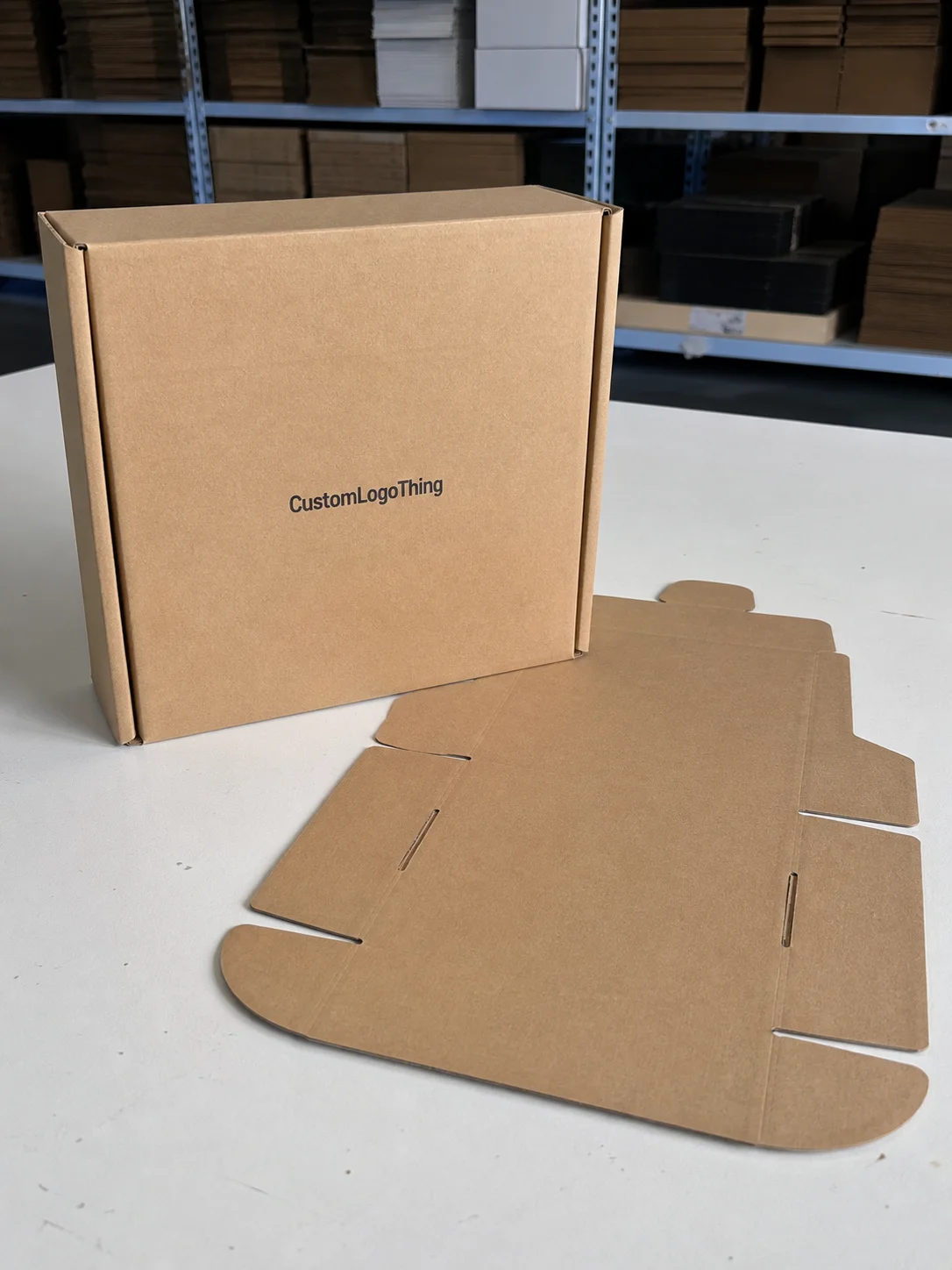
The workflow is a six-step operation: design brief, dieline, sample approval, print, die-cutting, and logistics. First, we capture your specs—dimensions, weight, stacking, print goals—and feed them into our template system, which typically takes two business days for complex dielines or less than one day for standard formats. Second, we produce the dieline and share it with your team for markups. Third, I get a digital pre-production sample with inline callouts on adhesives and measurement points; you approve it electronically so production can begin.
One recent electronics client gave us 4 days to refine their dielines and artwork. We produced color-matched prototypes in the next 24 hours, and approval came back fast because our in-house art team pre-flighted the files to 280 lpi on a 120-mesh plate—no surprises. Production took 7 business days after approval, finishing with die-cutting on our Ohio partner’s new Bobst with an 8-station folder-gluer. Logistics added another 2 days to the final door with DHL Express for the coastal warehouse. You track every stage through our shared portal, which auto-updates with QR-coded photos of the pallet.
Transportation partners are chosen based on volume. UPS and Estes handle our LTL jobs for 5,000–15,000 cartons, and we use full truckload with J.B. Hunt for 25,000+. For west coast deliveries we lean on DHL Freight, and we maintain negotiated spots at $1.28 per mile to keep costs predictable. That way we can tell you whether your corrugated boxes affordable quote includes an LTL lift gate or if the job needs a dock-to-dock pallet.
The shared portal also records QC checklists, so you see temperature logs (28°C max) and humidity (45–55%) before we ship. If your goods need cold-chain protection, we coordinate with our logistics team to provide refrigerated trailers without pushing your cost per box beyond the projected $0.07 freight bump we calculated at quote time.
Why Choose Custom Logo Things for Affordable Corrugated Boxes
Transparent communication is non-negotiable. Every job gets daily factory updates, including photos of the flexo proof, the corrugator run, and final pallets. QC checklists accompany each update so your operations team knows exactly what they’re paying for. We’re not dumping spreadsheets; we provide context—like why we increased adhesive to meet choke points or why we held the print for a better Pantone match.
Our in-house art team saves clients about $0.08 per box on average by prepping files to printer-ready standards before we ever send them to press. They pre-flight for trapping, dot gain, and Pantone compliance, so I don’t have to deal with last-minute plate rework. That translates to faster proofs and fewer hold-ups for you.
I’ve audited three plants in Mexico and one in Ohio this quarter alone, and I expect the same level of control at each location. At the Zapopan, Jalisco facility I visited, the manager walked me through their stack testing lab where they run ASTM D642 on every double-wall order. The Bellevue, Ohio plant still uses our shared Gantt chart to coordinate die cut, and their team won’t ship without updated photos. Those audits ensure we keep delivering corrugated boxes affordable without skipping verification steps.
I don’t sugarcoat it: affordability requires discipline. That discipline starts with sourcing, continues through engineering, and ends with logistics, with every run hitting 32 ECT minimums before it leaves the plant. And yes, there are jobs where a higher price is warranted—we let you know in advance when that’s the case.
Next Steps to Order Affordable Corrugated Boxes
Send us your dimensions, weight, and print goals; we’ll return a quote that breaks down cost per box, art charges, and the expected 12-15 business day lead time. If you need help determining flute or finish, book a 15-minute call. I’ll walk you through the sample kit we keep in stock—A, B, C, and E flutes plus various adhesives—so you can test on your line before committing.
Approve the proof, sign the online PO, and we’ll lock in the production window. We use a shared dashboard that tracks progress, payment milestones, and shipment status until delivery hits your dock. If you want to combine multiple SKUs to hit volume discounts, I’ll talk you through combining dielines and matching print masks so you get corrugated boxes affordable without excess inventory.
We’re not just listing options; we assign your job a dedicated project manager who handles every supplier, from our partners on Custom Shipping Boxes to the flexo houses doing your Pantone matches. The goal is simple: deliver corrugated boxes affordable, durable, and on time.
How can I order affordable corrugated boxes in small batches?
We accept orders starting at 1,000 units for standard sizes. Combine similar dielines or adjust print areas to share tooling and keep your piece price low, and use our stocked inline colors (Pantone 185, Reflex Blue, Process Black) to avoid custom ink charges.
What factors determine the price of affordable corrugated boxes?
Board grade, like 32 ECT B-flute versus 72 ECT double-wall, and flute type drive base material cost, which ranges from $0.38 to $1.05 per box at different quantities. Print ink coverage and run length affect both labor and press time, especially if you exceed 70% coverage and need an extra ink station. Additional finishing like perforations ($0.03 per line) or handles ($0.05 per box) adds incremental labor but can be planned to spread cost.
How long does production take for budget-friendly corrugated boxes?
Standard lead time is 10 to 14 business days after proof approval for 5,000 units. Expedited runs are possible in 7 days if the schedule allows; rush is confirmed with a dedicated slot. Freight door-to-door adds 2 to 4 days depending on destination.
Can Custom Logo Things help me reduce packaging waste while staying affordable?
Yes, we optimize board specs to match product weight, avoiding over-engineered boxes; our recycled linerboard blends include 30% post-consumer content, and we can print using vegetable-based inks endorsed by the Sustainable Packaging Coalition. Lightweight options like C-flute for retail shipper packs cut material use without losing structural integrity.
Do you offer consultations for choosing affordable corrugated box styles?
Absolutely—we provide free consultations with our packaging engineers. They review your product profile, shipping environment, and display needs before recommending styles, and we can ship you prototypes (with 3-day ground delivery) for approval.
For more industry standards, see ISTA science-based standards and packaging.org guidelines. Once you’ve reviewed those, drop your product profile, stacking loads, and print goals into our shared spec template so I can calculate exactly how corrugated boxes affordable stay resilient. I promise you this: clarity beats hype, measurable specs beat vague promises, and that’s what keeps your packaging thoughtful, resilient, and maybe even a little bit elegant.