Apparel Heavyweight Winter Hats Bulk Order for Teams
A bulk winter hat order sounds simple right up until the details show up. Cold weather, wind, wash durability, and decoration quality separate a decent program from one that turns into complaints later. The right hat should feel warm on first wear, keep its shape, and still look clean after a season of use.
Buyers usually choose heavyweight styles for one of three reasons: better cold-weather performance, a more substantial retail feel, or a uniform item that does not feel disposable. Those goals often overlap, but the spec behind them is not always the same. A crew hat may need durability first. A school store hat may need shelf appeal. A promo run may need to stay inside budget and still feel worth keeping.
The real question is not whether the hat is "good" in the abstract. It is whether the body, decoration, and timeline fit the actual job. That means comparing warmth, fit, MOQ, lead time, and decoration limits before the order is approved.
Why heavyweight winter hats outperform lighter beanies
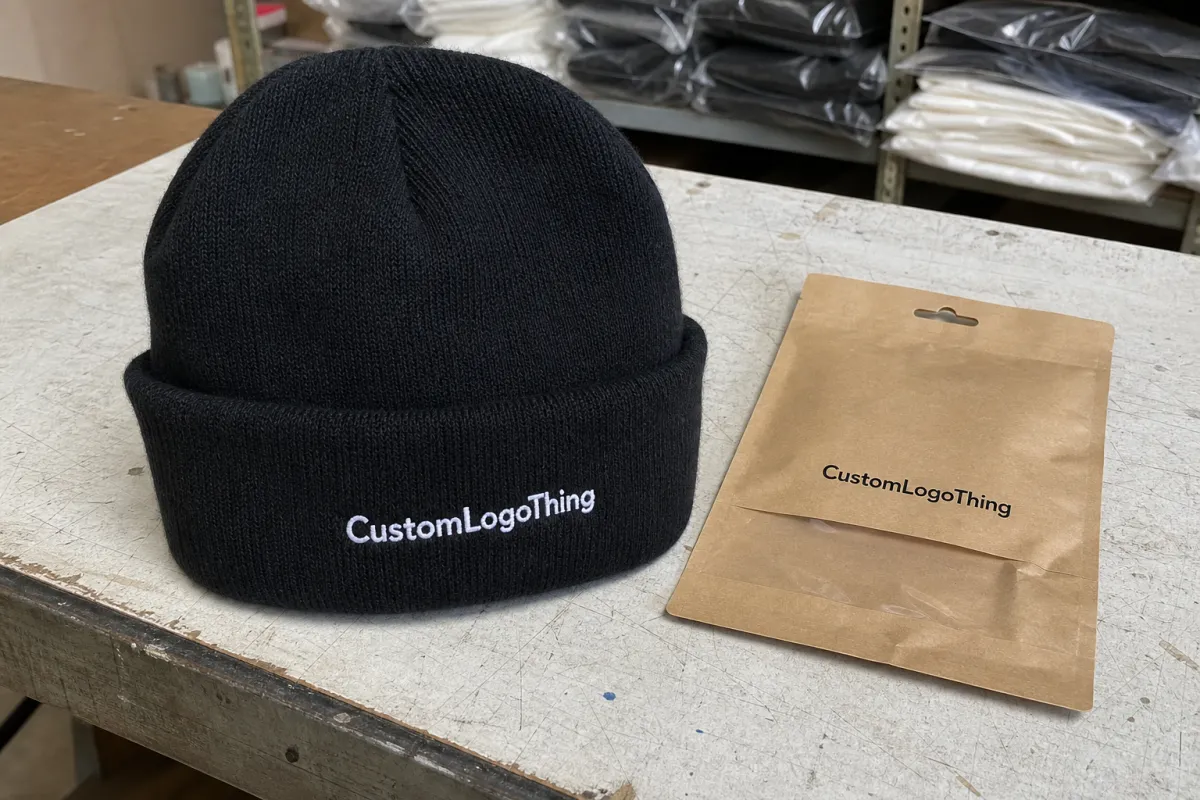
Lightweight beanies can work for mild weather and low-stakes giveaways, but they usually fall short in real winter use. Thin knit lets wind through, loses shape faster, and often feels promotional instead of practical. Heavyweight hats get around that with denser yarns, tighter gauge, and more coverage over the ears and crown.
That extra body matters because wear rate drives value. A hat that stays on heads through a season creates more impressions than a cheaper item that gets tossed after one cold morning. For construction crews, event staff, campus groups, and utility teams, a substantial hat is more likely to be worn in public and kept in rotation.
Heavyweight styles also fit better with the rest of the outerwear people already wear. When a buyer hands out hundreds of hats, recipients compare them with jackets, gloves, and other cold-weather gear. A thin knit can feel out of place next to those items. A denser beanie reads as part of the kit.
The most expensive winter hat is often the one that looked fine in a mockup and failed in use.
There are limits. If the hat needs to fit under a helmet liner, be packed flat for mailers, or work for younger users, too much bulk can become a problem. The right answer is the hat that fits the use case, not just the thickest option available.
Materials, construction, and fit
100% acrylic is still the default for many bulk hat programs because it is warm, predictable, and easy to keep on budget. It also supports a wide color range, which helps when a brand needs repeatable stock shades. Buyers who want a softer hand or a more premium feel can look at an acrylic-wool blend, though the price and care profile usually rise with it.
Recycled yarns are worth considering when sustainability is part of the brief. The trade-off is flexibility: color choices may be narrower, shade matching can be less exact, and some yarns behave differently in production. If exact brand color matters, that decision should be made before artwork is approved.
Construction affects both warmth and decoration. A cuffed beanie gives a natural logo zone and more structure around the ears, which is why it is often the safest choice for staff uniforms and team orders. An uncuffed style looks cleaner and more minimal, but logo space is tighter and fit can be less forgiving.
Interior finishing changes comfort in a very direct way. A single-layer knit is lighter and faster to produce. A fleece-lined winter hat adds another barrier against wind and makes sense for colder regions, outdoor shifts, or workwear programs where the hat will be worn for hours at a time. Fleece also helps for wearers who dislike scratchy yarn against the skin.
Gauge and density are where quality starts to separate. Two hats can both be called heavyweight, yet one may feel loose while the other holds its form. A tighter knit usually resists wind better, supports cleaner embroidery, and keeps shape after repeated wear. Too tight, though, and stretch recovery can suffer. The goal is not maximum thickness; it is a hat that still performs after a month of use.
Fit should be checked against how the hat will actually be worn. Adult one-size styles usually cover a broad range, but not every range is equal. If the hat needs to work over a ponytail, under a hard hat, or with a liner, ask for crown depth and stretch details instead of relying on a generic size label. Youth programs should not assume an adult pattern can simply be scaled down without testing.
Color deserves more attention than it usually gets. Dark solids are easiest to repeat on future orders. Heather and melange effects can look strong in a sample and still vary from run to run. If exact brand consistency matters, confirm which parts are stock-supported, which need a custom dye lot, and which may shift slightly because of yarn absorption.
Decoration methods, logo placement, and readability
Decoration is what turns a winter hat into branded inventory. Embroidery is still the default for good reason: it is durable, readable on thick fabric, and does not depend on adhesive. On a dense knit cuff, clean embroidery usually gives the best balance of cost and longevity.
Not every logo should be stitched directly into knit. Woven patches work better for small text, thin lines, and detailed crests. Faux leather patches add a more rugged retail look and are common for outdoor brands and campus programs. Sewn labels and tabs can work well when the goal is a quieter, more intentional mark.
The fabric surface sets the limit. Thick yarn softens edges, so hairline text disappears quickly and gradients usually lose clarity. A design that looks polished on screen can look muddy on rib knit. The safest rule is simple: if the mark is not readable from a few feet away, it is too detailed for the hat body.
Placement should follow the job. Front cuff placement is the most visible and usually best for staff uniforms and event crews. Side placement feels more retail and less promotional. A centered patch on the fold works when the cuff may roll during wear. If the hat will be seen in motion, front placement usually gives the strongest read.
Proofing should happen before production. Ask for artwork at actual size, not just a flat mockup. Check thread colors, patch dimensions, and stitch count. If the supplier says a detail will disappear, ask them to show what will be lost. That is faster than discovering the problem after hundreds of hats are already underway.
Color accuracy has limits. Pantone matching is usually stronger in thread, labels, and patches than in yarn-dyed knit bodies. Yarn color can shift by lot, and the texture of the fabric affects how the color reads. Buyers who need strict brand consistency should ask which elements are exact, which are approximate, and whether a substitute material is needed to preserve the match.
Cost, MOQ, and where the budget goes
Pricing comes down to a few predictable variables: base material, decoration method, color count, label work, patch size, packaging, and whether the hat body is stock or custom knit. Every extra variable usually adds setup time somewhere in the chain, even when the unit price looks stable at first.
MOQ is not fixed across all styles. A stock acrylic cuffed beanie with embroidery can often start lower than a fully custom jacquard knit with specialty labeling. Add multiple colorways and MOQ can rise again because knitting and finishing are split across variants. Buyers should avoid assuming that one order threshold applies to every version of a hat.
| Option | Typical MOQ | Typical unit price | Best for | Notes |
|---|---|---|---|---|
| Stock acrylic cuffed beanie with embroidery | 100-250 pcs | $3.20-$5.25 | Crews, events, general giveaways | Fastest path if the logo is simple and the decoration area is small |
| Heavy rib knit with woven patch | 250-500 pcs | $4.50-$7.50 | Retail, campus stores, team merch | Better for detailed marks and a more finished look |


