Buy Event Merch Heavyweight Winter Hats Unit Cost Guide
If you are pricing event merch Heavyweight Winter Hats Unit cost for a race, school fundraiser, sponsor kit, volunteer team, or staff winter drop, the useful question is not whether a hat is cheap. It is whether people will wear it long enough to justify the spend. A heavier winter hat does more work than a thin beanie: it blocks wind better, feels more substantial in hand, and usually survives more real-world use before it starts looking tired.
That difference changes the buying math. A hat that gets worn twenty times is better merch than a bargain item that looks fine on approval day and disappears by the following week. For event buyers, the strongest programs usually balance warmth, decoration quality, and bulk pricing instead of chasing the lowest line item on the quote sheet.
Winter hats also get judged fast. Buyers touch them, stretch them, and check whether the cuff sits flat enough for a logo. If the knit feels flimsy, the whole order looks cheaper. If it feels dense, comfortable, and consistent across the carton, the piece earns more trust before anyone even tries it on.
Why heavyweight winter hats sell better than thin beanies
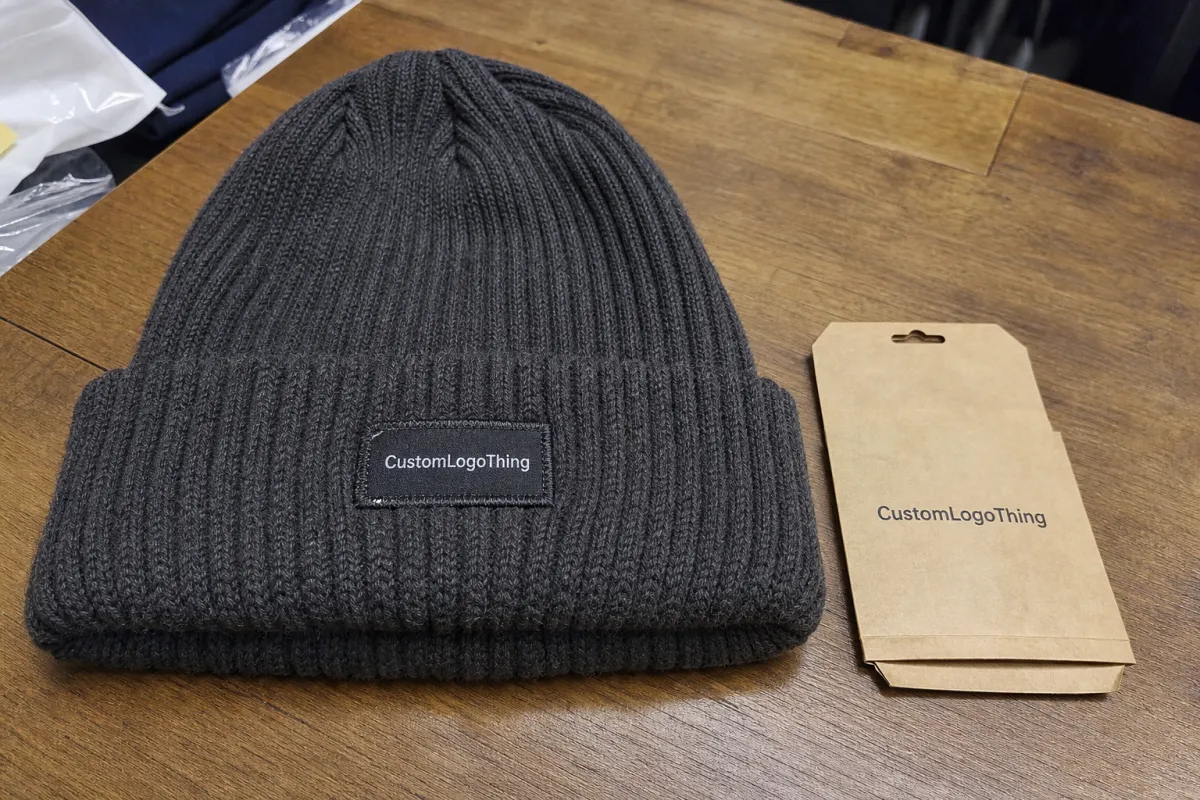
Heavyweight Winter Hats tend to outperform lighter beanies because they read like a finished product instead of filler. The thicker knit, deeper cuff, and denser handfeel create a stronger first impression the moment the box opens. That matters for event merch, where the unboxing is often the only chance to make the piece feel worth keeping.
For outdoor staff, winter trail races, ski weekends, sponsor bundles, and volunteer uniforms, warmth is not an extra feature. It is the reason the item exists. If the hat is too light, people wear it once and stop. If it is heavy enough, comfortable, and branded cleanly, it can stay in rotation for months.
There is also a visibility gain. Cuffed styles give decorators a flatter area to work with, which usually means a cleaner logo read from a distance. That helps sponsors, event organizers, and internal teams get more value from every unit. A small logo on a well-shaped cuff often outperforms a larger logo on a soft, sagging knit.
A winter hat does not need to be fancy. It does need to feel worth putting on.
That is the practical filter. Event merch is judged by use, not just appearance. A heavier hat costs more than a thin promotional beanie in many cases, but the better retention rate can make the higher price easier to defend. The real win is not the lowest quote. It is the item that stays on heads after the event is over.
Choose the right yarn, cuff, and fit before you price
Material choice changes comfort, warmth, decoration quality, and cost. Standard acrylic remains the workhorse for most custom winter hats because it is affordable, stable in color, and straightforward to knit. Heavier acrylic blends usually feel denser and warmer. Wool blends sit closer to the premium end because they add loft and a more natural handfeel, but they raise the unit cost quickly.
- Standard acrylic: lowest entry price, decent warmth, good for large giveaway quantities.
- Heavy acrylic blend: better structure and handfeel, often a cleaner retail-style finish.
- Wool blend: warmer and more premium, but harder to keep in the low-cost range.
Construction style matters just as much. Cuffed hats create a defined branding zone and usually look more traditional. Uncuffed styles can feel lighter and more casual, but the decoration area is less controlled. Slouch styles can work for retail-style merch or trend-driven programs, though they are less reliable for staff uniforms where logo clarity matters.
Fit is simpler than many buyers expect. Most custom winter hats are one-size, so the real issue is stretch recovery. A knit that springs back after wear will keep its shape and look newer for longer. A loose crown or weak rib structure makes even a decent yarn feel lower grade.
Construction details deserve a closer look. Rib density, cuff height, and knit gauge affect how the final logo sits. A taller cuff gives more room for embroidery. A tighter knit helps small text stay legible. If the hat is too soft, patches can ripple. If the fabric is too textured, stitches can sink in and lose clarity.
Buyers often over-focus on the color name and under-focus on the surface they are decorating. A heathered knit may look great on a sample card, but it can make fine lettering harder to read. A solid color may seem plain, yet it gives embroidery or a woven patch a cleaner stage. That tradeoff is worth deciding before the order is priced.
Specs that affect warmth, decoration, and wear time
Useful quotes start with measurable specs. Ask for knit gauge, fabric weight, cuff height, layer count, and whether the hat is stock or custom-knit. Those details tell you more about the final product than adjectives like premium or thick ever will. If a supplier cannot explain the construction in plain terms, the order is likely to be harder to manage later.
Decoration area is one of the most practical details on the page. A small front panel limits embroidery size, which changes the logo layout and often the price. On a compact cuff, a 2.25-inch mark may be the right fit. A wider cuff can handle 3 to 4 inches more comfortably. When a logo has thin strokes or small lettering, a woven patch or sewn label may read better than direct embroidery.
The knit surface itself can make or break the decoration. On a heavily textured hat, stitches can disappear into the fabric and lose definition. On a very soft knit, patches may not lay flat. On a short cuff, the logo can feel cramped. These are small issues during quoting and expensive ones during production.
For cleaner comparisons, ask suppliers to include the same fields on every quote:
- Fabric weight: use a number or range instead of loose terms like heavy or thick.
- Construction: single-layer, double-layer, cuffed, or slouch.
- Decoration method: embroidery, woven patch, sewn label, or a mix.
- Placement: front cuff, side, back tag, or woven loop.
- Color target: stock color, close match, or Pantone reference if applicable.
For apparel comparisons, tighter spec language is always better than vague language. Many buyers reference common textile testing frameworks such as ASTM methods when they need a consistent way to describe materials. A formal lab report is not necessary for every winter hat order, but clear language reduces guesswork and makes reorders far easier.
QC also starts here. Before approving production, check that the cuff height, logo size, thread colors, and placement all fit the actual hat dimensions. A design that looks balanced on a flat mockup can shift once it lands on a knit surface. If the proof does not reflect the real structure, the final piece may still be functional, but it will not feel intentional.
What drives event merch heavyweight winter hats unit cost
This is the part that determines whether the order feels manageable or awkward. Event Merch Heavyweight Winter Hats unit cost changes based on quantity, yarn choice, decoration method, and whether the project uses stock construction or custom knit programming. A vague request gets a vague answer. A detailed request gets a quote that can actually be compared across vendors.
The pricing levers are straightforward. Higher quantity lowers the per-piece rate. More thread colors increase decoration time. Custom-dyed yarn adds cost because the base material itself changes. Special packaging, split shipping, or rushed production all push the budget upward. None of that is mysterious; it is simply production math.
| Program type | Typical MOQ | Cost per piece | Common setup or tooling | Lead time | Best use |
|---|---|---|---|---|---|
| Blank stock heavyweight knit | 50-100 | $2.25-$4.25 | $0-$35 setup | 5-10 business days | Fast giveaways and simple team needs |
| Embroidered cuff beanie | 100-250 | $3.75-$6.50 | $35-$75 digitizing plus setup charges | 10-15 business days | Most event merch programs |
| Woven patch or sewn label | 100-250 | $4.50-$8.00 | $50-$150 patch tooling fees | 12-18 business days | Detailed logos and a more retail feel |
| Custom-knit or custom-dyed | 250-500+ | $6.50-$12.00+ | $150-$400 tooling fees | 20-35 business days | Brand programs and premium retail drops |
Those ranges are working estimates, not promises. A 100-piece run with simple one-color embroidery can land near the low end. A 1,000-piece order with multiple thread colors, custom hang tags, and split delivery can move far above what buyers expected at first glance. That is why every quote should be built on the same spec line.
MOQ matters, but it does not tell the whole story. A smaller order can look attractive until setup, digitizing, and shipping are added in. A slightly larger quantity often wins on bulk pricing because those fixed costs are spread across more units. Small runs still have their place, especially for pilot programs or limited staff drops, but they rarely produce the cleanest per-piece number.
To keep comparisons honest, ask for the usual extras in writing:
- Digitizing: often $35-$75 for embroidery, more for dense or highly detailed art.
- Sampling: usually $50-$150 if a physical pre-production sample is required.
- Split shipping: increases quickly if hats need to reach multiple event locations.
- Rush charges: common when artwork approval slips and production has to compress.
If hats ship with inserts or cartons, transit expectations should be clear before the order is released. Packaging guidelines from ISTA are useful when the order is dense, boxed, or moving through several hands before arrival. And if any paper component is included, FSC paper is an easy material choice that keeps the packaging side cleaner without complicating the order.
One more cost point gets missed often: artwork complexity. Clean logos with bold shapes are cheaper to reproduce than tiny lettering or gradient-heavy art. Thread changes add time. Stitch count adds time. Even a small logo can become expensive if it needs a dense fill or multiple passes to stay readable on knit.
Production steps, approvals, and shipping lead time
Most delays happen because one step was rushed or skipped, not because production suddenly became unpredictable. The normal sequence is simple: quote, spec confirmation, artwork review, proof approval, production, packing, and transit. If any stage is vague, the calendar slips.
Artwork approval usually causes the biggest friction. Missing vector files, blurry logos, and unclear color references waste time. Late design changes waste more. If the event date is fixed, treat the art deadline like a real deadline instead of a soft suggestion. It is the easiest way to avoid rush fees later.
- Spec confirmation: lock yarn, fit, decoration, and quantity first.
- Artwork review: send vector files and clean logo versions up front.
- Proof approval: check placement, thread colors, logo size, and spelling.
- Production: knitting, decoration, finishing, and trimming happen in sequence.
- Packing and transit: confirm carton count and ship-to addresses before release.
Fast stock orders can move quickly, especially when the decoration is simple and the base hat is already in inventory. Custom-knit and custom-dyed programs take longer because yarn ordering, knit programming, and quality checks all add time. For straightforward decorated stock hats, a planning window of 10-15 business days is common. Custom builds often need 20-35 business days, sometimes more during peak season.
That timing is not just about the machine schedule. It also depends on how many approval cycles the buyer needs. A clean order with one proof round moves. A messy order with unclear colors, a changed logo, and a revised shipping list can stall for days. The safest planning habit is simple: lock art early and leave buffer for transit, especially for winter events that cannot move their date.
QC checkpoints should be specific. Confirm that the logo sits where the proof shows it. Check whether the cuff lays flat. Make sure thread colors are close enough to the brand standard to read correctly under daylight, not just under a bright office lamp. The difference between a passable hat and a dependable hat is often a small production detail that was checked at the right time.
What makes repeat orders easier for event teams
Repeat orders are where organized teams save real money. If the same yarn, cuff, decoration placement, and carton count stay consistent, the production team does not need to rebuild the order from scratch. That reduces rework and cuts down on the small errors that creep in when a new person takes over the file.
Saved artwork matters more than many buyers expect. If the supplier has the correct logo file, the right stitch count, and previous color notes on hand, approval loops get shorter. That speed has value. It also lowers the odds of a surprise when the next event date shows up.
Consistency helps on the packing side too. Event teams often need mixed kits, multiple shipping locations, or sponsor-specific bundles. When carton labeling, quantity per box, and final pack rules stay the same, the order is easier to check and easier to replace if a problem appears. QC gets a lot less glamorous the moment a box goes missing, which is exactly why it matters.
Repeat-order habits that save time:
- Keep one master spec: yarn, decoration method, and placement should stay fixed.
- Save proof notes: thread colors, logo size, and cuff height should remain on file.
- Hold a sample: a physical reference helps when team members change.
- Confirm carton rules: count per box and ship-to address should stay consistent.
The savings are not limited to the factory floor. They show up in fewer replacement requests, fewer approval emails, and less last-minute panic before the event. That is the unglamorous side of good merch planning, and it is usually where the strongest gains show up.
For seasonal programs, repeatability also helps manage inventory risk. If the same style sells well one year, buyers can reorder with more confidence instead of reinventing the item. That lowers the odds of ending up with a pile of almost-right hats that do not match the original event and are hard to use anywhere else.
What to send for a fast quote and the next step
If you want a clean quote, send the useful details in one message. Quantity, target budget, decoration method, logo file, event date, and shipping ZIP are the core fields. Add the use case too. A staff winter hat is not the same as a race giveaway, and the pricing should not pretend that it is.
Two material options are enough for most buyers. Two quantity tiers are usually enough as well. A practical comparison might be 100 units versus 250 units, or standard acrylic versus a heavier blend. That gives a realistic view of event merch Heavyweight Winter Hats unit cost without burying the decision in options that will never get ordered.
If logo placement or color match matters, ask for a sample photo or pre-production proof before approval. That matters most when the knit surface is textured or the design is small. A five-minute proof review can save a five-day correction. The goal is not perfection theater. It is avoiding a preventable mistake after the order is already in motion.
Use this checklist before sending a request:
- Quantity: total units and any price tiers you want quoted.
- Budget: a target range if per-piece cost matters most.
- Decoration: embroidery, woven patch, sewn label, or a mix.
- Artwork: vector file, font notes, and color references.
- Deadline: event date, ship-to ZIP, and any split delivery needs.
That is enough information for a buyer to compare real bulk pricing instead of guessing. For winter programs, the orders that stay on budget are usually the ones that define the spec early, keep the decoration simple, and leave room for the proof cycle. The calendar gets tighter quickly once colder weather turns demand up, so clean planning matters more than a dramatic quote.
What affects event merch heavyweight winter hats unit cost the most?
Quantity is usually the biggest driver, followed by decoration method and yarn choice. Custom colors, complex artwork, special packaging, and rush production can push the per-piece price higher, so include setup and shipping before comparing suppliers.
What MOQ should I expect for custom heavyweight winter hats?
Decorated hats often start with a higher MOQ than blank stock hats because setup costs need to be spread across more pieces. Small runs are possible, but the unit price usually climbs under common breakpoints like 100 or 250 pieces.
How long does production usually take after approval?
Timing depends on decoration method, stock availability, and how quickly proofs are approved. Simple stock-based orders move faster than custom-knit or custom-dyed runs, and hard event dates should always include extra time for revisions and transit.
Which decoration method works best on winter hats?
Embroidery is the most common choice for a clean, durable look. Woven patches work well for detailed logos or a more premium feel, while sewn labels can be a smart option when the knit surface is too textured for crisp stitching.
Can I reorder the same winter hat later?
Yes, if the yarn, decoration file, and production notes were saved correctly from the first run. Reorders are easier when the original sample or proof is still on file, though color matching and availability still need confirmation.
If the spec stays tight, the reorder path gets much simpler, and pricing stays more predictable instead of turning into a surprise later.


