Apparel Performance Golf Caps MOQ: What Buyers Should Expect
The cheapest-looking cap can become the most expensive line item once embroidery, color matching, freight, carton rules, and reorders are added together. That is why apparel performance golf caps MOQ should be read as a production signal, not just a supplier rule. It tells you how much setup the factory needs, how much decoration the fabric can handle, and how much risk sits in the first run.
Apparel performance golf caps MOQ and what the first order really signals
A Minimum Order Quantity is never just a number on a quote. It is a shorthand for how much change the factory has to absorb before the first sellable cap comes off the line. If the order is a pro-shop test, a charity outing, a corporate event, or a retail trial, the right MOQ depends on the body construction, the decoration method, and how often the style might be reordered.
Many buyers start by asking for the lowest possible unit cost before the cap is fully defined. That usually pushes the quote toward a body that looks inexpensive on paper but costs more after digitizing, patch tooling, color approval, carton handling, and freight are added back in. With apparel performance golf caps MOQ, the better question is not how low the minimum can go. It is how the order can be set up so the first run is still clean, sellable, and repeatable.
MOQ behaves more like a tooling threshold than a shopping preference. Below that threshold, the setup charge dominates the cost. Above it, the unit price starts to make sense. On simple embroidered caps, moving from 100 units to 300 units often trims unit cost by roughly 15 to 30 percent because the digitizing and line setup are spread across more pieces. On complex patch or mixed-material builds, the savings can be smaller because the decoration and inspection time stay high.
A low minimum is useful only if the cap still fits the intended use. A small test run with the wrong fabric, weak front panel, or overloaded logo can cost more than a larger order that is built correctly the first time.
That is the practical tension buyers face. A modest MOQ helps reduce inventory risk when the style is unproven. A slightly higher MOQ can reduce landed cost enough to make the program viable. The right answer depends on whether the caps are meant to sell through retail shelves, support a one-time event, or establish a repeatable seasonal program.
Fabric, crown, and closure choices that hold up on the course
Performance golf caps work best when the body construction matches the use case. Polyester twill, recycled polyester blends, nylon-poly mixes, and moisture-wicking mesh are common because they dry faster than cotton, hold shape better in humidity, and take decoration more predictably. A midweight performance fabric in the 150-180 gsm range is usually easier to manage than a very light shell that collapses under embroidery tension.
Recycled polyester deserves a more careful look than it often gets. The fiber itself is not the issue; consistency is. Good recycled yarn can perform very well, but color variance across dye lots can be wider than buyers expect. That matters if the cap has a strong brand color or if a repeat order must match a first shipment closely.
Structured crowns give a firmer front profile and support front-panel branding better. Unstructured crowns feel softer and sit lower, which some golfers prefer for comfort and travel. Neither is automatically better. The right choice depends on how the logo needs to read from a distance, how the cap should look after repeated wear, and whether the program leans more athletic or more retail.
Closure choice shapes both fit and production speed. Snapbacks are straightforward to size and usually simple to run. Hook-and-loop closures are common for event merchandise because they cover a wide range of head sizes. Adjustable fabric straps feel more polished on premium builds, but they can add a little labor and inspection time. A good sweatband, enough ventilation eyelets, and a bill shape that matches the brand all make the cap feel deliberate instead of generic.
- Polyester performance fabric is the safest choice for moisture control and repeatable color.
- Mesh side panels improve airflow, but very soft mesh can reduce front-panel stability.
- Structured fronts support embroidery better than thin or highly flexible crowns.
- Stretch hybrids feel premium, but they can limit heavy decoration or large stitch counts.
- Pre-curved bills reduce finishing time when the buyer wants a ready-to-wear shape.
Decoration details that keep logos sharp and readable
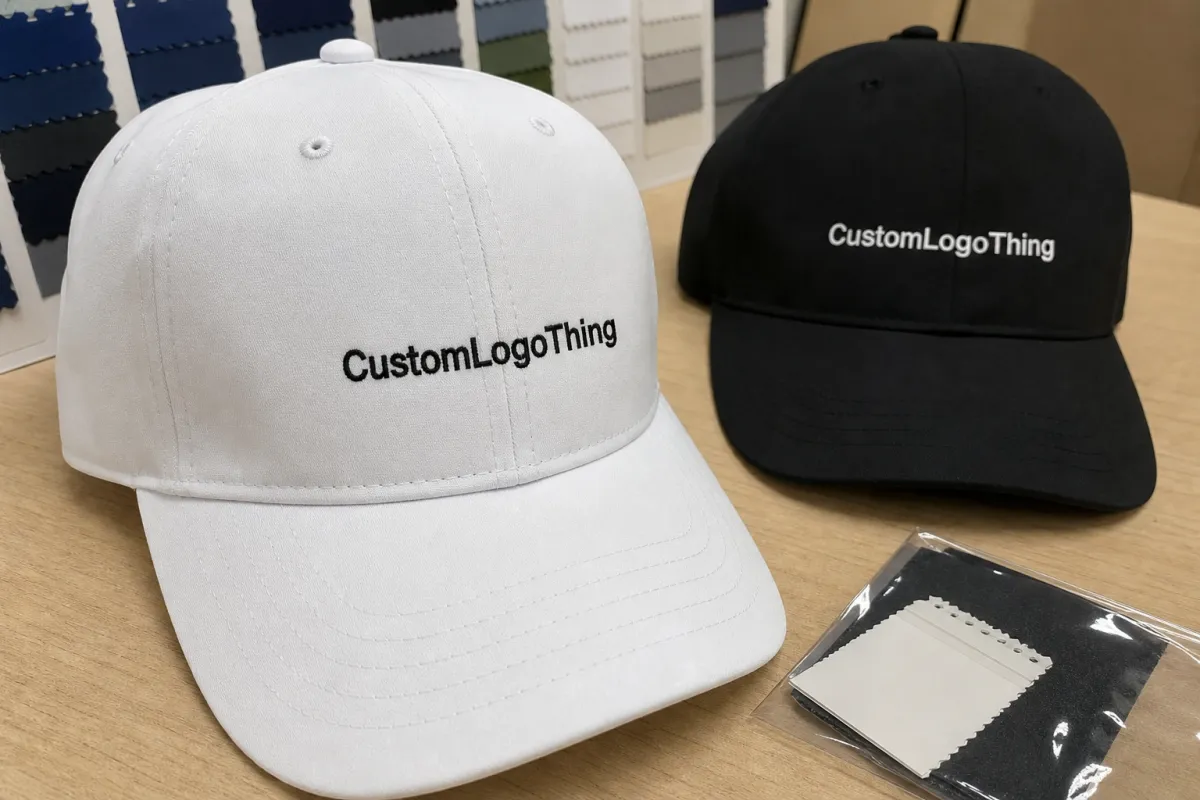
For most performance caps, flat embroidery is still the workhorse. It is durable, clean, and dependable across a wide range of fabrics. A well-digitized logo with moderate stitch density usually holds up better than a more ambitious version that overloads a thin panel. A good rule: if the design has small text, fine outlines, or tight spacing, simplify it before the thread machine sees it.
3D embroidery can look strong on a thicker structured front, especially when the mark uses bold letters or a simple icon. It is less forgiving on soft crowns or on art with narrow strokes. Woven patches and heat-applied emblems sit somewhere else in the decision tree. They are useful when the logo has details that thread would blur, or when a premium retail look matters more than pure stitch durability.
Placement matters almost as much as the decoration method. Front-panel branding gives the strongest visibility and usually carries the largest stitch count. Side-panel logos are subtler and can reduce the decoration load. Back arch branding works well for sponsor names or team identifiers, but the closure has to be considered so the mark does not get hidden or split awkwardly.
On lightweight performance fabric, overbuilt decoration can distort the cap body. The front panel may pucker. The crown can lose shape. A logo that looks impressive on a screen can become too heavy once it is translated into thread or patch material. That is why decoration should be matched to the fabric, not just to the artwork.
Typical decoration options break down like this:
| Decoration method | Typical use | Approx. setup charges | Best fit |
|---|---|---|---|
| Flat embroidery | Most logos, durable everyday wear | $35-$75 digitizing | Structured or semi-structured caps |
| 3D embroidery | Bold front marks with larger lettering | $45-$90 digitizing | Thicker front panels |
| Woven patch | Fine detail, small text, multi-color art | $60-$180 tooling fees | Premium retail looks |
| Heat-applied emblem | Clean graphics, lower stitch load | $25-$70 setup charges | Smooth performance fabrics |
There is no universal best choice. There is only the method that protects legibility, stays within the fabric's tolerance, and lands at a price that makes the program workable.
Cost, pricing, and MOQ planning for custom cap programs
The main cost drivers are straightforward: blank cap price, fabric, closure type, decoration method, stitch count, packaging, and shipping destination. The tricky part is that each variable affects the others. A lighter body may cost less per blank but need a more careful decoration approach. A premium closure can raise the base price but make the finished cap feel retail-ready. That is why unit cost and landed cost should be reviewed together.
Bulk pricing usually improves as quantity increases, but only to a point. Simple embroidered caps can support lower minimums because they require less tooling and fewer setup steps. Specialty performance fabrics, multiple decoration locations, custom patches, or mixed-color builds tend to push the MOQ higher because they require more handling and more inspection. Buyers often discover that the quoted minimum is per color, per logo, or per style. That detail matters more than the headline number.
For planning purposes, a small test run of 50-100 pieces is usually the highest-cost route, but it is useful when the buyer is checking market response or internal approval. A core launch run of 100-300 pieces is often the most realistic balance for apparel performance golf caps MOQ planning. Above 300 pieces, the setup cost spreads out more efficiently, and the unit price starts to stabilize.
A practical pricing range for decorated performance caps often looks like this: simple embroidered styles around $4.25-$7.50 per piece at 100 units, then roughly $3.25-$5.25 at 300 units, and about $2.60-$4.20 at 1,000 units, depending on fabric, country of origin, and stitch count. Patch-based programs usually land higher because of tooling and material steps. Very simple low-stitch jobs can sit below those bands, while dense embroidery, premium closures, or special packaging can push them higher.
Sampling also adds cost. A physical sample often runs $25-$75 per cap before shipping, and the sample may or may not be credited back on bulk production. That is not wasted money if the order has any ambiguity. One corrected front-panel size or closure choice can save far more than the sample costs.
Freight can change the final picture just as much as the cap itself. Carton count, pack ratio, and destination all affect the landed number. If the order is heading into retail, or if it includes inserts and hang tags, transport durability starts to matter too. The handling guidance from ISTA is useful because it keeps the focus on what happens after the order leaves the factory. If the program uses recycled paper components or fiber claims, the sourcing rules and chain-of-custody expectations from FSC may also be relevant.
Process, timeline, and production steps from proof to shipment
A cap order usually follows the same sequence: inquiry, spec review, artwork check, digital proof, sample approval, production, quality inspection, and shipment. None of those steps is unusual. The order slows down when the logo file is poor, the decoration location is unclear, or the buyer is still choosing between cap bodies after the quote is issued.
Timing depends on complexity. Artwork review can take a day or two if the file is ready. Proofing is usually quick once the style is fixed. Sample lead time often adds several days, especially for a new body or a new decoration method that needs physical approval before bulk production. After approval, bulk runs commonly take 12-20 business days, though that can stretch during peak season or when the order includes multiple SKUs.
Rush orders are possible, but only in the narrow cases where the cap body is known, the decoration is simple, and there are no open questions about color or packaging. Multiple logos, custom patches, or special labeling slow things down because they require extra setup and inspection. That is not a delay for its own sake. It is the reality of moving material through a controlled production line.
The biggest timing mistake is treating sample time and bulk time as the same thing. They are not. A sample can look fast on the calendar, then create revisions that push the actual production start back several days. If the deadline is hard, the better path is to lock the production-ready spec first and treat the sample as a check, not as the place where all decisions are made.
- Day 1-2: inquiry, artwork collection, and spec review.
- Day 2-4: proofing and revisions, if needed.
- Day 5-10: sample or pre-production approval for new builds.
- Day 12-20: bulk production and final inspection, depending on complexity.
For seasonal orders, the calendar matters as much as the spec. A July golf promotion ordered in late June leaves almost no margin for error. A fall retail run placed earlier gives the supplier time to correct thread color, packaging, or fit before the inventory is needed.
Quality checkpoints that prevent fit and color surprises
The best cap programs do not rely on final inspection alone. They build checkpoints into the order before the first box is sealed. Crown depth, panel symmetry, bill shape, closure alignment, stitch consistency, and logo registration all deserve attention because small issues become obvious once the caps are worn in daylight or lined up on a retail shelf.
Color is another place where buyers get surprised. Fabric lots, thread shades, and printed labels can look different under warehouse lighting, showroom lighting, and daylight. A Pantone reference helps, but it is not magic. If the brand color is critical, ask for a physical match against the actual material. A screen image is not enough.
Placement tolerance should also be written down. For a front logo, 2-3 mm of shift may be acceptable on some jobs, but not on others. If the mark needs to sit dead center for a premium retail look, say so early. The same rule applies to logo size, panel spacing, and back arch lettering. The more precise the expectation, the less room there is for expensive guessing.
A first article or pre-production sample is worth the time when the silhouette is unfamiliar. It shows how the front panel holds the embroidery, how the closure sits, and whether the cap keeps its shape after handling. The same is true for new decoration methods. A woven patch can look excellent in art review and still need adjustment once it follows the curve of the crown.
Packaging needs the same discipline. Carton labels, size counts, color breakdowns, and inner-pack quantities should match the purchase order so the receiving team does not end up sorting product by hand. That matters even more for multi-color orders or mixed-size programs, where one mislabeled carton can waste hours.
One practical point: a cap that passes a visual check on a table can still fail once it is tried on. The sweatband may feel rough. The front may sit too high. The bill may curve more than expected. Those are not cosmetic details. They shape whether the product feels worth reordering.
What to send for a cleaner quote and order review
If the goal is a quote that reflects the real job, send the details that actually drive production. Cap style, target quantity, logo file, decoration location, color preferences, and ship-to destination are the essentials. Once those are clear, the quote can reflect the real apparel performance golf caps MOQ instead of a placeholder number.
The use case also matters. Retail resale, team wear, promotion, and event giveaway all point toward different specs. A retail cap may need a better hand feel, cleaner stitching, and more careful packaging. An event cap may prioritize speed and value. A team order may need a fit range that avoids re-order headaches later. That context shapes the correct minimum and the right price band.
If the logo is detailed, request a sample review before committing to bulk. That is especially useful when the front panel is soft, the artwork is fine, or the buyer wants to compare a structured and unstructured version side by side. A little review time is cheaper than a production miss.
The most useful quote request is specific, not long. It should identify the cap body, the closure, the decoration method, the target quantity by color, the deadline, and the destination. If two specs are being compared, ask for both. That makes the trade-off between fabric, MOQ, and landed cost much easier to read.
FAQ
What is a typical MOQ for performance golf caps with a logo?
Minimums vary by cap body, fabric, and decoration method. Simple embroidered styles usually allow lower starting quantities than specialty performance builds. Ask whether the minimum is per color, per logo, or per style, because that detail changes the real buying requirement more than the headline number does.
Can I mix colors or styles and still meet apparel performance golf caps MOQ?
Sometimes yes, but only when the factory groups those items under the same body, fabric family, or decoration setup. Mixed colors often still require a minimum per color, while mixed styles usually count as separate SKUs with separate minimums. The safest approach is to confirm the calculation before combining variants in one purchase order.
Which decoration method lasts best on performance golf caps?
Flat embroidery is a strong choice for durability and a clean look on most performance fabrics. Woven or embroidered patches can help preserve small details when the logo is too fine for direct stitching. Heavy applications should be avoided on very light or stretch-heavy panels if long-term comfort and shape retention matter.
How long does a custom performance golf cap order usually take?
Artwork review and proofing can move quickly when the logo file is ready and the spec is already defined. Bulk production often follows sample approval, and the overall schedule depends on fabric availability, decoration complexity, and order size. Rush timing is possible in some cases, but only when the style and decoration are straightforward and the approval steps move fast.
What should I prepare before requesting a quote for golf caps?
Prepare a vector logo file, target quantity, preferred cap style, color choices, decoration location, deadline, and shipping destination. Include whether the caps are for resale, promotion, or team wear so the quote matches the job. If you are comparing options, ask for two specs side by side so you can see how fabric, closure, and MOQ affect the final unit cost.
A clean quote starts with a complete spec, not a rushed request. The more precise the inputs, the easier it is to turn apparel performance golf caps MOQ into a workable order instead of a guess.