An apparel Logo Patch Beanies Unit Cost review should start with the full build, not just the logo decoration. The blank beanie, patch material, application method, packaging, and freight often move the total more than the patch itself. That distinction matters when you are comparing merch, teamwear, or retail programs and need a quote that survives internal review.
Patch beanies are popular because they usually look cleaner than direct print on knit, hold detail better on textured fabric, and feel more retail-ready without becoming difficult to produce. The useful question is not whether patches are fancy. It is whether the spec, cost, and lead time fit the end use and the repeat order plan.
Where buyers get burned is inconsistency. A sample can look right, then the bulk run drifts on placement, cuff height, or shade. A lower-cost printed option may seem cheaper up front, but rework, rejects, and complaints can erase the savings. The best value is the version that repeats cleanly.
Why patch beanies can beat prints on perceived value
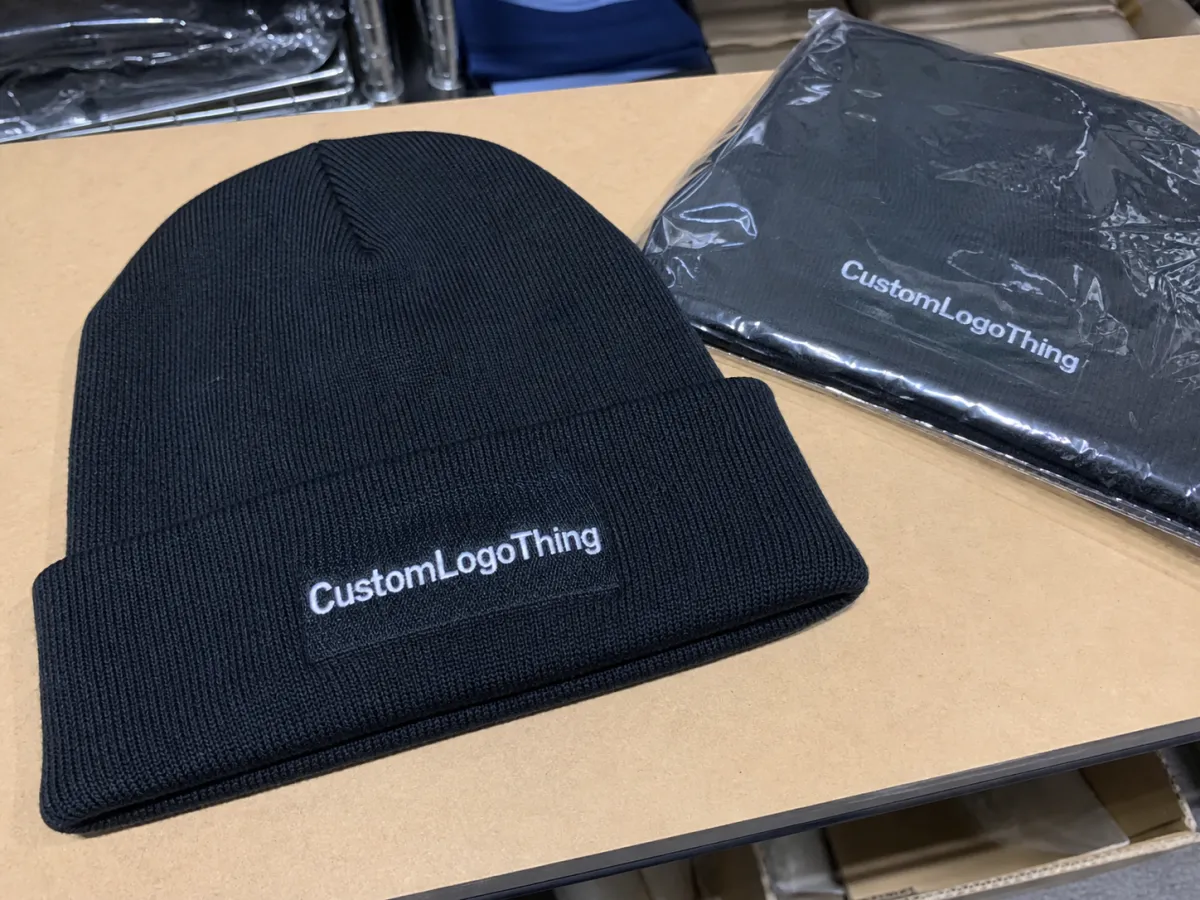
Patch decoration gives a beanie a more structured front point of focus. A woven, leatherette, embroidered, or molded PVC patch sits on the cuff like a badge, so the logo stays readable even when the knit stretches or has visible texture. Screen print can work on some beanies, but it depends heavily on knit density and ink system.
That is why many buyers prefer patches for logos with thin lines, small type, or sharp borders. The patch gives the artwork its own substrate instead of asking ink to sit directly on a flexible knit surface. On ribbed or looser cuffs, that usually means better clarity and fewer surprises in bulk production.
There is also a reuse advantage. One beanie body can support multiple patch versions, which helps merchandising teams and seasonal programs manage inventory without changing the entire product. If the blank fits and the cuff is stable, the branding can change without forcing a full rebuild.
"If the logo stays sharp, the cuff sits right, and the supplier can repeat it in a reorder, the beanie usually earns its price."
Patch styles, knit builds, and finish choices that change the result
Patch types buyers compare most often
Woven patches are usually the safest choice for detail-heavy logos. They handle small type and thin rules better than embroidery at the same size, which makes them a strong option for cuff-scale branding. If the artwork is busy, woven is often the least risky path.
Leatherette pushes the look toward lifestyle or premium casual. Embossed PVC works well for bold marks and strong contrast, but it is less forgiving on tiny detail. Embroidered patches add depth and tactility, while printed fabric patches handle gradients and complex color transitions better than most alternatives. Each choice changes both the look and the proofing burden.
Beanie bodies that shift hand feel and cost
Cuffed acrylic remains the common starting point for promotional and basic retail programs because it is stable, easy to decorate, and usually the lowest-cost option at scale. Recycled blends can support a sustainability story, though they often add cost and slightly change the hand feel. Rib knit tends to look denser, while slouch styles are more relaxed but offer less structure. Fleece lining increases warmth and comfort, but it also adds material and labor cost.
The knit construction matters more than many first-time buyers expect. A tighter cuff usually holds a patch flatter and reduces distortion around the edge. A looser build can let the patch sit unevenly or curl after steaming. In samples, that difference can look minor; in bulk, it is obvious.
Placement also affects the result. Centered cuff placement is easiest to repeat and easiest to inspect. Offset placement can feel more fashion-driven, but it needs tighter application control. Some buyers add a small side label for secondary branding or size info, which can make the piece feel closer to retail than giveaway quality.
Match the patch build to the artwork instead of forcing every style to do the same job. Woven handles detail best. PVC and embossed marks are better for bold shapes. Printed patch material is useful when gradients matter, but it still needs proofing at the final size. A logo can look fine on screen and fail once reduced to actual cuff dimensions.
Size, placement, and spec details that protect quality
A clean spec sheet prevents most avoidable mistakes. For patch beanies, it should define circumference, cuff height, crown shape, yarn weight, stretch range, patch dimensions, artwork limits, and packing method. If those details are vague, the sample may still look acceptable while the production run drifts away from the approved version.
Small logos need extra scrutiny. Thin rules can disappear, tiny type can fill in, and borders can crowd once the patch is stitched onto textured knit. If the smallest text is not readable at arm's length in the proof, it usually should not go to production unchanged.
Physical samples, strike-offs, or pre-production proofs matter more than polished renderings because they confirm real size, placement, and how the patch sits when the cuff is folded. They also show whether the backing, stitch density, and edge treatment keep the patch flat instead of curling. That is especially important for premium retail or gifting programs.
Packaging deserves the same discipline. Fold consistency, carton fill, size stickers, hang tags, and insert cards all affect how the order arrives and how many units survive freight without scuffing. If paper packaging is part of the order, FSC guidance at fsc.org is a useful reference point for material sourcing. For shipping durability, ISTA test methods help reduce carton crush, abrasion, and loose packing damage during transit.
Apparel logo patch beanies unit cost review: MOQ and quote drivers
The cleanest apparel Logo Patch Beanies Unit Cost review begins with the cost stack. A useful quote should separate the blank beanie, patch material, setup or digitizing, application method, packing, and freight. If one of those pieces is missing, the comparison is incomplete and the lowest number may not be the real total.
MOQ changes the economics quickly. Setup charges spread across more pieces as volume rises, so a 100-piece run almost always carries a higher unit cost than a 1,000-piece run with the same decoration. The same applies to tooling. Molded PVC and other special patch formats can involve one-time fees that should be listed clearly, even when they are small relative to the order.
Most quote confusion comes from comparing unlike programs. One supplier may include individual polybags, size labels, and carton marks. Another may quote only the garment and patch. Those are not equivalent prices. If the order is headed for retail, promotional distribution, or warehouse handling, packing is part of the real cost, not an extra.
Here is a practical market view for common patch beanie programs. These are broad ranges, not fixed prices. Yarn grade, patch type, finish level, and freight all change the result.
| Style | Typical MOQ | Approx. unit cost at 500 pcs | What moves the price |
|---|---|---|---|
| Cuffed acrylic with woven patch | 100-300 pcs | $2.10-$3.40 | Patch size, stitch count, packaging, freight |
| Cuffed acrylic with leatherette patch | 100-300 pcs | $2.30-$3.80 | Material grade, backing, application method |
| Rib knit recycled blend with embroidered patch | 200-500 pcs | $2.80-$4.40 | Yarn content, patch complexity, color count |
| Fleece-lined slouch with PVC patch | 300-500 pcs | $3.40-$5.20 | Tooling fees, lining, mold complexity, packing |
That table only helps if the comparison is apples to apples. Same size. Same patch area. Same packing. Same shipment term. If the supplier quote is missing one of those pieces, ask for a revised version before judging the price. A slightly higher opening number can still be the better deal if it protects consistency and reduces rework later.
"Do not compare a bare beanie price to a finished program price. Split blank, decoration, setup, packing, and freight before you trust the number."
For repeat programs, the second and third order often matter more than the first bargain. Buyers who reorder the same style need stable color, repeatable placement, and predictable application. If the supplier can explain pricing at 250, 500, and 1,000 pieces without avoiding the question, that quote is usually worth more than the cheapest one in the inbox.
Production steps, lead time, and approval checkpoints
The usual flow starts with art intake and a technical review. The supplier checks whether the logo can be built at the requested size, confirms the beanie body, and flags any limits on line thickness, color count, or patch construction. After that comes the proof or sample stage. Once approved, bulk knitting or sourcing begins, then patch application, inspection, packing, and shipment.
Lead time depends more on readiness than on beanie style. A clean vector file, clear color references, and a simple patch type move faster than a messy file with vague brand colors or undecided packaging. Delays often come from late buyer changes to labels, inserts, or carton marks.
There are a few checkpoints that help avoid expensive rework. First is artwork review, where the supplier should confirm line thickness and text readability. Next is color matching. Then comes placement confirmation so the patch sits correctly on the cuff. Finally, there should be production signoff before bulk starts, because changes after that point usually cost real money.
For a straightforward order, turnaround is often 12-15 business days after approval, though tooling, special yarn, or larger volumes can extend that. If the launch date is fixed, protect the schedule early. Chasing it after a late revision usually ends badly.
What dependable sourcing looks like for branded winter headwear
Dependable sourcing is less about polished sales language and more about repeatable execution. A reliable partner explains the blank clearly, states the decoration limits, and identifies risk before production starts. That matters because winter headwear can look simple while hiding variation in knit tension, cuff height, patch placement, and color consistency from lot to lot.
Reliable suppliers also keep the numbers honest. They do not hide setup charges or pretend every patch style costs the same. They do not promise a premium finish at a price that only supports a basic build. If the quote is vague, the product usually will be too. If the quote spells out assumptions in writing, the buyer has something usable.
Reorder stability matters as much as the first sample. The cuff height should stay consistent, the logo should not drift, and the base color should stay within an acceptable shade band. That kind of control is what makes patch beanies useful for promotions, retail bundles, staff gear, and seasonal replenishment.
Packaging discipline matters too. Fold consistency, carton fill, labeling, and insert selection all affect how the beanies arrive. A supplier that treats packing seriously usually treats the product more seriously as well. That does not guarantee perfection, but it reduces the odds of a carton full of bent cuffs and scuffed patches.
How to request an accurate quote and move cleanly into production
If speed matters, send the details that shape cost. Start with the logo file, target quantity, preferred beanie style, patch type, placement, and color references. Add packaging requirements such as individual polybags, size stickers, hang tags, or folded insert cards. Specific inputs reduce back-and-forth and make the quote easier to approve.
For a real comparison, ask for pricing that separates garment, decoration, setup, and freight. That format makes internal review easier because the cost drivers are visible. It also makes future changes easier to evaluate. If you later switch from woven to leatherette, or remove private packaging, you can see exactly what changed.
Before placement, finalize the colorways, confirm whether samples are needed, and decide how the finished product should be packed. If the order covers multiple teams or regions, specify whether each version needs its own patch or whether the body can stay the same across all versions. That choice can move both lead time and unit cost more than buyers expect.
A clean order ends with three checks: does the spec match the use case, does the quote describe the real assumptions, and can the supplier repeat the result without quality drift? If the answer is yes, the job is ready for proof approval and production scheduling. If not, the spec needs another pass before the order gets expensive to fix.
Frequently Asked Questions
What affects apparel logo patch beanie unit cost the most?
Order quantity usually has the biggest impact because setup charges get spread across more pieces at higher volumes. Patch type, beanie construction, and packaging choices also move the price more than many buyers expect.
Is there a minimum order for custom patch beanies?
Most programs have an MOQ because knitting, patch setup, and application all require preparation before bulk production starts. The exact minimum depends on the decoration method, beanie style, and whether custom labeling or packaging is included.
Which patch type is best for small logos on beanies?
Woven patches usually handle fine detail best when the logo has small text or thin outlines. Embossed or molded patches can work for bold marks, but they are less forgiving on intricate artwork.
How long does production usually take after approval?
Lead time depends on artwork readiness, material availability, and order size, but approval speed has a direct effect on the schedule. Straightforward orders often ship faster than those with special packaging or custom tooling.
What should I send to get a precise quote on logo patch beanies?
Send vector artwork, quantity, preferred beanie style, patch preference, color references, and any packing instructions. Ask for pricing that clearly separates garment, decoration, setup, and freight so the quote stays usable.


