The custom clothing store paper bags Minimum Order Quantity is not just a procurement detail. It shapes the price you pay, the speed of the order, the print methods you can use, and even how polished your checkout presentation feels. Buyers often treat MOQ as a hard stop. In practice, it is a planning variable, and a useful one if you understand what is driving it.
The trouble starts when a store orders too few bags for a campaign, then discovers the reorder is slower and more expensive. Paper batch differences, handle shortages, and setup fees can all make the second run look different from the first. That is annoying on a small scale. Across a season, it becomes a branding problem and a cost problem at the same time.
For apparel retailers, the bag is not separate from the product. It is part of the purchase experience, part of the brand memory, and part of the handling system behind the counter. A good order is sized for the item mix, the sales volume, and the replenishment cycle. Everything else is noise.
The lowest quote is rarely the lowest total cost. The smarter order is the one that covers demand without forcing a rushed reprint two weeks later.
That is why buyers should look beyond the headline MOQ and ask what sits underneath it: stock weight, handle style, print complexity, carton count, and shipping volume. Once those pieces are visible, the minimum order quantity becomes easier to compare across suppliers and easier to fit into a broader Custom Packaging Products plan.
Custom Clothing Store Paper Bags Minimum Order Quantity: What Buyers Miss
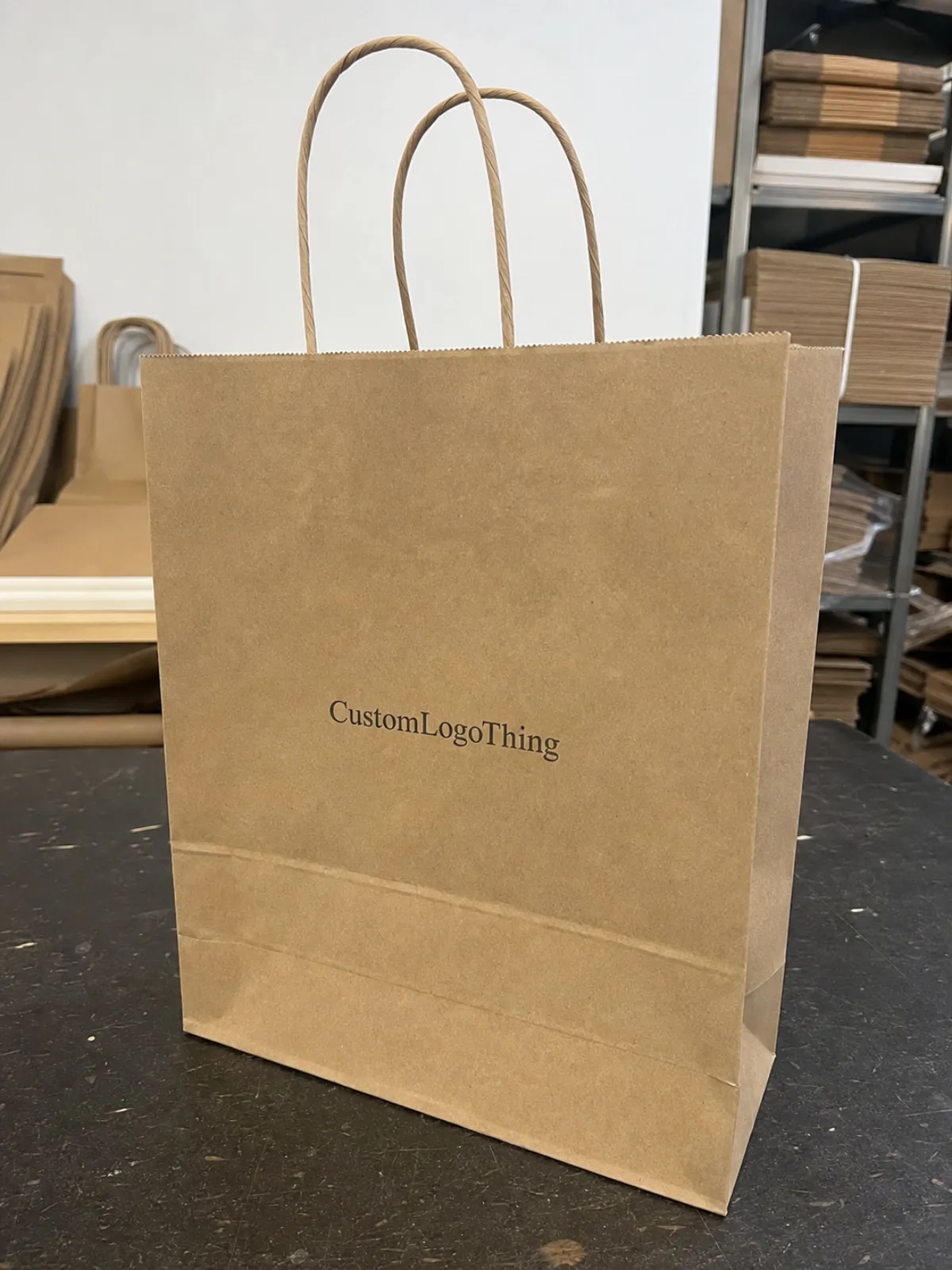
Most suppliers set MOQs for practical reasons, not to make life difficult. A bag run includes setup time for printing, cutting, folding, handle attachment, quality checks, and packing. If the order is too small, those fixed costs are spread over too few units and the price rises quickly. A simple kraft bag and a premium boutique bag do not live in the same cost structure.
What buyers miss is how often MOQ and specification changes interact. A standard size with a one-color logo might qualify for a lower threshold. Move to a custom size, add foil, switch from flat handles to rope handles, and the minimum can jump. Not because the supplier is being arbitrary, but because each change adds labor, material, or waste risk.
There is also a timing issue. Apparel stores rarely need packaging in perfectly smooth cycles. Seasonal launches, pop-ups, trunk shows, and holiday traffic all create spikes. If the first order is under-sized, the reorder may land right when lead times are longest. That is when buyers discover the true cost of an overly small MOQ: not the bag price alone, but the time spent waiting and the freight needed to move the rush order.
A useful way to think about MOQ is as a threshold where production becomes efficient enough to be worth running. Smaller tiers make sense for testing, opening a new location, or checking how a new logo reads on paper. Larger tiers make sense once the bag format is stable and the sales volume is predictable. The real question is not, “Can I order the minimum?” It is, “Can I order enough to avoid a second, more expensive run before the season ends?”
If you are buying packaging across more than one category, keep the bag spec aligned with labels, tissue, and any custom printed boxes used for higher-ticket items. A consistent system is easier to reorder, easier to store, and less likely to look improvised at the register.
Bag Sizes and Styles That Fit Garments Without Wasting Space
Bag size should track the merchandise, not the other way around. A folded T-shirt, a denim jacket, a shoe box, and a stack of accessories all need different clearance. If the bag is too tight, the contents look stuffed and the handles strain. If it is too large, customers end up carrying a half-empty bag that looks wasteful and cheapens the presentation.
For most clothing stores, the practical size range falls into a few lanes:
- Small flat bags for shirts, socks, scarves, and accessories.
- Medium boutique bags for folded tops, knitwear, and gift sets.
- Large gusseted bags for denim, sweaters, and heavier apparel.
- Deep carry bags for shoe boxes or bundled multi-item purchases.
Flat-handle bags are usually the most economical. They pack tightly and work well for lighter garments. Twisted paper handles cost a little more, but they carry better and feel more substantial in hand. Rope handles move the bag into a higher-end lane, which can make sense for premium assortments or boutiques with a stronger gift orientation.
Gusset depth matters more than many buyers expect. A shallow bag can technically hold a sweater, yet it will bulge in the middle and lose structure in the shopper’s hand. A deeper side gusset keeps the load upright and improves stackability in cartons. Add a bottom insert if the bag needs to stand square at the counter or if you are packing heavier pieces.
Some stores try to force one oversized bag to cover every purchase. That usually backfires. A large bag is expensive to ship, awkward for smaller items, and more likely to be partially empty. Two properly sized bags are often cheaper and better-looking than one catch-all format. The cleaner choice is usually the one that matches actual checkout behavior, not the one that looks safest on a spreadsheet.
Paper Stock, Handles, and Print Specs That Hold Up in Retail Use
Paper stock is where the structure of the bag begins to matter. For light garments and accessories, lower-weight kraft can be enough. Once the contents include denim, thick knits, or boxed items, the paper needs more body. Otherwise the bag creases too easily, the handles pull unevenly, and the bottom panel starts to sag before the customer reaches the door.
In apparel retail, 150gsm to 200gsm kraft or art paper is a common working range for light-to-medium use. Heavier stocks are worth considering for premium retail packaging, repeated carry, or large formats that need better rigidity. Coated art paper gives sharper print detail and smoother solids. Uncoated kraft feels more natural and supports a recycled look. Neither is automatically better. The right choice depends on load, branding, and budget.
Handle style should be chosen with the weight and usage pattern in mind. Flat handles are economical and fine for lower loads. Twisted handles are a good middle ground for everyday apparel use. Rope handles feel more premium and are usually paired with thicker stock or boutique presentation. Reinforcement patches at the handle area are worth the extra cost if the bag will carry heavier purchases or be reused more than once. The handle is often the first part to fail, which makes it the wrong place to save money.
Print choices affect both MOQ and the finished look. One-color printing usually keeps setup simpler and lowers the risk of registration issues. Two-color logos can still be economical if the design is straightforward. Full-bleed coverage, foil, embossing, and specialty finishes increase complexity fast. They can be worth it for premium positioning, but they also raise waste, approval time, and the chance of variation between batches.
Quality buyers ask for the details that actually affect retail use: tolerances on size, glue strength, handle attachment method, and whether the paper has enough fold memory to keep the bag square. If the order includes sustainability claims, ask for the documentation behind them. FSC-certified paper is a meaningful benchmark, but the certification only matters if the chain of custody is clear. For shipping durability standards, some brands cross-check carton performance with ISTA methods so the bag system stays intact during transit.
That kind of specification discipline is more useful than decorative language. A bag either holds its shape, survives handling, and presents well at the register, or it does not.
Pricing, MOQ, and Unit Cost Breakpoints
Pricing for the Custom Clothing Store Paper Bags minimum order quantity usually has four moving parts: setup, paper stock, handle assembly, and freight. Some quotes break those out clearly. Others bury the cost in a single total and make comparison harder than it should be. Ask for the breakdown. A clean quote saves time later.
The per-unit price usually drops as quantity rises because setup costs are spread across more bags. That drop is rarely smooth. It often falls sharply at certain breakpoints, then levels off. A 250-piece order can look expensive because the setup cost is carrying a large share of the total. At 1,000 or 3,000 units, the same setup becomes less visible in the unit price.
| Order Tier | Typical Use | Approx. Unit Cost | What Drives It |
|---|---|---|---|
| 250 bags | Launches, pop-ups, test runs | $0.55-$1.20 | Setup cost spread thin, simple print only |
| 500 bags | Small boutiques, seasonal promos | $0.38-$0.85 | Better cost spread, more workable for repeat use |
| 1,000 bags | Core store use | $0.22-$0.55 | Often the best balance for apparel retailers |
| 3,000 bags | Multi-store or steady repeat orders | $0.18-$0.38 | Lower setup share, better production efficiency |
These are working ranges, not promises. Paper weight, print coverage, handle type, and packaging format can move the number in either direction. A lightweight kraft bag with one-color printing should sit near the low end. A premium bag with thicker board, rope handles, foil, or custom sizing will often sit well above it.
The cheapest way to save money is usually the least dramatic one: pick a standard size, keep the print limited, and match the stock weight to the actual product load. The wrong shortcut is ordering a thinner or smaller bag and then paying later through returns, reprints, or customer complaints. That false economy shows up quickly in retail.
If your replenishment pattern is steady, ask about Wholesale Programs. Pricing tiers can change the economics in a useful way, especially when the bag is part of a repeat packaging system rather than a one-off promotion.
Production Steps, Proofs, and Lead Time Expectations
Good orders follow a clear sequence: quote, dieline review, artwork proof, approval, production, quality check, packing, and shipment. That sequence matters because most production errors happen when one of those steps is rushed or skipped. If a supplier cannot explain the sequence, the order is not yet ready to place.
Lead times vary with complexity. A basic kraft bag with a simple logo can move relatively quickly after proof approval. A custom size, premium finish, or multi-step handle assembly takes longer. A typical window for straightforward production is often 12-15 business days after approval, but peak retail seasons, material shortages, and late artwork changes can extend that. That is normal, not unusual.
The biggest delays are often caused by incomplete buyer input. Missing measurements. Artwork in the wrong format. Pantone colors left vague. A logo revision after proof approval. One late correction can push a schedule by days, sometimes longer if the paper or print run has already been reserved. Production teams can move fast; they cannot read minds.
For store openings or seasonal drops, build in one proof cycle and one correction cycle. That cushion gives room for small issues without turning the order into a rush fee. If the bag needs to match tissue, tags, or custom printed boxes, the packaging schedule should be treated as one timeline, not a stack of separate decisions.
Reliable suppliers also ask about carton count, ship-to address, and required delivery window early. That is a sign they understand how packaging moves through distribution, not just how it looks in a mockup. The point is to get the bags into the store in a form the staff can actually use.
Ordering Mistakes That Inflate Freight and Reorder Costs
Freight is often where a good-looking quote gets less attractive. Oversized bags take up more carton space. Heavy paper raises shipping weight. Unfolded or poorly nested bags can move inefficiently through packing, which increases the cost per shipped unit. A bag that seems inexpensive on paper can become a poor buy once it is packed for distribution.
Carton size matters more than most buyers expect. A well-designed bag stacks efficiently and ships with less wasted air. A bag that is too wide, too deep, or too stiff can trigger extra freight charges because the carton count rises before the unit count does. If you distribute to multiple stores, those inefficiencies repeat with every replenishment.
There is also the reorder trap. Stores often assume they can wait until the last box is nearly empty. Then the replenishment order arrives late, and artwork changes are made at the same time. That creates two problems: inconsistent branding and a delay that can force you into a more expensive production slot. It is not rare. It is just expensive.
Before confirming an order, check five things:
- Bag dimensions and the product load it needs to hold.
- Quantity tier and expected reorder volume.
- Paper weight, handle type, and reinforcement needs.
- Print method, color count, and finish.
- Delivery location, carton preference, and required date.
That checklist is not complicated. It does, however, catch most of the problems that make packaging expensive after the fact. The less guesswork involved at quote stage, the fewer surprises at the dock.
It also helps to keep the bag aligned with the rest of the store’s presentation. If the storefront, tissue, inserts, and packaging all look unrelated, the customer notices. A retail system should feel deliberate, not patched together item by item.
What a Reliable Apparel Bag Supplier Should Show Before You Pay
A dependable supplier shows the useful details early: MOQ tiers, stock options, handle choices, artwork requirements, tolerance ranges, and realistic lead times. If those details are missing, the quote is incomplete. A friendly tone does not make up for a vague spec sheet.
Samples matter because photos hide a lot. Dielines matter because a bag that looks right on screen may fold differently in production. Written specs matter because the same bag can be made with slightly different paper thickness, glue patterns, or handle reinforcement. Those differences are small in theory and visible in bulk.
Look for signs that the supplier understands function as well as decoration. The bag needs to carry garments securely, stack neatly in cartons, and open cleanly at the register. If the reply focuses only on the logo and not on the mechanics, the order may look good in an email and disappoint in the store.
For buyers managing more than one packaging item, it helps if the supplier can support related retail packaging under the same account. One set of specs, one approval path, fewer mismatched files. That also makes reorders less fragile. A well-kept account history is worth more than a polished mockup.
There is a practical test here. If the supplier can explain why a certain bag size, paper weight, or handle style fits your product mix, they are solving a production problem. If they only repeat your keyword back to you, they are selling a keyword.
What to Send for an Accurate Quote and Fast Approval
If you want a clean answer on the custom clothing store paper bags minimum order quantity, send the full spec in one message. Size. Quantity. Product type. Print colors. Paper preference. Handle style. Delivery location. Target date. The more complete the first request, the fewer rounds of clarification you need later.
Ask for tiered pricing instead of a single number. The difference between 250, 500, 1,000, and 3,000 bags can be large, and the breakpoints often show where the real value sits. A good quote makes the tradeoff visible. A thin quote hides the decision.
Include the use case, not just the dimensions. Are these for folded T-shirts at checkout, premium gifting, or heavier denim purchases? That one detail helps determine the right stock weight and handle style. A bag should support the merchandise, not just carry a logo.
If the order needs to arrive before a store opening, seasonal launch, or wholesale replenishment date, say so early. That gives the supplier a realistic production window and keeps proofing from becoming a rush exercise. Orders that start with a clear deadline tend to finish cleaner than orders built around hope.
Once the details are locked, the approval path becomes straightforward: confirm the quote, review the proof, check the structure, and move into production. That is the most reliable way to secure the right quantity without paying for uncertainty.
What is the typical custom clothing store paper bags minimum order quantity?
It varies by size, stock, and print method. Standard bags with simple printing often start at lower tiers, while custom dimensions, heavier paper, or premium handles usually raise the minimum. The MOQ is usually tied to setup efficiency and material availability, not just supplier preference.
Can I lower the MOQ for custom apparel paper bags with simpler artwork?
Sometimes. Simpler artwork can reduce setup complexity, especially if you stay with a standard size and a common paper stock. But a custom size or specialty finish can keep the minimum high even when the logo is easy to print. If you want a smaller first run, keep the specifications simple.
How does MOQ affect the unit cost of clothing store paper bags?
Lower quantities spread setup and preparation costs across fewer bags, so the unit cost rises. Higher tiers usually lower the per-bag price because the same fixed costs are divided across more units. A cheaper unit price only helps if the order size matches actual demand.
What is the usual lead time after artwork approval?
Simple paper bag orders can move fairly quickly after approval, while custom sizes, premium finishes, and larger runs take longer. A practical window is often 12-15 business days for straightforward production, plus shipping time. Add cushion if the artwork is still changing or the season is busy.
What should I send to get a fast quote for apparel paper bags?
Send the bag size, quantity, print colors, paper type, handle choice, delivery location, and intended use. If possible, include your target date and ask for multiple quantity tiers in the same request. That gives you a clearer view of the real price breakpoints before you commit.

