Bakery embroidered beanies material sample guide: what buyers miss first
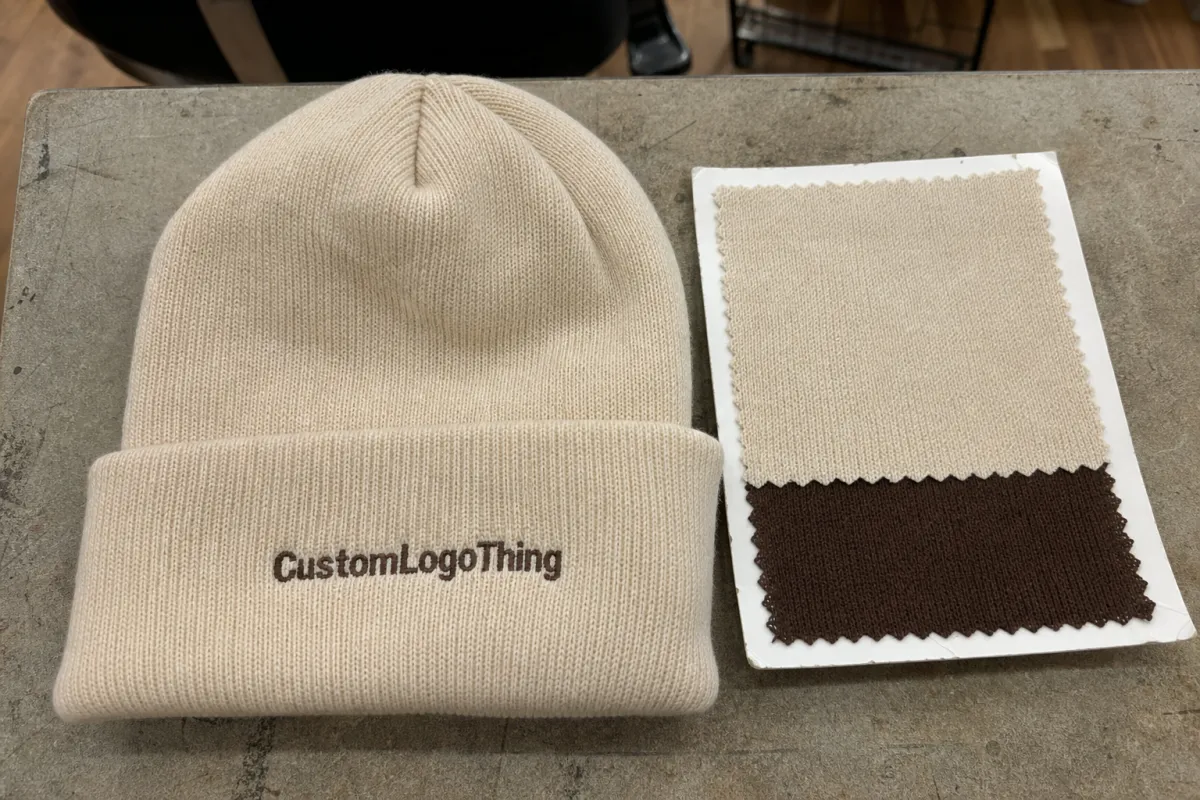
A bakery Embroidered Beanies Material Sample guide is not about picking the nicest knit in a product photo. The real test is whether comfort, structure, and decoration stay intact during everyday wear. A beanie can feel soft at first and still sag after a few shifts, distort the logo, or pill where aprons and collars rub all day. The sample should surface those issues before they turn into a bulk-order problem.
Bakery work exposes hats to a very specific wear pattern. Staff move between warm prep areas, storage rooms, and customer-facing counters. They bend, reach, lift trays, and work near heat. A hat that looks polished in a staged mockup can behave very differently after eight hours on the job. Fabric recovery, knit density, and embroidery placement end up mattering more than the mockup suggests.
Base material has a direct effect on the embroidery too. A small logo can look crisp on a tight rib knit and muddy on a looser one. Same artwork, same thread, same color, different result. That difference is not minor. It separates branding that reads clearly from a few feet away from branding that disappears into the fabric.
The useful parts are the practical ones: yarn choice, knit structure, stitch clarity, fit, cost drivers, and the review steps that keep re-dos down. A sample that does not answer those questions is not doing its job.
How the sample process works from yarn lab dip to stitched mockup
A clean sample process follows a straightforward sequence. Yarn gets selected and color gets confirmed first. The factory then prepares a swatch or lab dip. After that, the knit structure, cuff style, and embroidery placement are checked against the spec sheet. If decoration is part of the order, a stitched sample should come before bulk production begins. That order sounds simple because it is. Skipping steps usually leads to rework.
Three sample types, three different jobs
A blank material swatch answers the first questions: does the yarn feel right, is the color accurate, and does the knit have the density needed for daily wear? A decorated pre-production sample checks whether the logo sits correctly on the actual fabric with the actual stitch count. A photo-only approval helps with placement review, but it cannot show whether the knit stretches too much, whether the cuff recovers, or whether the embroidery pulls the fabric.
That difference is easy to miss once approvals start moving quickly. A render can make a thin logo look balanced. A stitched sample may tell a very different story, especially if the script is fine, the beanie gauge is open, or the thread tension is too high. Small lettering and tight curves need a physical sample. The screen version is not enough.
A proper spec sheet keeps the process from drifting into vague feedback. Include the target head circumference, cuff height, beanie length, yarn type, embroidery dimensions, thread color references, pack-out preference, and any wash requirement. If the brand wants a slouchier fit, say so. If the cuff needs to stand upright for a cleaner logo field, say that too. “Make it nicer” is not a technical instruction.
Revisions are part of the process, not proof that the supplier failed. A capable factory can adjust yarn shade, tighten the knit, change the logo scale, or shift the mark a few millimeters if the first sample is close but not quite there. Timing is the real issue. A revision requested before production is routine. A revision requested after the order is halfway through the line becomes a cost problem.
Material factors that control stretch, warmth, and stitch clarity
Material choice changes almost everything buyers later complain about. Warmth, stretch, recovery, pilling, logo clarity, and the way the cap behaves after repeated wear all depend on it. The softest fiber is not always the best fit for a work setting. In a bakery, structure matters more than luxury handfeel. That does not mean the beanie should feel stiff or scratchy. It means the knit has to keep its shape while staying wearable.
Acrylic is common because it is affordable, warm enough for most indoor and outdoor use, and predictable in production. It usually gives the best cost-to-performance ratio for large teams. Acrylic-wool blends add a more premium handfeel and better insulation, but they can raise the price and demand tighter quality checks on pilling. Recycled polyester can work well for buyers who want recycled content, although it needs a dense enough knit to keep the embroidery from sinking. Wool blends look and feel premium, but they cost more and need closer wash testing.
Knit structure matters just as much as fiber content. A tighter rib keeps the logo on top of the fabric instead of letting it disappear into the grooves. Gauge matters too. Finer gauges usually allow cleaner stitch definition, while open knits are more likely to distort under thread tension. If the artwork uses tiny letters, ask for a sample at the actual stitch size. A design that looks sharp enlarged on a screen can turn messy once it is translated into yarn and thread.
Fit creates another practical problem that buyers often notice too late. Some materials stretch out quickly and recover slowly, especially after a long day of repeated wear. Others hold their shape but feel less forgiving across different head sizes. In a mixed staff environment, a slightly more resilient knit is usually the safer pick. One size may still fit most people, but “most” is not the same as “all,” and a kitchen team notices that difference fast.
Here is a simple comparison buyers can use before asking for a full run:
| Material | Handfeel and structure | Embroidery behavior | Typical bulk price at 500 pcs |
|---|---|---|---|
| Acrylic | Warm, light, predictable knit | Good on tighter ribs; can pill if the yarn quality is weak | $3.50-$5.80 per unit |
| Acrylic-wool blend | Softer handfeel, better insulation, more premium | Usually holds logos well if the gauge is tight | $4.80-$7.20 per unit |
| Recycled polyester | Smooth, stable, often good for repeat orders | Works well with a dense knit and moderate stitch count | $4.20-$6.90 per unit |
| Wool blend | Warm, classic, more premium, less forgiving | Best with careful sizing and sample approval | $6.00-$10.50 per unit |
If the sample kit is going to a buying team, packaging should be treated as part of the sample rather than an afterthought. Use corrugated cardboard mailers, wrap the beanie in kraft paper, and keep the presentation stable so the knit does not get crushed in transit. FSC certified paper works well for belly bands or insert cards, and recycled-content paper is usually a sensible default. For transit durability, ISTA testing guidance helps when the sample pack needs to survive more than one shipment touchpoint.
Heat is another detail that gets overlooked. Bakery teams often work in warmer spaces than office wear buyers expect. A plush, overly thick beanie may feel luxurious at first and then become annoying by the second hour of wear. A slightly firmer fabric usually performs better because it keeps the logo cleaner and avoids the damp, flattened look that shows up when the knit is too soft for the environment.
Cost, MOQ, and quote variables that change unit price
Pricing for custom embroidered beanies usually comes from several smaller costs rather than one clean number. There is the blank sample or swatch, the decorated sample, embroidery setup, revision charges, shipping, and then the bulk unit price. The more complex the decoration, the more those pieces matter. Smaller orders also carry a higher per-unit burden because setup gets spread across fewer units.
Two quotes can look close and still mean very different things. One may include sample revisions, freight, or packaging while the other leaves them out. MOQ affects the picture as well. A lower minimum can be useful for testing demand, but the unit price usually climbs once setup is divided across a smaller run. For buyers comparing suppliers, the cheapest line item often turns out to be the least complete quote.
Embroidery density changes pricing too. A simple one-color logo with a low stitch count costs less than a detailed mark with multiple thread changes. Placement matters as well. Front-only embroidery is easier to produce than a front-and-side layout, and a larger logo field can require more stabilization. If the design has tiny details, the factory may recommend a cleaner simplification rather than push a fragile layout into production. That recommendation usually saves money later.
Packaging affects quote totals more than many teams expect. Individual polybags may be enough for internal distribution, but branded inserts, belly bands, and retail-ready packing add labor and material costs. Shipping method matters too. Air is faster and more expensive, sea is cheaper and slower, and mixed shipments sit somewhere between the two. A buyer trying to control landed cost needs to look at the full chain, not just the factory invoice.
A practical quote review should ask for these items in writing:
sample fee, decoration setup, revision limits, packaging method, carton count, shipping terms, and the production MOQ for the exact material and stitch count requested. Once those numbers are clear, the real comparison becomes much easier.
Turnaround and production timeline from approval to shipment
Sample timing and bulk timing are not the same thing. A standard yarn swatch can move quickly, while a stitched pre-production sample needs more coordination. Once the sample is approved, production usually begins with yarn sourcing, knitting, embroidery setup, trimming, inspection, and packing. Delays usually come from missing approvals, shade mismatches, or last-minute artwork changes.
Lead time also shifts with season. Cooler months drive more demand for beanies, which means factories book capacity earlier and move slower when lines fill up. A team placing a holiday order late in the year may find that the calendar matters as much as the design. Planning ahead gives the supplier room to fix small issues before they become bottlenecks.
Shipment timing depends on the destination and the chosen freight method. Air shipping is the fastest route for samples or urgent replenishment, while sea freight makes more sense for larger runs with flexible delivery windows. Customs, carton labeling, and final inspection all add time. If the schedule is tight, build a buffer rather than assuming everything lands on the ideal date.
A smooth timeline usually looks like this: lab dip or yarn approval, sample knit, decoration sample, buyer review, production slot confirmation, bulk run, inspection, and shipment. Each step depends on the one before it. When one approval slips, the rest usually follow.
Common mistakes that make bakery beanie samples misleading
Some samples fail because the wrong details get tested. A sample in the wrong color can hide stitch contrast problems. A sample in the wrong size can make a logo look better than it will on production units. A sample made from a different yarn batch can also create false confidence. If the production run will use a different lot, the approved sample should reflect that as closely as possible.
Artwork scale causes another common problem. A logo that is enlarged for review may look balanced on paper and still collapse once it is stitched at actual size. Thin outlines, small text, and tight spacing need extra care. If the artwork is too detailed for the knit, the answer is not to hope the factory will solve it later. The cleaner move is to simplify the design before approval.
Some buyers also rely on photos alone. That works for rough placement checks, but it misses stretch, recovery, and handfeel. A baked-in assumption that the sample and the bulk run will look identical can lead to disappointment. Even a small change in knit density can affect how the embroidery sits on the fabric.
Another issue shows up after the sample arrives. Teams sometimes review it under warehouse lighting or from too far away. That makes the logo seem brighter or weaker than it really is. A better check is simple: place the sample on a head form, view it from a few feet away, and compare it to the approved spec in the same lighting the team will actually see it in.
Expert next steps for cleaner approvals and fewer re-dos
The fastest way to reduce rework is to make the approval process specific. Ask for a physical sample when stitch clarity matters. Put dimensions in the spec sheet. Confirm yarn, gauge, thread color, and placement before the factory cuts into production. Clear instructions save time later.
Documentation helps too. Keep one version of the artwork, one version of the spec, and one thread reference file. If changes happen, mark them in the same place instead of scattering notes across email threads. That habit makes it easier for the supplier to follow the latest instructions without guessing.
Buyers who manage multiple locations should also think about usage. A retail-facing team may want a cleaner, more polished beanie, while a kitchen crew may need a more durable knit that holds shape through long shifts. Matching the material to the use case matters more than chasing the softest sample on the table.
For larger orders, a short pilot run can be smarter than a full commitment. A small batch exposes fit issues, color drift, or embroidery tension problems while the fix is still affordable. That approach is especially useful when the design is new, the supplier is new, or the staff wearing the hats work in demanding conditions.
FAQ
What makes a bakery beanie sample different from a regular promo beanie sample?
The fit, wear pattern, and embroidery durability matter more. Bakery staff move through warm spaces, so the material needs to keep shape and stay comfortable for long shifts.
Should buyers approve a photo before a physical sample?
A photo helps with placement, but it cannot show stretch, recovery, or stitch pull. Physical approval is the safer choice for detailed logos and tighter knits.
Which material is the safest default for most teams?
Acrylic is usually the most predictable starting point because it balances price, warmth, and production stability. Blends become more attractive when the budget allows a more premium handfeel.
Why do embroidery samples sometimes look better than bulk production?
Small differences in knit density, thread tension, and yarn batch can change how the logo sits on the fabric. Matching the sample as closely as possible reduces that gap.
How much should buyers budget for sampling?
The answer depends on decoration complexity, shipping, and whether revisions are included. Simple samples cost less, while detailed embroidery and multiple review rounds push the total up.


