A good-looking mailer is not automatically an expensive mailer. Beauty Poly Mailers Unit Cost often comes down when the bag size, film gauge, print coverage, finish, and order quantity are specified carefully instead of guessed through a few loose emails.
That distinction matters because guessing costs money. A 10 x 13 inch bag may seem harmless for a 5 x 7 inch boxed serum kit, but the extra film adds cost, the loose fit lets the product shift, and the final package can feel careless before the customer even reaches the product. Pretty packaging still has to earn its place on the packing bench.
Why a better-looking mailer can still lower the real packaging bill
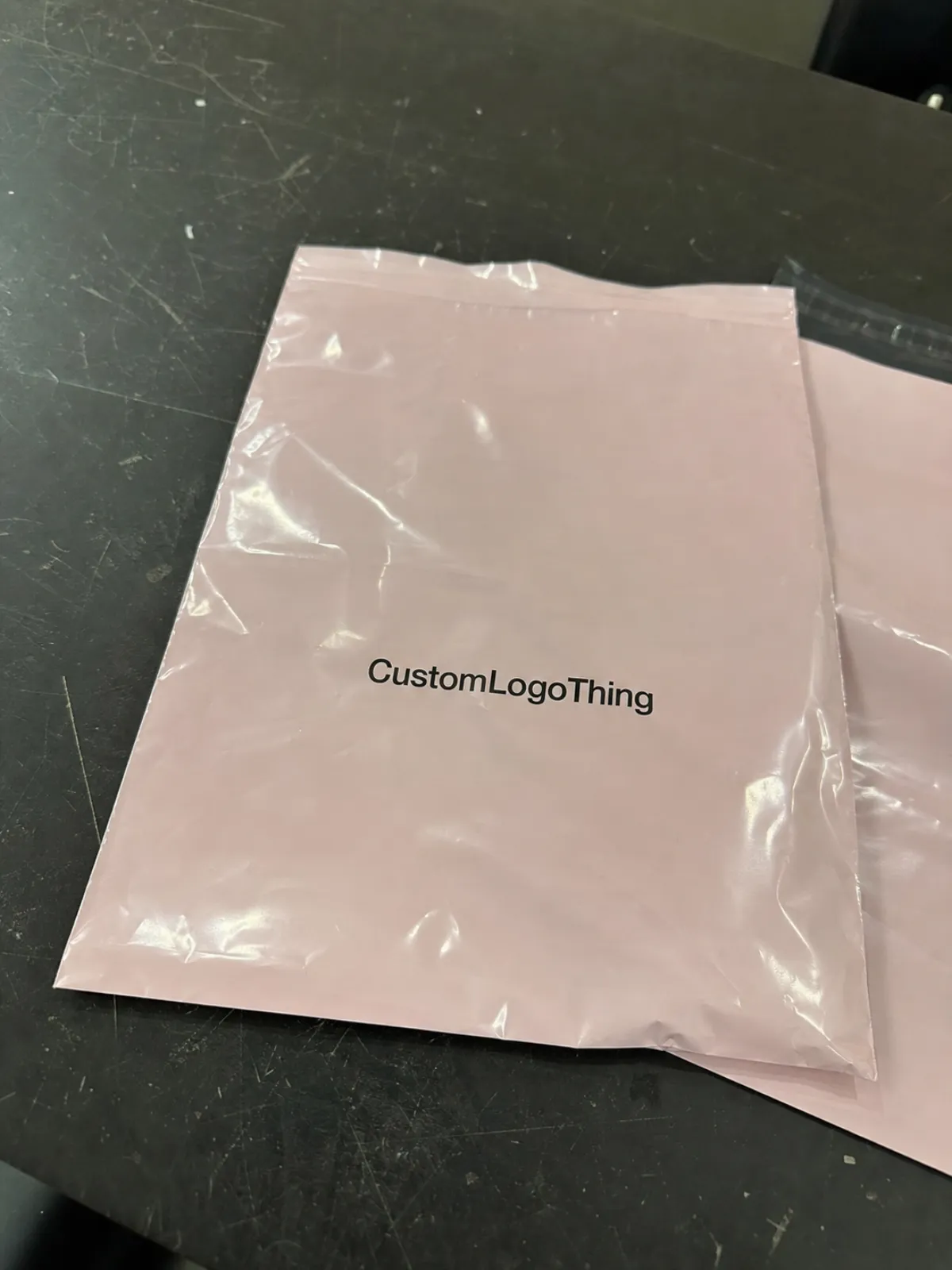
Many beauty brands treat custom mailers as a decoration line item. The mailer gets judged by color, logo placement, and whether it photographs well on social. Those things matter, but they are only part of the job. A clean branded poly mailer can replace a separate thank-you card, reduce the need for an outer sleeve, and make a small order feel intentional without adding three more pieces for staff to handle.
The real packaging bill includes the mailer, shipping label, labor, inserts, void fill if used, damage rate, storage space, and reorder timing. If a custom bag costs $0.22 but saves $0.06 in printed insert cost and trims packing time by 10 seconds per order, the economics shift. Across 5,000 shipments, 10 seconds becomes nearly 14 labor hours. Nobody puts that on the mood board, but it belongs in the cost review.
Cheap on the quote is not always cheap at the packing station. A low line item can still lose money through poor sizing, weak seals, late reorders, or artwork that has to be reprinted because the first run came out muddy.
Beauty Poly Mailers unit cost should be judged against repeat shipment economics, not only the first launch order. If the bag protects boxed products, carries the brand color cleanly, fits the SKU mix, and does not force staff to fold corners or add tape, it is doing practical work. Not glamorous work. Useful work.
For early brands, a sensible starting point is often a stock-size custom print rather than a fully custom die size. You still get branded presentation, but you avoid higher tooling charges and longer production review. Once monthly volume becomes predictable, custom dimensions can reduce film waste, improve product fit, and tighten the final presentation.
What beauty poly mailers need to handle during shipping
Beauty poly mailers are lightweight plastic shipping bags used for cosmetics, skincare kits, samples, refill packs, hair accessories, and small retail bundles. Most are made from polyethylene film with a permanent peel-and-seal adhesive strip. Some are plain stock bags. Others carry logos, color floods, patterns, QR codes, seasonal art, or campaign graphics.
The right specification depends on what goes inside. A flat packet of sheet masks can usually ship in a lighter bag than a boxed glass dropper bottle. A rigid carton with sharp corners needs better puncture resistance. A palette box needs enough width and length for the bag to seal flat rather than stretching across the product. If the mailer is the outer shipping pack, it needs more strength than a secondary branded bag placed inside a corrugated carton.
- Sample sachets and refill packs: often work in 2.0 to 2.5 mil film with simple one-color print.
- Boxed skincare sets: commonly need 2.5 to 3.0 mil film, depending on edge sharpness, weight, and how tightly the carton fits.
- Glass bottles or jars: usually need a protective inner carton, wrap, or molded insert; the mailer alone is not protective armor.
- Subscription kits: need consistent sizing because mixed SKUs in a barely large enough mailer slow packing and increase seal failures.
Shipping is not gentle. Bags face abrasion, conveyor belts, compression, moisture, label scuffing, cold or hot storage, and the occasional puncture from another parcel. Brands shipping higher-value kits or fragile components can review general transit-testing concepts from ISTA. Not every beauty mailer needs formal lab testing, but the principles behind drop, vibration, and compression exposure are useful when choosing film gauge and inner protection.
Appearance still matters. A dull gray mailer can make a premium serum feel like it came from a clearance bin. The bag needs to arrive intact, seal cleanly, protect privacy, and hold a shipping label without curling at the corners. Good beauty packaging is rarely just one thing; it is a balance of protection, presentation, speed, and cost.
Material, finish, and print specifications that matter
Film thickness is one of the first numbers to check. Most beauty poly mailers sit around 2.0 to 3.0 mil. Lightweight samples may run thinner, while heavier kits or sharp retail cartons often need 3.0 mil or more. More thickness increases cost per piece, but going too thin creates punctures, stretch marks, weak corners, and a crinkly feel that can make a premium brand look underbuilt.
Opacity deserves attention as well. A white co-extruded film can hide product shapes, invoices, and shade names better than a thin translucent film. For beauty brands shipping higher-value skincare, fragrance samples, or launch kits, opacity supports privacy and reduces the chance that the package advertises what is inside.
Adhesive strength is another quiet spec. A permanent peel-and-seal strip should bond evenly across the opening, with enough tack to resist tampering during normal transit. Check whether the adhesive performs well across expected storage conditions, especially if mailers will sit in a warm warehouse or travel through cold weather. A bag that looks excellent but opens at the lip is not a bargain.
Finish choices
Glossy film is usually the most cost-efficient option and gives color a brighter, higher-contrast look. Matte feels softer and photographs well, though it can add cost and may show scuffs more readily. Frosted film can suit clean beauty positioning, especially with minimal logos or pale ink. Soft-touch coatings feel premium in the hand, but they are rarely the lowest-cost path and may complicate recyclability depending on the film structure.
Print choices
A one-color logo on a stock-size mailer is the simplest route. Multi-color graphics, full-coverage backgrounds, gradients, and edge-to-edge patterns raise setup charges and make production more sensitive because registration, ink density, and dry time matter more. Front-only print usually costs less than full-bag coverage. If the artwork uses heavy ink coverage, ask whether the quote assumes flood printing, spot print, or a printed panel.
Leave quiet space for shipping labels. A beautiful design hidden under a 4 x 6 inch carrier label is not a design win; it is expensive wallpaper. Confirm tear-strip style, opening direction, lip size, and whether the order needs a return strip for ecommerce returns. Recyclable film options exist, but claims need care. The EPA recycling guidance is a useful reminder that local collection and material acceptance vary by region.
Beauty poly mailers unit cost, MOQ, and quote math
Beauty Poly Mailers Unit cost moves mainly with quantity, finished size, film gauge, print colors, finish, and whether the order uses a stock base or a fully custom build. Buyers often ask for “just a ballpark,” and ballparks are easy to misunderstand. A useful quote needs matching assumptions.
For planning, a simple one-color custom poly mailer may land around $0.18 to $0.35 per piece at 5,000 units, depending on size and freight assumptions. Smaller runs can push $0.45 to $0.90 per piece because setup charges are spread across fewer bags. Larger orders, such as 25,000 to 50,000 pieces, may bring straightforward specs into the $0.10 to $0.22 range. Specialty finishes, heavy film, return strips, custom sizing, or full-coverage print can move above those ranges.
| Order type | Typical MOQ | Estimated unit cost | Best fit |
|---|---|---|---|
| Stock size with one-color logo | 1,000-3,000 pieces | $0.28-$0.75 | Launches, tests, small batches |
| Custom print, standard film | 5,000-10,000 pieces | $0.18-$0.35 | Growing beauty ecommerce brands |
| Full-coverage printed mailer | 10,000+ pieces | $0.22-$0.48 | Seasonal campaigns and branded kits |
| Special finish or custom size | 10,000-25,000+ pieces | $0.30-$0.70+ | Premium launches with stable volume |
MOQ is production math, not a personal insult. A lower MOQ usually means higher unit cost, fewer material options, and less room for custom sizing. Tooling fees may apply for unusual dimensions, special seals, return strips, or new print plates. Setup charges may be shown separately or folded into the piece price. Ask for the structure instead of assuming the cheapest-looking line is truly cheapest.
Freight also changes the real number. A supplier may quote a lower bag price but ship in larger cartons, use a less favorable freight lane, or exclude delivery charges from the first estimate. Carton pack count matters for storage and receiving, especially for brands working out of compact warehouse space or using a third-party fulfillment partner that charges for inbound handling.
To compare quotes, put every supplier on the same playing field: same size, same thickness, same print colors, same finish, same carton pack count, same destination, and same freight assumption. Otherwise, the unit cost being compared is not truly comparable.
Process and lead time: from proof to production to delivery
A normal order flow starts with inquiry, spec review, artwork check, digital proof, sample or pre-production approval, production, quality check, packing, and shipping. Simple orders move faster because fewer decisions can break. Fully custom sizing, specialty finishes, multi-color artwork, recycled-content material, or unusually tight color matching usually adds review time.
For planning, stock-size printed runs may take around 10 to 15 business days after proof approval. More complex custom runs often need 18 to 30 business days, especially if a physical sample is required before mass production. Freight time sits on top of that. Production time is not delivery time, and the difference can matter when a launch date is tied to influencer kits, subscription renewals, or retail replenishment.
Delays often start with artwork. Low-resolution logos, missing bleed, tiny type, unconverted fonts, and brand colors described as “like our website pink” all slow the order down. Give CMYK values, Pantone references if you use them, and a vector file such as AI, EPS, or print-ready PDF. If the design is still changing, say so before proofing begins.
- Confirm product dimensions and packed thickness.
- Select bag size, film gauge, finish, and print method.
- Submit artwork with placement notes and color references.
- Review the digital proof for scale, print area, seal location, and label space.
- Approve the sample or production proof before the full run starts.
- Confirm carton count, shipping destination, delivery date, and receiving requirements.
Rush options may exist, but they rarely fix unclear specs. If a launch date is tight, reduce complexity. A stock-size mailer with a confident one-color logo can look better than an overdesigned custom bag that arrives after the campaign window closes.
Why buyers switch suppliers after the first reorder
The first order gets attention because everyone is excited. The second order tells the truth. Reorder value depends on consistent sizing, stable print color, clean seals, defect control, and whether the supplier keeps the production file organized. A supplier who saves the proof, specs, carton count, and shipping preferences is saving time every reorder.
Beauty brands often switch suppliers after a reorder because the second batch does not match the first. The logo shifts slightly. The pink runs warmer. The bag feels thinner. The adhesive strip opens unevenly. Those problems do not always mean a supplier is dishonest, but they do show that tolerances and quality checks were not defined tightly enough.
A strong supplier flags spec problems before production. If carton corners are sharp, film thickness should be questioned. If artwork has a dark flood over a large area, scuff risk should be discussed. If the mailer is too tight for a boxed kit, that should come up before 10,000 bags are packed into cartons.
Custom Logo Things supports buyers comparing branded packaging across categories, including Custom Packaging Products and dedicated Custom Poly Mailers. The useful work is not offering the longest possible menu of options; it is locking the right spec before the order becomes expensive to correct.
For repeat orders, ask for a saved spec sheet. Include film gauge, finished size, lip size, adhesive type, print colors, finish, pack count, carton dimensions, approved artwork file name, and any tolerance notes. It is a boring document. It is also the kind of boring document that prevents expensive little fires.
Common mistakes that inflate cost or create delays
Oversizing is the big one. A mailer that is two inches too wide and three inches too tall may not look dramatic on a desk, but across 10,000 units it means more film, larger cartons, more storage space, and a looser packed product. Loose products slide, corners rub, and the bag arrives looking tired.
Overcomplicated artwork is another budget leak. Full-coverage ink, gradients, tiny repeat patterns, and four-color artwork can be worth it for the right brand. They can also add cost without improving buyer perception. If the logo is only 1.25 inches wide and buried inside a loud background, the mailer is doing too much and saying very little.
- Skipping sample approval: saves a day early and can create a full reprint later.
- Changing quantities after proofing: can alter pricing tiers, production scheduling, and freight estimates.
- Using vague thickness language: “strong enough” is not a spec; 2.5 mil or 3.0 mil is a spec.
- Ignoring label placement: carrier labels cover artwork, barcodes need contrast, and glossy surfaces can glare under scanners.
- Forgetting storage limits: larger cartons and higher MOQs can create receiving problems even when the piece price looks attractive.
Another mistake is changing too many variables in one quote request. If one supplier quotes 5,000 matte bags at 3.0 mil and another quotes 10,000 glossy bags at 2.5 mil, the comparison is mostly noise. Change one variable at a time if you want to see what is driving the number.
Compliance and sustainability claims need care as well. If a mailer kit includes FSC-certified paper components, confirm chain-of-custody requirements through FSC. For plastic mailers, ask about recycled content, film structure, collection expectations, and whether any claim on the bag can be supported in the markets where the product ships. Broad environmental language can create more risk than value when the material pathway is not clear.
What to send for a fast quote and a cleaner reorder
A fast quote starts with a complete spec. Not a mood board. Not a screenshot. Send the bag size, thickness, material preference, print colors, finish, quantity, destination zip code, target delivery date, and whether the mailer is the outer shipper or a secondary branded layer.
Artwork should include a vector logo, placement notes, brand color references, proof approval contact, and a clear answer on whether the design is final. If the design may change, say that early. Suppliers can estimate from a working concept, but production should not begin until the final proof is approved.
Include the product mix. A brand shipping sample packets, boxed palettes, 2 oz jars, and refill pouches may need two mailer sizes instead of one compromise size that fits nothing well. Splitting volume into two sizes can sometimes lower total waste, even if each size loses a little bulk pricing advantage.
- Bag details: width, length, lip size, thickness, seal style, and return strip if needed.
- Print details: front-only or full-bag print, number of colors, finish, logo size, bleed, and label quiet zone.
- Commercial details: quantity, MOQ flexibility, delivery zip code, deadline, freight terms, and reorder forecast.
- Product details: packed dimensions, weight, sharp edges, glass components, and whether inner protection is used.
If you want an honest beauty poly mailers unit cost, send the same spec sheet to every supplier and compare like for like. That one habit cuts through most quote confusion. It also signals that the buyer understands the production variables, which tends to produce clearer answers and fewer padded assumptions.
The best mailer is rarely the fanciest one. It is the one that fits the product, protects the shipment, prints cleanly, stores efficiently, and can be reordered without a small crisis every season. Beauty packaging has plenty of room for style, but the strongest results usually come from disciplined specifications rather than decoration piled on top of uncertainty.
FAQ
What changes beauty poly mailers unit cost the most?
Quantity is usually the biggest lever, followed by bag size, film thickness, print colors, and finish. Setup charges matter more on small orders because they are spread across fewer units. Freight, carton pack count, and storage requirements become more noticeable once shipment volume rises.
What MOQ should I expect for custom beauty poly mailers?
Stock-size mailers with simple branding may start around 1,000 to 3,000 pieces. Fully custom print, custom size, return strips, or specialty finishes often start around 5,000 to 25,000 pieces. Lower MOQ usually means higher cost per piece and fewer customization choices.
Do glossy and matte finishes price out the same?
No. Basic glossy film is often the lower-cost option. Matte, frosted, soft-touch, and coated finishes usually add cost and may change scuff resistance, ink appearance, and recycling considerations. Compare the visual payoff against the added unit cost before approving the spec.
How long does production usually take after artwork approval?
Simple custom runs often take about 10 to 15 business days after proof approval. Complex multi-color, specialty-material, or fully custom-size orders can take 18 to 30 business days or longer. Confirm production time separately from freight time because delivery can add several days.
What should I send to get an accurate quote fast?
Send exact size, quantity, thickness, print colors, finish, artwork, delivery zip code, and target ship date. Include product dimensions and weight so the supplier can flag sizing or strength problems before quoting. For the cleanest comparison, use one spec sheet for every supplier and review cost on the same assumptions.


