The Packaging Math Most Stationery Brands Miss
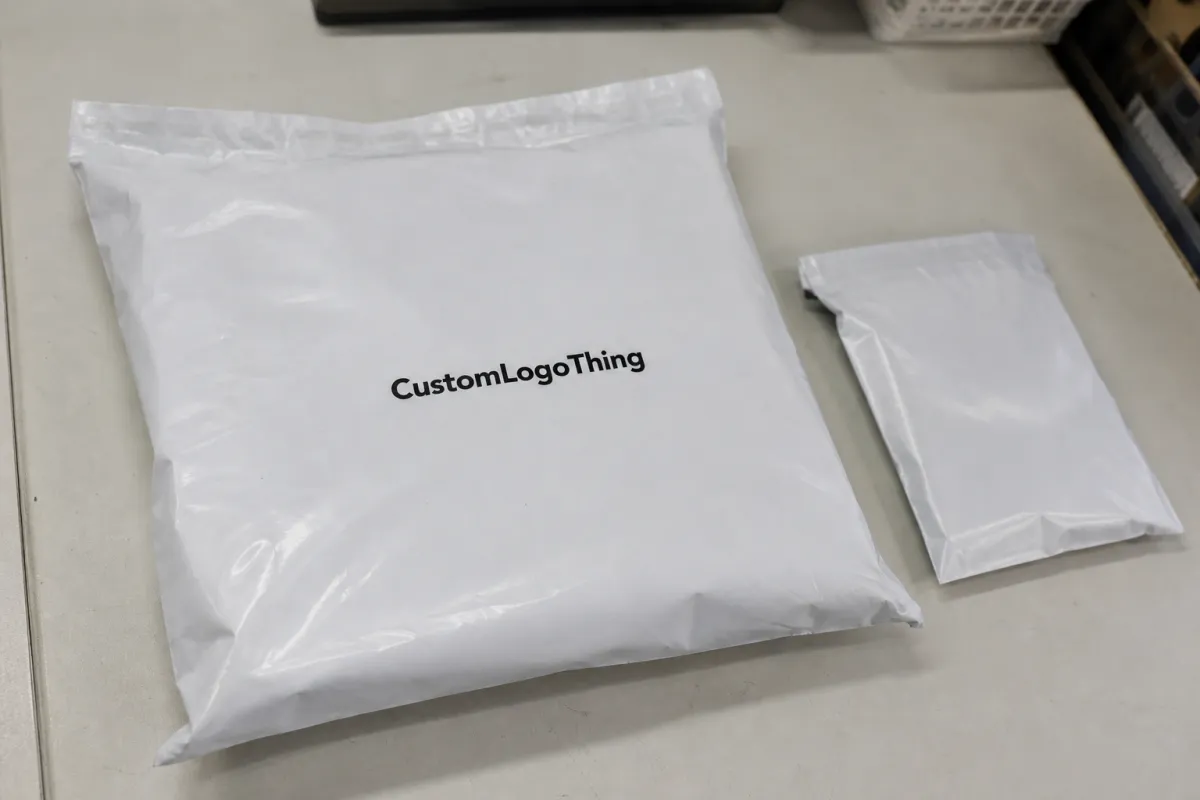
A $6 greeting card can lose its profit before the customer even opens the mailbox. Buyers comparing stationery Poly Mailers Unit Cost should look beyond the bag price and calculate the shipped, branded, damage-adjusted cost: postage, replacement risk, fulfillment time, storage, and the customer’s first impression all sit inside that number.
Stationery is deceptively fragile. Stickers, notepads, planners, art prints, journals, card sets, subscription stationery, and lightweight office accessories look simple to ship because they are flat. Yet paper corners can puncture thin film. Oversized packaging can push parcels into higher postage brackets. A mailer that looks cheap on a quote sheet can become expensive after 400 replacements, 30 customer service tickets, and three shelves of dead inventory.
Boxes, rigid mailers, kraft envelopes, and poly mailers all solve different problems. A corrugated box gives structure, but it adds dimensional weight and slows packing. A rigid mailer protects prints, but it can cost more to store and ship. A kraft envelope is familiar and paper-based, yet it offers limited moisture resistance. Poly mailers are compact, fast to seal, lightweight, and water resistant. For flat goods that do not need crush protection, they can be a margin-control tool rather than a cosmetic upgrade.
Buyer reality: the lowest bag price is not always the lowest packaging cost. The better calculation is material plus size plus thickness plus print coverage plus quantity plus freight plus add-ons such as tear strips, return strips, or recycled content.
That is the commercial frame. Not inspiration. Not mood-board packaging. A quote-ready buyer needs numbers, tolerances, artwork rules, and a clean way to compare options from Custom Poly Mailers against boxes, paper mailers, and other Custom Packaging Products.
What Actually Drives Stationery Poly Mailers Unit Cost
The main drivers of stationery poly Mailers Unit Cost are resin grade, film thickness, finished dimensions, adhesive quality, print method, ink coverage, order quantity, packing format, and destination freight. Small changes can move the price more than buyers expect. One extra inch of width across 10,000 mailers is not an inch. It is thousands of square inches of film, more carton volume, more shipping weight, and more storage space.
Thickness needs discipline. Light gauges may work for sticker sheets, flat cards, and slim refill packs. Heavier planners, spiral notebooks, journals, and bundles with washi tape or pens may need stronger film to reduce punctures and seam stress. In practice, many buyers start by asking for the cheapest option, then discover the real issue is not the quoted cost per piece. It is whether the mailer survives carrier sorting with the actual product inside.
Print economics matter as much as film. A one-color logo on a stock-size mailer usually prices differently from a flood-coated exterior, all-over pattern, multiple spot colors, or two-sided print. Full coverage also changes drying, rub resistance, and inspection requirements. If brand color is critical, ask whether the supplier is working from Pantone guidance, CMYK approximation, or a standard ink library.
Low unit cost can be a false win if seals lift, ink rubs off on hands, film is too transparent, or production delays push packaging past a subscription drop date. A better quote request asks for tiers. Compare 1,000, 5,000, 10,000, and higher quantities if storage and cash flow allow. The meaningful bulk pricing break may not be where you assume.
| Quote Variable | Typical Buyer Choice | Cost Effect | Risk if Under-Specified |
|---|---|---|---|
| Film thickness | Light, standard, or heavy gauge | Higher gauge usually raises unit cost | Punctures from paper corners or planner edges |
| Print coverage | Logo only, pattern, or full flood print | More ink and colors can add setup charges | Poor color consistency or ink rub-off |
| Quantity | 1,000 to 10,000+ pieces | Higher quantity can reduce cost per piece | Overbuying outdated seasonal designs |
| Closure | Permanent seal, tear strip, or return strip | Extra features add material and production steps | Slow packing or poor return experience |
Product Details That Matter for Stationery Shipments
Custom printed poly mailers are lightweight plastic shipping bags with a peel-and-seal closure, usually selected for non-fragile, flat, or soft goods. For stationery, that can include greeting card sets, sticker sheets, washi tape bundles, notebooks, planners, calendars, craft kits, art prints with backing boards, branded refill packs, and small office accessories.
The protection profile is specific. Poly mailers resist moisture, dust, and surface scuffing. They do not replace rigid protection for bend-sensitive prints, certificates, premium paper goods, or hardbound items with sharp corners. If an A4 art print is shipped loose in thin film, the failure is not the carrier’s fault alone. The packaging specification did not match the product risk.
Useful functional options include permanent adhesive seals, resealable strips for returns, perforated tear strips, tamper-evident closures, opaque film, matte or glossy finishes, and interior security color. For e-commerce stationery, opacity can be more than an aesthetic choice. It helps hide order contents and reduces the chance that a gift item or premium planner is visible through the bag.
Branding is practical here. Exterior logo placement, all-over line art, seasonal artwork, QR codes, reorder prompts, social handles, and short unpacking instructions can all sit on the mailer. Keep the shipping label area clean. A beautiful design that fights with a 4-by-6-inch label is not doing the fulfillment team any favors.
Operational details count. Fulfillment teams value mailers that open quickly, seal consistently, stack neatly, and run under label application without wrinkling. A mailer that saves six seconds per order saves nearly 17 hours across 10,000 shipments. That is not hype. That is labor math.
Specs to Confirm Before You Request a Quote
A strong request for stationery Poly Mailers Unit cost starts with measurable specifications. Confirm finished mailer size, usable inner dimensions, film thickness, flap depth, adhesive type, print colors, print location, artwork format, quantity, and delivery address. If one supplier quotes a 2.5 mil mailer and another assumes thinner film, the two prices are not comparable.
Measure the product at its packed thickness, not loose on a desk. Include tissue, chipboard, backing board, thank-you cards, stickers, sleeves, protective bags, and inserts. Stationery brands often ship mixed orders, so test two or three common bundles rather than designing around the smallest SKU. A card set may fit beautifully. A card set plus a planner may strain the seal.
- Size: record product width, length, and packed thickness, then allow enough clearance for insertion and sealing.
- Film: specify target thickness or performance requirement, especially for planners and multi-item bundles.
- Artwork: prepare vector logo files, color references, safe zones, bleed, and label-free areas.
- Closure: choose permanent adhesive, resealable strip, tear strip, or return-friendly construction.
- Delivery: provide ZIP code or full destination details so freight assumptions are not guessed.
Sustainability choices should also be specified, not treated as a slogan. Options may include recycled-content poly, reduced-gauge film, right-sized dimensions, reusable closures, and restrained ink coverage. The U.S. Environmental Protection Agency’s guidance on sustainable materials management is a useful reference for thinking beyond a single material claim: EPA Sustainable Materials Management.
Vague requests create vague quotes. “Cheapest custom mailer” can produce five different assumptions about size, gauge, printing, adhesive, and packing. Ask for the specification you actually need. Then compare the numbers.
Pricing, MOQ, and Quote Variables to Compare
MOQ depends on print method, size, material, and customization level. Stock-size printed mailers may have lower minimums than fully custom dimensions. Multi-color print, specialty film, recycled-content material, custom cartons, or unusual sizing can shift the minimum upward because setup time, machine changeover, and production handling must be spread across enough pieces.
Compare landed cost, not factory unit price. Landed cost includes setup charges, proofing, cartons, freight, duties where relevant, and rush fees. Tooling fees may apply in some custom formats, especially if dimensions or production requirements move beyond a standard mailer program. If a quote looks unusually low, ask what is excluded. Freight is a common culprit.
Tiered pricing needs a cold reading. A lower price at 20,000 pieces only helps if the brand has storage space, cash flow, and design stability. If your seasonal artwork changes every eight weeks, holding a year of inventory can trap money in obsolete packaging. If your logo, product mix, and order volume are stable, a higher tier may be rational.
Ask every supplier the same questions. Is the quote one-sided or two-sided printing? One color or multiple colors? Standard adhesive or return strip? Standard carton packing or branded cartons? Does pricing include digital proofing? What happens if artwork needs correction? Is the quoted stationery Poly Mailers Unit cost based on delivered pricing or ex-works terms?
Custom Logo Things can quote by budget target, launch date, or packaging performance priority. That matters because not every buyer wants the same optimization. A sticker shop may want lowest landed cost. A premium planner brand may accept a higher unit cost for opacity, heavier film, and tighter print control. A subscription stationery brand may care most about repeatable supply and carton labeling by batch.
Process and Timeline From Artwork to Delivery
The buying sequence is straightforward when the inputs are clean: consultation, specification confirmation, artwork review, quotation, digital proof, sample or pre-production approval if needed, production, quality control, packing, and shipping. Delays usually appear earlier than buyers think. Incomplete artwork, unconfirmed dimensions, late proof approvals, uncertain delivery addresses, and last-minute color changes can add days before production starts.
The proof stage is a control point, not decoration. Verify logo scale, orientation, seal placement, barcode clearance, QR code readability, and shipping label space. If the mailer has a tear strip or return strip, confirm which side the customer opens and which side fulfillment seals. A small orientation mistake can make a premium-looking package awkward to use.
Lead times vary. Stock-based and simple printed jobs can often move faster than custom-size, multi-color, or specialty-material orders. More complex work may require additional artwork checks, longer production slots, and closer inspection. Build the calendar backward from the launch, subscription drop, trade show, or holiday shipping deadline. Add buffer for freight and internal packing tests.
Clear specs at the start shorten the timeline more reliably than urgency after approval. That is the salesperson’s blunt truth. A buyer who sends final dimensions, vector artwork, color targets, quantity, delivery address, and deadline can get a tighter quote and a cleaner schedule than a buyer who sends a screenshot and asks for “something like this.”
For general package testing language and distribution-risk thinking, the International Safe Transit Association is a useful authority: ISTA. Not every stationery mailer order needs formal transit testing, but the principle holds. Test the packed product, not the empty package.
Quality Checks That Prevent Cheap-Mailer Regret
Cheap-mailer regret has patterns. Weak side seams. Adhesive that lifts in cold, dusty, or humid conditions. Ink that rubs off after handling. Film transparent enough to reveal contents. Punctures near sharp product corners. Inconsistent sizing that slows packing. None of these defects look dramatic in a spreadsheet, but each one can drain margin across thousands of orders.
Run practical checks before committing to a large reorder. Seal a packed order and drop it from fulfillment-table height. Rub the printed area with a dry cloth. Apply a shipping label and check adhesion after 24 hours. Hold the packed mailer under bright light to assess opacity. Confirm the flap seals without forcing the product into the corners.
Stationery creates unusual stresses. Paper corners can act like blades inside thin film. Heavy planners can swing during carrier sorting and stress the side seams. Spiral notebooks may create pressure points. A washi tape bundle can create lumpy thickness near the adhesive strip. Testing an empty mailer tells you almost nothing about these conditions.
Ask about tolerances and inspection. What size variance is acceptable? What color variance is expected between print runs? Are seam strength checks performed? Are cartons labeled by SKU, size, and batch? Can pre-shipment photos or samples be supplied for larger jobs? For some buyers, those answers are worth more than shaving half a cent from the Stationery Poly Mailers unit cost.
Custom Logo Things is most useful before production, where specification mismatch can still be corrected. Moving from plain mailers to custom printed packaging introduces more variables: artwork scale, ink coverage, label placement, opacity, and brand color expectations. Solve those early. It is cheaper.
Next Steps: Build a Quote-Ready Mailer Brief
Start with the three products or bundles you ship most often. Measure them packed. Photograph each packed order from the top and side. Estimate monthly volume, launch quantity, or subscription drop quantity. Then decide which priority wins if trade-offs appear: lowest landed cost, stronger protection, recycled content, premium print appearance, return-friendly closure, or fastest practical turnaround.
Prepare artwork in vector format if possible. Note exact color expectations, logo placement, label area, and whether the design needs to support seasonal campaigns or limited-edition drops. If the mailer will carry a QR code, barcode, reorder message, or social handle, treat those as production elements rather than afterthoughts. Small text can fail quickly on flexible film if size and contrast are poor.
- Choose the top three packed product configurations, not just the smallest item.
- Measure width, length, and packed thickness with inserts included.
- Set a quantity target and ask for two or three price tiers.
- Send vector artwork, color notes, and label-area requirements.
- Ask for budget, balanced, and premium build options with MOQ, unit price, timeline, and freight assumptions.
The best quote conversations are specific. “I need 5,000 matte white poly mailers for card sets and planners, opaque film, one-color exterior logo, permanent seal, delivered to this ZIP code by this date” will beat “How much are custom bags?” every time.
The smartest stationery poly mailers unit cost is the one that protects margin after production, shipping, storage, and damage are counted. Send your dimensions, quantity target, artwork, and deadline to Custom Logo Things for a fact-based custom mailer quote that compares the real options, not just the cheapest line on a spreadsheet.
FAQ
What is a realistic custom stationery mailer unit cost to budget for?
The price depends on size, film thickness, print coverage, quantity, closure type, and freight. Rather than relying on a single average, ask for tiered quotes at several quantities. Compare landed cost, including setup charges, proofing, cartons, and shipping, because a low factory price can become less competitive after freight.
How does MOQ affect stationery poly bag pricing?
Higher MOQs usually reduce the cost per piece because setup, printing preparation, and production handling are spread across more mailers. The best MOQ is not automatically the highest tier. It should match storage space, cash flow, design stability, and expected order volume.
What size poly mailer should I order for notebooks, cards, or stickers?
Measure the packed product, not the loose product. Include sleeves, backing boards, tissue, thank-you cards, and any bundle thickness. Leave enough room for easy insertion and sealing, but avoid excessive empty space that increases material use and can raise postage.
Can custom poly mailers protect stationery from bending?
Poly mailers help with moisture, dirt, and surface scuffing, but they are not rigid protection for bend-sensitive prints or premium paper goods. For art prints, certificates, or delicate paper products, pair the mailer with chipboard, a rigid insert, or a more structured packaging format.
How fast can printed stationery shipping bags be produced?
Timeline depends on artwork readiness, proof approval, material availability, print complexity, quantity, quality checks, and freight method. Buyers can reduce delays by submitting final dimensions, vector artwork, quantity, delivery address, and deadline before the quote is prepared.


