A Beer Twisted Handle Paper Bags material sample guide is not a mood board. It is a check on paper strength, handle anchoring, print quality, and cost before a full run turns a small weakness into a large one. Beer packaging is harder than it looks: glass is heavy, condensation is common, and a bag that feels fine empty can behave very differently once it is loaded.
Beer Twisted Handle Paper Bags Material Sample Guide: Why It Matters
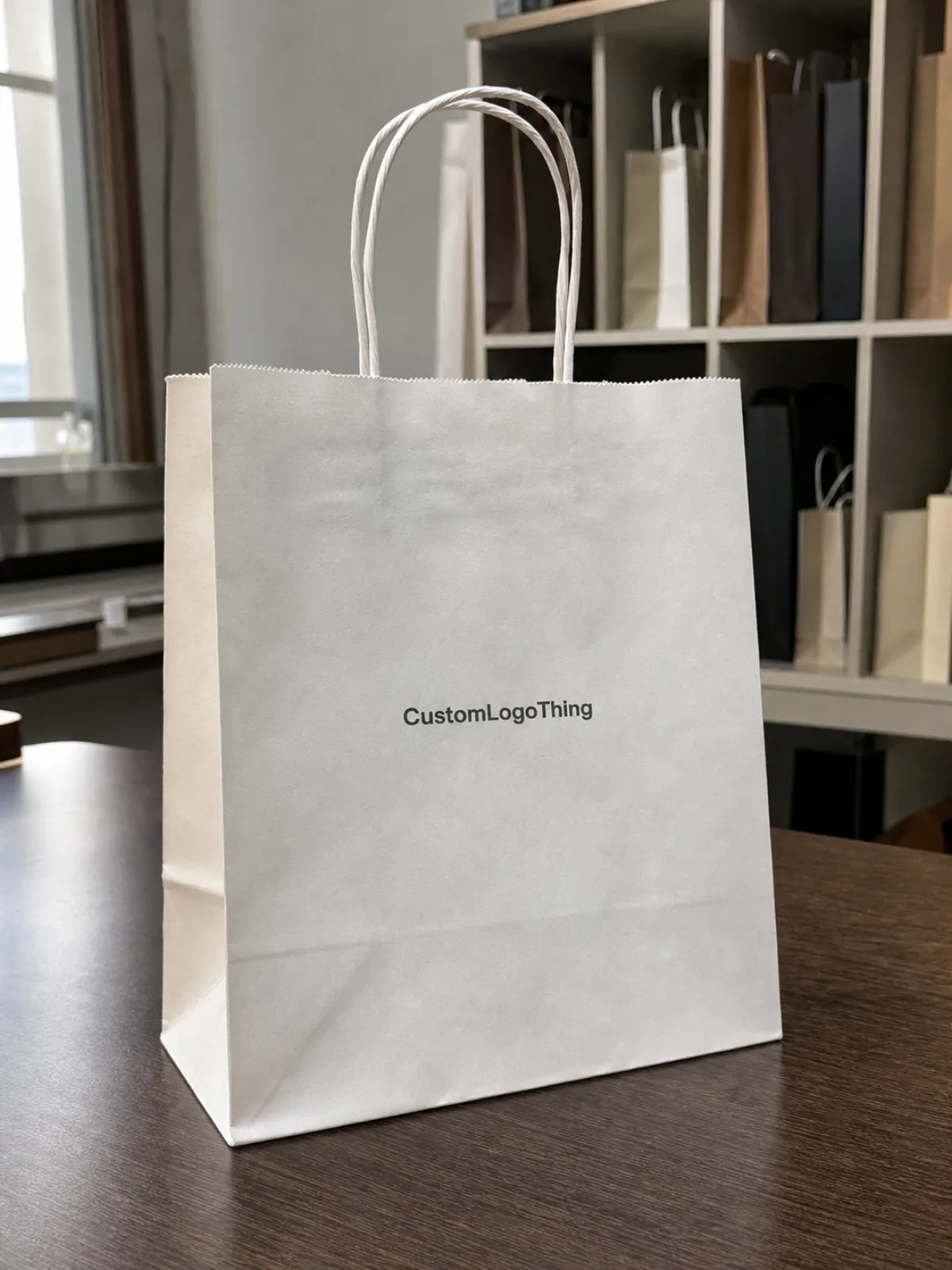
Two bags can look nearly identical online and still perform very differently in hand. One has enough stiffness to stand upright and recover after loading. Another collapses at the corners once a chilled bottle starts sweating. That difference affects the customer experience, the brand impression, and the chance of failure before the product even leaves the store.
For beer carriers, the sample should answer a simple question: will the bag hold weight without feeling fragile? A two-bottle pack is manageable. Four bottles can move the load into the 2 to 3 kilogram range depending on bottle size, glass thickness, and any divider or insert. Six bottles raise the risk again, so paper grade, handle build, bottom structure, and glue coverage start to matter quickly.
The sample also separates real material performance from broad claims. "Eco-friendly" is not useful unless the stock is backed by FSC certification, documented recycled content, or another clear sourcing claim. Even then, the paper still has to print cleanly, carry well, and survive handling. Sustainability is part of the decision, not a substitute for performance.
That is why this kind of guide is useful before production starts. It lets buyers compare kraft, white, and recycled stock in physical form, and it shows how each one behaves under load. The most expensive packaging mistake is usually a small weakness that shows up after thousands of units have already been made.
What a Material Sample Actually Shows
Think of the sample as a spec check, not a sales prop. It should show the paper stock, handle construction, bottom build, reinforcement, and finish closely enough to predict production behavior. If it is only a visual mockup, that is fine, but it should be labeled that way. A buyer who mistakes a prototype for a production match is likely to approve the wrong thing.
A useful sample lets you judge tear resistance, edge crispness, fold memory, and how the bag behaves after a few real carries. Beer bags get opened, loaded, moved, set down, and sometimes stacked in cartons for secondary shipping. That rough treatment is normal, so the bag should not depend on gentle handling to survive.
Check the print under ordinary light, not under flattering showroom conditions. Ink density, registration, and small type can look clean on a PDF and then soften on brown kraft or ghost on a textured recycled sheet. A one-color logo that looks strong on white stock may lose contrast fast on unbleached paper.
Ask what the sample is made from in measurable terms. GSM, caliper, coating type, handle glue, and any reinforcement strip should be spelled out. If the sample uses a slightly different spec from the planned production run, that needs to be obvious. A close approximation is fine. Hidden approximation is not.
If the sample cannot survive a full carry test, it is not a finished answer. It is an early warning.
For buyers focused on end-of-life claims, this is also the stage to check whether the bag can support a recycling or composting story. Paper is not automatically simple to recycle if it uses heavy coating, dense ink coverage, or mixed materials. A light aqueous finish is different from lamination, and that difference matters once the bag leaves your dock.
Process and Timeline: From Request to Approved Sample
Start with a tight brief: size, bottle count, target stock, print colors, finish, quantity, and any performance requirement. If the bag must hold four bottles plus a divider, say so. If it is meant for gifting and needs a more polished finish, say that too. The clearer the brief, the fewer revision rounds later.
Most sampling schedules fall into a few predictable ranges. An off-the-shelf stock sample often takes 2-5 business days. A custom prototype usually takes 5-10 business days. If the structure changes, the coating is special, or the print setup is more complex, 10-15 business days is more realistic.
The sequence is usually simple: request, digital proof, physical sample, comments, revision, approval. What slows things down is missing artwork, unclear bottle dimensions, shifting specs, and late changes to reinforcement or finish. Packaging does not respond well to last-minute improvisation.
Use the real use case when testing. A bag that will carry chilled bottles should be tested with chilled bottles, not room-temperature ones that weigh the same but behave differently. Condensation affects grip, paper stiffness, and finish performance. If the bag is used at retail or events, carry it more than once. Handle fatigue often shows up on the second or third use.
Sample review should also include the final bottle shape and label height. Long necks can interfere with the top opening. Wide shoulders can push against the paper wall. If the bag is intended for a gift set, tissue, inserts, and ribbon should be part of the test. Small packaging systems usually fail at the seams between components.
Cost, Pricing, MOQ, and Quote Variables That Move the Number
Beer bag pricing is usually driven by four things: paper grade, print complexity, construction, and order size. If a quote does not ask about those variables, it is probably incomplete. The final number may still be useful, but it is not trustworthy yet.
Paper grade comes first. Natural kraft usually gives a practical balance of strength, feel, and cost. White stock often costs more because it is processed differently and gives brighter contrast for graphics and small text. Recycled stock can be competitive, but price depends on fiber quality, mill availability, and how specific the recycled-content target is.
Construction adds cost too. Twisted handles, handle reinforcement, heavier bottom folds, and stronger gussets all add material or labor. Print complexity matters as well. One color on one side is very different from multiple inks, coatings, or specialty finishes. If the bag is expected to carry glass regularly, a slightly higher build cost is often cheaper than dealing with complaints later.
MOQ changes the math. Many suppliers set minimums somewhere between 1,000 and 5,000 units, though custom print, special sizing, or multiple versions can push that higher. Lower quantities usually carry a higher unit price because setup costs are spread across fewer bags. Larger runs lower the per-piece number, but only if the spec is already stable.
| Material / Build | Typical Look | Approx. Unit Cost at 5,000 pcs | MOQ Impact | Best Use |
|---|---|---|---|---|
| Natural kraft, 180-250 gsm | Warm, earthy, utilitarian | $0.18-$0.28 | Usually lowest setup pressure | Retail, tasting rooms, value-focused packs |
| White stock, 180-250 gsm | Clean, bright, higher contrast | $0.22-$0.34 | Mid-range | Gift sets, premium branding, darker artwork |
| Recycled stock, 200-300 gsm | Muted, textured, lower-impact feel | $0.20-$0.33 | Can vary with fiber availability | Lower-impact messaging, certified sourcing programs |
| Premium printed build with finish | Sharper, richer, more polished | $0.30-$0.50+ | Higher due to setup and finishing | Seasonal promotions, specialty packs, branded retail |
Ask about sample fees, tooling, and freight in plain language. Is the sample charge refundable if the order goes ahead? Are plates or dies billed separately? Does the quoted price include shipping, or is freight added later? A low unit price can look excellent until shipping appears on the invoice.
For buyers who want verification instead of vague claims, the FSC framework is a useful source for responsible sourcing, and ISTA methods are a helpful reference for packaging performance thinking. Standards do not decide everything, but they keep the conversation grounded in measurable terms.
How to Compare Stock, Handles, Printing, and Finish
Compare stock by function first. Kraft paper gives a natural feel and usually a strong cost-to-performance ratio. White stock offers cleaner contrast for logos, illustrations, and small type. Recycled stock supports a lower-impact story, especially when the supplier can document the fiber mix and source chain. If the brand relies on sustainability claims, ask for a precise recycled-content percentage rather than a broad statement.
GSM is useful, but it is not the whole story. A 20 gsm difference can matter more than an artwork change. Caliper, fiber length, surface sizing, and folding behavior all affect how the bag handles weight. A sheet that feels thick can still fold poorly, while a lighter one can hold its shape better because the fiber structure is more consistent.
Handle comfort deserves a close look. Twisted handles should feel secure without digging into the hand when the bag is full. The anchor area needs clean glue and even tension. A handle that looks fine but pulls oddly under load is a poor trade, even if it does not fail on day one.
Print Behavior Changes With Stock
Printing is where many sample reviews go sideways. Solid colors, small text, and fine line work behave differently on each stock. A dark green logo can look crisp on white paper and then lose definition on brown kraft. That is not a design failure. It is the interaction between ink and substrate.
If the artwork uses tiny type or intricate marks, request a printed sample on the exact intended stock. Matte finishes usually soften the visual read and reduce glare. Gloss can make colors appear richer, but it also shows scuffs and fingerprints faster. Neither choice is universally better.
Finish And Feel
Finish changes perception quickly. Matte feels calmer and more restrained. Gloss increases color density and gives a sharper shelf presence. Soft-touch can feel premium, but it is not always appropriate for beer packaging, where grip, moisture resistance, and durability matter more than a velvet-like hand feel.
Ask how the finish affects folding, scratch resistance, and moisture behavior. Chilled bottles create condensation quickly, and condensation is where weak choices show up. A surface that looks elegant in a sample tray may scuff when it spends time in a cooler, a tote, or a car trunk.
Compare samples on the same table, under the same light, with the same bottle load. Once the conditions change, the comparison is less useful. A warm bulb flatters kraft. A cool fluorescent makes white stock look harsher. Different setups produce different opinions, which is not the same as testing.
Common Sampling Mistakes That Waste Time and Money
Do not approve on appearance alone. A bag can photograph beautifully and still sag, twist, or tear when bottles shift inside it. The camera does not carry weight. The hand does.
Do not ignore the actual use case. If the bag carries beer, test it with the real bottle count, weight, and any insert or divider. If it is for gifting, include tissue, caps, labels, and whatever extra pieces change the shape of the load. If the bag will ride inside corrugated cases, test it in that context too.
Do not review samples in conditions that hide problems. Bad lighting can flatter a color that will look dull in a store. A sample without the final print area, the right bottle weight, or the correct handle length is not a fair comparison. It is only part of the picture.
Do not assume the first sample is the final answer. Paper batch variation, coating differences, and print method can all shift the result. If the handle pull feels weak or the base wrinkles more than expected, ask for a revision. Picky is cheaper than replacing a run.
Do not let eco claims drift beyond what the bag can support. Paper can be part of a lower-impact package, but the details still matter. Heavy coating can complicate recycling, and dense ink coverage can change the finish. A clear statement about FSC certified stock or recycled content is stronger than broad language that says little.
The best sample does not just look right. It makes the wrong production decision harder to defend.
Practical Approval Checklist
Before approving, lock the non-negotiables: bottle count, target cost, delivery window, brand feel, and whether the bag must handle damp conditions. If those pieces are not fixed, every sample will seem "close." Close is useful only when the differences are small.
A simple scorecard helps. Rate each sample on strength, look, cost, and timing. If one bag wins on appearance but fails on handle confidence, that is not a confusing result. It is a clear one. The numbers force the trade-off into the open.
Ask for the final spec sheet before approval. GSM, caliper, handle build, coating, print method, MOQ, lead time, and any setup fees should be written down. If there is a note about what may vary in production, read it carefully. That sentence often contains the most expensive truth in the document.
One useful habit is to put the sample through the same route your customers will. Lift it, carry it, set it in a car, place it on a counter, and check the print again under normal light. The bag should still look intentional after the real-world test. That is what approval means.
What should a beer twisted handle paper bag sample include?
The sample should show the actual paper stock, twisted handle build, bottom reinforcement, and the closest matching print or finish. Ask for the gsm, coating, handle glue spec, and a note on whether the sample matches production exactly or only approximates it. If the bag is meant for bottles, test it with the real load, not an empty shell.
How many material samples should I compare before ordering?
Two or three samples are usually enough if the goal is to compare kraft, white, and recycled stock, or to test different finishes. Keep the size, artwork, and bottle load identical so the differences come from the material choice rather than unrelated spec changes. If possible, compare one structural sample and one printed sample.
How long does a custom beer bag sample usually take?
Simple stock-based samples often take 2-5 business days. Custom printed prototypes usually take 5-10 business days. If the structure, coating, or handle reinforcement changes, 10-15 business days is a more realistic range.
Why is sample pricing different from full production pricing?
Samples cost more per unit because setup, manual checking, material waste, and short-run labor are spread across very few bags. Production pricing drops once those fixed costs are distributed across a larger order. Ask whether the sample fee can be credited back if the full run is placed.
What matters most when approving the final bag?
Strength under real weight matters first. Handle comfort and bottom performance matter more than a perfect front panel. After that, check print clarity under normal lighting and make sure the finish still looks clean after handling, storage, and a little moisture exposure. If the bag fits the real bottle count and still feels controlled in the hand, it is much closer to ready.

