Beer Twisted Handle Paper Bags Unit Cost Review for Buyers
A beer Twisted Handle Paper bags Unit Cost Review should focus on whether the bag can safely carry glass in the real world. The lowest quote is not useful if the handle tears, the bottom softens, or condensation ruins the print. Buyers are not purchasing decoration. They are buying a carrier that has to survive weight, cold surfaces, and hurried handling.
The comparison should be bag price versus failure risk, wasted stock, and replacement cost. Taproom carryout, retail packs, gift sets, and event sales all stress the same format differently. A bag that looks fine on a quote sheet can still become a problem once it meets a chilled bottle and a damp counter.
That is why unit cost should be read with the use case in mind. A low per-piece number means little if the carrier is underbuilt for the bottle count or the environment.
Beer Twisted Handle Paper Bags Unit Cost Review for Buyers: Why the Unit Cost Looks Higher Than It Is
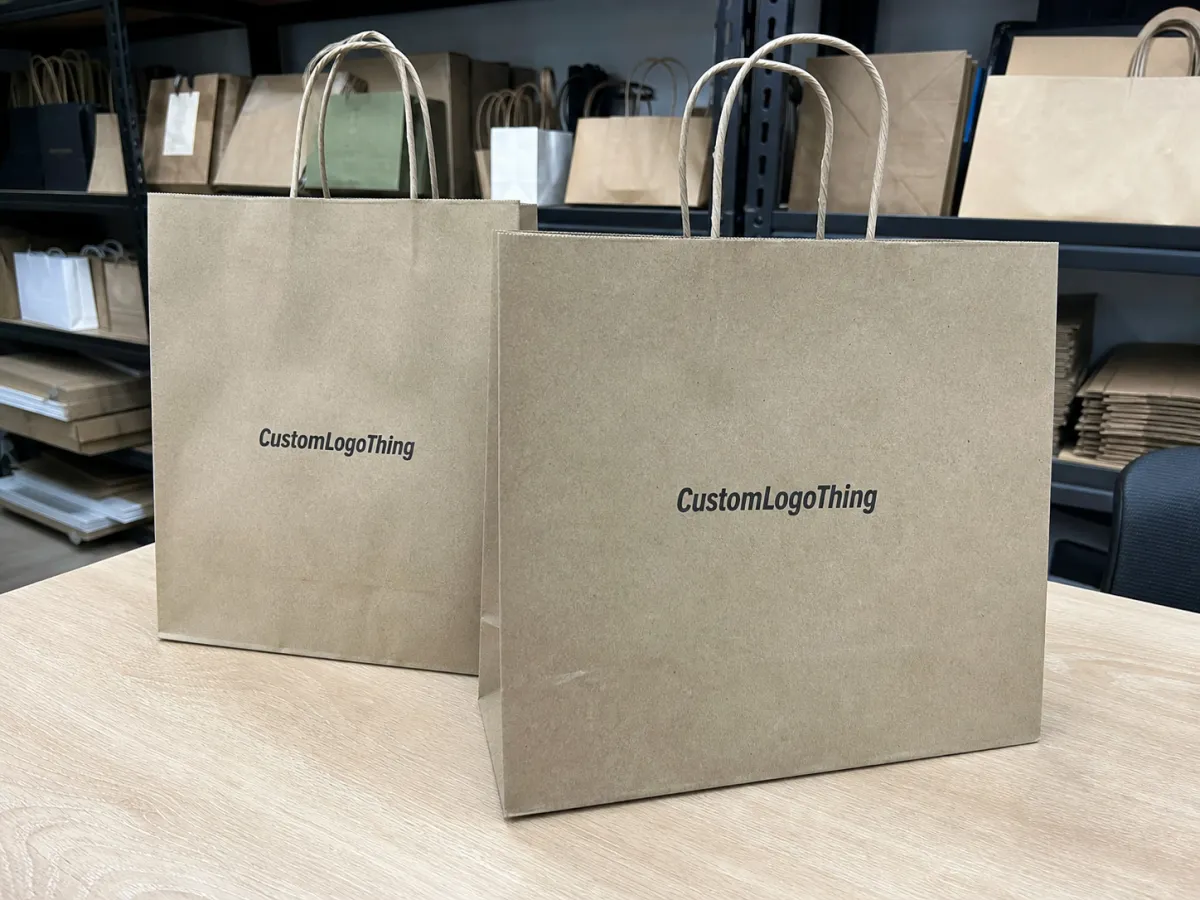
Beer twisted handle bags are load-bearing packaging, not generic shopping bags with a logo. If the handle pulls out or the bottom bursts, the bag fails where the customer notices it most: at checkout, in the parking lot, or at the table.
Different use cases push price in different directions. A single-bottle gift bag can use lighter paper and less reinforcement. A two-bottle carrier needs more structure, stronger handle anchoring, and a bottom that does not sag. Four- and six-bottle formats need more material, more glue, and usually more testing.
The useful comparison is not quoted price versus quoted price. It is quoted price versus the total cost of a failure. If the bag is used around condensation, cold bottles, or wet hands, the cheapest option often becomes the most expensive one later.
Practical rule: if the carrier cannot survive a wet hand, a heavy bottle, and one awkward lift, the unit cost is fake. The bag was underbuilt.
Buyers should also separate visible price from landed cost. Freight, carton configuration, sampling, proofing, and setup charges can move the real number more than a small difference in paper grade. A supplier who quotes only the bag and hides the rest is not making comparison easy.
For fiber sourcing and packaging basics, FSC is useful for chain-of-custody rules, and packaging.org provides a solid terminology baseline. Those references do not sell bags, which makes them easier to trust for the non-sales parts of the decision.
Paper Grade, Handle Build, and Bottle Count That Change the Real Price
Three choices move pricing faster than most quote sheets admit: paper grade, handle build, and bottle count. Those choices also determine whether the bag survives use. Twisted handle bags are not built the same way across suppliers, even when the outside dimensions look similar.
Natural kraft is usually the most economical starting point. It prints well for simple logos, converts efficiently, and gives a clean retail look without extra finishing. Coated stock or heavier art paper can improve appearance, but it adds cost and often adds lead time. If the artwork is simple, premium finishing may not be worth the extra spend.
Handle design matters more than buyers often expect. Twisted paper handles are cost-efficient, but only if the anchor is reinforced correctly. A weak attachment saves cents and can cost far more when a full carrier fails in use. During sampling, the handle area should be one of the first things inspected.
Bottle count changes the structure. A two-bottle format is often the sweet spot for taprooms and retail gifting. Four-bottle carriers need wider gussets and better bottom support. Six-bottle bags move into heavier-duty territory and should be treated as a structural product, not a casual paper carrier.
Moisture is another hidden cost driver. Beer bags are used around condensation, ice buckets, chilled glass, and damp counters. Paper that is fine in dry retail can soften quickly in a cold setting, so adhesive quality and fiber strength matter more here than in a standard gift bag.
Specifications Buyers Should Lock Before Requesting Samples
If a supplier receives only a rough size, expect a rough answer. For beer carriers, the exact bottle dimensions matter more than the product name. Neck height, shoulder width, bottle diameter, and any insert space all affect fit.
Before requesting samples, lock the following:
- Bottle count: single, 2-bottle, 4-bottle, or 6-bottle.
- Bottle dimensions: actual diameter and height, not just label size.
- Paper thickness: target gsm or paper grade range.
- Handle spec: twisted paper color, length, and reinforcement method.
- Bottom support: glued base, patch reinforcement, or extra board insert.
- Print area: one-color logo, full-wrap artwork, or partial coverage.
- Packing method: flat-packed carton count and master carton size.
That is the minimum. If the carrier will be used in a retail setting, tell the supplier the use case as well. A taproom carryout bag is not the same as a gift bag that sits under a tree for two days before opening. A festival bag faces abrasion. A shelf-ready carrier may need cleaner print and tighter carton packing.
Artwork decisions should happen early. One-color logos are cheap to print and easier to align. Full-color coverage can work well, but it increases setup work and the chance of rejection if color tolerance is not clearly defined. If large ink coverage is part of the design, ask how the supplier handles drying time and scuff resistance.
If recycled content or traceability matters, request documentation before sample approval. A supplier using FSC-certified paper should be able to say so clearly. If they cannot, keep looking.
Unit Cost, Pricing, and MOQ Breakpoints Buyers Should Expect
The best way to evaluate pricing is by breakpoint, not by one magic number. Entry quantities carry a higher unit cost because setup, printing, and converting are spread over fewer pieces. As the order volume rises, the per-piece cost usually drops. The real question is how quickly it drops and what is included.
For a Beer Twisted Handle Paper Bags unit cost review, compare landed unit cost at 1,000, 3,000, and 5,000 pieces. Ask for the same paper grade, handle spec, bottle count, and carton pack size. If one quote uses thinner stock or a simpler handle, it is not a better price. It is a different product.
| Format | Typical MOQ | Cost per piece range | Usual lead time | Notes |
|---|---|---|---|---|
| 2-bottle natural kraft, one-color print | 1,000-3,000 pcs | $0.28-$0.58 | 12-18 business days after approval | Lower entry cost; common for taproom and retail carryout. |
| 4-bottle reinforced carrier, medium coverage print | 3,000-5,000 pcs | $0.48-$0.92 | 15-22 business days after approval | More paper, stronger base, and more testing. |
| 6-bottle heavy-duty bag, full print or premium finish | 5,000 pcs and up | $0.62-$1.45 | 18-28 business days after approval | Higher structural load and more visible print risk. |
Those ranges are buyer-side references, not quotes. Paper markets move, print coverage matters, and freight can distort the final number. Still, the pattern is useful: once volume rises, bulk pricing becomes more efficient, while small orders carry more setup burden.
Ask for an itemized quote. You want to see base bag cost, print cost, sample cost, tooling or plate fees, and freight separately. Otherwise, the numbers are difficult to compare. A low base price with high setup charges is just a different way to reach the same total.
Do not chase the cheapest bag if the handle spec or paper weight is lighter than the others. A carrier failure can erase the savings from a few cents on the quote.
Process, Production Steps, and Lead Time From Artwork to Cartons
The production path is straightforward when the buyer sends clean inputs. The normal sequence is inquiry, specification confirmation, artwork check, sample or proof approval, production, inspection, packing, and shipment. Skip a step, and the timeline shifts.
Sampling is faster than mass production. A plain sample may take only a few business days. A printed approval sample takes longer because the supplier has to validate color, handle placement, and size. Once the sample is approved, production timing depends on quantity, paper availability, and print complexity.
For planning, many buyers should expect about 5-10 business days for a printed sample, then 12-20 business days for production after approval. Add time for special paper, multiple print passes, or longer freight routes. Sea freight is cheaper; air freight is faster. The right choice depends on the launch date.
Delays usually come from the same places: missing bottle dimensions, late artwork revisions, color approval back-and-forth, and quantity changes after the proof is already set. The easiest way to avoid that is to freeze the specification early.
If the bags are going into distribution, ask whether the factory tests to an ISTA method or a similar compression and drop sequence. That matters when the product is being stacked, shipped, or handled through parcel channels.
Quality Checks and Failure Points That Matter in Beer Carryout
Beer bag quality is easy to inspect, which is why bad product is so frustrating. The main failure points are handle pull strength, bottom burst resistance, glue line adhesion, and edge tear performance under load. If any one of those is weak, the bag will show it quickly.
Cold and damp conditions are the real test. Beer bottles come out chilled, not dry. Condensation softens the paper, makes the handles slicker, and stresses the base. A bag that survives in a warm sample room can behave differently at a retail counter near an ice well. That is why a filled sample should use actual bottles.
Testing note: if a supplier tests only with empty bottles or filler, the result is not useful. Real weight, real condensation, real risk.
Print durability matters too. Scuffed ink, rubbed corners, and warped artwork can make a premium carrier look cheap even when the structure is fine. Buyers often focus on the bag shape and forget the finish. That is a mistake, because the bag sits at eye level.
During inspection, check these five items before sign-off:
- Handle attachment is even on both sides.
- Bottom folds sit flat and centered.
- Color is consistent across cartons.
- No glue seepage or warped panels.
- Carton counts match the packing list.
If the order is for a launch or premium retail program, ask for production and final inspection photos. One bent corner on a sample is a warning. Repeated damage in a shipment is a production habit.
What to Send for an Accurate Quote and Next-Step Ordering Plan
To get a real quote, send the supplier the bottle count, bottle dimensions, target quantity, artwork files, paper preference, and ship-to destination. If one of those is missing, the answer will be fuzzy and the later revisions will take longer.
Ask for an itemized quote so you can see base bag price, print charges, sample cost, freight, and any setup fees separately. If the supplier will not break out the numbers, it is difficult to tell whether the quote is strong or merely polished.
For heavy glass, premium branding, or a launch-critical SKU, order one approval sample before mass production. A sample is the cheapest way to check fit, handle strength, print accuracy, carton packing, and general feel in hand.
A practical ordering plan looks like this:
- Confirm bottle count and real bottle dimensions.
- Lock the paper grade, handle spec, and print coverage.
- Request itemized quotes at 1,000, 3,000, and 5,000 pieces.
- Approve one sample with filled bottles.
- Schedule production around the launch date, not a guess.
Used this way, a beer twisted handle paper bags unit cost review is a decision tool: compare the full landed cost, lock the specification, and choose the carrier that protects the bottle instead of the one that only looks cheap on a spreadsheet.
What is the MOQ for beer twisted handle paper bags?
MOQ usually depends on bag size, print method, and paper grade, but custom runs often start in the low thousands. Simple kraft versions usually sit lower than full-color printed or heavily reinforced carriers. Ask for pricing at 1,000, 3,000, and 5,000 pieces so you can see where unit cost improves.
How much does a custom beer twisted handle paper bag cost per unit?
Unit cost depends on bottle count, paper weight, print coverage, handle reinforcement, and quantity. A small run costs more per bag because setup is spread over fewer pieces. Ask for landed unit cost, not only ex-works price, so freight and packaging are included.
Can twisted handle paper bags hold multiple beer bottles safely?
Yes, if the bag is sized for the bottle count and built with enough paper strength and bottom support. Two-bottle and four-bottle formats are common; six-bottle carriers need stronger reinforcement and testing. Always test with the actual filled bottles.
How long does production take after artwork approval?
Sampling is usually faster than full production, and custom printing adds time compared with plain kraft bags. Production timing also depends on quantity, paper stock, and finishing. Ask for a written schedule that separates proof approval, production, inspection, and shipping.
What do I need to request an accurate quote for beer twisted handle paper bags?
Send the bottle dimensions, bottle count, bag size target, artwork, quantity, and destination. Include the use case too: retail shelf, taproom carryout, or gift packaging. The more exact the spec, the less guesswork in the final price.

