Buyer Fit Snapshot
| Best fit | compostable mailer brands selection review for packaging buyers comparing material specs, print proof, MOQ, unit cost, freight, and repeat-order risk where brand print, material, artwork control, and repeat-order consistency matter. |
|---|---|
| Quote inputs | Share finished size, material target, print colors, finish, packing count, annual reorder estimate, and delivery region. |
| Proofing check | Approve dieline scale, logo placement, barcode or warning zones, color tolerance, and any recyclable or compostable wording before bulk production. |
| Main risk | Vague material claims, crowded artwork, or missing packing details can create delays even when the unit price looks attractive. |
Fast answer: Compostable Mailer Brands Selection Review: Film, Closure, Print, and Fulfillment should be specified like a repeatable production item. The safest quote includes material, print method, finish, artwork proof, carton packing, and reorder notes in one written spec.
What to confirm before approving the packaging proof
Check the product dimensions against the actual filled item, not only the sales mockup. Ask for tolerance on folds, seals, hang holes, label areas, and retail display edges. If the package carries a logo, QR code, warning copy, or legal claim, reserve that space before decorative graphics fill the panel.
How to compare quotes without losing quality
Compare board or film grade, print process, finish, sampling route, tooling charges, carton quantity, and freight assumptions side by side. A lower quote is only useful if the supplier can repeat the same color, closure quality, and packing count on the next order.
Brands often buy packaging for the story, then discover the shipment has to live in the real world. That is why the best compostable mailer buying tips begin with a blunt question: what, exactly, does the mailer need to survive before it reaches the customer? A mailer that looks responsible on paper can still fail in humid transit, puncture in a warehouse stack, or split at the seal line, and those failures cost more than the upgrade ever saved.
From a packaging buyer's point of view, this is not a branding exercise. It is a comparison exercise. The best option is the one that balances performance, certification, and margin without creating extra damage claims or customer service noise. For some programs, that means a fully compostable film. For others, a paper composite or a different format may be the better fit. The best compostable mailer buying tips work like a decision checklist, not a slogan.
That distinction matters because packaging touches both the front end and the back end of the business. A mailer that supports eco-friendly packaging goals can also reduce avoidable waste, but only if it fits the parcel profile, shipping distance, and handling conditions. Otherwise, the carbon footprint rises through replacements, rush freight, and returns. The goal is not to buy the greenest-looking option. The goal is to buy the one that holds up, documents itself clearly, and fits inside the actual packing workflow.
One more practical point: buyers who treat compostable mailers like a commodity usually miss the hidden costs. Seal integrity, print coverage, MOQ, and shelf life all influence the real landed price. The best compostable mailer buying tips start with use case, then move through materials, Specs, Pricing, Timing, and supplier support in that order.
Best Compostable Mailer Buying Tips: Start With the Real Use Case
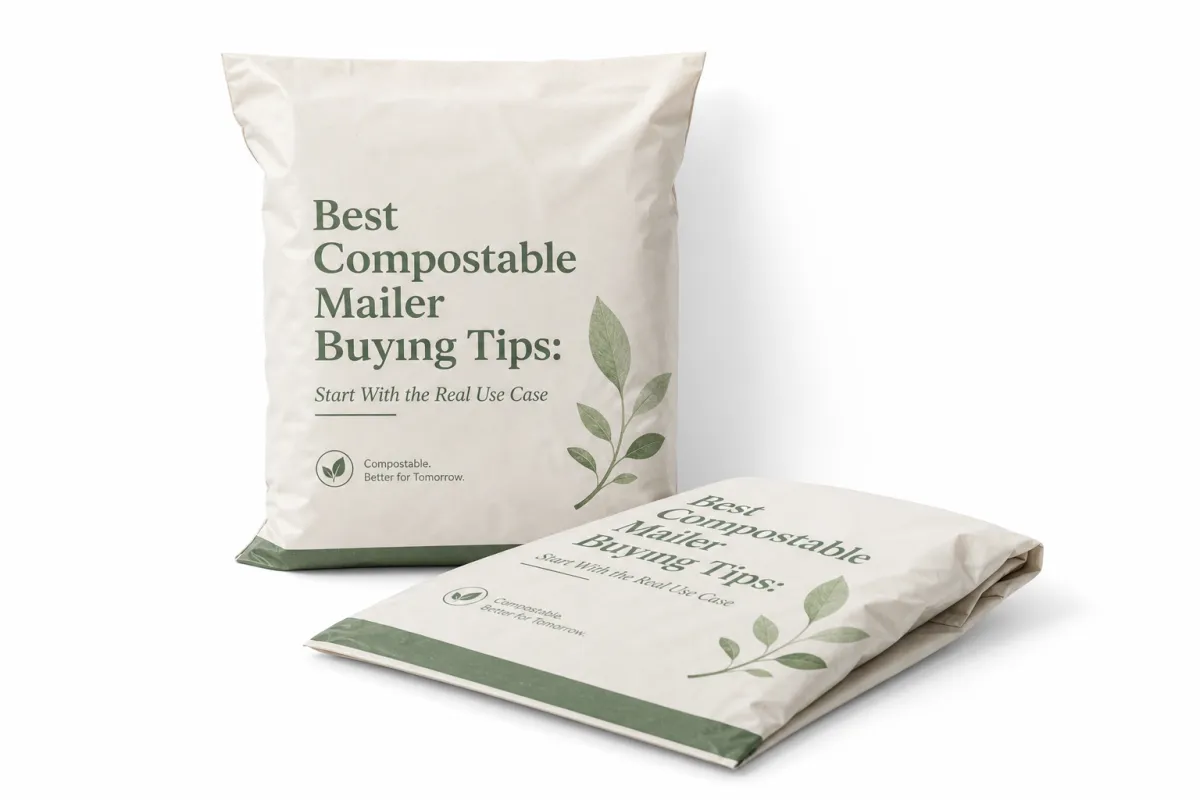
The first mistake shows up often. A brand sees a clean-looking compostable mailer and assumes it will work for every SKU. It will not. Lightweight apparel, cosmetics, books, and accessory kits all stress packaging in different ways. The best compostable mailer buying tips begin by mapping the shipment itself: retail shelf presentation, curbside drops, humid transit, or warehouse stacking. Those are four different tests, and one mailer rarely excels at all four without tradeoffs.
Start with the product profile. What is the average unit weight? How sharp are the corners? Does the item need extra opacity for brand presentation or tamper avoidance? If a product weighs 6 ounces and ships once a month across a short regional route, a thinner build may be enough. If the same buyer ships dense boxes of hardware accessories through multiple hubs, puncture resistance and tear control matter more than the sustainability label. The best compostable mailer buying tips are built on that kind of honesty.
There is also a mismatch cost that buyers underestimate. A mailer that tears in the line, opens during transit, or arrives wrinkled and brittle creates replacements, refunds, and customer complaints. In practice, that can erase the savings from a lower unit price. I have seen packaging teams focus on the environmental claim while ignoring the operational claim: “Will this survive the trip?” That question is more useful than a polished sales deck.
Good buyers compare options the way operations teams compare carriers. They ask what the package must endure, how often it fails, and what that failure costs per order. The best compostable mailer buying tips turn sustainability into a measurable procurement decision:
- Short-run retail kits need presentation, print quality, and reliable seals.
- Apparel subscriptions need consistent sizing, fast packing, and low breakage.
- Humidity-heavy routes need stable film behavior and strong closures.
- Warehouse-stacked parcels need seam strength and puncture resistance.
That last point trips up a lot of teams. Compostability does not cancel out physics. A product still needs enough caliper, enough seal width, and enough strength to survive compressive load. The best compostable mailer buying tips are useful precisely because they force teams to stop guessing.
If your current packaging is a standard plastic mailer, compare the job, not the label. In some cases, a transition to Custom Poly Mailers may be the better bridge if the priority is damage reduction, print control, or cost stability while you phase in greener formats elsewhere. Not every SKU should switch at the same time.
A compostable mailer that fails on the packing line is not sustainable. It is rework, waste, and a bigger carbon footprint than the buyer expected.
The smartest procurement teams treat the best compostable mailer buying tips as a filter. If the mailer cannot meet the parcel's real stress points, the conversation should shift before pricing does. That saves time, and it usually saves budget too.
For broader context on materials recovery and waste reduction, the EPA's packaging and recycling guidance is a useful reference point: EPA recycling resources. It helps buyers keep the sustainability conversation grounded in actual end-of-life pathways rather than marketing language alone.
Best Compostable Mailer Buying Tips for Materials and Construction
Material construction is where the sales pitch meets the warehouse floor. The common structures are not interchangeable. PLA blends can offer a clean look and a familiar film feel, but their performance profile depends heavily on the blend and the actual layer stack. PBAT-based films tend to be more flexible and can improve tear resistance. Paper composite mailers may support a stronger eco-friendly packaging story, especially if a paper content target matters, but they do not behave the same way as film when exposed to moisture or compression. Hybrid builds split the difference, which is useful in some programs and awkward in others.
The best compostable mailer buying tips do not stop at the material name. They ask how the mailer feels in hand, how it seals, and how it performs in cold storage. A compostable film that becomes stiff in a cool back room can slow packing speed. A paper composite that looks great in a sample box may show scuffing or corner wear after transit. A buyer needs to know those things before the order ships, not after complaints arrive.
Closure and finish choices matter just as much. A peel-and-seal strip speeds pack-out. A reinforced seam helps if the parcel is heavy or handled aggressively. A tear notch improves customer opening experience. Gusseted formats add volume but may change the seal geometry. Every one of those details affects labor time, defect rate, and the final quote. The best compostable mailer buying tips help teams see those tradeoffs as part of the product, not as optional extras.
Material language can be slippery. Suppliers may say “compostable” without clarifying whether the claim applies to the full mailer, the film only, the adhesive only, or a paper component. That is a problem. Buyers should request the build specification, not just the headline claim. If the supplier cannot explain the sealant layer, adhesive, ink system, and outer structure in plain terms, the quote is not ready.
Sample testing is the fastest way to separate marketing from construction. Before price negotiations, request two to three samples and run them through your own workflow:
- Pack the actual product, not a dummy fill.
- Measure seal closure speed for 20 to 30 units.
- Check noise, opacity, and hand feel.
- Inspect corner scuffing and seam tension after a short transit test.
That last step is where many brands gain confidence. A sample that feels good but tears under real loading is not a good sample. The best compostable mailer buying tips are only useful if the sample is treated like a working prototype.
For freight durability and parcel testing, many packaging teams use ISTA-style methods as a sanity check. The standard library from the International Safe Transit Association is worth reviewing if your product is sensitive to handling damage. It is not the only reference point, but it helps anchor the conversation in shipping performance rather than impressions.
The strongest buying teams compare materials the same way they compare suppliers: on repeatability. One sample can impress anyone. Three consistent samples tell you whether the construction is real. That is why the best compostable mailer buying tips keep circling back to the same idea: test, compare, and document.
Specifications That Matter When Ordering Compostable Mailers
If the mailer is custom, the spec sheet is the purchase order's backbone. The most useful specs are not glamorous, but they are decisive: dimensions, film or paper caliper, seal width, load rating, tensile strength, print-safe area, closure style, and storage requirements. Without those, a price quote can look attractive while hiding performance gaps. The best compostable mailer buying tips insist on specifics because specific is what production understands.
Dimensions should match the actual product with a realistic fill allowance. Overbuying size can make the mailer look sloppy and increase material use. Underbuying size can stress the seam or distort the opening. A 1-inch mistake in width can create packing issues across an entire line. That is why the best compostable mailer buying tips tell buyers to measure the product in its packaged state, not just on the shelf.
Compliance checks deserve equal attention. Ask for the exact standard name and certificate number. Industrial compostability often references ASTM D6400, ASTM D6868, or EN 13432, depending on the market and the product construction. If the mailer contains paper, an FSC chain-of-custody claim may matter as well, but only if that paper component is actually certified. Buyers should also confirm ink compatibility and whether the compostability claim covers the entire mailer or only some layers. The best compostable mailer buying tips prevent vague claims from slipping into customer-facing language.
Storage conditions are easy to ignore and hard to fix later. Compostable films and paper composites can be more sensitive to heat, moisture, and long warehouse dwell times than conventional plastic. That does not make them weak; it means the buyer needs to plan inventory better. Cool, dry storage and sensible rotation often solve problems before they start. In some programs, a 6- to 12-month shelf-life window is workable. In others, the combination of humidity and long storage can shorten that window. The best compostable mailer buying tips are practical enough to admit that variability.
Match the specification to the product category:
- Lightweight apparel: prioritize seal quality, clean print, and moderate film strength.
- Accessories and small kits: prioritize puncture resistance and correct sizing.
- Fragile items: prioritize load stability and test results, not just compostability claims.
- Subscription shipments: prioritize pack speed, repeatability, and consistent finish.
The phrase “green packaging” can mean almost anything in a sales deck. A specification sheet makes it measurable. It shows whether the product is actually compatible with your process, your product weight, and your customer expectations. That is a major reason the best compostable mailer buying tips remain useful long after the first order.
Do not confuse compostability with recyclability. They are not interchangeable. A compostable mailer may be the right answer for a specific use case, while a recyclable mailer may be better for another. The sustainability claim must match the disposal pathway. That is where the circular economy conversation becomes serious: the right end-of-life route depends on the material, the local infrastructure, and the brand promise. The best compostable mailer buying tips help buyers avoid overselling the disposal story.
For companies that care about verified fiber sourcing, FSC certification can support the paper side of a composite build. You can review the framework at FSC. That does not replace compostability testing, but it adds a different layer of credibility for the paper component.
Ask for documentation before approval, not after shipment. The best compostable mailer buying tips save time because they reduce back-and-forth later. A clean spec sheet, a clear compliance packet, and a sample that matches production are worth far more than a polished product name.
Pricing, MOQ, and What Changes the Final Quote
Price is not one number. It is a stack of decisions. Material choice, print colors, custom sizing, certification work, packaging configuration, freight, and setup fees can all move the quote. The best compostable mailer buying tips treat pricing like a formula, not a mystery. That makes it easier to see where savings come from and where they do not.
The biggest variable is usually material plus volume. Smaller runs often cost more per piece because the setup work is spread across fewer units. Larger runs can lower the per-unit price, but they increase inventory risk if the brand is still testing the format. A buyer who orders too much too early may save cents per unit and then spend dollars on storage and obsolescence. The best compostable mailer buying tips keep both sides of the tradeoff visible.
For a custom order, these are realistic reference ranges buyers often use as a starting point, though actual pricing depends on size, structure, and print coverage:
| Option | Typical MOQ | Typical Unit Range | Best Fit |
|---|---|---|---|
| Stock-size plain compostable mailer | 3,000-5,000 pcs | $0.18-$0.32 | Testing, internal rollouts, simple apparel shipments |
| Custom size with one-color print | 5,000-10,000 pcs | $0.24-$0.45 | Branded ecommerce orders, subscription kits, repeat SKUs |
| Heavier film, reinforced seam, multi-color print | 10,000+ pcs | $0.31-$0.58 | Higher-risk transit lanes, premium branding, larger programs |
| Paper composite hybrid mailer | 5,000-10,000 pcs | $0.28-$0.52 | Paper-led brand positioning, mixed sustainability goals |
Those ranges are not a promise. They are a useful lens. The best compostable mailer buying tips push buyers to ask which line items are driving the quote. Common extras include rush fees, sample charges, freight, import duties, palletization, carton labeling, and whether exterior packaging is included. A quote that looks low can move quickly once those details are added.
Quote shape matters too. Ask for three versions: a test order, a mid-volume order, and a full rollout order. That comparison exposes the cost curve. It also helps the finance team understand whether the savings come from scale, simpler printing, or a different construction. The best compostable mailer buying tips are often the difference between a one-off quote and a usable procurement plan.
There is also an overlooked cost: delayed decisions. If a team spends three extra weeks debating the mailer, it may pay more for air freight, miss a campaign date, or force a rush run. Those expenses are real, and they can dwarf a small unit-price difference. A good buyer values timing alongside unit cost.
Here is a practical conversation starter: “Quote this size and spec at pilot volume, then quote the same build at a rollout volume of three times that number.” That single request gives you a lot of signal. The best compostable mailer buying tips encourage that kind of controlled comparison because it reveals the real landed cost more accurately than a single number ever could.
Custom size and print choices can also change labor costs inside the warehouse. A mailer that packs faster may justify a higher unit price if it saves seconds per order across thousands of shipments. That is a supply chain calculation, not a marketing slogan. The best compostable mailer buying tips respect that math.
Process and Timeline From Sample to Shipment
A clean process is worth more than a fast promise. The usual sequence is straightforward: discovery call, spec confirmation, sample request, artwork proof, approval, production, quality check, and dispatch. The best compostable mailer buying tips help buyers plan for each step instead of assuming production begins the day a quote is accepted. It does not.
Sampling is often the quickest part. If the size and structure are already close to stock, samples may move in a few days. Custom production takes longer because material sourcing, print setup, and factory scheduling all enter the equation. For many projects, 12-15 business days from proof approval is a realistic baseline, while more complex builds can stretch beyond that. The best compostable mailer buying tips set expectations early so no one mistakes a real schedule for a vague promise.
What slows projects down? Usually not the factory. It is the file, the approval chain, or a late change. Unclear artwork files, repeated proof edits, certification questions, and dimension changes after quoting all add days. Internal sign-off can also drag if packaging, operations, and sustainability teams review the same order at different speeds. The best compostable mailer buying tips are partly project-management advice in disguise.
That is why a timeline table is useful. It keeps the team honest about what happens first and what can wait:
| Step | Typical Time | What Can Slow It Down |
|---|---|---|
| Discovery and brief | 1-3 business days | Unclear product weight, missing dimensions, no print goals |
| Sample sourcing | 3-7 business days | Custom dimensions, special material requests, stock shortages |
| Artwork proof | 2-4 business days | Multiple revision rounds, low-resolution art, missing brand files |
| Production | 10-20 business days | High print complexity, new tooling, material sourcing delays |
| Quality check and dispatch | 2-5 business days | Freight booking, pallet prep, final documentation checks |
That schedule can stretch for a new material or a complex certification review. It can also shrink if the buyer comes prepared. Good artwork, a confirmed size, and a clear approval path can shave meaningful time off the order. The best compostable mailer buying tips make this obvious because they reduce avoidable back-and-forth.
Build internal buffer time too. If a launch date is fixed, approval should happen before the critical path begins. A late sustainability review can stall a purchase even when the supplier is ready. A late ops review can do the same. The best compostable mailer buying tips protect the calendar as much as the budget.
There is another operational truth that buyers respect once they experience it: a sample pack-out test is cheaper than a rushed reprint. Put 20 to 30 units through the actual workflow. Watch sealing time, handling comfort, and damage rate. The best compostable mailer buying tips are not theoretical because they are designed to catch the errors that show up on an assembly line, not in a spreadsheet.
If the project includes seasonal demand, ask the supplier about reorder planning before the first batch ships. That protects the carbon footprint too, because fewer emergency shipments usually mean less air freight and less waste. A tidy process is better for the operations team, the finance team, and the brand story.
Most buyers do not need drama. They need a clear path from sample to shipment, with each gate defined. The best compostable mailer buying tips make that path visible enough that a launch can move without guesswork.
Why Choose Us for Compostable Mailers
At Custom Logo Things, the business case is straightforward: buyers need packaging that is documented, repeatable, and aligned with the product line, not just packaging that sounds responsible in a pitch meeting. That is true for compostable formats, and it is true for other branded mailers as well. Consistent specs, transparent documentation, and predictable production matter more than vague sustainability claims. The best compostable mailer buying tips lead to suppliers who can prove those things.
We focus on the details that reduce risk. That means tighter QC expectations, clear communication around certification and material options, and custom sizing support that reflects how products actually ship. It also means being honest when a compostable option is not the best fit for a given SKU. Some product lines need a different transition plan. A supplier that says “yes” to everything is not helping the buyer. The best compostable mailer buying tips should push brands toward realism, not wishful thinking.
For brands comparing formats, it helps to see where compostable mailers fit inside a wider packaging strategy. In some cases, a brand may use compostable mailers for a flagship line while keeping another SKU on Custom Poly Mailers until its transit profile or budget changes. That is not a compromise; it is disciplined packaging planning. A good green packaging program often moves in stages.
The practical value is visible in reorder planning and seasonal peaks. A supplier with repeatable specs can help a buyer hold the line on quality while managing multiple launches, regional promotions, and SKU expansions. That keeps the brand from reacting to every new order as if it were a one-off event. The circular economy works best when the process is consistent, not improvised.
Many brands also want help translating sustainability goals into actual purchase criteria. That is where supplier guidance matters. The right partner will talk about seal strength, print-safe areas, MOQ tiers, shelf life, and packaging configuration before talking about slogans. The best compostable mailer buying tips reward that kind of discipline because it keeps the order grounded in facts.
We also understand that buyers sometimes need a gradual path. A full switch to compostable packaging is not always the right move on day one. For some teams, the better answer is to test one SKU, validate the workflow, and expand in phases. That protects budget, reduces disruption, and creates a cleaner learning curve. If a customer is serious about zero waste goals, the journey should still respect cost, durability, and operational reality.
A strong supplier does not just quote a price. It helps the buyer match structure, certification, and order volume to the shipment itself.
That is the difference between a transactional quote and a packaging partner. And for buyers who care about eco-friendly packaging as a real procurement standard, not a headline, that difference is often the whole game. The best compostable mailer buying tips are easier to follow when the supplier is prepared to explain every variable.
If you are evaluating whether a compostable program is ready for rollout, ask for documentation, samples, and a pilot quote. That lets the team compare packaging options on the same page. The best compostable mailer buying tips are most useful when they lead to a clear yes, a clear no, or a clearly staged next step.
Next Steps to Buy the Right Compostable Mailer
The fastest way to make a better decision is to collect the right inputs before asking for a quote. Start with the product dimensions, average parcel weight, and the performance problem the mailer must solve. Then add shipping distance, storage conditions, print requirements, and any certification needs. The best compostable mailer buying tips work because they narrow the conversation before it gets expensive.
Ask for three things before you approve any build: target size, monthly volume, and compliance requirements. If those are missing, the quote is still floating. If those are clear, the supplier can quote a build that has a chance of working in production. The best compostable mailer buying tips are about clarity, not complexity.
Then order samples and run a simple pack-out test. The team should check sealing speed, surface feel, customer opening experience, and damage rate. If possible, include a short transit test and a warehouse-handling test. A dozen extra units spent on testing can prevent a far larger loss later. That is a practical form of sustainability because it avoids waste before it starts.
Compare at least two quote tiers: a pilot order and a rollout order. That makes the cost tradeoffs visible. It also helps leadership see whether the business case depends on scale, simpler print, or a different material. The best compostable mailer buying tips make those assumptions obvious instead of buried in a single quote.
For many brands, the best move is to decide fast enough to keep the launch moving and carefully enough to avoid reordering the wrong thing. That balance is hard, but it is manageable. If a team keeps the use case, spec sheet, and sample test in view, the odds improve immediately. The best compostable mailer buying tips are a shortcut to a better buying process.
At Custom Logo Things, that is the standard we aim for: practical guidance, documented specs, and packaging that supports the brand without creating avoidable operational drag. If you are planning a switch, the next step is simple. Audit what you ship now, request samples, and compare a pilot quote with a rollout quote. The best compostable mailer buying tips will help you buy with confidence instead of hope.
And once the numbers are in front of you, use a simple rule: choose the mailer that protects the product, fits the workflow, and has a disposal claim you can defend in plain language. If it misses any one of those three, it is not the right buy yet. That kind of discipline is what keeps compostable packaging honest.
What should I compare first when using best compostable mailer buying tips?
Start with product weight, shipping distance, and how much protection the mailer needs in transit. Then compare material construction, certification documents, and whether the supplier can provide samples before production. The best compostable mailer buying tips always begin with performance, not price alone.
How do I know if a compostable mailer is actually certified?
Ask for the exact standard name and certificate number rather than a general compostable claim. Confirm whether the certification applies to the full mailer, the film only, or just specific components like inks or adhesives. The best compostable mailer buying tips also recommend checking that the documentation matches your market, since requirements vary by region.
What MOQ should I expect for custom compostable mailers?
MOQ depends on material, print complexity, and setup work, but custom orders usually need a meaningful minimum to keep pricing efficient. Smaller runs are useful for testing, while larger runs improve unit pricing and reduce reorder frequency. The best compostable mailer buying tips suggest asking for multiple quote tiers so the pilot order and rollout order can be compared directly.
How long does it take to produce compostable mailers after approval?
Lead time depends on sample approval, artwork readiness, and whether the material is in stock or needs sourcing. Simple orders can move quickly, but custom specs, special printing, or certification questions can extend the schedule. The best compostable mailer buying tips also leave room for internal approvals so the project does not stall after the supplier is ready.
Are compostable mailers more expensive than plastic mailers?
Often yes, especially at lower volumes, because materials and compliance steps can raise cost. The real comparison should include landed cost, damage rate, brand value, and the cost of reorders or returns. The best compostable mailer buying tips end where they began: with a sample test, a clear spec, and a buying decision based on how the mailer actually performs.


