Buyer Fit Snapshot
| Best fit | custom packaging for plant based snacks buyer review for packaging buyers comparing material specs, print proof, MOQ, unit cost, freight, and repeat-order risk where brand print, material, artwork control, and repeat-order consistency matter. |
|---|---|
| Quote inputs | Share finished size, material target, print colors, finish, packing count, annual reorder estimate, and delivery region. |
| Proofing check | Approve dieline scale, logo placement, barcode or warning zones, color tolerance, and any recyclable or compostable wording before bulk production. |
| Main risk | Vague material claims, crowded artwork, or missing packing details can create delays even when the unit price looks attractive. |
Fast answer: Custom Packaging for Plant Based Snacks Buyer Review: Claims, Protection, MOQ, and Cost should be specified like a repeatable production item. The safest quote includes material, print method, finish, artwork proof, carton packing, and reorder notes in one written spec.
What to confirm before approving the packaging proof
Check the product dimensions against the actual filled item, not only the sales mockup. Ask for tolerance on folds, seals, hang holes, label areas, and retail display edges. If the package carries a logo, QR code, warning copy, or legal claim, reserve that space before decorative graphics fill the panel.
How to compare quotes without losing quality
Compare board or film grade, print process, finish, sampling route, tooling charges, carton quantity, and freight assumptions side by side. A lower quote is only useful if the supplier can repeat the same color, closure quality, and packing count on the next order.
Choosing the Best Custom Packaging for plant based snacks starts with a boring truth people keep trying to dress up: the pack has to protect the product before it flatters the shelf. If the bag cannot keep out oxygen, block moisture, and survive getting banged around in transit, the design is basically decoration with a bill attached. Pretty packaging does not save stale chips or oily seeds that smell like regret.
From a buyer’s perspective, the real question is not “What looks cool?” It is “What keeps this snack sellable after it leaves my building?” The Best Custom Packaging for plant based snacks usually depends on shelf life, shipping method, fill speed, and how much cash you want tied up in minimum order quantities. A roasted chickpea brand shipping nationwide needs different structure than a dried fruit line that cares more about low weight and a clean shelf face.
This is not a cheer squad for fancy materials. I am comparing the Best Custom Packaging for plant based snacks by the things that actually matter in production: barrier performance, print quality, unit cost, setup friction, and what happens after a customer tears the thing open. Nice graphics are fine. Packaging that protects the snack and still pays its own way is better. Good barrier film, a reliable zipper, and a structure that does not fold like cheap cardboard matter more than the trend of the month.
What Is the Best Custom Packaging for Plant Based Snacks?
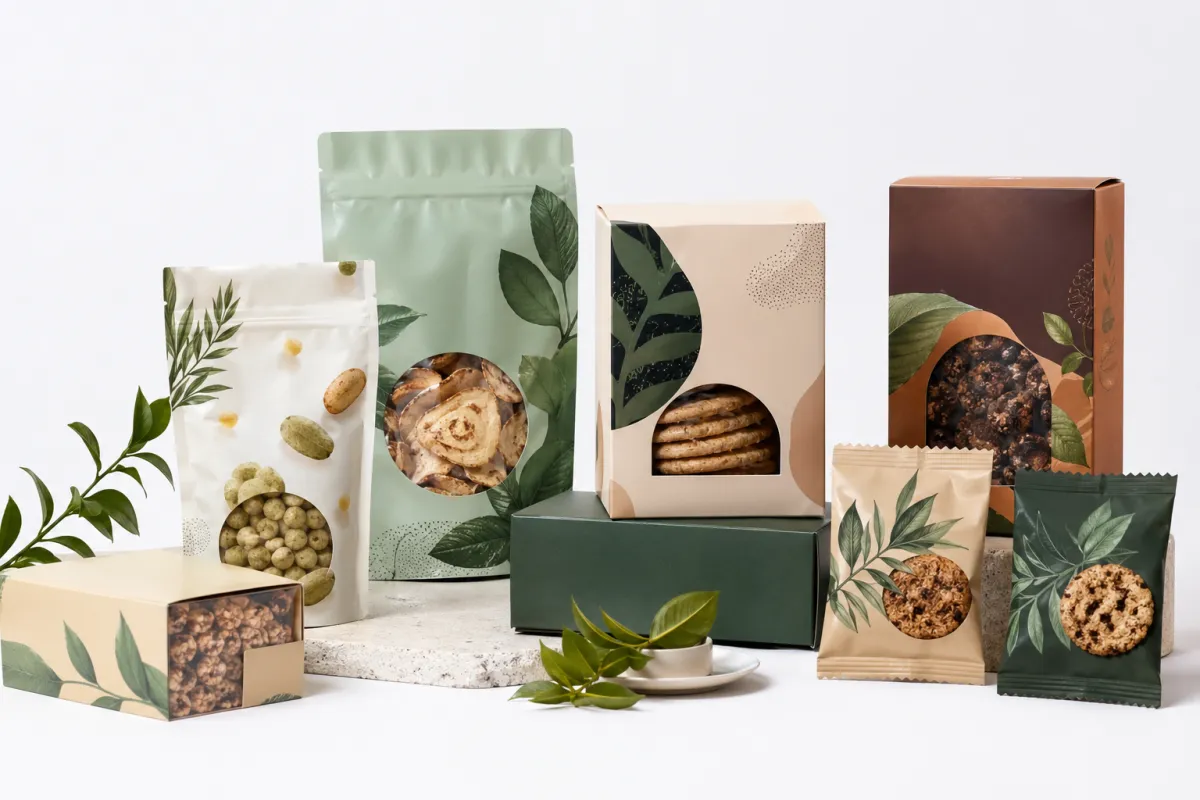
The blunt answer: the best custom packaging for plant based snacks is usually the format that protects texture first and aesthetics second. A gorgeous pouch that lets crackers go soft is an expensive mistake. If you want the short version, start with a high-barrier stand-up pouch for most crunchy snacks, a paperboard carton for premium shelf presence, and compostable materials only if your product, storage, and supply chain can actually support them. Otherwise, you are buying a nice story and a logistics headache. Fun combo, obviously.
For most brands, the best custom packaging for plant based snacks lands in three buckets:
- Stand-up barrier pouches for flexibility, resealability, and lower freight cost.
- Paperboard cartons for premium retail packaging, gifting, and more room for brand messaging.
- Flow wraps or flat pouches for bars, bites, and sample-size formats that need efficient high-volume filling.
Think about the product before you think about the render. A roasted chickpea brand shipping across the country needs moisture control, oxygen resistance, and a pack that will not puncture in a mailer. A freeze-dried fruit brand can lean harder into lighter structures and a visible window, because the product is less fragile and the visual cue matters more. That is why the best custom packaging for plant based snacks is never just about artwork. It is about product behavior, distribution, and whether the pack survives a rough week of handling. It is also why barrier film and package format deserve more attention than most mood boards get.
If I had to be blunt, the best custom packaging for plant based snacks for a lot of emerging brands is a matte or soft-touch stand-up pouch with a zipper, tear notch, and the right barrier film for the snack inside. For premium lines, a folding carton with an inner pouch can make sense. Compostable materials? Sure, sometimes. Just do not buy the story before you read the spec sheet. I have seen enough pretty failures to get a little suspicious on principle.
If the snack loses crunch before the customer finishes the box, the package failed. The artwork can be gorgeous and still be wrong.
The best custom packaging for plant based snacks should also open cleanly, re-close without a fight, and stack without acting like it has a personal grudge against the warehouse. Consumers notice when a pouch stands straight, seals properly, and does not look like it lost a fight with a pallet. That is dull. It is also real.
Top Options Compared for Plant Based Snacks
Five formats show up again and again in real production runs: stand-up pouches, flat pouches, paperboard cartons, flow wraps, and printed sleeves. Each one can be the best custom packaging for plant based snacks depending on what the product needs and how the brand sells. The point is not to crown one universal winner. That would be lazy, and usually wrong.
Stand-up pouches are the easiest starting point for many snack brands. They give you a large print area, decent shelf presence, and better shipping efficiency than rigid formats. For e-commerce, the best custom packaging for plant based snacks often ends up here because the pack is light, resealable, and cheap enough to leave margin for other things. Flat pouches are similar, just better for smaller servings, sampler packs, and multi-pack inserts.
Paperboard cartons work differently. They are weaker on pure barrier performance unless you pair them with an inner liner, but they win on shelf storytelling. If the snack line leans premium, giftable, or retail-first, cartons can make the product feel more deliberate. That is why brands buy Custom Printed Boxes even when a pouch would cost less. The box does not have to carry everything alone, but it carries a lot of perceived value. It also gives you a clean place for certifications, serving callouts, and the kind of copy that would look cramped on a flexible pack.
Flow wraps fit bars, bites, and formats that move through machines at speed. They are efficient, but the branding canvas is tighter. Printed sleeves help when you want to dress up an existing tray, carton, or multipack without rebuilding the whole package system. That can be a smart move if you want package branding without signing up for a full structural redesign. Simple idea. Less drama.
| Format | Typical MOQ | Typical Unit Cost | Best For | Main Tradeoff |
|---|---|---|---|---|
| Stand-up barrier pouch | 1,000-5,000 pieces | $0.18-$0.42 | Crunchy snacks, nuts, seeds, chips, shelf display | Strong on function, less rigid than a box |
| Flat pouch | 1,000-10,000 pieces | $0.10-$0.28 | Samples, single-serve snacks, inserts | Less shelf presence than a stand-up pack |
| Paperboard carton | 2,000-10,000 pieces | $0.28-$0.75 | Premium retail packaging, gifting, storytelling | Higher freight cost and weaker barrier without a liner |
| Flow wrap | 10,000+ pieces | $0.05-$0.18 | Bars, bites, high-volume production | Less space for branding and copy |
| Printed sleeve | 1,000-5,000 pieces | $0.08-$0.22 | Brand upgrades, multipacks, retail packaging | Cosmetic value, not the main barrier layer |
Barrier details matter more than most buyers expect. Moisture barrier protects crunchy snacks. Oxygen barrier helps nuts, seeds, and anything with fats stay fresh. Grease resistance matters for protein bites and oily coated snacks. Light protection matters when colorful ingredients or spice blends fade under retail lighting. The best custom packaging for plant based snacks is the one that matches those risks without dragging dead weight into the budget.
For brands selling through stores, retail packaging has to work from six feet away. That means clear hierarchy, readable ingredient callouts, and enough structure to sit upright without slumping like it gave up halfway through the day. For direct-to-consumer, the priorities shift toward shipping performance and opening experience. The best custom packaging for plant based snacks can look different in a warehouse than it does on a shelf, and that is fine. A package can be practical first and still look polished on display.
Detailed Reviews: Best Custom Packaging for Plant Based Snacks
Here is the honest breakdown. The best custom packaging for plant based snacks depends on whether the product needs real barrier protection or just a better outfit. Some formats look premium and become a headache in production. Others look plain and keep the snack tasting right for longer. That tradeoff is the job.
Stand-up barrier pouches are the safest all-around recommendation. They are fast to fill, easy to store, and simpler to ship than boxes. If the film spec is right, they handle moisture-sensitive snacks well and can include zippers, tear notches, and matte or gloss finishes. For most lines, this is the best custom packaging for plant based snacks if you want a practical place to start. They also make sense for brands that need to move from test run to repeat order without reworking the whole line. That matters more than people admit in the first meeting.
Flat pouches are underrated. They are simple, economical, and useful for trial sizes or multi-pack promotions. They do not shout as loudly as a stand-up pouch, but they can be a smart tool for sampling new flavors. For a brand testing market response, the best custom packaging for plant based snacks can be a flat pouch because it keeps risk low while you learn what actually sells.
Paperboard cartons are strong on retail presentation and gifting. Add an inner bag or liner and you get a more complete pack system with room for ingredient story, nutrition panels, certifications, and brand language. FSC-certified board is worth considering if sustainability claims matter to your audience; the signal is easier to trust when the material can be traced. You can read more through FSC certification standards. That does not make the carton magical, but it does help with credibility.
Metallized and matte film pouches are usually the strongest choice for shelf impact. Metallized film gives serious barrier performance and a brighter, more premium flash on shelf. Matte film looks calmer and more natural, which matters for brands trying to avoid the hyper-processed look. If the design system is careful, the best custom packaging for plant based snacks may be a matte pouch with restrained graphics and a clean layout. If the design gets muddy, the pack just looks expensive and confused.
Compostable pouches deserve a skeptical review. They can be great for brand story, and some buyers love the narrative. Still, the material is often less forgiving in humid storage, less consistent on barrier, and more sensitive to seal quality than conventional films. For short shelf life, local distribution, or products that move fast, they can work. For greasy snacks, long distribution chains, or warm warehouses, they may underperform. I would not call them the best custom packaging for plant based snacks by default. I would call them the best-looking promise if the operation can support them.
Window cartons and paper tubes are useful for premium retail packaging, but they come with baggage. They can be visually appealing and very giftable, yet they are often less efficient to ship than flexible formats. Tubes can be memorable, but they are not cheap, and they are not always the smartest answer for low-margin snacks. If the product needs to sell as a treat or a premium gift, they can absolutely be the best custom packaging for plant based snacks. If the product needs to move volume cheaply, not so much.
One more thing most buyers miss: the opening experience matters. A zipper that closes badly, a tear notch that rips sideways, or a carton that resists opening will annoy customers faster than a slightly plain design ever will. A pack should feel deliberate. That is part of packaging design, not a bonus feature.
The best operators test three things before they place a big order: seal integrity, shelf fit, and transit abuse. A quick drop test, a short heat exposure check, and a hand-carry test tell you more than a polished mockup ever will. Packaging professionals do not have to pretend the sample is enough. They know better. They also know when a supplier is overpromising, which saves a lot of angry email later.
Pretty packaging is easy to sell in a deck. Packaging that opens cleanly, stacks well, and survives a truck ride is the one that earns repeat orders.
Price Comparison: What Custom Packaging Actually Costs
People love asking for the cheapest option and then acting shocked when the total lands higher than expected. The best custom packaging for plant based snacks is not the one with the lowest printed unit price. It is the one with a sane total landed cost once setup fees, shipping, minimum order quantities, and revisions show up. They always show up.
Here is the typical cost picture for small-to-mid runs. A fully printed stand-up pouch might land around $0.18-$0.42 per unit at 5,000 pieces, depending on material, finish, zipper, and print coverage. A flat pouch can come in lower, often $0.10-$0.28. Cartons usually sit higher, often $0.28-$0.75 or more if you want specialty coatings or inserts. The best custom packaging for plant based snacks can be one of the cheaper options if the product is simple, but premium finishes change the math fast. Barrier upgrades, foil accents, and custom closures will move the number before anyone gets sentimental about the quote.
Setup and sampling are where budgets get blindsided. Expect sample costs in the $25-$150 range, and setup or plate charges anywhere from $120 to $800 depending on format and print method. Short-run digital work can reduce some of that pain, but it may raise the per-unit price. That is why the best custom packaging for plant based snacks is rarely the cheapest quote on page one. It is the quote that makes sense after every line item gets counted.
Special finishes add up. Soft-touch lamination can add a noticeable premium. Spot UV, embossing, foil, and custom window shapes are all useful tools, but they should earn their keep. If the snack line is low-margin and high-volume, those extras can eat margin without moving enough units to matter. If the line is premium and giftable, they can be worth it. The best custom packaging for plant based snacks should match the product position, not your mood the day you approved the artwork.
Minimum order quantity changes the real cost more than most buyers expect. A lower MOQ can feel attractive, but if the per-unit cost is much higher, the savings disappear once the product starts selling. A larger run usually lowers the unit price, but it also ties up cash and storage. That is the tradeoff. No magic. No free lunch.
Here is a blunt buying rule: if the snack is low-margin and high-volume, flexible packaging usually wins. If the snack is premium, giftable, or retail-led, cartons can justify the extra spend. If the brand is still testing the market, the best custom packaging for plant based snacks is often the format that gives you the best balance of low setup risk and decent shelf appeal.
For transit-heavy programs, do not ignore testing cost. A small run of drop testing or distribution simulation is cheaper than replacing damaged product and dealing with unhappy customers. If the pack will move through e-commerce, it is smart to review basic transit expectations against ISTA testing guidance. Nobody needs a fancy shipping label if the pouch arrives split open. That kind of mess can burn a launch in a week.
How to Choose the Right Packaging for Plant Based Snacks
Start with the product, not the art file. Crunchy snacks need moisture and oxygen protection. Oily snacks need grease resistance. Fragile snacks need crush resistance. If you reverse that order, you end up with pretty packaging that performs badly. The best custom packaging for plant based snacks starts with product behavior and only then moves into package branding.
Match the pack to the sales channel. E-commerce needs durable seals, low weight, and a structure that survives a box being tossed around by people who do not care about your margins. Retail packaging needs shelf stability, strong front-facing design, and often a hang tab or carton structure that sits neatly. Farmers markets and short runs may need lower-MOQ options because cash flow matters more than perfection. The best custom packaging for plant based snacks for a direct-to-consumer brand is not always the same as the best retail pack.
Then look at shelf life. A snack with a short, delicate texture profile needs a better barrier than a dry product with more tolerance. A corn chip can start losing quality quickly if moisture gets in. A seed mix with fats can go rancid if oxygen is not controlled. Good package design respects those limits. The best custom packaging for plant based snacks is the one that buys enough shelf life to sell through the product without turning freshness into a gamble.
Sustainability claims deserve a hard check. Compostable only helps if your customers and distribution partners can actually handle it correctly. If the pack ends up in the wrong bin, the claim becomes decoration. Recycled content, FSC-certified board, right-sized packs, and lighter-weight structures are often more practical than making a broad promise you cannot support. That is not cynicism. It is just how product packaging works in the real world.
Use a checklist before you approve anything:
- Barrier needs: moisture, oxygen, grease, and light.
- Sales channel: retail, e-commerce, wholesale, or direct pickup.
- Fill method: manual, semi-auto, or high-speed line.
- Brand goal: premium, natural, playful, or value-led.
- Shipping risk: crush, puncture, temperature, and transit distance.
- Budget range: unit cost, setup fees, and storage space.
The best custom packaging for plant based snacks also needs to fit the operator, not just the product. If your team fills by hand, a complicated structure becomes a bottleneck. If your retail buyers want neat shelf facings, a floppy pouch may need a carton or display tray to earn its place. Packaging design should make the operation easier, not turn every order into a small crisis.
One more practical point: think about the unboxing moment only after the pack survives shipping. That sounds obvious, yet brands keep getting this backwards. A snack pack can be beautiful and still be a terrible seller if it arrives scuffed, crushed, or half-open. The best custom packaging for plant based snacks should do the dull stuff well first. Then it can be attractive.
Process and Timeline: From Dieline to Delivery
The process is simple in theory and annoyingly specific in practice. Choose the structure, confirm the dieline, submit artwork, review proofs, order samples, approve production, and wait for manufacturing. The best custom packaging for plant based snacks is often the result of disciplined file prep more than genius design. That is not glamorous, but neither is redoing proofs because the barcode is too small or the copy has wandered into the bleed area.
Simple stock-based customization moves faster than fully custom printed packaging. If you are using a standard pouch or carton with custom graphics, lead times can be much shorter than a bespoke structure. Fully custom work usually takes longer because the proofing, tooling, and production schedule need more coordination. A realistic timeline for many runs is often 12-20 business days after final proof approval, but that shifts with material, quantity, and queue. The best custom packaging for plant based snacks is not the fastest quote; it is the one that arrives before your launch date with the right specs.
Most delays come from the same few places. Brand teams wait on final copy. Files miss bleed or use the wrong color space. Sample feedback introduces changes that force another proof cycle. Freight lands later than planned because the calendar was optimistic, which it usually is. The best custom packaging for plant based snacks avoids these problems by treating artwork like production work, not just a creative file.
Do not skip sample validation. Check the seal quality, zipper feel, board stiffness, ink scuff resistance, and whether the pack still looks good after a few handling passes. For cartons, make sure the closure tabs and folds hold up. For pouches, check whether the bottom gusset sits flat enough to stand. If the package fails a simple bench test, it will not become more reliable in a warehouse. That is the moment to fix it, not after the truck is already rolling. I know that sounds obvious. It still gets skipped.
There is also a freight reality to face. Flexible packaging ships compactly. Custom printed boxes take more space. Heavy or rigid packs increase freight and storage costs, which can become a hidden tax on the whole project. If you are building a national rollout, that matters a lot. The best custom packaging for plant based snacks is the one that does not quietly bury you in logistics costs while looking pretty on a render.
Build in time for the last round of approvals. A good process includes at least one internal review for claims, one for regulatory text, and one for physical sample checks. That sounds tedious because it is. It is also cheaper than correcting thousands of units after production. If you want the smooth version of branded packaging, you need boring discipline up front. There is no shortcut that is not secretly a gamble.
Our Recommendation and Next Steps for Plant Based Snacks
Here is the practical recommendation. For crunchy retail snacks, start with a high-barrier stand-up pouch. For premium lines, test cartons with a well-fitted inner liner or secondary pouch. For bars and bites, look hard at flow wrap or a compact pouch if your line speed and budget support it. That is the shortest honest version of the best custom packaging for plant based snacks.
If you are still deciding, order two or three sample structures and put real product inside them. Do not judge empty mockups like they are finished packages. Watch how the pack fills, seals, stacks, and ships. Then inspect shelf visibility and the opening experience. The best custom packaging for plant based snacks should still look trustworthy after being handled a few times, because that is exactly what customers will do. A pack that only works in a render is not a pack. It is a screenshot.
For brands that want a more premium presentation, a carton-and-pouch hybrid can work well. It gives you more room for storytelling while keeping barrier performance in the inner pack. That is one of the few times custom printed boxes earn their price instead of just making the line look more expensive. The best custom packaging for plant based snacks is often the one that balances function and shelf theater without pretending either one is free. It gives the brand a strong first impression and the product the protection it actually needs.
If you want a fast next move, narrow your list to the formats that match your snack type, then request real samples and compare them with filled product. Ask for clear pricing on unit cost, setup charges, shipping, and minimums. You can start that conversation with Custom Packaging Products and make the review practical instead of abstract. The best custom packaging for plant based snacks is not a mystery once you hold the samples and see the actual math.
Shortlist the best custom packaging for plant based snacks, ask for real samples, and choose the format that survives your product, your budget, and your distribution. That is the part most people skip, and then they spend twice. I would rather see a brand make one slightly boring but effective choice than chase a beautiful pack that fails the first serious test. Pick the structure that protects freshness, passes transit, and fits your line. Everything else is just packaging theater.
FAQ
What is the best custom packaging for plant based snacks if I sell online?
Use a strong stand-up pouch or flat-bottom pouch with a solid barrier film so the snack survives shipping and still looks sharp on arrival. For the best custom packaging for plant based snacks in e-commerce, prioritize crush resistance, resealability, and low freight weight over decorative extras that do not protect the product. A pack that survives the courier is worth more than a pack that just photographs well.
Are compostable packs the best custom packaging for plant based snacks?
Not automatically. Compostable packaging is only a good choice if your shelf life, storage conditions, and barrier needs fit the material. For oily, crunchy, or long-distribution snacks, compostable films can underperform compared with conventional high-barrier options, so the best custom packaging for plant based snacks may still be a standard film structure. The environmental story has to match the product reality, or it gets flimsy fast.
How much should custom packaging for plant based snacks cost?
Expect the price to vary by material, print method, order size, and extras like zippers, windows, or special finishes. The cheapest unit price is not always the cheapest total once setup fees, shipping, and minimum order quantities are included, which is why the best custom packaging for plant based snacks needs a full landed-cost check. If a quote looks suspiciously cheap, read the fine print before you get attached.
What packaging works best for crunchy plant based snacks?
Choose packaging with strong moisture and oxygen barrier properties, because crunch dies fast when air and humidity get in. A well-made stand-up pouch or high-barrier flat pouch is usually the safest starting point for chips, crisps, and puffed snacks, and it often ends up being the best custom packaging for plant based snacks for that product type. Crisp snacks need a pack that acts like a bodyguard, not a souvenir.
How long does custom packaging take to produce?
Lead time depends on artwork readiness, proof approvals, sample rounds, and whether the packaging is stock-based or fully custom printed. Build extra time into the schedule so you can approve samples, fix file issues, and avoid launch delays from freight or production backups; the best custom packaging for plant based snacks is the one that gets approved before your launch deadline starts barking at you. Give yourself room, because production rarely cares about optimism.

