Buyer Fit Snapshot
| Best fit | Wholesale Corrugated Packaging Suppliers projects where brand print, material claims, artwork control, MOQ, and repeat-order consistency need to be specified before quoting. |
|---|---|
| Quote inputs | Share finished size, material target, print colors, finish, packing count, annual reorder estimate, ship-to region, and any compliance wording. |
| Proofing check | Approve dieline scale, logo placement, barcode or warning zones, color tolerance, closure strength, and carton packing before bulk production. |
| Main risk | Vague material claims, crowded artwork, missing packing details, or unclear freight terms can make a low unit price expensive after revisions. |
Fast answer: Wholesale Corrugated Packaging Suppliers: Quote Scope, Sample Proof, MOQ, and Lead Time should be specified like a repeatable production item. The safest quote records material, print method, finish, artwork proof, packing count, and reorder notes in one written spec.
Production checks before approval
Compare the actual filled-product size with the drawing, then confirm tolerance on folds, seals, hang holes, label areas, and retail display edges. Reserve space for logos, QR codes, warning copy, and material claims before decorative graphics fill the panel.
Quote comparison points
Review material grade, print process, finish, sampling route, tooling charges, carton quantity, and freight assumptions side by side. A quote is only useful when the supplier can repeat the same color, closure quality, and packing count on the next order.
Wholesale corrugated packaging suppliers can hand you two quotes that look almost identical and still deliver two very different results. One carton arrives stacked, squared, and ready to move. The other shows up with crushed corners, sloppy folds, and a freight bill that makes everyone sigh. The gap usually lives in the small stuff: flute profile, board grade, score placement, print coverage, and whether the box actually fits how the product moves through your operation.
That matters because the lowest price on the page is not always the cheapest order in the real world. A better-fit carton, a stronger spec, or a cleaner die-cut can cut damage, reduce void fill, speed up packing, and keep claims off your desk. Good wholesale corrugated packaging suppliers do more than sell cartons. They help line up product packaging with weight, stack pressure, cube efficiency, and branding needs so the whole system stops fighting itself.
I've been on enough docks to know the difference between a box that works and one that just looks fine on a screen. The first one disappears into the process. The second one creates noise. Not dramatic, just annoying in the way that burns time and money all week.
In a lot of facilities, the smart sourcing stack leans on more than one provider. You want wholesale corrugated packaging suppliers, a capable corrugated box supplier network, and reliable packaging manufacturers who all read your shipment profile the same way. If those teams disagree, the process does not just slow; it fragments.
If you use one trusted corrugated carton manufacturer as a baseline, you can compare others faster. If one offer skips a structural review, that is usually the early warning sign. It is easier to fix issues at the quote stage than after tooling, print, and loading are done.
Wholesale Corrugated Packaging Suppliers: Why the Right Spec Saves Money
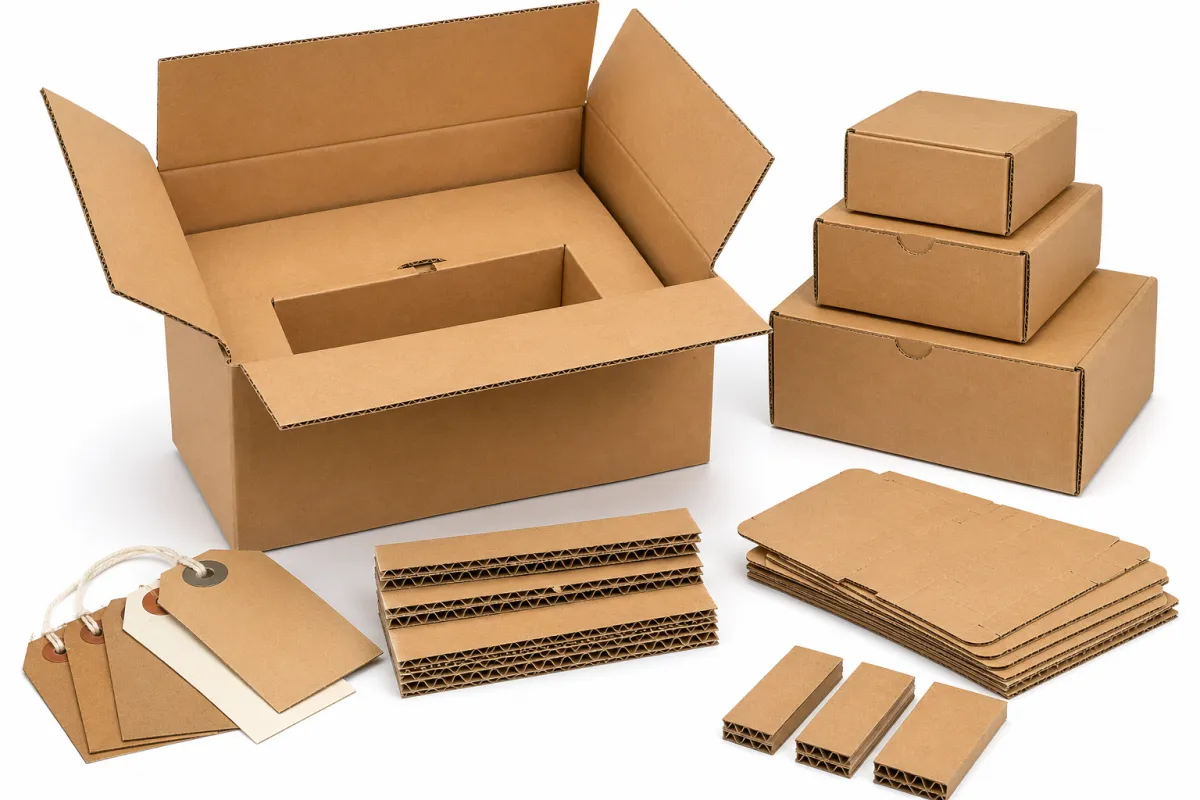
Spend time on a dock and the pattern gets obvious fast. Two cartons can look close enough to fool a tired eye, but one buckles because the flute is too light for the stack height, while the other is built like a bunker and wastes board, space, and cash. That is the real job for wholesale corrugated packaging suppliers. They are not just pricing cardboard. They are matching the shipment profile, the product's fragility, the handling environment, and the impression the customer gets when the box lands.
The right spec is usually the one that holds the load without piling on extra material or turning pack-out into a wrestling match. A carton that fits cleanly and travels well can lower labor at the packing station, reduce dunnage, and improve pallet utilization. In plain terms, the full landed cost matters more than the unit price. A lower per-box quote can turn into the expensive choice if it triggers rework, damage, oversized freight, or extra manual steps that slow the line.
That is why wholesale corrugated packaging suppliers should talk about total packaging cost instead of only piece price. Real packaging cost includes:
- carton price per unit
- freight and pallet configuration
- labor to fold, fill, and seal
- void fill or inserts needed to stabilize the product
- damage risk and claims exposure
- cube efficiency and how many cartons fit per pallet or trailer
That shift in thinking changes buying decisions quickly. A right-sized carton can use less corrugated material and still protect better than a box stuffed with extra pads, bubble wrap, and wishful thinking. That is where experienced wholesale corrugated packaging suppliers earn their keep. They help you spend a little smarter so the shipment behaves better all the way to the destination.
The cheapest carton is rarely the lowest-cost shipment. If the box fails in transit, the savings disappear fast in damaged goods, extra labor, and replacement freight.
Standards matter too. For distribution testing, many teams use ISTA methods to see how a package handles vibration, compression, and drop events. For fiber sourcing and responsible forestry, procurement teams often ask for FSC documentation. Wholesale corrugated packaging suppliers that can speak clearly about those standards make the buying process less annoying and a lot more useful.
The point is simple: match the corrugated construction to the product so the shipment stays stable, the line keeps moving, and the customer receives something that looks intentional instead of improvised. That is the line between buying boxes and building a packaging system.
Wholesale Corrugated Packaging Suppliers: Box Types, Inserts, and Conversions
Different products need different carton styles, and wholesale corrugated packaging suppliers who know the business usually ask how the item loads before they talk about price. Top-loaded or side-loaded? Single unit or multi-pack? Retail-ready or warehouse-only? Those answers point to the right structure faster than guessing from dimensions alone.
The common box families are familiar, but each does a different job. Regular slotted containers are the workhorse for general shipping. Half-slotted cartons work well for trays, displays, and top-fill applications. Custom die-cut boxes give a tighter fit and a cleaner presentation for e-commerce and branded packaging. Two-piece sets and telescope-style cartons fit larger or heavier goods where coverage and stackability matter. Partitions, pads, and inserts add protection without overbuilding the outer carton.
That mix matters operationally too. Many wholesale corrugated packaging suppliers can consolidate several box sizes into fewer standard footprints, which simplifies inventory, trims tooling overlap, and makes replenishment less painful. If you are running multiple SKUs through one packing line, fewer box sizes usually means faster picking and fewer mistakes. Simple math, which is rare enough to be refreshing.
For retail packaging and shelf-facing programs, the conversation expands into graphics and presentation. One-color identification, product labels, and simple print bands may be enough for some programs. Others need sharper package branding or Custom Printed Boxes with registration that stays clean after handling and stacking. Wholesale corrugated packaging suppliers should be blunt here: more print coverage can look better, but it also affects cost, setup, and sometimes lead time.
The insert can matter as much as the outer carton. Corrugated dividers keep bottles, glass, electronics, small parts, and kits from sliding around. Die-cut inserts can suspend a product in the center of the pack, which cuts edge impact without filling the box with foam or loose fill. For fragile goods, that usually means a cleaner pack-out and a more polished unboxing experience.
Here are a few uses that show up all the time:
- RSC cartons for warehouse shipping, industrial components, and straightforward e-commerce orders
- Die-cut mailers for subscription kits, apparel, cosmetics, and other brand-heavy product packaging
- Partitions and inserts for glass, candles, hardware assortments, and fragile sets
- Two-piece cartons for heavy items, long items, or product families that need coverage plus access
- Trays and display packs for shelf merchandising and retail packaging programs
If you are comparing wholesale corrugated packaging suppliers, ask how many of these styles they can produce in-house or source reliably. A supplier that can handle the outer carton and the protective interior usually creates fewer coordination headaches and gives you a cleaner spec to manage on repeat orders.
When you need both speed and control, a strong Shipping Carton Supplier partnership with one team handling conversions, inserts, and finish options reduces errors. It is a small advantage with huge downstream value.
Corrugated Specifications That Decide Strength and Fit
Corrugated packaging looks simple until a carton collapses under stack pressure or rattles around because it is too loose. Wholesale corrugated packaging suppliers spend a lot of time on what sits under the surface because that is where performance lives. The basic choices are board construction, flute profile, strength rating, and dimensional accuracy.
Single-wall board is the most common option for many shipping boxes. It works for light to moderate loads and is often paired with B, C, E, or combination flutes. Double-wall construction adds more compression strength and works better for heavier items, longer storage cycles, or warehouse stacking. Triple-wall is for demanding industrial applications where the carton needs serious structural support.
Flute profile is another lever that matters more than most people expect. A smaller flute can give you a cleaner print surface and a tighter box feel, while a larger flute often adds cushioning and crush resistance. The right choice depends on product weight, transit distance, and whether the shipment moves by parcel, LTL, or palletized distribution. Wholesale corrugated packaging suppliers should be able to explain that tradeoff plainly. No jargon fog, no hand-waving.
Two technical measures come up again and again: burst strength and Edge Crush Test, or ECT. Burst strength tells you how much force the board can take before it ruptures. ECT is especially useful for predicting stacking performance. If your boxes go four high on a pallet or sit in a warehouse for weeks, the stacking profile and ECT rating matter a lot. Buyers do not need to memorize every test method, but they do need to know that 32 ECT, 44 ECT, and double-wall constructions are not interchangeable just because the outside dimensions match.
Fit matters just as much. A box can be strong and still be wrong if the inside dimensions do not leave enough room for loading and closure. Too tight, and operators fight the pack-out. Too loose, and the product shifts, scuffs, or needs extra cushioning. Good wholesale corrugated packaging suppliers ask for the packaged size, not just the item size. That difference matters when the product has handles, corners, retail sleeves, or attached parts that change the true envelope.
Cut tolerances, score placement, and glue control also affect how the box folds and squares up. For custom runs, a tolerance around plus or minus 1/16 inch may work for some jobs, while tighter-fit applications need more careful structural review. Mailers, branded packaging, and carton styles with locking tabs or special closures are especially sensitive to this kind of detail.
Humidity exposure, pallet stability, and moisture resistance deserve attention too. Corrugated board can lose strength in damp conditions, so a cold chain, a humid warehouse, or a route that crosses wet climates may call for a stronger construction or a coated solution. In some cases, wholesale corrugated packaging suppliers will recommend a different flute or a better liner so the box keeps its shape through handling instead of turning into a soft square on the floor.
If you work with multiple production sites or regional facilities, ask whether a corrugated box supplier can maintain consistency in board caliper and glue lines. That consistency is often what keeps quality from drifting quarter to quarter.
The best spec is the one that gives enough protection without turning the pack-out into a headache. Enough structure to protect the product. Enough dimensional discipline to keep packing efficient. Enough print quality to support the brand where it counts. That is the target.
Pricing, MOQ, and What a Fair Wholesale Quote Includes
Pricing goes sideways fast when box quotes are compared as if every carton were the same. Wholesale corrugated packaging suppliers know better because they see the variables every day. A unit price is shaped by board grade, size, print coverage, die costs, setup time, run length, pallet count, and shipping distance. If those variables are not aligned, the comparison is noise.
MOQ, or minimum order quantity, usually reflects production setup and material efficiency. A custom printed carton may need a larger run to spread tooling, press setup, and waste across enough units to make sense. A plain shipping box can sometimes be quoted in smaller quantities, especially if it is a standard size or a stock-style construction. Bigger runs usually lower the unit cost, but that only helps if the inventory matches your demand pattern.
A fair wholesale quote should say more than a dollar amount. It should spell out the carton style, board construction, print method, dimensions, quantity, freight terms, sample costs if any, and whether tooling or die charges are included. If any of that is missing, ask. Wholesale corrugated packaging suppliers that answer clearly are much easier to work with later if something shifts in production or transit.
Here is a practical comparison of common options. These numbers are directional and will move with size, board grade, print coverage, and freight, but they work well for early budgeting.
| Box Style | Typical Construction | Best Use | Common MOQ | Indicative Unit Range |
|---|---|---|---|---|
| RSC shipping box | Single-wall, 32 ECT or similar | General shipping, warehousing, e-commerce | 500-1,000 pieces | $0.45-$1.20 |
| Die-cut mailer | E flute or B flute, custom score | Branded packaging, subscription kits | 1,000-3,000 pieces | $0.70-$2.10 |
| Double-wall carton | BC flute or equivalent | Heavier products, stacking, pallet loads | 500-1,500 pieces | $1.20-$3.50 |
| Two-piece telescope set | Single-wall or double-wall | Long items, bulk parts, better coverage | 500-1,000 sets | $1.10-$3.25 |
| Partitions or inserts | Corrugated or chipboard, die-cut | Fragile goods, separation, anti-shift protection | 1,000+ pieces | $0.08-$0.60 per component |
Those ranges are not universal, and any honest supplier should say that out loud. A large carton with heavy print coverage can cost far more than a tiny plain mailer, and freight can swing the final number in a big way if the pallets are oversized or the destination is far from the plant. That is why wholesale corrugated packaging suppliers should quote from the same spec sheet, not from a vague description that leaves too much room for guesswork.
Watch hidden cost drivers too. Hand assembly adds labor. Excessive void fill adds materials and time. Reprint fees can show up if artwork is not approved cleanly. Rush freight can wipe out the savings you thought you got on unit price. A strong quote should show the landed cost clearly instead of hiding it behind a cheap-looking box price.
For branded packaging and Custom Printed Boxes, ask whether the price includes one-color flexographic print, full coverage print, inside print, or special finishes. Ask how many versions are included if you need multiple SKUs. Wholesale corrugated packaging suppliers that support product packaging programs regularly should be able to break that out without forcing you to chase details through three separate emails.
One practical check is to ask a corrugated packaging supplier for a quote breakdown that separates material, print, labor, and freight. If these four buckets are not separated, the number is not as useful as it looks.
Process and Timeline: From Artwork Review to Delivery
The buying process runs a lot better when wholesale corrugated packaging suppliers follow a disciplined workflow. It usually starts with a request for quote, then moves into specification confirmation, structural review, artwork approval, proofing or sampling, production, and shipment. Each step sounds obvious. The delays happen when one detail was never pinned down at the start.
Missing dimensions are a classic headache. So are vague print requirements, late changes after tooling begins, or a product sample that does not match the final packaged size. If the supplier is waiting on a corrected file or a revised die line, the clock stops. A clean quote package saves time because wholesale corrugated packaging suppliers can move faster when they do not have to guess at the product envelope or print placement.
There is a real difference between stock-style orders and fully custom conversions. A standard corrugated shipping box with no print can often move quickly because there is less setup and fewer approval steps. A custom die-cut carton or branded packaging program may need structural review, tooling, and proof approval before production starts. That is normal. It just means the buyer needs to plan ahead instead of assuming the box fairy is gonna sort it out overnight.
Lead times vary by quantity, complexity, season, and freight method. A practical planning window for Custom Corrugated Packaging is often about 12-15 business days after final proof approval for simpler runs, while more complex jobs can take longer. Add time if artwork is not final, if multiple inserts are involved, or if the order needs specialized coatings or unusual board grades. Wholesale corrugated packaging suppliers that communicate milestones clearly make inventory planning easier for production and receiving teams alike.
Good communication matters after the order is placed too. A supplier should tell you when artwork is received, when proofs are approved, when production starts, and when shipment is scheduled. That kind of visibility helps the buyer line up dock space, labor, and downstream assembly. Small on paper, expensive in reality if it is missing.
If your packaging program includes multiple box sizes or seasonal volume swings, ask how repeat orders are handled. Reorders should not start from scratch every time. Experienced wholesale corrugated packaging suppliers usually keep order history, tooling references, and print notes organized so replenishment stays predictable. That helps a lot for wholesale packaging programs that need stable dimensions over long stretches of time.
For buyers building a larger sourcing process, it helps to compare a supplier's product range and order pathways through pages like Custom Packaging Products, the Wholesale Programs overview, and the shipping-focused options in Custom Shipping Boxes. That gives you a clearer read on how the program is organized before you send a formal spec request.
The practical rule is simple: the fuller the spec sheet, the less likely the job is to stall. That applies whether you are ordering plain corrugated shippers, retail packaging, or custom printed boxes with tighter brand requirements.
Why Choose Our Wholesale Corrugated Packaging Team
What buyers usually want from wholesale corrugated packaging suppliers is not mystery or buzz. They want accurate recommendations, consistent execution, and enough technical judgment to keep them from overbuying. That is the bar. A good supplier looks at the product weight, the distribution route, the pack-out method, and the branding goal, then recommends a carton that works without making the operation harder than it needs to be.
That practical mindset matters because overbuilt packaging can waste just as much as underbuilt packaging. Extra board raises cost, cuts pallet cube, and slows packing. Underbuilt packaging creates damage, complaints, and rework. A strong wholesale partner helps you balance those tradeoffs instead of pushing the heaviest construction every time. The biggest box is not automatically the smartest one. Shocking, I know.
Consistency is another place where experienced wholesale corrugated packaging suppliers stand out. Once a box is approved, repeat orders should come back with the same score, the same fit, and the same print result. Small changes in board weight or cut quality can ripple through a pack line very quickly. That is why manufacturing discipline matters. Packaging design is not only about the first sample. It is about every reorder behaving the same way.
Early risk detection also saves money. A supplier with real corrugated experience should spot weak stack patterns, overcomplicated artwork, poor pallet coverage, or a dimension that will cause trouble once the boxes go into production. That kind of feedback can save time long before the first case ships. It also protects the brand image, which is easy to forget when the conversation stays locked on board and freight.
For customers building a branded packaging program, the benefits are even clearer. A well-designed carton can do more than carry product. It can support package branding, reinforce product categories, and make the shipping experience feel deliberate. That does not always mean elaborate graphics. Sometimes a clean one-color print and a precise fit do the job better than a pile of ink and a box that barely closes.
Wholesale corrugated packaging suppliers should also understand documentation. Some buyers need FSC chain-of-custody information. Others need technical input tied to ASTM or ISTA testing. Some care most about production consistency, while others care about how the box presents on shelf or in an unboxing workflow. Good suppliers adapt to that mix instead of handing every customer the same canned answer.
If you want a practical place to start, look for a supplier that can explain board grades in plain language, quote custom corrugated packaging without hiding the extra charges, and help you compare alternatives without pushing unnecessary complexity. That is the kind of partner that keeps procurement calmer and the shipping department less irritated.
Also, if you use a carton conversion house that handles both external design and structural packaging support, you cut one major handoff. Fewer handoffs usually means fewer translation errors between sourcing, prepress, and factory floor.
Next Steps: Build a Quote Request That Gets Fast Answers
The fastest way to get useful pricing from wholesale corrugated packaging suppliers is to send a clear spec sheet, not a short email that says "need boxes, please quote." A complete request should include inside dimensions, product weight, box style, print requirements, shipping method, stacking needs, annual or monthly volume, and the delivery window. If you already know the board grade or flute profile you want, include that too. If not, ask for a recommendation based on the product profile.
Photos help more than many buyers expect. A picture of the product, the current packaging, or the packed-out pallet can reveal fit problems, handling risks, and wasted space very quickly. If the product is unusually shaped or fragile, a sample unit sent to the supplier can save a lot of back-and-forth. Wholesale corrugated packaging suppliers can make better calls when they can see the load instead of reading a sentence and guessing.
It also helps to compare quotes on the same terms. Ask each supplier to quote the same dimensions, construction, print method, freight assumption, and delivery location. If one supplier is quoting a single-wall shipper and another is quoting double-wall, you are not looking at a real comparison. The same rule applies to die-cut cartons, inserts, and custom printed boxes: align the spec before the price means anything.
Think about whether you need a prototype or pre-production sample. That is especially smart for heavy goods, fragile goods, or branded packaging that has to look right on arrival. A sample lets you test fit, strength, closure, and presentation before full production starts. It may add a little time, but it can keep a much bigger mistake from landing on your dock later.
For recurring programs, keep one master spec document and use it every time you talk to wholesale corrugated packaging suppliers. That one habit cuts confusion, speeds up reorders, and makes apples-to-apples comparison much easier. It also keeps internal teams aligned on product packaging goals, which matters when purchasing, operations, and marketing all care about different parts of the result.
In practical terms, the buying process gets cleaner when you ask for what you actually need: a carton that fits, protects, ships efficiently, and supports the brand without wasting materials. That is the standard worth aiming for with wholesale corrugated packaging suppliers, and it is the standard Custom Logo Things is built to support through better spec review, clearer quoting, and smarter packaging decisions.
How do I choose wholesale corrugated packaging suppliers that fit my business?
Start with outcomes, not marketing language. You do not need a bigger logo. You need less friction. The most reliable way to compare wholesale corrugated packaging suppliers is to put each candidate through the same test: Can they recommend the right corrugated spec, explain the cost drivers, and support repeat orders without guesswork?
Use this short checklist before you place the first order:
- Can they recommend single-wall, double-wall, or custom die-cut options based on your actual usage?
- Do they provide clear specs for ECT, burst strength, and dimensional tolerance?
- Do they include all charges up front, including print, tooling, samples, and freight assumptions?
- Can they source from a reliable packaging converter or in-house team and keep consistency over time?
- Do they respond quickly with practical alternatives when you change volume or artwork?
That checklist sounds simple. It is usually where weak providers fall apart, especially in larger runs.
What do wholesale corrugated packaging suppliers need to quote accurately?
Provide inside dimensions, product weight, box style, print needs, and shipping method. Add your annual or monthly volume so the supplier can judge pricing breaks and MOQ. Include any special handling requirements, such as stacking strength or moisture exposure, so the quote reflects the real shipment profile instead of a guess.
How do I compare wholesale corrugated packaging suppliers on quality?
Compare the same board grade, flute profile, dimensions, and print method across each quote. Ask for samples or proofs so you can check fit, score quality, and structural consistency. Review whether the supplier explains performance in shipping terms, not just in box terminology, because that usually shows who understands the application and who is just reading from a quote form.
What is a common MOQ for corrugated packaging orders?
MOQ depends on whether the item is stock, custom printed, or die-cut. Higher quantities usually reduce unit cost because setup and material waste are spread out. If your volume is lower, ask about shared tooling, standard sizes, or simplified print options so you can keep the order practical and avoid paying for excess capacity you will never use.
Can wholesale corrugated packaging suppliers provide custom inserts too?
Yes, many can supply corrugated partitions, pads, or die-cut inserts along with the outer carton. Custom inserts help prevent shifting, improve stacking, and reduce void fill. Match the insert design to the product shape so the carton closes cleanly and packs quickly on the line instead of turning into a small engineering project.
How long does a wholesale corrugated packaging order usually take?
Lead time depends on complexity, quantity, proof approval, and freight method. Custom tooling and print approval can add time before production starts. The fastest orders are the ones with complete specs, clean artwork, and quick sign-off, which is why planning ahead pays off and last-minute changes usually cost more than they should.
If you want fewer surprises and a cleaner purchasing process, use one spec sheet, one set of ship-testing assumptions, and one comparison method when talking to wholesale corrugated packaging suppliers. Then choose the quote that explains its board grade, fit, print, and freight assumptions without hand-waving. That is the box that is most likely to work on the line, survive transit, and stay out of your inbox later.


