Buyer Fit Snapshot
| Best fit | poly mailers for small businesses decision review for packaging buyers comparing material specs, print proof, MOQ, unit cost, freight, and repeat-order risk where brand print, material, artwork control, and repeat-order consistency matter. |
|---|---|
| Quote inputs | Share finished size, material target, print colors, finish, packing count, annual reorder estimate, and delivery region. |
| Proofing check | Approve dieline scale, logo placement, barcode or warning zones, color tolerance, and any recyclable or compostable wording before bulk production. |
| Main risk | Vague material claims, crowded artwork, or missing packing details can create delays even when the unit price looks attractive. |
Fast answer: Poly Mailers for Small Businesses Decision Review: Film, Closure, Print, and Fulfillment should be specified like a repeatable production item. The safest quote includes material, print method, finish, artwork proof, carton packing, and reorder notes in one written spec.
What to confirm before approving the packaging proof
Check the product dimensions against the actual filled item, not only the sales mockup. Ask for tolerance on folds, seals, hang holes, label areas, and retail display edges. If the package carries a logo, QR code, warning copy, or legal claim, reserve that space before decorative graphics fill the panel.
How to compare quotes without losing quality
Compare board or film grade, print process, finish, sampling route, tooling charges, carton quantity, and freight assumptions side by side. A lower quote is only useful if the supplier can repeat the same color, closure quality, and packing count on the next order.
Best poly mailers for small businesses: honest picks
The best poly mailers for small businesses are rarely the lowest line on a quote sheet. A cheap unit price can look appealing right up until a split seam, a weak adhesive strip, or a bag that opens at the corner starts sending money back out the door through returns, replacements, and those awkward apology emails nobody enjoys writing. I have watched enough packaging decisions unravel to know the pattern: what looks inexpensive on paper can become the most expensive part of shipping once real orders start moving.
That is why the best poly mailers for small businesses usually sit at the intersection of seal strength, film thickness, opacity, and order-size flexibility. Some businesses need plain shipping bags that keep volume moving with very little fuss. Others need branded mailers that make the package feel thoughtful before a customer even opens it. A few need more puncture resistance because the shipment includes folded denim, boxed accessories, or anything with a corner that wants to work its way through thin film. If your products are the kind that shift around a lot in transit, you are gonna feel the difference fast.
The most practical way to choose is to match the mailer to the actual shipping pattern, not the polished version of it. The best poly mailers for small businesses usually fall into four useful categories: budget basic shipping, branded presentation, heavier-duty apparel protection, or an eco-minded option that supports a sustainability story without stretching the truth. Each one solves a slightly different problem, and each one can be right if the product, the volume, and the budget line up cleanly.
Here is the lens I trust. Light, soft, consistently sized products can often ship in a plain stock bag. Apparel usually pushes the decision toward seal quality and seam strength. Premium brands tend to care about print quality and opacity almost as much as the item inside the package. High-order-volume sellers often discover that the cheapest mailer is not the one that protects margin once damage claims start showing up, because the hidden costs have a habit of adding up quietly and then all at once.
The cheapest mailer is not cheap if it creates returns, re-shipments, or customer service tickets. That lesson shows up again and again, and packaging has a way of making the math painfully clear.
Bottom line: the best poly mailers for small businesses are the ones that protect the product, fit the brand, and keep total shipping cost under control. Plenty of buyers still skip that step while chasing the unit price, and that is where avoidable waste starts creeping in.
Best Poly Mailers for Small Businesses: Top Options Compared
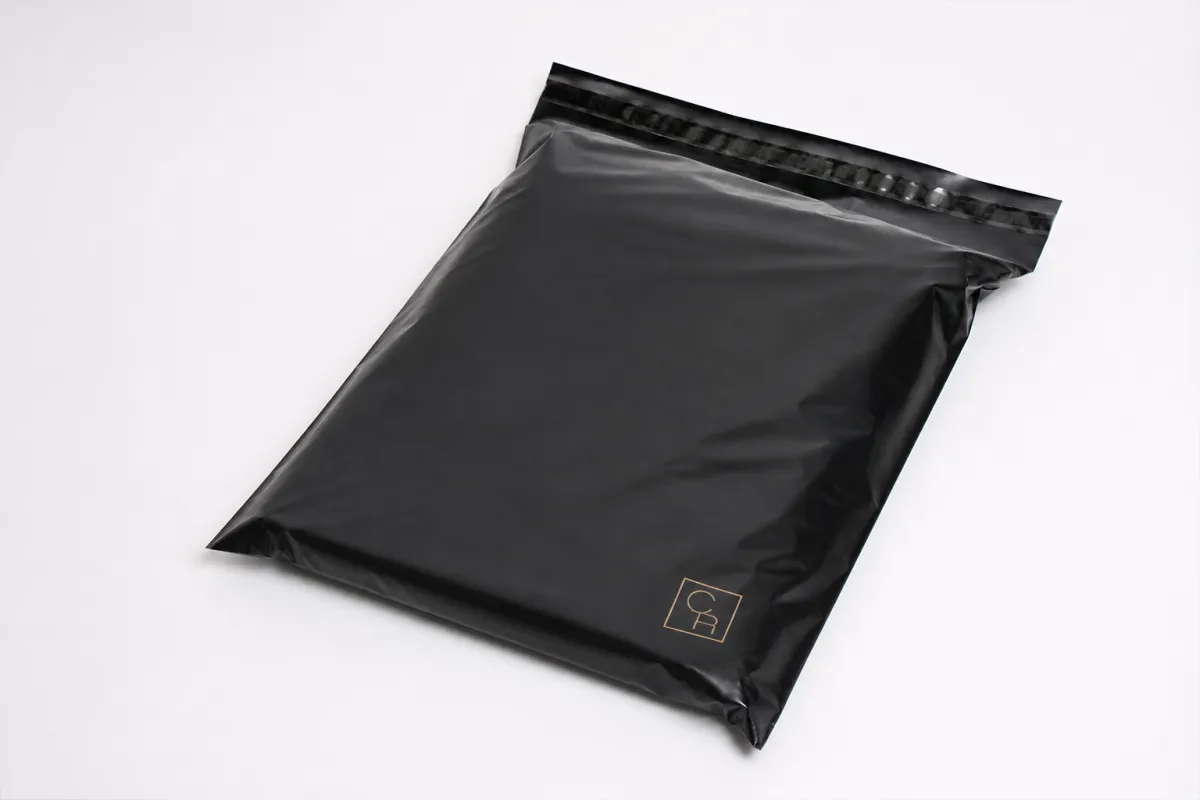
The best poly mailers for small businesses are easier to compare once the main categories sit side by side. A quote sheet full of nearly identical bags can hide real differences in film gauge, adhesive quality, and print readiness. The right bag for a five-piece apparel order is not always the right bag for a subscription kit or a heavier soft-good shipment, even if the specs look close at first glance.
For planning, I prefer pricing that reflects a real small-business buying tier instead of a tiny sample order. The table below uses a typical order size of around 5,000 units because that is where pricing starts to show its true shape. At lower quantities, small differences can be distorted by setup fees, while higher volume can make a better bag look more expensive than it really is if you do not compare the full shipping picture.
| Option | Best for | Durability | Adhesive Quality | Print Readiness | Typical Price per Unit | Main Tradeoff |
|---|---|---|---|---|---|---|
| Plain economy poly mailers | Basic apparel, low-risk soft goods, high-volume shipping | Good for light loads; usually 2.5-3 mil | Decent if sourced well, but varies | Low unless you add labels or stickers | $0.06-$0.12 | Lowest price, but weak margins if damage rates rise |
| Premium tear-resistant mailers | Brands that want fewer splits and a cleaner feel | Very good; often 3.5-4 mil | Usually stronger, better first-press seal | Moderate; solid colors look polished | $0.10-$0.18 | Costs more up front, but can save money on replacements |
| Custom printed poly mailers | Branded unboxing, repeat customers, social-friendly packaging | Good to very good, depending on gauge | Usually specified in the custom run | Excellent for logos, color, and on-brand messaging | $0.18-$0.32 | Higher MOQ and longer lead time |
| Eco-forward mailers | Stores that want recycled content or lower-impact messaging | Varies widely; check exact spec | Often good, but not always premium | Good if printing is simple and restrained | $0.14-$0.28 | Green claims need careful wording and proof |
| Heavy-duty poly mailers | Bulkier apparel, multiple garments, items with sharper edges | Excellent; often 4-6 mil | Strong, especially with wider seals | Good, though finish may feel more utilitarian | $0.16-$0.30 | More material cost and slightly higher shipping weight |
The best poly mailers for small businesses often land somewhere in the middle of that table, not at the extremes. That middle is where the economics usually make sense. A mailer that costs three cents less but adds a 1% damage rate can erase the savings in a hurry. On 2,000 orders, a 1% problem rate means 20 re-shipments. If each replacement shipment costs $7 to $12, the "cheaper" bag stops looking cheap very quickly, and the math gets kinda unforgiving once you start counting actual exceptions instead of just purchase orders.
Here is the comparison rule I trust most: a slightly higher unit cost is worth it if it cuts leakage, replacements, or customer complaints. If you sell a $28 item and your packaging prevents one damaged shipment out of every hundred, the numbers usually settle the argument for you. The best poly mailers for small businesses are not judged alone; they are judged against the cost of failure.
If you want a branded route, start with our Custom Poly Mailers. If you are still mapping a broader packaging stack, browse Custom Packaging Products for a wider view of what can support your shipping setup.
Detailed Reviews: What We Liked and What Failed
The best poly mailers for small businesses earn their keep in the details. Seal reliability matters. So does how the film feels in the hand, whether the corner seams hold under pressure, and whether the finished bag looks clean enough to ship directly to a customer without apology. I judge these bags the same way a buyer should: by how they behave during packing, transit, and unboxing, not by the stock photo or the polished mockup.
For a practical review, I would look at four failure points: puncture resistance, adhesive consistency, seam integrity, and how the mailer holds its shape when filled. The best poly mailers for small businesses should survive a rough route, a rushed packout, and a customer who opens the package with scissors. The weak ones reveal their flaws early, and they do not usually hide them well.
Plain economy poly mailers
These are the workhorses. If you ship T-shirts, socks, light accessories, or low-value goods, the best poly mailers for small businesses may be a plain economy bag. The film is usually thinner, often around 2.5 to 3 mil, and the finish stays basic. That is not glamorous, but it can be perfectly sensible for a brand that ships at scale and keeps product risk low.
Best feature: the price. A stock economy bag can keep shipping costs disciplined, especially if you buy in carton quantities. Deal-breaker: the adhesive and seam quality can vary more than buyers expect. If a batch is inconsistent, the savings disappear the first time a bag opens in transit.
My take: these are the best poly mailers for small businesses only when the product is forgiving and the supplier is consistent. They are not the place to cut corners if your items have hardware, zippers, or any sharp edge. I have seen a bargain bag do fine for months and then fail on the one order that really mattered, which is exactly the kind of problem nobody wants to explain after the fact.
Premium tear-resistant mailers
This is the category that surprises people. The film feels firmer, the corners resist stretch better, and the closure tends to behave with more predictability. The best poly mailers for small businesses often land here if the goal is to reduce complaints without jumping all the way to custom print. Think of it as the grown-up version of a basic mailer, just without the premium branding overhead.
Best feature: better puncture resistance and a more confident hand feel. That matters more than many buyers admit. Deal-breaker: you pay for it. The premium is not huge, but it is real.
For apparel brands shipping hoodies, leggings, or mixed soft goods, this category often becomes the smart middle ground. It is the kind of packaging that looks intentional even when the customer cannot quite name why it feels better. The package arrives, the seam holds, the contents stay crisp, and that small difference can shape the buyer’s opinion before the product even gets a fair look.
Custom printed poly mailers
If presentation matters, this is where the best poly mailers for small businesses start acting like brand assets rather than shipping supplies. Print quality can be crisp, the color can be strong, and a well-designed mailer can make a plain apparel order feel more deliberate. That said, custom printing only makes sense if the artwork is clean and the business can live with the MOQ.
Best feature: branding. A printed logo on a solid-color bag can do more brand work than many people expect. Deal-breaker: bad artwork or overcomplicated print coverage. Busy designs can make smaller mailers look cluttered fast.
Many small businesses misread the math here. They assume custom automatically means expensive and fragile. Not always. The best poly mailers for small businesses can be custom printed and still perform well if the gauge, seal width, and artwork setup are handled properly. I have also seen the opposite, where a beautiful design sat on top of an underbuilt bag and the first rough transit run exposed every shortcut. Pretty packaging only helps if it survives the route.
Eco-forward poly mailers
The best poly mailers for small businesses with a sustainability angle deserve a closer look. "Eco" can mean recycled content, downgauged film, or a more responsible sourcing story, but those are not the same thing. Ask what percentage of recycled material is actually in the bag, whether the claim is post-consumer or post-industrial, and what local disposal route applies before you build a story around it.
Best feature: brand alignment. Customers who care about waste notice packaging choices. Deal-breaker: vague claims. If the supplier cannot explain the material spec clearly, the story is probably weaker than the marketing makes it sound.
If your policy language mentions recyclability, check your local rules and the EPA recycling guidance. Film packaging is not universally accepted in curbside systems, and promising more than the bag can deliver is a quick path to lost trust. That is especially true for brands trying to be careful and credible at the same time.
Heavy-duty poly mailers
These are the bags I reach for when the product is bulky, folded tightly, or likely to create pressure points. For multiple garments, heavier knits, or kits with harder components, the best poly mailers for small businesses are often the ones with more film and a wider seal area. The material may not feel luxurious, but it usually feels dependable.
Best feature: resistance to stretch and corner splits. Deal-breaker: extra material adds cost and can raise shipping weight slightly, which matters if you are watching carrier thresholds closely.
One practical note: if the item inside can shift and bruise the corners of the mailer, go heavier. Preventing a failure costs less than explaining one to a customer who expected a clean delivery. That simple choice can save a lot of back-and-forth later, and it often keeps the fulfillment team moving without rework.
For a reality check on package performance testing, the International Safe Transit Association is worth reading. Not every small brand needs a formal test lab, but the logic behind transit testing is useful: simulate the bumps, drops, compressions, and handling a parcel actually sees before it reaches a doorstep.
Cost, Pricing, and MOQ: What Small Businesses Actually Pay
The best poly mailers for small businesses are rarely the lowest sticker price. They are the option that delivers the lowest total cost after damage, labor, and replacement shipping are included. That difference matters. A bag that costs $0.08 may seem cheaper than one at $0.12, but if the cheaper bag creates even a small failure rate, it can cost more by the end of the month.
Here is the pricing pattern I see most often. Stock economy mailers can land around $0.06-$0.12 per unit at higher carton counts. Better tear-resistant bags usually sit closer to $0.10-$0.18. Custom Printed Mailers often start around $0.18-$0.32 depending on size, ink coverage, film gauge, and whether the order is one color or multiple. The best poly mailers for small businesses can sit anywhere inside that band, but the price only makes sense if you compare apples to apples.
MOQ changes the math. A stock mailer might be available in smaller runs, sometimes 500 to 1,000 pieces, while custom runs often start much higher because setup, plate costs, and production scheduling need to be absorbed across the order. If your monthly shipping volume is low, a custom order can tie up cash and storage space in a hurry. If your volume is steady, the larger run usually lowers per-unit cost. The best poly mailers for small businesses are the ones that fit both your budget and your warehouse reality, not just the marketing brief.
There are hidden costs people miss all the time:
- Mis-sized mailers: overstuffed bags slow packout and can force a second shipment size.
- Replacement shipments: one damaged parcel can cost several times the bag price.
- Void fill or secondary packaging: the wrong mailer can force extra padding or an inner bag.
- Customer service time: every complaint has a labor cost, even if nobody invoices it directly.
Do the simple math Before You Order. If you ship 1,500 parcels a month and a cheaper mailer raises your damage rate by just 1.5%, that is 22 or 23 extra problem shipments. At $8 each, that is roughly $176 in direct replacement cost before you count labor or lost goodwill. Suddenly the best poly mailers for small businesses are not the cheapest ones, but the ones that keep those hidden costs under control.
My buying rule is blunt: if one option saves a few cents but causes even a small damage rate, it can cost more than the sturdier competitor. That is the kind of mistake that stays hidden on the invoice and shows up plainly on the returns report. I have seen brands spend weeks trying to recover a margin leak that started with a package choice nobody thought would matter.
Process, Timeline, and Lead Time: From Order to Delivery
The best poly mailers for small businesses are not just a product choice. They are a timing choice. Stock bags and custom bags follow very different paths, and that difference affects cash flow, launch schedules, and restock planning. If you are short on time, the order process matters almost as much as the film itself.
Stock mailers are the easiest to move. You place the order, confirm size and color, and wait for inventory to ship. In a normal setup, delivery can be fairly quick if the supplier has inventory on hand. Custom orders take longer because they usually involve artwork review, proof approval, setup, and production scheduling. A typical custom run often lands in the 12-15 business day range after proof approval, though larger or more complex orders can stretch beyond that. The best poly mailers for small businesses are often the ones that arrive before your launch date, not after it, because a missed fulfillment window tends to ripple through the rest of the schedule.
There are three timing risks I watch closely:
- Artwork revisions: one small logo fix can add days if nobody owns the proof process.
- Seasonal spikes: peak periods tighten production schedules and freight slots at the same time.
- Inventory gaps: if the supplier is out of a popular size, you may be pushed into a substitute that does not fit your product as well.
Here is the workflow I recommend for the best poly mailers for small businesses:
- Order samples before production, not after.
- Confirm folded product dimensions with a ruler, not a guess.
- Check seal width and adhesive placement on the sample bag.
- Leave a buffer if your launch date depends on packaging arrival.
That last point is where many smaller brands get squeezed. They place a packaging order too late, then rush to make the first drop. The result is either a generic emergency bag or a launch delay. Neither feels good. The best poly mailers for small businesses are chosen early enough that you can still adjust if the first sample feels too flimsy or the color looks off in daylight.
Freight timing deserves the same attention. A production schedule can be perfect and the shipment can still lose days in transit. If you are planning to launch a new collection or switch packaging before a sales push, build in enough margin that one delay does not cascade through fulfillment. That buffer is often the difference between a calm receiving week and a very long one.
How to Choose the Right Poly Mailers for Your Products
The best poly mailers for small businesses are matched to the product, not the ego of the brand. That sounds blunt, but packaging is full of unnecessary drama. A mailer should solve a shipping problem. If it creates one, it is the wrong bag.
Start with product weight and shape. Light tees, thin accessories, and flat textiles can usually live in a lighter-gauge bag. Heavier items, bulkier knits, and products with hardware or corners need more protection. In practical terms, I rarely recommend going too thin once a parcel starts approaching a pound or the contents have anything that can poke or abrade the film. The best poly mailers for small businesses are the ones that match the failure point you are actually trying to prevent.
Thickness matters, but only in context. A 2.5 mil mailer can work very well for soft goods, especially if the adhesive is strong and the product fits cleanly. A 4 mil mailer may be worth the extra cost if the package needs more puncture resistance or a stronger feel in hand. The point is not to buy the thickest bag available. The point is to buy the right one. The best poly mailers for small businesses are rarely chosen by thickness alone; they are chosen by the way the product behaves inside the bag.
Size selection is another place where buyers make expensive mistakes. Too small, and you force the seam to work too hard. Too large, and the package looks sloppy, shifts around in transit, and may trigger needless dimensional waste. For apparel brands, common sizes like 6x9, 9x12, 10x13, 12x15.5, and 14x19 cover a lot of ground, but you should always measure the folded item first. Add just enough clearance for a clean seal. Empty space is not free, even if the bag itself is cheap.
Branding choices matter too. White mailers can feel clean and bright. Black mailers can read premium and hide contents well. Clear mailers are more niche and usually fit best when visibility is part of the product story. Printed mailers do the most brand work, but the print area needs to be used carefully. Large blocks of color can look sharp or chaotic depending on execution. The best poly mailers for small businesses should look intentional, not noisy.
For product categories, my rule of thumb stays fairly steady:
- Apparel brands: prioritize seal consistency and a clean unboxing surface.
- Handmade goods: prioritize puncture resistance and size flexibility.
- Beauty products: prioritize presentation, opacity, and compact fit.
- Subscription sellers: prioritize repeatability and packout speed.
If you want a more formal sense of transit testing language, the best poly mailers for small businesses should be judged against the same stress points used in package-performance thinking. That is where organizations like the International Safe Transit Association are useful. You do not need a lab for every order, but you do need to think like a parcel that gets dropped, stacked, and dragged through a system you do not control.
Be honest about what the mailer is supposed to do. Some brands need the package to disappear so the product can take center stage. Others want the mailer to act like a mini billboard. The best poly mailers for small businesses can do either, but trying to force one bag into both jobs is how packaging starts to feel confused. Keep the job simple, and the choice gets a lot clearer.
Our Recommendation and Next Steps
The best poly mailers for small businesses depend on where you are in the business cycle. If you are budget-first and shipping low-risk items, a solid economy bag can make sense. If you are a growing apparel brand, I would lean toward a premium tear-resistant option before I settled for the absolute lowest price. If your packaging is part of the brand experience, custom printed mailers deserve serious attention. If your products are bulkier or more delicate in transit, heavy-duty film is usually money well spent.
My practical recommendation is to test three things before you place a larger order: seal reliability, size fit, and transit durability. Ship a small batch. Track damage rates. Ask customers whether the package arrived cleanly. Those feedback loops tell you more than a polished sample photo ever will. The best poly mailers for small businesses are the ones that perform after they leave the pack table, not just the ones that look good on a desk.
Here is a rollout sequence that works for a lot of brands:
- Choose one standard mailer for daily orders.
- Keep one backup size for edge cases or larger bundles.
- Add one branded option if presentation materially affects repeat purchases.
That sequence keeps your packaging system simple while still leaving room to upgrade. It also prevents the common trap of trying to source five mailers for five different product moods. Most small businesses do better with fewer, better-chosen SKUs, especially once fulfillment starts getting busy and the team needs something predictable.
If you are narrowing the field this week, measure your top three products, calculate monthly shipping volume, and request quotes that match those numbers exactly. Ask for stock pricing, custom pricing, and a second size if your first choice is close but not perfect. That is usually enough to separate the best poly mailers for small businesses from the merely acceptable ones.
My final take: the best poly mailers for small businesses are the ones that protect the product, fit the brand, and keep total shipping cost under control. If one bag is a little cheaper but creates friction everywhere else, it is not the winner. The winner is the one that keeps your operation moving and keeps customers from thinking twice about the boxless item that arrived intact. Start with the product in hand, the shipping risk in mind, and the smallest package that can still do the job cleanly.
Frequently Asked Questions
What size are the best poly mailers for small businesses shipping apparel?
Most apparel brands start with one or two standard sizes that fit folded tees, leggings, or lightweight hoodies without overstuffing. The best poly mailers for small businesses in apparel usually fall in the 9x12, 10x13, or 12x15.5 range, but the real answer depends on the folded product. Measure the garment first, then add just enough clearance so the adhesive seal closes cleanly and the fabric does not bunch near the top.
Are cheap poly mailers for small businesses actually worth it?
They can be, but only for low-risk, lightweight items and only if the adhesive and seam quality are reliable. The best poly mailers for small businesses are not the cheapest by default; they are the ones that stay closed, resist tearing, and avoid replacement shipments. If the damage rate rises, the low sticker price stops looking cheap very quickly, and the savings usually vanish in the return pile.
How thick should poly mailers be for a small business order?
A lighter mailer can work for soft, low-value goods, while heavier items or products with sharper edges usually need a sturdier gauge. The best poly mailers for small businesses are chosen by failure point: punctures, seam splits, or stretch around the closure area. In practice, 2.5-3 mil can be enough for simple apparel, while 3.5-4 mil or more is often a better fit for tougher shipments.
What MOQ should I expect when ordering custom poly mailers?
MOQ varies widely, but custom printing typically requires more units than stock mailers because setup costs are built into the run. The best poly mailers for small businesses in custom form often come with higher minimums than plain bags, so ask for pricing at multiple tiers. That lets you compare the true cost of a first order versus a repeat reorder before you commit cash and storage space.
Which is better for branding: white, black, clear, or printed poly mailers?
Printed mailers usually create the strongest brand impact, but solid colors can still look premium if the finish and opacity are good. The best poly mailers for small businesses are the ones that match the brand tone and shipping conditions at the same time. White can feel clean, black can feel polished, and clear can work for niche uses, but printed bags tend to do the most brand work overall.


