Buyer Fit Snapshot
| Best fit | printed zipper pouches with logo for packaging buyers comparing material specs, print proof, MOQ, unit cost, freight, and repeat-order risk where brand print, material, artwork control, and repeat-order consistency matter. |
|---|---|
| Quote inputs | Share finished size, material target, print colors, finish, packing count, annual reorder estimate, and delivery region. |
| Proofing check | Approve dieline scale, logo placement, barcode or warning zones, color tolerance, and any recyclable or compostable wording before bulk production. |
| Main risk | Vague material claims, crowded artwork, or missing packing details can create delays even when the unit price looks attractive. |
Fast answer: Printed Zipper Pouches With Logo: Before You Order Them should be specified like a repeatable production item. The safest quote includes material, print method, finish, artwork proof, carton packing, and reorder notes in one written spec.
What to confirm before approving the packaging proof
Check the product dimensions against the actual filled item, not only the sales mockup. Ask for tolerance on folds, seals, hang holes, label areas, and retail display edges. If the package carries a logo, QR code, warning copy, or legal claim, reserve that space before decorative graphics fill the panel.
How to compare quotes without losing quality
Compare board or film grade, print process, finish, sampling route, tooling charges, carton quantity, and freight assumptions side by side. A lower quote is only useful if the supplier can repeat the same color, closure quality, and packing count on the next order.
Printed Zipper Pouches With Logo: Before You Order Them
Printed zipper Pouches with Logo do a quiet kind of work that changes how a product is received. A small item in a plain bag can feel forgettable, even if the product inside is excellent. Put that same item into printed zipper pouches with logo, and the whole package looks more deliberate, easier to trust, and far more ready for a retail shelf or a crowded shelf photo.
I have watched good products lose a little of their momentum just because the packaging looked temporary. That part is easy to underestimate. A pouch does not need to shout; it just needs to feel considered. Once the logo is printed cleanly, the zipper closes properly, and the material has the right hand feel, the product suddenly reads as finished instead of provisional.
Brands keep coming back to this format for practical reasons. A reclosable pouch ships light, takes up less space than rigid packaging, and often stays useful after the first opening. That keeps the logo in front of the customer long after the product has been used. Not every packaging choice needs to be glamorous. Some of the best ones are simply useful enough to stick around.
For Custom Logo Things, the real work starts after the artwork. The pouch structure, print method, finish, and minimum order quantity all change the total cost, the shelf presence, and the timing. Those details decide whether printed zipper pouches with logo feel polished, flimsy, or priced exactly right for the product. If you skip them, the order usually tells on itself later.
Printed Zipper Pouches With Logo: What They Really Do
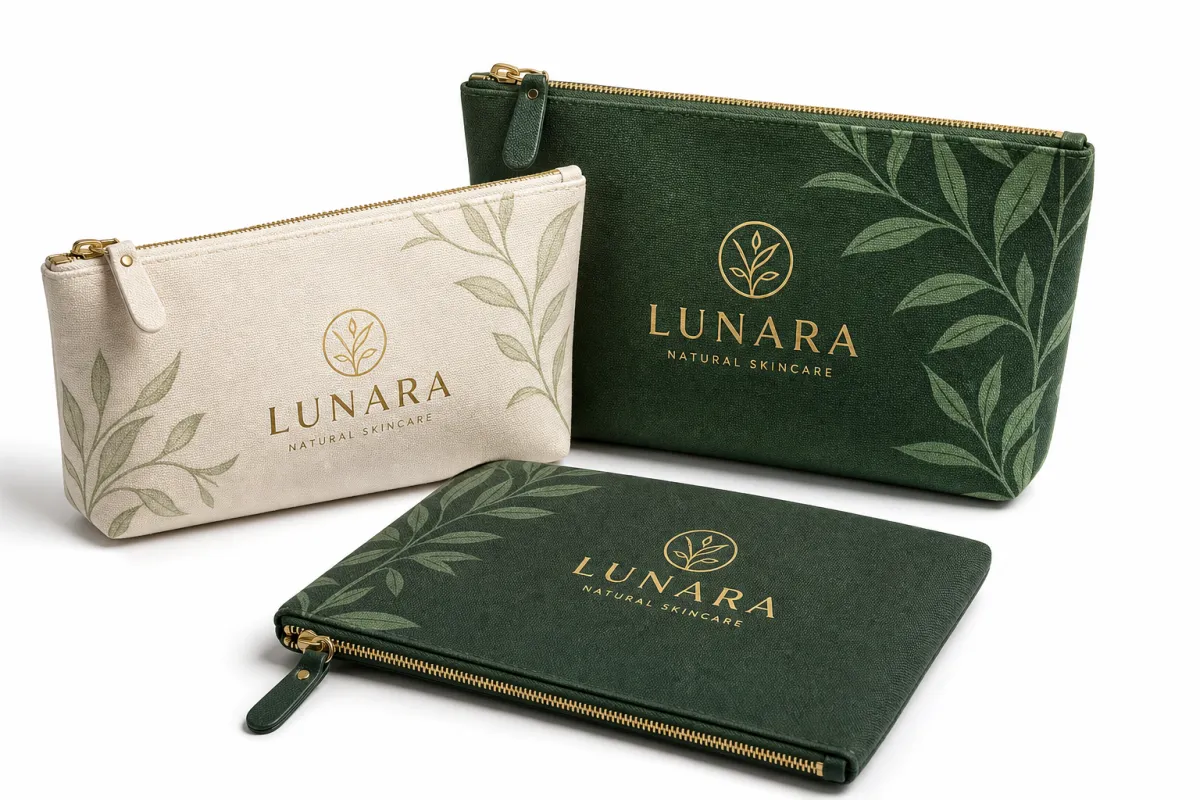
A pouch is more than a container. It is a sales surface, a storage tool, and often the first physical brand contact a buyer handles. Printed zipper pouches with logo make that first contact count. A coffee sample, supplement blend, snack, or beauty item looks very different in a clear plain bag than it does in a matte printed pouch with a clean zipper and a sharp logo lockup.
The format itself is straightforward. You have a flexible pouch with a reclosable zipper, branding printed on the exterior, and optional details like a tear notch, hang hole, clear window, matte finish, or gloss finish. Most buyers choose between stand-up pouches, flat pouches, and side-gusset styles because the shape affects both shelf presence and the filling process. The shape also changes how the product settles in the pack, which matters more than most mockups ever show.
Three reasons keep showing up again and again:
- Shelf appeal: a printed pouch looks intentional, not temporary.
- Repeat use: the zipper keeps the package useful after opening.
- Shipping efficiency: flexible packaging weighs less than rigid containers.
There is another benefit that often gets ignored during planning. A pouch usually stays in the home, office, gym bag, or bathroom cabinet long after the product is gone. That gives printed zipper pouches with logo repeated exposure without requiring another purchase. The packaging industry likes the phrase brand touchpoint. The simpler truth is that people keep the things that still work for them.
"The pouch is not decoration. It is the thing customers touch, open, and remember after the sale."
The rest of the decision is where the real value sits. Printed zipper pouches with logo affect cost, product protection, user experience, and production speed all at once. A great mockup does not help much if the pouch cannot survive filling, shipping, or repeated opening without losing its shape and feel. That sounds basic, but basic is usually what separates a packaging win from a packaging headache.
How Printed Zipper Pouches With Logo Are Made
Most printed zipper pouches with logo are built in layers. Start from the inside and move outward: a base film or laminate, a barrier layer for protection, a printed surface, a zipper closure, and heat-sealed edges that hold the structure together. The exact mix depends on the product. Coffee, powdered supplements, frozen snacks, bath salts, and skincare samples all ask for different film structures. A pouch that works well for dry tea may be a poor fit for an oily snack or a moisture-sensitive powder.
Print method changes the equation too. Digital printing usually fits shorter runs and faster turnarounds. Flexographic printing works well when quantity is higher and artwork changes are limited. Gravure and similar high-volume setups make sense once the order is large enough to justify tooling and cylinder costs. The cheapest unit price does not always win once setup, lead time, and waste are counted honestly. I have seen buyers chase a low quote, then spend more fixing what the quote left out.
The workflow usually follows a familiar path:
- Define the product size, fill weight, and pouch style.
- Confirm the dieline and safe zones.
- Prepare artwork and color references.
- Review the proof and adjust positioning.
- Approve samples if a physical check is needed.
- Run production and inspect the finished batch.
That sequence feels orderly because it usually is, as long as the buyer gives clear information up front. Printed zipper pouches with logo turn messy fast when the design begins before dimensions are settled. A logo can look perfect on screen and still land too close to a zipper, seal, or side fold once the pouch is formed. The machine only follows the geometry it is given.
Structure affects the user experience more than most people expect. A stiff, smooth zipper feels premium. A weak zipper feels like the package was chosen without anyone actually opening it twice. Seal strength matters because the pouch has to survive filling, handling, and transit. If the film is too thin, the pouch may crease badly or feel flimsy. If the barrier is wrong, the product life can suffer. The tradeoff is plain enough: better materials usually cost more, but poor materials create complaints that cost more later.
For transit testing, ask whether the supplier follows recognized methods such as ISTA procedures for shipment and handling. If the package needs to survive freight inside cartons, vague assurances are not enough. The same logic applies to paper-based outer cartons or inserts: if fiber sourcing needs documentation, look for FSC certification instead of a green-looking claim with no paperwork behind it.
Cost, Pricing, and MOQ for Printed Zipper Pouches With Logo
Pricing is where printed zipper pouches with logo stop being abstract. Buyers usually want one number, but the real answer depends on size, material, print coverage, number of colors, zipper style, finish, barrier performance, and total quantity. A 4 x 6 inch simple pouch is not priced like a 7 x 10 inch high-barrier stand-up bag with a matte finish and window panel. Pretending otherwise is how people end up frustrated by quotes that seem to change the rules halfway through.
Lower MOQ orders usually carry a higher unit price because setup costs, waste, and machine time get spread across fewer pieces. Larger orders bring the per-unit cost down and often make premium details like soft-touch lamination, custom zippers, or specialty windows easier to justify. A pilot run and a full production run can look completely different on paper for that reason alone.
Ballpark pricing for printed zipper pouches with logo often falls into these ranges, though the final number depends heavily on specs and supplier structure:
| Order Type | Typical Use | MOQ | Unit Price Range | Lead Time | Notes |
|---|---|---|---|---|---|
| Digital short run | Launches, samples, small test batches | 200-2,000 pieces | $0.28-$0.85 | Often 7-15 business days | Best for fast artwork changes and lower risk |
| Flexo mid-volume | Steady selling products | 5,000-20,000 pieces | $0.12-$0.32 | Often 12-20 business days | Better unit economics once the design is settled |
| High-volume custom | Large retail programs | 20,000+ pieces | $0.08-$0.22 | Often 20-35 business days | Tooling, plates, or cylinders may apply |
Those ranges are not a promise. They are a reality check. Printed zipper pouches with logo can climb in price quickly once you add a window, heavy ink coverage, specialty inks, metallic effects, textured finishes, or more complex barrier layers. A pouch that looks simple from across a desk may still require a careful build with more steps than the mockup suggests.
Ask for quotes that separate the real costs. Unit price, setup charges, plate or tooling fees, packaging for shipment, and freight should all be itemized. If one quote looks much cheaper and does not explain what is included, something is missing. Sometimes that missing piece is quality. Sometimes it is shipping. Sometimes it is both.
Paying more makes sense when the pouch protects a fragile formula, supports a higher retail price, or helps the product look like it belongs on a shelf instead of in a sample drawer. Printed zipper pouches with logo can absolutely pay for themselves when presentation influences conversion. They can also become unnecessary cost if the product is low-margin and the structure is overbuilt. Good buying judgment matters more than enthusiasm.
Process and Timeline for Printed Zipper Pouches With Logo
The smoothest projects follow a simple order. First comes the brief. Then artwork. Then dieline confirmation. Then proofing. Then sample approval, production, inspection, and shipment. Printed zipper pouches with logo are easier to manage when the buyer has already locked in product size, quantity, and deadline. They become painful when those details keep shifting after the quote has already been sent.
Timelines vary by print method and structure. Digital jobs can move quickly if the artwork is ready and the supplier has the right stock on hand. More custom printed zipper pouches with logo need more lead time, especially when the order includes a unique laminate, a special zipper color, or a new die-cut shape. Larger production runs also need more careful planning because a mistake costs more once the quantity grows.
Common delay points are boring, predictable, and entirely avoidable:
- Missing vector artwork or low-resolution files.
- Late proof approval.
- Color changes after the proof is already sent.
- Unclear pouch dimensions or fill weight.
- Product formula changes after the quote is issued.
That last one causes the classic headache. If the product gets denser, fluffier, or wider than expected, the pouch size may no longer fit the fill properly. Then the buyer wants a rush fix. The supplier wants a revised spec. Everyone remembers, usually at the worst possible time, that dimensions were never optional.
Plan backward from the launch date instead of forward from the quote date. If the product has a retail deadline, build in time for proofing, sample review, freight, and one extra buffer for corrections. That buffer is not wasted time. It is insurance against the revision that always seems to arrive late.
Printed zipper pouches with logo are easiest to manage when the buyer arrives with a clean brief:
- Final product dimensions or fill weight
- Target quantity and split quantities, if any
- Preferred finish and pouch style
- Barrier or shelf-life requirement
- Launch date and shipping destination
Once those details are settled, the process stops feeling like guesswork. There is still room for design decisions, of course, but the production path gets much clearer. That saves time, money, and the kind of back-and-forth emails that nobody enjoys opening twice. And honestly, that part alone can make the whole project feel easier.
Key Factors That Change the Look and Performance
Material choice changes everything. Food, coffee, supplements, beauty products, and non-food retail items each need different barrier levels and finish choices. Printed zipper pouches with logo for roasted coffee usually need stronger aroma and oxygen protection than a pouch for dry apparel accessories. A beauty sample may need moisture resistance and a clean premium look. A snack may need oil resistance and a zipper that feels easy in a kitchen, not fiddly.
Shape matters too. Flat pouches are efficient and tidy. Stand-up pouches present better on shelf and are easier to display. Side-gusset pouches can hold bulkier or more irregular fills and often suit coffee or dry goods. Printed zipper pouches with logo can use all of these formats, but the function changes with the form. If the pack needs to stand, ship, and reseal well, the structure should match the use case instead of the mood board.
Design decisions can make a pouch look either expensive or accidental. Contrast matters. White ink matters on clear or dark films. Logo placement matters because the eye needs a clean focal point. A window can help customers see the product, but too much window area can make the pack feel less premium. Full-coverage print delivers strong shelf impact, while a quieter layout can look more refined if the typography and finish are handled carefully.
Finish is one of those details people underestimate until they hold the sample. Matte often feels calmer and more modern. Gloss can pop more under store lighting. Soft-touch lamination feels expensive but can show scuffs depending on the handling route. Printed zipper pouches with logo are not just visual objects; they are handled, stacked, opened, tossed into bags, and resealed over and over. The finish has to survive that behavior.
Sustainability is a useful topic, but it gets messy fast if the details are skipped. Recyclable claims, mono-material pouches, and paper-look laminates all sound good in a sales deck. The real question is whether the local recycling stream accepts the structure and whether the product still gets the barrier performance it needs. A package that cannot protect the product is not sustainable in practice, because spoilage and returns create waste too.
If you want an honest comparison, ask these questions before you approve printed zipper Pouches with Logo:
- Does the product need high barrier protection or only basic protection?
- Will the pouch travel in a master carton and need transit testing?
- Does the finish need to feel premium or simply stay readable?
- Is the pouch likely to be reused after opening?
- What does local recycling actually accept?
When those answers are clear, the design gets sharper and the packaging performs better. When they are not, the pouch may still look decent in a render and disappoint in real life. Printed zipper pouches with logo live or die on details like zipper feel, print contrast, and seal strength. That is not glamorous, but it is the part that matters.
Common Mistakes When Ordering Printed Zipper Pouches With Logo
The first mistake is designing before the dieline is confirmed. That seems harmless until the logo lands too close to a seal line, the copy gets cut off, or the artwork looks off-center once the pouch is formed. Printed zipper pouches with logo need proper safe zones. A mockup only helps if it matches the real production geometry.
The second mistake is chasing the lowest quote without reading the spec. A cheap price can hide thinner film, a less reliable zipper, poor color control, or a build that is not right for the product's shelf life. Printed zipper pouches with logo should be compared on the full spec, not on one line item. If one supplier offers a much lower number, ask what changed. Something always changed.
The third mistake is ignoring fill weight and product behavior. A pouch sized for 8 ounces may look fine in a render, but if the product is dense, airy, sticky, or oddly shaped, the final fill can change the pouch appearance completely. Printed zipper pouches with logo should be chosen for the actual product, not the idealized version in someone's head.
The fourth mistake is treating the zipper like a minor detail. Customers touch that part first. If it feels cheap, does not close cleanly, or seems weak, the entire package feels less trustworthy. Seal strength matters too. Nobody wants a pouch that splits on the way home or refuses to sit flat after opening.
"A pouch should help the product. If it creates friction, the packaging has already lost."
The fifth mistake is forgetting that the pouch is part of the product experience, not just decoration. Printed zipper pouches with logo influence how the item is perceived, stored, and reused. For a premium snack, a specialty coffee, or a beauty item, that matters a lot. For a low-margin commodity, the same premium spec can be unnecessary overspend.
One more practical point: proofing by screen alone is risky. Color on a monitor is not color on film. Metallics, transparencies, and matte finishes all behave differently in real production. If the order matters, ask for a physical sample or at least a detailed material reference. Your eyes will thank you later.
Expert Tips and Next Steps for Printed Zipper Pouches With Logo
If you want printed zipper pouches with logo to go smoothly, start with a clean buyer checklist. Product type. Fill weight. Target dimensions. Barrier needs. Finish preference. Quantity. Ship date. That list sounds basic because it is basic, and basic information is what keeps the project from turning into expensive guesswork.
Ask for three things before you approve the order: a spec sheet, a mockup, and a physical sample if the timeline allows it. A screen render will not show zipper feel, actual seal strength, scuff resistance, or how the color behaves on the chosen film. Printed zipper pouches with logo can look nearly identical in a digital proof and still feel very different in hand.
It is smart to compare at least two quote structures. One can be a pilot run that keeps risk low. The other can be a larger production run that shows the better unit economics. That comparison tells you where the break-even point lives, which is more useful than chasing the absolute lowest number.
Here is a simple decision rule that works in practice:
- If the product is low-margin, keep the pouch simple and functional.
- If the product sells on presentation, spend where customers can see and feel the difference.
- If the product needs protection, do not cut corners on barrier performance.
- If the launch date is fixed, build in sample and freight buffers early.
That rule sounds obvious, yet buyers break it often. They overspend on visual extras for a commodity item, or they underspec the barrier on a premium item and then wonder why the shelf life or resale feel is off. Printed zipper pouches with logo reward smart tradeoffs, not random upgrades.
One last practical note: if the order is going into a carton, pallet, or retail distribution flow, think beyond the pouch itself. Check shipping carton specs, handling expectations, and whether the package needs testing against recognized transit protocols. If the outer packaging is paper-based, ISTA guidance can help frame realistic handling tests, and FSC sourcing can matter for paper components where certification is part of the brand story. Printed zipper pouches with logo are only one part of the system, but they are the part customers notice first.
Before you place the order, lock the dieline, choose the film based on how the product behaves, confirm the barrier requirement, and request a sample if the launch matters. Those four steps catch most of the expensive surprises early, and they keep printed zipper pouches with logo working the way they should: cleanly, consistently, and with no drama.
Frequently Asked Questions
How much do printed zipper pouches with logo usually cost?
Price depends on size, material, print coverage, finish, zipper style, and total quantity. Low-MOQ runs usually cost more per pouch, while larger orders bring the unit cost down faster. Ask for a quote that separates unit price, setup charges, and shipping so you can compare offers cleanly. For printed zipper pouches with logo, that separation is the difference between a real quote and a number that only looks helpful.
What file do I need for printed zipper pouches with logo?
Use a vector logo file when possible, usually AI, EPS, or PDF with editable text outlined. Ask the supplier for the dieline before placing artwork, because pouch dimensions and safe zones matter. If you only have a raster file, get the highest-resolution version available and expect some cleanup work. That is normal with printed zipper pouches with logo, not a sign that anything is broken.
What is the MOQ for printed zipper pouches with logo?
MOQ varies by print method and pouch structure, so there is no single standard number. Short-run digital orders can be far lower than high-volume custom production runs. If you are testing a product, ask for a pilot MOQ first instead of locking yourself into excess inventory. Printed zipper pouches with logo are one of those packaging formats where the right MOQ can save a launch.
How long does production take for printed zipper pouches with logo?
Timeline depends on artwork approval, sample approval, material availability, and shipping method. Simple jobs can move faster; custom structures and larger quantities need more lead time. Build in extra buffer if you need the pouches for a launch, trade show, or seasonal window. Printed zipper pouches with logo are easiest to manage when the deadline is treated as fixed, not aspirational.
Which material is best for printed zipper pouches with logo?
The best material depends on the product. Food, coffee, supplements, and beauty items all have different needs. Look for the right balance of barrier protection, durability, and print quality instead of chasing the cheapest film. If sustainability matters, confirm what is actually recyclable in your market before you buy. That is the honest way to choose printed zipper pouches with logo.


