Buyer Fit Snapshot
| Best fit | ways to simplify packaging practical options for packaging buyers comparing material specs, print proof, MOQ, unit cost, freight, and repeat-order risk where brand print, material, artwork control, and repeat-order consistency matter. |
|---|---|
| Quote inputs | Share finished size, material target, print colors, finish, packing count, annual reorder estimate, and delivery region. |
| Proofing check | Approve dieline scale, logo placement, barcode or warning zones, color tolerance, and any recyclable or compostable wording before bulk production. |
| Main risk | Vague material claims, crowded artwork, or missing packing details can create delays even when the unit price looks attractive. |
Fast answer: Ways To Simplify Packaging Practical Options: Material, Print, MOQ, and Cost should be specified like a repeatable production item. The safest quote includes material, print method, finish, artwork proof, carton packing, and reorder notes in one written spec.
What to confirm before approving the packaging proof
Check the product dimensions against the actual filled item, not only the sales mockup. Ask for tolerance on folds, seals, hang holes, label areas, and retail display edges. If the package carries a logo, QR code, warning copy, or legal claim, reserve that space before decorative graphics fill the panel.
How to compare quotes without losing quality
Compare board or film grade, print process, finish, sampling route, tooling charges, carton quantity, and freight assumptions side by side. A lower quote is only useful if the supplier can repeat the same color, closure quality, and packing count on the next order.
Best Ways to Simplify Packaging: Practical Options usually start with a simple observation from the floor: the fewer decisions a packer has to make, the fewer mistakes sneak into the order. I have watched that play out on corrugated lines in Columbus, Ohio, on mailer stations outside Grand Rapids, Michigan, and on shipping docks in Savannah, Georgia, where a crew can lose a half-hour just checking which insert goes with which carton family. One contract packer in Cincinnati had 11 carton sizes, 6 insert patterns, and 4 label formats spread across a single shift, and the whole thing felt like a machine that was trying to remember too many passwords at once. In a clean, well-run plant, simplicity is not a style choice. It is a production habit measured in seconds, pallet counts, rework tickets, and how often somebody has to stop the line to ask a supervisor for the right version.
I watched one cosmetics brand in New Jersey move from three corrugated carton sizes to a single 12 x 9 x 4 mailer made from 32 ECT kraft board and cut mispacks before they ever reached the artwork stage. From the customer side, the package barely changed, which was the point. Simpler packaging can lower labor, reduce freight waste, and make branded packaging easier to control, but only if the system reflects how the line actually runs on a Tuesday at 7:30 a.m., not just how it looks in a mock-up room with good lighting and zero pressure. A Design That Feels tidy in a conference room can become awkward fast once it meets tape guns, die-cut inserts, pallet stacks, and a Monday morning crew trying to ship 4,000 orders from a 60,000-square-foot warehouse. That is why I compare the best ways to simplify packaging by cost, speed, protection, and presentation. "Simple" only matters if it survives production, transport, and unboxing without creating a new mess somewhere else.
What Are the Best Ways to Simplify Packaging?
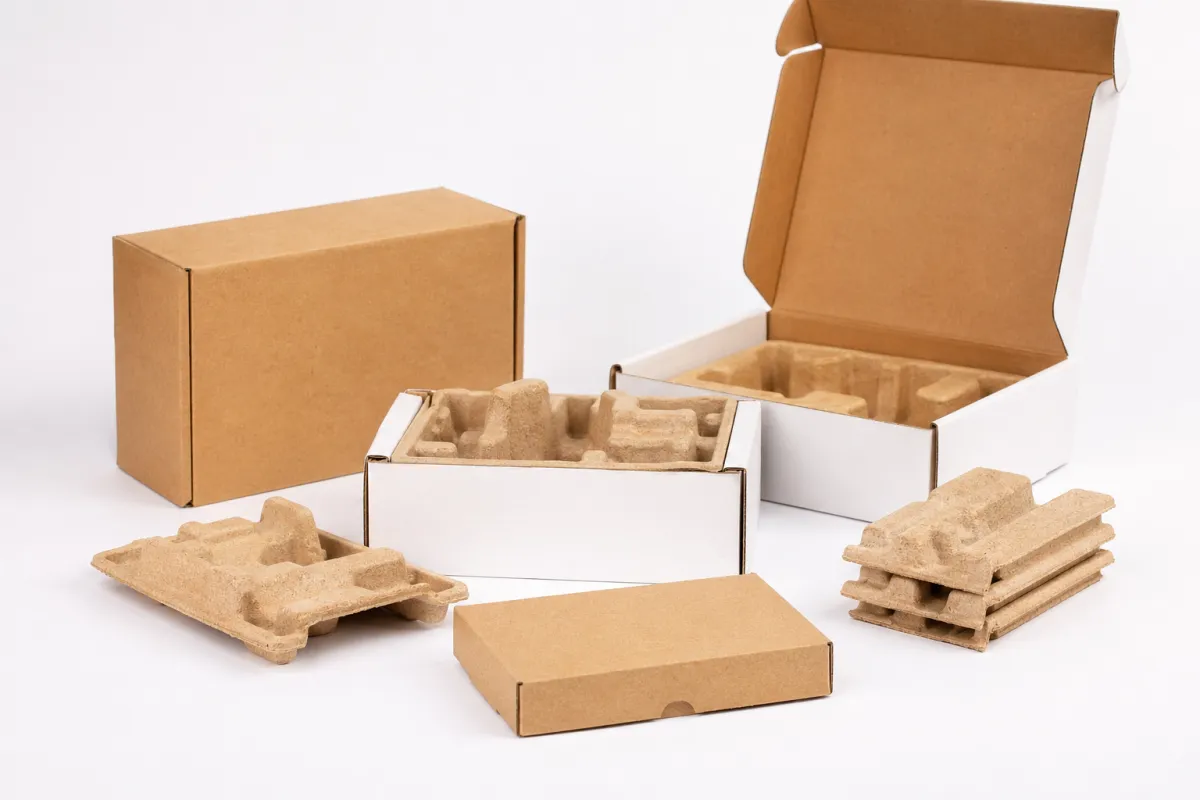
The best ways to simplify packaging usually come down to three moves: fewer box sizes, fewer components, and fewer assembly steps. That is the short version, and it holds up on the floor in facilities from Monterrey, Mexico, to Charlotte, North Carolina. If a warehouse is juggling 18 stock carton sizes, 9 insert styles, and 4 label formats, the packaging system is already carrying more complexity than it needs. Simplification is not a decorative exercise. It is a way to remove decisions that slow the team down and create avoidable errors during pack-out, especially when a crew is handling 2,500 to 8,000 orders a day with two shifts and a half-hour lunch window.
The fastest path I see most often starts with standard box sizes. After that, strip the print back so you are not paying for elaborate decoration on every component, especially on short runs under 5,000 pieces. Then remove any insert, wrap, sleeve, or void-fill method that does not protect the product or support package branding in a way you can actually measure. I worked with a subscription brand in Austin that had a 7-part pack-out: two tape steps, one tissue fold, one sticker placement, one insert, one card, and one outer carton. We cut it to 4 parts and saved 11 seconds per order, which mattered because the monthly volume was 8,000 units and the line ran with a 14-minute changeover between SKUs. Also, fewer steps meant fewer chances for someone to ask, "Where did the green sticker go?" which I have heard more times than I can count. Those are the best ways to simplify packaging when time and clarity matter more than decorative extras.
Simple does not always mean cheaper on the box quote. A right-sized custom carton can cut freight by 8% to 12% and still raise the unit price by a few cents, especially if the board changes from 200#/ECT-32 to 275#/ECT-44 or if the print includes a water-based varnish. A stock mailer can cost less to buy and cost more to run once void fill and hand-folding are counted. I have seen purchasing teams focus on the printed quote from a supplier in Dallas or Toronto, then wonder why the warehouse budget swells later. Lower unit price is not the same thing as lower total cost, and packaging budgets reward the difference between those two ideas. That is one reason the best ways to simplify packaging should always be judged against total landed cost, not just the quote sheet.
A practical order of attack works well in most facilities: standardize, right-size, reduce finishes, then tighten labeling rules. If you want a starting point for samples, our Custom Packaging Products page makes it easier to compare structures before you commit to a full change. The same approach works for custom printed boxes if you still need a controlled visual presentation with fewer moving parts, whether the job is a 1,000-piece boutique run or a 25,000-piece replenishment order. In most cases, the best ways to simplify packaging are the ones that reduce touchpoints without sacrificing protection or a clean shelf read.
"We thought we needed a full redesign. What we really needed was one box family, one insert spec, and a packing rule people could follow in under 20 seconds on a shift in Columbus."
Top Options Compared for the Best Ways to Simplify Packaging
Five routes come up again and again when clients ask about the best ways to simplify packaging: stock packaging, right-sized custom packaging, modular inserts, lighter print finishes, and simplified labeling. Each one solves a different bottleneck, and the right answer often depends on whether the product is leaving a plant in Ohio, a fulfillment center in Nevada, or a contract packer in Ontario. Stock packaging usually wins on speed to source. Right-sized custom packaging usually wins on Reducing Void Space and visual clutter. Modular inserts help when one tray has to support several products. Lighter finishes trim cost and often move faster through press and conversion. Simplified labeling can remove a surprising amount of backroom confusion, especially in multi-SKU operations where people are already juggling too many exceptions and one mislabeled pallet can stall a whole truck load. In other words, the best ways to simplify packaging are rarely one-size-fits-all; they depend on where the bottleneck actually lives.
A lot of teams overvalue premium decoration when the packing line is already strained. Matte lamination, foil stamping, custom tissue, and a two-piece rigid setup may look polished on a sample table, yet the economics change the moment the crew spends 45 extra seconds per order and the line moves at 18 units per hour instead of 26. For retail packaging, a cleaner structure often wins because stores care about stackability, damage resistance, and replenishment speed almost as much as shelf presence. For e-commerce, the best ways to simplify packaging usually center on pack time, cube efficiency, and fewer failure points during transit, especially on UPS Ground or FedEx Home Delivery routes with long dwell times in hubs like Memphis or Indianapolis.
Every direction carries a trade-off. Stock packaging saves time but can waste space. Right-sized custom packaging reduces empty volume but may require tighter forecasting and a 3,000-piece minimum at some plants in Illinois or Quebec. Modular inserts can simplify kitting and still add tooling cost if too many product shapes are supported. Simplified labeling cuts confusion and rework, but it only works when SKU logic is disciplined and artwork approvals are not chaotic. I have seen sourcing teams save $0.14 per unit on paper and then add $0.19 in labor because the new structure needed hand folding at every station. The box price looked better. The operation did not. That kind of math makes my eye twitch a little, frankly, because the best ways to simplify packaging should make the whole line calmer, not just the purchase order smaller.
A quick decision matrix helps people get honest about what they really need. I use a simple scan in supplier meetings because it keeps everyone focused on the same four variables: speed, budget, protection, and presentation. If a brand says it wants simpler packaging, this is often the moment where the real need becomes visible, whether the current supplier is a folding-carton plant in Illinois or a mailer converter in Shenzhen.
| Option | Best For | Typical Unit Cost Impact | Speed Impact | Protection Impact | Brand Look |
|---|---|---|---|---|---|
| Stock packaging | Fast sourcing, low setup | Lowest upfront; often $0.28 to $0.65/unit at 5,000 pcs | Fastest to approve and reorder | Moderate; depends on fit | Basic unless labeled well |
| Right-sized custom packaging | Lower void space, cleaner logistics | Usually $0.42 to $0.88/unit at 5,000 pcs | Moderate setup, good repeatability | Strong when engineered well | Clean and controlled |
| Modular inserts | Multiple SKUs, kitted sets | $0.06 to $0.24/unit added | Can speed pack-out after setup | Good for movement control | Organized, but not flashy |
| Lighter print finishes | Lower decoration cost | Saves $0.03 to $0.11/unit | Often faster on press | No change by itself | Cleaner, less decorative |
| Simplified labeling | Operations clarity, multi-SKU control | Saves labor more than materials | Can cut mis-picks sharply | No change by itself | Very practical |
If you are comparing Product Packaging Options for a launch, start with stock versus right-sized custom, then test a modular insert only if the product actually shifts during transit. That kind of test tells you which of the best ways to simplify packaging deserves scale and which one only looks good in a sample photo from a plant in Dongguan or a sample room in Chicago. For package testing guidance, I often point teams to ISTA test resources because a structure that feels simple on a desk can fail quickly in a real shipping lane with vibration, compression, and rough handling in the mix.
Detailed Reviews: Best Ways to Simplify Packaging by Use Case
E-commerce shipping shows the best ways to simplify packaging almost immediately. One direct-to-consumer skincare brand I worked with was shipping in five carton sizes, two void-fill formats, and three label versions out of a 22,000-square-foot fulfillment center in Phoenix. The team spent too much time checking what fit where and which version belonged to which order. We moved them to one carton family, one paper insert made from 18pt SBS, and one label rule. Pack time fell from 54 seconds to 39 seconds per order, and errors dropped because people stopped second-guessing the structure. Nothing about that change was flashy. The line just ran better, which is my favorite kind of improvement because nobody has to pretend it is glamorous. In that kind of environment, the best ways to simplify packaging are the ones that remove hesitation.
Retail shelf packaging works differently. Customers touch it in person, buyers may ask about display readiness, and the package has to hold up in a warehouse for weeks before it reaches a shelf in Minneapolis, Atlanta, or San Diego. In that setting, the best ways to simplify packaging usually mean stripping away visual noise without flattening the brand. I like one strong face panel, one materials choice, and one finishing decision. A 350gsm C1S artboard with aqueous coating can look polished enough for shelf presentation without the extra cost and lead time tied to specialty effects. If you want the line to stay consistent, package branding should live in the structure and the artwork system instead of being layered on through three separate decoration steps, especially if the carton is being converted at a plant in Toronto or Louisville.
Fragile products need a tighter lens. I have seen suppliers remove inserts completely in the name of simplification, only to create a damage problem that cost more in returns than the original savings, especially for glass vials, ceramic components, and small electronics traveling through the Chicago hub. That is not simplification. The better move is to keep only the insert that actually restrains the item. A molded pulp tray or a single die-cut corrugated insert may be enough, while foam, tissue, and a decorative sleeve are often redundant. ASTM-based drop expectations and carrier abuse are not the same thing, so the test plan has to reflect the shipping reality, not the sample room mood. And yes, someone always says, "It passed the desk drop test," as if a conference table in a marketing office has ever replicated a 42-inch drop onto a dock in Newark. For fragile goods, the best ways to simplify packaging are usually the ones that cut excess parts without cutting protection.
Subscription boxes tend to accumulate extras. The best ways to simplify packaging here usually mean removing layer stacking and converting to a single set of rules: one outer, one fold style, one insert family, one artwork template. I sat in a supplier negotiation at a facility near Richmond where the brand wanted three tissue colors, two thank-you card versions, and a different sticker for every seasonal box from spring through Q4. The assembly team hated it, the warehouse hated it, and the customer cared less than the marketing calendar suggested. We cut two tissue colors, standardized the card to one print run of 10,000 pieces, and held the box to a single 16pt insert spec. The box still felt premium, but the packing station got easier to train and easier to replenish. That is a classic example of the best ways to simplify packaging working exactly as intended.
Kitted sets bring a different kind of complexity because the problem is grouping, not just presentation. If you are selling two or three bundled SKUs, modular inserts and simple partitioning usually beat decorative overengineering. In that case, the best ways to simplify packaging often mean one tray that can support multiple configurations without turning the line into a puzzle every time a kit changes, especially when the kit includes a 2 oz bottle, a travel pump, and a printed instruction card. It also makes inventory planning easier because one component can serve more than one product packaging system, which helps a procurement team in Nashville or Edmonton avoid carrying excess stock on the shelf.
Decorative features that do not improve conversion, protection, or compliance are easy to admire and hard to justify later. Foil, soft-touch, window patches, and multi-material wraps can all work, but they should earn their place. If they add 12 seconds per pack and only lift perceived value in a narrow segment, they are not among the best ways to simplify packaging. They are expensive habits with nice photography, and I have seen them consume $6,000 to $12,000 in extra annual labor on a 20,000-unit program without changing the sell-through rate enough to matter.
For brands trying to keep a cleaner presentation without making production miserable, branded packaging can still feel premium with fewer parts. A single-color logo on a well-formed carton, a consistent label system, and one smart insert often outperform a stack of decorative layers. If you want to compare practical builds, I would also suggest reviewing our packaging products alongside your current line so you can see where a simpler structure keeps the visual effect intact, whether you are sourcing from a mill in Wisconsin or a converter in Ontario. That kind of side-by-side review usually makes the best ways to simplify packaging much easier to defend internally.
Anyone using paper-based materials and making sustainability claims should also check FSC guidance before printing a certification mark. A cleaner package is not automatically a greener one, but removing a second sleeve or a mixed-material wrap can reduce waste handling and make sourcing easier to document across the supply chain from Vancouver to Atlanta. It also helps when procurement needs to track board origin, glue type, and recycling instructions in a one-page spec sheet.
Price Comparison: What Simpler Packaging Really Costs
Price is where packaging decisions get distorted most often. People ask for the cheapest box, then discover the labor cost, storage cost, and return cost three weeks later after the first 4,000-unit shipment lands in the warehouse. The best ways to simplify packaging need to be judged on total landed cost, not a single line item. That means unit price, setup fees, tooling, labor, freight, damage rate, and the hidden cost of rework when the line gets confused between two nearly identical cartons.
I have seen one setup where a company saved $0.08 per unit by switching to a thinner carton, only to increase damage claims by 1.9 percentage points and trigger 146 replacement shipments in one quarter. That is not a victory. Another client paid $0.05 more per unit for a right-sized custom structure from a plant in Wisconsin, then cut void fill usage completely, reduced carton cube by 14%, and improved pallet density enough to save on outbound freight. That is a real gain. It shows up after the first invoice has already been paid, which is exactly why it gets missed in shallow comparisons. It is also why the best ways to simplify packaging should be measured against returns and freight, not just the box quote.
The pattern is usually the same: the cheapest-looking option is rarely the cheapest overall once labor and returns are counted. Fewer parts usually save money faster than dramatic material swaps. If a packaging operator can shave 8 seconds off each pack-out, that can matter more than a $0.03 materials difference on a 10,000-piece run. Multiply 8 seconds by 3,000 orders a week and the savings become visible to finance, not just operations. That is why the best ways to simplify packaging often pay back through labor first and materials second, especially in 2-shift warehouses with overtime costs on Friday and Sunday nights. Simpler packaging also tends to improve packaging standardization, which makes budgeting less volatile across seasons.
| Simplification Level | Typical Setup | Unit Cost | Labor Time | Freight Impact | Damage Risk |
|---|---|---|---|---|---|
| Low simplification | Multiple box sizes, decorative inserts, mixed labels | $0.55 to $1.10 | 45 to 70 seconds | Often higher due to void space | Moderate to high if fit varies |
| Medium simplification | Two box sizes, one insert family, simplified print | $0.38 to $0.84 | 30 to 48 seconds | Usually improved by 6% to 10% | Moderate, usually manageable |
| High simplification | One box family, one insert, one label rule | $0.31 to $0.72 | 18 to 34 seconds | Best cube efficiency | Low if tested correctly |
Those ranges are not universal, and I would not pretend they are. A 2,000-unit run behaves differently from a 50,000-unit run, and a rigid box for cosmetics is not the same thing as a corrugated shipper for hardware moving through a regional DC in Pennsylvania. The pattern still holds. The best ways to simplify packaging usually save the most money when they remove labor, shrink SKU sprawl, and cut shipping waste together, especially if the same packaging family can serve a spring launch, a holiday run, and an everyday replenishment order.
In packaging negotiations, I often ask suppliers for three quotes on the same structure: a basic finish, a mid-tier finish, and a premium finish. On a run of 5,000 pieces, the spread might only be $0.04 to $0.11 per unit, which sounds small until you realize the premium finish can add drying time and push lead time from 12-15 business days to 18-22 business days, particularly if the work is being finished in a plant near Shenzhen or Guadalajara. That is where package branding and operations collide, and it is why the simpler path can be the smarter one for a retail packaging launch. Also, if a vendor tells you the premium effect only adds "a couple of days," I have learned to ask for the calendar, the press schedule, and the curing time in writing, politely but firmly. The best ways to simplify packaging are often the ones that keep approvals short and lead times predictable.
Process and Timeline: How to Simplify Packaging Without Delays
The best ways to simplify packaging fail when teams try to do too much at once. I prefer a four-step sequence: audit the current SKUs, identify the bottlenecks, choose one test package, and run a pilot before a full rollout. It sounds basic because it is. The complication usually comes from internal approvals, not the structure itself, especially when marketing, operations, and procurement are spread across offices in New York, Chicago, and Atlanta.
Start by auditing every box, insert, label, and tape variant in use. Count them. I mean count them literally with a spreadsheet and a sample pull. One client believed they had six packaging SKUs; they actually had 14 because seasonal sleeves and promo labels were hidden in different departments and two contract decorators in different states were each holding a separate version. That discovery changed the whole project. Once the team sees the real number, the best ways to simplify packaging become easier to prioritize because you can target the loudest source of waste instead of guessing at it. It also creates a baseline for packaging standardization, which helps the next round of sourcing decisions stay disciplined.
Then time the actual pack-out. Not an estimate. A stopwatch. Record the average for 20 to 30 orders and note where the delays happen. Is the team folding an insert twice? Are they looking up which label goes with which region? Is someone waiting for a marketing approval because the artwork files are not final? Those delays matter more than the box drawing on a sales deck. Packaging design should be built around what the team can do ten times in a row without confusion, preferably on a shift with three temporary workers and one supervisor covering a 120-foot packing line. When the best ways to simplify packaging are mapped against actual labor, the unnecessary steps become obvious.
The timeline depends on how much you are changing. A simple stock-to-stock conversion can move in 1 to 2 weeks if the vendor has inventory in a warehouse in Ohio or Nevada. A right-sized custom carton with new dielines and print review often takes 3 to 5 weeks. If you need structural samples, compliance checks, and a sign-off loop across operations, marketing, and procurement, allow longer. The hidden delays are usually dieline corrections, bar code placement, and "one more round" of art feedback. I have watched a five-minute design tweak delay a launch by 9 days because nobody wanted to own the revised proof and the prepress team in Montreal had already queued the plates.
A low-risk rollout plan keeps fulfillment running. Pilot one product line, not the entire catalog. Use one supplier sample set. Run 100 to 300 units through the line. Check damage, pack speed, and customer comments. If the result holds, expand in phases instead of flipping everything at once. That approach has saved more than one warehouse in Dallas from a stressful Monday morning where everyone is relearning the new system at the same time and the inbound dock is already stacked with six pallets of replenishment stock. It is also one of the best ways to simplify packaging without creating a service disruption.
For the best ways to simplify packaging, I also like a short checklist before any approval: one line item for protection, one for branding, one for labor, one for freight, and one for compliance. If a proposed change does not help at least two of those five, I usually push back. A packaging idea can look clever and still be a terrible fit for the line, which is a lesson I wish more glossy pitch decks in conference rooms and demo spaces would respect.
How Do You Choose the Best Ways to Simplify Packaging?
The best ways to simplify packaging depend on five questions: how fragile is the product, how many orders do you ship, how much storage space do you have, how important is the visual finish, and how many hands touch the pack-out. That is the decision tree. Ignore those factors and you end up optimizing the wrong thing, then wondering why the process still feels clumsy in the warehouse.
Fragile products need durability first. High-volume e-commerce usually cares more about labor speed than a luxury finish. Retail packaging may put stack strength and shelf behavior ahead of everything else. Subscription box brands often want a strong unboxing moment, but that goal loses its value fast if the line needs three extra steps and a second QC check to complete one order. In my experience, the best ways to simplify packaging remove the most steps per order, not the most ink on the carton, and they do it with the kind of discipline you see in a plant that runs the same SKU 30,000 times a quarter.
The rule I use in practice is simple: choose the simplification path that reduces touchpoints first. A structure that cuts one insert, one label scan, and one tape step will usually outperform a pure visual cleanup. The packaging design may look nearly identical to a shopper, but the operations team feels the difference every shift. That matters even more in warehouses that rely on seasonal labor, where the instructions need to be clear enough for a new hire to learn them in 15 minutes, not 45, and the carton should close the same way whether the worker is on hour one or hour nine. When I talk about the best ways to simplify packaging, that is the kind of day-to-day reality I mean.
There is also a customer experience side that gets underestimated. Customers notice when a package feels flimsy, arrives crushed, or opens awkwardly. They notice less often that the carton has one fewer foil accent. That is why the best ways to simplify packaging should protect structure and clarity before ornament. If you have to choose between a cleaner look and stronger delivery performance, pick stronger delivery performance unless the brand case is unusually clear and backed by sales data from a 10,000-unit test or a retailer reset in four store regions.
Use this checklist before requesting samples or quotes:
- Can the pack-out be completed in under 30 seconds on a real shift?
- Does one box size cover at least 70% of orders by monthly volume?
- Can the design survive a real shipping test, not just a desk mock-up in a sales office?
- Will the label, barcode, and insert logic stay understandable at 5 a.m. on a busy shift?
- Does the structure support your branded packaging goals without extra hand assembly?
If the answer is "no" to two or more of those questions, the packaging is probably too complicated. I have seen that pattern in startup meetings and mature retail accounts alike, from Seattle to Atlanta. The fix is rarely a glamorous redesign. Usually, it is a tighter packaging system, a clearer spec sheet, and fewer exceptions floating through the warehouse. I know that sounds less exciting than a shiny new concept board, but the warehouse does not care about mood boards; it cares about whether the tape gun jams again at 2 p.m. on a Thursday. The best ways to simplify packaging are the ones that make that Thursday easier.
Our Recommendation and Next Steps for Simplifying Packaging
My practical recommendation is straightforward: start with one packaging family, one insert strategy, and one print standard before you consider a full redesign. That single move often captures the best ways to simplify packaging without creating a supply chain headache. It also keeps the project manageable for operations, procurement, and marketing, which is where most packaging projects get tangled when a plant in Ohio, a designer in Brooklyn, and a buyer in California all want different things.
If you want a sensible next move, do three things. First, audit the current pack line and document every box, insert, label, and tape step with actual times and piece counts. Second, request samples from two or three suppliers so you can compare fit, assembly, and print quality side by side, ideally from different regions such as the Midwest and the Southeast. Third, run a 100-unit or 300-unit pilot and compare damage rates, pack speed, and total landed cost. That small test tells you more than a month of opinions ever will, especially when the sample run includes one rushed Friday shift and one morning shift with a new hire. Those are the best ways to simplify packaging in a way that sticks.
In one recent supplier comparison, the team assumed the most elaborate option would look best to customers. After testing, the simpler version won by a wide margin because it packed 9 seconds faster, used 17% less void fill, and produced fewer corner crush issues in transit. That is the kind of result that changes minds. Not a mood board. Not a slogan. Real numbers from a real line, backed by a pilot run of 300 units and a freight bill from a regional carrier.
If you are building or revising custom printed boxes, this is also the point where you decide how much decoration is actually pulling its weight. A clean structure, a disciplined label system, and one good print finish can deliver strong package branding without creating rework. The best ways to simplify packaging are rarely about removing every visual choice. They are about removing the unnecessary ones, especially the ones that add labor in a packing room in Detroit or a finishing line in Montreal without improving the customer's experience.
Document the bottlenecks, test a simplified option, and roll out what performs best. That is how I would approach it in a plant, in a brand meeting, or in a sourcing review. The best ways to simplify packaging are not abstract ideas; they are practical changes that save minutes, reduce waste, and make the system easier to run day after day on a 12,000-piece monthly program or a 120,000-piece annual contract. Once those changes settle in, the operations team usually wonders why the old setup lasted so long. And honestly, that is the kind of win that makes the whole project worth it.
FAQ
What are the best ways to simplify packaging without hurting protection?
Reduce the number of components first, then test one right-sized structure that still passes shipping and drop checks. Use inserts only where the product moves in transit, and remove decorative parts that do not improve protection. A small pilot with 100 to 300 units will usually show whether the change is safe before you scale it, especially if the product is traveling through hubs like Louisville or Memphis. That is one of the best ways to simplify packaging while keeping returns under control.
Which packaging changes usually save the most money?
Fewer box sizes and fewer inserts usually save the most because they reduce setup time and inventory complexity. Right-sizing can also cut void fill, shipping weight, and storage space at the same time. In many operations, the biggest savings come from labor, not materials, so measure pack time per order and compare it against the cost of a 5,000-piece run from a supplier in Wisconsin or Ontario. If you want the best ways to simplify packaging from a cost perspective, start with the steps that remove labor.
How do I know if my packaging is too complicated?
If pack-out requires extra hand steps, frequent SKU checks, or multiple approvals, it is probably overcomplicated. A packaging system is too complex when employees need exceptions more often than standard instructions. High damage rates paired with slow fulfillment usually mean the design is doing too much or not enough, and that pattern becomes obvious after 20 to 30 timed orders on the line. The best ways to simplify packaging should make the process easier to train and easier to repeat.
What is the fastest process for simplifying packaging?
Start with an audit of every box, insert, and label variant currently in use. Pick one low-risk product line, simplify it, and test production speed before changing the full catalog. Use supplier samples early so artwork, fit, and assembly issues show up before launch, and aim for a decision window of 1 to 2 weeks if the parts are already in stock. That is one of the best ways to simplify packaging without delaying a launch calendar.
Should I choose stock packaging or custom packaging to simplify?
Stock packaging is simpler when speed and low setup costs matter more than exact fit or branded presentation. Custom packaging works better when reducing void space, labor, or damage will outweigh the extra design effort. The right choice depends on volume, product fragility, and how much assembly time you need to remove, especially if your annual demand sits above 20,000 units. Either way, the best ways to simplify packaging are the ones that align with how your line actually runs.
What is the clearest takeaway for a team making packaging changes now?
Pick one product, one carton family, and one assembly rule, then test it on a real shift before you touch the rest of the catalog. If the new setup cuts touchpoints, holds up in transit, and keeps the line moving, roll it out in phases and leave the rest alone until you have data. That is the simplest way to make simplification real instead of theoretical, and it is usually the safest path too.


