Buyer Fit Snapshot
| Best fit | Biodegradable Corrugated Box Manufacturer projects where brand print, material claims, artwork control, MOQ, and repeat-order consistency need to be specified before quoting. |
|---|---|
| Quote inputs | Share finished size, material target, print colors, finish, packing count, annual reorder estimate, ship-to region, and any compliance wording. |
| Proofing check | Approve dieline scale, logo placement, barcode or warning zones, color tolerance, closure strength, and carton packing before bulk production. |
| Main risk | Vague material claims, crowded artwork, missing packing details, or unclear freight terms can make a low unit price expensive after revisions. |
Fast answer: Biodegradable Corrugated Box Manufacturer: Board, Finish, Dieline, and Unit Cost should be specified like a repeatable production item. The safest quote records material, print method, finish, artwork proof, packing count, and reorder notes in one written spec.
Production checks before approval
Compare the actual filled-product size with the drawing, then confirm tolerance on folds, seals, hang holes, label areas, and retail display edges. Reserve space for logos, QR codes, warning copy, and material claims before decorative graphics fill the panel.
Quote comparison points
Review material grade, print process, finish, sampling route, tooling charges, carton quantity, and freight assumptions side by side. A quote is only useful when the supplier can repeat the same color, closure quality, and packing count on the next order.
A biodegradable corrugated box manufacturer may sound straightforward on paper, yet the real work lives in the details that sit behind the carton. A box can be paper-based and still behave very differently depending on flute profile, adhesive chemistry, ink load, moisture exposure, and whether the finished pack carries a film window, a synthetic label, or a coating that changes the disposal story. Buyers who treat those choices as minor usually end up with packaging that looks responsible in a mockup and tells a very different story once it reaches a warehouse or recycling bin.
For Custom Logo Things, the question is never just whether a package appears eco-friendly at first glance. The real test is whether the biodegradable corrugated box manufacturer behind it can balance strength, print quality, shelf appeal, and end-of-life expectations without creating awkward surprises later. A retail gift set, a subscription box, and a dry-goods shipper each ask something different of the board. One needs crisp edges and confident print. Another needs crush resistance through a fulfillment network. Another may need fiber sourcing that supports FSC goals and a disposal claim that stays honest all the way through.
That practical lens matters more than brand language. If you are comparing a Custom Shipping Boxes program, tightening a sustainability message, or deciding whether to work with a About Custom Logo Things style partner who understands both structure and print, clarity should come first. A biodegradable corrugated box manufacturer ought to walk you through the board system, the performance target, and the disposal pathway before anyone starts talking about artwork. I have seen projects drift off course because the claim was picked before the carton spec was locked, and once that happens, the box ends up doing a lot of explaining it never should have been asked to do.
What a biodegradable corrugated box manufacturer really means
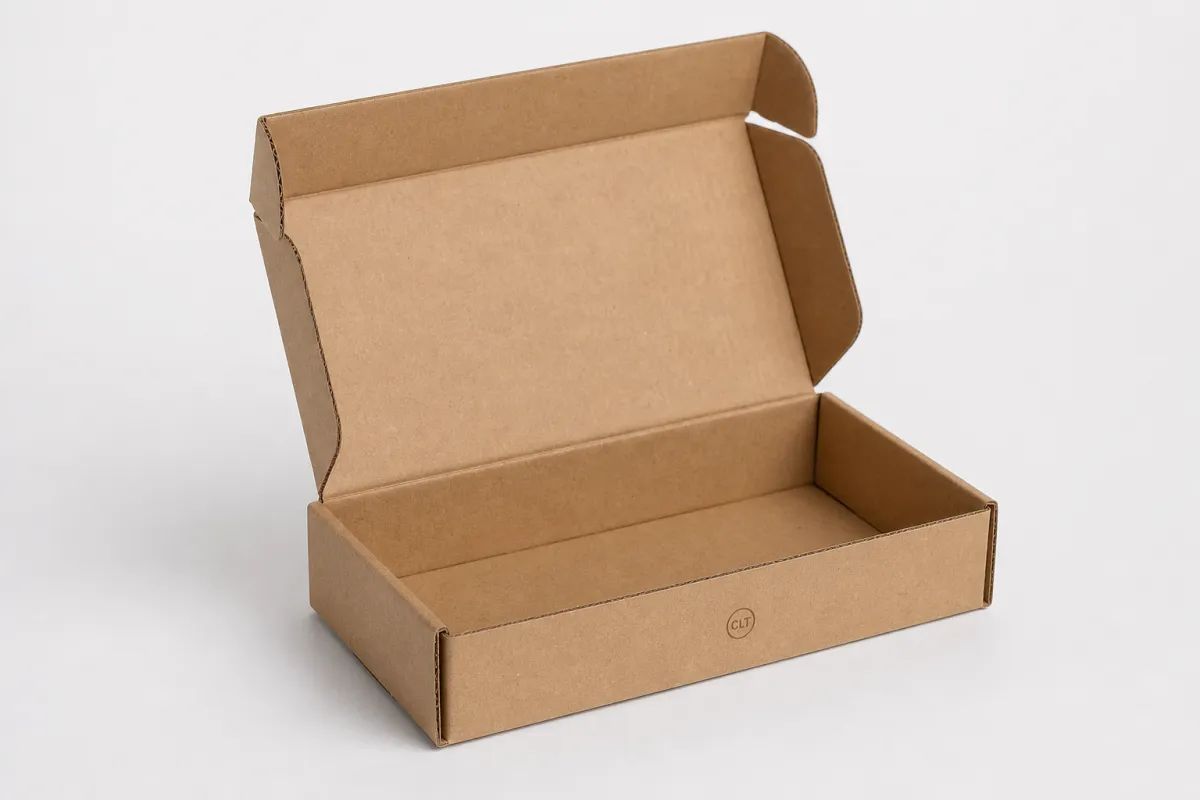
A biodegradable corrugated box manufacturer makes cartons whose main structure is corrugated paperboard, but the outcome depends on the entire package system rather than the cardboard alone. Linerboard and fluting are made from paper fibers, which generally break down more readily than plastic-heavy alternatives, yet adhesives, inks, coatings, tapes, labels, and any added windows all influence what happens after the box is used.
That difference gets blurred constantly because buyers use biodegradable, recyclable, and compostable as if they were interchangeable. They are not. A corrugated shipper can be recyclable in a curbside stream and still fail composting expectations if it has a plastic film or heavy varnish. It can be biodegradable in a broad sense while still missing a composting standard that depends on controlled conditions. A good biodegradable corrugated box manufacturer should explain those distinctions plainly instead of hiding behind marketing gloss.
Real sourcing work exposes this quickly. A buyer may want a carton for tea, snacks, or cosmetics, then add a glossy finish, foil accents, a plastic label, and tape with a synthetic backing. The board is still paper-based, yet the finished pack is no longer a simple fiber-only item. Thinking in systems avoids that trap. The board matters, but the entire assembly matters too, and a biodegradable corrugated box manufacturer should be able to talk through every added component without hand-waving.
Performance has to stay in the conversation. A box that breaks down more readily after use still needs to survive transit, shelving, warehouse handling, and the occasional rough transfer before it reaches the customer. The right structure has to deliver stiffness, edge crush, and compression resistance for the actual route it will travel. From a buyer’s point of view, the best package is not the most fragile one. It is the one that performs well first and disposes appropriately later.
Good packaging is honest packaging. If the box survives the trip, prints cleanly, and fits the disposal path you are claiming, the sustainability story carries real weight. If one of those parts is weak, the claim starts to lose shape.
Claims deserve the same discipline as construction. FSC chain-of-custody documentation can support responsible fiber sourcing, while EPA materials guidance helps frame packaging within broader waste-reduction thinking. For buyers sorting through claims, the EPA sustainable materials guidance and FSC are useful reference points for separating careful language from loose promises.
How biodegradable corrugated boxes work in real shipping
Corrugated board works because its structure is simple and clever at the same time. Linerboard forms the outer and inner skins, while a fluted medium sits between them. The flute acts like a small spring and a spacer together, which gives the carton cushioning, stiffness, and impact absorption without adding much weight. A capable biodegradable corrugated box manufacturer chooses flute style and board grade around the shipping abuse the carton will actually face, not around the look of the sample on a table.
E-flute often appears when print detail and a compact form factor matter, while B-flute and C-flute offer different balances of crush resistance and panel rigidity. Double-wall constructions serve heavier loads or stacking conditions that push single-wall board too far. The right answer depends on product weight, box dimensions, storage conditions, and the handling pattern from packing bench to final delivery. A design that looks elegant on screen can fail quickly if the board span is weak or the carton is underspecified for the route.
Biodegradation sits in a separate bucket from shipping strength. Paper fibers are naturally derived and can break down under the right conditions, yet that process does not happen overnight and it does not behave the same way everywhere. A dry recycling stream, a damp warehouse, and a controlled composting facility create very different outcomes. A biodegradable corrugated box manufacturer should be cautious about timelines and avoid promising one universal breakdown schedule.
Moisture is one of corrugated board’s biggest enemies. Paper fibers absorb water, and once they do, compression strength falls. A carton that feels solid in a dry sample room may soften in a humid receiving area or after a long ocean transit. Temperature swings, repeated handling, and uneven pallet stacking also shape performance. In practice, the failure often comes from the shipping environment being harsher than the buyer expected, not from the material being wrong. I once reviewed a box that passed every tabletop test, then went soft after a week in a coastal warehouse; nothing about the board changed, but the environment absolutely did.
Secondary components can change the sustainability picture in a hurry. Water-based inks are usually a cleaner fit than heavy solvent systems, starch-based or water-based adhesives can be more compatible with paper recovery, and paper labels are easier to justify than plastic facestocks. Tape, window patches, and barrier coatings need careful review. A package can stay functional while still becoming much harder to explain at end of life, which places more pressure on the biodegradable corrugated box manufacturer and on the buyer making the environmental claim.
Testing should match the job rather than the brochure. ASTM D642 compression testing, ISTA handling tests, and drop or vibration checks are common ways to confirm the carton can survive a real route. A shop that understands those methods can usually explain where the box is strong, where it will give way, and what change would improve performance without inflating cost for no reason. That is the sort of practical conversation buyers should expect from a biodegradable corrugated box manufacturer.
Key factors to evaluate before you choose a biodegradable corrugated box manufacturer
Choosing a biodegradable corrugated box manufacturer is not a pure price exercise. The right partner reads your product size, shipping method, print goals, and sustainability expectations, then turns that brief into a carton spec that can actually be made well. A weak partner only asks for dimensions and a logo, then leaves fit problems to appear after tooling and production have already started.
Board grade and structure come first. Flute type, wall count, and basis weight determine how much stacking pressure the carton can take, how sharply it folds, and how much cushioning the structure provides. Lightweight retail sets may do well in a single-wall carton. Dense products or pallet-stacked inventory may need heavier board. A serious biodegradable corrugated box manufacturer should be able to explain those trade-offs in plain language rather than hiding behind jargon.
Print and finishing choices matter just as much. High-gloss varnish, plastic lamination, and specialty coatings can make a carton look polished, yet they can also complicate recyclability or biodegradation goals. That does not mean every finish is wrong. It means the finish should match the claim you want to make. Buyers often get pulled toward shelf appeal and forget that the final package still has to support both brand presentation and disposal logic.
Manufacturing capability shapes the result. Dieline accuracy, die cutting consistency, folding behavior, glue application, and print registration all affect the final pack. A plant with control over those variables can keep the first carton and the last carton aligned. A weaker operation may produce a sample that looks great and then drift once volume starts moving. Any biodegradable corrugated box manufacturer worth trusting should be willing to show how variation is controlled.
Quality control is where theory becomes a carton on a desk. Ask how the team handles sample approval, whether compression or fit is tested, and how repeatability is checked across a run. A box that lands one or two millimeters off can create stacking issues, shipping waste, or assembly headaches on the packing line. For custom projects, I like to see at least one structural sample, one print proof, and one production-style sample before volume is approved.
Sustainability documentation should be part of the selection criteria from the start. If you want to make a responsible claim, you need material data, component details, and a clear view of which parts of the package support the claim. A good biodegradable corrugated box manufacturer should not overstate compostability, should not blur paper recovery with home composting, and should be able to describe what the carton is made of without hedging. If the answer sounds a little too polished, that is a sign to slow down and ask again.
What a good quote package should include
A useful quote is more than a unit price. It should list the board spec, flute style, dimensions, print method, finish, MOQ, Lead Time, sampling cost, and any tooling or plate charges. Missing details make comparison pointless. You are not comparing two equal offers if one quote has a full specification and the other is little more than a number.
- Board specification with flute and wall construction
- Print method and ink type
- Finish if any coating or treatment is included
- MOQ and whether it can be split across SKUs
- Sampling scope and sample approval steps
| Option | Typical spec | Best use | Indicative unit range at 5,000 pcs | Main price drivers |
|---|---|---|---|---|
| Plain RSC shipper | Single-wall, 32 ECT to 44 ECT | Basic freight and fulfillment cartons | $0.35-$0.75 | Board grade, box size, run length |
| Printed mailer box | E-flute or B-flute, custom die-cut | Retail kits and subscription packaging | $0.55-$1.20 | Print coverage, die complexity, fold style |
| Heavy-duty shipper | Double-wall construction | Heavier products and pallet stacking | $1.20-$2.80 | Board weight, compression target, material yield |
| Box with insert set | Custom partitions or die-cut insert | Fragile items or multi-piece kits | $0.90-$2.10 | Tooling, insert count, manual assembly |
Those ranges are planning guides, not promises. Freight, pallet density, and material markets can alter landed cost quickly. Even so, the table shows how a biodegradable corrugated box manufacturer should think about price: not as a single figure, but as the outcome of structure, print, yield, and handling demands.
Process and timeline: from concept to production
A strong project begins with a clean brief. The biodegradable corrugated box manufacturer needs product dimensions, product weight, shipping method, brand goals, disposal expectations, and expected order volume before the quote has any real value. Vague input produces vague samples, and vague samples usually lead to revision cycles that waste time and budget.
The next step is dieline development. That is where the flat template takes shape, and it is often where fit issues reveal themselves first. Product dimensions matter, yet the structural designer still needs to account for insertion clearance, tuck depth, board thickness, and the way the package will fold under pressure. A structural prototype at this stage tells you more than a polished mockup because it proves whether the carton truly works.
Sampling follows. Some jobs need a white sample first so the team can check fit and assembly. Others move straight to a print proof or a production-style sample when the structure is already proven. A careful biodegradable corrugated box manufacturer uses this phase to catch loose inserts, weak locking tabs, print placement issues, and graphics that sit too close to a fold line.
Approval is the point where a project either gains momentum or stalls. Artwork signoff, material confirmation, and final specification lock all need to happen before production. Even a small change at that stage can create delay, especially if it affects cutting tools, print plates, or board sourcing. One late logo tweak can consume more time than a full week of machine capacity.
Once production begins, the flow usually stays familiar: board sourcing, printing, die cutting, folding, glueing, packing, and dispatch. The time is consumed by coordination between those steps rather than by the list itself. A custom die, heavy print coverage, or a special adhesive that needs longer set time all extend the schedule. A skilled biodegradable corrugated box manufacturer will say that plainly instead of offering a date that cannot survive contact with the plant floor.
Lead time depends on the project shape. Straightforward corrugated cartons may move from brief to sample in a few business days, while custom structural work with new tooling takes longer. Production often lands in the 12-15 business day range after approval for moderate runs, though quantity, seasonality, and current plant load can shift that window. Rush work is sometimes possible, yet it usually narrows customization options and may increase cost.
Cost, pricing, MOQ, and quote drivers
Price confuses many buyers because a biodegradable corrugated box manufacturer is not pricing a simple cardboard shell. The quote reflects material grade, converting time, print complexity, waste yield, setup effort, and sometimes custom tooling. Two offers can look close at first glance and still be very different once the spec line gets read carefully.
Size is the first driver. Larger cartons use more board and more freight space, so the cost rises with material area and pallet inefficiency. Board grade is next. A lighter grade may suit a retail mailer, while a heavier grade may be necessary for a shipper that needs more stacking performance. A good biodegradable corrugated box manufacturer will explain why one option saves money but lowers durability, or why another adds cost while lowering failure risk.
Print coverage changes the number fast. A one-color logo on kraft board is a very different job from full-coverage artwork with multiple hit colors, tight registration, and finish treatment. Inserts, partitions, and custom locking features bring in more labor and more material waste. Premium unboxing work usually costs more because the converting steps are more demanding.
MOQ in plain language
Minimum order quantity usually reflects production efficiency rather than sales attitude. The press, the die, the make-ready time, and the board yield all have to make sense for the factory. Small runs can absolutely be produced, but unit cost usually rises because setup time gets spread across fewer cartons. A thoughtful biodegradable corrugated box manufacturer should be clear about whether the MOQ comes from tooling, material sourcing, or machine economics.
Freight deserves equal attention. A large corrugated carton can occupy more volume than the product inside, which means pallet count and truck loading efficiency matter. Multi-warehouse programs bring storage cost into the equation too. In some projects, landed cost moves more from freight than from the carton itself. That is why a quote should always be read as a full package cost, not just a per-unit line.
How to compare quotes fairly
Fair comparison starts with one sheet that holds every detail. Check the board grade, flute, dimensions, print method, finish, MOQ, lead time, sample cost, and whether plates or dies are included. If one supplier quotes a lower number by using lighter board, simpler print, or separate setup charges, the comparison is misleading. The best biodegradable corrugated box manufacturer is not always the cheapest one; it is the one whose offer matches the carton you actually need.
For buyers handling custom packaging at scale, this is the point where the carton should be tied back to the broader product plan. A box that reduces damage, speeds packing, or fits shipping lanes more efficiently can justify a slightly higher unit price. That kind of calculation is standard in packaging operations, and it is usually where custom programs earn their keep.
Common mistakes when sourcing biodegradable corrugated packaging
The most common mistake is assuming every paper-based carton is automatically biodegradable in the same way. It is not. A corrugated box may still include a coating, adhesive, or label system that changes the end-of-life picture. Buyers who want a clean sustainability story need to ask the biodegradable corrugated box manufacturer about every added component, not just the board itself.
Another mistake is designing for appearance first and performance second. A carton can look refined in a mockup and still crush under real shipping loads. That happens when finish, color, or structure gets chosen before the actual use case has been checked. A subscription box for dry goods may deserve elegant print, but it still has to hold up through cart handling, stacking, and the occasional rough drop onto a conveyor.
Skipping samples is a quick path to avoidable waste. A dieline that seems correct on screen can misfit the product, pop open under stress, or slow assembly on the line. Even a small tuck adjustment can change how the pack feels in the hand. A competent biodegradable corrugated box manufacturer will push for sampling because that is where expensive surprises usually appear early enough to fix.
Buyers also forget the secondary materials. Tape, labels, shrink wrap, and void fill all affect the sustainability outcome. A paper box wrapped in mixed plastics no longer tells a simple story. If biodegradability sits at the center of your message, the surrounding materials need the same level of scrutiny. Otherwise the carton does the right thing while the rest of the parcel works against it.
The last mistake is comparing quotes without a spec sheet. Two suppliers can offer “the same box” while quoting very different products. One may use heavier board and tighter control, while another is quoting a lighter grade with looser tolerances. The cheapest offer is not a bargain if it leads to damage, returns, or slower packing. That is why a biodegradable corrugated box manufacturer should be judged on the clarity of the offer, not only on the number at the bottom.
Never buy a packaging claim without the construction details. If the supplier cannot tell you the board, the finish, the adhesive, and the test basis, then the claim is doing more work than the box.
Expert tips and actionable next steps
A one-page spec sheet makes sourcing cleaner. Include product dimensions, product weight, shipping method, print count, sustainability goals, expected order volume, and any handling concerns. A biodegradable corrugated box manufacturer can only price and recommend accurately when the brief is specific enough to matter.
Ask for both a structural sample and a production-style sample. The structural sample tells you whether the carton fits and closes properly. The production-style sample shows whether print, finish, and fold quality hold up under real production conditions. For retail kits and subscription packs, that distinction matters because the box is part of the customer experience, not just a transport shell.
Build a claim checklist for marketing and operations. Divide it into three parts: what the box is made of, how the box performs, and how it should be disposed of. That keeps the language accurate. A biodegradable corrugated box manufacturer can help with the material facts, but your team still needs to decide how to present them without stretching the claim.
Shortlist suppliers on communication quality as much as price. Do they answer technical questions plainly? Do they explain why one board grade fits better than another? Do they send clean mockups and clear revisions? Those signals say a lot about how the production process will feel later. A supplier that is vague during quoting usually stays vague all the way through the project.
For custom programs, it helps to connect the carton to the broader fulfillment chain. If the current shipper is oversized, slow to pack, or awkward to stack, a redesigned carton can reduce labor or damage cost even if the unit price rises a little. That is where a biodegradable corrugated box manufacturer can create real value: not by selling the cheapest box, but by helping you Choose the Right One for the product, the shipping lane, and the customer.
Two practical next steps usually clear the path. First, request a sample based on the actual product rather than a guessed substitute. Second, ask the supplier to walk through the quote line by line so you know what is included and what is not. Those two actions make the next conversation with a biodegradable corrugated box manufacturer far more productive.
Teams that want the project to keep moving should follow a simple order: confirm the spec, review the sample, and lock the timeline before production begins. That sequence protects budget, reduces mistakes, and gives you a stronger final carton.
Actionable takeaway: if you are sourcing from a biodegradable corrugated box manufacturer, start by locking the material stack, the performance target, and the disposal claim in one document, then approve a real sample before you place volume. That keeps the packaging honest, saves rework, and gives your team a cleaner decision when the quote sheet lands.
Frequently Asked Questions
What makes a biodegradable corrugated box manufacturer different from a regular box supplier?
A regular box supplier may focus mainly on size, print, and cost, while a biodegradable corrugated box manufacturer should also understand how the whole package system affects end-of-life behavior. That includes the board, adhesive, inks, any coating, and the labels or tape added later. The difference is not just wording. It is whether the supplier can explain how to balance sustainability with compression strength, print quality, and real shipping abuse.
Are biodegradable corrugated boxes also compostable?
Not always. Biodegradable and compostable are related ideas, but they are not the same claim. A box may break down over time and still fail composting requirements, especially if it includes coatings or mixed materials. A biodegradable corrugated box manufacturer should tell you what part of the package supports compostability, what part does not, and whether any pieces need to be removed before disposal.
How long does the process usually take with a biodegradable corrugated box manufacturer?
Timing depends on the project. Straightforward cartons can move quickly, while custom structural work takes longer because the dieline, fit, and print all need checking. A biodegradable corrugated box manufacturer usually needs time for sampling, artwork approval, board confirmation, and production scheduling. Rush work is sometimes possible, yet it often narrows customization options and may raise the total cost.
What drives the price of biodegradable corrugated boxes the most?
Board grade, box size, and print coverage usually have the biggest effect on price. After that come die complexity, inserts, tooling, and order quantity. A biodegradable corrugated box manufacturer also has to account for setup time and board yield, which is why small orders often carry a higher unit cost. Freight and storage can shift the final landed cost more than the quote suggests, so compare the full package rather than the printed unit price alone.
What should I ask before placing an order with a biodegradable corrugated box manufacturer?
Ask what materials are in the box body, what adhesives and inks are used, whether any coatings affect biodegradation, and what the quote actually includes. Ask for samples, lead time, MOQ, and the exact spec behind the number. Ask how the carton should be tested in your real shipping environment. A dependable biodegradable corrugated box manufacturer will welcome those questions, because the best answer is usually the one that performs well in practice and still supports your sustainability goal.