A logo can look perfectly clean on screen and still feel underwhelming once it is printed on a boutique bag. Paper base, ink behavior, finish, and bag structure all shape the result, sometimes more than the artwork itself. That is why a Boutique Paper Bags print method comparison matters so much: the right process can sharpen the brand impression, while the wrong one can make an otherwise good design look flat or imprecise.
Boutique bags are judged at close range. A customer sees the surface texture, the edge of the print, the handle attachment, and the way the bag holds its shape. They also notice practical things that brand teams sometimes overlook, like whether solids look even, whether black is truly deep, and whether a metallic accent feels controlled or noisy. The bag is part packaging, part advertisement, and part quality signal.
That is also why the best print method is rarely the one with the flashiest sample. It is the one that matches the stock, the quantity, the timeline, and the visual effect the brand actually needs. A premium foil finish may be worth the extra tooling on a gift bag. A plain one-color flexographic run may be the smarter choice for a repeating retail program. The decision gets easier once the tradeoffs are laid out clearly.
Why the Same Artwork Looks Different on Boutique Bags
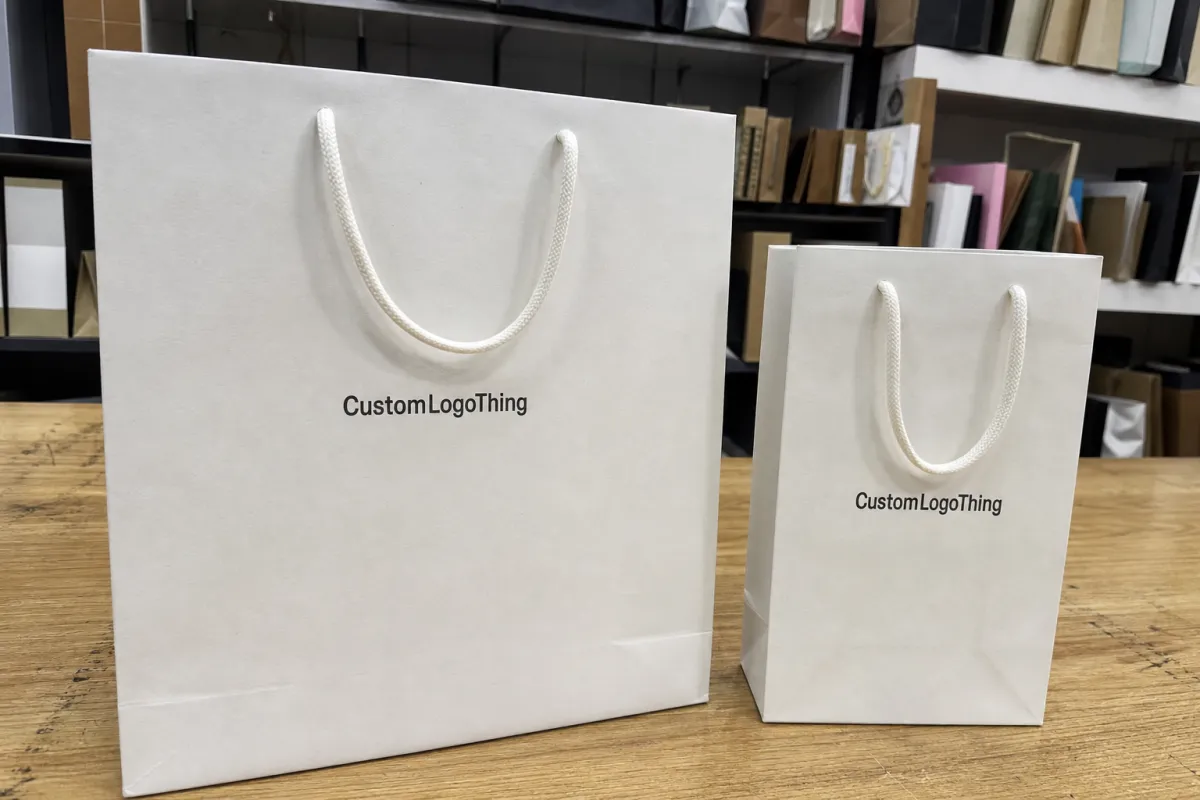
The most common surprise for buyers is that identical artwork can produce very different results from one bag to another. A logo that feels crisp on coated board may soften on matte kraft because the fibers absorb ink more aggressively. A bright brand color can appear warmer on natural paper, cooler on white stock, or slightly muted on a textured surface. Even simple black changes character depending on the paper and the ink system behind it.
This is why a boutique paper Bags Print Method Comparison should start with material behavior, not artwork preference. A 350gsm C1S board, a 140gsm kraft shopping bag, and a laminated premium tote all react differently. Offset printing usually gives very clean detail on smoother surfaces. Flexographic printing is often stable for large repeat orders with simpler graphics. Digital printing is useful for short runs and versioned artwork, though the final look still depends on coating, toner or ink type, and drying control.
Close inspection matters more here than in many other packaging categories. Customers carry boutique bags through stores, cafés, cars, and public spaces. They see how the surface catches light, whether the print sits sharply at the edge, and whether the handles and gussets feel like part of a deliberate design. The bag has to work as a carrier, but it also has to hold up as a visible brand object.
Practical rule: choose the print method around the bag’s real job. If the bag is part of the presentation moment, a higher setup cost can be justified by a more refined finish. If the bag is mainly for carrying purchases home, consistency and durability may matter more than decorative effects.
That separation helps buyers ask better questions. First: what visual outcome do you want? Second: what can the production method actually deliver at your size, stock, and deadline? Once those questions are answered, supplier quotes are much easier to compare honestly.
Boutique Paper Bags Print Method Comparison: Process and Results
A practical Boutique Paper Bags print method comparison is really a comparison of tradeoffs, not a ranking of one universal winner. Digital, offset, flexographic, screen, foil stamping, and embossing each solve different problems. The best method depends on how detailed the design is, how many bags are needed, and how premium the final piece needs to feel in hand.
Digital printing
Digital printing is usually the easiest path for short runs, samples, seasonal launches, and artwork that changes often. Setup is lighter, which makes it attractive for quantities around 100 to 500 bags, and sometimes a bit above that depending on bag size and finish. It also handles variable artwork more comfortably than plate-based methods, which is useful for boutiques that want different graphics for different product lines or events.
The tradeoff is that digital output does not always have the same depth or ink density as offset on a premium coated surface. Large solids can show more texture, and some paper stocks will not give the same saturated look buyers expect from a press-based process. For speed, flexibility, and lower MOQ, though, digital is often the most practical option.
Offset printing
Offset printing is often the strongest choice for crisp registration, controlled color, and a polished retail appearance. Fine lines, small type, and exact brand colors usually hold up well here, especially on smoother paper stocks. The process becomes more economical as quantity increases, because the setup cost is spread over a larger run.
For premium boutique packaging, offset is frequently the most predictable route when the artwork is final and the stock is stable. It performs especially well when the design includes a clean logo, a precise spot color, or a solid print area that needs to look even from bag to bag. If the brand wants strong visual consistency across a larger order, offset deserves serious attention.
Flexographic printing
Flexographic printing suits simpler graphics, high-repeat production, and projects where cost control matters more than subtle tonal effects. It works well for bold logos, repeating patterns, and straightforward one- or two-color artwork. Once the plates are prepared and the press is set, the process can be efficient for ongoing replenishment orders.
That efficiency comes with limits. Fine gradients, photographic detail, and very tight multicolor registration are not where flexo usually shines. For boutique paper bags, it tends to make the most sense when the artwork is clean and the order will repeat over time. If the same style is ordered every month, the process can be both practical and stable.
Screen printing, foil stamping, and embossing
Screen printing, foil stamping, and embossing are less about full coverage and more about presence. Screen printing lays down a heavier ink layer and can produce a tactile result that feels deliberate. Foil adds reflectivity and draws the eye quickly, which is why it is often associated with premium retail packaging. Embossing changes the surface itself, so the effect is physical rather than purely visual.
These finishes usually sit on top of a base print method rather than replacing it. A brand might use offset for the primary artwork and foil for the logo, or use embossing to add depth to a clean mark. The effect can be strong, but it adds tooling, alignment checks, and extra approval points. In many jobs, the finish creates the luxury impression more than the print base does.
| Method | Typical MOQ | Typical setup cost | Approx. unit cost at 5,000 pcs | Lead time | Best fit |
|---|---|---|---|---|---|
| Digital printing | 100-500 | $40-$150 | $0.25-$0.70 | 7-12 business days | Short runs, versioned artwork, fast turnarounds |
| Offset printing | 1,000-3,000 | $150-$450 | $0.12-$0.28 | 12-18 business days | Crisp detail, stable color, larger retail orders |
| Flexographic printing | 3,000-10,000 | $200-$600 | $0.10-$0.22 | 10-16 business days | Simple graphics, repeat programs, cost control |
| Screen / foil / embossing | 500-5,000 | $75-$500+ | $0.08-$0.35 added to base print | +3-7 business days | Premium texture, accent branding, shelf appeal |
The table is directional, not absolute. A thick matte stock with foil may cost more than a plain printed bag on coated paper. A two-color offset job can also be cheaper than a heavily covered digital job once quantity rises. The real comparison comes from matching the process to the artwork, the stock, and the order size.
Pricing, MOQ, and Unit Cost by Print Method
Pricing becomes clearer once fixed costs are separated from variable costs. A quote for printed bags is rarely just “print only.” It usually includes setup, plates or tooling, proofing, labor, spoilage allowance, finishing, and sometimes a paper premium if the chosen stock is heavier, textured, or FSC-certified. Small changes in one line item can move the entire quote more than expected.
Digital printing can look expensive per unit at first glance, but that view is incomplete. If an order only needs 300 bags, avoiding plate costs and long setup may save money overall. Offset and flexographic printing often become more efficient as quantities rise, which means a 500-piece order and a 5,000-piece order should never be judged with the same price logic.
Special finishes can add cost faster than the base print method. A simple one-color bag can turn expensive once soft-touch lamination, foil, embossing, or custom handle wrapping is added. The material may still be ordinary, but the labor and approval steps are not. Even a few cents per bag matter on a large program, and tooling charges can dominate a short run.
MOQ is another place where buyers get caught off guard. Digital printing usually supports lower quantities, while offset and flexo often need more volume to justify the setup. Foil and embossing may have their own minimums because the tooling has to be created and aligned. The trap is familiar: the unit price looks fine, but the order total rises once setup and finish charges are added.
These are the cost drivers worth asking about directly:
- Rush fees: compressed schedules often add 10% to 25%, depending on plant load.
- Color matching: brand-critical spot color work may require extra proof cycles.
- Revisions: changing the dieline after approval can trigger a new setup.
- Paper upgrades: heavier gsm, textured kraft, or specialty coatings change pricing fast.
- Coverage: heavy ink coverage increases material use and can slow drying.
If the bags will ship inside cartons or move through distribution before reaching stores, ask whether the supplier has transit testing aligned with ISTA practices. That does not change the printed image itself, but it does matter for how the bags survive packing and freight. If sustainability claims are part of the brief, confirm documentation against FSC requirements rather than relying on a verbal assurance.
The cleanest comparison method is still the simplest one: quote the exact same stock, the exact same finish, and the exact same quantity across vendors. If one supplier prices a plain kraft bag and another prices laminated premium board, the numbers are not comparable. They only look comparable on the page.
Process, Timeline, and Production Steps From File to Finished Bag
Once artwork is approved, the job still moves through several gates. The typical path goes from dieline review to print-ready files, then proofing, production, finishing, and packing. A delay in any one of those steps can push the whole schedule, especially if the order depends on a store launch or seasonal delivery window.
File prep is one of the most common pressure points. Vector logos usually print cleaner than raster images. Small type should be checked at actual size, not only zoomed in on a screen. For CMYK jobs, black text and fine lines need careful construction so they do not separate into registration issues. For brand-sensitive work, spot colors are usually safer than guessing from a monitor preview.
Proofing deserves more time than it often gets. A digital mockup is useful for layout, but it does not fully predict how ink behaves on the final stock. Kraft can mute bright colors. Coated paper can make them appear stronger. Embossing changes how light moves across the surface. Foil shifts with angle and motion. Physical samples are often worth the extra lead time, especially on premium jobs.
A practical lead-time pattern usually looks like this:
- Digital printing: fastest path if the file is final and finishing is basic.
- Offset printing: more setup, but strong consistency once the press is running.
- Flexographic printing: efficient for repeat work, though plate prep still takes time.
- Foil and embossing: often the longest tail because tooling and alignment need extra checks.
Production does not end when the ink dries. Trimming, handle assembly, inspection, packing, and carton loading all affect the schedule. A bag can print quickly and still wait for finishing. Freight booking can become the final bottleneck, especially if the bags need to land in store before a campaign starts.
Buyer’s caution: a quoted “10-day turnaround” usually means ten business days after proof approval, not ten calendar days from the first inquiry. Ask where the clock starts.
A Practical Decision Workflow for Buyers
A useful boutique paper bags Print Method Comparison starts with the use case. A retail checkout bag needs strength and legibility. A gift bag needs a more refined surface and stronger presentation value. A promotional bag may prioritize cost and fast repeat orders. Subscription inserts sit in a different category again, because they often need compact packing, consistency, and lower cost per unit.
After that, rank the priorities before comparing suppliers. Is the top goal premium finish, speed, color accuracy, lower landed cost, or a sustainability target such as FSC-certified paper? A shortlist only works once those priorities are named. Otherwise every quote looks partly right and partly wrong, which is how projects drift into round after round of corrections.
A strong request for quote should include:
- Bag size, gusset depth, and handle type
- Paper stock, gsm, and finish
- Print area, number of colors, and whether the job needs CMYK or spot colors
- Any premium finishing such as foil, embossing, or soft-touch lamination
- Target quantity, reorder expectation, and delivery date
To get useful pricing, ask each vendor to quote the same artwork on the same board, with the same finish, and the same packing standard. That one step removes a lot of noise. It also shows which supplier understands boutique work and which one is just quoting a generic bag spec.
For many buyers, the best choice is not the cheapest method and not the most elaborate one. It is the process that matches the actual constraint. A fashion boutique may choose offset plus foil because the bag is part of the presentation. A small gift shop may choose digital because the design changes every season. A high-volume lifestyle brand may choose flexographic printing because repeatability matters more than decorative effects.
Common Mistakes That Distort Color or Raise Costs
Screen previews can be misleading. A beige kraft bag will not reproduce color the same way a white coated bag does. Textured stocks reduce detail differently. Matte finishes soften contrast, while gloss can make color look stronger but also expose alignment issues more quickly. A buyer who approves artwork from a laptop alone is taking a real risk.
Another common mistake is underestimating the print area. Handles, gussets, and fold lines limit where artwork can sit. A full-bleed layout that looks elegant on a flat file may fail once it wraps around seams and tolerances. That often leads to last-minute changes, which usually mean more time and more cost.
Too much coverage can backfire too. Heavy ink on a bag that is meant to feel light and premium can make the piece look crowded. Too many colors increase registration risk and slow production. Very fine type can disappear on textured paper. Buyers often ask for more elements because they want more presence, but restraint usually looks more expensive.
Timing mistakes are just as common. Teams approve a concept before confirming stock, finish, MOQ, and turnaround. Then they discover the chosen process cannot meet the schedule, or the selected paper is not compatible with the intended finish. The order should move in the right sequence: material first, method second, design third, final proof fourth.
One more point: if the bags are part of a regulated sustainability message, do not improvise the claim language. FSC marks, recycled-content statements, and environmental wording need the right documentation. The risk is often not a legal dispute; it is a damaged brand reputation when the packaging overpromises.
Expert Tips and Next Steps for Comparing Quotes
If the budget allows, request physical samples on the same stock. Touch reveals things a screen never will. You can feel ink laydown, judge opacity, and see whether the finish makes the bag feel refined or merely decorated. That is often the difference between a bag that photographs well and a bag that actually supports the brand in hand.
Use vector artwork whenever possible. Lock the dieline before comparing methods. If brand accuracy matters, specify spot colors rather than asking a printer to match from a screenshot. For a simple two-color logo, that discipline can remove days of back-and-forth and reduce the risk of a color mismatch that only appears after production starts.
Compare total landed cost, not just print price. Freight, sampling, cartons, and the cost of a reprint if color misses the target should all be included. A quote that is lower by $0.03 per bag may become more expensive once finishing and delivery are added. Over larger quantities, that difference is not small.
If you need a clean decision path, narrow the field to two print methods and ask both suppliers for matching samples and matching specs. Then compare the output in hand rather than in a PDF. That is the most dependable way to use this boutique paper bags Print Method Comparison without getting pulled toward sales language or vague promises.
My practical view is straightforward: premium paper bags reward discipline. The cleaner the brief, the easier it is to choose the right process, and the more likely the final bag will look deliberate instead of merely printed. Start with use case, stock, and quantity. Then decide whether digital printing, offset printing, flexographic printing, or a finish-heavy approach fits the job. That sequence saves money, reduces friction, and usually produces a bag the brand is comfortable handing over.
Which boutique paper bags print method is best for small runs?
Digital printing is usually the easiest starting point for short runs because setup is lighter and changes are simpler. If the design needs foil, embossing, or a specific tactile finish, compare those options against the added setup and lead time. Always ask for the total cost at your exact quantity, not only the unit rate.
How do I compare digital vs offset for boutique paper bags?
Use digital when speed, versioning, or lower quantity matters most. Use offset when you need crisp registration, stable color, and a run size that can absorb the setup cost. Ask both vendors to quote the same stock, same finish, and same artwork so the comparison is based on process rather than hidden variables.
What print method gives the most premium look on boutique bags?
Foil stamping, embossing, and carefully controlled offset printing often read as the most premium because they change texture as well as color. The bag stock matters just as much as the print method, though. A minimal one- or two-color design on a strong stock can look more expensive than a crowded layout with extra effects.
How do MOQ and setup fees change by print method?
Digital usually has the lowest barrier because setup is simpler and smaller quantities are easier to produce. Offset, flexo, and specialty finishes often carry higher setup costs, which pushes the MOQ higher to make the order efficient. Compare MOQ and unit cost together, because a lower minimum can still cost more if the run is tiny.
Can I mix print methods on one boutique paper bag?
Yes. Many brands use offset for the main graphic and foil for the logo or accent detail. Mixed methods can raise cost and lead time, so they work best when the visual payoff is clear and brand-critical. Confirm registration, finish compatibility, and proof sequence before approving a combined approach.


