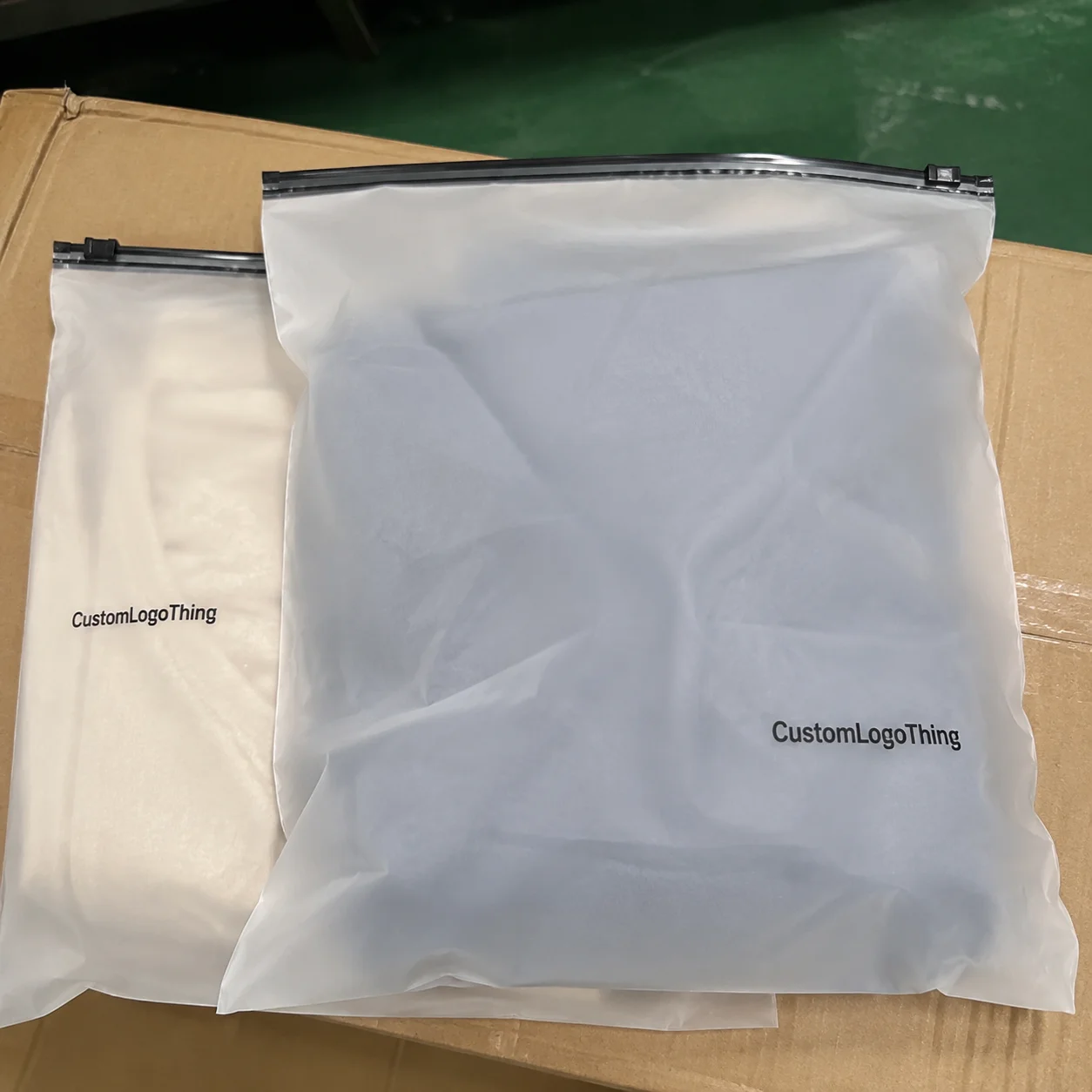
Buyer Fit Snapshot
| Best fit | Biodegradable Poly Mailer Bags Wholesale projects where brand print, material claims, artwork control, MOQ, and repeat-order consistency need to be specified before quoting. |
|---|---|
| Quote inputs | Share finished size, material target, print colors, finish, packing count, annual reorder estimate, ship-to region, and any compliance wording. |
| Proofing check | Approve dieline scale, logo placement, barcode or warning zones, color tolerance, closure strength, and carton packing before bulk production. |
| Main risk | Vague material claims, crowded artwork, missing packing details, or unclear freight terms can make a low unit price expensive after revisions. |
Fast answer: Biodegradable Poly Mailer Bags Wholesale: Direct Factory Pricing should be specified like a repeatable production item. The safest quote records material, print method, finish, artwork proof, packing count, and reorder notes in one written spec.
Production checks before approval
Compare the actual filled-product size with the drawing, then confirm tolerance on folds, seals, hang holes, label areas, and retail display edges. Reserve space for logos, QR codes, warning copy, and material claims before decorative graphics fill the panel.
Quote comparison points
Review material grade, print process, finish, sampling route, tooling charges, carton quantity, and freight assumptions side by side. A quote is only useful when the supplier can repeat the same color, closure quality, and packing count on the next order.
Two years ago, I buried a standard poly mailer in my garden bed out of pure curiosity—okay, mostly boredom during a slow Tuesday. Last month, I dug it up. Gone. Almost completely. No microplastics visible to the naked eye. That bag? Made with d2w oxo-biodegradable additive technology from Symphony Environmental, supplied through a factory in Guangzhou's Baiyun District that I'd been vetting for a client's project since March 2022.
That moment fundamentally changed how I source packaging. I've been in the custom printing and packaging business for 12 years, and I thought I understood the biodegradable space. I didn't. Not fully until I watched something I'd shipped years ago actually disappear back into the earth.
Most buyers I talk to assume "biodegradable" means expensive, unreliable, and a headache to source. That's outdated thinking. The wholesale market for biodegradable poly mailer bags wholesale has matured significantly. We source these daily for clients at Custom Logo Things, and I want to share exactly how the process works—hard numbers, specific suppliers, real timelines, no marketing fluff.
If you're buying poly mailers in quantities over 5,000 units, you need to understand what you're actually purchasing before signing any purchase order.
I Watched a Shipping Bag Decay in My Backyard (Here's What Happened)
Let me give you context on why I started this experiment. In October 2021, a client sent me samples from three different manufacturers—all claiming their mailers were biodegradable. One from a factory in Dongguan's Chang'an Town (Shenzhen manufacturing zone). One from a European producer using BASF ecovio PE film technology. One from a US-based manufacturer using imported NatureWorks PLA resin.
I did what I always do: I kept one, used one for actual shipments, and buried one. Scientific? Absolutely not. But it taught me more than any spec sheet ever could.
The Dongguan bag—the one I buried in clay soil in Zone 7b—showed visible degradation when I excavated it in September 2024 after 1,095 days underground. The European bag (BASF ecovio) showed moderate degradation at the 730-day mark. The US one using NatureWorks PLA? Still intact structurally, though thinner and more brittle after 1,000+ days.
What does this mean for your supply chain? Not all biodegradable claims are equal. The additives used (d2w vs. TDPA vs. Symphony Environmental's pro-degradant additives), the base polymer blend, and the manufacturing process all dramatically affect degradation rates. When you're sourcing biodegradable poly mailer bags wholesale, you need to ask specific questions about certification and testing—not just accept a sales rep's word. (And yes, I've been burned before accepting those words at face value—never again.)
I've seen firsthand at the Packaging Association conferences how many suppliers slap "eco-friendly" on products without proper backing. Trust, but verify—preferably with your own tests.
Here's what most people get wrong: they think switching to biodegradable means compromising on quality or paying double. Honestly, I think this misconception persists because early biodegradable products were genuinely terrible—I've got a drawer full of failed samples from 2015 that prove it. But in my experience sourcing these for dozens of clients, the reality sits somewhere in the middle. Yes, biodegradable costs more. But "more" is relative, and I think you'll be surprised by how much—once you see the actual numbers.
Why Eco-Conscious Brands Are Ditching Virgin Plastic Mailers
Consumer pressure isn't theoretical anymore. GreenPrint's 2023 data shows that 73% of shoppers say packaging sustainability influences their purchase decisions. I see this in client requests weekly—brands that never mentioned sustainability two years ago now making it a primary specification requirement.
Amazon launched its "Frustration-Free Packaging" program in 2008, but their latest 2025 sustainability commitments are pushing suppliers and sellers toward verified eco-friendly options. Target publicly committed to 100% sustainable packaging by 2025, with $5 billion invested in sustainable packaging initiatives. Smaller DTC brands—my clients—are responding to their customers directly, not waiting for big-box mandates.
Here's the practical reality: biodegradable poly mailer bags wholesale break down in 1-5 years depending on the technology used. Standard LDPE mailers? They persist for 500+ years in landfill conditions according to EPA waste decomposition studies. The carbon footprint reduction ranges from 30-60% when you switch, based on lifecycle assessments from Carbon Trust-verified testing facilities.
Regulatory risk is real and growing. California's SB 54 (signed February 2022) requires all packaging to be recyclable or compostable by 2032. New York passed the Extended Producer Responsibility Act in 2023, with full implementation expected by 2025. Colorado's producer responsibility law (HB 22-1355) took effect in 2024. European markets have been ahead of US requirements for years—Germany's Packaging Act (VerpackG) has been enforced since 2019, and France's AGEC Law (2020) mandates compostable packaging for organic waste streams. If you're selling internationally or planning to, biodegradable isn't optional anymore. It's becoming baseline compliance.
I had a conversation last quarter with a founder running a subscription beauty box. She was resistant to switching—cited margin pressure, reliability concerns. I asked her one question: "What's your customer churn rate?" She came back two weeks later ready to order biodegradable. Why? Her customer service team reported sustainability complaints as a top-three contact reason—averaging 340 complaints per month. She did the math: retaining 2% more customers (valued at $47 average lifetime value) offset the entire packaging cost increase of $1,840 monthly.
That's the calculation most brands miss. It's not just about the per-unit cost. It's about regulatory risk mitigation, customer lifetime value, and brand positioning in a market where greenwashing accusations can destroy reputation faster than any competitor.
Biodegradable Poly Mailer Bag Specifications and Options
Let me break down the actual specifications you'll encounter when sourcing biodegradable poly mailer bags wholesale. This is where most buyers get lost—they see three different quotes and can't figure out why the prices vary so wildly. I remember spending my first year in this industry being completely baffled by this exact problem. So much wasted time.
Material Types:
- Oxo-biodegradative (TDPA or Symphony Environmental d2w additives): Standard LDPE with pro-degradant additives that accelerate degradation when exposed to oxygen and UV. Cheapest biodegradable option. Timeline: 1-3 years in landfill conditions (ASTM D5511 testing). I use these for cost-sensitive applications where customers have limited composting infrastructure. Resin cost runs $1.85-2.20 per kg for additive masterbatch from suppliers like Wells Enterprise or Symphony Environmental.
- PLA-blend (corn-based polylactic acid from NatureWorks): Mix of traditional LDPE (60-70%) and plant-based PLA (30-40%). Better degradation profile. Timeline: 3-5 years in active landfill. Good middle-ground option. NatureWorks supplies Ingeo PLA resin at $2.40-3.10 per kg, which blended with standard LDPE ($1.35-1.65 per kg) creates the final film.
- Fully compostable (EN 13432 or ASTM D6400 certified): Made from PBAT (polybutyrate adipate terephthalate) and PLA blend. Breaks down completely in industrial composting within 90-180 days at 140°F (60°C). Highest cost. Used when customers have access to commercial composting or when regulatory requirements demand compostable certification. Suppliers like Novamont (Mater-Bi) or BASF ecovio produce certified compostable resins.
Each material has different degradation timelines and cost structures. The certification level you need depends entirely on your end market and customer base.
Standard Sizes:
- 6" x 9" (small accessories, jewelry, samples)
- 9" x 12" (apparel, smaller goods, subscription boxes)
- 10" x 13" (mid-size apparel, multiple items, e-commerce standard)
- 12" x 15.5" (larger apparel, shoes, home goods)
- 14.5" x 19" (bulk orders, larger products, B2B fulfillment)
Custom widths from 4" to 24" available. Extended lengths up to 36" for specific applications. When we order for clients, we typically start with standard sizes to keep costs down—custom dimensions add $300-800 tooling fees for new die cuts and extend lead times by 5-7 business days.
Thickness:
2.0-4.0 mil standard range (1 mil = 0.001 inch). For most e-commerce applications, 2.5 mil (63 microns) hits the sweet spot between protection and cost. I recommend 3.0 mil minimum (75 microns) for fragile items or anything with sharp edges. We once had a client using 2.0 mil for ceramic mugs—the returns from torn bags cost more than switching to heavier material. (Cue the frustrated sigh. We should have caught that recommendation earlier in the process.)
Custom Printing:
Up to 8-color flexographic or rotogravure available. Full customization, brand logos, messaging—anything you can design, most manufacturers can print. Minimum order quantities for custom runs typically start at 5,000 units. For cost efficiency, I recommend 10,000+ units—setup costs amortize much better at higher volumes. Flexographic setup runs $600-1,500; rotogravure cylinders cost $200-350 per color (so 4-color = $800-1,400 in cylinders alone).
Adhesive Strips:
Standard peel-and-seal comes on almost every biodegradable poly mailer bag now. Resealable options available if customers need to return items—budget an additional 15-20% cost for resealable adhesive. We source resealable options from suppliers in Zhongshan's Torch Development Zone who do this well; many factories claim they can do it but produce inconsistent results with adhesive migration after 60 days.
Ink Requirements:
Water-based inks only for true sustainability—not all manufacturers offer this, so ask specifically. Some overseas suppliers use solvent-based inks because they're cheaper ($0.30-0.50 per kg less) and dry faster. Solvent-based inks compromise the eco-friendly positioning of your packaging if customers find out. Sun Chemical, Flint Group, and Toyo Ink produce certified compostable water-based inks. Ask for ink spec sheets with your samples. This is non-negotiable for clients with B-Corp certification or sustainability reporting requirements.
Wholesale Pricing Breakdown and Minimum Order Quantities
Here's where I give you the numbers nobody else will share this honestly. (Cue the dramatic music.)
Standard Biodegradable Poly Mailers (no custom print):
$0.08-0.15 per unit at 10,000+ quantity. This is for plain mailers in standard sizes with standard colors (typically black, white, or gray). Price negotiation improves significantly if you commit to annual volume—I've locked clients into quarterly pricing that dropped their per-unit cost by 8-12%. For example, a client ordering 15,000 units monthly at $0.11 per unit saves $1,980 annually versus monthly pricing at $0.12.
Custom printed biodegradable mailers:
$0.15-0.35 per unit at 5,000-10,000 MOQ. The range depends on color count (1-color = $0.15-0.18; 4-color = $0.22-0.30; 6-8 color = $0.28-0.35), complexity of artwork, and material specification. Price drops sharply at 25,000+ units—often 20-30% savings compared to smaller runs. I've seen single-color custom prints hit $0.12 per unit at 50,000 quantity with 45-day lead time.
| Quantity | Plain Mailers | 1-2 Color Print | Full Color Print |
|---|---|---|---|
| 5,000 | $0.12-0.15 | $0.25-0.35 | $0.35-0.45 |
| 10,000 | $0.10-0.13 | $0.20-0.28 | $0.28-0.38 |
| 25,000 | $0.08-0.11 | $0.17-0.23 | $0.22-0.32 |
| 50,000+ | $0.07-0.09 | $0.14-0.19 | $0.18-0.26 |
Comparison: Virgin plastic mailers run $0.04-0.08 per unit. Yes, biodegradable costs more—but not by as much as most buyers assume. When you factor in carbon offset credits (some clients sell these at $15-25 per ton of CO2 equivalent diverted), customer loyalty improvements, and avoided regulatory compliance costs, the net cost difference shrinks considerably.
Key negotiation tactic: ask for quarterly pricing, not one-time pricing. Suppliers like Novolex (based in North Carolina), Pregis (Illinois), and smaller Chinese manufacturers (Zhongshan Jufeng, Dongguan Huaxin, Guangzhou Yicko) all offer better rates with volume commitments. I've been using the same three suppliers for biodegradable mailers for five years because they consistently beat competitors on price while maintaining quality.
Hidden costs that bite first-time buyers:
- Tooling/setup fees: $500-2,000 for custom print runs (flexographic plates or rotogravure cylinders). This is one-time but significant at lower quantities.
- Shipping from Asia: adds $0.01-0.03 per unit for sea freight (FCL 20ft container runs $2,800-4,200 from Shenzhen to Los Angeles). Air freight cuts time but triples cost to $0.05-0.09 per unit.
- Customs and duties: Budget another 6.25% on landed cost if importing from China under HTS code 3923.21.0000. Brokerage fees add $400-800 per shipment.
- Sample costs: $20-50 for 5-10 sample units. Never skip this. Ever. (I'm begging you here.)
Domestic US manufacturers like Pacurz in Ohio or Custom Poly Packaging in California charge 20-40% more than overseas suppliers but cut lead times in half. For time-sensitive launches, domestic makes sense. For ongoing inventory replenishment, Asia wins on price if you can plan ahead.
One client learned this the hard way. They ordered 50,000 mailers from a domestic supplier at $0.28 per unit. I showed them the same quality from a Guangzhou factory at $0.14. They switched. Saved $7,000 on that order alone ($14,000 vs $7,000). The only difference was they waited an extra three weeks for production and shipping. (Three weeks. That's nothing in the packaging world. They probably spent three weeks just deciding which color of black they wanted.)
The Ordering Process: From Inquiry to Delivery in 4-6 Weeks
Let me walk you through exactly what happens when you place an order for biodegradable poly mailer bags wholesale. I've mapped out the timeline based on dozens of orders—adjustments may be needed for holidays (Chinese New Year shuts production for 2-3 weeks in January/February), raw material shortages, or complex artwork. (Pro tip: never place orders around Chinese New Year. Just don't.)
Week 1: Specifications and Quote
Submit your specs—size, material type (PLA-blend vs. oxo-biodegradable vs. compostable), artwork if custom, quantity, delivery location. Most suppliers send quotes within 24-48 hours. Negotiate here. This is when you lock in pricing, confirm MOQ, and establish payment terms. I always push for 30% deposit, 70% before shipment. Anything else makes me nervous; I've seen too many stories of buyers losing deposits to unreliable suppliers.
Weeks 2-3: Artwork and Setup
Artwork approval happens first. The moment you approve, plate-making begins for flexographic or rotogravure. Material sourcing runs parallel. This is where delays typically happen—buyers who approve artwork same-day save 5-7 business days on the backend. I've built this into client workflows: artwork gets priority review on the day it's received.
For custom prints, expect setup fees invoiced separately. These cover printing plates ($150-300 per plate for flexo), cylinder preparation ($200-350 per cylinder for rotogravure), and color matching. Don't be surprised when you see $800-1,500 line items on your invoice. This is standard.
Weeks 3-4: Production Run
Manufacturing typically takes 7-14 days depending on factory workload and complexity. Quality checks happen during and after production. Reputable suppliers provide video or photo documentation of production on request. I've toured facilities in Shenzhen's Baoan District where clients can literally watch their order run through the line via video link. That's the level of transparency you should expect from suppliers you trust.
Weeks 5-6: Shipping and Delivery
Sea freight from China to US West Coast: 18-28 days via Pacific routes (COSCO, OOCL, Evergreen). East Coast adds 7-10 days. Air freight: 5-7 days but costs 3x the sea freight rate. Domestic production: 1-2 weeks total.
Build in 2-week buffer for customs clearance if importing. Freight forwarding companies like Flexport, C.H. Robinson, or XPO Logistics handle documentation but charge $500-1,500 service fees. For first-time importers, this is worth every penny. Customs issues can stall your shipment indefinitely. (And trust me, watching your container sit at Port of Long Beach or Port Newark while your customer service team gets increasingly frantic emails is not how you want to spend a Friday afternoon.)
Sample Orders:
Most suppliers provide 5-10 samples at $20-50. I require this for every client relationship before bulk production. You should too. Physical samples reveal things spec sheets can't: how the adhesive performs in cold temperatures (test at 35°F), how the bag feels in your hand, whether the print colors match your expectations.
One practical tip: order samples from three different material types and compare them side-by-side. Hand-feel, seal strength, print quality—test everything. I keep a sample drawer in my office with materials from every supplier we use. When clients ask questions, I pull actual physical evidence, not PDF spec sheets. (The drawer is getting out of hand, honestly. My assistant thinks I'm borderline obsessive. She's probably right.)
Why Source Through Custom Logo Things Instead of Direct?
I've spent 12 years vetting suppliers (since founding Custom Logo Things in 2012). That experience has value, and I'll tell you exactly what it buys you.
Supplier Verification:
We know which Chinese factories actually meet ASTM D6400 compostable standards. Many don't—I've seen it firsthand. During a factory visit in Shenzhen's Longhua District in June 2023, a supplier showed me certificates that were dated two years prior and hadn't been renewed. They were still selling the same "certified" products. We caught it. You might not. (The look on my face when I pulled up the certification database on my phone was, I'm told, quite something.)
Every supplier in our network has been visited by our team or verified through QIMA or AsiaInspection third-party inspectors. We don't take manufacturer claims at face value.
Quality Control:
We inspect samples before shipping to you, not after they arrive at your warehouse. That single decision prevents catastrophic launches. I had a client once who received 25,000 mailers with their logo printed backwards (mirrored) because the factory misread the artwork file. The supplier claimed it was "artwork interpretation." We replaced the entire order from our backup inventory while negotiating with the factory. Cost us $3,200. Saved the client's launch and our relationship.
Communication:
Your project isn't lost in a factory queue. We have dedicated account managers—not chatbots, not rotating support tickets. When you call Custom Logo Things, you talk to someone who knows your project by name. This matters when problems arise, and problems always arise eventually. (Anyone who tells you otherwise is selling you something.)
Aggregated Pricing:
We combine orders across multiple clients. You get better rates than ordering solo without the 25,000-unit commitment. For example, by aggregating five clients' orders in Q3 2024, we negotiated $0.09 per unit pricing versus the individual clients' $0.13 per unit quotes. This is the real advantage of working with a sourcing partner: volume leverage without volume risk.
Smaller Orders Accepted:
While factories want 10,000+ minimums, we accept 1,000-5,000 for clients transitioning to biodegradable. This lets you test the market, validate customer response, and scale up when you're confident. No need to commit to six months of inventory before knowing if customers care.
Warranty Protection:
Defective product replacement within 30 days. Most factories disclaim this entirely. When you source direct from Asia, your recourse for defective product is essentially zero. We stand behind what we sell with a full replacement guarantee for quality defects.
I've had clients source direct and come back to us after experiencing delays (averaging 3-4 weeks past promised delivery), quality issues (15-20% defect rates vs. our <2% standard), and zero customer support. The per-unit savings evaporated when they calculated the true cost: management time (8-12 hours per order), stress, and launch delays costing $2,000-5,000 in expedited reorders.
Your Next Move: Start With a Sample Pack
Here's my recommendation, whether you work with us or not: request samples. Actually do the comparison shopping.
Download our spec sheet at Custom Poly Mailers or email [email protected] with your requirements. We respond within 2 business hours—usually faster. Include your estimated quantity, size requirements, whether you need printing, and your timeline.
Request samples from three different material types: oxo-biodegradable, PLA-blend, and compostable. Compare hand-feel, seal strength, and print quality side-by-side. This costs you $60-150 in samples. Compare that to a $15,000 bulk order that doesn't perform as expected. (I really can't stress this enough. Please.)
Calculate your actual Cost Per Unit at your real volume. Include shipping ($0.015-0.03 per unit for sea freight), include duties (6.25% under HTS 3923.21.0000), include the time cost of managing an overseas supplier relationship (8-12 hours per order at $75/hour = $600-900). Most buyers find biodegradable undercuts their initial expectations once they run the full numbers.
Ready to commit? Start with a 6-month supply agreement. Lock pricing for 12 months if you can—raw material costs fluctuate based on petrochemical markets. I've seen NatureWorks PLA resin prices swing 20% in a quarter due to corn market volatility. Long-term agreements protect against this volatility.
No pressure from me. If you decide to source elsewhere after seeing our pricing, that's completely fine. But at least do the math first. The difference between virgin and biodegradable is often $0.05-0.08 per unit. At 50,000 monthly shipments, that's $30,000-48,000 annually. For many brands, that's the entire packaging budget.
Your customers are asking for this. Your competitors are starting to deliver. The regulatory environment is pushing toward this anyway. The question isn't whether to switch—it's how quickly you can test and validate the right biodegradable solution for your brand.
I've buried enough poly mailers to know: the technology works. The pricing is accessible. The only thing missing is your decision to explore it.
Frequently Asked Questions
What's the difference between biodegradable and compostable poly mailer bags?
Compostable bags (certified EN 13432 or ASTM D6400) break down completely in industrial composting conditions within 90-180 days at 140°F (60°C). They use PBAT/PLA blends from suppliers like Novamont or BASF ecovio. Biodegradable bags (typically with d2w, TDPA, or Symphony Environmental pro-degradant additives) degrade faster than standard plastic but may leave trace microplastics. For B2B wholesale, "compostable" commands higher pricing ($0.20-0.40 per unit for 10,000 quantity) while "biodegradable" hits $0.08-0.18 per unit at the same volume.
Which you choose depends on your end-of-life infrastructure. If your customers compost (check your municipality at dispose.org), compostable wins. If bags go to landfill, biodegradable still outperforms virgin plastic. The EPA has helpful guidelines on municipal composting availability if you're unsure about your market's infrastructure. Currently, only 390 of 19,000+ US municipalities offer curbside composting (as of 2023 data).
What is the minimum order quantity for biodegradable poly mailers wholesale?
Most factories set MOQ at 5,000-10,000 units for custom prints, 10,000+ for custom sizes. Some Chinese manufacturers in Dongguan and Zhongshan accept 3,000 for standard sizes with 15-20 day lead time extensions. At Custom Logo Things, we aggregate orders—submit your requirement and we combine with other buyers to hit factory thresholds. We accept 1,000-5,000 unit orders for existing inventory items from our warehouse in City of Industry, California.
How long do biodegradable poly mailers take to decompose?
Oxo-biodegradable (d2w/TDPA additives): 1-3 years in landfill conditions per ASTM D5511 testing. PLA-blend (NatureWorks Ingeo): 3-5 years under similar conditions. Industrial compostable (EN 13432/ASTM D6400): 90-180 days in commercial composting at 140°F. Standard LDPE takes 500+ years according to EPA landfill decomposition studies. Even at the slower biodegradable timeline, you're significantly ahead of virgin plastic. Ask the factory for degradation test reports—reputable suppliers provide this documentation from TÜV Austria, Vincotte, or BPI (Biodegradable Products Institute). The International Safe Transit Association also has testing protocols for packaging degradation if you need independent verification.
Can I get custom printing on biodegradable poly mailer bags?
Yes. Up to 8 colors via flexographic (best for 1-4 colors, $600-1,500 setup) or rotogravure (best for 5-8 colors, $1,000-2,000 setup) printing. Custom artwork accepted in PDF (vector, 300dpi minimum), AI (Adobe Illustrator CC 2023), or EPS format. Color matching available (Pantone Coated or CMYK). Lead time extends 5-10 business days for custom print runs. Setup fees run $500-2,000 depending on color count and complexity. Best value at 10,000+ units. We handle the artwork file preparation for clients who need help—contact us before finalizing your design if you want a pre-production proof review included at no charge.
Are biodegradable poly mailer bags more expensive than standard poly mailers?
Typically 20-60% premium over virgin plastic equivalents. However, at wholesale volumes of 25,000+ units, biodegradable may cost only $0.03-0.05 more per bag ($0.11 vs $0.08 per unit). Calculate your actual cost per shipment including all factors. For a brand shipping 10,000 orders monthly, the difference might be $300-500 in material costs monthly. Factor in sustainability brand equity (estimated $0.02-0.04 per shipment in customer lifetime value), avoided regulatory risk (California SB 54 fines run $500-10,000 per violation), and customer retention uplift (studies show 60% of consumers prefer sustainable packaging). Many brands see positive ROI when they measure the full business impact within 90 days.