A half-inch sounds minor until a paperback set, journal bundle, or boxed stationery kit no longer fits the reordered bag. That is why a practical Bookshop Frosted Zipper Bags reorder cost guide matters. Repeat orders should be easier than the first run, but they become expensive when size assumptions, film gauge, or print details drift from the approved specification.
For bookshops, Frosted Zipper Bags protect paper goods from dust and light moisture, tidy gift bundles, and speed counter packing. Reorder cost problems usually come from fit, usable space below the zipper, thickness, print method, carton count, and shipping cube rather than unit price alone.
This guide focuses on the points that affect buying decisions: specs, price ranges, MOQ, Lead Time, decoration, inspection, and the information needed for a clean reorder quote.
Why a missing half-inch in bag size can raise replacement and reorder costs
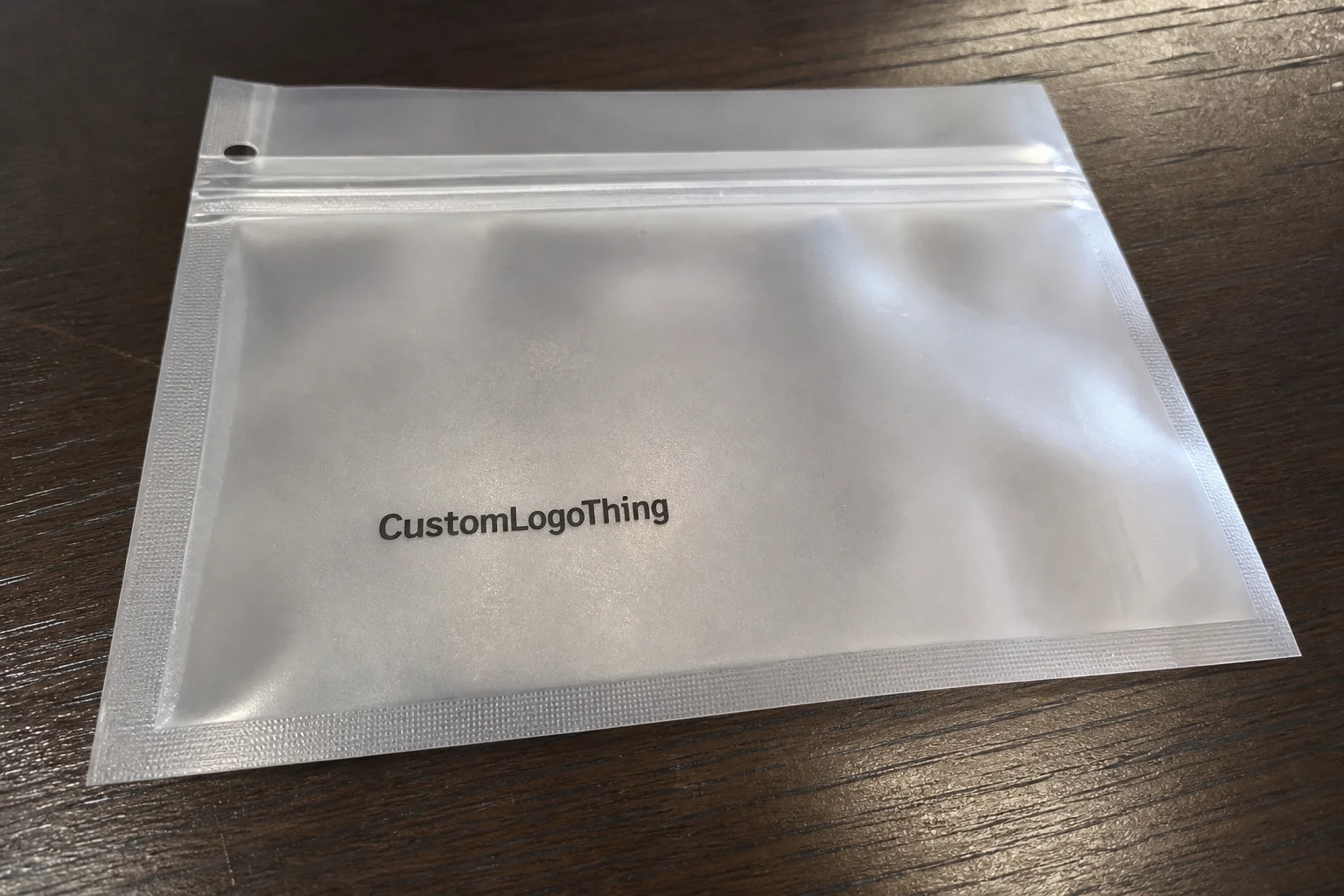
Bag size on a quote is usually listed as outside width and height. That is not the same as usable interior space.
The zipper reduces top clearance. Side seals narrow effective width. A bottom gusset changes how contents sit once loaded. A nominal 9 x 12 inch bag can be a poor fit for an 8.5 x 11 inch bundle if the spine is thick or the zipper line removes too much fill height.
This is where bookshops get caught. Signed editions may include inserts. Journal kits may include pens or elastic accessories. Stationery bundles stack unevenly. A small sizing error can trigger a replacement order, rush freight, and extra labor sorting which SKUs still fit.
The cost impact usually appears in four places:
- Replacement spend for unusable bags
- Rush freight to cover events or seasonal launches
- Store labor for repacking or reassigning inventory
- Margin loss if backup packaging slows fulfillment or looks less presentable
Other cost drivers include:
- Usable fill area below the zipper
- Film thickness, often around 70 to 160 microns depending on load
- Zipper style
- Print method, typically flexographic or gravure for custom runs
- Carton quantity and receiving efficiency
- Shipping cube, especially on larger bags
If the reorder instruction is only “same as last time,” the process depends on memory. That works until the last order was not fully documented or the packed product changed. A repeat order still needs a brief technical review.
What bookshops usually need from frosted zipper bags in daily retail use
Most Frosted Zipper Bags used in retail are made from PE-based film, commonly LDPE or a blended polyethylene structure. Bookshops usually need a balance of softness, sealability, and enough toughness for repeated opening and closing.
The frosted look should be translucent, not so cloudy that the contents look dull. That makes mixed gift sets look cleaner than they do in a fully clear bag.
Common bookstore uses include:
- Signed books with inserts
- Journals and planner sets
- Bookmarks, stickers, and stationery packs
- Membership kits and subscription add-ons
- Seasonal gift bundles
- Small apparel or fabric accessories sold near the counter
Compared with clear OPP sleeves, Frosted Zipper Bags are usually thicker, softer, and less prone to edge cracking. Compared with paper gift bags, they handle light moisture better and keep flat products from sliding around. Compared with rigid boxes, they are easier to store and replenish.
They are not ideal for very heavy gift sets, sharp-edged products, or premium presentation programs that need rigid structure. Matte frosted surfaces can also show scuffing in rough stock-room handling.
In daily use, staff usually care about a few practical details: whether the bag opens easily, whether the zipper closes cleanly, whether products snag on side seals, and whether there is enough slack to load quickly without making the bag look oversized.
If you are comparing formats across a broader packaging plan, you can review general purchasing questions in the FAQ or compare stocking options through Wholesale Programs.
Specifications that affect fit, feel, print clarity, and repeatability
Repeatable reorders start with a complete spec sheet. If the structure or print details are vague, the next lot may be close but not fully usable.
Core dimensions to lock down
Confirm width, height, bottom gusset if any, and usable fill height below the zipper. Ask for tolerance ranges. Flexible bags often carry dimensional tolerances around ±2 mm to ±5 mm depending on size and converting method.
Film thickness and feel
Lighter items such as bookmarks or flat cards often use 70 to 90 microns total thickness. For journals, paperbacks, or small mixed kits, 100 to 140 microns is more typical. More thickness increases cost, shipping weight, and carton cube, and can make the bag feel stiffer than intended.
Also confirm whether the quoted thickness is total bag gauge or single-side film gauge. That mistake causes many reorder mismatches.
Frosted finish and print contrast
Print on frosted PE behaves differently from print on coated paperboard. Black usually gives the strongest contrast. White can also work well, but opacity depends on film haze, ink laydown, and press setup. Fine lines and very small reversed text should be reviewed carefully because they can soften on a hazy flexible surface.
If logo appearance matters, keep a retained sample from the last approved lot. A digital proof confirms placement, but not the exact interaction of haze, opacity, and flexing.
Zipper and construction details
Most bookstores use a standard press-to-close zipper. Heavier contents or reuse-focused programs may need a stronger rib profile. Other details that should be documented include side seals, top trim, rounded corners, hang holes, vent holes, and any lip extension above the zipper.
Vent holes can help reduce trapped air and improve carton packing efficiency, but they also reduce dust protection. They should only be specified when that tradeoff makes sense.
Print file and approval control
One-color printing is usually the easiest starting point for cost control. More colors increase registration sensitivity, approval time, and the chance that new plates or cylinders are needed.
Your spec sheet should also include carton details: pieces per inner bundle, pieces per carton, carton dimensions, labels, and pallet pattern if relevant. These details are easy to skip and expensive to correct later.
For buyers managing mixed packaging programs, outside references can still help. Paper-based components are often reviewed against standards from FSC, while broader operations guidance can be found through PMMI packaging industry resources.
Bookshop frosted zipper bags reorder cost, pricing, MOQ, and unit cost factors
A repeat order usually takes less administrative effort than a first run if artwork, tooling status, and specifications are already on file. That does not guarantee a lower quote. Resin, labor, and freight still move.
Main pricing drivers include:
- Bag dimensions
- Film thickness
- Zipper type
- Number of print colors
- Print coverage
- Order quantity
- Packing method
- Shipping terms and destination
For custom printed zipper bags, a typical MOQ often starts around 3,000 to 5,000 pieces for a straightforward size and print layout. Some suppliers start higher for nonstandard dimensions or more complex print work. Short replenishment runs usually have weaker unit economics because setup, startup waste, and packing labor do not shrink evenly.
| Specification Range | Typical Quantity | Estimated Unit Cost | Notes |
|---|---|---|---|
| Small flat bag, 80-90 microns, 1-color print | 5,000 pcs | $0.12-$0.19 | Typical for bookmarks, stickers, flat stationery |
| Medium bag, 100-120 microns, 1-2 color print | 5,000 pcs | $0.18-$0.30 | Common for journals, paperbacks, and small gift kits |
| Larger bag, 120-140 microns, higher coverage print | 10,000 pcs | $0.26-$0.42 | Often used for book bundles and mixed merchandise sets |
These ranges are directional. A useful cost guide should focus on landed cost, not ex-factory price alone. Freight, duty where applicable, receiving labor, repacking, and awkward carton counts can erase a low quoted unit price quickly.
Another common question is whether a new lot can match the previous lot exactly. Usually it can match within normal manufacturing tolerance, but exact duplication is less realistic. Resin source, haze level, and press conditions can create slight variation in look or feel.
Artwork-only changes may still affect price. If color count, print area, or registration demand changes, the quote changes even if bag size and structure stay the same. Some suppliers also treat tooling, print plate, or cylinder reuse separately from normal reorder pricing.
The cleanest quoting method is still simple: send the prior PO number, approved specification, and last accepted artwork file.
Production process and lead time for repeat bag orders
A good reorder process is straightforward: confirm the prior specification, verify the artwork version, approve the quote, issue the PO, lock pre-production details, manufacture, inspect, pack, and ship.
Production itself usually follows this sequence:
- Confirm material structure and target gauge
- Print artwork if the bag is decorated
- Run bag making with zipper insertion
- Seal, trim, and count
- Inspect for size, print, and closure performance
- Pack by approved carton configuration and ship
For many custom repeat orders, lead time falls around 12 to 20 business days from final approval. One-color reorders in an existing size often move faster than multicolor runs with revised carton requirements. If the art changed, a new proof is needed, or production lands near a holiday peak, lead time can extend.
Proofing depends on what changed. If nothing changed and the production file is already approved, a new proof may not be necessary. If the art moved or logo size changed, a digital proof is usually the minimum. If the last lot had fit problems, a retained sample comparison or pre-production sample is worth the extra time.
Practical callout: If the bags support a seasonal bundle, school rush, or event launch, count backward from the in-store merchandising date, not the sale start date.
Quality control for repeat orders should include dimensional verification, seal strength, zipper function, print position, practical color consistency, count accuracy, and carton labeling. For heavier bundles or e-commerce kits, shipment testing references such as ISTA can help shape the broader packaging plan.
Common reorder mistakes that create delays, mismatched bags, or avoidable extra charges
The quickest way to make a reorder expensive is to treat it as a clerical task. Flexible packaging looks simple until one missing detail affects fit, print, lead time, and freight at the same time.
Common mistakes include reordering from memory, quoting only outside dimensions, omitting film thickness, sending updated art without marked revisions, and assuming the prior carton pack should stay unchanged.
A few specification changes can alter cost more than buyers expect:
- Increasing width can change material yield across the web
- Thicker film raises resin use, weight, and cube
- More print coverage increases ink use and setup sensitivity
- Split carton packs add labor and reduce packing efficiency
- Lower quantities usually push unit cost up sharply
Bookshops also face predictable timing traps:
- Holiday gifting spikes
- Author events and signed releases
- Membership kits or subscription cycles
- Back-to-school and campus rush periods
The best protection is recordkeeping. Keep the approved spec sheet, current artwork file, carton configuration, photos of the packed product, and one retained sample from the last accepted run. Add recent usage by SKU if multiple bag sizes are carried.
How to request an accurate reorder quote and move to production faster
If you want a fast, dependable quote, send complete information the first time. That is the practical end point of any reorder cost guide: fewer assumptions, cleaner pricing, and less back-and-forth.
Start with these basics:
- Previous PO number or supplier reference
- Bag width, height, gusset, and usable fill area
- Film thickness or micron range
- Zipper style and top edge details
- Material description and frosted finish requirement
- Current print file in vector format
- Target quantity and alternate quantity breaks
- Required in-house date
- Ship-to destination
Then answer four direct questions before requesting pricing:
- Is the spec exactly the same, or revised?
- Is the artwork unchanged, or updated?
- Is the carton pack count staying the same?
- Does the new lot need to match a retained sample?
If fit has ever been a problem, send a photo of the current bag with the actual product loaded inside. It often shows whether the issue is width, height, gusset depth, zipper clearance, or simply an overfilled bundle.
Ask for multiple quantity tiers. A 5,000-piece, 10,000-piece, and 15,000-piece quote will usually show where unit economics improve. Sometimes it makes sense to buy deeper; sometimes storage limits or cash flow make that a poor choice. Decide from actual turnover, not just the lowest per-piece number.
The best reorder requests are not long. They are precise.
FAQ
How is pricing calculated in a bookshop frosted zipper bags reorder?
Pricing usually depends on bag size, total film thickness, zipper construction, print colors, print coverage, quantity, carton packing method, and shipping terms. A true reorder often reduces setup friction if approved artwork and exact specifications are already on file, but resin cost, labor, and freight still move over time. Compare landed cost rather than the quoted bag price alone.
What MOQ should I expect for bookshop frosted zipper bags reorders?
MOQ varies by size, material structure, and print setup, but common reorder tiers still fall around 3,000, 5,000, or 10,000 pieces. Very small replenishment runs usually carry a higher unit cost because machine setup, startup waste, and packing labor do not scale down evenly. Ask for several quantity options before you decide.
Can I change artwork on a bookshop frosted zipper bags reorder without changing the bag itself?
Yes, but artwork changes can still affect pricing. If the new design changes color count, print area, opacity needs, or registration difficulty, the cost may rise even if the bag dimensions and material stay the same. Keep structural specifications separate from print specifications so the impact is easy to quote.
What lead time is typical for a bookshop frosted zipper bags reorder?
Many standard repeat orders land around 12 to 20 business days from final approval, though timing depends on quantity, artwork complexity, proofing needs, and production capacity. Reorders with unchanged one-color art and an existing size usually move faster than jobs with revised print layouts or special packing requirements. Build in receiving time before the bags are needed on the floor.
What information should I send to get an accurate quote for bookshop frosted zipper bags?
Send the prior PO or supplier reference, bag dimensions, usable fill area, thickness, zipper style, material description, print file, quantity, in-house date, and ship-to location. Include notes on whether the reorder must match a previous sample and whether any fit or quality issue from the last lot needs to be corrected. Photos of the packed product are useful if sizing has been tight.


