Buyer Fit Snapshot
| Best fit | Biodegradable Void Fill Bags Wholesale projects where brand print, material claims, artwork control, MOQ, and repeat-order consistency need to be specified before quoting. |
|---|---|
| Quote inputs | Share finished size, material target, print colors, finish, packing count, annual reorder estimate, ship-to region, and any compliance wording. |
| Proofing check | Approve dieline scale, logo placement, barcode or warning zones, color tolerance, closure strength, and carton packing before bulk production. |
| Main risk | Vague material claims, crowded artwork, missing packing details, or unclear freight terms can make a low unit price expensive after revisions. |
Fast answer: Biodegradable Void Fill Bags Wholesale: Buyer's Outline should be specified like a repeatable production item. The safest quote records material, print method, finish, artwork proof, packing count, and reorder notes in one written spec.
Production checks before approval
Compare the actual filled-product size with the drawing, then confirm tolerance on folds, seals, hang holes, label areas, and retail display edges. Reserve space for logos, QR codes, warning copy, and material claims before decorative graphics fill the panel.
Quote comparison points
Review material grade, print process, finish, sampling route, tooling charges, carton quantity, and freight assumptions side by side. A quote is only useful when the supplier can repeat the same color, closure quality, and packing count on the next order.
Biodegradable Void Fill Bags Wholesale is not the sort of purchase that usually gets anyone excited in a planning meeting, but it becomes very interesting the first time a carton shows up split, crushed, or with a product that has shifted hard enough to scuff itself on the way in. I’ve seen that pattern more times than I can count: the outside box looks fine, the internal space is the real problem, and the damage bill shows up later with a lot less patience than the shipping lane had. Most packaging failures start with movement, not with a dramatic hit.
That is why biodegradable void fill bags wholesale deserves a real spot on the shortlist for teams that care about freight damage, labor, and warehouse cleanup. A good bag fills empty space quickly, keeps products from wandering around inside the carton, and avoids leaving loose filler all over the packing floor. If your operation also buys cartons or printed packaging, our Wholesale Programs page is a useful comparison point so you can line up volumes, freight, and lead times without treating each category like a separate little crisis.
Cheap packaging often ends up being the expensive option once returns, rework, and damaged goods get counted honestly. I’m not saying every low-cost filler is bad, because that would be too neat and too easy. But in the real world, a packaging material that slows the line, sheds dust, or does a poor job of holding product in place can cost more than it saved on paper. That is usually the moment buyers circle back to biodegradable void fill bags wholesale after trying loose-fill or oversized air pillows that looked fine in a quote and got awkward in daily use.
Packaging that fails under normal warehouse handling is not economical. It just moves the expense to a later line item.
Biodegradable Void Fill Bags Wholesale: Why They Cut Damage Fast
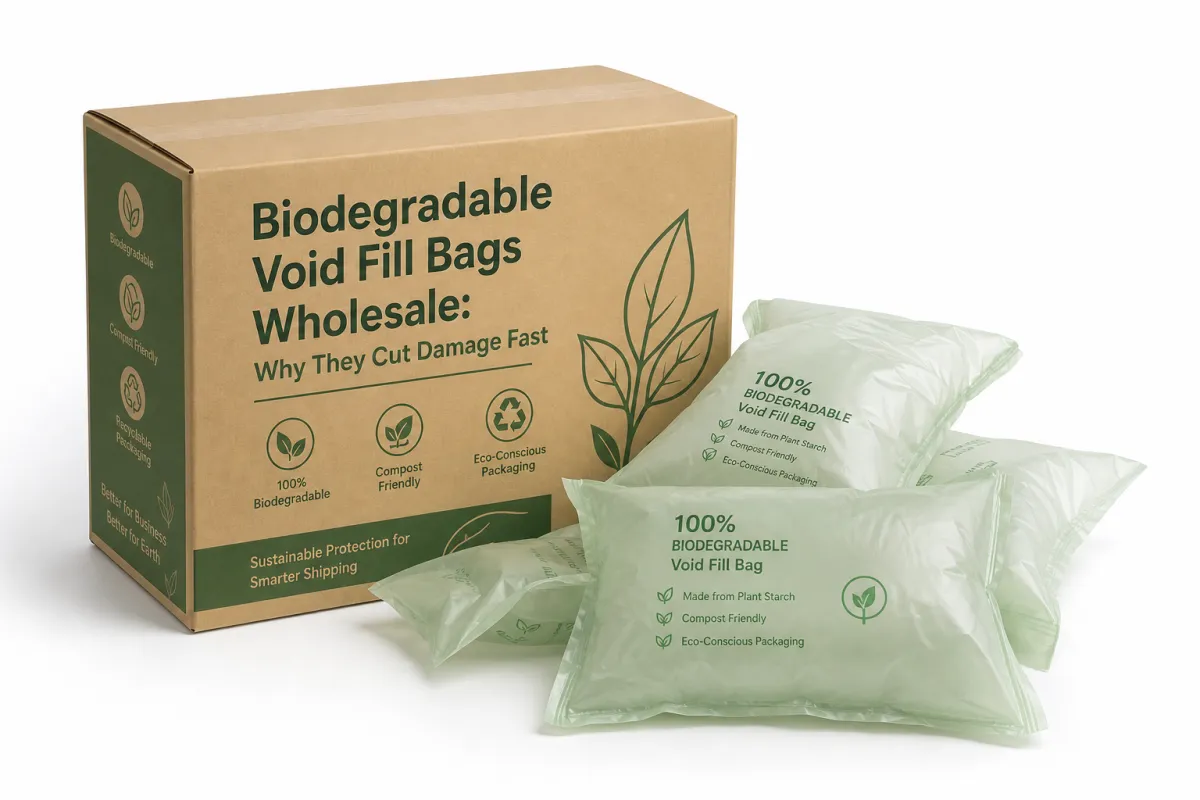
Damage in transit usually starts with movement, then snowballs from there. A bottle neck bumps a divider, a candle jar leans, or a small insert slides into a corner and takes repeated impact from the rest of the shipment. Biodegradable void fill bags wholesale helps by occupying empty space in a consistent way from box to box. The goal is not to look clever or win a sustainability buzzword contest. The job is to keep the product from drifting inside the carton like it has room to spare.
Mixed-SKU cartons make the problem easier to see. One item may be tall and narrow, another short and heavy, and suddenly the space around them becomes a pocket where every vibration matters. Teams often try to solve that with scrap paper, loose-fill, or whatever happens to be close by. That can work for a while. Then the shipment gets longer, the product gets more fragile, or the line gets busier, and the shortcut stops holding up. Biodegradable void fill bags wholesale gives the pack station a cleaner answer: fill the open space, stabilize the load, and reduce the damage that turns into refunds and replacements.
The practical upside is not limited to lower claims. Packing speed usually improves too. A packer can place a bag faster than they can scoop loose filler, shake it down, and hope it settles where it should. That matters in subscription boxes, cosmetics, contract packing, home goods, and spare parts, where every extra step gets multiplied across hundreds or thousands of cartons. Buyers who move to biodegradable void fill bags wholesale usually care about three things: fewer claims, cleaner handling, and less mess on the packing floor.
There is also a cost reality that gets overlooked when procurement focuses only on unit price. A lower per-bag number means very little if the station needs extra labor to clean up, the bag tears too easily, or the fill is too inconsistent to trust. Biodegradable void fill bags wholesale can look a little more expensive at first glance and still cost less in practice because the fill is predictable. Predictable fill means steadier carton weights, better cube use, and less waste in both labor and materials. That tends to matter a lot once the warehouse is busy and nobody has time to babysit a bad product.
From a buyer’s perspective, the better question is not which option has the lowest sticker price. It is which option protects the shipment with the least friction. That shift in thinking changes the buying conversation pretty quickly. It also explains why biodegradable void fill bags wholesale often fits brands that want damage control without turning every packing shift into a cleanup project.
Biodegradable Void Fill Bags Wholesale: Product Details and Formats
Biodegradable void fill bags wholesale covers more than one format, so the first step is to define the packing job before talking price. These bags are made to fill empty carton space, reduce product movement, and stay light enough that they do not inflate shipping costs. That sounds simple, but real packing lines make it less tidy than it sounds. A format that looks fine in a sample photo can be kinda useless if it slows the line, tears too easily, or does not fit the carton families you actually ship.
Buyers usually run into three broad formats. Prefilled bags save labor because the station does not need a separate fill step. Machine-ready options work better on higher-volume lines where speed matters and equipment stays part of the workflow. Manual-fill styles give smaller operations more flexibility and usually fit mixed-use packing stations well. Each one changes throughput, storage needs, and consistency from carton to carton, which is why biodegradable void fill bags wholesale should never be bought by habit alone.
Material choice matters just as much as format. Buyers often compare biodegradable film, compostable blends, and recycled-content options. Each brings tradeoffs. A lighter film may be enough for small cosmetics cartons, while a thicker or more structured blend may be better for longer freight lanes or rough warehouse handling. Some buyers also mix up void fill and cushioning. They are related, but they are not the same thing. Void fill occupies empty space; cushioning absorbs impact. Order the wrong spec and you pay for performance your carton does not need. That is how biodegradable void fill bags wholesale turns into an overbuilt purchase.
Common uses include e-commerce, contract packing, subscription kits, skincare, candles, printed stationery, home goods, and fragile parts shipping. If a product can move, tip, rub, or settle during transit, it needs stabilization. A careful buyer studies the packing line, the product shape, the box dimensions, and the shipping distance before placing a wholesale order. That work is not glamorous, but it keeps returns down, and returns are far more expensive than quiet preparation.
Here is a practical way to think about formats:
- Prefilled bags - faster at the packout table, lower handling effort, usually better for moderate volume.
- Machine-ready bags - better for higher throughput, but only if the equipment and workflow match the spec.
- Manual-fill bags - flexible and simple, often useful for small teams or custom-sized packs.
If you are comparing categories, start with the shipment profile rather than the marketing language. Biodegradable void fill bags wholesale should fit the box, the line, and the freight lane. Plenty of buyers still choose by product photos and regret it after the first pallet arrives. I’ve watched that happen enough to know the sample table can be misleading if nobody checks the actual carton mix.
Biodegradable Void Fill Bags Wholesale: Specifications to Check Before Buying
Buyers who treat biodegradable void fill bags wholesale like a commodity usually find out fast that the spec sheet controls the real result. Size comes first. A bag that is too large wastes storage and freight. A bag that is too small forces the team to use too many units, and the labor savings disappear. The right size should match the carton families you use most often, not just the sample that looked neat on a desk.
Film thickness and seal strength deserve a close look next. Thin films can work for light-duty applications, but they still need enough puncture resistance to survive warehouse handling, pallet stacking, and vibration in transit. A bag that tears after sitting under a carton for a week is not a useful product. Ask for thickness range, seal performance details, and the recommended carton weight it can support without failure. That is where biodegradable void fill bags wholesale either proves itself or gets removed after the first test run.
Humidity and storage time matter more than many teams expect. Some biodegradable materials react more strongly to heat, moisture, and long storage than standard plastic alternatives. If your warehouse runs warm, damp, or crowded, say so before the order is placed. The supplier cannot give useful guidance without the real storage conditions. Buyers should also ask about stacking pressure. If the bags sit under other cartons for weeks before use, the material needs to keep its shape without flattening or deforming.
Compatibility causes trouble when it is ignored. If your packing station uses a specific sealing setup, inflation device, or manual workflow, the bag format has to fit that process. Otherwise line speed drops and the team starts improvising, which usually opens the door to waste. A good biodegradable void fill bags wholesale supplier should help match the bag to the workflow rather than pretending every packing station works the same way. They do not.
Before placing a larger order, request samples and run a simple in-house test. Use cartons that reflect your normal shipment mix, not a perfect lab setup. Try a drop test, a shift test, and a stack test. For structured packaging testing, the ISTA testing framework is a useful reference point. For fiber sourcing and chain-of-custody concerns, FSC documentation can help keep claims clear. I’d be careful here: biodegradable is not the same as compostable, and neither one automatically means a product will break down the same way in every facility or disposal stream. If a supplier cannot provide clear material paperwork or basic compliance documentation, that is a warning sign, not a small inconvenience.
Good buyers ask for these specifics before they approve biodegradable void fill bags wholesale:
- Bag dimensions and usable fill volume.
- Film thickness or material weight.
- Seal strength and puncture resistance.
- Humidity sensitivity and storage guidance.
- Equipment compatibility and pack speed expectations.
- Sample availability for carton-level testing.
The point is simple: vague specs lead to vague performance, and vague performance leads to wasted shipments. Nobody needs that kind of surprise on a Monday.
Biodegradable Void Fill Bags Wholesale: Pricing, MOQ, and Quote Rules
Pricing for biodegradable void fill bags wholesale is never just a single line on a quote. It reflects a stack of inputs: material grade, bag size, custom labeling, order volume, freight distance, and the amount of packaging needed per carton. Buyers who focus only on unit price miss the parts that move the full cost. That mistake happens often, and then the freight bill and handling cost arrive as if they were unexpected guests.
For rough planning, smaller test runs usually carry a higher unit price, while steady wholesale volume tends to improve the number quickly. Depending on the material and the bag size, pricing may move in volume tiers instead of a flat discount. A 2,000-piece order can cost much more per unit than a 10,000-piece order, even before freight gets added. Biodegradable void fill bags wholesale usually rewards repeat buying more than one-off purchasing.
MOQ rules vary from one program to another. A standard wholesale order may begin in the low thousands, while custom sizes or custom labeling can push the minimum higher. If you are testing a new line, ask for a pilot run first. If monthly usage is already stable, ask for tiered pricing so the breakpoints are easy to see. A supplier should be able to explain pilot pricing, standard wholesale pricing, and volume pricing without turning the conversation into a maze.
Here is a practical quote checklist for biodegradable void fill bags wholesale:
- Carton dimensions and the most common box sizes you ship.
- Expected monthly or annual usage.
- Target order quantity for the first buy.
- Preferred bag format: prefilled, machine-ready, or manual-fill.
- Any print, label, or compliance requirement.
- Warehouse conditions and freight destination.
Freight deserves special attention because bulky packaging can fool buyers. A bag can look inexpensive per unit and still land poorly once dimensional shipping is added. Storage matters too. If packaging takes up too much rack space, the real cost rises before a single carton ships. The better question is not whether biodegradable void fill bags wholesale is cheap. The better question is whether it is economical once unit cost, labor, freight, and damage reduction are all counted.
| Format | Typical MOQ | Best For | Common Cost Drivers | Buying Note |
|---|---|---|---|---|
| Manual-fill biodegradable bags | 2,000 to 10,000 units | Small teams, mixed packing stations | Material blend, bag size, freight | Flexible, but labor must stay low |
| Machine-ready void fill bags | 5,000 to 20,000 units | Higher-throughput operations | Compatibility, film spec, repeat volume | Better speed if equipment matches |
| Prefilled void fill bags | 3,000 to 15,000 units | Pack stations that need speed | Fill volume, handling, shipping cube | Good labor saver, usually costs more per unit |
That table is useful because it helps teams compare options side by side before they buy the wrong format and spend the next month defending the decision. Biodegradable void fill bags wholesale becomes easier to approve when procurement, finance, and operations can see the tradeoffs in plain numbers.
Biodegradable Void Fill Bags Wholesale: Process, Timeline, and Lead Time
The buying process should feel orderly, not theatrical. A clean biodegradable void fill bags wholesale order usually starts with sample approval, then spec confirmation, then pricing review, then production, and finally shipment. If any step is unclear, the order slows down. The fastest projects are not the loudest ones. They are the ones that arrive with clear dimensions, realistic usage estimates, and one decision-maker who does not need three more rounds of discussion before saying yes.
Sample lead time is usually shorter than full production lead time, but the two should not be treated as the same thing. A sample gives the buyer a chance to check pack feel, opening behavior, and carton fit. Production takes longer because materials must be booked, converted, packed, and shipped. Repeat orders tend to move faster once the supplier already has your spec on file. That is one reason brands stay with a stable biodegradable void fill bags wholesale program instead of treating every replenishment like a new experiment.
Late carton counts, last-minute artwork changes, back-and-forth over pallet patterns, and compliance questions that should have been asked earlier all slow the process. The list sounds dull because it is, yet those details are where delays live. A simple approval flow helps: procurement signs off on cost, warehouse operations confirms fit and speed, and finance approves the budget before production starts. That keeps the team from sending emergency emails that really mean the project was underdefined from the start.
For planning, a first order usually needs time for spec alignment, sample checking, and production scheduling before freight is added. Repeat orders can move faster, especially if the supplier keeps your approved material and dimensions on file. Product launches and changes to packout methods deserve enough time to test the bag in the actual carton. Biodegradable void fill bags wholesale does not need a long design cycle, but it does need enough runway to avoid emergency air freight, which is a fast way to burn money.
One simple habit saves a lot of trouble: set the reorder point from real monthly usage, not optimism. If a warehouse burns through stock faster than expected, the backup order should already be moving. That matters especially for biodegradable void fill bags wholesale because shortages tend to appear right when promotions, peak season, or new SKU launches increase demand. Once a packing line starts improvising with random filler, quality tends to wobble.
For reference, many buyers like to compare their packaging purchasing rhythm with broader sourcing workflows through our Wholesale Programs page. It keeps the conversation centered on volume, lead time, and replenishment instead of one-off buying drama.
Why Choose Us for Biodegradable Void Fill Bags Wholesale
Buyers do not need more packaging buzzwords. They need a supplier who understands shipping pressure, repeatability, and the gap between a nice sample and a production order that has to survive real warehouse use. That is how we think about biodegradable void fill bags wholesale. Stable quality matters more than flashy claims. Clear quotes matter more than vague promises. If a product works once and then fails on the next shipment, it is not a supply partner. It is a problem waiting for a purchase order.
We pay attention to the things buyers actually use: consistent specs, fast sampling, transparent quote breakdowns, and support for volume planning. A good supplier should help you compare formats instead of steering you toward the most expensive option because it pads the order value. That matters even more with biodegradable void fill bags wholesale, where the cheapest-looking choice can become the costliest one if it slows the line or increases claims.
What should you expect from a supplier? Current material documentation. Repeat-order consistency. Clear production checkpoints. Straight answers about humidity, storage, and line speed. If a vendor cannot explain where the savings come from, they probably do not know. If they cannot explain where the risk sits, they definitely do not know. That is not cynicism. It is what packaging buying looks like after enough wasted cartons and avoidable reorders.
From the buyer side, the best vendor relationship is the quiet one. The sample arrives on time. The spec matches the quote. The reorder looks like the last order. No drama. No scavenger hunt. No explanation that the blend changed slightly after the first pallet shipped. That kind of consistency is what makes biodegradable void fill bags wholesale useful rather than decorative.
We also keep sustainability claims grounded. Packaging should do its job, reduce waste where possible, and support the documentation your team needs for reporting. For some buyers, that means compostability paperwork. For others, it means recycled content documentation or stronger traceability through the supply chain. Either way, the conversation should stay practical. If a product cannot protect the shipment, the sustainability story matters a lot less because the return truck is already on the road.
If you are comparing suppliers, use this short checklist:
- Do they explain the material spec in plain language?
- Do they offer samples before volume commitment?
- Do they give actual lead times, not optimistic guesses?
- Do they break down freight, MOQ, and volume pricing?
- Do they help you match the bag to the carton and packing line?
That is the kind of support biodegradable void fill bags wholesale buyers should expect. Anything less is paperwork dressed up as service.
Next Steps for Biodegradable Void Fill Bags Wholesale Orders
If you are ready to buy biodegradable void fill bags wholesale, start with the facts already in front of you. Measure the carton sizes you ship most often. Estimate monthly usage. Decide whether the order is a test, a rollout, or a full replenishment. Then collect a few packing photos from the warehouse. A picture of the real station does more for sizing than a long call that wanders into theory.
Next, request samples and compare two or three spec options side by side. A small difference in bag size, fill volume, or material thickness can change labor time and freight more than the unit price suggests. The goal is to Choose the Best fit, not the prettiest quote. That is how biodegradable void fill bags wholesale turns into a working operational tool instead of another line item nobody trusts.
Here is the fastest way to get a useful quote:
- Send carton dimensions and the most common box styles.
- Share monthly or annual usage estimates.
- State the preferred bag format and any equipment requirements.
- Note warehouse conditions such as humidity or long storage.
- Include photos of the current packing setup and current filler, if you have it.
If you are still comparing suppliers, keep the process clean. Ask for pricing at two or three volume tiers. Ask for lead time on the sample and the full order. Ask what changes if you switch to a custom size. A supplier who answers clearly usually saves money later. A supplier who dances around the basics usually costs more than they admit. That is the plain truth behind biodegradable void fill bags wholesale.
Send the carton dimensions, quantity target, warehouse notes, and production date you need to hit. With those details up front, the quote comes back faster and the fit is better. That is the practical value of biodegradable void fill bags wholesale: better control over shipping damage, labor, and replenishment without turning packaging into a guessing game. If you want the first order to land well, make the specs do the heavy lifting and leave the guesswork out of it.
What is the minimum order for biodegradable void fill bags wholesale?
MOQ usually depends on bag size, material type, and whether the order is standard or custom. A test run may start at a lower quantity, while a repeat wholesale order usually moves into a more efficient pricing tier. If you are testing fill speed or warehouse fit, ask for a small sample run before committing to a larger buy.
Are biodegradable void fill bags wholesale compatible with standard packing stations?
Most are designed for standard manual packing stations, but line speed and handling style still matter. Check whether the bags are prefilled, machine-ready, or manual-fill so you do not buy the wrong format. If your team packs fast, test a sample to make sure the bag opens cleanly and does not slow the line.
How do I compare unit cost for biodegradable void fill bags wholesale?
Compare cost per filled carton, not just cost per bag. Include labor, storage, freight, and damage claims or the cheapest option will lie to you politely. Ask for pricing at two or three volume tiers so you can see where the real savings begin.
Will biodegradable void fill bags wholesale hold up in humid warehouses?
That depends on the material blend and how long the bags sit before use. Some biodegradable materials need tighter storage control than traditional plastics, especially in warm or damp warehouses. If moisture is part of your daily life, test a sample in the actual warehouse before placing a large order.
What should I send for a biodegradable void fill bags wholesale quote?
Send carton dimensions, monthly or annual usage, target order quantity, and whether you need standard or custom specs. Add packaging method, warehouse conditions, and destination country so freight and compliance are not guessed later. If you want a faster answer, include photos of the packing setup and any current filler you are using.

