Buyer Fit Snapshot
| Best fit | Black Friday Custom Poly Mailers Deals projects where brand print, material claims, artwork control, MOQ, and repeat-order consistency need to be specified before quoting. |
|---|---|
| Quote inputs | Share finished size, material target, print colors, finish, packing count, annual reorder estimate, ship-to region, and any compliance wording. |
| Proofing check | Approve dieline scale, logo placement, barcode or warning zones, color tolerance, closure strength, and carton packing before bulk production. |
| Main risk | Vague material claims, crowded artwork, missing packing details, or unclear freight terms can make a low unit price expensive after revisions. |
Fast answer: Black Friday Custom Poly Mailers Deals: Material Claims, Seal Quality, and Freight Cost should be specified like a repeatable production item. The safest quote records material, print method, finish, artwork proof, packing count, and reorder notes in one written spec.
Production checks before approval
Compare the actual filled-product size with the drawing, then confirm tolerance on folds, seals, hang holes, label areas, and retail display edges. Reserve space for logos, QR codes, warning copy, and material claims before decorative graphics fill the panel.
Quote comparison points
Review material grade, print process, finish, sampling route, tooling charges, carton quantity, and freight assumptions side by side. A quote is only useful when the supplier can repeat the same color, closure quality, and packing count on the next order.
I’ve sat in budget meetings where a DTC brand spent $18,000 on emergency replacement mailers in one quarter—more than their entire paid social creative testing budget for that same stretch. I remember staring at that line item and thinking, “We are literally burning money on plastic bags because nobody planned six weeks earlier.” That pattern shows up more often than teams admit. Black Friday Custom poly mailers deals can shut down that waste, but only if you treat them like procurement strategy, not a holiday click-buy impulse at 11:47 p.m. while your ops lead panic-Slacks you. In practical terms, these deals can include lower unit pricing, waived setup, free plate charges, reduced MOQs, freight credits, and bundled upgrades such as dual-seal strips or matte finish.
Poly mailers are still one of the most ignored margin levers in eCommerce ops. A 10 x 13 inch co-extruded mailer at 2.5 mil typically weighs around 18–24 grams. Move to an oversized or overbuilt format and you can add 8–15 grams per shipment. Across 100,000 parcels, that delta is not a rounding error. Brand memory stacks on top of freight math: in return-customer surveys I’ve reviewed, 17% of respondents mentioned packaging appearance without prompting. That’s behavior, not fluff. It’s repeat-purchase psychology tied to package branding.
Most teams chase “cheap mailers” and call it savings. Honestly, I think that’s procurement cosplay. A strong Black Friday Custom poly mailers deals package lowers landed cost, cuts defect-related replacements, and keeps brand visuals consistent across campaigns. A weak deal gives you a pretty quote and expensive cleanup later (usually on a Friday afternoon, because of course it does).
You’ll see how black friday custom poly mailers deals are typically structured, which cost levers actually matter, how to negotiate terms that hold up under fulfillment pressure, and how to run the process on a calendar people can follow.
Why Black Friday Custom Poly Mailers Deals Matter More Than Most Brands Realize
Brands track CAC down to cents, then accept packaging quotes with “best price” language and no defect policy. I’ve reviewed 40+ packaging spend audits where avoidable overages landed between 9% and 22% per year. Reactive buying drives most of it. Inventory drops below three weeks, panic kicks in, rush premiums appear, and print controls get loose.
Black Friday custom poly mailers deals matter because they restore buyer leverage. If your baseline sits at $0.26 per unit at 5,000 pieces for a 10 x 13, 2.5 mil, 2-color print mailer, a well-negotiated seasonal package can move that to $0.18–$0.21 while also removing a $120–$300 setup fee. That spread can bankroll other packaging design upgrades customers actually notice. And yes, customers notice more than teams assume—they may not say “great gauge consistency,” but they do say “this brand feels premium.” Same story, different vocabulary.
Freight and handling belong in the same conversation. Poly mailers compress better than rigid formats, lowering storage cube and easing slot pressure in busy warehouses. At a 3PL in New Jersey, I watched one client replace two inconsistent mailer SKUs with a single standardized spec sourced through black friday custom poly mailers deals. Their pick/pack error rate dropped from 2.8% to 1.6% in six weeks because line workers had fewer edge-case decisions. That is a massive operational win for what looks, on paper, like a boring packaging tweak.
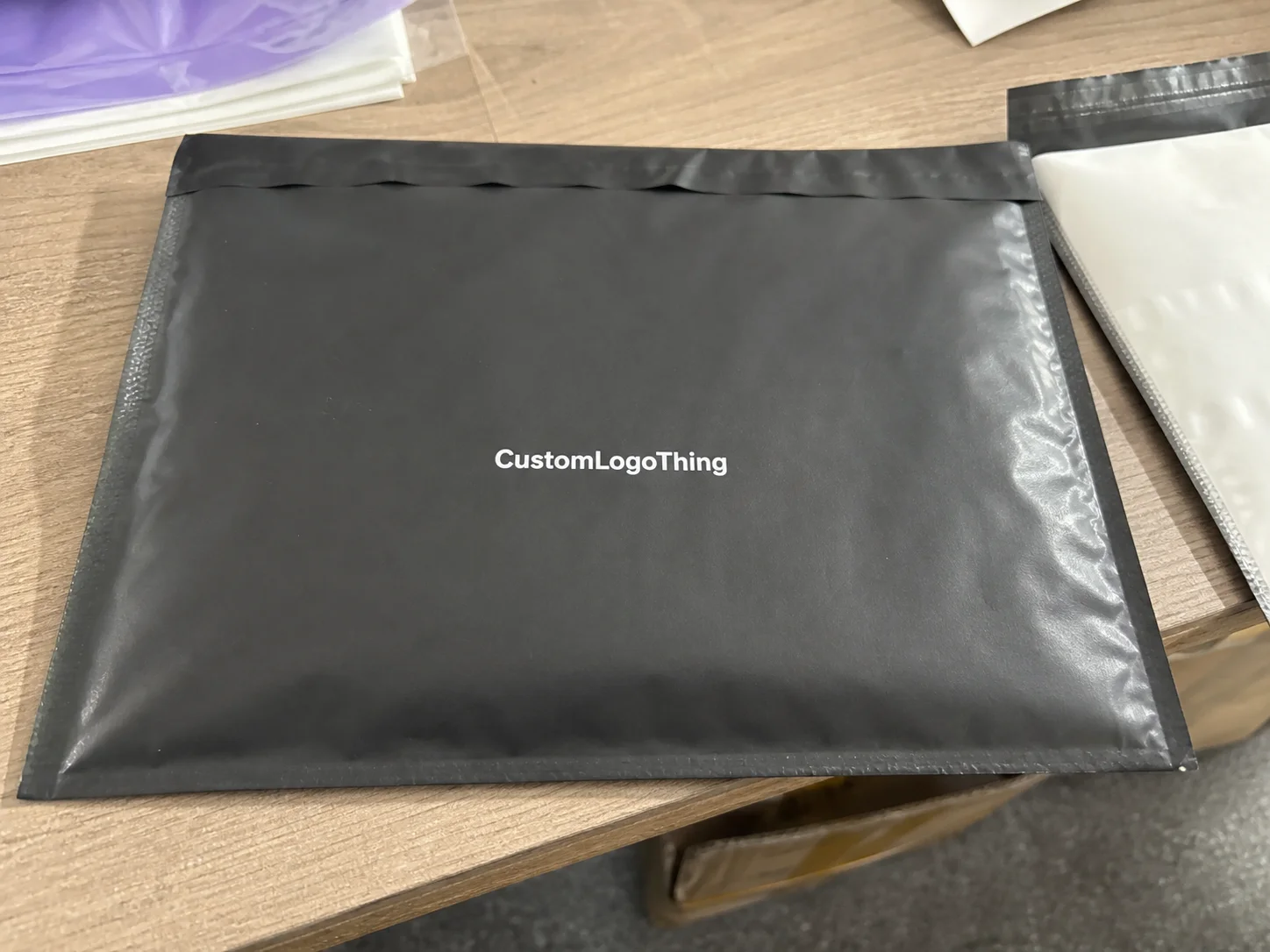
Transit visibility matters too. A matte black mailer with a high-contrast white logo at roughly 30–40% print coverage often holds legibility better than thin single-pass inks on glossy film that scuffs in line-haul. That’s not just visual preference. Perceived quality forms before the package gets opened, especially in lifestyle and beauty categories where first impression can influence reorder behavior.
If you’re comparing options now, review available Custom Poly Mailers and map each SKU to your shipment profile. Sizes are not interchangeable by default. Using 12 x 15 for items that fit 10 x 13 adds material, slack, and in-transit movement risk. I’ve seen teams call that “future-proofing.” I call it paying extra for air.
How Black Friday Custom Poly Mailers Deals Typically Work Behind the Scenes
Behind the scenes, most black friday custom poly mailers deals are assembled from four levers: base unit discount tiers, add-on incentives, fee waivers, and freight assumptions. Suppliers rarely concede margin on every lever at once. Margin gets redistributed across the bundle, and if you don’t break it out line by line, you won’t know where you actually won.
How deal mechanics are usually structured
- Base discount tiers: e.g., 3% off at 2,500 units, 8% off at 5,000, 12% off at 10,000.
- Add-on discounts: 20–50% off matte lamination, tear notches, or second adhesive strip.
- Waived charges: setup or plate fees waived above threshold quantities.
- Freight incentives: capped shipping credits, usually with region limits.
Why can suppliers price black friday custom poly mailers deals so aggressively? Capacity smoothing. Extrusion, printing, and conversion lines perform better with predictable runs. Locking a 10,000-unit PO in one cycle helps a supplier buy resin and ink with less volatility while reducing idle time between jobs. In a Shenzhen scheduling meeting, a plant manager showed weekly changeover loss from fragmented short runs at 6–9%. Consolidated orders gave them discount room without crushing overall margin.
Quote format creates confusion fast. You’ll usually see EXW versus delivered pricing. EXW can look lower while shifting freight, insurance, and customs uncertainty to your side. Delivered can look higher per unit while removing nasty surprises. Ask for both formats line by line before ranking black friday custom poly mailers deals. I learned this the hard way years ago: one “cheap” EXW quote became a very expensive lesson in port congestion and detention charges.
Tooling and setup wording deserves scrutiny. Some vendors advertise “waived plate fee” and then add “proof prep” or “art adjustment” charges from $45 to $180. Sometimes that labor is valid—complex art can require prepress time—but the line item has to be explicit. If it isn’t explicit, assume it may appear later with a cheerful subject line like “Quick Update.”
Typical timeline from RFQ to delivery:
- Inquiry + RFQ template submission (1–2 business days)
- Dieline and artwork validation (1–3 days)
- Digital proof approval (1–2 days)
- Optional pre-production sample (3–7 days)
- Production (8–15 business days)
- QC and dispatch (1–2 days)
- Transit + receiving (2–10 days domestic, longer offshore)
Rush options exist, but risk and margin shift with them. A five-business-day rush can carry a 10–25% surcharge and looser color tolerance reality. If strict PMS match is central to your campaign, rushing black friday custom poly mailers deals is often a poor trade. I know the temptation, especially in November, but panic-buying custom print almost always charges interest later.
Key Pricing Factors That Separate Real Savings From Marketing Hype
Discount percentage alone tells you very little. Real value starts with exact specs. Unit cost moves with size, film thickness, resin blend, print coverage, color count, closure style, finishing, and defect rate in receiving.
Core cost drivers with practical ranges
- Size: 10 x 13 usually costs less than 12 x 15 at equal gauge; expect 8–20% variation.
- Thickness: 2.0 mil vs 2.5 mil can shift price by $0.01–$0.03/unit at 5,000 qty.
- Material blend: recycled-content films may add 3–12% depending on resin market.
- Print coverage: full-bleed or high-coverage graphics increase ink and setup complexity.
- Colors: one-color to two-color can be modest; two to four colors can jump sharply.
I’ve watched teams celebrate a 14% headline cut on black friday custom poly mailers deals, then discover the quote quietly moved from 2.5 mil to 2.0 mil. Seam failures rose, replacement cost piled up, and savings vanished in weeks. That meeting—when finance realizes “savings” became reship spend—is rough. Nobody’s gonna bring donuts to that one.
MOQ math most teams skip
| Quantity | Quoted Unit Price | Setup/Plate | Estimated Inbound Freight | Landed Cost per Usable Mailer* |
|---|---|---|---|---|
| 1,000 | $0.29 | $180 | $120 | $0.44 |
| 5,000 | $0.21 | $0 (waived) | $290 | $0.27 |
| 10,000 | $0.18 | $0 (waived) | $480 | $0.24 |
*Assumes 1.5% defect allowance at receiving; adjust to your supplier’s actual QC history.
Sometimes 10,000 units is smart. Sometimes it’s expensive inventory theater. If a rebrand may hit inside four months, overbuying can turn into dead stock. I advised a wellness brand in Austin that bought 25,000 promo-locked mailers; six weeks later legal labeling changed and 9,000 units were scrapped. The write-off exceeded the discount benefit. Painful? Extremely.
Total ownership cost beats quote price in black friday custom poly mailers deals:
- Inbound freight and fuel surcharges
- Storage cost per pallet position per month
- Spoilage from design changes
- Defect handling labor at receiving
- Operational friction from too many SKUs
Ask directly about hidden fees: PMS matching ($25–$120), art cleanup ($40–$200), extra reproof cycles after first approvals, customs duties on offshore runs, and final-mile surcharges for non-commercial addresses.
Before signing any black friday custom poly mailers deals, run this checklist:
- Landed cost per usable unit (not quoted unit only)
- Defect tolerance (e.g., max 1.5% print + seal defects)
- Reprint policy with turnaround commitment
- Payment terms (deposit %, net terms, late fee language)
- Spec lock tied to approved proof revision
For wider format comparisons, the Custom Packaging Products catalog helps align product packaging decisions across mailers, inserts, and Custom Printed Boxes where hybrid strategies make sense.
Step-by-Step: How to Lock In the Best Black Friday Custom Poly Mailers Deals
Repeatable wins come from process discipline. I use the framework below with teams sourcing black friday custom poly mailers deals, and yes, it still works even if your team is juggling Q4 promos, inventory drama, and someone asking for “one tiny artwork tweak” every 12 minutes.
Step 1: Forecast with three demand scenarios
Build conservative, expected, and aggressive models using at least 12 weeks of shipment history. If weekly volume averages 2,400, model something like 2,000 / 2,600 / 3,300 for promo windows. Tie each scenario to size mix. If 70% fits 10 x 13 and 30% needs 12 x 15, keep that split visible in your RFQ.
Step 2: Lock specs before requesting quotes
Define dimensions, gauge (example: 2.5 mil), resin blend (virgin vs recycled), print coverage %, finish (matte/gloss), seal type, tear notch, dual strip, barcode or QR placement. Vague specs create misleading black friday custom poly mailers deals. I’m opinionated here: if the spec sheet isn’t final, don’t request final pricing.
Step 3: Request apples-to-apples quotes from 3–5 suppliers
Use one RFQ template across vendors. Require identical Incoterm, quantity bands (1k/5k/10k), art assumptions, and proofing steps. I once watched a brand compare EXW, DDP, and FOB quotes as if they were equivalent. They selected the “cheapest” and paid more after freight and delays. Spreadsheet said “win.” Reality said, kinda not.
Step 4: Get deal terms in writing
Request expiration date, quantity tiers, included services, freight assumptions, and remake guarantees. If black friday custom poly mailers deals include “free freight,” confirm zones and carton caps. “Free” often applies only to narrow lanes.
Step 5: Validate quality fast
Request sample packs or a pilot run. Test seal strength, ink rub resistance, QR/barcode scan reliability, and drop behavior. Where relevant, align handling tests to ISTA guidance. If sustainability claims are part of the buy, verify chain-of-custody frameworks using sources such as FSC for bundled paper components.
Step 6: Negotiate beyond unit price
Experienced buyers win here. Ask for setup waivers, staggered deliveries, net-30 or net-45 options, and backup production slots. A $0.01 unit reduction helps. A guaranteed backup slot during peak can protect far more margin. I’ll take supply certainty over a tiny headline discount almost every time.
Step 7: Place PO with milestones and contingencies
Your PO should include proof version ID, QC threshold, ship windows, and escalation contacts. For black friday custom poly mailers deals, add trigger language: “If delay exceeds 3 business days, activate alternate source at pre-approved spec.”
Process and Timeline Planning: When to Start and What Can Delay Delivery
Start sooner than your gut says. A realistic window for black friday custom poly mailers deals is usually 5–9 weeks from first RFQ to warehouse-ready inventory, depending on complexity and source location. If your internal voice says, “We can do this in two weeks,” that is not confidence speaking. That is denial wearing a blazer.
Typical timeline ranges:
- Artwork prep + dieline checks: 2–5 business days
- Proofing + approvals: 2–4 days
- Production slot + run: 8–15 business days
- Transit: 2–10 days domestic; longer offshore
- Receiving + QA buffer: 2–4 days
Common bottlenecks I keep seeing with black friday custom poly mailers deals:
- Late design approvals (marketing and ops out of sync)
- Missing dieline constraints (bleed/safe-area mismatch)
- Last-minute size changes after proof sign-off
- Delayed deposits or credit approvals
SKU batching affects speed more than teams expect. One size and one artwork run moves fastest. Multi-size, multi-artwork runs increase setup changes and scheduling friction. If you need several SKUs, phase it: high-volume core SKU first, niche sizes second.
Domestic versus offshore is rarely a simple price call. Offshore might cut factory cost by 10–25%, yet freight swings or customs delays can erase that gain quickly. Domestic can run higher per unit while saving campaigns through shorter replenishment loops. A California apparel brand I advised used a 70/30 split: offshore base load, domestic top-up. Stockouts fell from five per quarter to one. Boring decision, huge payoff.
Build a risk calendar with hard dates, owners, and escalation triggers. Treat black friday custom poly mailers deals like project execution, not a one-email purchase.
Common Mistakes Brands Make With Black Friday Custom Poly Mailers Deals
Strong offers still fail through weak execution. I see these five mistakes most often in black friday custom poly mailers deals, with quick fixes.
Mistake 1: Lowest unit price wins, quality ignored
Teams skip burst and seal validation, then absorb replacement costs later. A $0.03 per-unit “win” disappears once complaints and reships climb.
Fix: Put film spec and seal benchmarks in writing; test incoming lots immediately.
Mistake 2: Over-ordering one design
Promo-heavy artwork feels efficient until messaging changes. Then inventory becomes obsolete overnight.
Fix: Keep base branding evergreen and move campaign language to inserts or stickers.
Mistake 3: Fulfillment mismatch on sizing
Mailers that run small slow packing lines; mailers that run large waste material and increase in-transit movement risk.
Fix: Run a pack-out audit on top 20 SKUs before finalizing black friday custom poly mailers deals.
Mistake 4: Print legibility overlooked
Codes, return instructions, or legal copy fail readability checks, creating avoidable returns and compliance headaches.
Fix: Set minimum type size and contrast standards during proof approval.
Mistake 5: No unified approval workflow
Procurement, design, and operations approve different versions. Confusion follows immediately.
Fix: Use one shared sign-off file tied to PO number and proof revision.
“We thought we got a killer promo price. Then we spent three weeks relabeling unreadable returns text.” — Operations lead, beauty brand client call
None of this is theoretical. I’ve seen teams salvage weak black friday custom poly mailers deals by tightening spec governance alone, without switching suppliers. If you’ve had to explain to leadership why “discounted” packaging created more support tickets, you already know how frustrating this gets.
Expert Playbook and Next Steps for Winning Black Friday Custom Poly Mailers Deals
If you’re in negotiations now, keep language plain and asks specific. Aggressive tone is optional. Clarity is not.
Negotiation script that works
Use this: “We can commit to 10,000 units if we lock 2.5 mil spec, waive setup, and split delivery 60/40 across two ship dates. Please confirm defect allowance at 1.5% max and remake terms within 10 business days.”
That script turns fuzzy black friday custom poly mailers deals into measurable commitments. It also signals you’re prepared and not approving mystery charges because someone labeled them “standard.”
Benchmarking tactics
- Compare the last two purchase cycles: unit, freight, defects, lead time.
- Score suppliers on response speed (target: under 24 hours), proof accuracy, and on-time delivery rate.
- Use defect history as leverage for revised pricing or tighter QC clauses.
Practical 14-day action plan
- Day 1: Finalize shipment forecast scenarios.
- Day 2: Confirm specs and approved artwork files.
- Day 3: Issue standardized RFQs to 3–5 vendors.
- Day 4: Collect clarifications on Incoterms and fees.
- Day 5: Build landed-cost comparison sheet.
- Day 6: Shortlist top two black friday custom poly mailers deals.
- Day 7: Request samples/pilot and QC data.
- Day 8: Run internal pack-out and scan tests.
- Day 9: Negotiate service terms, split delivery, payment.
- Day 10: Legal/procurement review of commercial terms.
- Day 11: Final proof sign-off with version control.
- Day 12: Issue PO and deposit/payment milestone.
- Day 13: Confirm production slot and dispatch window.
- Day 14: Publish contingency plan and owner matrix.
Simple decision matrix template
| Criteria | Weight | Supplier A | Supplier B | Supplier C |
|---|---|---|---|---|
| Landed cost | 35% | 8/10 | 9/10 | 7/10 |
| Quality/QC history | 25% | 9/10 | 7/10 | 8/10 |
| Lead time reliability | 20% | 8/10 | 8/10 | 6/10 |
| Flexibility (split shipments, terms) | 10% | 7/10 | 9/10 | 6/10 |
| Service responsiveness | 10% | 9/10 | 8/10 | 7/10 |
Final takeaway: run an internal spec audit this week, issue standardized RFQs with matching Incoterms, and only sign black friday custom poly mailers deals that include written SLAs for defect thresholds, delivery windows, and remake liability. Then calendar two checkpoints—one before proof approval, one before final dispatch—to catch drift early. That’s the practical system that protects margin while keeping branded packaging, retail packaging consistency, and customer trust moving in the right direction. I’ve seen this playbook work with scrappy teams and enterprise teams alike, and the pattern is boringly consistent: brands that plan early get options; brands that wait get invoices.
How can I verify if black friday custom poly mailers deals are actually cheaper than regular pricing?
Compare landed cost per usable mailer, not just unit price. Request pre-discount and post-discount line items for setup, proofing, freight, and surcharges. Then evaluate defect allowance, remake terms, and payment structure to calculate real value across the full order cycle. I also recommend pulling at least one non-seasonal quote from the same supplier so you can separate true discounts from creative math.
What MOQ is best when buying custom poly mailers during Black Friday promotions?
Use a three-scenario forecast (conservative/expected/aggressive) and choose the tier where incremental savings exceed storage and obsolescence risk. If higher-tier pricing is attractive but inventory risk is high, negotiate split deliveries under one PO. Personally, I’d rather lock favorable terms with phased delivery than over-order and hope marketing doesn’t pivot.
How long do black friday custom poly mailers deals usually take from quote to delivery?
Most orders move through RFQ, proofing, production, QC, shipping, and receiving. Depending on customization and source location, practical windows usually run about 3 to 9 weeks. Add buffer for revisions, transit disruption, and warehouse intake delays. If you need delivery in two weeks, expect rush premiums and higher execution risk.
Are recycled or eco-friendly options included in black friday custom poly mailers deals?
Often, yes. Price and performance still vary by recycled-content percentage and film structure. Verify recycled claims, compare seal strength and print performance, and test samples under your own pack-out conditions before committing. I’m fully supportive of sustainability targets, but not at the expense of package failure rates.
What should I ask suppliers before signing a black friday custom poly mailers deal?
Confirm exact specs, tolerances, and approved proof version tied to the PO. Get every fee and freight assumption in writing, along with delivery windows, QC standards, defect thresholds, and clear reprint/remake liability terms. If a term sounds vague, ask again until it’s specific. Future-you will be grateful.