Buyer Fit Snapshot
| Best fit | Black Poly Mailers with Logo projects where brand print, material claims, artwork control, MOQ, and repeat-order consistency need to be specified before quoting. |
|---|---|
| Quote inputs | Share finished size, material target, print colors, finish, packing count, annual reorder estimate, ship-to region, and any compliance wording. |
| Proofing check | Approve dieline scale, logo placement, barcode or warning zones, color tolerance, closure strength, and carton packing before bulk production. |
| Main risk | Vague material claims, crowded artwork, missing packing details, or unclear freight terms can make a low unit price expensive after revisions. |
Fast answer: Black Poly Mailers with Logo: Branding That Ships Well should be specified like a repeatable production item. The safest quote records material, print method, finish, artwork proof, packing count, and reorder notes in one written spec.
Production checks before approval
Compare the actual filled-product size with the drawing, then confirm tolerance on folds, seals, hang holes, label areas, and retail display edges. Reserve space for logos, QR codes, warning copy, and material claims before decorative graphics fill the panel.
Quote comparison points
Review material grade, print process, finish, sampling route, tooling charges, carton quantity, and freight assumptions side by side. A quote is only useful when the supplier can repeat the same color, closure quality, and packing count on the next order.
Black poly mailers with logo can look polished, or they can look like somebody slapped a brand sticker on a shipping bag and called it a day. The difference usually comes down to contrast, material choice, and whether the artwork was actually designed for print rather than for a glowing screen. Black hides scratches and warehouse grime better than lighter film, but it also exposes weak design choices faster. If the logo is timid, the whole package feels timid too.
That is why black poly mailers with logo matter more than they first seem to. They are not just bags for transit. They are a visible brand cue that can make a small apparel label look deliberate, organized, and worth remembering. If you are building out a broader packaging mix, see Custom Packaging Products and the dedicated Custom Poly Mailers page for other mailer styles and specs.
A clean mailer is not luxury for its own sake. It is the packaging equivalent of showing up on time in a pressed shirt.
For ecommerce brands shipping clothing, accessories, and other light goods, black poly mailers with logo do a few jobs at once. They protect the contents, keep freight weight down, and set the tone before the customer even opens the package. That matters because the mailer may be the only physical brand touchpoint in the entire transaction. A plain bag says the order moved through a system. A branded one says someone paid attention.
I have seen brands spend weeks perfecting product photography and then send out orders in anonymous gray mailers. The disconnect is a little odd, honestly. Customers notice it, even if they do not say so in so many words.
Black Poly Mailers with Logo: Why They Look Premium
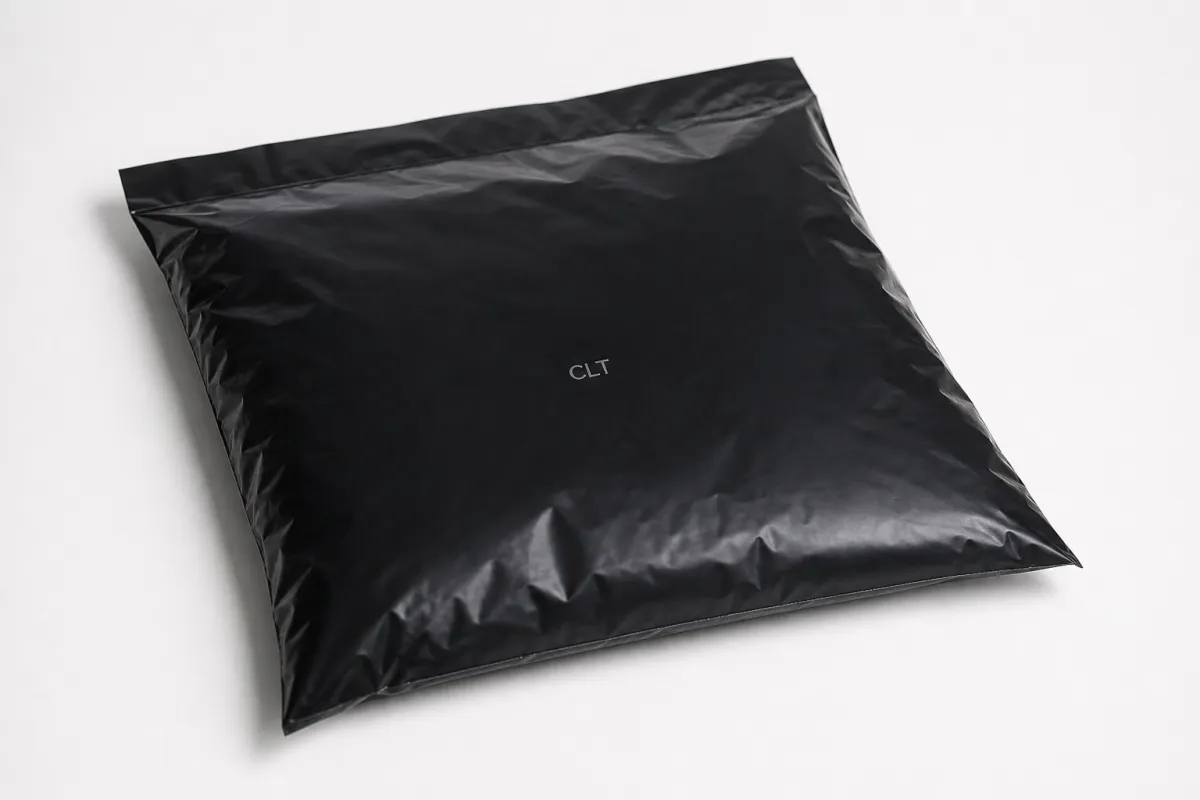
Black poly mailers with logo read as premium for a simple reason: black hides the messy parts of shipping. Scuffed corners, tape residue, dust, and the general friction of parcel handling are far less visible on a dark surface. A white or light gray mailer can look tired after one rough trip through a sorting hub. A black mailer usually keeps its composure.
Black is not magic, though. It is a stricter canvas. Black poly mailers with logo only look premium when the logo is designed for contrast instead of mood-board approval. A dark gray mark on black film may look elegant on a monitor and disappear in real life. White ink, metallic ink, or a strong brand color usually works better because the mailer needs legibility at arm's length, not subtlety that nobody can see.
From a packaging buyer's point of view, the value is plain. A customer opens the package and sees that the brand made a choice. That is different from a generic shipping bag, which usually feels like a placeholder. Black poly mailers with logo turn a transit item into a branded touchpoint, and that matters when the package itself is the first real contact with the product experience.
Poly mailers are practical too. They are lightweight, water resistant, and quick to seal. For apparel and soft goods, they often reduce freight weight compared with cartons. That is why black poly mailers with logo show up so often in ecommerce. They are not trying to be precious. They are trying to ship well and still look intentional.
- Best fit: apparel, socks, scarves, soft accessories, and other low-risk items
- Less ideal: fragile products, rigid items, or anything that needs crush protection
- Brand effect: stronger perceived organization when the artwork is clean and high-contrast
- Operational benefit: lower weight and less storage bulk than many carton options
That is the real pitch. Black poly mailers with logo are not fancy for the sake of being fancy. They are a sensible packaging choice that can still make the brand look serious. If the design is disciplined and the specs are right, they do their job without turning the warehouse into a design critique.
How Black Poly Mailers with Logo Are Made
Most black poly mailers with logo begin as co-extruded polyethylene film. In plain English, several plastic layers are combined to give the mailer flexibility, moisture resistance, and enough tear resistance for everyday ecommerce shipping. The material stays light, which is exactly what you want for clothing or other soft goods. Nobody wants a mailer that weighs like a brick for no reason.
The print method matters just as much as the film. For larger runs, flexographic printing is common because it handles repeated production efficiently. Gravure can be used for very high volumes, especially when the brand needs even coverage and a long run. Smaller or more customized orders may use screen or digital methods, depending on the supplier and the artwork. With black poly mailers with logo, the print method affects setup cost, edge sharpness, and how much color detail survives the jump from screen to plastic.
Black changes the rules. A white logo on black film can look crisp and expensive. A silver mark can look sharp if the finish is controlled. Thin lines, gradient fades, and low-contrast color choices often turn muddy fast. If the logo depends on tiny detail, black poly mailers with logo can expose design flaws that stayed hidden on a bright monitor.
The practical pieces deserve attention before you place the order. A decent custom mailer usually includes a reliable self-seal adhesive strip, an opaque body for privacy, and a thickness that fits the product load. Thickness is often listed in mils or microns, and those numbers matter more than people think. For regular apparel shipments, a common range is 2.5 to 4 mil, though heavier or sharper items may need more.
Small construction details separate a useful order from a headache. Dual adhesive strips help with returns. Tear strips improve opening. Reinforced seals reduce failures during handling. If a supplier says they make black poly mailers with logo, the real question is not only whether they can print it. The real question is whether the film, adhesive, and seal match the shipping reality your team faces.
If you want to sanity-check performance claims, ask whether the material has been tested against common packaging methods such as ISTA transit test standards or film performance references like ASTM D882 for tensile properties. Not every supplier will provide that data, and not every order needs a laboratory report. Still, if the shipment is valuable or the lanes are rough, it is a fair question.
Black Poly Mailers with Logo: Cost, Pricing, and MOQ
Pricing for black poly mailers with logo comes down to a set of variables that show up almost every time. Size matters. Thickness matters. Print coverage matters. The number of colors matters. Quantity matters a lot. A one-color logo on a standard-size bag at 10,000 pieces is a different animal from a two-sided, full-coverage design at 2,000 pieces. Anyone pretending those quotes should be close is either new to packaging or selling something.
MOQ, or minimum order quantity, exists because setup takes labor and the factory needs efficient production runs. On smaller orders, setup cost gets spread across fewer pieces, so unit price climbs. On larger orders, unit price drops, but more cash and storage space get tied up. With black poly mailers with logo, the sweet spot usually sits between paying too much per piece and buying a mountain of bags that sit untouched for months.
Here is a practical way to think about typical pricing. These are broad working ranges, not promises, because film grade, print coverage, shipping distance, and supplier location can move the number. They still help with budgeting black poly mailers with logo without pretending the market is simpler than it is.
| Order Type | Typical MOQ | Approx. Unit Price | Best For | Main Tradeoff |
|---|---|---|---|---|
| Plain black mailer, no print | 1,000 to 5,000 | $0.08 to $0.18 | Basic shipping where branding is not a priority | Cheapest, but no brand value |
| One-color logo on black film | 3,000 to 10,000 | $0.14 to $0.28 | Most apparel and accessory brands | Good balance of cost and presentation |
| Two-color logo or larger coverage | 5,000 to 20,000 | $0.18 to $0.34 | Brands with stronger visual systems | Higher setup and print complexity |
| Full-coverage or premium finish print | 10,000+ | $0.25 to $0.50+ | High-volume programs or premium launches | Best look, highest budget commitment |
Hidden costs show up too. Plate charges can appear on printed runs. Artwork cleanup may be billed if the file is messy. Rush production costs more. Freight can sting, especially if the bags travel long distance or by air. Sample fees and physical proofs matter as well. When people say they found cheap black poly mailers with logo, what they often found was a quote with a few of those costs left out until later.
Compare quotes carefully. Make the supplier quote the same size, same thickness, same color count, same print coverage, same seal style, and the same delivery terms. If one option is dramatically cheaper, check whether the supplier quietly changed one of those variables. That is usually where the trick hides.
One more useful benchmark: if you are buying 5,000 to 10,000 pieces, one-color black poly mailers with logo often land in a workable middle ground for apparel brands. At that level, you can get decent branding without turning packaging into a luxury line item. It is not free, but it does not have to be absurd either.
Production Steps and Timeline for Black Poly Mailers with Logo
The production flow for black poly mailers with logo is simple to describe and less simple to rush. Artwork review comes first. Then proof creation. Then approval. After that, the factory handles plate or file setup, production, inspection, packing, and shipping. Each step is easy in isolation. The delay usually happens at the handoff, especially when someone takes three days to approve a proof or keeps changing the logo by two pixels as if that will rescue a weak layout.
Turnaround depends on the order type. A simple reorder with the same artwork and the same specs can move much faster than a new design with custom sizing and heavier print coverage. If the artwork is clean and the quantity is sensible, black poly mailers with logo often move through production in roughly 12 to 15 business days after proof approval, though that can stretch when factories are busy or freight is complicated.
Lead time also depends on where the order is made and how it is shipped. Domestic supply can shorten transit time, but not every supplier stocks the exact spec you want. Overseas production can lower cost on large quantities, but it usually adds more moving parts. If the launch date matters, quote the full timeline, not just the factory time. A production promise without shipping context is not very useful.
Seasonal demand matters too. Packaging factories do not exist in a vacuum. When ecommerce volumes spike, capacity gets tighter, proof queues get longer, and freight becomes less predictable. If you are ordering black poly mailers with logo for a seasonal drop, leave enough room for proof revisions and transit time. “We need them by Friday” is not a plan. It is a wish with a deadline attached.
Buyers who want a cleaner process should treat the order like a small production project. Lock the specifications early. Confirm the artwork in the right color mode. Check how the logo sits on black film. Verify bag dimensions against the actual product stack, not the ideal one. That is how black poly mailers with logo stay from becoming a last-minute rescue operation.
How to Order Black Poly Mailers with Logo Step by Step
Start with the product, not the packaging. What are you shipping? How thick is it when folded? Does it include hard edges, zippers, hang tags, or anything that could puncture the film? Those answers tell you what size and thickness black poly mailers with logo need. A mailer that is too small creates packing friction. One that is too large looks sloppy and wastes material.
Next, clean up the artwork. Vector files are usually the right place to start because they scale well and keep edges sharp. If the logo has tiny lines or thin type, simplify it before production. That is especially true for black poly mailers with logo, where contrast does most of the heavy lifting. Dark-on-dark design is how brands accidentally buy expensive invisibility.
Then request a quote with complete specs. Give the supplier the quantity, bag size, thickness, print colors, print sides, finish preference, and shipping destination. If you leave out the details, you will get a weak quote. Weak quotes create comparison problems later. For black poly mailers with logo, exact information is cheaper than guesswork.
Ask for proofing before mass production. A digital proof is the minimum. A physical sample is even better if the order is large or the artwork is sensitive to contrast. This is where you check whether the logo feels readable, whether the black film looks matte or glossy enough, and whether the real scale feels balanced. A logo that looks elegant in a design file can look oddly tiny on a finished mailer.
Then compare the options in a way that means something. Use a short checklist:
- Size: does the mailer fit the product without excess slack?
- Thickness: is the film appropriate for the product weight and handling?
- Print quality: are edges crisp and colors visible on black?
- Seal strength: does the adhesive close cleanly and stay closed?
- Timeline: does the supplier's schedule fit your launch date?
If you want a second opinion on packaging fit, compare the quote against your current shipping materials. If you are already using an existing mailer, measure the actual folded product bundle, not just the item size on paper. That is where people get tripped up with black poly mailers with logo. They buy based on product dimensions and then discover the seal area, fold thickness, and return handling need more room than expected.
Before you approve the final run, confirm the shipping scenario. Are these going to a fulfillment center? To a warehouse that stacks parcels high? To a team that reuses outer bags for returns? The right black poly mailers with logo setup depends on the real handling path, not just the polished mockup.
One practical note: if sustainability is part of the decision, check whether the supplier can speak clearly about recycled content, mono-material construction, or recycling guidance. Not every poly mailer belongs in the same disposal stream, and the EPA recycling guidance is a better reference than a vague green badge on a product page. If a supplier cannot explain the material honestly, that is a clue.
Common Mistakes With Black Poly Mailers with Logo
The biggest mistake with black poly mailers with logo is choosing artwork that disappears on black film. Thin lines, dark gray type, tiny details, and subtle gradients can look refined in a brand deck and useless in print. A packaging graphic needs more contrast than a website banner. If it cannot read from a few feet away, redesign it.
Another common error is getting the size wrong. Brands often choose by product dimensions alone and forget closure allowance, fold bulk, and return handling. That is how black poly mailers with logo end up overstuffed, wrinkled, or awkwardly sealed. A neat package is not just about fitting the item. It is about fitting the item with a bit of breathing room.
Price-only buying causes its own damage. The cheapest quote may use thinner film, weaker adhesive, or a print process that looks soft at the edges. That can save a few cents on paper and cost much more in customer complaints. When a brand orders black poly mailers with logo, the cheap option can look expensive in all the wrong ways.
Proof approval is another trap. If the proof does not show contrast correctly, the final run will not fix itself. It will only reproduce the mistake at scale. For black poly mailers with logo, the proof is the last safe place to check logo size, placement, and color visibility before the money turns into plastic.
Then there is timing. Waiting until the launch date is already locked is how packaging budgets get squeezed. Production timelines move faster when the buyer plans ahead, confirms specs early, and responds quickly to proof questions. That is especially true for black poly mailers with logo, where the print setup and freight schedule both need room to breathe.
- Bad contrast: dark artwork on dark film
- Wrong size: no seal room or too much empty space
- Thin specs: film and adhesive chosen only for price
- Lazy proofing: approving a mockup that does not reflect the real material
- Late ordering: no buffer for revisions, production, or transit
If you avoid those five mistakes, black poly mailers with logo usually do exactly what they are supposed to do: protect the shipment, arrive looking clean, and support the brand without acting precious about it.
Expert Tips and Next Steps Before You Reorder
Here is the simplest rule I can give you: if the logo is not readable from a few feet away, fix it before print. That one change usually improves perceived quality more than adding a second color or a fancier finish. With black poly mailers with logo, clarity beats cleverness almost every time.
Think carefully about finish. Matte often reads as restrained and premium. Gloss can make color punch harder and reflect more light, which helps some logos but hurts others. The right choice depends on the product and the brand voice. If the brand is minimalist and clean, matte usually behaves better. If the brand is louder and more graphic, gloss may work. There is no universal winner for black poly mailers with logo.
Build a spec sheet for every reorder. Keep the exact bag size, thickness, artwork file name, print colors, approved proof, adhesive type, and supplier notes in one place. That way, the next quote is faster and cleaner. Reorders for black poly mailers with logo should be repeatable, not a scavenger hunt through old email threads and half-finished spreadsheets.
Ask for three things before you commit again: a fresh sample if anything changed, an updated quote that matches the exact spec, and a delivery timeline tied to your current launch schedule. If any one of those is missing, you are guessing. Guessing is how packaging budgets start making strange noises.
For brands that want to pressure-test the packaging choice, it helps to compare the mailer against the actual order economics. A slightly better-looking bag that reduces damage, improves presentation, and keeps freight weight down can be worth more than a cheaper alternative that creates support tickets. That is the real business case for black poly mailers with logo. They are not just a bag. They are part of the customer's first impression and your shipping cost structure at the same time.
My practical recommendation is simple: audit the current mailer, request one or two sample options, and compare print clarity, thickness, and total landed cost before you place the order. If the specs are clean, the artwork is readable, and the timeline fits, black poly mailers with logo can give you a much better packaging result without overcomplicating the operation. If the logo still feels crowded or hard to read, go back one step and simplify it. That small correction usually pays for itself pretty fast.
Are black poly mailers with logo good for clothing shipments?
Yes. Black poly mailers with logo work well for lightweight apparel, accessories, and other soft goods that do not need crush protection. They keep weight down, resist moisture, and give the package a cleaner presentation than a generic bag. If the item is bulky, sharp-edged, or fragile, a carton or padded mailer is usually the safer move.
What thickness should black poly mailers with logo have?
A practical range is usually 2.5 to 4 mil for most ecommerce apparel orders. Go thicker if the product has sharp edges, heavier fabric, or rough handling in transit. Do not overspec just to feel safe. Extra film adds cost and can make sealing less flexible, which is not a great trade when black poly mailers with logo already have enough performance for the job.
How much do black poly mailers with logo cost per unit?
Unit cost depends on size, thickness, quantity, print colors, and print coverage. A one-color run at moderate volume often lands in a useful middle range, while full-coverage or two-color work costs more. If you are comparing quotes for black poly mailers with logo, make sure every supplier is quoting the same size, same gauge, same print area, and same shipping terms. Otherwise the comparison is fiction dressed up as math.
How long does production take for black poly mailers with logo?
Timing depends on proof approval, print method, order size, and freight route. Simple reorders are usually faster than first-time custom jobs because the artwork and setup are already approved. For black poly mailers with logo, a common planning window is roughly 12 to 15 business days after proof approval, but that can stretch if the design changes or the shipping lane is busy. Build in buffer time. Packaging always seems to need it.
Can I use white ink on black poly mailers with logo?
Yes, and it is often the best choice. White ink gives strong contrast on black film, which helps readability and keeps the logo crisp. Metallic inks can also work well if the brand wants a more premium look. For black poly mailers with logo, avoid low-contrast colors unless you have tested them on the actual material. Screen brightness lies. Real plastic does not.
If you want packaging That Ships Well and still looks like someone cared, start with the right spec, the right artwork, and the right quote. Then check the sample against the real product, not the fantasy version of it. That is the cleanest way to choose black poly mailers with logo.


