Book Box Zipper Pouches Bulk: Specs, Pricing & Quote
book box zipper pouches bulk make a lot more sense once a boxed set starts moving through real packing tables, real freight lanes, and real customer handling. A pouch that is a little too thin, a little too loose, or built around the wrong closure can turn into the most expensive "cheap" choice on the order sheet. Corners bend, cartons look untidy, and returns climb faster than anyone wants to admit.
The better buying decision starts with fit. Match the pouch to the book, the insert stack, and the packing line, then judge it by the result. A good pouch keeps the set stable, presents the product cleanly, speeds up fulfillment, and lowers the chance of surprises after the shipment leaves the warehouse. If you are buying for retail display, gift sets, subscription kits, or protective bundling, book box zipper pouches bulk should be measured by what they do, not by how neat they look on a desk sample.
"The pouch is doing three jobs at once: protect the contents, make the package look finished, and keep the line moving. If it misses even one of those, the spec needs another look."
That practical view keeps the order grounded. No hype. No packaging theater. Just the details that affect labor cost, return rate, and the way a customer feels during unboxing.
Why Book Box Zipper Pouches Bulk Beat Generic Pouches
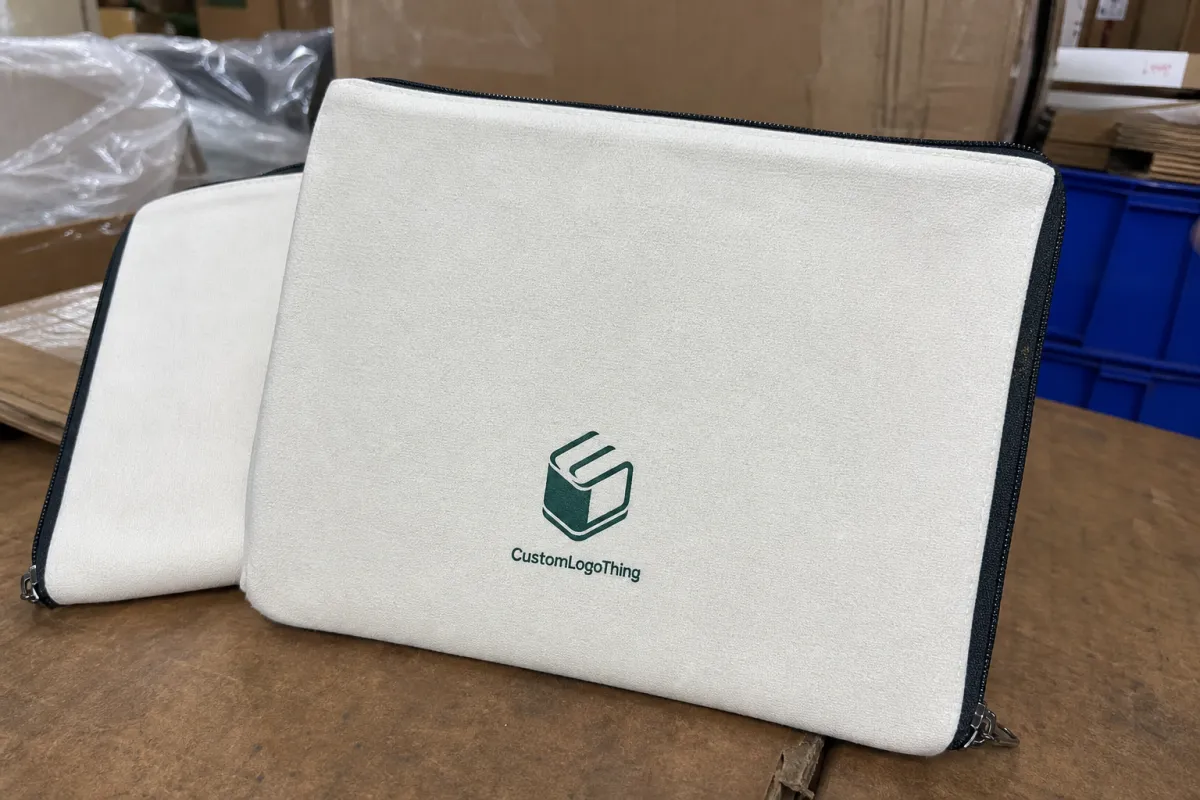
Generic pouches work fine until the product inside has corners, slip sheets, inserts, or a rigid box that does not forgive sloppy sizing. book box zipper pouches bulk solve that at the spec level. The pouch is built around the product instead of forcing the product into a stock size that almost works.
That tighter fit does more than keep things tidy. It cuts movement in transit, makes packing faster, and keeps the contents from shifting around when the carton opens. On a manual packing line, a pouch that drops in cleanly can save 10 to 20 seconds per unit. Across 5,000 units, that becomes real labor, not a rounding error. I have watched teams lose an entire afternoon just because the pouch opening fought the box edge every time, and nobody needs that kind of headache.
Brand control matters just as much. A generic pouch may protect the contents, but it rarely helps the presentation. book box zipper pouches bulk can be set up with clear film, frosted film, print zones, and zipper placement that make the package feel planned instead of improvised. That kind of detail carries weight for collector editions, boxed novels, stationery bundles, and promotional kits where the opening experience shapes the impression.
There is less waste upstream too. Once the size is locked early, the production line spends less time repacking or force-fitting items. Once the closure style is chosen correctly, the zipper closes without fighting the contents. That sounds basic because it is basic, yet plenty of orders still get placed with the wrong opening width, wrong gusset depth, or wrong film thickness.
For buyers comparing book box zipper pouches bulk across suppliers, the decision usually comes down to business results:
- Lower rework because the pouch fits the product correctly.
- Better shelf appeal because the film, print, and finish are set for the audience.
- Fewer damages because the contents are restrained instead of floating.
- Cleaner fulfillment because packing staff are not wrestling with undersized packaging.
That is why serious buyers do not start with "What is your cheapest pouch?" They start with "What size, film, and zipper spec will hold the book box properly?" That one question usually saves more money than a tiny per-unit discount ever will.
Book Box Zipper Pouches Bulk: Product Details Buyers Notice
Most buyers only need a few details to tell whether book box zipper pouches bulk are built for the job. Film structure comes first. Zipper style comes next. Whether the pouch is meant for display, shipping protection, or bundled sets that will be opened and closed more than once rounds out the decision.
A clean zipper pouch usually includes a front and back film layer, a sealed bottom, side seals or a bottom gusset depending on the format, and a closure that holds without feeling flimsy. For book packaging, the common asks stay simple: clear visibility, a tidy closure, and enough stiffness to avoid wrinkling around the box edges. Retail packaging puts the look front and center. Shipping packaging asks more from the structure.
Here is where buyers usually split the spec:
- Clear film for visibility and product recognition.
- Frosted film for a softer, more premium look with less glare.
- Gloss finish if bright color and sharp contrast are the goal.
- Matte finish if the brand wants a quieter, upscale feel.
- Printed pouch if the logo, instructions, or campaign message needs to be part of the packaging.
book box zipper pouches bulk often show up in boxed sets, collector editions, notebook bundles, stationery add-ons, and subscription inserts. That range matters because the same pouch format can feel very different depending on the contents. A minimalist black logo on frosted film may suit a premium edition. A full-color print with a barcode zone may work better for a retail bundle that passes through several hands before it reaches the customer.
Useful features are where stronger suppliers separate themselves from the "looks fine in a photo" crowd. Buyers should ask about tear notches, euro holes for hanging, resealability, and whether the print zone leaves enough clean space for a barcode or price label. If the pouch is meant for store shelves, barcode-friendly placement is not optional. If it is meant for shipping, a tear notch placed too close to the zipper becomes a daily annoyance.
Shipment-oriented book kits are often tested against transit standards such as ISTA methods, and some buyers also ask for carton performance checks aligned with ASTM D4169. That does not mean every pouch needs lab testing. It means the package should be judged by the route it will actually travel, not by wishful thinking.
If part of the kit includes paper board, booklets, or printed inserts made from responsible fiber, the chain of custody may matter too. The FSC framework is useful there. The film pouch itself does not become FSC just because someone used the word "eco" in a sales email.
Handling feel is easy to overlook. A pouch that feels too slick can be awkward on a fast packing line. One that feels too soft can sag. The right balance depends on whether the contents are a slim book box, a two-piece set, or a heavier kit with inserts and accessories. book box zipper pouches bulk should be chosen for how the package behaves in real hands, not in a rendering.
Book Box Zipper Pouches Bulk Specs That Affect Fit and Finish
Spec mistakes usually begin with dimensions. book box zipper pouches bulk need the right internal measurements, not the nice-sounding outside size. Buyers should confirm the usable opening width, zipper placement, gusset depth if the pouch expands, and whether the contents need a snug or loose fit. Snug is not always better. Too tight can slow packing and scuff the box corners. Too loose can let the kit slide.
As a rule, the pouch needs a small allowance beyond the book box size for insertion and closure. If the product is rigid, the allowance has to be generous enough for smooth loading. If the product is soft or flexible, the fit can be closer. For many runs, a 2 to 5 mm tolerance band is practical, though that depends on the film type and how the zipper is placed.
Thickness is the next decision. Buyers often talk about "durable" packaging without specifying a gauge, which is not helpful. For book box zipper pouches bulk, common film ranges are roughly:
- 60-80 micron for light inserts or slim kits where flexibility matters most.
- 90-120 micron for standard retail use and moderate protection.
- 120-150 micron for heavier boxes, multi-item kits, or higher abrasion resistance.
Those ranges are not a sales trick. They reflect a tradeoff. Thicker film usually feels better and resists handling damage better, but it costs more and can slow the pack line if the zipper becomes stiff. Thinner film is cheaper and easier to fold, but it may wrinkle or crease around sharp book edges. The right answer depends on the product weight, the shipping method, and how much abuse the package sees after it leaves the warehouse.
Print specs matter just as much. If the artwork includes a logo, color block, product name, and barcode, the buyer should provide clean files with proper bleed and safe zones. Small pouch faces do not forgive sloppy art. As a practical rule, leave 3 to 5 mm of safe margin from the seal edges and keep barcode placement away from the zipper track and any gusset folds.
Detail retention matters too. Fine lines, small legal copy, and tiny QR codes can get muddy if the pouch is printed on the wrong press or with the wrong film finish. For book box zipper pouches bulk, a simple design often prints better than an overcomplicated one. Big type, strong contrast, and fewer distractions usually win.
Compliance and handling should not be pushed aside. If the pouch will sit near food, cosmetics, or fragile inserts, ask for the right material declarations before you approve production. For food-adjacent or cosmetic-adjacent kits, the supplier should be able to state what the film and ink system can and cannot claim. A nice sample does not equal proper compliance, and packaging mistakes are expensive enough already.
Finish changes perception quickly. A matte pouch softens the look and hides fingerprints. A gloss pouch makes colors pop but can pick up glare under retail lights. Frosted film sits in the middle and often feels more refined than a plain clear pouch. For book box zipper pouches bulk, the finish should support the product story, not fight it.
Book Box Zipper Pouches Bulk: Cost, Pricing, MOQ, and Unit Cost
Price is driven by a few obvious variables and a few less obvious ones. book box zipper pouches bulk get more expensive as material thickness increases, pouch size expands, print coverage grows, and extra features get added. Zipper style matters too. A simple resealable closure costs less than a custom zipper profile or a pouch with a specialty opening.
MOQ is where buyers often get caught. Custom printed pouches usually start higher than stock-style pouches because setup work, film sourcing, and print preparation all bring fixed costs. If a supplier is quoting a very low MOQ on a custom format, the unit price is usually higher or the size options are limited. That is not a flaw. It is math.
For typical book box zipper pouches bulk orders, realistic pricing often falls in these ranges, depending on size, film, and print coverage:
| Option | Best For | Typical MOQ | Indicative Unit Cost | Notes |
|---|---|---|---|---|
| Clear unprinted zipper pouch | Simple book inserts, protection only | 1,000-2,000 | $0.14-$0.28 | Lowest visual cost, simplest setup |
| Custom size clear pouch | Book boxes that need exact fit | 3,000-5,000 | $0.22-$0.42 | Better fit, more setup than stock sizes |
| Printed retail pouch | Branded boxed sets and shelf display | 5,000-10,000 | $0.30-$0.65 | Print coverage and color count move the price |
| Premium frosted or matte pouch | Collector editions and premium bundles | 5,000+ | $0.40-$0.90 | Finish and film structure matter a lot here |
Those are working ranges, not promises. Freight, duties, carton count, and delivery location can move landed cost more than buyers expect. A pouch that looks cheap per unit can become the expensive option once air freight, storage, and slow-moving inventory are included. That is why book box zipper pouches bulk should be evaluated on total landed cost, not just the quote line for the pouch itself.
There is a cleaner way to think about unit cost. If the order is 3,000 pieces and the price drops by six cents at 5,000 pieces, the "savings" only matter if you will actually sell or use the extra 2,000 units before the spec changes. Overbuying because the unit price looked prettier on a spreadsheet is a classic warehouse headache. Saving $300 and then parking $1,200 of dead stock is not a win.
For an accurate quote on book box zipper pouches bulk, send the following:
- Finished pouch dimensions.
- Quantity required.
- Material preference and thickness target.
- Print colors, artwork files, and finish preference.
- Any extras such as tear notch, hang hole, euro hole, or custom zipper style.
- Ship-to location so freight can be estimated properly.
That list sounds basic because it is. Incomplete specs are one of the biggest reasons quotes drift later. If the supplier has to keep guessing, the buyer usually pays for the guess one way or another.
Production Process and Timeline for Book Box Zipper Pouches Bulk
A clean process saves time. The best book box zipper pouches bulk orders usually follow the same sequence: inquiry, spec review, quote, artwork check, proof approval, production, inspection, and shipping. Nothing glamorous there. That is the point. Predictable steps mean fewer errors.
- Inquiry - the buyer sends size, quantity, and intended use.
- Spec review - the supplier confirms film, zipper, finish, and print method.
- Quote - unit price, setup cost, and freight estimate are presented.
- Artwork check - files are reviewed for bleed, resolution, and safe zones.
- Proof approval - the buyer signs off on a digital or physical proof.
- Production - film is printed, formed, sealed, and checked.
- Inspection and shipping - cartons are verified and sent out.
Lead time depends on the order type. A plain unprinted pouch can move quickly if the size is standard and the material is available. Custom printed book box zipper pouches bulk usually take longer because of print setup and proof approval. A realistic range for many custom jobs is 12 to 20 business days after proof approval, with shipping time added on top. Some straightforward orders can move faster. Specialty finishes and new tooling usually cannot.
What slows a job down? Three things, most of the time. First, artwork that is not press-ready. Second, size changes after the quote is already in motion. Third, waiting on a sample decision while production slots fill up. Buyers who send complete specs early get better timing. Buyers who change the spec late usually get a revised schedule. That is not the supplier being difficult. That is the clock doing what clocks do.
There is a real difference between a plain sample, a printed proof, and a full production run. A plain sample confirms size, zipper function, and basic handling. A printed proof checks artwork placement, color balance, and finish. A production run is the real order, with full quantity, final materials, and normal factory variance. A sample is a checkpoint, not a guarantee for every detail.
Rush orders can be possible if the pouch is close to an existing spec, the artwork is ready, and the factory schedule has room. Special finishes, custom dies, and high-coverage printing still take time. If someone promises a rushed custom pouch with no tradeoffs, they are probably overpromising or skipping the part where quality control matters. Neither option is good.
For buyers who want fewer headaches, the smart move is to confirm size and finish before the quote is finalized. That keeps the order of book box zipper pouches bulk from turning into a rescue mission three days before the deadline.
Why Buyers Choose Us for Book Box Zipper Pouches Bulk
At Custom Logo Things, the useful part is not a shiny pitch. It is the unglamorous work that keeps an order from going sideways. Buyers choosing book box zipper pouches bulk usually want fast quoting, clear specs, and honest MOQ guidance without three rounds of back-and-forth just to learn the pouch needs a different zipper or a wider seal margin.
We keep the process practical. If a size looks tight, we say so. If a film choice is likely to wrinkle around a rigid book box, we say that too. If the artwork needs more breathing room near the edge, that gets flagged before production starts. Feedback like that saves more money than a lower quote with hidden issues.
Quality control should be concrete, not vague. For book box zipper pouches bulk, the checks that matter are simple:
- Seal checks to make sure the pouch closes cleanly and stays closed.
- Zipper function checks to confirm open-close performance and alignment.
- Print alignment checks so logos, text, and barcodes land where they should.
- Carton inspection to verify count, packing style, and shipping condition.
That is how you keep small mistakes from becoming expensive returns. A millimeter off on the zipper line might not look dramatic on a screen, but on a packed run it can create drag, misalignment, or sloppy closures. Buyers who order packaging repeatedly know this. They would rather hear the truth early than read a polished apology later.
We also help with file review and size recommendations. If the buyer only has a rough concept, we can usually narrow the pouch structure, suggest a material range, and explain which finish makes the most sense for the product. That matters for teams moving fast. It also matters for brands that do not have a packaging engineer sitting in the corner waiting to solve the problem.
If your packaging needs span multiple SKUs or a broader program, our Wholesale Programs page is the right place to start. That keeps the ordering structure cleaner, especially for recurring runs of book box zipper pouches bulk and related packaging pieces.
The real advantage is consistency. Same quote structure. Same expectation on artwork. Same check on fit. Buyers get fewer surprises, and the line gets fewer delays. That is not flashy, but it is what matters once the PO is live.
Next Steps to Order Book Box Zipper Pouches Bulk
If you are ready to move, gather the basics first. For book box zipper pouches bulk, the most useful starting packet is straightforward: finished dimensions, quantity, artwork files, preferred finish, and the date the order needs to arrive. If you know the packaging will sit on shelves, say that. If it is shipping-only, say that too. The more precise the use case, the better the recommendation.
I would also ask for two or three material options. That comparison helps you see the tradeoff between cost, feel, and durability without guessing. A clear film may be the cheapest. A frosted or matte film may look better. A heavier gauge may hold up better under handling. The right choice is the one that fits the product and the channel, not the one that sounds fancy in a sales call.
If the pouch has a tight fit or branded print, request a plain sample or digital proof before you approve full production. That small step catches the annoying stuff early: zipper placement, seal width, artwork cropping, and whether the box actually slides in the way everyone hoped it would. That is a cheap fix at sample stage and a painful fix after production.
For buyers comparing book box zipper pouches bulk, do not look at price alone. Compare the quote, the lead time, the exact film structure, the MOQ, and the freight estimate together. A supplier who is transparent on all four points usually saves you more than one who only looks inexpensive on paper.
Lock the measurements, confirm the finish, and approve the sample before production starts. That is the cleanest way to keep book box zipper pouches bulk on track for a book launch, retail bundle, or subscription kit, and it saves everybody from a last-minute scramble that nobody wants.
Frequently Asked Questions
What is the MOQ for book box zipper pouches bulk orders?
MOQ usually depends on size, film structure, and print complexity, so custom printed runs often start higher than stock-style pouches. For many book box zipper pouches bulk projects, a practical range is 1,000 to 2,000 pieces for simpler unprinted formats and 3,000 to 5,000 pieces or more for custom sizes and printed work. Larger orders usually lower the unit cost, but the best MOQ is the one that matches your real sell-through rate instead of stuffing your warehouse.
Can I get a sample before placing a bulk order?
Yes. Ask for a plain sample if you want to check size and closure function, or request a printed proof if artwork accuracy matters. A sample helps catch fit problems early, which is cheaper than discovering your book box zipper pouches bulk order is too tight after production. If the pouch will hold a rigid book box, a sample is one of the smartest small costs you can pay.
How long does production usually take?
Timeline depends on proof approval, material availability, and print setup, but custom packaging typically takes longer than stock inventory. Many book box zipper pouches bulk orders land in the 12 to 20 business day range after approval, with shipping added on top. The fastest way to keep lead time tight is to send complete specs and final artwork before asking for a quote.
What information do I need for an accurate quote?
Send pouch dimensions, quantity, material preference, print colors, finish, and ship-to location. If you want a clean quote for book box zipper pouches bulk, include any special features like tear notches, hang holes, euro holes, or a custom zipper style. That is how you avoid a quote that looks fine until the real spec shows up.
Are book box zipper pouches bulk suitable for retail display?
Yes, if you Choose the Right film clarity, print quality, and finish for shelf presentation. Retail-ready book box zipper pouches bulk usually need stronger visual consistency than shipping-only packaging, so ask for a proof before you approve production. A pouch that looks clean under store lighting can do more for perceived value than a complicated design that prints poorly.


