Book ribbon handle paper bags Bulk Order Planning sits at the intersection of presentation, cost, and product protection. A bag can look right in a mockup and still fail when a hardcover, boxed set, or gift bundle loads the base seam or stresses the handle anchors. That kind of failure leads to complaints, replacements, and a poor handoff at the counter.
The better approach is to treat the bag as a working package, not a decorative extra. A ribbon handle can improve comfort and create a cleaner premium feel, but only if the structure, paper weight, handle style, and finish match the actual load. Good-looking is useful. Fragile is not.
"A bag does not get graded on a mockup. It gets judged in the hand, under weight, with corners that should still look sharp afterward."
Why Ribbon-Handle Book Bags Can Lower Return Risk
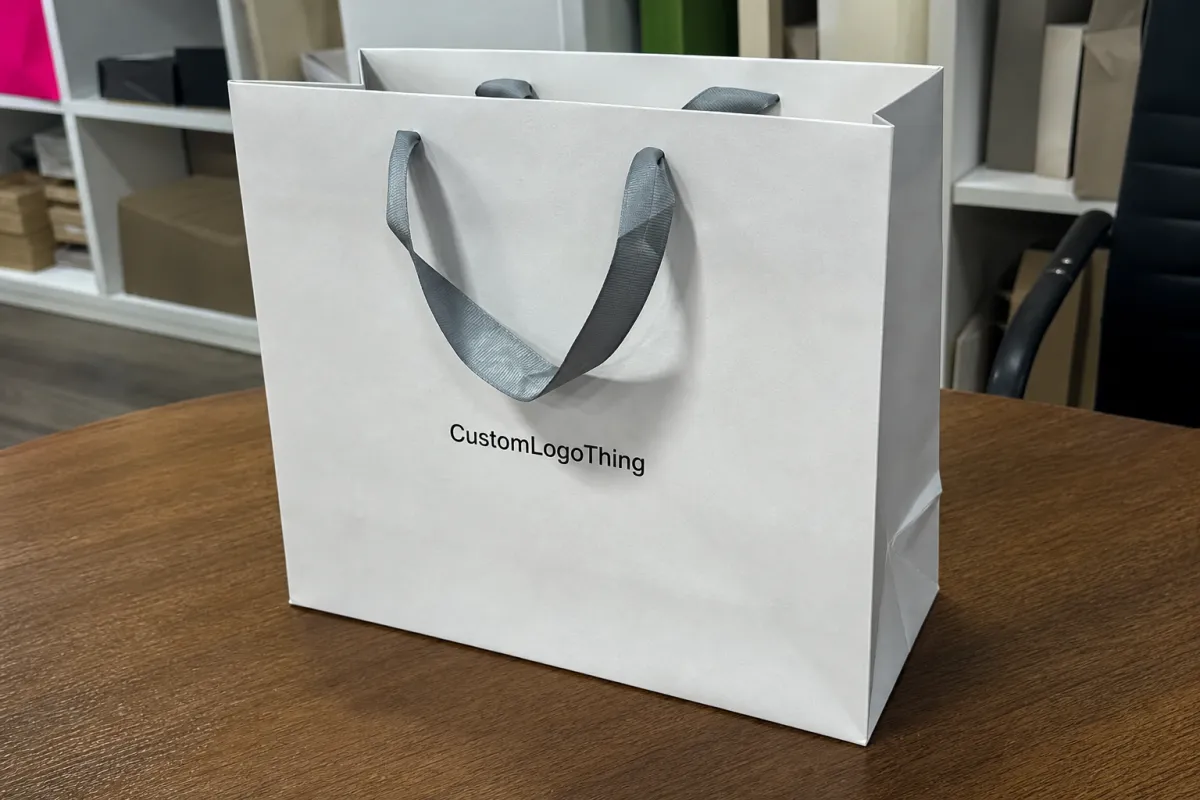
A book bag has one job after the sale: move the product home without damage. Thin handles dig into the hand, weak bottoms sag, and flimsy sidewalls let hardcovers rub. Customers notice those problems before they notice the logo.
Ribbon handles help because they spread pressure more evenly than narrow paper cords or thin cutouts. That matters on heavier titles, especially hardcovers, gift editions, and bundled sets. A wider ribbon also gives the bag a more deliberate look, which is why it appears so often in premium bookstores, museum shops, publisher launches, and branded gift kits.
There is a cost angle as well. A basic paper bag may be cheaper on the invoice, but if it causes bent corners, crushed dust jackets, or awkward carrying, the savings disappear fast. The real comparison is landed cost plus failure risk. Buyers who track complaints often find that stronger handles and better base construction reduce replacement shipments and customer service noise.
For buyers planning volume orders, the load profile should be clear before price shopping starts. A bag for a single trade paperback is not the same as one for a boxed set or a promotional pack with inserts. If the bag is too narrow, the book scrapes. If it is too roomy, the item shifts and looks sloppy. Either way, the spec needs adjustment.
Bag Structure, Capacity, and Book-Friendly Fit
Size should start with the book, not the supplier's stock template. Measure the product first, then add room for dust jackets, tissue, wraps, or inserts. Hardcovers usually need more height because the top edge can catch on the opening. Boxed sets need a wider gusset and a stronger base. If the product has to be forced in, the bag is already wrong.
Fit checks should happen early. Test a sample bag with the heaviest item in the order, not the lightest. That simple habit catches problems with gusset depth, handle length, and base strength before production begins. For programs with multiple title formats, two or three bag sizes are usually better than one oversized compromise.
Paper choice changes how the bag behaves. Coated art paper supports sharper print and a more polished finish. Kraft stock gives a natural look and tolerates scuffs better. Heavier board grades help the bag stand upright and resist collapse, which matters when the bag is being carried, handed over, or stacked for pickup.
Base reinforcement deserves attention. The bottom seam is a common weak point when the order includes a hardcover, a notebook set, or more than one item. A doubled bottom board or reinforced insert adds cost, but it also helps the bag survive a busy checkout counter. The handle area needs similar discipline. A ribbon anchored poorly will fail faster than a plain paper handle done well.
The practical test is simple: the bag should still look composed after the product is inside. If the top flares, the base bows, or the handle attachment pulls the panel out of square, the spec needs more work.
Print, Finish, and Handle Details Buyers Should Lock In
Artwork affects production more than many buyers expect. A front-panel logo is straightforward. Full-wrap art is not. Once the design crosses fold lines, handle anchors, and side gussets, registration becomes more sensitive. Bleed margins matter, and dieline accuracy matters more. If the logo sits too close to a fold, the finished bag can look awkward even if the PDF looked fine.
Finishes affect both appearance and handling. Matte tends to feel quieter and more editorial, which works well for bookstores and publisher programs. Gloss adds shine but shows scuffs sooner. Soft-touch coating feels premium in hand, though it usually adds cost and can extend lead time. If the bag is meant to support a book rather than compete with it, a restrained finish usually ages better than a flashy one.
Ribbon specification deserves similar care. Width changes both comfort and strength. Ten millimeters can work for lighter loads. Fifteen millimeters is a safer middle ground for most book programs. Twenty-five millimeters makes sense for heavy hardcovers, premium sets, or gift bundles. Color should be checked in person when possible, because a ribbon that looks elegant on screen can read differently under retail lighting.
Attachment method matters as much as ribbon width. Glued anchors are common, but stitched reinforcement or stronger top construction gives better pull resistance on heavier bags. If the program includes signed editions, launch kits, or higher-value items, a reinforced top edge and a clean fold line help the bag keep its shape longer.
For quick planning, this comparison helps:
| Option | Typical effect on cost | Best for | Watch-out |
|---|---|---|---|
| 10 mm ribbon, matte print | Lowest | Light books, event handouts | Less comfortable for heavier loads |
| 15 mm ribbon, soft-touch finish | Mid-range | Gift sets, premium bookstore sales | Higher scuff sensitivity during transit |
| 25 mm ribbon, reinforced top | Higher | Hardcovers, boxed sets, luxury kits | Needs tighter spec control and testing |
Pricing, MOQ, and Book Ribbon Handle Paper Bags Bulk Order Planning
This is where vague requests get expensive. Buyers ask for a quote before dimensions, paper grade, ribbon style, finish, and delivery terms are locked. The result is a number that changes later. Good book Ribbon Handle Paper Bags Bulk Order Planning starts with the variables that actually move cost: size, paper stock, print coverage, handle construction, finishing method, quantity, and destination.
MOQ should be understood as a production threshold, not a penalty. Every custom run includes setup work: die cutting, print setup, color matching, handle assembly, carton packing, and often a test batch. Small orders can be done, but unit cost rises quickly when those steps are spread over too few pieces. For many custom programs, 1,000 to 3,000 pieces is a common minimum. Better pricing usually appears at 5,000 units and above, especially when the spec is stable.
Planning ranges are useful before artwork is final. They are not live quotes, but they help buyers budget with less guesswork.
| Quantity | Typical unit range | What usually improves | Best fit |
|---|---|---|---|
| 1,000-2,500 | $0.28-$0.45 | Setup cost spreads over more units | Launches, pilot retail programs |
| 3,000-5,000 | $0.22-$0.35 | Better print efficiency and packing cost | Monthly replenishment, bookstores |
| 10,000+ | $0.18-$0.30 | Lowest per-unit production cost | National retail, publishers, chains |
The more useful number is landed cost, not factory cost. Freight, export packing, storage, and any rework can matter more than a small change in finish. A better ribbon or heavier board may raise the unit price slightly and still lower total cost if it reduces damage or handling issues. That is especially true for recurring programs where the same bag gets reordered every month or quarter.
The cheapest spec is rarely the cheapest program. A bag that folds poorly, ships badly, or fails on the floor creates work later. Buyers who manage packaging for a living already know that. The invoice is only the first line item.
Production Steps, Timeline, and Approval Milestones
The usual workflow is quote, dieline review, artwork confirmation, proof approval, production, finishing, packing, and shipment. It sounds tidy, but it rarely stays that way if the buyer sends incomplete specs or keeps changing artwork after the order is already in queue. Even a small revision can affect color, alignment, or handle placement.
For standard custom orders, lead time often falls around 12 to 20 business days after proof approval. Simpler bags can move faster. Specialty coatings, custom ribbon colors, heavy board, or unusual packing requirements can stretch the schedule. Rush work is possible in some cases, but it usually costs more and leaves less room for quality control.
Two approvals matter most. First is the artwork proof. Second is the physical sample or sign-off sample for larger or more sensitive orders. The proof catches placement errors. The sample catches real-world problems: ribbon color mismatch, a bag that opens too narrowly, a handle that feels thin, or a logo too close to the fold. Screen previews can hide those issues. A sample cannot.
Packing and freight details matter as well. Carton count, bag direction, pallet wrap tension, and compression during transit all affect how the bags arrive. A neatly printed bag is useless if the corners are crushed in the box. That is why some buyers ask for shipping standards aligned with ISTA testing logic, especially for long-distance freight. If the order uses certified paper, FSC documentation should be available when requested.
The real schedule discipline is simple: everyone knows what is approved, who approved it, and when the order moves to the next stage. Without that, production gets fuzzy fast.
How We Keep Bulk Orders Consistent Across Reorders
Consistency is where good packaging systems prove themselves. The first order can hide a lot. The second order exposes everything. Paper color drifts, ribbon shades shift, board thickness changes, and one run stands neatly on shelf while the next one slouches. If a program will repeat, the spec needs to be frozen instead of improvised each time.
The cleanest way to do that is to archive the approved dieline, paper grade, ribbon width, finish, and packing method. A retained sample helps too. Some teams call it a golden sample. It becomes the physical reference for future reorders, which is better than relying on memory or an old approval email. If the new run does not match the reference, the issue can be found before the full shipment goes out.
Quality control should include a few direct checks: handle pull strength, fold alignment, color consistency, base flatness, and edge scuffing. None of those are glamorous, but all of them matter in retail. A ribbon that looks elegant but detaches too easily is not premium. A bag that stands crooked on the counter looks tired before it is even used.
Packaging also matters after the bags leave production. Overpacked cartons can flatten handles. Loose cartons can let bags shift and rub. Too-tight pallet wrap can leave crease marks on the top panels. Those details are easy to miss in a spec sheet and obvious the minute a carton is opened. Reorder consistency depends on all of them, not just the print file.
What To Send For A Fast, Accurate Quote
If you want a quote that holds up, send the numbers that matter: bag dimensions, paper type, quantity, number of print colors, finish, ribbon width and color, delivery date, and ship-to location. Those details do more for pricing accuracy than a long paragraph about brand tone. If artwork is ready, attach it. If there is a reference sample, send that too. A physical sample beats a mood board every time.
It also helps to describe the use case plainly. Retail purchase, gifting, event distribution, and subscription kit all put different demands on the bag. A retail bag may need more carry strength. A media kit may need a tighter fit and cleaner front panel. A signed-book launch may call for a more restrained finish so the packaging supports the title without stealing attention from it.
Before approval, ask for three things: a tiered price quote, a proof timing estimate, and a production slot. That is enough to turn the ordering process into something practical instead of guesswork. If the order is recurring, ask for the spec to be locked in writing so the next run does not drift.
Then make the call on the facts: fit, weight, handle strength, finish, timing, and total landed cost. That is the whole job.
FAQs
What is the usual MOQ for book ribbon handle paper bags bulk orders?
MOQ depends on size, paper stock, print complexity, and ribbon selection because each change affects setup and assembly efficiency. For custom builds, buyers often see minimums in the 1,000 to 3,000 piece range, with better pricing at 5,000 pieces and above.
How do ribbon handles affect unit cost on a paper bag order?
Ribbon handles add material and assembly cost, but the increase is usually modest compared with the presentation benefit. The better comparison is total landed cost, including freight, handling, rework risk, and whether the bag reduces damage during carry.
What specs matter most before I request a quote?
Dimensions, paper weight, print coverage, finish, and ribbon style are the core inputs that determine quote accuracy. Delivery date, destination, and any special packing instructions should also be included so the timeline is realistic from the start.
How long does production usually take after proof approval?
Standard timing often runs about 12 to 20 business days after proof approval, depending on quantity and finish. Custom ribbons, specialty coatings, and tight ship dates can add time, so a buffer is wise.
Can I approve a sample before placing the full bulk order?
Yes. Sampling is the safest way to confirm size, handle feel, color, and overall structure before volume production. Use the sample to check book fit, ribbon strength, print placement, and how the bag holds up under real handling.
Good packaging for books is not complicated, but it is unforgiving. A ribbon handle can improve the experience, yet it only works if the size, structure, and production details are set with enough discipline to survive actual use.

