coffee roaster frosted zipper bags Bulk Order Planning starts with a practical question: how do you package beans so they look premium, stay fresh, and arrive on time without locking cash into the wrong spec? Frosted pouches answer a narrow but useful need. They soften glare, hide minor fill variation, and still let buyers see there is real coffee in the bag. That balance is why roasters often move from plain matte pouches once the line reaches cafes, specialty retail, or private-label accounts.
What Drives the Buy
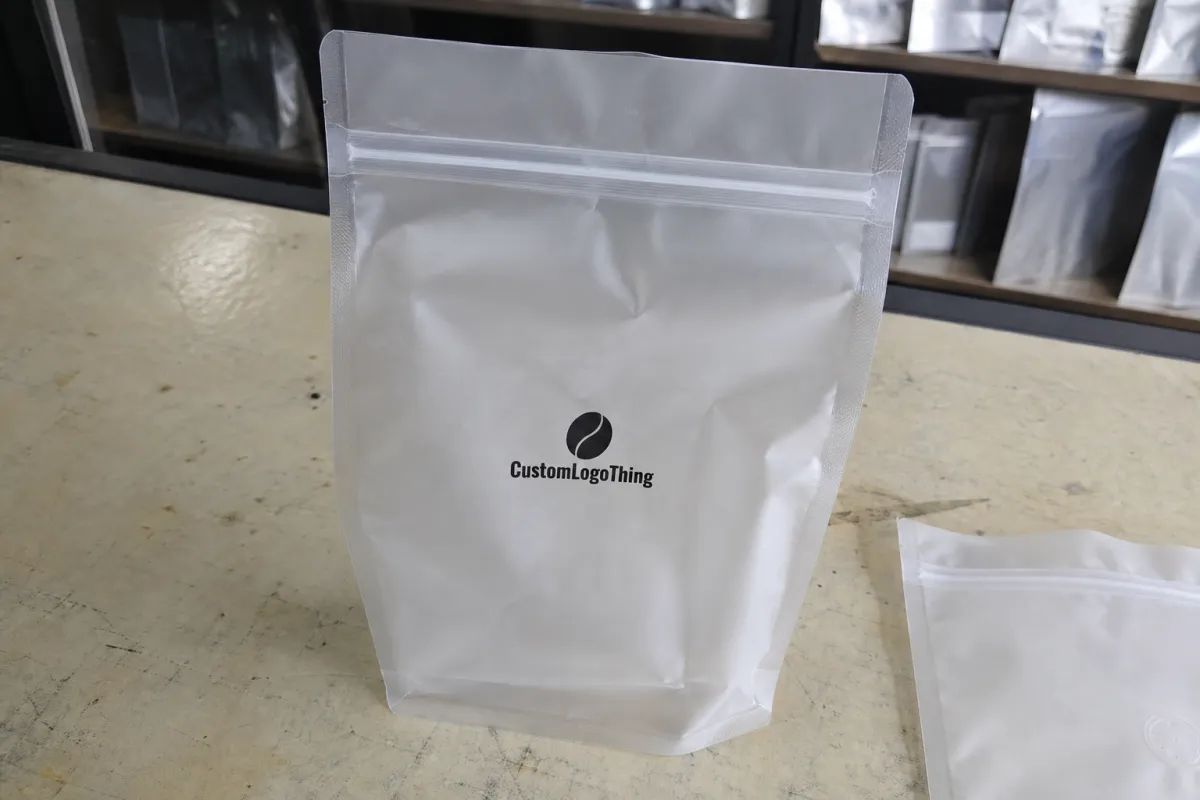
Frosted film gives a coffee bag a cleaner shelf presence without hiding the product. Retail buyers notice that fast. They scan color, bean visibility, and label clarity before they read tasting notes. A frosted zipper pouch cuts harsh shine, reduces the visual clutter of fill variation, and helps artwork Stand Out Without looking loud.
The business case is usually straightforward. Roasters move into frosted bags when they need a more controlled shelf presentation, a resealable format that feels practical after opening, or a packaging system that stays consistent across replenishment cycles. At that point, packaging is no longer just decoration. It becomes part of the supply plan.
Bulk ordering is not only about buying more bags. It is about matching fill weight, print requirements, freight timing, and reorder cycles so packaging does not become the bottleneck. The cleanest programs start with a SKU map: 12 oz, 1 lb, 2 lb, maybe a 5 lb club format, plus a clear view of which sizes actually move.
The first question should be whether the bag supports roast cadence, channel mix, and the next reorder without forcing a reset. That is the useful lens for coffee roaster frosted zipper Bags Bulk Order Planning.
Frosted Finish, Zipper Closure, and Valve Options
The frosted surface is a muted translucent finish, not a clear window and not a fully opaque wall. That middle ground softens glare under bright retail lights, improves contrast around logos, and gives the bag a more controlled premium look. Clear film can expose uneven fills or bean dust. Heavy opacity can hide the coffee so completely that the package feels generic.
Zipper choice matters just as much. Standard press-to-close zippers work for normal retail use. High-cycle closures are better for households that open the bag often. Child-resistant closures only make sense where regulations or channel requirements demand them; otherwise they add friction without adding value. For daily-use whole-bean coffee, zipper feel affects how premium the product seems after the first opening.
Valve selection is where buyers often under-spec the job. Whole-bean coffee releases gas after roasting, and a one-way degassing valve is usually the safer choice when bags are packed soon after roast. For slower-moving or fully rested coffee, some roasters can skip the valve, but that should be a decision, not a guess. If the bag will sit on shelves, travel through mixed freight, or ship directly to consumers, the valve helps protect both shape and appearance.
Small add-ons change the user experience more than people expect. Tear notches make opening consistent. Euro slots help with hanging displays. Gussets control shelf stance and filling behavior. Tin ties work in some cafe formats, though they show up less on premium retail pouches.
- Standard zipper: a practical choice for general retail and moderate reopen frequency.
- High-cycle zipper: better for households that reopen the bag often.
- One-way valve: safer for fresh whole-bean coffee packed close to roast.
- Gusseted base: improves shelf stance and filling stability.
For terminology and basic barrier concepts, the resources at packaging.org are a useful reference point when teams are comparing supplier claims.
Specifications That Affect Fit, Print, and Line Speed
Bag dimensions should follow fill weight, bean density, and the headspace needed for a clean seal. A dense dark roast behaves differently from a lighter bean that has expanded more during roasting. A 12 oz pouch that looks perfect on a spec sheet can feel cramped after fill, while another pouch may look oversized because the bean volume is lower than expected. Good planning starts with sample fills.
Material structure matters too. Many coffee pouches use laminated films such as PET/PE, PET/PE with a barrier layer, or similar structures built to slow oxygen and moisture transfer. Retail coffee bags often land somewhere around 100-140 micron total thickness, but the right number depends on shipping route, shelf life, and how much abuse the pouch will take in packing and transit. Puncture resistance matters because weak film can crease, split, or telegraph zipper stress after filling.
Artwork affects the bag run as much as the material does. A front-panel logo, a detailed origin story, and a barcode all compete for room. If the zipper or valve sits too close to the print zone, the layout may need to move. Heavy ink coverage on frosted film can look elegant if it is planned with the translucent base in mind; it can also look muddy if the art ignores how the film behaves under light.
Line speed is another hidden cost. Hand-filling a few thousand pouches is one thing. Feeding a semi-automatic or automated line is another. Heat-seal temperature, dwell time, zipper alignment, and fill-nozzle compatibility all affect throughput. If the pouch is too narrow, the fill head slows down. If the gusset collapses awkwardly, operators waste time correcting each unit. That is why the fill method should be part of approval, not an afterthought.
Transit testing is worth asking for, especially if the bags ship Direct To Consumers or move through multiple handoffs. A pouch can look great in a sample and still fail once stacked, dropped, or compressed in cartons. If the route is rough, ask for an ISTA-style test path before the final run. The point is to catch zipper failures and seal fatigue before customers do. See ista.org for standards and industry guidance.
Pricing, MOQ, and Quote Variables Buyers Should Compare
Price on frosted coffee bags is never just about the pouch. It is the sum of size, film structure, print colors, valve inclusion, zipper type, and how many SKUs are being run at once. A 12 oz frosted zipper bag with a simple one-color print is not in the same cost class as a heavy-barrier, multi-color, valve-equipped pouch with custom finishes. Buyers who compare only the headline unit price usually miss the real economics.
| Configuration | Typical Use | MOQ Behavior | Indicative Unit Cost at 5,000 pcs | Planning Note |
|---|---|---|---|---|
| Frosted zipper pouch, no valve, simple print | Starter retail line, fast-turn SKUs | Often the lowest MOQ tier | $0.18-$0.28 | Useful for launch tests if roast rest time is long enough |
| Frosted zipper pouch with one-way valve | Fresh whole-bean coffee packed soon after roast | Moderate MOQ, often 5,000-10,000+ | $0.24-$0.38 | More dependable for shelf presentation and gas release |
| Heavy-barrier frosted pouch with specialty print and add-ons | Private label, higher-end retail, premium gift sets | Higher MOQ, often 10,000+ | $0.30-$0.48 | Worth it when brand presentation and freshness claim matter more than the lowest entry price |
MOQ changes by configuration for practical reasons. Larger runs spread setup, printing, and material waste across more bags, so unit cost usually falls as volume rises. Highly customized pouches often carry plate charges, cylinder charges, or similar setup fees. If the order includes several roast profiles, each with its own artwork and size, those costs multiply fast. That is why many roasters consolidate SKUs before placing a bulk order.
Quote comparisons should include freight, case pack count, proofing fees, and whether the supplier includes sampling or design support. A lower bag price can disappear if shipping is expensive or if every revision gets billed separately. The real number to track is true cost per filled bag: packaging price, expected waste rate, storage cost, and the packing time saved by a pouch that runs cleanly.
Inventory risk deserves the same attention. Ordering too little can stall a launch. Ordering too much can trap cash in cartons that sit for months. The best buying plans keep that balance visible from the start instead of pretending every reorder will land perfectly.
Process and Lead Time
A clean bulk purchase follows a predictable path: inquiry, brief, spec confirmation, artwork review, sampling, approval, production, quality checks, and shipment booking. The buyers who move fastest are the ones who answer those steps in one loop. Suppliers slow down when they are dealing with missing dielines, vague dimensions, or approvals that have to travel through several departments before anyone can say yes.
Lead time expands quickly when a job needs custom print, a new die line, specialty finishes, or repeated art changes. A straightforward production schedule might land around 12-15 business days after proof approval. Add custom structure, valve changes, or multiple revisions, and the window can stretch into 18-30 business days, sometimes more if freight lanes are busy.
Fast schedules depend on discipline. Final dielines should be approved before the sample round starts. One decision-maker should own sign-off. If the team waits for a committee review on every detail, the calendar slips. Strong roaster operations plan packaging the same way they plan production coffee: by batch size, by date, and by dependency.
Reorders should be synced with roast schedules and seasonal demand spikes. If a holiday program depends on a private-label pouch, the bag should arrive before the roast calendar gets crowded. That gives the packing line room to absorb delays without pushing launch dates back. A safety buffer matters even more when multiple SKUs share the same inventory pool.
Transit testing belongs in the process too. A pouch that looks perfect at sampling may fail once cartons stack, drop, or rub against each other in freight. If the bags must survive direct-to-consumer shipping, ask for the carton and bag combination to be checked against an ISTA-style test path before the final run. It is cheaper to find a weak seal in a test than in front of a customer.
Why Roasters Choose a Packaging Partner
Spot buying works when the order is small, the timeline is loose, and the spec is already proven. Once a roaster starts scaling, that model gets expensive in ways the quote sheet does not show. Color matching drifts. Zipper performance changes from lot to lot. A supplier that shifts film thickness or seal behavior can create line problems after the order is already paid for.
Consistency is the main advantage of a packaging partner. Repeatable specs make reorders easier. Stable zipper performance keeps the customer experience predictable. Color consistency matters because coffee packaging is often used as a brand signal. If the signature frosted tone changes between runs, the shelf looks messy even if the bags are technically fine.
A partner also helps with forecasted replenishment. That matters when a roaster runs multiple roast profiles or package sizes at once. A good supplier can help map annual usage, set a reorder threshold, and keep the program out of emergency mode. Emergency packaging costs more because every decision is rushed and every shipment has a deadline attached to it.
"A packaging program is only cheap when it stays on schedule. Miss the schedule, and the savings disappear in air freight, expediting fees, and production disruption."
Planned procurement lowers disruption, improves defect control, and reduces stockout surprises. It also gives the roaster time to refine artwork, test sample bags, and tune the fill process before the next purchase. For buyers managing private label or retail expansion, that stability is often worth more than a small cut in one-off invoice price.
Order Readiness Checklist
Before requesting samples or a formal quote, gather the information that actually drives the job. That keeps the planning practical instead of vague. The more complete the brief, the fewer rounds of revision you will need later.
- Target fill weight and bean type, including any dense or light roast differences.
- Bag dimensions, finish preference, zipper style, and whether a valve is required.
- Print colors, artwork files, barcode needs, and any panel copy that must stay visible.
- Estimated annual volume and the number of SKUs sharing the same spec.
- Target ship date and the reorder threshold that keeps inventory safe.
- Packing method, whether hand-fill, semi-auto, or automated line.
Once that list is in hand, compare three things before you move forward: unit cost, production lead time, and the consistency of sample quality. Those three tell you more than a headline price ever will. Ask for the full landed cost, not just the bag price. Ask how many revisions are included. Ask what happens if the finish, zipper, or print registration misses the approved sample.
A final check is simple: does the bag support the roast, the channel, and the reorder rhythm without forcing the team into emergency decisions? If the answer is yes, the spec is ready for quote, sample approval, and a production window that fits the calendar.
If you need to match a pouch spec to a launch plan, start with the details above, review our FAQ, and move into a sample request with fill weight, finish, and delivery window already defined.
FAQ
What size works best for coffee roaster frosted zipper bags in bulk?
Match the bag to the bean weight, not just the roast name, because light and dense coffees occupy different volumes. Common planning starts with sample fills to confirm headspace, seal quality, and shelf presentation before the run is locked.
How does MOQ affect frosted zipper bag pricing for roasters?
Higher quantities usually reduce unit cost because setup, printing, and material waste are spread across more bags. Lower MOQs can work for launches, but custom finishes, valves, and multiple SKUs usually raise the per-bag price.
Do frosted zipper bags for coffee need a degassing valve?
Whole-bean coffee often benefits from a one-way valve, especially when bags are packed soon after roasting. If the coffee is fully degassed or sold in a faster-turn format, a valve may be optional, but test the shelf result first.
What should I send for a faster frosted zipper bag quote?
Send size, quantity, print colors, finish preference, zipper style, valve need, artwork files, and your target delivery date. Including estimated annual usage helps the supplier suggest pricing tiers and a more realistic replenishment plan.
How far ahead should a roaster plan reorders for bulk zipper bags?
Plan reorders before inventory drops below one full production cycle so approvals, production, and freight do not overlap with a stockout. A safety buffer is especially useful when seasonal launches, private-label orders, or multiple bag sizes share the same inventory pool.

