Book twisted Handle Paper Bags material thickness guide is a mouthful, but the buying decision is plain enough: will the bag carry the books cleanly, hold its shape, and still look intentional after the customer leaves? Most failures happen at the handle fold or the base seam. That is why paper thickness matters, but it is only one part of the build.
If you are ordering for a bookstore, publisher, event, or premium retail handoff, the wrong spec gets expensive fast. Too light, and the bag sags or tears. Too heavy, and you pay for stiffness you do not need. The smart move is to match the bag to the actual load, the print coverage, and the budget before production starts.
That sounds obvious. Plenty of bad orders still happen anyway.
What Thickness Means for Book Twisted Handle Paper Bags
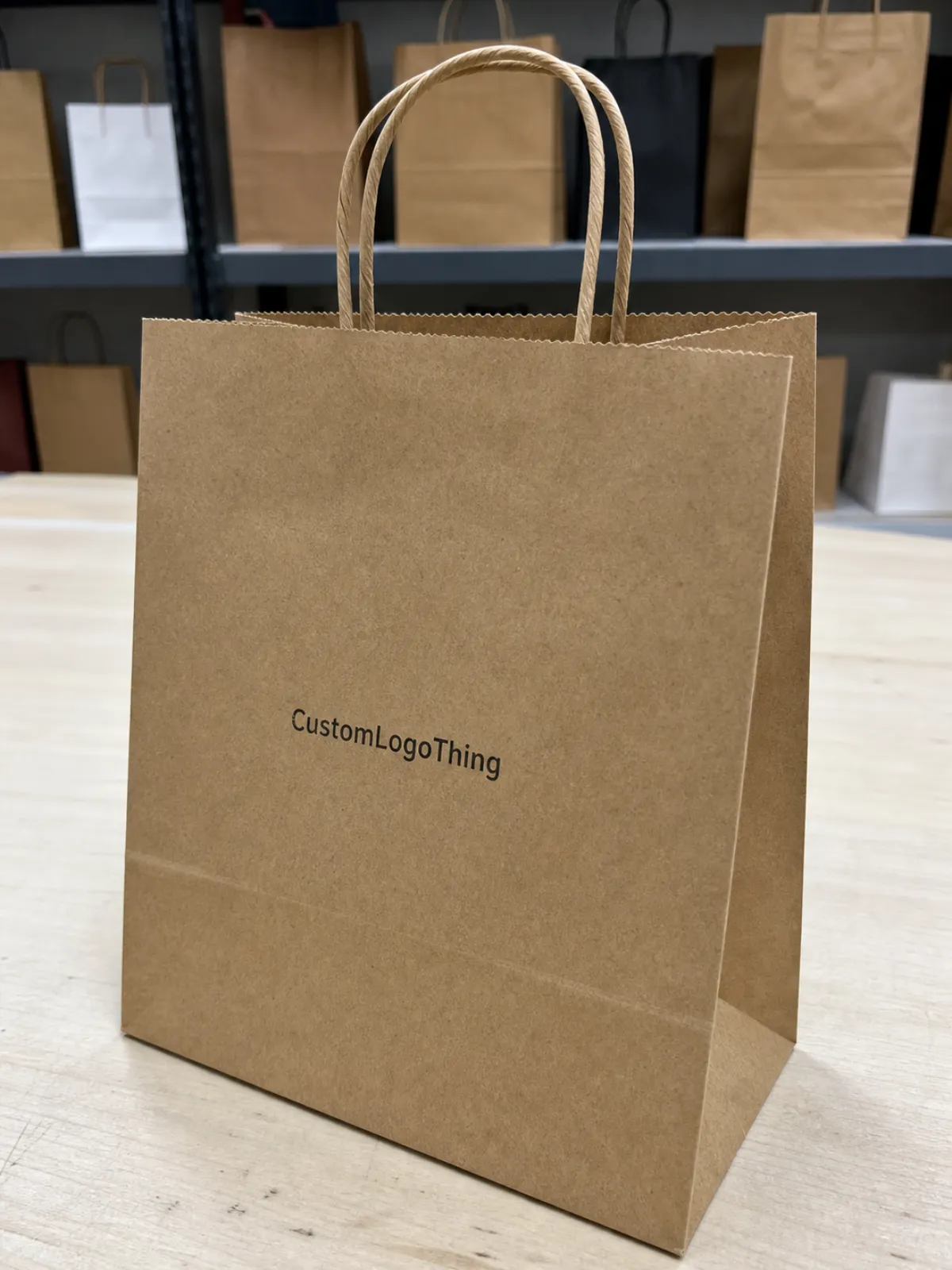
Buyers often ask for a stronger bag when what they really need is a better mix of GSM, paper grade, handle reinforcement, and base construction. GSM tells you paper weight per square meter, but it does not tell the whole story. A 170gsm kraft bag with a reinforced bottom board and clean handle attachment can outperform a sloppy 200gsm bag. Packaging loves to punish shortcuts.
Paper thickness is not a vanity metric. It affects how the bag folds, how it stands, how it resists tear at the handle points, and how it behaves once books are inside. A slim paperback, a hardcover, and a boxed set may all fit the same footprint, but they do not belong in the same build spec. One bag can cover a range of products, but only if the upper end of that range is tested honestly.
For lighter book handoffs, 150-170gsm can be enough if the load is modest and the handles are well made. For standard retail book sets, 180-220gsm is usually the practical middle ground. If you are carrying hardcovers, multiple books, or a premium presentation that needs a firmer feel, 220-250gsm with reinforcement is often safer. Not because thicker is automatically better. Because the bag needs margin where the stress actually lands.
People also use the word thickness to mean caliper, sheet feel, and construction quality. Kraft paper tends to feel tougher and more forgiving. Coated paper can print sharper and look more polished, but it needs the right fold behavior and glue plan. Recycled paper works well too, especially if the buyer wants FSC-certified material or a lower-waste spec. The goal is not the heaviest sheet on the quote. The goal is the right sheet for the load.
For material terminology and certification references, packaging.org and fsc.org are useful starting points if you want to sanity-check claims before asking for samples.
Buyer reality: start with the books, not the bag. Weight, dimensions, and hand-carry distance tell you more than a generic request for "stronger packaging."
How Thickness Changes Strength, Print, and Bag Feel
Heavier paper usually brings more stiffness, better tear resistance, and a more premium hand feel. That part is easy. The tradeoff is less glamorous. Once the stock gets too heavy for the build, folds bulk up, corners can crack, and the bag loses the crisp shape that makes branding look finished instead of improvised.
Print performance changes too. Heavier stock can support richer ink laydown and better opacity, which helps when the artwork uses dark logos, large solids, or full-coverage graphics. But paper surface still matters more than raw weight. A well-chosen kraft sheet can look cleaner than an overspecified coated sheet if the coating fights the fold lines. A bag is not a poster. It still has to move and carry something.
From a buyer's point of view, the feel of the bag tells a story before the logo does. A bag that stands up, resists denting, and has a firm handle pull feels reliable. A flimsy one feels cheap even if the print is excellent. I see buyers spend extra on foil and spot UV, then under-spec the structure. That is backward. The customer touches the bag first.
"If the handle stretch looks suspicious in the sample, it will not improve once books are inside. Paper does not get stronger because the order form is optimistic."
Sustainability claims need the same scrutiny. Biodegradable packaging is not a magic label. A bag can only be as responsible as its paper, inks, coatings, and adhesives allow. If sustainability matters, ask whether the paper contains post-consumer waste, whether the finish interferes with recycling, and whether the supplier can document the fiber source. A heavier recycled sheet is not automatically the green choice if it creates avoidable waste through reprints or returns.
Thicker bags also change how the converting line behaves. Creasing gets harder, handle placement needs tighter control, and the glue area has less forgiveness. That means a sample that looks fine on a desk can still fail in production if the tolerances are loose. The sample is not a trophy. It is a stress test.
Cost, Pricing, and MOQ for Heavier Paper Bags
Heavier stock changes pricing in more ways than people expect. The raw paper cost rises with GSM, sure. But that is only the first layer. Thicker sheets can increase converting waste, slow folding, and require more careful handle attachment. Freight also rises because you are shipping more weight per carton. The quote looks fine until the carton count lands on your desk.
For a typical custom run of 5,000 pieces, these are realistic starting ranges for book twisted handle bags, assuming standard sizes and ordinary print coverage:
| Spec range | Typical use | Approx. unit price | Buyer tradeoff |
|---|---|---|---|
| 150-170gsm kraft | Light books, brochures, single-item handoff | $0.16-$0.26 | Lower cost, lighter feel, less margin for heavy loads |
| 180-220gsm kraft or coated paper | Standard book sets, retail gifting, cleaner print | $0.24-$0.42 | Better stiffness, stronger carry, moderate cost jump |
| 220-250gsm with reinforcement | Hardcovers, stacked books, premium retail | $0.35-$0.68 | Best carry confidence, higher material and conversion cost |
Those ranges move with bag size, print colors, finish, handle attachment, and whether you want kraft paper, recycled content, or a more polished coated look. If a quote comes in far below these numbers, check what was removed from the build. It is usually something useful.
MOQ often rises with thickness because the material is more expensive to source and the run takes more careful setup. A vendor may offer lower minimums for basic kraft bags and ask for a larger run on reinforced or coated versions. That is normal. What you want is not the lowest MOQ on paper. What you want is the lowest MOQ that still produces a bag you can hand to a customer without crossing your fingers.
There is a second cost trap: over-specifying. A buyer asks for the thickest possible stock because it "feels safer." Then they pay for stiffness they never needed, and the bag still fails if the handle patch is weak. A modest upgrade in the right area often beats a big jump in paper weight. Structure first, then thickness.
Process and Turnaround: From Spec Sheet to Shipment
The production path is simple on paper and less charming in real life. First comes size confirmation. Then paper selection, artwork prep, proofing, handle assembly, conversion, carton packing, and shipment. Every step can slow down if the spec is vague. "Make it strong" is not a spec. "200gsm FSC kraft with twisted paper handles and reinforced base" is a spec.
Most delays come from the same dull places. Missing dielines. Unclear Pantone expectations. Late proof approval. A customer says the logo is "almost right," and three days disappear. If you want speed, send clean artwork, confirm the exact dimensions, and approve the proof quickly. That is not glamorous advice. It just works.
Standard runs often move in about 12-15 business days after proof approval. More complex bags, heavier paper, and larger print areas can push that to 15-25 business days. Special finishes, extra reinforcement, or unusual sizes add another layer. Shipping is separate unless the supplier clearly says otherwise. Ask that early. Nobody enjoys discovering it after the cartons are already packed.
A production sequence that keeps surprises down looks like this:
- Confirm book weight, bag size, and the expected retail feel.
- Choose the paper weight and handle build.
- Review the proof and color target.
- Approve a sample or pre-production check if the load is heavy.
- Lock carton count and freight method before the run starts.
Tip: if a supplier will not write the full build into the spec sheet, keep looking. A clear paper weight, handle style, bottom structure, print method, and carton count prevent most reorder problems later.
Step-by-Step Sizing Guide for Books and Handle Weight
Start with the load, not the bag. Write down the exact book format, total weight, and whether the bag holds one item or several together. A single hardcover at 700g does not need the same build as three paperbacks and a notebook. The handle sees the total pull. The base sees the spread of the load. That is where failures happen.
Next, match the dimensions to the product stack. The books should sit upright without crushing the corners or forcing the side gusset to bow out too hard. If the bag is too narrow, the handles carry odd stress. If it is too tall and shallow, the books slam into the bottom board and feel loose. The right size gives the load just enough room to sit flat and stable.
A simple rule helps: choose the paper grade around the heaviest standard load you plan to carry, not the lightest one. If your range is wide, size for the upper end and test it. The extra cost between a decent midweight and a borderline lightweight is usually smaller than the cost of a return, a complaint, or a reprint.
Paper choice should follow the use case. Coated stock works well for premium branding and sharp logo work. Kraft paper is often tougher and more forgiving in transit. If sustainability is part of the brief, ask for recycled materials or FSC-sourced fibers with a clean chain of custody. Some buyers also want the bag to support broader biodegradable packaging goals, but that only works if the finish and adhesives are selected with end-of-life recovery in mind.
A practical sizing process looks like this:
- Measure the largest book set in the range.
- Add enough room for easy insertion and removal.
- Check handle pull against the full loaded weight.
- Verify the bottom board or pasted base can hold shape.
- Move one step heavier on paper if the sample feels borderline.
That last point saves more grief than most buyers expect. If you are unsure, go one step heavier or add reinforcement instead of betting on a spec that only works when the load is light and the paper lot is forgiving.
Common Mistakes That Make Bags Weak or Too Expensive
The first mistake is choosing thickness by feel alone. A bag can feel stiff in your hand and still fail under books because the handles were attached badly or the base was underbuilt. The second mistake is ignoring the bottom. Buyers obsess over GSM, then forget that the bottom board, glue area, and gusset design carry a huge share of the stress. That is like buying better tires and leaving the brakes questionable.
Overspecifying is just as common. Yes, heavy paper looks reassuring. It also raises cost, can make folding less clean, and may not improve carry performance if the load is modest. I see this a lot in premium retail: the buyer asks for the heaviest available stock when a well-built midweight bag would do the job better and cost less. Nobody wins a prize for buying unnecessary paper.
Artwork and finishing can create weak spots too. Heavy ink coverage, lamination, foil, and tight folds all affect how the paper behaves. If the structure was not planned around those choices, the bag can crack along a crease or show stress at the handle junction. Print and structure should be reviewed together. They are not separate problems, even if the emails make them look that way.
Sustainability choices can also backfire if they are made in isolation. A bag made from post-consumer waste or FSC-certified fibers helps only if the whole spec still functions. Buyers sometimes pick a thinner recycled sheet to hit an eco target, then lose performance and need more replacements. The better choice is the lightest material that still passes the real carry test. Fewer failed bags matter more than a few grams on the spec sheet.
Practical warning: corrugated inserts can help shipping, but they do not rescue a weak bag design. If the paper, handle, and base are wrong, an insert just props up the problem for a while.
Practical Tips for Samples, Testing, and Next Steps
Before you place a full order, ask for two or three sample thicknesses. Compare them under actual load, not on an empty table. Load the bag with the heaviest expected book set, carry it for a short distance, and inspect the handle stretch and base after a few minutes. A bag that survives five minutes of real use is more trustworthy than one that looks polished in a photo.
Here is a simple test routine that works:
- Fill the bag with the maximum expected book weight.
- Lift it by the handles and hold for 20-30 seconds.
- Check whether the handle fold creases, opens, or tears.
- Set it down and inspect the base for bowing or glue failure.
- Repeat with the next-thinner sample so the difference is obvious.
Ask for a written spec sheet as well. It should list paper weight, size, handle build, print method, finish, and carton count. Without that, reorders drift. A bag that was "the same as last time" somehow becomes different every time someone changes a supplier note, a paper lot, or a gloss level. Paper bags are not magic. They are just easier to mess up than people expect.
If cost is the main pressure, compare two thickness options before you approve the heavier one. Sometimes a better handle patch or stronger base reinforcement gives you the protection you need without forcing a bigger paper jump. That is often the smarter spend.
For a clean, consistent program, keep the process boring: define the book load, compare two bag builds, confirm the timeline, and document the spec in writing. Do that, and the book twisted Handle Paper Bags material thickness guide becomes a buying tool instead of a vague guess that thicker paper will fix everything.
Final takeaway: choose the lightest spec that still passes the full-load test, keep the handle and base honest, and sample before you commit. That is how you get a bag that feels good, prints well, and actually carries the books you sell.
FAQ
What is the best thickness for book twisted handle paper bags?
For light book sets, a midweight stock can work if the handle and base are reinforced. For heavier hardcovers, move up in paper weight and test the full load, not just the empty bag. The best thickness depends on the actual book weight, not the bag size alone.
Can I use one paper thickness for both paperbacks and hardcovers?
You can, but it is usually a compromise rather than a clean fit. A single spec should be chosen around the heaviest standard load you plan to ship. If the weight gap is large, two bag specs usually perform better and cost less overall.
How does GSM affect twisted handle paper bag durability?
Higher GSM usually increases stiffness and tear resistance, but it is not the only strength factor. Handle reinforcement, glue coverage, and paper quality can matter just as much as raw weight. A well-built midweight bag can outperform a poorly made heavy one.
What is a normal turnaround for custom book paper bags?
Turnaround depends on artwork approval, paper availability, and whether the bags need special reinforcement. Simple custom runs are usually faster than highly finished or heavily printed bags. Always confirm whether the quoted timeline includes sampling and freight.
How do I lower cost without making the bag flimsy?
Start by sizing the bag correctly so you are not paying for extra material you do not need. Keep finishes simple and spend budget on structure where the load actually sits. Compare two thickness options and test them before you commit to the heavier spec.

