A book subscription Corrugated Mailer Boxes cost guide only earns its keep if it follows the money all the way through the order. Print is usually the part buyers notice first, then they discover the quieter costs: a carton that is 5 mm too large, extra board usage, higher freight weight, and a greater chance of damage. That is the unglamorous arithmetic behind packaging. In my experience reviewing subscription box specs, a few millimeters can change the bill more than a brighter ink color ever will. It decides whether a subscription business keeps its margin or watches it leak away one shipment at a time.
Book clubs and subscription teams need packaging that does three things at once: protect the title, control the shipper's cost, and make the first unboxing feel deliberate rather than improvised. A Book Subscription Corrugated Mailer Boxes cost guide should not read like a sales sheet. It should help you choose the right structure, estimate unit cost, sidestep fake savings, and Request a Quote that reflects the real build. If the spec is sloppy, the quote will be too. Simple as that.
Corrugated mailer boxes often outperform plain cartons in recurring book programs because the dimensions are predictable, the packing steps are quick, and the presentation is cleaner. You are not paying every month for loose void fill and overpacked inserts. You are paying for a carton that fits the book, opens neatly, and survives the shipping chain without looking tired. Fancy graphics do nothing for a smashed corner or a scuffed spine. A clean box, packed well, usually beats a prettier box with the wrong fit.
Book Subscription Corrugated Mailer Boxes Cost Guide: What Buyers Miss
The most common mistake in a book subscription corrugated mailer boxes cost guide is treating the print bill as if it drives the whole order. It rarely does. Size leads. A carton that is even slightly oversized can increase board consumption, raise dimensional weight charges, and force the use of filler or inserts that never made it into the budget. That is how the quote that looks cheapest on a spreadsheet turns into the most expensive box after a few thousand units ship. I have seen buyers shave pennies off print, then lose dollars to freight and damage. The math is annoyingly consistent.
From a packaging buyer's point of view, the box has to justify itself every month. A subscription mailer is not a display carton sitting on a retail shelf. It gets packed, stacked, shipped, tossed onto conveyors, and opened by people who care more about the book arriving intact than about the brand story on the flap. The real value of book subscription corrugated mailer boxes is repeatable protection with predictable pack-out time. If a carton slows the line, it is costing you twice: once in material and again in labor.
Think about the economics in plain terms. A well-sized corrugated mailer protects the title, reduces rejected shipments, and cuts the labor needed at fulfillment. A poorly sized box does the opposite: more board, more freight, more complaints. That is a painful mix. A strong book subscription corrugated mailer boxes cost guide makes the tradeoffs visible before you commit to production. You want the cost of the carton to stay smaller than the cost of fixing what the carton failed to do.
Small savings also compound faster than most teams expect. Ship 1,000 books a month and save $0.08 per unit through better sizing or a more sensible board spec, and you keep $80 a month, or $960 a year. Save $0.15 and the number climbs quickly. At 5,000 units, that same $0.15 difference becomes $750 a month. The same math works in reverse. A box that looks cheap up front but causes 2% more replacements can erase the supposed bargain before quarter-end.
Three jobs matter most:
- Protect the book from corner crush, spine damage, and scuffing.
- Keep the shipper's unit cost and freight cost under control.
- Deliver a first impression that feels planned, not improvised.
That is why a book subscription corrugated mailer boxes cost guide is more useful than a generic packaging price list. Generic pricing gives you a number. A useful guide explains how much of that number is board, how much is printing, how much is setup, and how much is simply empty space inside the carton. Once you can see those pieces, the quote stops looking mysterious.
If you are comparing a mailer against a standard shipping carton, the mailer usually wins on speed and presentation for a subscription program. A typical subscriber receives one book, not a mixed warehouse order. That makes the mailer format easier to standardize. Less fiddling at packing stations means fewer mistakes. Fewer mistakes mean fewer complaints. Packaging does not need magic to work; it needs consistency.
For brands that also ship shirts, inserts, or merch add-ons, it can make sense to pair this format with other packaging lines like Custom Shipping Boxes or Custom Poly Mailers for non-book items. The point is to match the package to the product, not force everything into one tired carton style. A box built for a hardback anthology is not automatically the right answer for soft goods, and vice versa.
A box that saves $0.05 but doubles the chance of damage is not a savings. It is a delayed bill.
For a subscription team, the smartest book subscription corrugated mailer boxes cost guide is the one that looks at the full run: packaging cost, shipping cost, labor, and replacement risk. That wider view is the only one worth trusting. It is also the one that makes finance, operations, and customer service stop arguing with each other for five minutes.
Book Subscription Corrugated Mailer Boxes Cost Guide: Construction and Fit
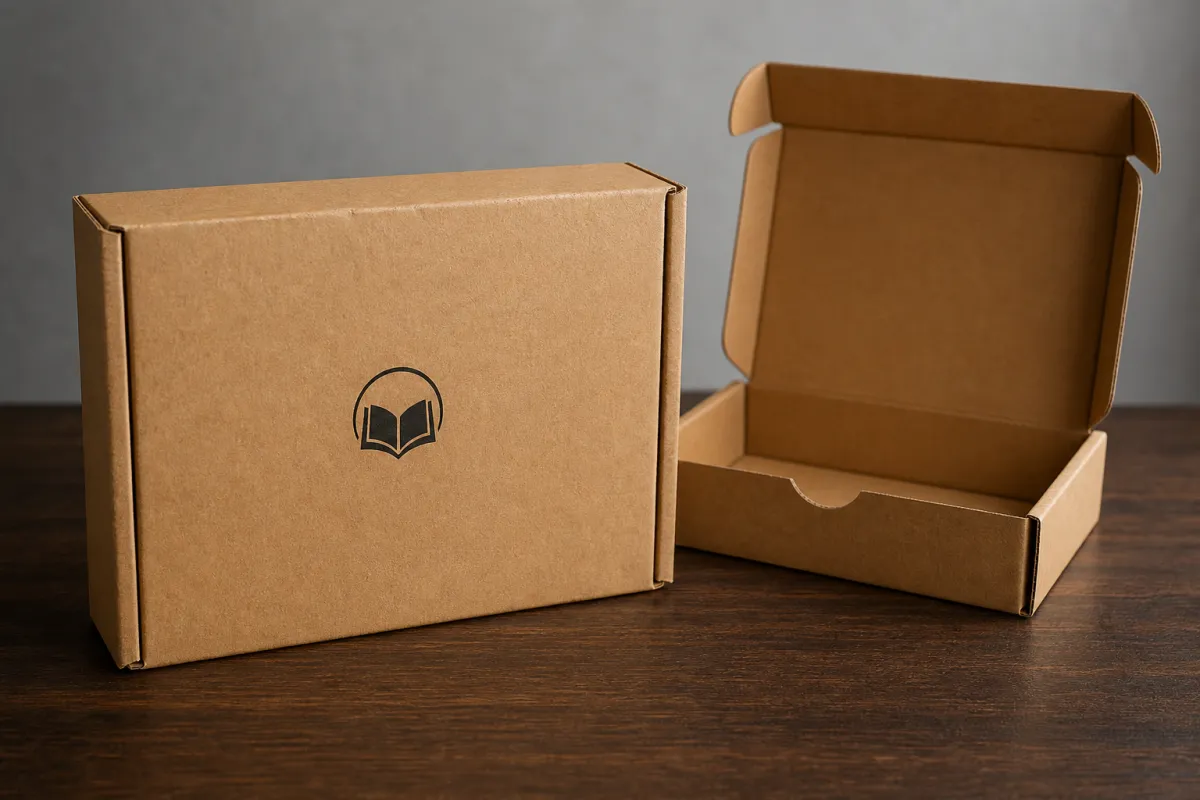
The construction of book subscription corrugated mailer boxes determines whether the carton works in the warehouse or only on a sample table. Tuck-top mailers, self-locking mailers, roll-end front tuck styles, and reinforced designs each solve a different problem. A light paperback subscription does not need the same build as a hardcover club with a slipcase and a bookmark bundle. Force the wrong structure into the program and you pay for it in broken edges, slowed packing, or both. That part is not theoretical; it shows up in customer complaints.
Tuck-top mailers are common because they are simple, quick to fold, and often less expensive to produce. Self-locking styles usually add better retention and closure strength. Roll-end front tuck designs can feel sturdier and give the face panels a cleaner presentation. Reinforced structures make more sense for heavier books, gift sets, or cartons that need to survive longer shipping routes. A book subscription corrugated mailer boxes cost guide should compare these options by use case, not only by unit price. A cheap structure that fights the packer is never really cheap.
Fit matters more than many buyers admit in meetings. Spine thickness, dust jackets, slipcases, and bundled extras all change the inner dimensions you need. A box sized only around the book cover can become too tight once a note card or limited edition insert gets added. A box that is too loose allows movement in transit and starts rubbing. Rubbing creates scuffs. Scuffs create unhappy customers. The chain is not complicated, which is why it gets ignored so often.
Insert choices also change the build:
- Paperboard cradles hold lighter books and add a clean presentation.
- Corrugated inserts give better support for heavier titles or bundles.
- Die-cut locks reduce movement without adding unnecessary material.
Recurring subscription work rewards consistency. A box that opens flat, folds cleanly, and closes without fighting the operator saves time every day. Multiply that across 500, 2,000, or 10,000 shipments and the labor savings become obvious. That is exactly why a good book subscription corrugated mailer boxes cost guide talks about structure alongside price. The most elegant carton on paper is useless if the team hates packing it.
There is also a difference between a box that photographs well and a box that behaves well on a conveyor or packing bench. Opening strength, crush resistance, and edge protection are not glamorous terms, but they matter after the pallet has been loaded. If the mailer is too flimsy, corners collapse. If the board is too heavy, cost per piece rises and the carton becomes harder to fold repeatedly. Every decision carries a tradeoff, and some of those tradeoffs only show up after the first month of orders.
For premium clubs, a custom size is often better than a generic mailer stuffed with filler. Generic sizing can look convenient at first, then quietly increase labor and create a messier unboxing. A custom box gives you control over footprint, reduces wasted board, and cuts down on packing errors. That is practical, not decorative. It is also why many brands come back to custom die-cuts after trying off-the-shelf sizes for a quarter or two.
For quality-conscious buyers, it helps to review industry standards instead of guessing. ISTA test methods are a sensible reference for distribution testing, and FSC sourcing can support responsible material claims when your supplier can document the board source. If you want the standard language, visit ISTA and FSC. Standards do not replace good design, but they keep the discussion grounded. They also give you a common language when procurement, fulfillment, and brand teams are looking at different risks.
At this point, a strong book subscription corrugated mailer boxes cost guide should answer one question: what is the minimum structure that protects the book without padding the bill? That single question cuts a lot of waste out of the process. It also stops teams from paying for a premium build when a smarter, simpler one would hold up just fine.
Specs That Affect Book Subscription Corrugated Mailer Boxes
If you want a real book subscription corrugated mailer boxes cost guide, the spec sheet needs to be in front of you. Without it, the quote is just decoration. The main details to confirm are inner dimensions, board grade, flute profile, print coverage, finish, and any insert or window requirement. Leave one of those out and you invite a revised quote later, which is how projects become slower and more expensive than they should be. The supplier is not being difficult; they are filling in the blanks you left behind.
Board grade is one of the biggest levers. E-flute is popular because it gives a smoother print surface and helps keep the box compact. It is a sensible choice for lighter books or titles that do not need much crush resistance. E-flute is also a little friendlier to printing fine detail, which matters if your cover art carries thin lines or small type. B-flute or stronger combinations make more sense for heavier hardcovers, thicker bundles, or routes with rough handling. A book subscription corrugated mailer boxes cost guide that ignores board grade is not a guide. It is a guess dressed up as advice.
Print method changes both the appearance and the price. One-color flexographic print works well for simple branding and tighter budgets. Full-color digital printing can handle smaller runs without the same setup burden. Litho-lam gives a richer retail look, especially if you want a sharp outer face and cleaner imagery. The tradeoff is easy to spot: the more elaborate the print, the more likely setup charges, tooling fees, and longer lead times appear. If you only need a logo and a return address, do not pay for a parade.
Finish matters too. Matte can feel calm and modern. Gloss has more pop. Soft-touch feels premium but adds cost, and not every mailer needs that treatment. Aqueous coating gives a useful middle ground for scuff resistance. If the books travel through busy fulfillment channels, a finish that resists abrasion may save more money than a prettier but weaker decorative treatment. A good book subscription corrugated mailer boxes cost guide should say that plainly. A glossy box that arrives scratched is a bad joke.
Think through these spec points before requesting quotes:
- Exact book dimensions, including dust jacket or slipcase.
- Whether inserts, cards, or gifts are included.
- Target board strength and flute style.
- Print coverage and finish expectations.
- Any sustainability claim that needs documentation.
Sustainability specs deserve plain language. Recycled content, FSC-certified board, and plastic-free packing are all valid claims if the supplier can document them. Do not write claims you cannot support. Buyers, retailers, and marketplaces are asking for proof, not copywriting. The EPA has useful background on packaging waste reduction and material recovery; if you want broader context, their site is a reasonable starting point: EPA. Honest claims hold up better than polished ones that cannot be verified.
For a subscription brand, the smartest move is rarely the most expensive spec. It is the one that balances presentation, protection, and cost per piece. A clean printed mailer on a sensible board grade often outperforms a heavily embellished box that drains margin without improving customer satisfaction. A practical book subscription corrugated mailer boxes cost guide should help you resist unnecessary extras. That includes decorative layers that look good on a deck but do nothing for the shipment.
One more point: recycled board does not automatically mean a dull-looking box. That assumption has lingered for no good reason. With controlled color, disciplined line work, and a carton size that fits correctly, recycled corrugated can look sharp enough for premium subscription use. The trick is to avoid overdesigning the package. If the structure is clean, the brand feels deliberate. If the art is trying to do all the work, the box usually feels cluttered instead.
Book Subscription Corrugated Mailer Boxes Cost Guide: MOQ, Pricing, and Quote Ranges
This is the section most Buyers Actually Want. A book subscription corrugated mailer boxes cost guide has to talk about money, MOQ, bulk pricing, and the forces that change unit cost. Here are the practical ranges. For plain or lightly branded custom mailers, lower quantities can start around 250 to 500 units, depending on the structure and supplier. Fully custom printed runs usually become more efficient around 1,000 to 3,000 units. Premium formats and recurring programs often make the most sense at 5,000 units and up because setup charges spread out better. That is not a sales trick; it is just how fixed costs work.
Price per unit depends on the predictable parts people skip: box size, board grade, print method, finish, inserts, and how much tooling is needed. A small, one-color mailer on E-flute may land around $0.38 to $0.68 per unit at mid-volume. A more polished one-color or two-color version with better board and a custom insert may sit around $0.55 to $0.95 per unit. Full-color litho-lam or special finish work can move into the $0.95 to $1.80 per unit range, sometimes higher if the size is large or the build is complicated. These are planning ranges, not promises; freight lane, resin pricing, and seasonal demand can shift them. Still, they are close enough to keep a budget honest.
For very small test runs, the unit cost rises because setup has fewer pieces to absorb it. That is normal. A sample run or pilot batch may look expensive on paper, but it is still cheaper than discovering that the book rattles inside the box or that the closure tears at the fold. A smart book subscription corrugated mailer boxes cost guide treats sampling as insurance, not waste. It is the cheapest way to find the weird little failure that would otherwise show up at scale.
| Option | Typical MOQ | Approx. Unit Cost | Best For | Notes |
|---|---|---|---|---|
| Plain corrugated mailer | 250-500 | $0.38-$0.68 | Pilot launches, tight budgets | Lower setup, simpler print, fewer tooling fees |
| Lightly branded mailer | 500-1,500 | $0.55-$0.95 | Regular subscriptions | Good balance of presentation and bulk pricing |
| Full-color premium mailer | 1,000-5,000+ | $0.95-$1.80+ | Premium clubs, gift programs | Higher setup charges, stronger shelf appeal, longer lead time |
The cheapest quote is often missing something. Maybe proofing is excluded. Maybe the supplier has not included plates or die charges. Maybe the board spec is thinner than expected, which makes the box less durable. Sometimes the quote is accurate, but only because the supplier assumed a simpler version than the one you actually need. A solid book subscription corrugated mailer boxes cost guide tells you to compare apples to apples before you judge the number. Otherwise you end up celebrating a bargain that was never real.
Compare quotes using the same checklist:
- Exact internal and external dimensions.
- Board grade and flute profile.
- Print method and number of colors.
- Finish, coating, and insert requirements.
- Shipping terms, proofing, and approval fees.
That last point matters more than most buyers want to admit. Freight can wreck a quote if you ignore it. A low unit cost with bad shipping terms is not actually low. Neither are hidden setup charges that appear after artwork approval. Ask for a quote that spells out tooling fees, insert cost, and delivery assumptions before you sign off. That is how you keep the book subscription corrugated mailer boxes cost guide tied to reality instead of optimism. It also makes internal approvals a lot less annoying.
One buying pattern is worth calling out. Recurring orders often get better bulk pricing after the first run because the supplier already has the dieline, print setup, and production notes. The second and third runs can be cheaper if nothing structural changes. If you are planning a subscription program, ask how reorders are handled and whether the same tooling can be reused. Reuse is where the savings hide. It is also where the operational headaches disappear if the first run was documented properly.
For brands that need multiple packaging formats, it helps to keep one supplier conversation open across product lines. A team that already supports Custom Packaging Products can often advise on fit, scheduling, and repeat order consistency without making you chase three vendors. That is not flashy. It is efficient. And on a monthly subscription schedule, efficient usually wins.
Bottom line: a book subscription corrugated mailer boxes cost guide should make budgeting easier, not harder. If the quote is clean, the MOQ is realistic, and the spec is nailed down, the numbers usually make sense. If any of those pieces are fuzzy, the final cost is probably fuzzier than it should be.
Production Process and Timeline for Book Subscription Corrugated Mailer Boxes
Production for book subscription corrugated mailer boxes follows a predictable path if everyone gives the supplier what they need on day one. The process usually starts with size confirmation, then dieline creation, then artwork setup, proofing, sample approval, production, quality check, and delivery. If any step gets vague, the schedule starts slipping. A good book subscription corrugated mailer boxes cost guide should include timeline discipline because delays cost money too. Late cartons can delay an entire book launch, which is the kind of problem nobody enjoys explaining upstairs.
Simple stock-style mailers move faster because the structure is already defined or close to standard. New custom structures take longer because the supplier has to confirm fold lines, closure strength, and fit. Specialty finishes, inserts, or complex print work add more steps. That is not a problem if you budget for it. It only becomes a problem when someone expects a premium mailer to move on the same timeline as a plain carton. That mismatch is where frustration starts.
Typical lead times often fall in the following range:
- Simple branded mailers: about 10 to 15 business days after proof approval.
- Custom printed mailers with inserts: about 15 to 25 business days after approval.
- Complex builds or premium finishes: about 25 to 35 business days, sometimes longer.
That timeline only works if the brief is complete. Most delays happen for dull reasons: missing exact book dimensions, late artwork changes, stalled approvals, or a sample that needs a structural tweak after testing. If the book has a dust jacket, say so. If the title includes a bookmark or card, say so. If the shipment is headed to an internationally routed fulfillment center, say so. The supplier cannot guess those details correctly every time. I have watched a one-line spec omission push a tidy schedule into a messy one. It is never glamorous.
For subscription brands, a sample-first approach is the sensible move. One carton test is much cheaper than a full printed run with a bad fit. Test the actual book, the actual insert, and the actual outer shipper if you use one. Check how the box opens, how it stacks, and whether the contents move around. A real test exposes problems that a mockup hides. That is a more honest way to spend money. It also saves the awkward moment when a beautiful carton turns out to be a pain to pack.
A practical book subscription corrugated mailer boxes cost guide should also remind buyers to approve artwork and structure together. Do not lock the print and then discover the box needs a different size. That is how time gets burned on revised proofs and extra setup. Lock the structure first, confirm the artwork fits that structure, then move into production. The best jobs are the ones where nobody has to pretend a second revision was always part of the plan.
Quality checks matter in recurring programs. Ask how the supplier verifies board thickness, print registration, fold accuracy, and flat-pack performance. If a carton will be packed in large monthly batches, consistency matters more than one perfect sample. A box that is slightly off across a 5,000-unit run creates more operational pain than a small design issue on paper. That is the part nobody enjoys budgeting for, which is exactly why it deserves attention. Repeated inconsistency is how a packaging line starts feeling cursed.
Why Choose Us for Book Subscription Corrugated Mailer Boxes
At Custom Logo Things, the practical value is simple: we help buyers get book subscription corrugated mailer boxes that fit the book, fit the budget, and do not create avoidable problems downstream. That sounds obvious, but a lot of suppliers still sell boxes like they are shipping mystery meat. We prefer a cleaner process: clear dimensions, clear material options, clear print choices, clear pricing. Not flashy. Useful. The goal is to keep the packaging program boring in the best possible way.
For subscription programs, the most valuable support is structural guidance. A strong book subscription corrugated mailer boxes cost guide should not stop at quoting a size. It should help you decide whether you need E-flute, B-flute, a paperboard insert, or a more reinforced closure. That is where recurring shipments succeed or fail. We focus on those details because they affect unit cost, damage rates, and pack-out speed all at once. If the structure is wrong, the rest of the job becomes a cleanup exercise.
We also keep the quote process practical. If you ask for a simple branded mailer and a premium version, we can show you the difference without burying the price behind vague language. That means you can compare bulk pricing, setup charges, and tooling fees in a way that makes sense for your launch plan. A supplier should help you decide, not stage a vocabulary contest. Clear numbers are better than polished fluff, every time.
What matters in recurring subscription work:
- Dieline support that matches the actual book dimensions.
- Print consistency across reorder batches.
- Board selection that balances protection and shipping cost.
- QC checks for fold accuracy and flat-pack performance.
- Documentation for recycled or FSC-backed material claims.
Recurring orders also benefit from direct communication. If a buyer needs a size tweak, a print change, or a revised finish, the worst outcome is silence. We keep the conversation clear so changes are handled before they become expensive. That kind of clarity saves more money than polished sales language ever will. It also keeps reorders from drifting off-spec six months later.
For brands building out a wider packaging program, it also helps to have one source for multiple formats. Some customers need book mailers now and a few Custom Packaging Products later. Others need shipper cartons for add-on items and Custom Poly Mailers for soft goods. A supplier who can keep those conversations organized is worth more than a supplier who can only quote one thing at a time. It reduces handoff errors, which is where a lot of packaging headaches start.
Quality control should never sit at the edge of the process. For a subscription box, small defects become recurring defects. A slight print misregistration on a one-off order is annoying. On a monthly program, it is a pattern. That is why we pay attention to board thickness, print alignment, and closure performance before production moves too far. A book subscription corrugated mailer boxes cost guide only works if the box that lands on your dock matches the box that was promised. Otherwise the quote was just fiction with a spreadsheet attached.
If you are shipping heavier items or alternate product lines, our team can also point you toward the right structure in Custom Shipping Boxes instead of forcing a mailer where it does not belong. Sometimes the right answer is not a mailer at all. That honesty saves headaches later. It also avoids paying for features you will never use.
We care about reorders for a simple reason: reorders are where subscription programs make money. If the first run works and the second run matches it, the packaging becomes a stable operating cost instead of a surprise. That is the standard we aim for. Stable packaging is not exciting, but it is the difference between a controlled margin and a creeping one.
Next Steps for Your Book Subscription Corrugated Mailer Boxes
If you want an accurate quote, send the supplier the book dimensions, monthly shipment volume, target budget, preferred print style, and any insert or branding requirements. That is the minimum. The more exact the brief, the less guesswork in the quote. A good book subscription corrugated mailer boxes cost guide only helps if the buyer feeds it real numbers. Otherwise you are asking the market to guess what you could have measured.
Ask for two versions if you are not sure where to land: one lean spec and one premium spec. That is the cleanest way to see how much the extra print, finish, or insert actually costs. If the premium version adds $0.32 per unit but only improves the unboxing slightly, the decision becomes easier. If the added cost cuts damage claims, the answer may still be yes. Tradeoffs matter more than wishful thinking. The right choice is the one that holds up across the full shipment cycle, not just on the mockup table.
Before you sign off, test one sample carton with the actual book and packaging set. Check fit, closure, scuffing, and whether the carton can be packed quickly without forcing the flaps. Then, if the box is part of a recurring subscription, test a small pilot run before scaling. One sample proves the idea. A pilot proves the process. That second step is the one that catches all the weird little problems nobody mentioned in the kickoff call.
A simple decision path works best:
- Lock the structure and dimensions.
- Approve the artwork against the dieline.
- Confirm MOQ, unit cost, and delivery window.
- Review the sample with the actual book.
- Move to production only after the fit is confirmed.
If you are comparing options, use this book subscription corrugated mailer boxes cost guide as your briefing tool. It will help you ask better questions, compare quotes fairly, and keep the final package aligned with your budget. That is the point. A good box should protect the book, keep the operation sane, and not eat the margin for sport. If the carton fails any one of those three jobs, the savings were never real.
When you are ready, give the supplier the real spec and ask for a quote that reflects the real build. Then compare the numbers by structure, not by the prettiest line item. If you only do one thing after reading this, send out a fully packed sample spec and compare two versions side by side. That is the fastest way to separate a true cost from a nice-looking estimate.
FAQ
What size book subscription corrugated mailer boxes do I need?
Measure the book with its dust jacket or slipcase, then add the minimum clearance needed for safe insertion and easy pack-out. If you include inserts or bundled items, size the mailer around the full packed kit, not just the book itself. A correct fit matters more than shaving a few millimeters off the carton, because a tight box can slow packing while a loose one can scuff the cover.
How much do custom book subscription corrugated mailer boxes cost per unit?
Unit cost depends mostly on size, board grade, print method, and order volume, not just on whether the artwork looks simple. For many programs, a basic branded mailer sits in the lower range, while premium full-color builds cost more because of setup charges, tooling fees, and finish choices. The fastest way to get a real number is to compare quotes with identical specs, shipping terms, and approval requirements. If the specs are different, the quote comparison is not really a comparison.
What MOQ is typical for corrugated mailer boxes for book subscriptions?
Lower MOQs are common for plain or lightly branded boxes, while fully custom printed runs usually need higher quantities to make setup worthwhile. If you are testing a new subscription, ask for sample or pilot-run options before committing to a larger annual order. That small test usually costs less than one round of replacements, and a pilot is often the cheapest insurance you can buy.
How long is the production timeline for custom book mailer boxes?
Timeline depends on whether the structure is standard or fully custom, plus how quickly artwork and samples are approved. Fast approvals keep the job moving; revisions to size, insert, or finish are what usually stretch lead time. For most programs, the schedule is reasonable if the brief is complete and nobody changes the box halfway through. One late revision can turn a tidy schedule into a scramble, so the approval chain needs to stay tight.
Can I use recycled corrugated board without losing a premium look?
Yes, recycled board can still look premium if the print, sizing, and finish are chosen carefully. A clean structure with controlled color and crisp folding often matters more than chasing unnecessary decorative extras. In a subscription program, a tidy fit and strong presentation do more for the brand than wasting material on showy details. Recycled does not have to mean rough or unrefined.