Clear packaging sells because it removes doubt. A shopper can see the color, the fold, and the finish without asking for help, and that small advantage matters more than most branding decks admit. The boutique buyer PVC garment packaging bags retail packaging guide starts there: the package should make the garment easier to understand from a couple of steps away, not turn it into a mystery.
That logic is practical, not romantic. A PVC garment bag protects folded shirts, lingerie sets, knitwear, scarves, and gift-ready apparel from dust and casual handling while keeping the shelf tidy. It also cuts repacking time, which is easy to overlook until a retail team is doing it all day. A heavy carton may feel more expensive, but for many boutique programs it is simply too much weight, too much labor, and too much cost for the actual sales environment.
Buyers usually get better results when they start with the display problem instead of the print idea. If the bag improves the way the product reads on the shelf, it earns its place. If it only adds decoration, the margin is paying for visual noise.
Boutique buyer PVC garment packaging bags retail packaging guide: what the package must do
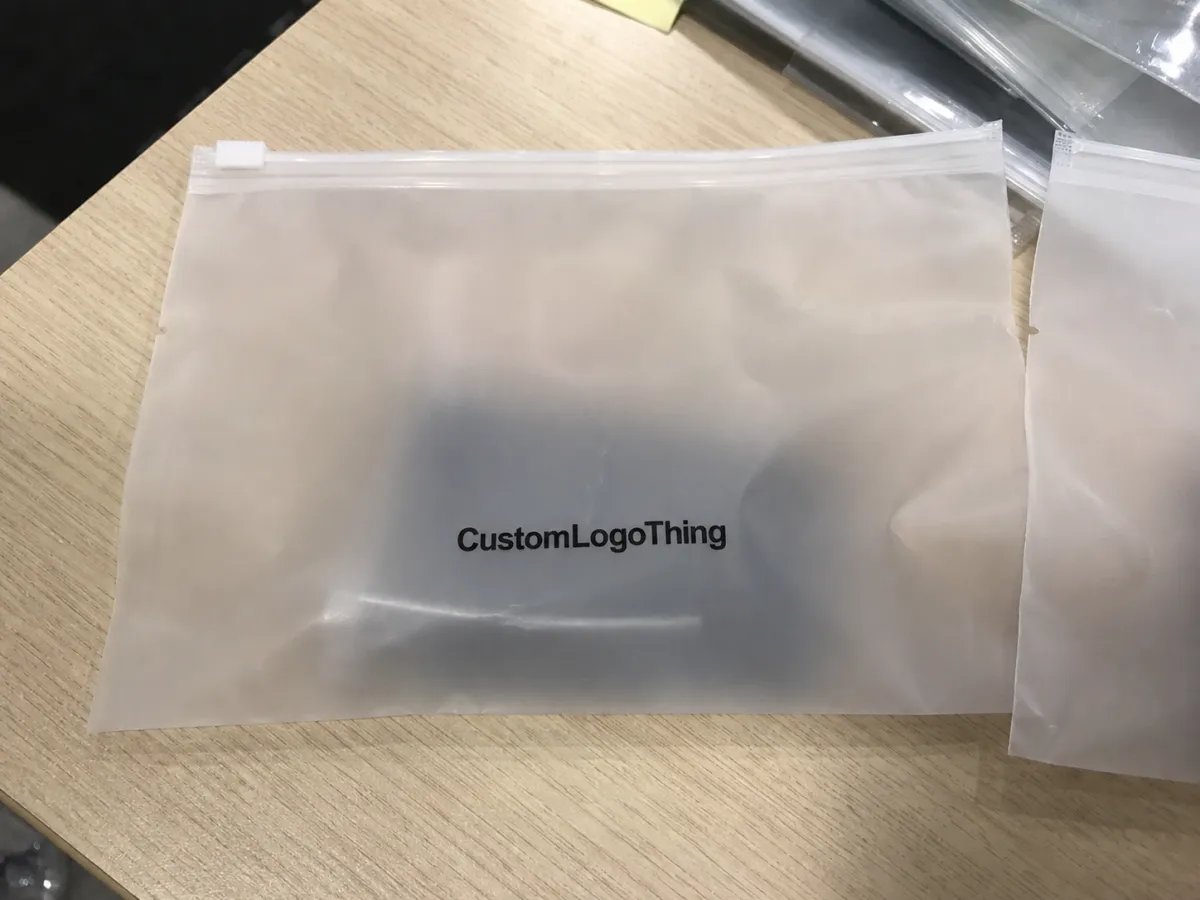
For boutique retail, clear PVC works best when the item itself has enough visual interest to carry the sale. Folded tees with trims, lingerie sets, sleepwear, lightweight knits, scarves, and coordinated sets all benefit from visibility. The bag should frame the garment, not hide it behind glare, cloudy film, or oversized empty space.
The economics are straightforward. A transparent front means fewer staff touches, faster replenishment, and lower exposure to dust or customer handling. It also helps a boutique keep a wall or table display consistent across dozens of units. If one bag warps and another arrives in a different shade of clear, the display starts looking patched together even if the apparel is strong.
There is a tendency to talk about “premium” packaging as if expensive always means better. That is a weak assumption. The real test is whether the package helps sell the product and preserve margin at the same time. A simple clear bag often does both. It can also reduce handling loss in open retail environments because the garment is less exposed before purchase.
“The strongest retail package is usually the one that clarifies the product fastest. Surface drama is expensive if it does not help the shelf do its job.”
That sounds obvious, but many packaging decisions are made backward. Buyers approve an attractive sample, then discover the bag takes too long to fold, clouds under store lighting, or makes the garment look flatter than it really is. The shelf tells the truth faster than a mockup.
Display-first bag constructions that work
PVC garment packaging bags come in a few useful structures, and each one serves a different retail need. Flat clear bags are the lowest-cost option and suit slim folded apparel. Zippered versions support repeated opening and closing, which matters for premium items or customer inspection. Gusseted bags add depth for thicker garments, stacked sets, or folded product with more volume. Hang-hole and euro-slot formats fit peg walls, hooks, and vertical merchandising systems.
Closure choice changes the buying math more than many teams expect. Adhesive flaps work for light apparel and seasonal runs where the bag is opened once and then shelved. Heat seals can lower cost in some formats, but they remove reusability and can make packing less forgiving. A resealable zipper adds cost, yet it usually pays for itself when the product is handled repeatedly or needs a more polished feel.
Film finish also changes how the item reads under retail lighting. Crystal-clear film gives the strongest visibility, which is usually what boutique buyers want. Frosted or matte surfaces reduce glare, but they can mute color and soften the sharp, immediate look that helps a garment sell. Stiffness matters if the bag sits upright on a shelf; hanging geometry matters if it goes on hooks. A sample can look refined in a sample room and still be awkward in a store.
- Flat clear bags for slim, folded apparel and the lowest unit cost.
- Zippered bags for repeated handling and a more premium retail feel.
- Gusseted bags for thicker garments, sets, and more structured packing.
- Hang-hole or euro-slot styles for peg display and wall merchandising.
Retail packaging works best when the structure matches the garment weight, fold depth, and handling frequency. A bag that looks elegant in a photo can become a labor problem if staff need an extra minute to fold every unit correctly. Multiply that by a few hundred pieces and the hidden cost becomes real.
If you are checking transit durability as well as shelf behavior, ISTA’s testing framework is a useful reference. Packaging still has to survive cartons, warehouse movement, and ordinary rough handling before it reaches a boutique floor. The display is the final test, not the only one.
Specs that should be locked before artwork
Start with measurements. Width, height, gusset depth, film thickness, closure style, and any hanging feature should be decided before artwork begins. Buyers skip this step all the time and then lose a week correcting the sample because the folded garment needs a different cavity or a different edge allowance. A bag that is 10 to 20 mm off can make a shirt look squeezed or leave too much dead space around the product.
Thickness affects both stiffness and cost. Thinner film lowers the unit price and works for lighter apparel or simple storage. Thicker film improves edge strength, clarity retention, and shelf presence. For boutique retail, many programs begin around 0.10 mm to 0.15 mm for light items and move higher for heavier garments or more premium presentation. The right number depends on bag size, product weight, and how many times the package will be touched before sale.
Size should always be based on the actual folded garment, not a rough guess from the buying team. Send a sample fold if possible. If not, measure the folded width, height, and depth after the item is prepared the way it will sit on the shelf. That gives the supplier something real to build from instead of a vague request that forces everyone to guess.
Finish tolerances matter too. Clarity should be consistent across the run, seals should be even, and carton counts should be predictable enough for warehouse receiving. Odor is another practical issue with PVC. A strong plastic smell can create a poor impression the moment the bag is opened, and that is avoidable. Ask for samples and inspect them in a closed room, not in a busy sample tray where nobody notices the problem until the goods arrive.
Paper inserts, hang tags, and outer cards can be specified in FSC-certified paper if the brand wants the non-plastic pieces to carry a cleaner sourcing story. See FSC for the paper standard itself. That does not make PVC disappear, of course. It just keeps the paper component honest and documented.
One more detail matters in real production: pack count. A buyer may approve a beautiful sample and then discover the shipping carton is packed in a way that wrinkles the bag or slows intake. If the factory can quote a consistent inner pack quantity, it becomes much easier for the warehouse to receive and count without rework.
Pricing, MOQ, and landed cost
Packaging cost is driven by material grade, size, thickness, print coverage, zipper hardware, finish, and freight. The cheapest ex-factory quote is not always the lowest-cost result after shipping, receiving, and rework. A low number can hide weak film, sloppy sealing, or inconsistent packing. Those are the kinds of savings that show up later as complaints.
MOQ changes the picture quickly. Small runs carry more setup cost per unit because the factory spreads material waste and labor across fewer pieces. Bigger runs usually bring the unit price down in a way that matters. For boutique programs, a test order of 500 to 1,000 pieces is often realistic for simple formats, though larger runs usually make more sense once the design is proven.
Landed cost is the number that matters. It includes unit price, freight, duties, carton charges, inland delivery, and the labor needed to count, store, and prep the bags. A supplier quote that looks strong on paper can lose its edge once the shipment reaches the warehouse. Buyers who track only ex-factory pricing tend to miss the real story.
Print coverage changes the economics as well. Full-surface ink, metallic accents, specialty finishes, and custom hardware all push the price up. A restrained clear bag with one well-placed logo can often do more for the shelf than a crowded design with too many effects. The visual hierarchy should help the garment, not compete with it.
Freight deserves attention early, especially for oversized cartons or heavier film. A slightly larger bag can affect carton density and raise shipping cost across a whole program. That is the kind of detail that feels small during sampling and becomes obvious when the invoices arrive. Ask the factory for carton dimensions and pack counts before approving the final spec.
Production, proofing, and timing
Sampling should check fit, clarity, seal quality, and handling speed. Put the actual folded garment in the sample, not a generic placeholder. That is the fastest way to find trouble before production starts. A good sample in the wrong size is still the wrong size.
Color matching is simpler with clear PVC than with printed cartons, but it still matters when inserts, zippers, labels, or outer cards are involved. Small differences in white cards or matte inserts can change how the whole package reads under store lighting. Proof the full assembly, not just the bag shell.
Lead time is usually longer than buyers want and shorter than delays make it feel. Artwork approval, film sourcing, sampling, production, inspection, and freight all take their turn. Rushing one stage tends to move the problem to another stage. A calm schedule is cheaper than expediting every handoff.
Inspection should cover seal alignment, clarity, count accuracy, and the condition of the cartons when they land. If the packaging is going straight into a retail launch, check the first cartons as soon as they arrive. That leaves room to fix a problem before the floor date, instead of after the display is already live.
Supplier signals that lower risk
Suppliers that lower risk usually ask better questions. They want the folded garment dimensions, the retail display method, the pack count, and the finish expectation before they quote. That is a good sign. A factory that rushes to price without understanding the use case often leaves gaps for the buyer to fix later.
Look for sample consistency. One neat sample is not enough if the second and third versions drift. Stable results suggest the factory can repeat the work, not just improvise it once. Ask for photos of previous retail jobs with similar film, closures, or display formats. That tells you more than a polished sales deck.
Communication speed matters, but clarity matters more. A supplier who answers quickly with vague language is less useful than one who responds a little slower with exact dimensions, pack counts, and material notes. Retail packaging leaves little room for ambiguity because the product has to fit, ship, and display cleanly every time.
Audit documents and quality controls help, especially if the packaging will ship internationally. Basic traceability, pre-production approval, and in-line checks reduce surprises. If the factory can describe its check points in plain language, that usually means the process exists for real and not just on paper.
Mistakes that burn budget or delay launch
The first mistake is approving artwork before the final size is fixed. That leads to reflowed graphics, awkward logos, and packaging that fits the wrong fold. The second is choosing the wrong closure for the handling pattern. A bag that opens too easily on the sales floor creates frustration, while one that is too stiff slows staff down.
Another common error is overdesigning a clear format. Heavy print, too many icons, and crowded copy weaken the one thing the bag does best: show the product. Buyers sometimes try to make the package carry every message at once. That usually makes the garment harder to see.
Ignoring smell, haze, or seal quality also causes problems. A bag can look acceptable in a bright sample room and still feel cheap on the floor. Store lighting is unforgiving. It exposes cloudiness, scuffs, and uneven edges fast.
Poor carton packing is a quiet failure that gets expensive later. If the bags arrive bent, crushed, or mixed by size, the warehouse absorbs the pain and the launch slows down. Simple packing instructions prevent a lot of rework.
Spec sheet and order file
A clean order file should include the folded garment sample or measurements, bag dimensions, film thickness, closure type, finish, print placement, pack count, carton size, labeling, and any testing requirements. Add the retail display method too. Peg, shelf, hook, and table display all affect the final construction.
Keep the approval trail visible. Version one, revised artwork, pre-production sample, and final confirmed spec should all be easy to find. That saves time when a question comes up during manufacturing or receiving. The fewer assumptions in the file, the fewer surprises on the dock.
If the order includes paper inserts or tags, list the paper grade and the certification claim clearly. For brands that want to keep the non-plastic elements documented, FSC-certified paper is a familiar route. It does not change the PVC itself, but it does keep the supporting materials easier to audit.
Once the file is locked, the rest of the job is about repeatability. A good boutique retail bag should arrive clean, pack neatly, and show the garment without distraction. That is the standard worth holding.

