The Care Labels Unit Cost for boutique orders is driven less by the label itself than by how stable the spec is. If the size, fold, copy, and material keep changing, the supplier has to rework proofs, adjust layouts, and absorb more risk. That is where a low first quote turns into a higher final cost.
Small brands get better pricing when the label is treated like a repeatable production item, not a creative exercise. Stable specs make quotes cleaner, reduce setup time, and improve the odds that the first sample is usable. If you already manage trims across multiple styles, keeping them under one naming system also helps reduce confusion across your Custom Labels & Tags program.
Why Stable Specs Lower Boutique Label Cost
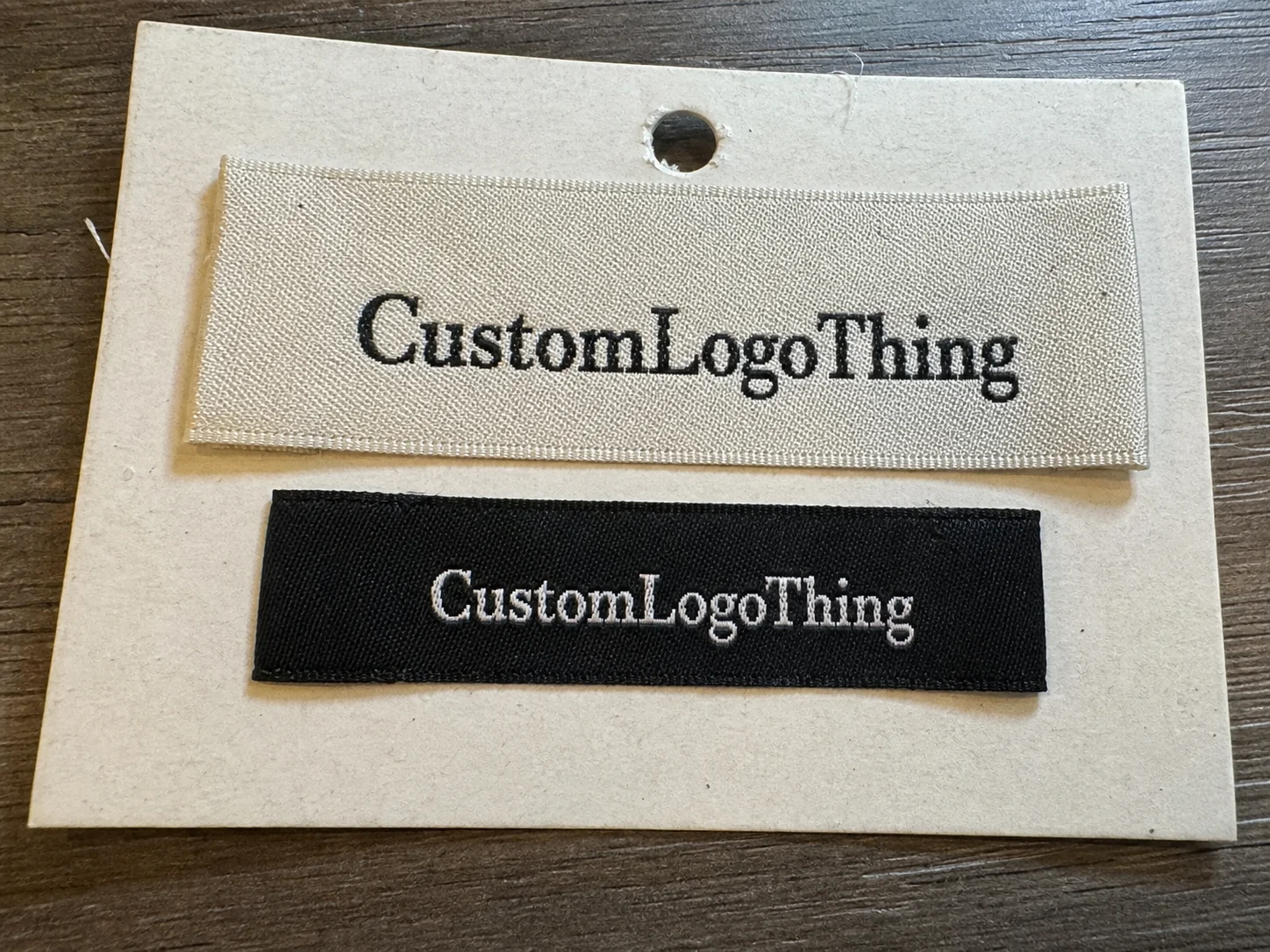
Most label quotes include both materials and labor. The labor side covers file review, proofing, layout adjustments, and production setup. That is why repeat orders often cost less per piece than first-time jobs, even when the label looks identical on paper.
Every change adds friction. A new width, a different fold, or a revised care line usually means the layout must be rebuilt and checked again. If the order is small, those extra steps get spread across fewer pieces and the unit cost rises fast.
A useful spec sheet should include only what production needs to quote accurately:
- Label size in millimeters or inches
- Fold type and cut finish
- Material or weave type
- Exact care text and fiber content
- Color references, if relevant
- Placement on the garment
- Quantity by style and colorway
“The lowest-cost label is the one that arrives on time, reads clearly, and does not force a second round of production.”
Choosing the Right Care Label Format for Small Apparel Runs
Boutique brands usually choose between woven, printed satin, cotton, and heat-transfer labels. The right format depends on garment type, wash frequency, and how much information has to fit in a small area. Readability matters more than most buyers expect. If the copy is crowded, the label becomes harder to approve and harder to use.
Woven labels are common for premium positioning and durability. Damask handles finer detail than basic taffeta, which helps when small type matters. Printed satin usually offers a softer hand feel and a lower entry price, though it can wear faster in repeated laundering. Cotton labels fit natural or heritage branding, but dense copy is harder to manage. Heat-transfer labels remove the stitched edge and work well for performance garments, but they depend on correct application and fabric compatibility.
Placement changes the economics too. Neck labels need strong contrast and clean edges because they are seen first. Side-seam labels can carry more care text, but the design still has to stay legible. For small labels, the most important information should win: brand name, fiber content, and care instructions.
| Format | Typical MOQ | Typical cost per piece | Best use | Main tradeoff |
|---|---|---|---|---|
| Woven damask | 500-1,000 | $0.08-$0.22 | Premium boutique apparel, neck labels | More setup sensitivity, less forgiving artwork |
| Printed satin | 500+ | $0.05-$0.16 | Soft-touch labels, short care copy | Less abrasion resistance than woven |
| Cotton | 500+ | $0.10-$0.25 | Natural-look brands, heritage collections | Very small text and heavy ink coverage are harder to manage |
| Heat-transfer | 300-1,000 | $0.14-$0.35 | Performance wear, no-scratch applications | Needs correct garment substrate and application control |
For most boutique lines, one standard format is easier to reorder than a different construction for every style. A focused trim supplier such as Custom Labels & Tags is usually better at holding that line than a general vendor that treats each order as a one-off.
Materials, Print Methods, and Finish Details That Change Wear and Price
Two labels that look similar on screen may behave very differently in production. The substrate, ink, edge finish, and fold style all affect comfort, durability, and how the label looks after repeated washing. That matters in boutique apparel, where a scratchy or poorly finished label can become a customer complaint.
Material choice should balance wear and hand feel. Woven polyester holds detail well and handles wash cycles reliably. Satin feels softer and often suits fashion-forward pieces. Cotton supports a natural look, but it absorbs more moisture and can lose crispness sooner than polyester-based options. The right choice depends on the garment, not on which sample looks nicest in isolation.
Print method affects both appearance and price. A woven label with several thread colors usually costs more than a simple printed label, but it can last longer and read more clearly at a small size. Heat-transfer labels eliminate the stitched edge, which improves comfort, but they depend on disciplined application. If the factory applies them poorly, the defect shows up on the garment, not just on the spec sheet.
Edge finish and fold style matter as well. A center fold reduces exposed edges on neck labels. An end fold can work better for seam placements. Cut-and-sew labels offer flexibility, but they can add sewing time and waste. Those details affect both setup charges and final cost per piece.
For related packaging programs, it helps to keep claims and standards grounded in verifiable references. If you need paper sourcing with a recognized chain-of-custody framework, FSC is the obvious reference. If packaged goods need transit testing, ISTA methods are more useful than vague durability claims.
For many boutique brands, the practical balance is a soft woven damask or printed satin label with a clean fold, moderate ink coverage, and enough copy to satisfy compliance without crowding the design.
Care Labels Unit Cost for Boutique Orders: What Buyers Actually Pay
Care Labels Unit Cost for boutique orders is a stack of costs, not a single number. Quantity, size, material, print complexity, finish, sampling, and freight all matter. A low raw unit price can still become expensive once the MOQ and revision fees are included.
The MOQ effect is usually the biggest factor in small runs. If setup takes an hour and the order is only 500 pieces, that labor gets spread across a limited batch. At 5,000 pieces, the same setup is diluted. That is why a 1,000-piece order can feel expensive even when the material itself is inexpensive.
Typical boutique pricing often falls into these ranges, though the exact number depends on the final spec:
- Simple printed satin labels: about $0.05-$0.12 per piece at 1,000-5,000 units
- Woven damask labels: about $0.08-$0.22 per piece at 1,000-5,000 units
- Heat-transfer labels: about $0.14-$0.35 per piece at smaller boutique volumes
- Cotton labels or specialty finishes: often $0.10-$0.25 per piece, sometimes more if the artwork is dense
Ask about the extra charges directly. The most common ones are sampling or strike-off fees, artwork cleanup, tooling or plate charges, rush handling, and freight. A quote should show these line items clearly; otherwise you are comparing headlines, not actual costs.
The useful question is not “What is the cheapest first run?” It is “What will this cost on the second and third order?” If you expect the label to stay fixed across several drops, a better-built spec can reduce waste and improve later bulk pricing.
For brands testing a style, compare the pilot quantity and the likely reorder quantity. That makes the unit cost easier to judge and shows whether the spec is worth locking in for future runs.
Artwork, Sampling, and Production Steps That Keep Orders Moving
The fastest quote is the one that arrives with usable input. Send a vector file if you have one. If not, a clean PDF or PNG works if it is final and readable. Add the dimensions, quantity, fold type, and exact care text. If fiber content or wash instructions are still changing, the supplier has to pause and revise, which usually adds time and cost.
The proofing sequence is usually simple: file review, layout adjustment, sample or digital proof, approval, then bulk production. Most delays happen before proof approval, not during the actual run. Someone notices the placement should move, the font should be smaller, or another language line is missing, and the job goes back into revision.
Common blockers are predictable:
- Missing fiber content
- Unreadable wash symbols or copy
- No final label size
- Inconsistent brand spelling across files
- Placement decisions that change after proof approval
Compliance matters here too. Fiber content and care instructions should match the rules in the market where the garment will be sold, and the art has to remain legible at actual label size. A good supplier should ask the right questions before production begins, not after the order is already in motion.
Timing depends on the process and the supplier’s queue, but a first run often takes 7-14 business days after proof approval. Repeat orders can move faster if the artwork is locked and the label spec has not changed. Rush service is possible in some cases, but it usually raises the final price.
Why Brands Keep Reordering the Same Label Spec
Once a boutique brand finds a label that fits the product and the customer feedback stays quiet, reordering the same spec is usually the best move. Repeatability lowers the Care Labels Unit Cost for boutique production because the supplier does not have to rebuild the file or recheck a new structure every time.
Consistency also protects the look of the line. If one season uses a 20 mm label and the next jumps to 25 mm, the garment may still function, but the presentation starts to drift. That drift is easy to miss in a spreadsheet and obvious on a rack.
This matters most for seasonal drops, capsule collections, and repeat basics. Those businesses need a spec that can be reused without drama. The moment the label becomes a moving target, production slows and the unit cost rises because each new version is treated like a first run.
Support matters most during the first few orders. A supplier that can clean up artwork, tighten the layout, and keep the care copy aligned with the garment type saves time later. That is the difference between a repeatable trim spec and a brand that renegotiates every order from zero.
Repeat specs also make quality control easier. If the color, hand feel, and fold stay the same, it is much easier to spot an off-run before the order reaches packing. That protects margin and reduces the chance that a small trim issue becomes a customer complaint.
Ordering Mistakes That Push Unit Cost Up
The fastest way to waste money is to treat the label as an afterthought. It is a production item with a cost structure. If you keep changing it, the supplier charges for the changes.
Changing dimensions after proof approval is one of the most expensive mistakes because it often triggers new setup work and resets timing. Ordering too many versions at once is another. If every garment style gets a different layout, scale disappears and the MOQ burden gets split across several small runs instead of one manageable one.
Vague care copy causes predictable trouble. “Use standard care text” is not a spec. It tells the supplier to guess, which opens the door to compliance errors and another revision round. The cleaner the text, the easier it is to quote and the lower the risk of rework.
Over-specifying finishes is another trap. Not every brand needs metallic thread, specialty edge treatments, or a complex fold if the garment is a basic tee or casual woven top. Those features may look impressive on a sample board, but they do not always improve customer experience. Sometimes they only raise the invoice.
Watch for these cost traps:
- Multiple colorways using separate label files instead of one master spec
- Adding extra icons that make the care copy harder to read
- Choosing a premium finish that the garment cannot support well
- Requesting a new sample for every small revision
- Ignoring freight until the order is already in production
If the goal is a sane Care Labels Unit Cost for boutique production, the order should be easy to quote and easy to repeat. That is how you keep setup charges from eroding margin.
What to Send for a Fast Quote and a Lower-Risk First Run
Send the full spec in one shot. Give the supplier the label size, quantity, preferred material, fold type, final artwork file, and exact care text. If you already know the garment type and fiber content, include that too. The more complete the request, the less back-and-forth it takes to build an accurate quote.
Ask for two quote tiers: one at your pilot quantity and one at a realistic reorder volume. That shows how the unit cost changes with scale and whether the spec is worth locking in for future drops. It also makes the bulk pricing picture visible instead of hidden.
If the collection is new, the fabric is new, or the wash panel is not final, a pilot run is the safer move. It is better to test a smaller batch than to discover the label is too stiff, too small, or incomplete after the full order has shipped.
For brands that want a repeatable system, the sequence is simple:
- Lock the spec
- Request a line-item quote
- Approve the proof only after the label content is final
- Run a pilot if the garment or copy is untested
- Reorder the same spec once it works
Follow that order and the care labels unit cost for boutique production usually becomes predictable instead of noisy.
What changes care labels unit cost for boutique orders the most?
Quantity is usually the biggest driver because setup gets spread across more pieces at higher volumes. Material choice, print complexity, fold style, and finish details also move the price quickly. Rush timing and proof revisions can add cost even when the design looks simple.
What MOQ should I expect for boutique care labels?
MOQ depends on the label format and finishing, so there is no single universal number. Smaller MOQs usually cost more per label because setup is divided across fewer units. Ask for tiered pricing so you can compare a test run against a repeat order.
Can one care label work across several boutique garments?
Yes, if the label size, placement, and care content fit every garment in the line. If the fabrics or washing instructions differ, you may need a master version plus variants. A shared spec usually keeps ordering simpler and helps control unit cost.
How long does a custom care label order usually take?
Timing depends on proof approval, sampling needs, and production load. Simple repeat orders move faster than first-time jobs with artwork cleanup or spec changes. Rush service is possible in some cases, but it usually increases the final price.
What files do I need to request an accurate boutique care-label quote?
Send a vector file if you have one, plus the final dimensions and quantity. Include the care text, fiber content, preferred fold, and any brand color references. Clear input up front reduces back-and-forth and makes the quote more reliable.


