A winter beanie order can lose margin before the first stitch is made. Boutique ribbed winter Beanies Bulk Order Planning starts with practical choices: rib structure, cuff height, decoration method, yarn, cartons, and delivery window. A simple knit cap gets expensive fast when those decisions are left open until proofing, packing, or freight.
For retail shops, resorts, breweries, campus stores, outdoor brands, corporate merch teams, and boutique gift programs, ribbed beanies remain one of the more dependable winter accessories to buy in volume. They stretch across head sizes, display a logo clearly on the cuff, feel more substantial than many flat knit styles, and sit in that useful middle ground between fashion merchandise and cold-weather utility. That is exactly why the planning has to be more precise than “put our logo on a hat.”
Boutique Ribbed Winter Beanies Bulk Order Planning That Protects Margin
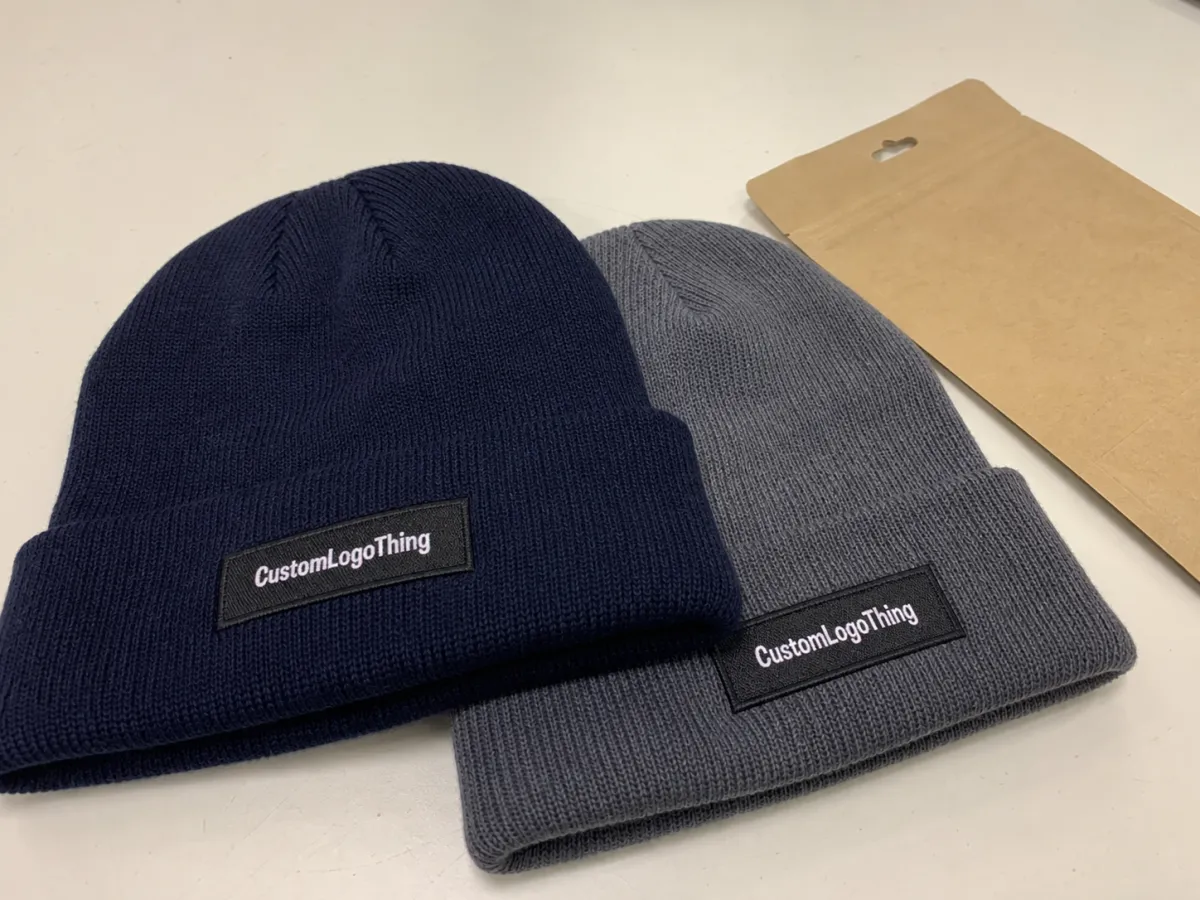
Most weak beanie orders start with the wrong first question. Buyers focus on the logo before the build. The logo matters, but a sharp woven label on a limp cuff still looks cheap. A premium leatherette patch on a beanie with poor recovery will wrinkle, tilt, or pull after wear. A rich brand color can miss by a shade if yarn availability is checked after the purchase order is already moving.
Better planning protects margin by reducing rework, rush freight, wasted samples, and mismatched expectations. If the order is defined early as a 2x2 rib, 3-inch cuff, acrylic yarn, woven label, individual bag, and 24-count carton plan, the production path is clearer than a loose request for black ribbed beanies with a logo. Tight specifications make the quote more reliable and the finished product more repeatable.
Ribbed beanies sell well because the structure does useful work. Vertical knit channels create texture, stretch, and recovery, helping one size fit a wide range of adults without a complicated size run. The cuff gives buyers a defined decoration panel, often around 2.5 to 3.5 inches deep on common retail styles. Usable logo space is smaller than that number suggests because curvature, fold line, rib texture, and seam position all steal room.
Repeatability is the quiet value. Across 300, 1,000, or 5,000 units, buyers need consistent yarn weight, controlled cuff height, stable color lots, and logo placement that looks intentional. Custom Logo Things helps turn a visual idea into a production-ready beanie order by narrowing material, fit, decoration, packaging, MOQ, and timeline decisions before the final quote is locked. That is the difference between buying a promo item and building a retail-ready winter accessory.
Production callout: A beanie is flexible by nature, but the order should not be. The more clearly the buyer defines cuff depth, logo size, packing method, and in-hand date, the less room there is for expensive surprises.
Ribbed Beanie Product Details Buyers Should Lock In Early
Rib construction is easier to evaluate if you picture the knit channels running vertically from crown to cuff. A 1x1 rib has a tighter, finer look with frequent knit-and-purl alternation. A 2x2 rib feels chunkier and more casual, with deeper grooves and stronger visual texture. Wider ribs can look fashion-led, but they may reduce fine detail for knit-in branding or create a more uneven surface under patches.
The silhouette changes the branding area. A cuffed beanie gives the cleanest logo zone and usually feels the most familiar for wholesale winter merchandise. An uncuffed beanie is sleeker, but decoration placement needs extra care because the logo sits on a curved, stretching surface. Fisherman beanies run shorter, often with a shallow cuff and higher ear exposure, so they look sharp in boutique assortments but leave less vertical room for a patch. Slouch styles have more crown volume and a softer fit, which can raise perceived fashion value but may not suit every uniform, staff program, or outdoor event.
Yarn choice drives hand feel, durability, warmth, and price. Acrylic is common because it holds color well, handles repeated wear, and usually keeps unit cost in a practical range. Wool blends add warmth and a more premium hand, but they can raise cost, introduce care-label questions, and feel scratchy if the blend is poorly chosen. Recycled polyester blends support sustainability positioning, especially for brands that already track recycled content claims. Cotton blends feel soft and breathable, though they are less focused on true cold-weather performance and may not recover like synthetic or wool-blend knits.
Decoration should match the beanie instead of fighting it. Woven labels and leatherette patches suit boutique retail because they sit neatly on the cuff and hold fine detail better than heavy embroidery in many cases. Embroidery works well for bold marks with enough stitch clearance, especially simple wordmarks or icons. Jacquard knit-in branding can be excellent for larger seasonal programs because the logo becomes part of the cap structure, but it needs more setup discipline and usually favors simpler artwork.
Finishing choices matter at scale. Decide on pom or no pom, fold width, seam position, interior label, hangtag attachment, individual bagging, inner pack quantity, and retail-ready packing before production starts. If the beanies must arrive tagged by SKU, separated by colorway, or packed for store receiving, say that early. Custom Logo Things can align those details with broader Wholesale Programs when the order is part of a larger merchandise assortment.
Specifications That Keep Bulk Beanies Consistent
Consistent beanies begin with measurable specs. Before approval, define finished height, cuff height, flat width, rib type, yarn composition, knit gauge, stretch tolerance, logo size, logo placement, and packaging format. A typical retail brief might call for an approximately 8.5-inch finished height with a 3-inch folded cuff, 2x2 rib, acrylic yarn, centered woven label, and individual bagging by color.
Knit goods are not injection-molded parts. Yarn tension, steaming, folding, and finishing can shift dimensions slightly, especially after the hat relaxes from production handling. The practical goal is not impossible piece-to-piece perfection. The goal is a controlled acceptable range, such as keeping cuff height within a defined tolerance and making sure the label stays centered relative to the fold and side seam.
Logo size needs to be planned against the cuff, not only against the artwork file. A 2.25-inch wide patch may look modest on a screen yet overpower a shallow fisherman cuff. A 1-inch tall woven label may disappear on a deep fold if the rib texture is heavy and contrast is low. The strongest boutique beanies often use a restrained logo scale, clean spacing around the mark, and enough contrast to read from a few feet away.
Color control deserves real attention. Yarn is usually selected from available color cards, and Pantone references help guide the match, but fiber, dye lot, twist, and texture can change how color is perceived. Matte acrylic black, heather charcoal, and deep forest green absorb light differently. For critical brand colors, approve a physical yarn or sample whenever the schedule allows. Monitor previews are useful for direction, not final color confidence.
Documentation makes production smoother. Prepare vector logo files, brand color references, target quantity by color, preferred size or fit notes, packaging instructions, carton label needs, and any retail compliance requirements. If sustainability claims matter, ask for documentation rather than assuming recycled yarn or paper packaging will meet the internal standard. For paper-based tags or packaging, buyers can review responsible sourcing frameworks through the Forest Stewardship Council.
| Specification | Common Planning Range | Why It Matters |
|---|---|---|
| Cuff Height | About 2.5-3.5 inches on many cuffed styles | Controls visible logo space and retail proportions |
| Rib Type | 1x1, 2x2, or wider rib | Affects stretch, texture, decoration surface, and perceived weight |
| Logo Width | Often 1.5-2.75 inches for patches or labels | Keeps branding readable without overwhelming the cuff |
| Yarn Composition | Acrylic, wool blend, recycled polyester blend, cotton blend | Drives warmth, hand feel, durability, claim language, and cost |
| Packing Format | Bulk pack, individual bag, hangtagged, or SKU-labeled | Impacts receiving speed, storage, freight volume, and retail readiness |
Pricing, MOQ, and Unit Cost Drivers for Custom Ribbed Beanies
Unit cost is shaped by more than the beanie blank. Quantity, yarn type, knit complexity, decoration method, label or patch material, sampling needs, packaging, freight method, and delivery deadline all push the price up or down. A stock ribbed acrylic beanie with a woven label has a very different cost profile than a fully custom wool-blend jacquard beanie with retail hangtags, SKU stickers, and split shipments.
MOQ depends on how custom the order needs to be. Lower quantities may be possible on stock or semi-custom ribbed blanks with logo decoration. Fully custom knit colors, jacquard designs, specialty yarns, custom-dyed lots, pom combinations, or private-label trims usually require higher production minimums because setup, yarn allocation, and machine time have to be spread across enough units to make sense.
Buyers sometimes treat minimums as arbitrary. They are usually a math problem. A short run still needs artwork review, digitizing or label setup, material pulls, machine scheduling, folding, trimming, inspection, and packing. On a 144-unit order, those fixed steps weigh heavily on each piece. On a 1,000-unit order, the same setup spreads across more units, which is why price breaks can be meaningful even when the physical beanie does not change.
Decoration affects cost in predictable ways. Embroidery can be efficient for clean, bold logos, though stitch count, thread colors, backing, and run time all matter. Woven labels are steady, polished, and retail-friendly, especially for small typography or detailed marks. Leatherette or faux suede patches add perceived value and often look strong on outdoor, lodge, brewery, and boutique apparel programs. Knit-in jacquard designs require more setup, but they integrate the branding into the beanie rather than applying it afterward.
For boutique ribbed winter Beanies Bulk Order Planning, quote accuracy depends on complete inputs. A reliable quote needs final artwork, target quantity, colorways, desired material, decoration placement, packaging expectations, destination, and in-hand date. Freight and rush handling can shift the landed cost quickly, especially if cartons are bulky or if the beanies must arrive during a tight seasonal sales window.
Pricing should be treated as a planning tool, not a mystery discount game. Custom Logo Things can compare good-better-best build options so buyers see which decisions add cost and which decisions can be controlled. Sometimes the smartest move is not the cheapest beanie; it is the beanie that sells at a better margin because the hand feel, cuff, logo treatment, and retail packaging support the price tag.
| Build Option | Typical Use Case | Cost Behavior | Buyer Watchpoint |
|---|---|---|---|
| Stock ribbed blank with embroidery | Fast events, staff gear, simple merch drops | Usually most efficient at lower quantities | Confirm stitch clarity on ribbed texture |
| Stock or semi-custom blank with woven label | Boutique retail, campus shops, brewery merchandise | Predictable cost with strong shelf appearance | Approve label size against actual cuff depth |
| Ribbed beanie with leatherette patch | Outdoor, resort, lodge, and premium casual programs | Moderate added cost for higher perceived value | Check patch stitching, adhesion, and edge finish |
| Fully custom jacquard knit | Larger seasonal assortments and brand-led drops | More setup cost, better integration at scale | Simplify artwork and plan production earlier |
Process and Timeline From Artwork to Delivered Beanies
A clean order flow usually follows the same pattern: consultation, spec confirmation, artwork cleanup, quote approval, sample or virtual proof, production approval, knitting, decoration, finishing, inspection, packing, and shipping. The steps sound simple. The details inside them decide whether the order feels controlled or stressful.
Time is commonly spent in yarn sourcing, sample development, patch or label production, embroidery digitizing, production queue scheduling, finishing, and transit. If a buyer needs three colorways, two patch colors, hangtags, and carton labels by store location, those choices need to be built into the schedule. A late packaging decision can hold an otherwise finished beanie order because goods cannot be packed correctly without the final receiving instructions.
A virtual proof shows placement, scale, and general appearance. It is useful for repeat orders, simple decorations, and tight timelines, but it does not prove hand feel, yarn color, or stretch recovery. A pre-production sample is made before the bulk run and is the better choice for premium retail assortments, new yarn choices, custom patches, or unfamiliar silhouettes. A production sample comes from the actual run and can be used as a final check, though waiting for it may not leave much room for major changes.
Seasonal planning matters. Winter accessories should be ordered before the selling window is already active, especially for resort shops, campus bookstores, holiday bundles, outdoor events, and boutique retail drops. Multiple colorways, retail packaging, custom trims, and split shipments all add coordination time. Transit can also create surprises if bulky cartons move during peak parcel or freight periods.
Late artwork changes, undecided packaging, and unclear ship-to details are the most common avoidable causes of delay after an order is otherwise ready. If the receiving team needs carton labels with PO numbers, SKU codes, color names, or inner pack counts, share that before packing starts. For buyers who want a broader view of protective distribution practices, the International Safe Transit Association publishes standards and resources tied to packaged-product handling and transit performance.
Practical warning: A beanie can be knitted and decorated correctly, then still create trouble at receiving if cartons are not labeled, colorways are mixed without a plan, or retail tags arrive separately.
Quality Checks That Matter Before Beanies Ship
Quality control for ribbed beanies should look beyond whether the logo is present. Inspection points include knit density, rib recovery, seam alignment, cuff consistency, decoration placement, loose threads, label attachment strength, color consistency, carton counts, and packing format. The order should arrive clean, countable, and ready for the next handling step.
Rib recovery is one of the biggest tells. A good ribbed beanie should stretch over the head and recover without bagging out immediately. Poor recovery makes the hat feel cheap, distorts the logo area, and creates inconsistent fit across a bulk order. It can also make a patch buckle or cause an embroidered area to sit unevenly after wear.
Each decoration method has its own inspection points. Embroidery should have solid thread coverage, clean edges, appropriate backing, and no puckering that distorts the cuff. Woven labels should have clean edge finishing, straight placement, and secure stitching. Leatherette and faux suede patches need consistent debossing or print clarity, stable adhesion if heat-applied, and reliable stitching if sewn. Jacquard logos should be checked for clarity on the curved knit surface, not just while the hat is flat.
Packaging checks are especially useful for boutique buyers. Individual bags protect against dust and moisture during storage. Hangtags support retail presentation. SKU stickers speed receiving. Carton labeling prevents colorway confusion. Inner pack quantities make store allocation easier. Moisture protection matters for knit goods because damp cartons can create odor, distortion, or mildew risk if goods sit in storage.
Custom Logo Things treats the finished beanie as more than a decorated cap. The product has to support repeat orders, retail presentation, and clean receiving. For buyers reviewing policies, production details, or common order questions, the FAQ can help clarify the basics before the quote conversation gets into final specs.
Action Steps Before You Request a Bulk Beanie Quote
Before requesting a quote, gather the core details in one place. A complete brief does not need to be elaborate, but it should answer the questions production will ask anyway. The faster those answers are available, the faster pricing and schedule options can be compared.
- Target quantity: Include total units and estimated units by colorway, such as 250 black, 250 heather gray, and 500 navy.
- Preferred silhouette: Cuffed, uncuffed, fisherman, slouch, pom, or no pom.
- Colorways: Provide brand color references, Pantone targets where available, or approved retail color names.
- Yarn preference: Acrylic, wool blend, recycled polyester blend, cotton blend, or open to recommendation.
- Logo file: Vector artwork is best for embroidery, woven labels, patches, and jacquard evaluation.
- Decoration method: Embroidery, woven label, leatherette patch, faux suede patch, jacquard knit-in, or side-by-side options.
- Packaging needs: Bulk pack, individual bag, hangtag, SKU sticker, carton label, or retail-ready packing.
- Ship-to details: One destination, multiple stores, event location, warehouse, or fulfillment partner.
- Required delivery date: Include the true in-hand date, not only the event or launch date.
Choose one primary goal before pricing. Lowest landed cost, most premium retail look, fastest turnaround, and closest brand color match are all valid goals, but they do not always point to the same build. If speed is the priority, a stock ribbed blank with a proven decoration method may be best. If boutique retail value matters more, a better cuff, refined label, and cleaner packaging may earn back the added cost on the shelf.
Photos help. Send examples of beanies you like and dislike, including notes about cuff depth, rib width, patch scale, pom size, and fit. Visual references shorten the conversation because terms like “chunky,” “short,” “premium,” and “soft” can mean different things to different buyers. A photo with a simple note such as “like the cuff height, dislike the oversized patch” is useful.
If you are undecided, request side-by-side options. Compare embroidered cuff versus woven label, acrylic versus wool blend, stock ribbed blank versus fully custom knit production, or individual bagging versus hangtag-only retail packing. The best quotes show tradeoffs clearly, so buyers can decide with cost, schedule, and retail presentation in view.
Boutique ribbed winter Beanies Bulk Order Planning works best when specs, pricing, production steps, and delivery expectations are aligned before the purchase order is placed. Set the beanie build early, confirm the logo method against the cuff, keep packaging practical, and give the production schedule enough room to do clean work. A small winter accessory can become a repeatable, margin-friendly merchandise program, but only if the details are treated like production decisions rather than afterthoughts.
FAQ
What information is needed for a boutique ribbed beanies bulk order quote?
Provide target quantity, beanie style, colorways, logo artwork, decoration preference, packaging needs, destination, and required delivery date. Vector artwork is best because it allows accurate evaluation for embroidery, woven labels, patches, and jacquard knit-in branding. If specs are still open, share reference photos so the production team can recommend practical options for cuff depth, rib structure, yarn, and logo scale.
What is the MOQ for custom ribbed winter beanies in bulk?
MOQ depends on whether the order uses stock blanks, semi-custom decoration, or fully custom knit production. Stock ribbed beanies with logo decoration usually allow more flexible minimums than custom yarn colors, specialty trims, or knit-in designs. Multiple colorways, retail packaging, custom labels, and private-label requirements can also affect the practical minimum for efficient production.
Which decoration method is best for boutique winter beanies?
Woven labels and leatherette patches are strong for boutique retail because they look clean on a cuff and hold detail well. Embroidery works best for simple, bold logos with enough space and stitch clearance. Jacquard knit-in branding is best for larger programs where the logo should become part of the knit structure rather than an applied decoration.
How long does ribbed winter beanie production usually take?
Timeline depends on sample needs, material availability, decoration method, quantity, packaging, and freight method. Orders move faster when artwork, color choices, packaging instructions, and ship-to details are approved early. Custom yarn colors, multiple samples, retail compliance requirements, or split shipments can add time before production begins.
How can I reduce unit cost on a bulk ribbed beanie order?
Increase order quantity, limit the number of colorways, choose an efficient decoration method, and keep packaging simple. Use standard yarn colors where possible instead of fully custom-dyed colors. Ask for good-better-best options so cost can be compared against perceived retail value before the order is approved.


