A winter pickup party can drain a merchandise box before the tasting room team notices the first empty carton. Good wine club Logo Patch Beanies bulk order planning starts before the proof, because members often read a branded beanie as wearable membership proof, not a throwaway extra tucked beside a release card.
That distinction affects the order. A beanie is useful on a cold vineyard morning, easy to pack with club materials, and credible on a retail table near the register. For a winery, the perceived value is high for the space it occupies: softer and warmer than a sticker, less fragile than glassware, less size-sensitive than jackets.
The risk sits in the details. Quantity guesses create shortages. Tiny label artwork can collapse on a small patch. A rushed delivery can arrive unsorted, with the staff color buried under retail inventory. None of those problems is dramatic in isolation. Together, they make a premium club gift feel improvised.
Wine Club Logo Patch Beanies Bulk Order Planning That Prevents Shortages
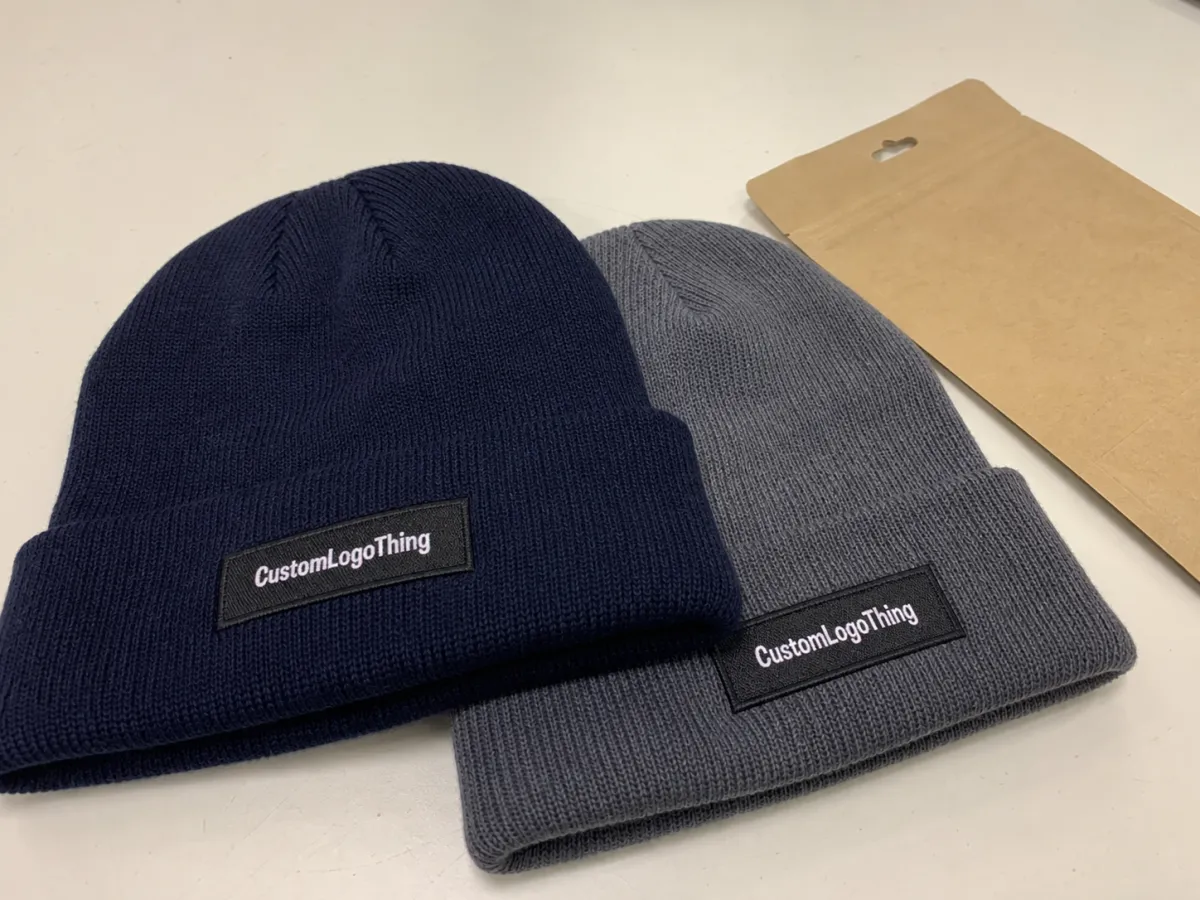
The first number should not be the lowest quantity that qualifies for a bulk price. Start with distribution math: active club members, staff units, tasting room retail inventory, event bundles, photography samples, replacement stock, and a controlled overage for damaged cartons or late member additions. A club with 480 active members may need 600 to 700 beanies once staff wear, release weekend sales, VIP hospitality, and backroom reserves are counted honestly.
Separate known demand from speculative demand. Known demand includes member shipments, pickup gifts, and employee wear. Speculative demand includes retail sales, distributor samples, auction baskets, holiday bundles, and social media giveaways. Those categories can use the same beanie, but they should not be buried inside one vague estimate called “about 500.”
Bulk ordering can reduce unit cost, but the savings are not automatic. A 144-piece order and a 576-piece order may require similar artwork cleanup, patch setup, proof review, and placement instruction. The larger run spreads those fixed steps across more units. That is usually where the lower unit cost comes from.
Planning rule: count the beanie like packaged inventory, not loose swag. Assign quantities by use, add a modest overage, and decide who receives and checks the cartons when they arrive.
Wine club Logo Patch Beanies bulk order planning also benefits from tier logic. If reserve members receive one color, estate members another, and staff a third, the order needs a style-by-color count before quoting. Color splits change blank inventory, carton labels, and packing instructions. They can also affect price if one color is stocked deeply and another is limited.
Consistency has financial value. If a premium wine club tier receives a beanie with a centered woven crest, a clean fold height, and a patch color that fits the label family, the item feels intentional. If the patch creeps left, the cuff height varies by carton, or small text fills in, the product starts to look like leftover merch.
Patch Beanie Styles That Fit Wine Club Branding
Most wine programs begin with a cuffed acrylic knit beanie because it fits many head sizes, holds a front patch well, and offers a broad color range without custom yarn dyeing. It is the safe member-gift choice: familiar fit, predictable decoration area, reasonable cost, and enough structure for a patch.
Ribbed knit beanies feel more retail-driven, especially in charcoal, heather gray, olive, navy, or burgundy. Fisherman-style beanies have a shorter, modern fit, but they sit higher on the head and are not right for every demographic. Blended yarns, such as acrylic with polyester or nylon, can improve hand feel and stretch recovery, though performance depends on knit gauge, yarn quality, and finishing.
Patch choice should follow the artwork. Woven patches hold small lettering, vineyard line art, appellation text, and estate crests better than standard embroidery because the design is built with finer woven threads. Embroidered patches add height and texture, but they need bolder shapes and fewer tiny details. Faux leather patches, usually debossed or laser-marked, create a cellar-door retail look and pair well with minimal marks. PVC patches work for outdoor staff wear because they resist moisture and wipe clean more easily.
Thin serif type is the trap buyers underestimate. A label may look elegant at bottle scale. The same letterforms can vanish when reduced to a 2.25-inch patch on a stretched cuff. For detailed winery logos, a woven patch or debossed faux leather patch often protects legibility better than direct embroidery.
| Patch Type | Best Fit | Typical Strength | Watchout |
|---|---|---|---|
| Woven patch | Detailed crests, fine type, vineyard line art | Clean edges and small lettering | Less raised texture than embroidery |
| Embroidered patch | Bold logos and simple monograms | Dimensional thread texture | Small text can fill in |
| Faux leather patch | Retail-style winery merchandise | Warm, premium shelf presence | Fine tonal contrast needs careful proof review |
| PVC patch | Outdoor staff wear and wet-weather use | Durable and easy to clean | May feel too technical for heritage branding |
Color deserves more than a quick dropdown selection. Deep navy, charcoal, olive, heather gray, black, and burgundy usually sit comfortably with wine branding, but patch contrast still needs testing under tasting room lighting and in outdoor event photos. A black deboss on dark brown faux leather can look refined up close and nearly invisible from six feet away.
Some buyers choose one premium style for every member. Others separate club tiers by color, such as charcoal for reserve members and burgundy for estate members. A practical compromise is one retail/member color plus one staff-only color for release weekends and fulfillment days. Guests identify the team faster, and the winery avoids adding a completely different merchandise category.
Specifications to Confirm Before a Bulk Beanie Quote
A clean quote starts with complete specifications. Prepare the beanie style, yarn content if known, color, cuff height, patch material, patch size, patch shape, stitch or deboss color, placement, inside label needs, hangtag needs, delivery destination, and desired in-hand date. If the order may ship to both a winery warehouse and a tasting room, say that early.
Patch size is not only a design decision. A 2.5-inch wide rectangle can look balanced on a standard cuff, while a 3.5-inch patch may wrap too far around the front curve of the beanie. Tall patches can wrinkle when the cuff stretches, especially on ribbed knits. Most winery logos work better with breathing room around the mark so the edge stitching, merrowed border, or heat application area does not crowd the artwork.
Vector artwork is preferred because it gives production clean edges, shapes, and type. AI, EPS, or production-quality PDF files usually reduce cleanup time. High-resolution PNG or JPG files can be reviewed, but small estate text, “produced and bottled by” lines, and thin filigree may need to be enlarged, simplified, or removed. That is not a downgrade. It is the conversion from bottle label to wearable decoration.
Packaging changes the handling plan. Individual poly bags keep beanies clean in storage and make member shipment packing easier. Retail hangtags help if the beanie will sit on a tasting room fixture with a barcode or price. Carton labels by color, use, or destination can save hours during a busy pickup weekend. For sustainability goals, buyers can compare packaging choices against the EPA Sustainable Materials Management hierarchy, then decide where reduced packaging is practical and where protection is still necessary.
Proofing should confirm logo scale, patch color, border treatment, thread density or deboss depth, and exact front-center placement. A digital proof is common because it is fast. A physical pre-production proof adds time and cost, but for a high-visibility club launch it can be worth the delay, especially with fine type, tonal faux leather, custom colors, or a new club mark.
One more specification belongs in the file: acceptable variation. Knits stretch. Patches are applied to a soft product, not a sheet of aluminum. Buyers should expect reasonable manufacturing tolerance, but the supplier should still define the placement target and inspect for obvious drift, crooked application, and mismatched materials.
MOQ, Pricing, and Unit Cost Factors for Wine Club Beanies
Minimum order quantity depends on the beanie body, patch type, decoration method, and whether the order uses stock colors or a custom build. Stock blank beanies with applied patches usually support lower minimums than custom-dyed yarn, private-label knit structures, or fully custom inside labeling. Many promotional and retail programs review tiers around 144, 288, 576, and 1,000 pieces because those breaks reveal where setup and handling costs begin to spread out.
Pricing is driven by blank beanie quality, yarn blend, patch material, patch size, stitch count or weave density, number of patch colors, setup work, proofing, packaging, freight, and rush handling. A stock cuffed acrylic beanie with a simple patch will usually sit in a lower unit-cost band than a ribbed retail beanie with a woven crest, individual bag, hangtag, and split shipment. Exact ranges move with material costs and specifications, so any early number should be treated as planning guidance until the details are locked.
For many bulk custom beanie projects, buyers may see broad planning bands from several dollars per unit for simple stock styles to higher single-digit or low double-digit costs for more retail-grade builds with upgraded patches and packaging. Freight can shift the final landed number, especially when cartons are split across locations or pushed through expedited shipping. The quote that matters is not the prettiest unit price. It is the landed cost for the product delivered in usable condition, sorted the way the team needs it.
That is why wine club logo patch Beanies Bulk Order Planning should compare total program cost. Individual bagging, hangtag application, carton sorting, freight, and rework risk all count. A cheaper quote can become expensive if cartons arrive unsorted two days before a release event or if the patch method cannot hold the logo detail.
| Quantity Tier | Typical Use Case | Cost Behavior | Planning Note |
|---|---|---|---|
| 144-287 pieces | Small club gift, staff wear, limited retail test | Higher unit cost because setup is spread over fewer units | Good for testing style, but reorder timing matters |
| 288-575 pieces | Mid-size member program or release weekend | Improved cost efficiency on patch setup and handling | Often a practical balance for wineries with growing clubs |
| 576-999 pieces | Member gift plus retail inventory and events | Better material and production efficiency | Useful when the beanie supports multiple channels |
| 1,000+ pieces | Large club, multi-location program, seasonal campaign | Strongest setup dilution; freight planning becomes more critical | Confirm carton routing and storage capacity before approval |
A useful quote request includes desired quantity tiers, target in-hand date, logo file, beanie color, patch preference, delivery ZIP code, and whether the order needs individual bags, retail hangtags, or split shipments. If the winery is still comparing product formats, Custom Logo Things can discuss broader branded merchandise options through its Wholesale Programs.
Production Steps, Lead Time, and Approval Timeline
A clean production path has a predictable order: inquiry, specification confirmation, artwork review, quote, purchase approval, proof creation, proof approval, patch production, beanie application, quality control, packing, and shipping. The sequence looks tidy on paper. One missing file can stall it.
Lead time starts most reliably after artwork and payment or purchase order details are approved. Not after the first email. If the first email says, “We need 500 beanies next month,” but the logo arrives five business days later and the patch color remains undecided, production has not truly started. Honest scheduling protects the buyer as much as the supplier.
Common slowdowns include low-resolution logos, patch colors that do not match brand standards, late quantity changes, undecided packaging, and event dates shared after quoting. Quantity changes are especially disruptive because they affect patch counts, blank inventory, carton planning, and sometimes freight method.
Proof types can also cause confusion. A sample may show the general beanie body or patch material, not the final approved artwork. A pre-production proof shows the custom decoration before the full run begins and may be physical or digital. A production proof confirms what is being approved for manufacturing. Buyers should know which one they are reviewing because approval can release materials into production.
For many custom patch beanie programs, a realistic planning window includes several business days for quoting and artwork cleanup, several more for proof creation and approval, then production and transit after that. Rush work may be possible, but it narrows options and demands fast approvals. If cartons must arrive before a winter release weekend, plan backward from the event date and add buffer for freight, receiving, internal sorting, and membership count changes.
Packaging performance is part of the schedule too. If the beanies will move through parcel networks or be combined with wine shipments, carton strength and handling conditions deserve attention. The International Safe Transit Association publishes transport testing resources that explain why cartons, compression, vibration, and handling conditions matter in distribution.
Quality Checks That Protect a Premium Wine Club Brand
Wine merchandise has to live up to the bottle. A crooked patch, scratchy cuff, or poorly packed carton feels out of step with a winery that sells carefully made releases and curated member experiences. Quality control is not decorative language. It is the habit of catching visible problems before members do.
Inspection points should include patch alignment, logo legibility, stitch security, cuff consistency, yarn defects, color variation, loose threads, packaging cleanliness, and carton labeling accuracy. On a front patch, even an eighth of an inch can look obvious if the mark is rectangular and the cuff ribbing gives the eye a straight reference line.
Wearability matters as much as decoration. The beanie should stretch without immediately losing shape, feel comfortable against the forehead, and hold the cuff without sagging. Patch edges should not scrape during longer wear. Heavy patches should be tested on softer knits so they do not pull the front down. People remember whether the item felt good, even if they never describe the knit gauge or patch construction.
Specification control protects reorders. If the first run uses a 2.25-inch woven patch with merrowed edge, charcoal acrylic cuffed beanie, individual bagging, and front-center placement 1 inch above the cuff seam, those details should be saved. Reorders are easier when the original bill of materials, proof, and carton instructions are organized.
Custom Logo Things can help translate winery artwork into production-ready decoration, flag risk areas before manufacturing, and keep specifications organized so reorders match the original run more closely. The point is not hype-driven merch. The point is a beanie that arrives correctly, represents the brand well, and can be reordered with fewer surprises.
If paper hangtags or belly bands are part of the retail presentation, buyers may ask about responsible paper sourcing. Depending on the material and supplier path, certification questions can be aligned with standards from organizations such as the Forest Stewardship Council. Certification availability depends on the exact paper stock and print route, so confirm it before placing sustainability claims on the tag.
Next Steps for Placing a Clean Bulk Beanie Order
Start by confirming the purpose. Is the beanie a member gift, retail item, staff uniform piece, event bundle, or all of those at once? That answer affects quantity, packaging, color choice, and the strictness of the delivery schedule.
- Confirm the beanie purpose and distribution channels.
- Estimate total quantity from members, staff, retail display, event sales, samples, and reserve stock.
- Pick one or two preferred beanie colors before requesting a quote.
- Gather logo files, brand guidelines, Pantone references, and artwork restrictions.
- Set the target in-hand date, not just the event date.
- Decide whether the order needs bulk packing, individual bags, hangtags, carton sorting, or split shipments.
For seasonal releases and holiday pickup periods, order for the known member count plus staff, tasting room display, event sales, and a controlled buffer. The buffer does not need to be reckless. Even 3% to 8% over planned distribution can protect a program from late membership additions, misplaced units, and last-minute hospitality needs.
Brand guidelines help. Send Pantone colors, logo spacing rules, approved one-color marks, and any restrictions on simplifying estate text. If the full crest cannot reproduce well at patch size, an approved secondary mark can protect the brand better than forcing tiny detail into a small decoration area.
To Request a Quote from Custom Logo Things efficiently, provide quantity tiers, artwork, patch preference, deadline, delivery ZIP code, and packaging requirements. If artwork, timing, or order setup questions need to be resolved first, the FAQ is a useful starting point before the quote is built.
Wine club Logo Patch Beanies bulk order planning becomes easier when specifications, approval path, and delivery date are locked before production begins. Put the math, artwork, patch choice, packaging, and receiving plan in order early, and the beanie has a far better chance of landing as a polished member item instead of a rushed box of winter merchandise.
FAQ
What quantity should I choose for a wine club logo patch beanies bulk order?
Start with active club members, then add staff, tasting room retail inventory, event needs, samples for photography, and a modest overage for late member additions or misplaced units. If the beanie is tied to a release weekend or holiday shipment, plan from expected distribution rather than the current membership count alone.
Which patch type works best for winery logos on beanies?
Woven patches are often best for fine type, vineyard line art, and detailed crests. Embroidered patches work well for bold marks, while faux leather patches give a more retail-driven tasting room look. The right option depends on logo detail, desired texture, brand tone, and contrast against the beanie color.
How does pricing work for custom wine club beanies in bulk?
Pricing is affected by beanie style, patch material, patch size, artwork complexity, order quantity, packaging, freight, and timing. Higher quantities usually lower the unit cost because setup, proofing, and production handling are spread across more pieces.
What lead time should we expect for logo patch beanies?
Lead time depends on the beanie style, patch method, proof approval speed, order quantity, and shipping destination. The safest planning approach is to approve artwork early and build in buffer time for freight, receiving, and internal distribution before the event or club shipment.
What files and details are needed to quote custom wine club logo beanies?
Provide a logo file, preferred beanie color, desired patch style, estimated quantity, target in-hand date, delivery ZIP code, and packaging requirements. Vector artwork is preferred, but high-resolution files can usually be reviewed to determine whether the logo needs cleanup before production.


