A beanie mockup can look sharp on screen, then arrive with the patch too low, the logo too thin, or the leather color fighting the knit like two toddlers over one crayon. That is why an ecommerce Logo Patch Beanies digital proof checklist belongs in the approval process before production starts.
For ecommerce brands, a beanie is not just a cozy add-on. It is inventory. It is product photography. It is customer reviews, return rates, launch timing, warehouse labeling, and whether the item on the product page matches the item that lands on someone’s doorstep. The digital proof is the last inexpensive place to catch problems before money gets locked into bulk production.
What an Ecommerce Logo Patch Beanies Digital Proof Checklist Actually Checks
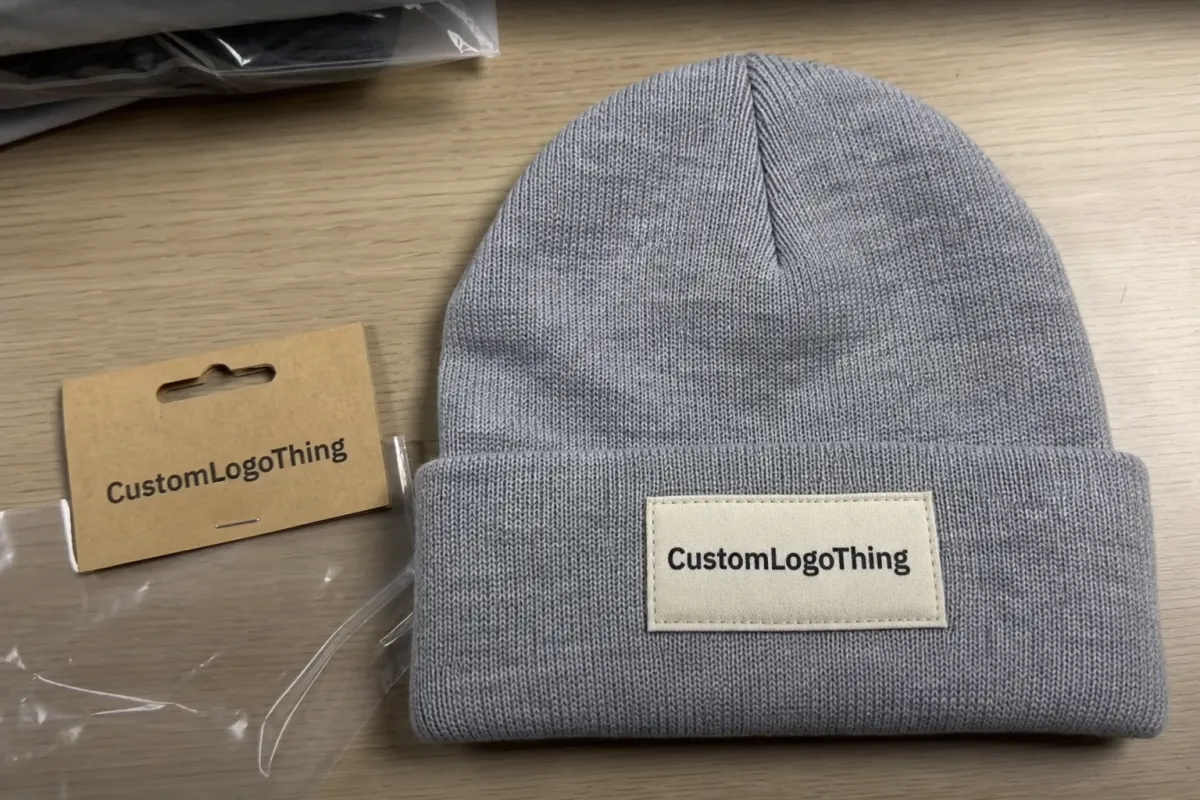
An ecommerce Logo Patch Beanies digital proof checklist is the approval list buyers use before a supplier starts making the order. Not decoration. Not a pretty PDF for someone to rubber-stamp between meetings. It is quality control before the expensive part begins.
A useful proof should show the beanie color, patch material, logo artwork, decoration method, patch size, patch placement, thread or imprint color, total quantity, and production notes. For example: “black cuffed acrylic beanie, 2.5-inch wide faux leather patch, debossed logo, centered on front cuff, 500 pieces, individually polybagged.” That gives production a target. “Logo on hat” does not.
The proof has limits. It does not guarantee exact monitor color, fabric stretch behavior, leather grain variation, or how tiny text feels at actual size. A screen can make a 1.75-inch patch look more readable than it will be on ribbed knit. Genuine leather can vary from piece to piece. Even faux leather can shift slightly by lot.
Approval rule: review specs, not just vibes. “Looks good” has created more ugly inventory than almost any other phrase in custom merchandise.
From a branded product buyer’s point of view, the proof needs to protect the sale after the sale. If the product photos show a crisp tan patch and the shipped beanie has a muddy brown patch with weak contrast, customers notice. Naturally, they notice after the cartons are received.
How the Digital Proof Process Works Before Beanie Production
The usual process is simple on paper. The buyer submits logo files, chooses a beanie style, selects the patch type, confirms quantity, and receives a layout proof from the supplier. Then the buyer reviews, requests changes if needed, approves the final proof in writing, and production gets scheduled.
There is a real difference between a generic mockup and a production proof. A mockup sells the idea. A production proof should show specifications the factory or decoration team will follow. If it does not include size, placement, material, and color details, ask for them. Nicely, but ask.
Vector artwork is best. AI, EPS, SVG, and editable PDF files usually give the cleanest result because the supplier can scale the logo without losing sharpness. A high-resolution PNG may work for printed patches or simple layouts, but it is not magic. Blurry logos do not become crisp because someone emailed them confidently.
Delays usually happen in boring places: missing Pantone references, unclear patch material, last-minute logo swaps, vague placement comments, or approvals split across five people who all think someone else replied. If your team needs approval from marketing, ecommerce, and operations, name one final decision-maker before the proof arrives.
Save the final approved proof. Keep it with the quote, invoice, timeline, and any sample photos. If there is a production dispute later, the approved proof becomes the reference. Not the Slack message. Not the “I thought we said charcoal” memory. The proof.
Patch Material, Logo Detail, and Placement Specs to Confirm
Patch choice drives both the look and the limits. Most ecommerce beanie orders use woven patches, embroidered patches, faux leather patches, genuine leather patches, PVC patches, or printed patches. Each has a personality. Some are clean and detailed. Some are textured and bold. Some are premium but less forgiving.
| Patch Type | Best For | Watchouts | Typical Use |
|---|---|---|---|
| Woven patch | Small text, fine lines, detailed logos | Less raised texture than embroidery | Retail-style ecommerce beanies |
| Embroidered patch | Bold marks, texture, classic merch feel | Tiny text can fill in | Outdoor, team, and lifestyle brands |
| Faux leather patch | Clean logos, strong perceived value, controlled cost | Low contrast can disappear | Fashion, coffee, brewery, and creator merch |
| Genuine leather patch | Premium positioning and natural variation | Higher cost and grain variation | Higher-price branded accessories |
| PVC patch | Bold shapes, weather-resistant branding | Mold fees and thickness limits | Streetwear and tactical-inspired styles |
| Printed patch | Gradients, fine detail, multicolor artwork | May feel flatter than woven or embroidered | Complex logos and illustrated graphics |
Fine text and thin lines may work on woven or printed patches but fail on embroidery or debossed leather. Tiny details are where optimism goes to die. If your ecommerce logo includes a tagline, location line, trademark symbol, and tiny established date inside a 2-inch patch, simplify it. Nobody buying a beanie wants to squint like they are reading a vitamin label.
Many beanie patches sit around 2 to 3 inches wide, with heights often around 1 to 1.5 inches. That range is not a law. It depends on cuff height, logo shape, knit structure, and whether the beanie is folded, slouchy, ribbed, or knit flat. A 3-inch wide horizontal patch can look balanced on a tall cuff and clunky on a shallow cuff.
Placement matters more than buyers expect. Common options include centered on the front cuff, offset left or right, side patch, and vertical label style. For ecommerce photos, centered placement is often easiest because it reads clearly in front-facing product shots. Offset patches can look more fashion-forward, but they need consistent product photography so the customer understands the design.
Check contrast hard. A black debossed logo on dark brown leather may sound premium, but in real life it can look like someone forgot to decorate the patch. Tonal branding can work. It just needs to be intentional and visible enough for the sales channel.
Cost, Pricing, MOQ, and Unit Cost Factors for Patch Beanies
Pricing depends on the beanie style, patch material, decoration method, patch size, number of colors, order quantity, packaging, and shipping destination. A basic stock acrylic cuffed beanie with a simple faux leather patch prices very differently from a custom knit color beanie with genuine leather, individual UPC labels, and carton-level warehouse prep.
As a practical range, small stock beanie runs with simple patches may land around $6.50 to $12.00 per unit, depending on quantity and specs. Larger ecommerce orders can move lower because setup, proofing, and handling are spread across more pieces. Premium beanies, custom knit colors, genuine leather, PVC molds, special packaging, or rush freight can push costs higher. Better inputs usually cost more money. Annoying, but true.
MOQs vary by supplier and decoration method. Some stock beanie projects may start around 50 to 100 pieces. Custom colors, custom labels, woven patches, PVC molds, or imported production can require 250, 500, or 1,000 pieces. If a supplier offers a very low MOQ on a complex custom project, ask what is stock and what is actually custom.
Setup costs may show up as separate line items or be baked into the unit price. Common charges include digitizing for embroidery, mold fees for PVC, leather die fees, woven label setup, artwork cleanup, and proof revisions beyond the included round. A $45 to $95 setup fee is common on simpler projects, while molds or custom tooling can run higher.
Faux leather patches are popular because they look sharp and keep costs reasonable. Embroidered patches add texture. Woven patches handle detail well. Genuine leather raises perceived value, but buyers need to accept natural variation. If sustainability claims are part of your brand story, ask about material sourcing and certifications such as FSC for paper-based packaging components. Not because a beanie patch magically becomes certified, but because packaging claims need proof too.
Ask for a quote that includes unit price, setup fees, proof fees, shipping, packaging, sample cost, revision policy, production timeline, and quantity breaks at 250, 500, 1,000, and 2,500 pieces if those levels fit your sales plan. If you need help matching specs to production options, Custom Logo Things lists broader decoration and sourcing options under Manufacturing Capabilities.
Timeline, Lead Time, and Approval Steps That Affect Delivery
A realistic timeline has several pieces: artwork review, first proof, revision time, final approval, production, quality control, packing, and shipping. Proofing can be fast when the buyer is prepared. It becomes slow when the logo file is weak, brand colors are unclear, or the team wants to debate “forest” versus “pine” for three business days. Excellent use of payroll.
For many stock beanie projects, the first digital proof may be ready within 1 to 3 business days after complete artwork and specs are submitted. Revisions can add another 1 to 2 business days per round. Production often takes 7 to 15 business days after approval for straightforward orders, though this depends heavily on supplier workload, quantity, and decoration type.
Custom beanie blanks, overseas production, high order volumes, physical samples, special packaging, or seasonal demand can stretch the schedule. Fall and winter merchandise calendars are especially unforgiving. If you want beanies for a holiday promo, influencer drop, retail bundle, or warehouse launch date, build a buffer. Ten extra calendar days can feel excessive until freight slips or a proof sits unapproved over the weekend.
Proof approval and delivery date are not the same thing. Approval starts the production clock. It does not mean the order is being boxed. It means the supplier now has permission to make what you approved.
For ecommerce fulfillment, also account for receiving time. Cartons may need to be checked, counted, entered into inventory, photographed, labeled, or routed to a 3PL. If packaging must pass shipping tests or carton requirements, resources from groups like ISTA can help frame how transit handling affects packed goods. A beanie is soft, yes, but crushed cartons and bad labeling still create real receiving problems.
Step-by-Step Proof Review Before You Approve the Order
Use the checklist as a line-by-line review, not a casual glance. Start with the artwork. Check spelling, registered marks, line thickness, small text, logo orientation, and whether the proof shows the correct logo version. Old logos love sneaking into orders. They have a gift for it.
- Confirm the artwork: file version, spelling, trademark marks, tagline size, line thickness, and orientation.
- Review the beanie: style, knit type, cuff height, color name, size, and fiber content if relevant to your product listing.
- Check the patch: material, shape, size, edge finish, logo color, background color, and decoration method.
- Verify placement: centered or offset, vertical or horizontal, distance from edge, and location on folded cuff or beanie body.
- Confirm order details: quantity by color, packaging, shipping address, in-hands date, approval name, and carton labeling.
Do not assume “brown leather patch” means the same brown across suppliers. One supplier’s brown may lean reddish, another may look tan, and another may resemble wet cardboard in low light. If color is critical, request Pantone targets where applicable, ask for material photos, or order a physical sample.
Review the proof at actual size. Print it at scale or view it at 100 percent on screen and compare the patch dimensions with a ruler. If the logo is hard to read at 2 inches wide on paper, it will not become easier to read on textured knit. Fabric is not a rescue mission.
Check ecommerce prep too. Do you need individual polybags? UPC labels? Size stickers? Carton labels by SKU? A 500-piece order split across black, heather gray, navy, and olive can become messy fast if the proof and packing notes only say “assorted colors.” If your store sells each color separately, the production order needs to support that SKU structure.
Simple rule: factories produce what is approved, not what the buyer meant.
Common Proofing Mistakes That Turn Into Expensive Beanie Problems
The big mistakes are painfully common: approving too quickly, reviewing only on a phone, ignoring actual patch size, forgetting cuff height, skipping color references, and assuming the supplier will “know what I mean.” Bold strategy. Rarely profitable.
Small type is the repeat offender. Ecommerce logos often include taglines that work beautifully on websites, hangtags, and packaging inserts. On a 2.25-inch patch, that same tagline may turn into decorative fuzz. Woven patches can usually handle more detail than embroidery, but every method has limits. If the proof makes small text look questionable, believe it.
Contrast errors are another classic. Tonal logos can look expensive when the decoration method gives enough visibility. A black print on charcoal fabric can be cool. A blind deboss on dark leather can also look premium. But low contrast should be a decision, not an accident discovered during product photography.
Placement problems often come from treating a beanie like a flat postcard. It stretches. The cuff curves. Rib knit shifts. A patch that appears centered on a flat proof may sit differently when worn, especially on thicker cuffs or slouchy styles. Placement notes should be practical: “centered on front cuff, patch bottom edge 0.5 inch above cuff bottom” is better than “put it in the usual place.”
Quantity and color mix errors are boring until they cost money. A buyer may approve the logo but miss that the proof lists 200 black beanies instead of 100 black and 100 heather gray. That mistake affects inventory, photography, ad planning, and launch promises. Read the quantity table. Every line.
The biggest mistake is treating the digital proof like a formality. After approval, changes move from “quick revision” to “rework, remake, discount, or live with it.” None of those are fun line items.
Next Steps Before You Send Final Approval
Before approving, gather your final logo file, brand color references, beanie style, patch material choice, desired patch size, order quantity, delivery deadline, and packaging needs. That bundle gives the supplier enough information to produce a useful proof instead of playing twenty questions by email.
Compare the proof against your ecommerce product page plan. The color shown online should match the color being produced as closely as the material allows. Patch placement should match the photos you intend to use. Perceived logo size should feel accurate, especially if your brand depends on subtle premium styling rather than loud merch branding.
Print the proof at actual size or view it at 100 percent scale. Hold it near a beanie if you have a blank sample. The exercise takes two minutes and catches a surprising number of problems. If the artwork looks too small, too low, or too low-contrast before production, say so before approval.
Use one decision-maker for final proof approval. Committees are fine for strategy decks. They are terrible for beanie placement approvals. One person should compare the proof to the checklist, collect internal comments, and send one clear approval or one clear revision request.
Save the approved proof, quote, invoice, and timeline in one folder. Reorders become faster, more consistent, and less dependent on someone digging through old email threads with the energy of an archaeologist. If you are planning related branded merchandise or retail packaging, review Manufacturing Capabilities early so materials, decoration methods, and packing specs do not conflict later.
The ecommerce Logo Patch Beanies digital proof checklist should be completed before approval, not after the first carton lands and everyone suddenly develops excellent eyesight. Check the file, check the patch, check the placement, check the quantities, and approve only when the proof matches the product you are willing to sell.
FAQ
What should be included in an ecommerce logo patch beanies proof checklist?
Include the logo file version, beanie color, patch material, patch size, patch placement, logo color, decoration method, quantity, packaging needs, ship-to address, and approval deadline. Also check spelling, small text, trademark symbols, and whether the proof matches the ecommerce product listing you plan to publish.
Can a digital proof show the exact color of custom logo patch beanies?
A digital proof can show intended colors, but monitor settings, lighting, knit texture, leather grain, and material finish can shift how colors appear. Use Pantone references when possible, and ask for material photos or a physical sample if color accuracy is critical to the brand or product page.
How long does the proofing process take for ecommerce beanie orders?
A clean logo file and clear specs can make proofing fast, sometimes within 1 to 3 business days depending on the supplier. Revisions, missing artwork, unclear color choices, physical sample requests, and slow approvals add time before production even starts.
What is the best patch type for detailed ecommerce logos on beanies?
Woven and printed patches usually handle small details better than embroidery or debossed leather. For bold, simple logos, faux leather, genuine leather, PVC, or embroidered patches can look stronger and more premium, provided the proof confirms size, contrast, and placement.
Should I order a sample before approving bulk logo patch beanies?
Order a sample if the beanie is for a major launch, premium price point, strict brand color requirement, or first-time supplier relationship. For repeat orders or simple stock beanie projects, a detailed digital proof may be enough if every spec is clearly confirmed in writing.