Candle Woven Label Beanies Material Sample Guide
Use this Candle Woven Label Beanies material sample guide to compare yarn, label feel, stitch density, pricing, and timelines before approving bulk orders.
Candle Woven Label Beanies Material Sample Guide: What Buyers Are Really Sampling
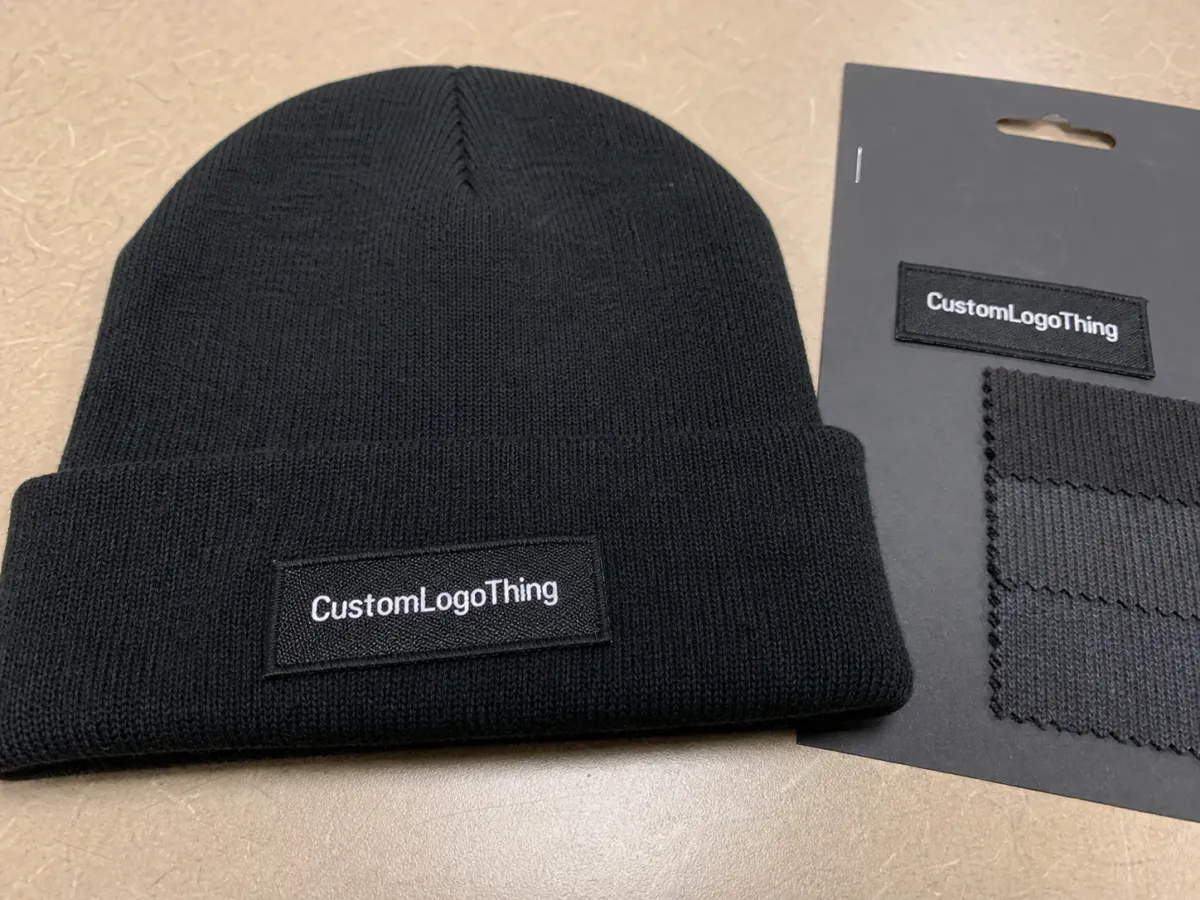
A shopper may touch a beanie for less than three seconds. That brief contact can decide whether a candle brand feels giftable, premium, practical, or forgettable. A candle Woven Label Beanies material sample guide is not just about approving a winter accessory with a logo sewn on the cuff.
The sample is a risk-control tool. It checks material feel, label legibility, color matching, stretch recovery, sewing tension, and shelf appeal before hundreds or thousands of units arrive. For candle brands, that matters because the beanie often sits beside glass jars, rigid gift boxes, kraft wraps, ribbons, tissue, or corrugated shippers. If the knit feels thin next to a $38 candle, the whole bundle loses authority.
Candle brands use Beanies for Winter launch kits, subscription-box add-ons, holiday market extras, staff apparel, loyalty gifts, and corporate gifting programs. The item extends the fragrance story into something wearable. Pine, smoke, amber, cedar, oatmeal, vanilla, black fig: those words imply texture and temperature. The knit has to support that mood.
A useful sample breaks into clear parts: yarn content, knit weight, cuff structure, woven label substrate, thread colors, backing, edge finish, attachment method, folding style, and packaging presentation. Each part changes the buyer’s reaction. A folded damask label with a soft edge says something different from a large taffeta patch sewn onto a heavy rib cuff.
There is also a packaging connection many apparel vendors underplay. The beanie label behaves like a tiny carton panel. It carries brand recognition, tactile cues, legal information in some cases, and perceived value within a surface area that may be only 1.5 by 2 inches. That is not much room for weak contrast or overstuffed artwork.
Sampling is not a courtesy step. It is the cheapest moment to catch a mismatch between the candle story, the merch item, and the customer’s expectation of quality.
Before bulk production, the sample should prove four things: comfort, label readability at arm’s length, durability under normal handling, and whether the finished beanie fits the fragrance concept. A smoky cedar candle may tolerate a rustic woven texture. A hotel-inspired white tea candle probably needs cleaner lines, tighter color discipline, and less visual noise.
How Woven Labels Work on Beanies Without Fighting the Knit
Woven labels are not printed labels. Threads create the artwork, so detail depends on weave density, thread count, color contrast, and physical label size. A logo that looks sharp on a jar label can turn muddy on a 1-inch-tall woven tag if the strokes are thin or the letters sit too close together.
Damask is usually the smoothest construction and the best option for fine lettering. It can hold compact wordmarks, small icons, and higher-contrast candle branding more cleanly than rougher weaves. Satin-style labels can feel polished and slightly glossy, which suits luxury, spa, and hotel-inspired candle lines, although glare may reduce readability under market lights. Taffeta-style labels are more textured and often less expensive. They can work well for artisan, apothecary, farmer’s market, and botanical brands that want a more handmade signal.
The knit matters just as much as the label. Ribbed cuffs stretch. Acrylic yarn snaps back differently than cotton blends. Wool blends may feel warmer but can introduce itch for sensitive wearers. If the label is too stiff, too large, or sewn with poor tension, it can pucker when the cuff curves around the head.
Common placements include the front cuff, side cuff, wraparound fold label, hem tag, and inside care label. Front cuff placement gives the strongest photo visibility. Side cuff placement feels quieter and less promotional. A wraparound fold label can look retail-ready and compact, especially for minimalist candle brands. Inside care labels are not decorative, but they may be needed for fiber content, washing instructions, country of origin, and channel requirements.
Review the sample on a head form or worn model, not only flat on a desk. Curvature changes everything. A crescent moon icon may stretch visually. A small fragrance name may disappear. A centered logo may sit lower than expected once the cuff is folded and worn.
Compliance can be simple, but it should not be ignored. Depending on the sales market and channel, sellers may need accurate fiber content, care instructions, country of origin, and separation between a decorative brand label and care information. Textile labeling and retail channel rules vary, so buyers should confirm requirements before approving bulk goods.
Material Factors That Change Feel, Color, and Brand Perception
Material is the part buyers often think they understand until the sample lands. Acrylic is common because it is warm, color-stable, widely available, and cost-efficient. Cotton feels breathable and familiar, but it may not recover as sharply after stretching. Wool blends can feel premium and warm, though itch, shrinkage, pilling, and care instructions need attention. Recycled polyester and mixed yarns can support sustainability claims if the supplier can document fiber content honestly.
From a packaging buyer’s point of view, this is similar to choosing between 350gsm C1S artboard, kraft paper, and corrugated cardboard. Each material sends a signal before the customer reads a word. A soft recycled yarn with a natural cotton-look label can support a soy candle or botanical line. A dense black rib knit with a high-density damask label may suit luxury candles, hotel amenities, and corporate gifting.
Color translation is a frequent trap. The beanie yarn, woven label thread, candle jar label, box print, ribbon, and tissue paper may all represent “cream,” but not the same cream. Under warehouse LEDs, market tent lighting, and product photography, undertones can drift yellow, gray, pink, or green. For brands matching candle packaging, ask for thread references, yarn cards, or physical swatches rather than relying on screen previews.
Handfeel should be scored, not waved away as personal taste. During sample review, rate softness, stretch, itchiness, thickness, cuff pressure, label edge comfort, and warmth. A simple 1-to-5 score across six reviewers gives better data than one founder saying, “I like it.”
| Beanie Material | Typical Strength | Watch Point | Best Candle Brand Fit |
|---|---|---|---|
| 100% acrylic | Cost control, color range, stretch recovery | Can feel synthetic if yarn is too coarse | Winter pop-ups, staff beanies, mid-price gift sets |
| Cotton blend | Soft, breathable, familiar handfeel | May stretch out faster than acrylic blends | Clean, botanical, wellness, and soy candle lines |
| Wool blend | Warmth and premium perception | Itch risk, care requirements, higher cost | Luxury winter kits and limited seasonal drops |
| Recycled polyester blend | Sustainability positioning and durability | Claims need supplier documentation | Eco-minded brands using recycled materials or FSC certified packaging |
Use case should drive the material. A premium holiday candle kit may justify a heavier rib knit at a higher unit cost. A giveaway beanie for a two-day winter market may need broad sizing tolerance and a simpler woven label. Both choices can be right. The mistake is pretending they serve the same commercial purpose.
If yarn, label size, thread palette, or placement changes, request a material swatch or pre-production sample. Even a small substitution can shift perceived value. The same discipline applies to candle packaging: post-consumer waste content, biodegradable packaging claims, and FSC certified board all need physical and documentary confirmation. For forestry-related packaging claims, the Forest Stewardship Council is a useful reference point.
Pricing, MOQ, and Unit Cost Drivers for Custom Beanie Samples
Sample pricing can look irrational. A single sample may cost $45 to $120, while bulk units land much lower. That does not automatically mean the supplier is padding the quote. One-off setup, loom programming, artwork conversion, yarn sourcing, sewing labor, inspection time, and freight all get compressed into one lonely sample.
The main cost drivers are predictable: beanie material, knit weight, label type, label size, thread count, number of colors, attachment labor, packaging, inspection level, and order quantity. A 2.5-inch damask label with six thread colors costs more than a small two-color fold tag. A heavier rib knit costs more than a stock acrylic blank. Individual kraft paper belly bands add labor and material, even if the band looks simple.
MOQ depends on how custom the order becomes. Lower minimums are often possible for stock beanie colors and existing woven label formats. Custom-dyed yarns, unusual knit patterns, specialty labels, or multiple colorways usually push minimums higher because the supplier has to reserve materials and production time.
| Order Scenario | Likely MOQ Pattern | Typical Bulk Cost Signal | Budget Comment |
|---|---|---|---|
| Stock acrylic beanie with small woven label | Lower MOQ possible | Often around $3.80-$6.50 per unit at moderate volume | Good for pop-ups and staff wear |
| Heavier rib knit with damask front label | Moderate MOQ | Often around $6.50-$10.50 per unit depending on weight | Better fit for premium candle bundles |
| Custom yarn color with specialty label | Higher MOQ likely | Often above $9.00 per unit before special packaging | Best for planned launches, not last-minute gifts |
| Multi-color assortment with individual packaging | MOQ may apply per color | Packaging and sorting can add $0.25-$1.25 per unit | Ask for packed-by-color carton details |
Cost tradeoffs are not always intuitive. Reducing label size may save more than removing one thread color. Choosing a stock beanie color may protect the budget better than downgrading to an uncomfortable yarn. A buyer who saves $0.40 per unit on material but loses wearability has not saved much.
Request quotes that separate sample cost, bulk unit cost, setup fees, shipping, revision fees, and packaging add-ons. That separation shows which part of the order is actually moving the price. It also makes supplier comparisons cleaner, especially if one quote includes inspection and another treats it as extra.
The cheapest beanie is often the expensive one. Complaints, weak gifting impact, poor customer photos, and a product that fails to match the candle collection can erase the savings from a slightly lower unit cost. The same principle applies to Custom Labels & Tags: a small label can carry a large share of perceived quality.
Process and Timeline: From Artwork File to Approved Sample
The normal sequence is straightforward. The buyer submits the logo, target specs, preferred beanie color, label size, placement, quantity, and launch timing. The supplier checks the artwork. The label design is converted for weaving. Materials and blanks are confirmed. The sample is produced, inspected, photographed, shipped if needed, then approved or revised.
A practical sample guide should include checkpoints, not just a promise that “production starts soon.” Useful checkpoints include artwork proof, material confirmation, woven label strike-off, sewn sample, photo or video review, physical sample shipment, and final production approval.
Lead time varies. A simple stock-color beanie with a clean logo may move quickly after proof approval. A custom yarn, dense label, multiple colorways, or holiday gifting deadline can stretch the schedule. Low-resolution logos, tiny text, uncommon thread colors, international shipping, multiple decision-makers, and late packaging changes are the usual delay points.
Ask for a timeline with dependencies, not just a ship date. If artwork approval takes four extra days, that delay can push label weaving, sewing, inspection, and freight. The factory may be ready, but the job is still stuck.
Digital proofing can be enough for a repeat order, a simple wordmark, or a low-risk staff beanie. A physical sample is worth the wait if the product supports a premium candle launch, a retail gift set, or packaging that needs close color coordination with jars, cartons, belly bands, or ribbons.
Work backward from the launch date. Include sample production, one revision round, bulk production, quality control, freight, receiving, kitting, and promotional packaging work. For transport testing of larger kits, especially if beanies ship with glass candles, the International Safe Transit Association provides useful packaged-product testing context.
- Artwork review: confirm vector files, minimum line weight, and simplified small text.
- Material confirmation: lock yarn content, beanie color, cuff style, and label substrate.
- Strike-off review: inspect the woven label before it is sewn to the beanie.
- Physical sample approval: check comfort, stretch, logo clarity, placement, and packaging.
- Bulk standard: keep one approved sample sealed for production comparison.
Common Sampling Mistakes That Make Beanies Look Cheaper Than Planned
The most common mistake is approving a logo on screen without testing how it weaves at the actual label size. Small serif text, thin scent names, delicate botanicals, and detailed candle icons can blur once converted into thread. Printed packaging can hold tiny detail that woven labels cannot.
A second mistake is judging color from a single phone photo. Camera settings, compression, and lighting can hide undertones that become obvious beside candle cartons, ribbons, or jar labels. Ask for photos under at least two lighting conditions and compare the physical sample to existing packaging if brand color matters.
Oversized labels are another quiet problem. A large stiff patch on a flexible cuff can pull, wrinkle, or feel glued-on even when it is sewn properly. For many beanies, a smaller label with strong contrast looks more premium than a large label trying to say too much.
Comfort failures damage repeat use. Scratchy label backs, sharp folded edges, tight cuffs, and heavy seams can turn a giftable merch item into a drawer item. Wear the sample for at least 10 to 20 minutes. That short test catches pressure and itch better than a quick touch test.
Assortment errors are common too. A label that reads well on a charcoal beanie may disappear on forest green or oatmeal. If one sample color is approved but five beanie colors are ordered later, check contrast across the full range. Candle brands often care deeply about coordinated palettes, so the same discipline used for jar labels and boxes should apply here.
Document every approved spec in writing: yarn material, beanie color, label dimensions, thread colors, placement, stitch method, packing style, approval photos, and acceptable tolerance. For related hang tags, belly bands, or woven brand tabs, align specs with your Custom Labels & Tags so the beanie does not feel like it came from a separate brand universe.
Checks Before You Approve Bulk Beanie Production
Before approving bulk production, treat the sample like a miniature retail audit. Inspect label clarity from three distances: close hand view, arm’s length, and a few feet away as it might appear in a booth photo. Stretch the cuff. Check the reverse side. Compare colors against candle packaging. Photograph under two lighting conditions. Wear-test it, even briefly.
Create a scorecard instead of relying on a vague group reaction. Weight the criteria based on commercial risk. A premium gift set might give 30% to material feel, 25% to brand match, 20% to label readability, 15% to comfort, and 10% to cost fit. A staff uniform beanie might weight durability and cost more heavily.
Send consolidated feedback in one message. Include annotated photos, exact revision requests, and priority levels. “Move label up 0.25 inch” is useful. “Make it feel more premium” is not. If three people send separate comments, the supplier may fix the wrong issue first or create contradictions.
Approve, revise, or restart with discipline. Approve if the sample matches the agreed specs and supports the candle brand’s commercial goal. Revise if one controllable element is off, such as thread contrast, label placement, or cuff fold. Restart if the material, fit, or overall brand impression misses the mark. Restarting feels painful. Shipping 2,000 disappointing units feels worse.
Keep one approved sample sealed as the production standard. That sample becomes the reference point if bulk goods vary in stitching, color, placement, folding, or handfeel. In packaging, buyers often keep signed carton proofs and drawdown sheets for the same reason: memory is weak, but a physical standard is specific.
Use the candle woven label Beanies Material Sample guide as a decision tool, not a decoration checklist. The right sample protects launch timing, budget, and brand perception before volume production turns small doubts into expensive inventory.
FAQ
What should be included in a candle beanie woven label material sample?
A useful sample should include the actual beanie material, woven label quality, label size, thread colors, placement, stitch method, and any packaging or folding style planned for the final order. If the supplier uses substitute yarn or a temporary label, ask them to mark exactly what will change in bulk production so approval is not based on the wrong assumptions.
How many samples should I order before approving custom woven label beanies?
For a single-color beanie with a simple logo, one physical sample plus a final proof may be enough. For multi-color assortments, premium Candle Gift Sets, or new brand artwork, request samples or at least label strike-offs for each major color combination to confirm contrast, edge comfort, and overall feel.
Can small text from a candle logo work on a woven label beanie?
Small text can work only if the label is large enough, the weave density is high enough, and the thread contrast is strong. Fine fragrance notes, taglines, and delicate serif lettering often need simplification because woven threads cannot reproduce detail the same way printed candle packaging can.
What affects the cost of candle woven label beanies the most?
The biggest cost factors are order quantity, beanie material, knit weight, label size, label complexity, number of thread colors, sewing labor, packaging, and shipping method. Using stock beanie colors and a clean woven label design usually controls cost better than choosing custom yarn dyeing or oversized labels.
How long does the custom beanie sample and production process take?
Timing depends on artwork readiness, material availability, label weaving, sample shipping, revision rounds, bulk production, and freight. Buyers should plan backward from the candle launch or gifting date and include buffer time for one sample revision, especially during holiday or cold-weather demand peaks. A candle woven label beanies material sample guide helps keep those dependencies visible before the order is locked.