Why Candle Woven Label Beanies Bulk Order Planning Matters Before You Buy
The beanie body is rarely the part that derails a bulk headwear order. The delays usually start with the decoration: an unclear label size, a logo too detailed for thread, a cuff height nobody measured, or a packing method added after pricing. Good Candle Woven Label beanies bulk order planning means locking down those details before yarn, labels, sewing time, and freight are already committed.
Many buyers begin with a simple idea: black cuff beanie, small logo, winter merch. Then the proof arrives. Should the label be flat or folded? Does the flame icon still read at 1 inch wide? Is the label centered on the front cuff or shifted to the side? Will the same label work on oatmeal, charcoal, and rust beanies? Each answer affects sampling, Cost, and Production speed.
For candle brands, spa retailers, gift companies, and seasonal merch buyers, a woven label beanie has a specific job. It carries the brand beyond the jar, rigid box, belly band, or shipping carton. That makes it useful for holiday bundles, staff merchandise, wholesale programs, subscription boxes, and gift sets where the soft goods item needs to feel intentional rather than thrown in as a generic extra.
Woven labels suit candle merchandise because they feel permanent. A small flame icon, apothecary-style shop name, fragrance collection mark, or cream-and-charcoal brand tag can look more finished than a temporary hangtag or oversized print. Thread has texture. On a knit cuff, that texture reads as part of the product, not an afterthought.
A strong bulk plan reduces rejected samples, uneven label placement, surprise unit-cost changes, and rushed freight decisions. It also gives the buyer better control over margin, in-hand date, carton handling, and retail presentation. Buyers comparing options through Wholesale Programs usually get cleaner quotes when they submit written specs instead of broad assumptions.
Practical rule: if the label artwork, stitch position, packaging method, and delivery window are not defined before the purchase order, they will still need to be decided later, usually under more pressure.
The details below cover beanie styles, woven label choices, specifications, pricing factors, timeline risks, inspection checks, and quote information that make bulk ordering easier to control.
Product Details That Shape the Look, Feel, and Retail Fit
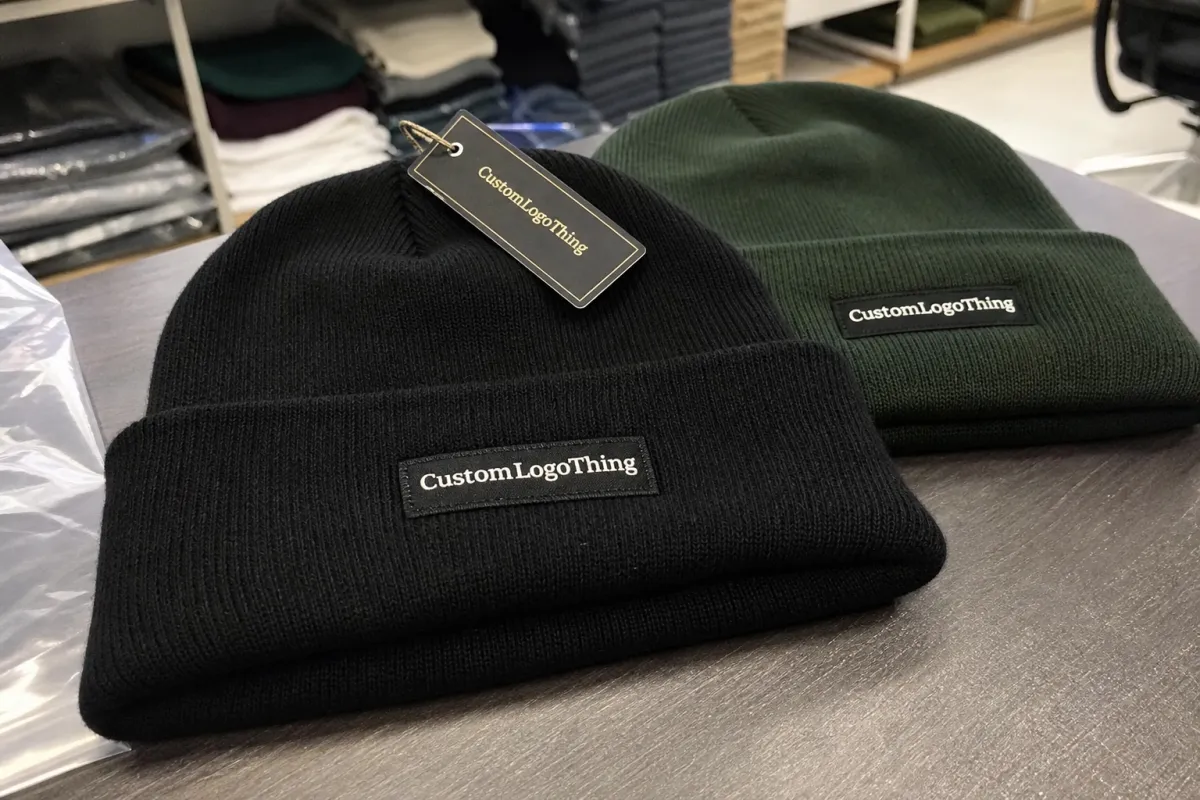
Start with the beanie body. A cuffed knit beanie is the safest bulk choice for a visible front label because the cuff gives the sewing operator a stable zone and gives the logo a natural frame. A fisherman beanie sits shorter and has a boutique look, especially in oatmeal, charcoal, olive, navy, warm brown, and other muted colors. Slouch beanies feel relaxed and gift-shop friendly, though they are less precise for front-label presentation. Rib-knit beanies hold shape well across repeated wear, which helps if the product will be handled in retail bins or packed into Candle Gift Sets.
Yarn selection affects hand feel, cost, carton volume, and perceived value. Acrylic remains common because it is cost-effective, warm, and widely available in stock colors. Softer acrylic blends feel smoother against the forehead and fit wellness or spa positioning. Recycled polyester blends can support sustainability language, but only if material documentation backs the claim and the buyer’s own standards allow it. Heavier gauges create a more structured winter item; lighter knits pack flatter and may reduce freight volume.
For woven labels, the main choices are construction, edge finish, and fold. Flat woven labels work well when the logo needs a clean rectangular patch. Fine damask-style weaving gives better detail for smaller lettering because the threads are finer and the surface is tighter. Satin-look woven labels feel smoother and can support a more polished retail appearance. Folded labels are useful when the edge needs to tuck into a seam or cuff, especially for side tabs or wraparound hem labels.
| Beanie Style | Best Use | Typical Label Placement | Planning Note |
|---|---|---|---|
| Cuffed knit beanie | Retail merch, staff gifts, holiday bundles | Front cuff center or side cuff | Stable sewing zone and repeatable label placement |
| Fisherman beanie | Boutique candle shops and minimalist sets | Side cuff or small front patch | Shorter height requires careful label scale |
| Slouch beanie | Relaxed gift programs and lifestyle merch | Lower front or side label | Less structured fit creates a more casual presentation |
| Rib-knit beanie | Frequent wear, retail handling, cold-weather promos | Front cuff patch | Strong stretch recovery helps maintain shape after packing |
Placement changes the item’s personality. Front cuff center gives maximum visibility. Side cuff feels quieter and more retail. A wraparound hem label can look boutique if the fold is clean and the stitch color is controlled. Inside labels work for care details, batch identity, or private-label information that should not compete with the main branding.
Candle-specific design has a different rhythm from sports merch or streetwear. Small flame icons, serif typography, seasonal gift colors, fragrance collection names, and neutral palettes often pair well with candle boxes, tissue, ribbons, and printed inserts. A black label on a black beanie can look premium, but only if the thread contrast is high enough to read. Cream thread on oatmeal knit may look calm and natural in a mockup, then nearly vanish under warm store lighting.
Woven labels cannot reproduce every photographic gradient, tiny stroke, or soft shadow. Thread is not ink. Artwork should usually be simplified to one to four thread colors, firm contrast, and enough letter spacing to stay readable at label scale. For more label construction options, Custom Logo Things can review related decoration details through Custom Labels & Tags.
Specifications to Confirm Before Sampling Beanies with Woven Labels
Sampling moves faster when the buyer defines the core specs early. Confirm beanie style, knit pattern, yarn content, finished height, cuff height, stretch tolerance, base color, label dimensions, label fold type, label edge finish, stitch color, stitch pattern, and packing method. The list looks long; the alternative is worse. A sample gets approved visually, then the purchase order describes something slightly different, and production stops while everyone decides which version is real.
Most promotional and retail beanies are one-size adult styles, yet fit is not controlled by a flat measurement alone. Finished height, cuff depth, yarn recovery, and knit elasticity all affect how the beanie sits on a head. A 9-inch cuffed beanie and a 12-inch slouch beanie may both be “adult,” but they sell differently and photograph differently. If possible, check samples on actual heads or fit forms rather than judging only on a table.
Label size deserves more attention than it usually receives. A small woven label, such as 1.0 by 1.5 inches, can look refined but leaves little room for a long candle company name or fragrance phrase. A front cuff patch closer to 1.5 by 2.0 inches or 1.75 by 2.5 inches gives better legibility, especially if the logo includes a flame icon plus text. Oversizing adds cost and changes the style. The goal is not the biggest patch; it is the clearest patch that fits the beanie.
Artwork files should be clean. Vector formats such as AI, EPS, or editable PDF are preferred because they allow the design to be adjusted for thread without rebuilding a low-resolution image. Pantone references or thread color targets help manage expectations, but thread and yarn do not always match printed candle labels exactly. A box printed on 350gsm C1S artboard with soft-touch lamination reflects light differently than woven polyester thread.
Attachment method affects durability and finish. A folded label sewn on two sides can work well on a cuff edge or side tab. A flat front patch may need four-side stitching so the corners do not lift during stretch, retail handling, or repeated wear. Stitch color can blend into the label border or contrast on purpose, but it should be specified. “Match as close as possible” only works when the acceptable tolerance is understood.
- Two-side stitch: clean for folded labels and side tabs, with less visible thread on the face.
- Four-side stitch: stronger for flat front patches, especially on stretchy rib knits.
- Folded cuff insertion: tidy when planned early, but less flexible after blanks are made.
- Contrast stitch: useful as a design detail, but it magnifies crooked sewing.
Packaging specs also change cost and timing. Individual polybags, paper belly bands, carton quantity, carton markings, SKU stickers, gift-ready packing, and color separation should be decided before pricing. A beanie packed loose in master cartons follows a different labor path than a beanie folded, banded, stickered, and separated by fragrance collection.
Treat the written spec as the order blueprint. If the approved sample shows a 1.5-inch label and the purchase order calls for 2 inches, production will slow down until the mismatch is resolved. That is not paperwork for its own sake. It protects the buyer, the schedule, and the production team.
Pricing, MOQ, and Unit Cost Factors for Bulk Beanie Orders
Pricing is driven by connected inputs, not one flat number. Quantity, yarn type, beanie weight, knit complexity, base color availability, woven label size, label color count, sewing method, packing requirements, and delivery destination all feed the final unit cost. For candle Woven Label Beanies bulk order planning, the quote should show what is included instead of presenting a low unit price that leaves out sewing or packing assumptions.
MOQ depends on how custom the order becomes. Standard blank beanies with a custom woven label may have flexible minimums, sometimes starting in the low hundreds depending on blank availability and label setup. Custom yarn colors, unusual knit structures, private-label packaging, or many SKU splits can require higher minimums because setup, material sourcing, and line changeovers need enough volume to make sense.
Woven labels are often cost-effective in bulk because once the artwork and loom setup are approved, the decoration cost becomes predictable. Repeat programs benefit most. A candle brand that reorders the same label for winter gift sets, staff merch, and wholesale kits can often avoid repeating some artwork setup work, assuming the same label size and construction remain approved.
Common adders include sample fees, rush sampling, extra label colors, oversized labels, custom paper bands, barcode stickers, separate color assortments, inspection requirements, and expedited freight. These are not hidden costs if they are discussed early. They become frustrating only when they appear after the buyer has built a retail margin around an incomplete quote.
| Order Factor | Typical Cost Impact | Buyer Planning Tip |
|---|---|---|
| Quantity | Higher quantities usually lower unit cost by spreading setup and sewing labor | Quote a test run, standard run, and reorder tier |
| Label size | Larger labels use more thread and may add sewing time | Size the label for readability, not decoration for its own sake |
| Thread color count | More colors can increase label setup and complexity | Keep most logos to one to four thread colors where possible |
| Packaging | Bags, belly bands, SKU labels, and carton sorting add labor and materials | Decide retail packing before quote approval |
| Freight | Carton size, delivery deadline, and destination affect landed cost | Compare total landed cost, not only unit price |
As a broad planning range, a standard acrylic cuff beanie with a small woven label may price very differently at 250 units than at 2,500 units. A simple label and basic master-carton packing will stay leaner than a multi-color assortment with belly bands, SKU stickers, and a tight delivery date. Exact pricing depends on current material costs, quantity, label construction, and freight method, so a spec-based quote is the only responsible way to buy.
Candle brands should compare total landed cost. Carton volume matters. A heavier cuffed beanie packed in individual bags may take more space than expected, and expedited freight can erase savings from a cheaper unit price. For packaging decisions tied to sustainability, buyers may also want to review general guidance from the EPA Sustainable Materials Management program, especially if recycled materials or reduced packaging claims are part of the campaign.
A useful quote should separate the assumptions: beanie material, label construction, sewing, packaging, sample timing, production lead time, and freight basis. That prevents a cheaper-looking option from omitting label attachment, individual packing, carton marks, or other work the buyer still needs.
Process and Timeline from Artwork Review to Packed Cartons
A clean order follows a steady sequence: quote request, spec review, artwork cleanup if needed, digital proof, woven label sampling or reference approval, beanie sample approval, bulk material confirmation, knitting or blank allocation, label production, sewing, inspection, packing, and shipment. Skip one of those steps without a reason and the risk does not disappear. It moves somewhere else in the order.
Timeline depends heavily on the buyer’s information at the start. Clean logo files, confirmed color references, label placement instructions, and packaging decisions can remove several days of back-and-forth before sampling. If the team has to ask whether the label is 1.25 inches or 2 inches, whether the cuff folds to 2.5 inches or 3 inches, and whether each color needs separate carton labels, the calendar stretches before production even begins.
Sampling should confirm more than the logo. A pre-production sample helps verify yarn feel, cuff proportion, label readability, stitch placement, and full retail appearance. A digital proof alone may be acceptable for a reorder using an already approved beanie, label, and packing method. For a first run, physical review is usually worth the extra time because thread scale and knit stretch are hard to judge from a screen.
Lead-time pressure often comes from the sales program, not the beanie itself. Holiday selling windows, launch kits, subscription box pack-outs, wholesale deadlines, and warehouse receiving appointments all have hard dates. If the beanies must arrive before a candle gift set is assembled, the in-hand date should reflect the pack-out schedule, not just the public launch date.
Multi-color assortments need extra planning. A cream woven label that looks elegant on charcoal can disappear on oatmeal. A rust label may look rich on black but weak on brown. Every beanie color should be checked against the label colors, and sometimes a border thread or alternate label version is the right fix. That adds complexity, but it prevents the retail display from looking uneven.
Before cartons close, inspection should cover label alignment, loose threads, cuff height consistency, color matching, quantity by carton, polybag or band placement, carton labels, and SKU separation. For shipping performance and transit testing language, buyers can reference standards and test procedures from ISTA, especially when finished goods move through parcel networks or third-party logistics channels.
Rush orders are sometimes possible. Success depends less on pressure and more on fast approvals, available yarn colors, simple decoration, and packaging choices that do not need special sourcing. A standard black cuff beanie with a one-color woven label is a very different rush request from four custom beanie colors, three label versions, and gift-ready belly bands.
Quality Checks That Prevent Common Bulk Order Problems
The most common bulk beanie issues are not mysterious. Labels are sewn slightly crooked. Label edges lift. Thread colors lack contrast. Cuff folds vary by half an inch. Beanies are packed in the wrong color ratio. Artwork that looked crisp on screen becomes cramped in woven thread. None of these problems are unusual, and most can be reduced with better specs and review points.
Readability starts before the loom. Review artwork at actual woven-label size, not full-screen size. Reduce fine detail. Increase letter spacing. Choose high-contrast thread colors. Avoid tiny taglines unless the label is large enough to support them. A candle brand with a long name may need to prioritize the main wordmark and drop the scent family line from the woven label, then use a hangtag or belly band for the extra copy.
Stitch durability deserves a practical look. Two-side stitching can be right for a folded label because the fold structure helps keep the label stable. Four-side stitching may be better for a flat patch on a front cuff, especially if customers will stretch the cuff while putting the beanie on. The tighter the knit stretch, the more the patch corners matter.
Color control should be discussed honestly. Yarn and thread colors are matched to available materials and can vary slightly from printed packaging. That does not mean the product is wrong; it means soft goods and paper packaging use different materials, dyes, finishes, and light reflection. If an exact brand match is critical, buyers should approve physical references and understand tolerance before expecting the beanie label to match a candle box perfectly.
Assortment control matters for bulk purchases. If the order includes three beanie colors, four fragrance labels, two store locations, or several gift set versions, the packing list should define quantity by style, color, label version, and carton. A clear carton map can prevent receiving teams from opening every box just to find the right version.
- Label check: verify placement measurement, straightness, stitch color, and corner security.
- Fit check: review finished height, cuff depth, stretch, and recovery after handling.
- Color check: compare approved references against bulk yarn and thread under steady lighting.
- Packing check: confirm bags, bands, SKU labels, carton marks, and quantity per carton.
- Documentation check: keep the approved proof, sample notes, and final spec together.
Packaging quality also supports retail operations. Clean folding, correct individual bags or bands, readable carton marks, outward-facing SKU labels when requested, and carton weights that fit receiving requirements all reduce friction after delivery. If the beanies are headed into candle gift boxes, subscription kits, or retail back rooms, the packing style can save labor on the buyer’s side.
This is the stage where preventable problems are still cheap to catch. Once goods are sewn and boxed, even a small correction becomes slower, more expensive, and more disruptive to the delivery schedule.
Next Steps for a Clean Quote and Purchase Order
A reliable quote starts with practical details. Choose the beanie style, estimate quantity, select base colors, provide logo artwork, decide woven label size and placement, note packaging preferences, share the delivery location, and state the required in-hand date. If some details are not final, say so. A good quote can show open questions clearly instead of pretending every decision is locked.
Send any existing candle packaging references. Box colors, jar labels, tissue paper, ribbon, hangtags, retail inserts, and brand guidelines help the beanie feel connected to the candle line. The woven label does not need to copy every packaging element, but it should speak the same visual language. A spa candle brand in soft neutrals will usually need a different thread palette than a bold holiday fragrance drop.
Custom Logo Things can return a proper quote with item description, material assumptions, MOQ, quantity breaks, label method, estimated sample timing, production lead time, packing details, freight assumptions, and open questions that affect pricing. Buyers can also review common ordering questions through the FAQ before finalizing the purchase order.
Before order release, approve one final written spec. Include beanie color names, label artwork version, thread colors, placement measurements, stitch method, packaging instructions, carton requirements, delivery address, and in-hand date. If the order has multiple label versions or store allocations, attach the assortment breakdown in the same approval chain.
Think about reorders during the first run. Keep approved artwork, label specs, sample notes, and carton details on file. That can shorten future buying cycles for holiday drops, new fragrance launches, corporate gifts, market staff, or wholesale retail merchandise. Repeat work is where a clean spec pays for itself.
For Candle Woven Label Beanies bulk order planning, the useful starting point is simple: send artwork, quantity range, target delivery date, delivery location, and packaging requirements so the quote can be built around real production details instead of assumptions.
FAQ
What information is needed for a candle woven label beanies bulk order quote?
Provide quantity, beanie style, base colors, logo artwork, desired woven label size, placement, packing method, delivery location, and required in-hand date. If the beanies need to match candle packaging, include brand guidelines, box colors, label references, or Pantone targets so the label can be planned with realistic thread colors.
What MOQ should I expect for custom woven label beanies in bulk?
MOQ depends on the beanie body, yarn color, label construction, and packaging needs. Standard blank beanies with a custom woven label usually have more flexible minimums than fully custom knit or custom-dyed styles. If the order is split across many colors or label versions, each split may need enough quantity to justify setup, sewing, and packing time.
How long does the process take for woven label beanies?
The process usually includes proofing, sampling or sample approval, bulk beanie sourcing or knitting, woven label production, sewing, inspection, packing, and shipping. Timeline is fastest when artwork is clean, label placement is confirmed, packaging is simple, and approvals are returned promptly.
Can a small candle logo be woven clearly on a beanie label?
Yes, but the artwork must be simplified for thread. Tiny lettering, thin lines, shadows, and gradients may need adjustment to stay legible. A slightly larger label, stronger contrast, or fewer thread colors often gives a cleaner retail result.
What affects the unit cost of candle brand beanies with woven labels?
Key cost factors include order quantity, beanie material, knit weight, label size, label color count, sewing method, packaging requirements, sample needs, and freight. Ask for quantity breaks and a clear spec-based quote so you can see where unit cost improves and which options are adding cost.