Buyer Fit Snapshot
| Best fit | Box Maker for Subscription Brands projects where brand print, material claims, artwork control, MOQ, and repeat-order consistency need to be specified before quoting. |
|---|---|
| Quote inputs | Share finished size, material target, print colors, finish, packing count, annual reorder estimate, ship-to region, and any compliance wording. |
| Proofing check | Approve dieline scale, logo placement, barcode or warning zones, color tolerance, closure strength, and carton packing before bulk production. |
| Main risk | Vague material claims, crowded artwork, missing packing details, or unclear freight terms can make a low unit price expensive after revisions. |
Fast answer: Box Maker for Subscription Brands: Board, Finish, Dieline, and Unit Cost should be specified like a repeatable production item. The safest quote records material, print method, finish, artwork proof, packing count, and reorder notes in one written spec.
Production checks before approval
Compare the actual filled-product size with the drawing, then confirm tolerance on folds, seals, hang holes, label areas, and retail display edges. Reserve space for logos, QR codes, warning copy, and material claims before decorative graphics fill the panel.
Quote comparison points
Review material grade, print process, finish, sampling route, tooling charges, carton quantity, and freight assumptions side by side. A quote is only useful when the supplier can repeat the same color, closure quality, and packing count on the next order.
Box Maker for Subscription Brands: How to Choose One
A subscription program lives or dies by what arrives at the door, and the box is doing a lot of quiet work before the customer ever sees the product. A box maker for subscription brands is not just a cardboard supplier. The right partner shapes first impressions, protects the contents through rough handling, and keeps your fulfillment team from fighting the packaging every single month.
That box has to look polished, sure, but it also has to carry mixed SKUs, absorb the bumps of the carrier network, and still open with a little bit of intention. If the package feels premium in a mockup yet falls apart in the warehouse, it is not premium. It is a headache in a nicer outfit. Choosing a box maker for subscription brands is as much a production decision as a branding one, and the details matter long before the first shipment leaves the dock. If you want to see how those choices play out after proofing, browse our packaging case studies.
The hidden cost of bad packaging usually shows up later, and that is part of why it catches teams off guard. It shows up in a slower pack line, in a damaged product that triggers a replacement, in an insert that shifts during transit, or in a first delivery that makes a customer think twice about renewing. A strong box maker for subscription brands helps prevent those failures before they become monthly retention problems.
Picture a beauty box with glass bottles, a snack box with pouches that never quite stack the same way twice, or a pet subscription with treats, chews, and accessories all sharing one carton. Each one needs a structure that can be assembled fast, hold the contents in place, and leave enough room for brand storytelling without turning the package into a billboard nobody asked for.
A subscription box that photographs beautifully but slows down fulfillment is not premium. It is just expensive.
What a Box Maker for Subscription Brands Actually Does
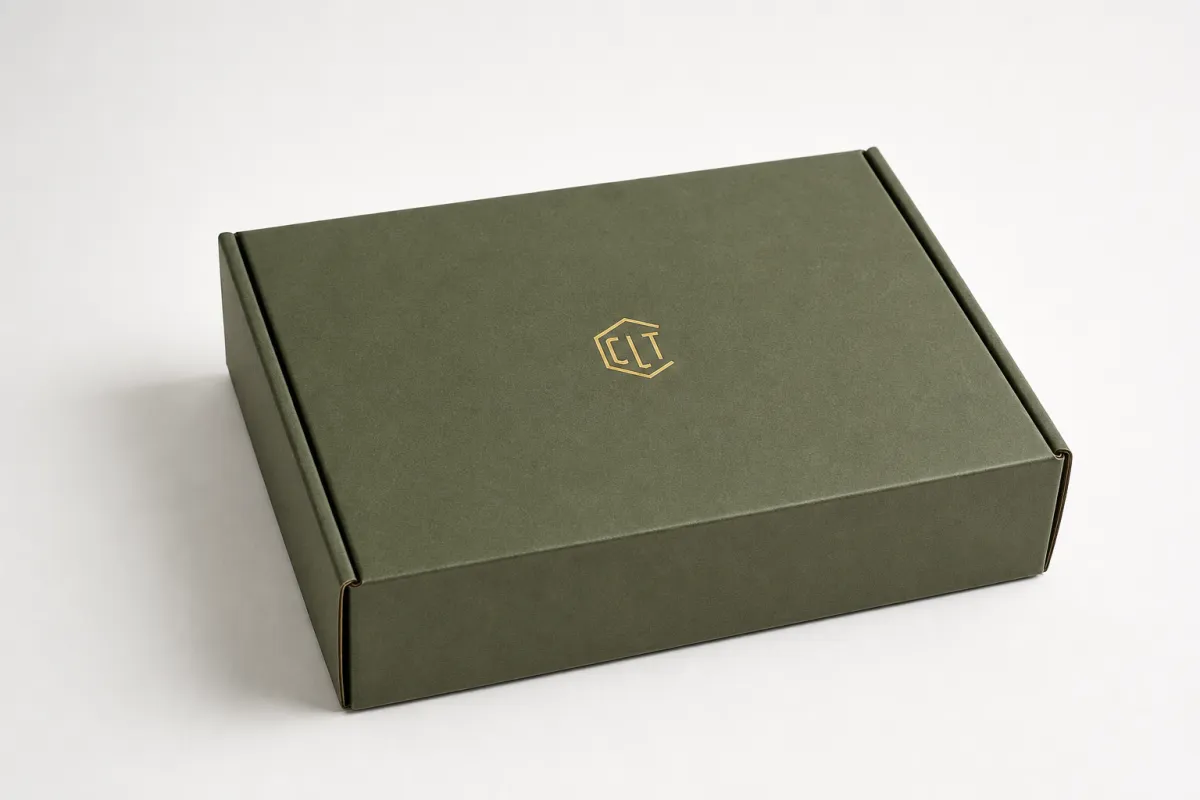
A general carton supplier can print and cut boxes. A box maker for subscription brands does that too, but the job goes further. The right partner helps translate product dimensions, pack-out rhythm, shipping method, and brand standards into a structure that can be repeated every month without introducing a new issue each time you reorder.
That usually includes structural design support, dieline creation, sample builds, print guidance, and repeat-run consistency. A box maker for subscription brands should understand how to keep panel sizes accurate, how to maintain artwork alignment from batch to batch, and how small specification errors snowball into labor costs. A box that is off by only a few millimeters can force extra void fill or a different insert, and suddenly the cheaper option is costing more in labor than it saved on paper.
The better partner thinks like a production planner. They ask about product weights, outer dimensions, fulfillment equipment, storage space, and whether the box will be packed by hand or with some semi-automated support. A box maker for subscription brands that skips those questions is probably guessing, and guessing is a weak foundation for packaging that has to perform on a schedule.
That tradeoff shows up fast in the labor math. A box that looks beautiful but takes extra seconds to assemble costs more than the quote suggests. Add 8 seconds per pack across 12,000 boxes a month and you are looking at 26.6 labor hours. That is not a rounding error. That is payroll.
The right partner also protects the customer experience. The lid opens cleanly, the insert holds the product where it should, and the print stays consistent from launch through repeat order. A box maker for subscription brands that understands recurring production runs reduces surprises, and that is usually what subscription teams really want, even when they say they want more wow. They want fewer problems, clearer planning, and a month that does not turn into a packaging fire drill.
For a beauty brand, that may mean a corrugated mailer with a tuck-in lid and a paperboard insert. For snacks, it might be a lighter E-flute shipper that keeps weight down. For pet products, it can mean a stronger board grade because the contents are heavier and less forgiving. The structure changes, but the goal stays the same: protect the contents, keep pack-out simple, and make the unboxing feel deliberate.
Good partners also document standards. If your program needs shipping validation, ask whether the sample can be checked against ISTA transit-testing standards or similar drop and vibration tests. A vendor that talks only about print gloss and ignores transport abuse is selling decoration, not packaging.
How a Box Maker for Subscription Brands Works
The workflow usually starts with a brief. A box maker for subscription brands will want product dimensions, monthly volume, target price, shipping method, and any brand rules before they draw the first dieline. If the numbers are vague, the packaging will be vague too. That part never really changes.
From there, the process usually moves through five steps:
- Brief review - The supplier checks size, product count, weight, and delivery goals.
- Dieline creation - The structure is drawn to spec, with allowances for closure, glue area, and insert fit.
- Sampling - A physical sample is built so you can test assembly, product fit, and print placement.
- Revisions - Small changes are made before the file is locked.
- Production - Approved artwork and structure move to press, die-cutting, finishing, and shipment.
A box maker for subscription brands should be clear about what can still change and what is already fixed. That distinction matters because people often change artwork after structure approval and then act surprised when the timeline slips. A structural change affects fit, fit affects the insert, and the whole chain shifts with it. Packaging does not care about launch anxiety, which is kinda rude, but true.
There are three common packaging paths. Custom packaging gives you the exact shape, print, and insert layout you want. Semi-custom uses a standard box form with branded printing or sleeves. Stock-style packaging keeps the shape simple and limits customization. A box maker for subscription brands should explain when each option makes sense instead of steering every project toward the most expensive version.
A practical rule helps here: if your product mix is stable and your shipment pattern repeats every month, custom often pays off over time because the insert and fold sequence can be tuned to your exact pack-out. If you are still changing SKUs every few weeks, semi-custom may be the safer call because sampling costs and design risk stay lower. A reliable box maker for subscription brands will tell you that before the quote lands, which saves everyone time and a fair amount of frustration.
Repeat orders are where the real value shows up. Once the structure and artwork are approved, the best partner saves the dieline, stores the spec history, and keeps prior revisions on file so replenishment does not start from zero. For subscription brands, that matters because a monthly box is not a one-time project. It is a rhythm that needs to hold month after month.
If your fulfillment team and packaging team work closely, they should feed back actual pack-out data. How long does assembly take? Does the insert snag on one corner? Are mixed SKUs shifting during line handling? A box maker for subscription brands can only improve what it can measure, so real numbers beat a vague “it feels a bit off” every time.
Cost and Pricing: What a Box Maker for Subscription Brands Charges
Pricing from a box maker for subscription brands depends on a handful of things buyers can actually control: size, board thickness, print coverage, finishing, insert complexity, and quantity. If someone gives you a quote without asking those basics, they are not quoting your packaging. They are tossing out a guess with a letterhead on it.
The biggest swing factor is usually volume. A smaller run can look manageable until you compare the per-unit price to a larger order. At 1,000 units, tooling and setup costs are spread across fewer boxes. At 10,000 units, that same setup burden fades into the background. That is why a box maker for subscription brands will often push you to understand the breakpoints before you settle on an order size.
MOQ, or minimum order quantity, means the smallest run the supplier can produce economically. Lower MOQ helps launch-stage brands test the market without sitting on too much inventory, but the unit price is usually higher. A box maker for subscription brands with a low MOQ may be useful for a pilot run, yet the per-box cost can sting if you scale quickly and keep ordering in tiny batches.
Common add-ons are where quotes quietly grow. Foil stamping, embossing, spot UV, soft-touch lamination, specialty coatings, and custom inserts all raise the number. A box maker for subscription brands can help you decide which upgrade matters and which one is mainly expensive ego.
Use the same spec sheet across suppliers so you compare like with like. If one quote includes inserts, proofing, and freight while another only includes blank boxes, the cheaper offer is fake math. A serious box maker for subscription brands should break the quote into production, finishing, sampling, and shipping so you can calculate the true landed cost.
| Packaging option | Typical MOQ | Estimated unit cost at 1,000 | Estimated unit cost at 5,000 | Estimated unit cost at 10,000 | Best fit |
|---|---|---|---|---|---|
| Custom corrugated mailer | 500-1,000 | $0.95-$2.25 | $0.55-$1.15 | $0.40-$0.80 | Most subscription shipments that need real protection and branded print |
| Semi-custom stock mailer with print | 250-500 | $0.70-$1.50 | $0.45-$0.95 | $0.30-$0.65 | Launches, seasonal runs, and programs that change often |
| Rigid box with outer shipper | 300-500 | $2.50-$6.00 | $1.80-$4.25 | $1.35-$3.25 | Premium unboxing, gifting, and higher-margin subscription tiers |
Those ranges are not fixed rules. They move with board grade, print coverage, insert style, and freight mode. A box maker for subscription brands should explain whether a quoted price assumes domestic truck freight, ocean freight, or a mixed supply chain. If that part is unclear, the budget is incomplete.
If sustainability matters, ask for board sourced with clear chain-of-custody paperwork and look for FSC certification where it applies. That does not automatically make the box better, but it does make your claims easier to defend. A good box maker for subscription brands will separate legitimate sustainability choices from marketing fluff.
Freight, storage, and sampling belong in the real budget too. A box that is 12 cents cheaper on paper but ships in smaller cartons, uses more warehouse space, or needs a second insert revision can end up costing more than the supposedly pricier option. A buyer who only checks the base unit price is usually seeing half the picture and carrying the rest of the headache home.
Process, Timeline, and Lead Time for Subscription Box Production
Lead time is where a box maker for subscription brands either earns trust or burns it. The process starts with discovery and moves through spec review, dieline approval, sample approval, prepress, production, and freight booking. If one of those steps is rushed, the whole schedule starts leaning in the wrong direction.
A simple box with straightforward print can move from brief to approved sample in roughly 7-14 business days, assuming dimensions are clean and approvals are fast. A more complex run with inserts, specialty finishing, and multiple revision rounds can stretch to 3-5 weeks before production even starts. A box maker for subscription brands should say that early instead of pretending every job is a one-week miracle.
The biggest delay usually comes from bad input. Unclear dimensions force rework. Slow approvals stall prepress. Artwork changes after sampling can send the job back to the beginning. A box maker for subscription brands can move quickly only when the brand moves quickly and the spec stays stable.
Fulfillment timing matters too. Subscription boxes often ship in fixed monthly windows, which means packaging should be planned backward from the pack date, not forward from the design kickoff. If the boxes need to arrive at the warehouse one week before assembly starts, production, freight, and buffer time have to be locked in long before that. A box maker for subscription brands is part of your production schedule, whether the spreadsheet says so or not.
Here is the basic timeline logic I recommend:
- Week 1 - Finalize size, materials, and artwork direction.
- Week 2 - Review dieline and fit sample.
- Week 3 - Approve print proof and make final corrections.
- Weeks 4-5 - Run production and line up freight.
- Buffer - Add extra time for holidays, port delays, or approval bottlenecks.
A box maker for subscription brands should also warn you about demand spikes. Holiday programs, product launches, and seasonal gift boxes can crowd production capacity fast. If your launch date is fixed, the packaging calendar needs to be treated like a dependency with consequences, not a side task someone will circle back on later. That phrase has knocked more schedules off track than any machine ever did.
A useful checkpoint is a written milestone list with dates for sample approval, print sign-off, production start, and ship date. The more specific the schedule, the easier it is to spot trouble early. A box maker for subscription brands that can only offer “roughly soon” is not ready for recurring fulfillment.
How to Choose the Right Box Maker for Subscription Brands
Choosing a box maker for subscription brands is partly about price, but it is mostly about fit. Can they handle your volume? Can they support your insert needs? Can they repeat the same quality every month without hand-wavy excuses? Those questions matter more than a polished rendering.
Start with the sample. A sample is not only a visual check. It is a structural test. Does the board feel strong enough? Are the folds accurate? Does the glue hold? Does the lid close cleanly after repeated opening? A box maker for subscription brands should encourage you to test the sample in real fulfillment conditions, not just on a clean desk under flattering light.
A good sample is not the prettiest one. It is the one that survives rough handling, packs quickly, and still looks intentional at the end of a long shipping day.
Ask how the vendor handles repeat runs. Some suppliers are fine with one-off jobs and much less useful once a program needs consistency. The better box maker for subscription brands keeps your records organized, understands your reorder cadence, and knows how to preserve consistency across batches. That matters if your program ships every month and a size drift would create fulfillment chaos.
Comparison quotes should be built from the same spec sheet. Same dimensions. Same board grade. Same finish. Same insert. Same quantity. Otherwise, you are not comparing suppliers; you are comparing assumptions. A box maker for subscription brands that refuses a clean apples-to-apples comparison is probably hiding something in the numbers.
Use these qualification questions before you sign anything:
- What MOQ do you need for my volume band?
- What lead time should I expect from sample approval to delivery?
- Can you support paperboard, corrugated, or molded inserts?
- Will you review the box against shipping abuse or only against appearance?
- What happens if we reorder every month?
- Can you provide references, photos, or documented results from similar programs?
Communication quality is also part of the buying decision. A strong box maker for subscription brands will be blunt about tradeoffs. If a finish adds time, they will say so. If a thinner board saves money but weakens the box, they will say that too. I trust that kind of answer far more than the supplier who promises miracles and then disappears until the PO is ready.
For more context on what solid execution looks like, compare notes with the examples in our Case Studies and see how structural choices affect pack-out, damage rates, and the final presentation. A box maker for subscription brands should be able to explain those same details on your project without making it feel like a secret audition.
If you want a direct conversation about your spec sheet, reach out through Custom Logo Things. The best next step is usually a short quote review, not a two-hour theory session about premium vibes.
Common Mistakes When Hiring a Box Maker for Subscription Brands
The most common mistake is sizing the box for a mockup instead of the shipping lane. A box maker for subscription brands can build a box that looks elegant on a rendering, but if the product rattles, crushes, or needs too much filler, the real cost rises fast. A few extra millimeters can mean more void fill, slower packing, or a different insert layout.
Another mistake is designing for the unboxing video and ignoring the actual handling path. Nice reveals are fine. They are not a substitute for protection. A box maker for subscription brands should keep reminding you that the box has to travel through trucks, conveyors, sortation, and warehouse stacks before it reaches a ring light. That is the part that counts.
Skipping sample testing is another classic. Brands approve artwork before the structure is finalized, then discover the print lands too close to a fold or the closure tabs interfere with the insert. A box maker for subscription brands can avoid that if the sample is reviewed properly, but the brand still has to test fit, assembly speed, and product movement.
Underestimating replenishment time causes stockouts that are entirely avoidable. If your subscription campaign works, orders can jump quickly, and a supplier with a 4-week production window cannot rescue a brand that waited until the last pallet was gone. A box maker for subscription brands should help you define reorder triggers so the next run starts before the warehouse goes empty.
The last big mistake is choosing the cheapest quote without checking print quality, board grade, or fulfillment fit. Cheap can be fine. Cheap can also be a very expensive lesson. A box maker for subscription brands that saves a penny by using the wrong spec may cost you far more in damaged goods, rework, and support tickets.
There is also a subtler mistake that shows up later: no one owns the packaging spec. If the file lives in three inboxes and two people kinda remember the last revision, the next reorder becomes a guessing game. The right box maker for subscription brands should help you keep a clean spec record, but your team needs one source of truth too.
Expert Tips and Next Steps for Subscription Packaging
The fastest way to get a useful quote from a box maker for subscription brands is to send a clean spec sheet. Include the box type, inner dimensions, product weights, monthly volume, insert needs, and budget target. If you do not know one of those numbers yet, say that directly. Guessing just creates a prettier version of confusion.
Ask for two samples if the project is serious: one unprinted structural sample and one printed sample. That lets you judge fit and finish separately. A box maker for subscription brands that can only show a flashy print proof but cannot produce a reliable structure is solving the wrong problem.
It also helps to build a rollout checklist. Keep it simple and brutally practical:
- Final artwork approved and archived
- Dieline locked and versioned
- Sample tested with real products
- Freight booked with buffer time
- Warehouse space confirmed
- Reorder trigger set before inventory gets tight
A box maker for subscription brands can support multiple formats if your program needs them. Many brands do well with one structure for standard monthly shipments and a second version for limited campaigns, gift drops, or premium tiers. That split keeps the everyday box efficient while giving special launches room to feel more elevated.
Do not ignore storage and pack-out labor. A larger box may look premium, but if it takes more shelf space or slows assembly by 5-10 seconds per order, the math can turn ugly over a full run. The best box maker for subscription brands will help you weigh those tradeoffs before production, not after the bill lands.
If you are comparing suppliers now, shortlist two or three and review the quotes line by line. Check print method, board spec, insert detail, sampling terms, freight assumptions, and reorder support. Then ask one blunt question: can this box maker for subscription brands support the next three order cycles without redoing the whole process? If the answer is unclear, keep looking. Subscription packaging rewards consistency, not drama.
For a direct conversation with the Custom Logo Things team, use the quote request page and send your current dimensions, target quantity, and a photo of the product set. That gives the team something concrete to work with, which is usually better than a vague need something premium note. The right box maker for subscription brands should make your life quieter, not louder.
FAQ
What should I ask a box maker for subscription brands before ordering?
Ask about MOQ, lead time, sample process, and whether they can match your monthly volume. A good box maker for subscription brands should also explain material options, print methods, and insert support before you compare pricing. Make sure they can describe how the box will perform in shipping, not just how it looks in a mockup.
How much does a box maker for subscription brands usually charge?
Pricing depends on size, print coverage, board grade, finishing, and quantity. Smaller runs usually have a higher unit cost, while larger runs lower the price per box. A box maker for subscription brands should also help you account for freight, sampling, and inserts so the quote reflects the real budget, not just the base unit price.
What lead time should I expect from a subscription box maker?
Expect time for spec review, sampling, revisions, production, and shipping. A straightforward box maker for subscription brands project may move faster, but custom structures and specialty finishes add time. Build extra buffer if your launch depends on a fixed subscription ship date, because packaging delays do not care about your marketing calendar.
Can a box maker for subscription brands help with inserts too?
Yes, many can design paperboard, corrugated, or molded inserts that hold products in place. A capable box maker for subscription brands will use insert design to reduce damage, filler, and packing time. Ask for sample testing with the actual product before you approve the final layout, because the fit on paper is not the same as the fit in a real box.
How do I know if a subscription box sample is good enough?
Check fit, fold accuracy, print clarity, and how the box holds up under handling. Test it in your real fulfillment process, not just on a desk. If the sample is hard to assemble or leaves too much empty space, keep refining. A box maker for subscription brands should welcome that feedback instead of treating it like a nuisance.
Choosing a box maker for subscription brands is really about repeatability. The partner should help you lock the spec, control cost, protect the product, and keep monthly production calm enough that your team can focus on growth instead of firefighting. If you compare quotes carefully, test the sample in real conditions, and insist on clear lead times, you will avoid most of the expensive surprises that make subscription packaging annoying in the first place. The practical move is simple: finalize a spec sheet, test one real sample, and set reorder triggers before inventory gets tight, because that is what keeps the box program steady month after month.