Buyer Fit Snapshot
| Best fit | Mailing Bags for Dtc Brands projects where brand print, material claims, artwork control, MOQ, and repeat-order consistency need to be specified before quoting. |
|---|---|
| Quote inputs | Share finished size, material target, print colors, finish, packing count, annual reorder estimate, ship-to region, and any compliance wording. |
| Proofing check | Approve dieline scale, logo placement, barcode or warning zones, color tolerance, closure strength, and carton packing before bulk production. |
| Main risk | Vague material claims, crowded artwork, missing packing details, or unclear freight terms can make a low unit price expensive after revisions. |
Fast answer: Mailing Bags for Dtc Brands: Film, Print, MOQ, and Carton Packing should be specified like a repeatable production item. The safest quote records material, print method, finish, artwork proof, packing count, and reorder notes in one written spec.
Production checks before approval
Compare the actual filled-product size with the drawing, then confirm tolerance on folds, seals, hang holes, label areas, and retail display edges. Reserve space for logos, QR codes, warning copy, and material claims before decorative graphics fill the panel.
Quote comparison points
Review material grade, print process, finish, sampling route, tooling charges, carton quantity, and freight assumptions side by side. A quote is only useful when the supplier can repeat the same color, closure quality, and packing count on the next order.
Mailing Bags for DTC Brands: How to Choose Smartly
Mailing bags for DTC brands do more than hold a product together on the trip to the doorstep. They shape the first physical impression, influence shipping efficiency, and can either speed up packing or quietly make the whole operation harder to run. That is a lot of responsibility for a flexible pouch that the customer may only handle for a few seconds.
The interesting part is how many outcomes sit inside such a simple format. A good mailer can change postage cost, damage rates, unboxing quality, and even repeat purchase behavior. Mailing bags for DTC brands sit right between branding and logistics, which is why a weak choice tends to create problems long before the customer opens the parcel.
I've seen packaging teams focus on the logo first and the structure second. That order usually causes grief later. The bag has to fit the product, survive transit, support the pack line, and still look good enough that nobody feels the need to apologize for it. Getting those pieces in the right order is half the battle.
Why mailing bags for DTC brands matter more than you think
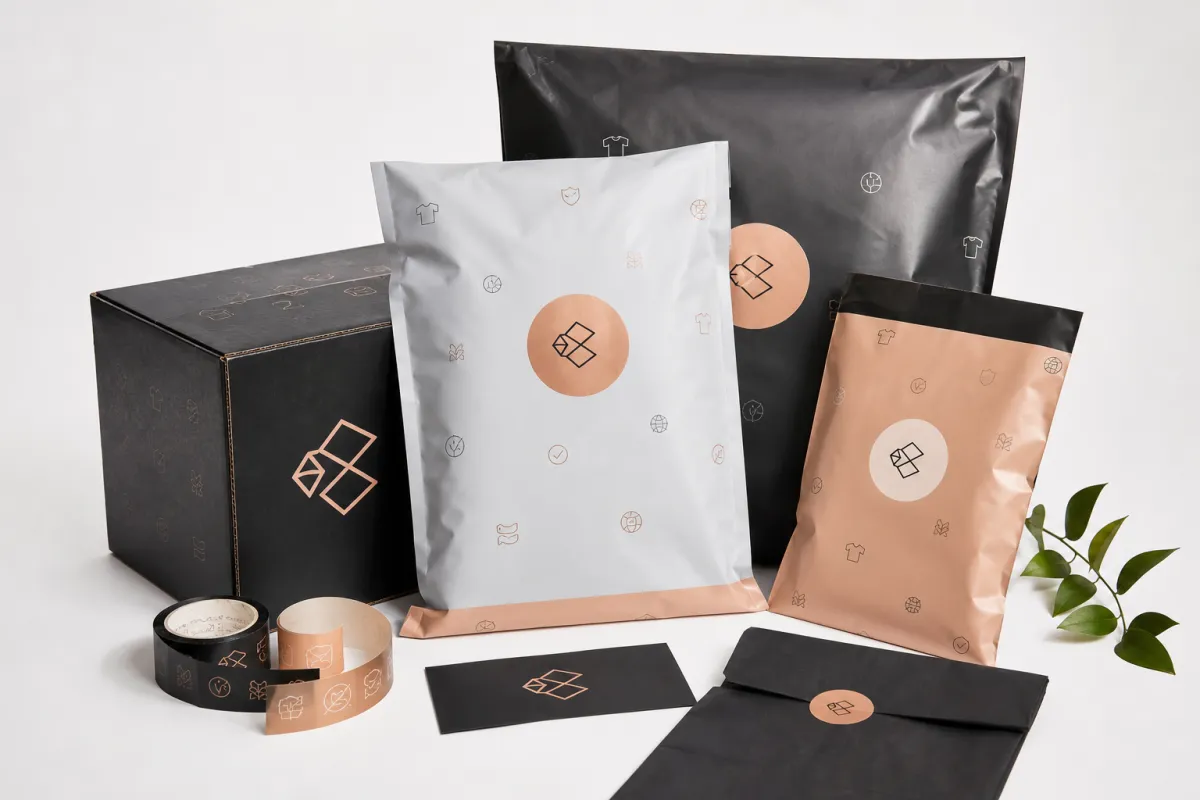
For a direct-to-consumer brand, packaging is rarely just a shipping utility. It is often the first tangible touchpoint a customer sees, and that makes mailing bags for DTC brands unusually influential. The bag arrives before the garment, before the accessory, before the beauty item. It acts like a handshake. If that handshake feels flimsy, dirty, oversized, or generic, the product inside starts from a lower position than it should.
That may sound dramatic, yet packaging buyers see the effect in real numbers and real feedback. A clean branded mailer communicates care. A plain poly bag with loose tape or a sloppy fit can make even a premium item feel discounted. Customers do not run a technical analysis of film gauge or adhesive chemistry, but they absolutely register whether the shipment feels considered or thrown together in a hurry.
Mailing bags for DTC brands matter because the economics pile up quickly. A few cents saved on material can disappear after one damaged return, one re-ship, or one extra minute at the packing table repeated across thousands of orders. Add postage, warehousing, and labor, and the smallest decisions start to carry real weight. A lightweight mailer can keep a brand in a lower shipping band. An oversized one can push the parcel into more expensive dimensional weight pricing. The difference may never show up in a product photo, but it is obvious on a fulfillment invoice.
The DTC model changes the selection criteria as well. Traditional retail packaging often lives on a shelf, then goes home in a shopping bag. Mailing bags for DTC brands move through a parcel network instead. They need to survive automated belts, stacking, compression, corner impacts, and the occasional rough handoff. At the same time, they still need to support fast fulfillment, because many DTC teams pack by hand and cannot afford a closure system that slows every order.
In simple terms, mailing bags are flexible shipping pouches made from plastic film, recycled film, or paper-based materials, designed to protect soft goods, accessories, and small items during parcel delivery. That definition is easy enough. The buying decision is not. A good mailer has to fit the product, protect it, present it well, and keep the operation moving.
“A mailer does not need to be flashy, but it does need to fit cleanly, close reliably, and survive the trip.”
Mailing bags for DTC brands deserve more attention than they usually get. Buyers often start with the logo. The better sequence is protection, fit, workflow, then branding. That order tends to produce better results and fewer surprises.
There is also a loyalty effect that is easy to underestimate. If the package arrives neat, easy to open, and aligned with the brand’s look and feel, the customer’s mind connects that experience to the product itself. If the packaging arrives creased, punctured, or badly sized, the product feels less valuable even when nothing is actually wrong with it. That perception gap can affect reviews, repeat purchase rates, and support volume.
No single bag solves every case, which is where many teams get stuck. What works for a luxury sock brand is not the same as what works for a beauty subscription or a home goods drop. Even so, mailing bags for DTC brands follow a practical logic once the main tradeoffs are clear: protection versus weight, branding versus cost, and speed versus presentation. The rest of this piece walks through those tradeoffs in plain terms so the decision gets easier instead of noisier.
How mailing bags for DTC brands work in transit
It helps to think about mailing bags for DTC brands as compact engineering systems rather than simple envelopes. Once an order leaves the packing station, the bag has one job: keep the product intact while the shipment is handled by multiple people, machines, and miles of movement. That journey can include conveyor belts, sorting bins, truck vibration, stacking pressure, and weather exposure. The parcel may not be dropped from dramatic heights, but it will be flexed, compressed, and rubbed against other packages many times.
Bag structure matters. Most mailing bags for DTC brands use a film layer, a seal adhesive or self-seal strip, and sometimes a gusset or expansion panel. Some include a tear strip for easier opening. Others use a double adhesive line so the bag can be reused for returns. The right construction depends on the product and the order flow. A soft knit tee does not need the same rigidity as a boxed candle sleeve, and a return-friendly bag does not need the same presentation as a one-way shipping pouch.
Outer surface quality matters more than many teams expect. Scuff resistance, moisture protection, and print durability all affect what the customer sees on arrival. A glossy surface may show fingerprints more readily; a matte film may hide minor wear but show crease lines. Print that looks crisp in a proof can still smear or scratch if the coating is wrong. Mailing bags for DTC brands should be tested under actual handling conditions, not just admired on a screen.
Material choice changes performance in noticeable ways. LDPE remains common because it is affordable, flexible, and easy to seal. Co-extruded films can improve toughness by combining layers with different properties. Recycled-content films help brands reduce virgin plastic use, although quality varies widely and recycled resin is not a magic answer. Paper mailers bring a different feel and can support certain sustainability narratives, yet they are not automatically better for every product because they can wrinkle, tear, or absorb moisture more readily than film. The decision should follow the product, not the trend.
There is also a clear line between mailers and other packaging formats. Mailing bags for DTC brands work best for soft goods, apparel, textiles, beauty items, and small lightweight accessories. A box or rigid mailer may be the safer choice for brittle, heavy, or irregular products. The wrong format often costs more than the right one, even when the wrong one looks cheaper on paper.
Tamper-evident seals and self-seal closures improve both security and pack speed. A packer can close the bag in one motion instead of reaching for tape, which saves seconds on every order. That sounds minor until a team is processing hundreds or thousands of units. The cleaner seal also builds confidence, because the customer can see that the parcel stayed closed all the way to the door.
Field testing should follow recognized standards. If a supplier can reference the ISTA framework, that gives both sides a shared language for vibration, drop, and compression testing. Mailing bags for DTC brands do not need to pass every formal lab protocol to be useful, but they should survive a realistic simulation of how the parcel will be handled. ASTM references such as D882 for tensile properties and D1709 for impact behavior can also help teams discuss performance in a more exact way.
One practical way to think about it is this: the mailer is not only a shell. It is part of the delivery system. If the structure is too thin, the product may arrive scuffed or open. If the structure is too heavy, postage and material cost creep upward. Mailing bags for DTC brands live in that narrow middle ground where performance and efficiency have to work together.
Mailing bags for DTC brands: cost, pricing, and MOQ
Cost is where many teams make their first mistake. They compare unit price and stop there. Mailing bags for DTC brands need a broader view. Material grade, print complexity, closure style, bag size, freight method, duties, and warehousing all shape the real number that lands in the budget. A low quote can still be a bad buy if it hides expensive shipping or an awkward MOQ.
MOQ, or minimum order quantity, matters because it changes the economics of the whole program. Smaller brands usually pay more per unit because setup and tooling costs are spread across fewer bags. Larger brands can negotiate better tiers, but only if the specification stays stable enough to repeat. Change the print, the dimensions, or the structure every other order, and the savings disappear quickly.
A useful comparison method is to ask for a landed-cost quote, not just a factory quote. Landed cost includes the bag itself, freight, tax or duty where applicable, and any sample or tooling charges that affect the first purchase. That shift in language can prevent a quote that looks inexpensive from turning out expensive later.
Customization is another cost lever. A one-color logo on a stock bag is relatively inexpensive. Full-coverage printing on a custom-sized recycled-content mailer costs more because the run usually needs setup work, color matching, and tighter quality control. Special finishes such as matte varnish, soft-touch lamination, metallic ink, or spot gloss can elevate the presentation, but they also add cost and can lengthen lead time. Some of those upgrades are worth paying for. Some are only decoration with a higher invoice.
If a brand ships 5,000 units at a time, the difference between a plain stock mailer and a fully custom one can be meaningful. The right answer depends on the business model. A fast-moving apparel label with narrow margins may care more about throughput and freight efficiency. A premium brand with a higher average order value may gladly spend more on a packaging experience that supports repeat buying. Mailing bags for DTC brands are not one-size-fits-all; the economics should reflect the price point of the goods inside.
Below is a simple comparison showing how the numbers often line up in practice. These are planning ranges rather than universal quotes, because size, print coverage, and geography can shift the outcome.
| Option | Typical use | Approx. unit cost | Common MOQ | Lead time | Main tradeoff |
|---|---|---|---|---|---|
| Plain stock poly mailer | High-volume basics, promo drops | $0.10-$0.18 | 500-1,000 | 3-7 business days if in stock | Lowest cost, least brand impact |
| Light custom branded mailer | Apparel, accessories, subscription orders | $0.16-$0.30 | 3,000-5,000 | 12-18 business days after proof approval | Balanced cost and presentation |
| Fully custom printed recycled-content mailer | Premium DTC launches, brand-led packaging | $0.24-$0.55 | 5,000-10,000 | 15-25 business days after approval | Stronger brand story, higher setup and freight sensitivity |
Those ranges show why mailing bags for DTC brands should be reviewed alongside return rates, labor time, and shipping economics. A bag that saves two cents may not be a win if it tears more often or adds a taping step. A bag that costs eight cents more may still be the better option if it reduces repacks, protects margins, and presents the brand more cleanly.
For a broader view of how packaging tradeoffs affect commercial decisions, our Case Studies page is useful because it shows how real brands balance presentation against production realities. That sort of comparison is worth doing before you commit to a custom run.
Mailing bags for DTC brands also interact with inventory planning. Buy too much too early, and storage costs or outdated artwork become problems. Buy too little, and you may end up rushing a reorder at a worse price. The sweet spot is usually a volume that supports a decent unit price without locking the business into more packaging than it can move in one cycle.
Another overlooked cost is waste. An oversized mailer uses more material, occupies more space, and can trigger higher postage. A mailer that is too tight can damage the product or the finish. In that sense, the cheapest bag is not the one with the lowest invoice. It is the one that fits the product, supports the workflow, and reaches the customer without creating avoidable friction.
Process and timeline for mailing bags for DTC brands
A clean process matters almost as much as the design itself. Mailing bags for DTC brands move through a predictable sequence: brief, sizing, material selection, artwork prep, proof approval, manufacturing, quality check, and shipment. If any one of those steps gets rushed, the rest of the timeline tends to wobble. Packaging looks simple from the outside because the finished item is small. The path to that finished item is not simple.
The first delay usually appears in the brief. If the team has not defined the packed product size, the expected folds, the return flow, or the shipping method, the supplier has to guess. Guessing is expensive. A slightly wrong dimension can force a redesign. The same is true for material selection. A mailer meant for lightweight apparel will not necessarily work for a denser item with sharper edges.
Artwork revisions are another common bottleneck. Marketing wants a sharp look. Operations wants a bag that seals and stacks well. Procurement wants a stable quote. If those groups do not review the proof together, the project can cycle through unnecessary changes. Mailing bags for DTC brands benefit from cross-functional approval because a change that seems small in design software may matter a great deal on the packing line.
Complex print jobs generally take longer than plain stock mailers. Recycled-content materials can also extend lead time if the specific resin or paper stock is not available. Supply shortages are not always dramatic, but they can be enough to push a launch from one week to the next. That is why production calendars matter. A packaging schedule that lives only in someone’s inbox is not really a schedule.
Lead time planning matters especially for seasonal drops and influencer campaigns. If product inventory lands before the packaging, the warehouse either stores loose goods or repacks later, which adds labor. If the packaging lands first, cash and floor space get tied up. Mailing bags for DTC brands should arrive with enough buffer to absorb proof delays, freight variability, and the occasional color correction.
A supplier should be able to share milestone dates, not just a vague “about two weeks” promise. Ask for dates tied to proof approval, manufacturing start, inspection, and dispatch. That kind of specificity makes it easier to protect launch timing. If the first sample misses the mark, ask how the supplier handles correction rounds and replacement policy before production begins.
For higher-stakes programs, it helps to test the packaging the same way it will actually be used. That means the actual product, the actual packer, the actual tape or seal, and the actual carrier method. Mailing bags for DTC brands often look fine on paper but slow the team down in real packing conditions because the closure feels sticky, the bag is hard to align, or the print placement interferes with the seal.
One useful rule is to build a buffer that covers at least one proof round and a transit delay. If a supplier says 15 business days, planning for 20 is often more realistic. That extra cushion reduces the chance of expensive emergency freight or temporary substitutions that weaken the brand experience. Nobody loves that kind of delay, but it beats explaining to the warehouse why a launch had to get repacked at the last minute.
Key factors to compare when choosing mailing bags for DTC brands
If two suppliers both say they can make mailing bags for DTC brands, compare them on more than price. Start with size, because size is the easiest place to create hidden waste. A bag that is too large uses extra film and more shipping space. A bag that is too small can wrinkle the product, stress the seal, or make the package look underthought. Fit should be checked against the packed product, not the item on its own.
Strength and thickness come next. A thicker bag is not automatically better, but it usually offers better puncture resistance. The tradeoff is weight and sometimes cost. The right thickness depends on the product edges, the shipping method, and whether the shipment will face higher handling risk. Mailing bags for DTC brands are often specified in microns or mils, and buyers should ask what that number means in practical terms instead of treating it as a badge of quality.
Branding deserves careful attention. A full-coverage print creates a strong visual identity, while a one-color logo can feel cleaner and more cost-efficient. Matte finishes tend to look softer and more premium; gloss finishes can appear brighter but may show wear more easily. If the brand uses minimal visuals, a restrained mailer may look smarter than a loud one. If the brand trades on color and boldness, the opposite may be true.
Sustainability is where many packaging claims become slippery. Recycled content, recyclability claims, and paper-based alternatives all need context. A recyclable bag only helps if the local collection stream accepts it. A paper mailer may be easier to explain, but that does not automatically make it lower impact if it is heavier or less protective. If you are making recycled-content claims, the FSC system is a well-known certification reference for responsible fiber sourcing, though it does not solve every packaging question by itself. Mailing bags for DTC brands should be judged on real-world performance, not just environmental language.
Operational fit matters as much as the visual layer. Self-seal speed can save seconds per order. Stackability affects how much room the bags take in the fulfillment area. Tear strips may help the customer but can complicate production if they are poorly positioned. Compatibility with an existing packing workflow is often the difference between a packaging upgrade that helps and one that creates friction.
Customer segment differences also matter. Apparel brands often prioritize presentation because the product is soft, light, and naturally suited to mailers. Beauty and accessory brands may prioritize moisture protection and tamper resistance. Home goods or rigid accessories may need a different format altogether. Mailing bags for DTC brands are not a universal answer. They are a targeted tool.
If your operation already uses Custom Poly Mailers in some lanes, compare the new option against that baseline rather than against a generic ideal. That keeps the conversation grounded in actual throughput, print quality, and damage rates instead of abstract preferences.
The best decision usually balances three things: performance, price, and brand story. Ignore one of them and the packaging tends to expose the gap later. For a premium brand, presentation matters because customers feel the difference. For a leaner brand, speed and cost may dominate. Mailing bags for DTC brands work best when the choice reflects the business model instead of someone’s favorite aesthetic.
Step-by-step guide to ordering mailing bags for DTC brands
Ordering mailing bags for DTC brands becomes much easier once the process is broken into stages. The biggest mistake is treating it like a one-email purchase. It is closer to a small procurement project, and the best results usually come from treating it that way.
-
Define the product first. Measure the packed item, not just the loose product. Include folded dimensions, weight, any inserts, and whether the customer might return it in the same bag. Mailing bags for DTC brands should be designed around the real packing state, because that determines fit and closure tension.
-
Decide the packaging role. Is the bag only there to protect, or does it also need to carry the brand story? A plain protective pouch and a branded presentation mailer are different jobs. If the bag needs to do both, say so early. That keeps the supplier from optimizing for the wrong outcome.
-
Shortlist materials and formats. Compare LDPE, co-extruded film, recycled-content film, and paper-based options. Ask for samples and handle them in person. The feel, seal quality, and print clarity often tell a more useful story than a spec sheet alone. Mailing bags for DTC brands should be judged with the product inside, not in isolation.
-
Prepare artwork correctly. Use the supplier’s dieline, safe zones, bleed settings, and color specs. Review the proof with operations and marketing together. That reduces the chance of a logo crossing a seam, a barcode sitting in the wrong place, or a seal area being blocked by print.
-
Confirm the commercial terms. Lock down price, MOQ, lead time, freight method, sample charges, replacement policy, and whether pricing changes by size or color count. Mailing bags for DTC brands should be bought on equivalent specs only. A cheaper quote that uses thinner film or a wider tolerance is not an apples-to-apples comparison.
-
Test in real packing conditions. Use the actual product, the actual packer, and the actual shipping method. Run a small batch through the full workflow and watch what slows down. If the seal is awkward or the bag is too snug, fix that before a large order goes out. It is easier to correct a sample than 10,000 units.
-
Launch in a controlled way. Start with a manageable SKU or drop. Review customer feedback, damage rates, pack speed, and any complaints about opening or resealing. Then iterate. Mailing bags for DTC brands usually improve after one real-world round of feedback, not before it.
That process sounds careful because it should be. Packaging is one of those places where small errors compound quickly. A wrong dieline can become wasted inventory. A weak seal can become a returns headache. A bag that is one size too large can become a postage problem. A bag that is one size too small can become a fulfillment bottleneck.
Most smart buyers also create a simple internal checklist: dimensions, film type, print coverage, closure style, order volume, and approval owner. That keeps the project from drifting. Mailing bags for DTC brands are easier to manage once the team agrees on the criteria in advance rather than arguing about them after the sample arrives.
From a practical point of view, this is where packaging teams earn their keep. They are not just buying a bag. They are setting the tone for how efficiently the business ships, how consistently the brand looks, and how much friction customers encounter between checkout and delivery. That is serious work for a small format.
Common mistakes and expert next steps for mailing bags for DTC brands
The most common mistake is buying on price alone. Mailing bags for DTC brands can look interchangeable in a quote sheet, but the differences show up in seal performance, print sharpness, packing speed, and freight efficiency. A low number on the quote is not the same thing as a low total cost. If the bag tears, arrives dirty-looking, or slows the line, the savings disappear.
The second mistake is choosing the wrong size. This one is sneaky because it rarely looks catastrophic at first. A slightly oversized bag seems harmless until postage rises, storage space gets tighter, and the final presentation feels loose. A bag that is slightly too small can be worse, because it stresses the adhesive or forces a packer to overwork the closure. Mailing bags for DTC brands should be sized to the packed product plus just enough margin for a clean finish.
Another problem is skipping real shipping tests. A sample can look beautiful on a desk and still fail after vibration, corner pressure, or repeated handling. Ask for samples, then test seal strength, compression behavior, and pack-out speed before scaling. If a supplier cannot support that kind of review, treat it as a warning sign. Most packaging failures are not mysterious. They were visible in the sample phase.
Overbranding is a subtler mistake. A mailer does not need to shout to be effective. In fact, too much print on a thin film can look busy or cheap. Sometimes a restrained logo, clean typography, and a strong color are enough. Mailing bags for DTC brands work best when the visual language matches the product category and price point. A premium minimalist brand usually benefits from a cleaner bag than a loud promotional one.
Lead time planning is the other weak spot. Many teams order too late, then pay more for rush production or emergency freight. That is especially painful near launches, seasonal peaks, or influencer campaigns. Mailing bags for DTC brands should be ordered with room for proof revisions and transit delays. If you cannot absorb one extra week, the order is probably too late already.
Here are the next steps I would recommend if you are evaluating suppliers right now:
- Request samples from at least three suppliers and compare them side by side.
- Ask for unit price, setup fees, freight, and any tooling or sample charges so you can calculate landed cost.
- Test one live SKU in the actual fulfillment workflow before committing to the full volume.
- Create a scorecard with cost, protection, presentation, and sustainability columns.
- Check whether the supplier can support the exact closure, print, and size tolerance you need.
That scorecard keeps the discussion objective. It also prevents a lot of internal debate from becoming aesthetic preference dressed up as procurement strategy. Mailing bags for DTC brands are easier to approve when the team can compare the same criteria across every option.
One more practical tip: if your brand ships multiple categories, do not assume one mailer size can cover all of them. A product mix with tees, leggings, socks, and small accessories often needs at least two or three sizes. That may sound less elegant, but it usually reduces waste and improves presentation. The right answer is often a small range of sizes rather than a single universal bag.
Packaging does not have to be exciting to be effective. It does have to be precise. That is the real lesson behind mailing bags for DTC brands. If the fit is right, the seal is clean, the print supports the brand, and the timeline holds, the packaging disappears in the best possible way: it does its job without calling attention to itself.
For teams that want more proof before placing a larger order, the best move is to review supplier examples, compare live samples, and tie the choice back to actual unit economics. Done well, mailing bags for DTC brands become a quiet advantage. Done poorly, they become a recurring source of waste, delays, and customer complaints. The difference is rarely one dramatic decision. It is usually about a dozen small ones made carefully, in the right order, with mailing bags for DTC brands treated as a strategic purchase rather than an afterthought.
What are mailing bags for DTC brands best used for?
They are best for soft, low-breakage products such as apparel, accessories, and small lifestyle goods. Mailing bags for DTC brands work well when you want lightweight protection, faster packing, and a branded shipping experience without moving to a box.
How do I choose the right size mailing bag for DTC brands?
Measure the packed product, not the loose item, and leave enough room for folds, inserts, or return handling. The best size is the smallest one that closes cleanly without stressing the seal or crushing the product presentation.
Are custom mailing bags for DTC brands worth the extra cost?
They are worth it when packaging is a meaningful part of the brand experience or when repeat purchases depend on presentation. If budget is tight, start with a simple printed bag or stock mailer, then upgrade once volume and positioning are more predictable.
What affects the lead time for mailing bags for DTC brands?
Lead time usually depends on material availability, print complexity, proof revisions, MOQ, and shipping method. The safest plan includes extra buffer for artwork approval and transit delays, especially if the bags are tied to a product launch.
How can I compare pricing on mailing bags for DTC brands accurately?
Ask for unit cost, setup fees, freight, tax, and any sample or tooling charges so you can see the true landed cost. Compare equivalent specs only, because a cheaper quote may use thinner film, smaller sizes, or lower print quality.

