Brand Custom Promotional Hats Sample Checklist: What It Proves
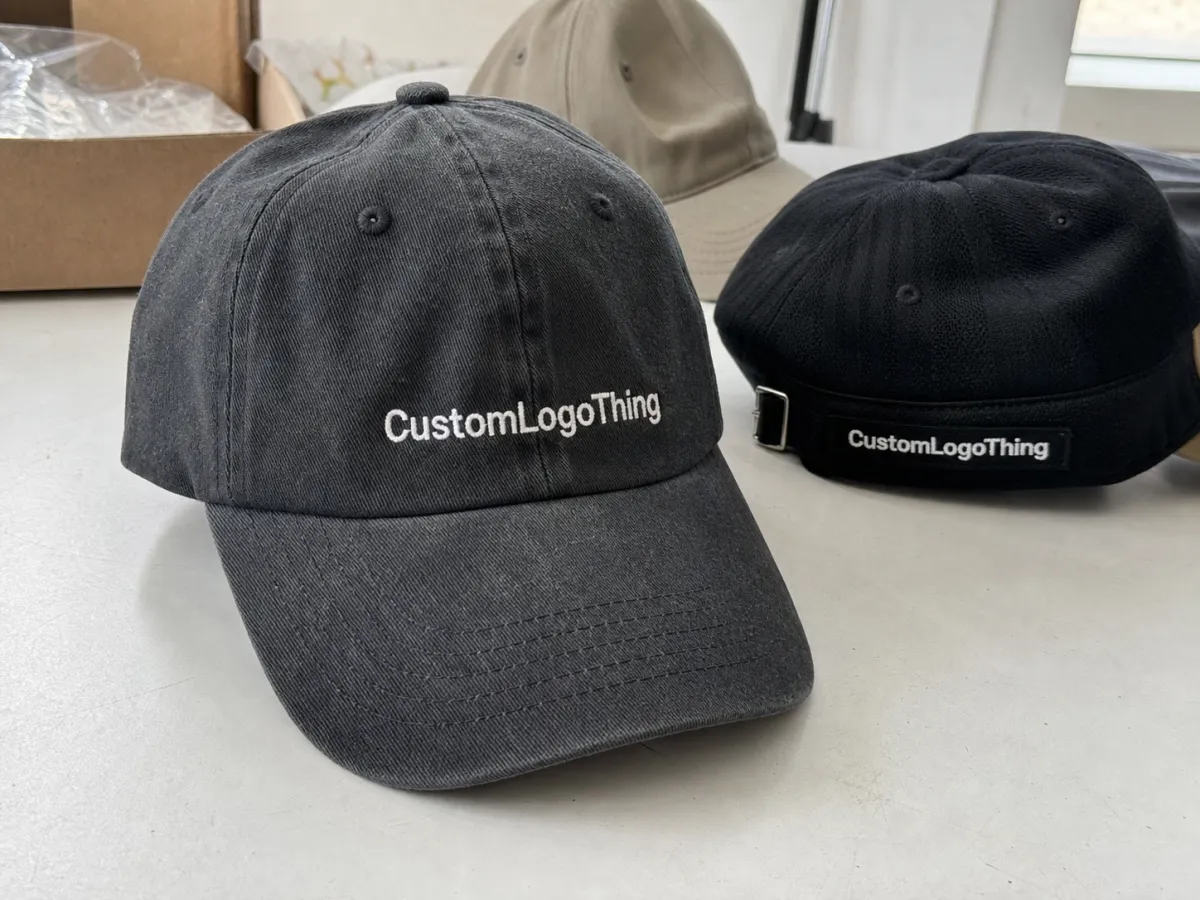
A buyer approves 2,000 event hats from a clean digital mockup. The logo is sharp on screen, the color looks close, and the schedule appears workable. Then the cartons arrive: the embroidery sits too low on the crown, the bill shape fights the campaign’s sharper visual style, and the hats feel less like branded merchandise than a rushed handout. A brand custom promotional Hats Sample Checklist is the evidence file that helps prevent that order from going into production unchecked.
Hats carry more risk than many flat promotional products. A mediocre logo on a pen may be noticed only at close range. A cap puts the brand at eye level, on a moving person, in event photos, on desks, in retail kits, and sometimes inside custom packaging where every detail is expected to feel intentional.
A proper checklist proves more than whether the cap “looks good.” It records the physical construction, crown shape, fabric hand-feel, thread color, stitch density, sweatband comfort, closure type, decoration placement, packaging, labeling, and approval notes. If the cap is part of an employee uniform, franchise launch, retail bundle, or customer gift box, the same review also protects the broader brand presentation.
Many buyers under-check hats because hats feel familiar. Most people own several, so the product seems simple. That familiarity is the trap. A six-panel structured cap, an unstructured dad hat, a foam-front trucker, and a lightweight performance cap can carry the same logo and send completely different signals about the brand.
Buyer rule: the sample does not need to be flawless in an abstract sense. It needs to be repeatable, so the approved cap becomes the production standard for every unit that follows.
How Promotional Hat Sampling Works Before Bulk Production
Sampling starts with terminology. A virtual proof, blank stock sample, pre-production sample, and production sample are not interchangeable, and mixing them up creates avoidable disappointment.
A virtual proof shows the layout, approximate logo size, and general placement. It can catch obvious artwork issues, such as a mark that is too wide for a five-panel front or a tagline that will be illegible at cap scale. A blank stock sample proves the hat body: fit, fabric, closure, crown height, mesh texture, bill shape, and general feel. A pre-production sample shows the real decoration on the selected hat before bulk production begins. A production sample, pulled from the actual run, confirms whether the approved standard is being followed.
The workflow usually sounds simple: artwork review, style selection, decoration method selection, digital proof, sample creation, buyer review, revision if needed, and production approval. The difficulties sit in the details. A 2.5-inch embroidered logo may look balanced on a structured snapback and awkward on a low-profile dad cap. A leatherette patch may suit a streetwear promotion but feel too heavy for a thin performance cap meant for summer use.
Decoration method changes the risk profile. Embroidery is durable and familiar, but small type can close up, gradients do not translate directly, and high stitch counts can pucker lighter fabric. Woven patches usually handle fine detail better than direct embroidery. PVC patches add dimension, though they also change the cap’s weight and tone. Heat transfers can look crisp on performance materials, but buyers should check edge lift, stretch behavior, and wash resistance. Screen printing has a place, especially on foam fronts or flat panels, but opacity and registration need close review.
The sample is not just a preview. It is a control document. A strong brand custom promotional Hats Sample Checklist gives you a way to compare the promised product against the delivered shipment using photos, measurements, notes, and signed approval instead of memory.
Fit, Fabric, Logo Placement, and Other Specs Worth Checking
Start with the hat body. Structured crowns hold their shape and usually present embroidered logos cleanly. Unstructured crowns feel softer and more casual, but the decoration can distort if the logo is wide, dense, or placed across uneven fabric. Five-panel caps provide a clean front panel for patches and transfers. Six-panel caps add a center seam that can interrupt embroidery. Trucker mesh improves airflow. Dad caps signal relaxed wear. Snapbacks lean more streetwear. Bucket hats and beanies bring different use cases entirely.
Buyer intent should drive the specification. A streetwear giveaway may need a high-profile crown, flat bill, and bold woven or PVC patch. An employee uniform cap may need breathable fabric, a washable sweatband, and embroidery that survives regular use. A golf outing may call for lightweight polyester, a moisture-wicking band, and a low-contrast tonal logo. None of these choices is automatically better; each serves a different job.
Fit checks should be physical, not theoretical. Put the sample on at least two or three people if possible. Check crown height, bill curve, closure comfort, seam irritation, stretch, adjustability, and whether the style suits different head sizes. A cap that looks premium on a desk can feel tight at the temples after five minutes.
Logo checks need the same discipline. Measure placement height from the bill seam. Check centering from the front and from a slight side angle. Review thread colors, stitch density, patch edge quality, print sharpness, and color contrast. Fine details are usually the first casualties. Small registered trademark symbols, thin taglines, narrow letter counters, and delicate line art often disappear once they are translated onto fabric at actual cap size.
Color verification takes more than glancing at a screen. Compare fabric, thread, patch material, and packaging colors under daylight and indoor light. Brand colors shift across cotton twill, polyester, leatherette, PVC, woven labels, and paper hang tags. If color control matters, ask for Pantone references and define an acceptable tolerance before production. Not every material can hit the same visual target, even when the supplier is careful.
Packaging deserves its own review, especially for buyers pairing hats with custom printed boxes, retail packaging, or welcome kits. Check polybag thickness, hang tag print, barcode labels, inner carton counts, and whether the hats arrive crushed or retail-ready. A cap with a clean logo can still disappoint if the crown is flattened under poor packing pressure or if fulfillment teams cannot identify carton contents quickly.
Pricing, MOQ, and Unit Cost Checks Before You Approve
Sample approval should happen alongside cost review, not after it. Decoration complexity can change the final unit price. A logo that begins as a simple 6,000-stitch embroidery may become 11,000 stitches after resizing. A small patch may need to grow by half an inch so the lettering stays readable. Add a side logo, custom inside label, individual polybag, hang tag, or carton relabeling, and the quote changes again.
Common pricing drivers include hat style, fabric, order quantity, decoration method, logo size, stitch count, patch material, number of logo locations, packaging, freight, and rush production. Stock promotional caps often allow lower minimum order quantities because the hat body already exists. Fully custom hats, private-label caps, specialty fabrics, custom-dyed materials, or molded patches usually require higher quantities because setup, sourcing, and production line changeovers carry real cost.
| Sample or Spec Item | What It Confirms | Typical Cost Impact | Buyer Watchout |
|---|---|---|---|
| Blank stock sample | Fit, fabric, crown, closure, bill shape | Often low cost plus freight | Does not prove logo quality |
| Decorated pre-production sample | Embroidery, patch, transfer, or print execution | Can include setup, digitizing, and shipping fees | May take longer if art needs revision |
| Custom patch mold or die | Patch size, edge finish, relief, and material | Higher setup cost, sometimes credited after bulk order | Changing size can trigger new setup |
| Custom packaging | Polybag, hang tag, barcode, carton pack, unboxing condition | Can add per-unit and carton costs | Missing labels can disrupt fulfillment |
Sample fees vary. Some suppliers charge for decorated samples, digitizing, patch molds, or freight. Some credit part of the sample cost after bulk approval. Neither model is automatically good or bad. What matters is transparency. A $3.80 cap quote that excludes setup, inbound freight, hang tags, and carton relabeling can beat a $4.25 quote only on paper.
Ask for pricing at two or three quantity breaks. The jump from 500 to 1,000 pieces may reduce unit cost enough to justify extra inventory, while the jump from 2,500 to 5,000 may not. The curve depends on the hat style and decoration method. For embroidered stock caps, savings may flatten quickly. For custom patches or private-label caps, higher volume can spread setup cost more efficiently.
If the hats are part of a larger packaging design program, compare the cap quote with related inserts, mailers, or retail cartons from Custom Packaging Products. Merchandise and packaging budgets are often reviewed separately, then the combined landed cost gets noticed late. Freight, dimensional weight, and kit assembly can turn a low unit price into a less attractive delivered price.
Process, Timeline, and Lead Time From Sample to Delivery
A realistic timeline has more steps than most schedules admit: artwork prep, proofing, sample production, transit, buyer review, revision window, bulk production, quality inspection, packing, shipping, receiving, and distribution.
The biggest hidden delay is rarely sewing the hats. More often, it is artwork clarification, slow approval, color uncertainty, or late changes to logo placement. One undecided stakeholder can burn a week. So can a brand color that looks right in a PDF but wrong in thread.
Stock decorated hats usually move faster than fully custom caps with custom fabric, private labels, patches, imported components, or special packaging. A standard embroidered cap from available inventory may fit a shorter schedule. A fully custom cap with dyed fabric, woven labels, custom buckle, and retail-ready packaging needs more planning because each component has its own approval path.
Revisions vary in severity. Changing thread color may be minor. Adjusting logo placement by 0.25 inch may be manageable if production has not begun. Changing the hat structure, patch size, or decoration method can restart sampling. For that reason, the checklist should capture what was approved, what was rejected, and what changed after the first proof.
Work backward from the event or launch date, not forward from the date you hope to place the order. Set an internal approval deadline with real consequences. If the trade show starts on a Monday, delivery to the office on Friday is not a safe plan. Build time for receiving, counting, repacking, and shipping to teams or venues.
Packaging can create timeline risk even when the hats look correct. Crushed crowns, missing barcode labels, unclear size or color breakdowns, and unlabeled cartons create distribution problems. If hats are being packed into kits, custom printed boxes, or employee welcome packs, the carton labeling must match the fulfillment plan. Standards bodies such as ISTA publish transport testing guidance that reinforces a practical point: the product has to survive the route to use.
Step-by-Step Sample Review Checklist for Buyers
A useful sample review is slow on purpose. Ten focused minutes can prevent thousands of disappointing units. Treat the brand custom promotional hats sample checklist as an inspection method, not as a casual desk review between meetings.
- Compare the sample to the quote and proof. Check style number, color name, fabric, decoration method, logo size, logo location, and quantity assumptions. If the proof shows a 2.75-inch front embroidery and the sample measures 3.25 inches, document it.
- Inspect the hat in hand, then on a person. Crown shape, bill angle, and logo visibility change when worn. Look straight on, from the side, and from normal conversation distance.
- Photograph every relevant view. Capture front, side, back, inside label, closure, close-up logo view, top seam, underbill if relevant, hang tag, polybag, and carton label. These photos become the visual approval record.
- Test wearability for a few minutes. Adjust the closure, feel the sweatband, check seam irritation, bend the bill if appropriate, and confirm whether the logo placement feels natural on the head.
- Review decoration quality carefully. Look for loose threads, puckering, uneven patch edges, off-center placement, weak print opacity, adhesive marks, crooked labels, or color mismatch.
- Approve with written notes. Avoid vague language like “looks good.” Write exactly what is accepted and what must change before bulk production begins.
The written approval should include measurements. Use inches or millimeters consistently. “Logo approved at 2.8 inches wide, centered on front panel, lower edge 1.25 inches above bill seam” is much stronger than “front logo approved.” Production teams can follow numbers. They cannot follow impressions.
If sustainability claims appear on hang tags or packaging, verify the basis for those claims before print. For fiber-based retail packaging or paper tags, chain-of-custody programs such as FSC may be relevant, but certification depends on the supplier, material, and documentation. A leaf icon by itself does not prove anything.
Common Sampling Mistakes That Create Expensive Hat Orders
The first mistake is approving only a digital proof. A proof cannot show crown shape, fabric hand-feel, thread texture, sweatband comfort, or how a logo behaves on a curved surface. It is a layout tool, not a product standard.
The second mistake is ignoring logo scale. A mark that looks bold on a screen may become too small, too wide, or visually heavy on a cap front. Caps have awkward geometry. The front panel is not a flat rectangle on a monitor; it is a curved, stitched, wearable surface.
The third mistake is forgetting the end user. A trendy flat-bill snapback may fail for a field crew that needs sun protection, washability, and comfort during long shifts. A lightweight performance cap may be perfect for a run club but too casual for a premium retail gift set.
The fourth mistake is reviewing one sample under poor lighting. Thread and fabric shift. Black can read brown, navy can look purple, and warm indoor light can make a brand red feel orange. Check the sample near a window, under office light, and in the environment where the hat will likely be used.
The fifth mistake is skipping packaging and carton labels. That sounds minor until a franchise rollout receives mixed colors, a retail kit lacks barcodes, or an event team opens cartons with no count markings. Good product packaging is operational infrastructure, not decoration.
The sixth mistake is verbal approval. Without written approval notes, there is no clean reference point if the delivered hats differ from the sample. The checklist protects both sides by stating what “approved” actually means.
Actionable Next Steps Before You Sign Off
Create a one-page approval sheet before signing off. Include product name, cap style, fabric, crown profile, closure type, decoration method, logo dimensions, approved colors, packaging instructions, carton labeling, revision notes, and approval date. Keep it plain. The best approval sheets are boring because they remove doubt.
Ask the supplier to confirm which physical sample becomes the production standard. If the bulk goods will be checked against that exact sample, say so in writing. If the sample is only representative because bulk production uses a slightly different fabric batch or thread lot, get that disclosure before approval.
Request final quote confirmation after sample review, especially if logo size, stitch count, patch material, packaging, freight, or shipping method changed. A small decoration change can create a real price change at 2,000 or 5,000 units. Numbers tend to get louder after purchase orders are issued.
Set a decision deadline with every stakeholder who needs to review the hat. Marketing may care about logo fidelity. Operations may care about carton labels. Retail may care about hang tags and barcode placement. HR may care about comfort if the cap is part of an employee kit. If several teams share approval power, give each person a specific review duty instead of asking for general feedback.
Keep one approved sample untouched for comparison when the bulk shipment arrives. Do not hand it out, wear it, or toss it into an event bin. Treat it like evidence. For larger programs, save the approval photos and notes with related Case Studies, purchase records, packaging specs, and supplier emails so future reorders start from facts rather than guesswork.
A hat is small, but the signal is public. Fit, logo quality, packaging, and documentation decide whether it feels deliberate or disposable. A careful sample checklist is the final gate between a promising prototype and a bulk order that protects the brand.
FAQs About Promotional Hat Sample Approval
What should be included in a custom promotional hats sample checklist?
Include cap style, fabric, crown shape, fit, closure, logo size, decoration method, color match, stitch or print quality, packaging, carton labeling, sample photos, and written approval notes. Add measurements for logo width, placement height, and approved colors so the bulk order can be checked against a clear standard.
Do I need a physical sample before ordering branded promotional hats?
Yes, especially if the order is large, event-critical, retail-facing, or uses embroidery, patches, specialty fabrics, private labels, or exact brand colors. A digital proof is useful for layout, but it cannot verify comfort, fit, fabric feel, thread texture, decoration durability, or packaging condition.
How much does a promotional hat sample usually affect pricing?
A sample can reveal cost changes tied to stitch count, patch size, extra logo placements, custom labels, upgraded fabrics, special packaging, or freight. Confirm the final unit cost after sample approval if any specification changes were made, rather than relying on the first estimate.
How long should I allow for a custom hat sample and bulk production timeline?
Allow time for proofing, sample production, shipping, internal review, revisions, bulk manufacturing, inspection, packing, and delivery. Fully custom hats usually need more lead time than stock caps with a standard embroidered logo, and late changes to patch size or hat structure can restart the sampling clock.
What is the biggest mistake buyers make when approving promotional hat samples?
The biggest mistake is approving based on appearance alone instead of checking fit, logo durability, color under real lighting, packaging, and written production specifications. A strong approval process documents what is accepted so the bulk order can be judged against a clear standard.


