Buyer Fit Snapshot
| Best fit | Brand Packaging Affordable projects where brand print, material claims, artwork control, MOQ, and repeat-order consistency need to be specified before quoting. |
|---|---|
| Quote inputs | Share finished size, material target, print colors, finish, packing count, annual reorder estimate, ship-to region, and any compliance wording. |
| Proofing check | Approve dieline scale, logo placement, barcode or warning zones, color tolerance, closure strength, and carton packing before bulk production. |
| Main risk | Vague material claims, crowded artwork, missing packing details, or unclear freight terms can make a low unit price expensive after revisions. |
Fast answer: Brand Packaging Affordable: Quote Scope should be specified like a repeatable production item. The safest quote records material, print method, finish, artwork proof, packing count, and reorder notes in one written spec.
Production checks before approval
Compare the actual filled-product size with the drawing, then confirm tolerance on folds, seals, hang holes, label areas, and retail display edges. Reserve space for logos, QR codes, warning copy, and material claims before decorative graphics fill the panel.
Quote comparison points
Review material grade, print process, finish, sampling route, tooling charges, carton quantity, and freight assumptions side by side. A quote is only useful when the supplier can repeat the same color, closure quality, and packing count on the next order.
Brand packaging affordable is not code for cheap, blank, or forgettable. It means making sharp choices so the box, pouch, sleeve, or insert does its job without dragging up unit cost, freight, or labor. That distinction matters a lot more than most teams want to admit. A quote can look friendly on paper and still turn into a mess after reprints, damage claims, and a dull shelf presence start eating the margin. For a lot of brands, brand packaging affordable is a margin decision first and a design decision second. It affects launch speed, product protection, and how the brand shows up in the market. If you care about profit, brand packaging affordable is about discipline, not compromise.
From a packaging buyer’s point of view, the real question is never “What is the lowest number?” It is “What structure protects the product, supports the brand story, and stays inside the total budget?” That is the standard worth using when comparing brand packaging affordable options across Custom Printed Boxes, folding cartons, mailer boxes, and pouches. Packaging has three jobs at once: visibility, performance, and production efficiency. Miss one, and the whole thing gets expensive fast.
If you are building retail packaging, branded packaging, or custom printed boxes for a new launch, the goal is to make the package look intentional. Clean structure. Smart material choice. A print method matched to order volume. That combination usually does more for brand identity than pouring money into decoration everywhere. Plenty of packages shout. Few actually say anything useful. And the smartest brand packaging affordable choices are usually the quiet ones that still look deliberate.
Practical rule: the best affordable package is the one you do not need to replace. If the first run protects the product, ships cleanly, and supports the unboxing experience, the true cost usually falls fast.
Brand Packaging Affordable: Why the Cheapest Quote Can Cost More
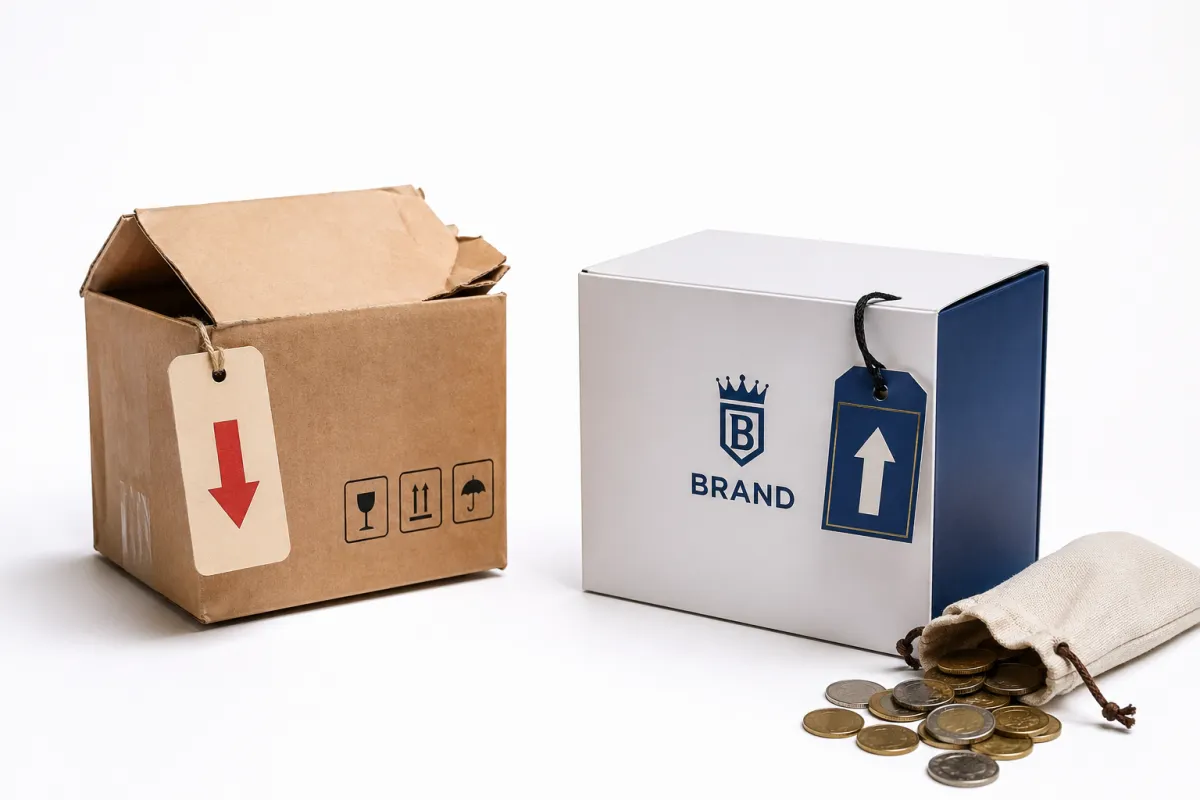
Brand packaging affordable starts with an annoying truth: the lowest quote is often not the lowest cost. A box price can look attractive until the buyer realizes the structure needs inserts, the print quality weakens shelf impact, or the product arrives damaged enough to force a second order. That is where savings disappear. In practice, brand packaging affordable is about total landed cost, not the per-unit number staring back from the quote.
I have watched brands shave a few cents off a carton and then spend far more on labor, packing materials, and returns. That kind of math gets ugly fast. You are not gonna win by buying the cheapest shell and hoping the rest of the supply chain behaves.
Picture a launch that starts with plain stock cartons. Day one looks efficient because the box itself is inexpensive. Then the team notices the product shifts inside the box, so it needs inserts. Then the carrier charges more because the void fill pushes parcel size up. Then a slice of units arrives dented or scuffed. The “cheap” package just created three extra cost centers. That is why brand packaging affordable should be measured against protection, assembly time, storage space, and customer touchpoints, not material cost alone.
For a packaging professional, the most useful lens is simple: how many jobs does the package need to do? A package for lightweight cosmetics may need strong visual impact, controlled print coverage, and an elegant unboxing moment. A package for a candle or glass bottle may need better crush resistance, a tighter fit, and a safer transit profile. The right structure can cut replacements, protect margins, and still look polished. That is the core logic behind brand packaging affordable.
Here is the part buyers often miss. Packaging cost is spread across more than the box. Die setup, artwork prep, freight, assembly, warehousing, and even the number of seconds a worker spends folding or taping the package affect the final number. A package that assembles in ten seconds instead of twenty can matter more than a few cents saved on paperboard. Brand packaging affordable works best when the buyer treats it like a system, not a single line item.
When the budget is tight, the cleanest strategy is to choose a structure that protects the product first, then build the brand message where customers actually see it. For some products, that means a sturdy outer shipper with a printed sleeve. For others, it means a modest folding carton with strong artwork hierarchy and a tight fit. Either way, the package should reinforce brand identity instead of fighting it. That is how brand packaging affordable stays practical instead of becoming a gimmick.
Buyers who compare brand packaging affordable options well usually ask three questions before approving a quote:
- Will this structure survive transit without extra protection?
- Does the print method match the order size and timeline?
- What hidden costs show up after the unit price is approved?
Those three questions cut through most of the noise. They also stop the classic mistake of treating packaging design as decoration only. Good packaging design behaves more like logistics than most people want to admit. If the structure is wrong, the budget pays for it later. That is the part of brand packaging affordable nobody wants to discover the hard way.
If you want to see how packaging formats are described in a manufacturing setting, browse the range of Custom Packaging Products. If you want proof that structure and specification matter across real jobs, review the variety of projects in our Case Studies.
One more reality check: brand packaging affordable is not always the same as minimum spec. Sometimes a slightly heavier board, a better closure, or a more efficient dieline lowers the overall project cost by reducing damage and labor. That is the kind of trade-off that separates a cheap package from a smart one. In other words, brand packaging affordable often means paying a little more in the right place so you spend less everywhere else.
Brand Packaging Affordable Options That Fit Different Products
Not every product should be packed the same way. That is where brand packaging affordable shifts from theory to actual buying. A lightweight supplement bottle does not need the same structure as a luxury candle. A dry goods pouch does not need the same finish budget as a retail gift box. Matching the format to the product is the fastest way to stop wasting money on features that do not improve performance. For brand packaging affordable, the structure itself often drives the biggest savings.
Folding cartons usually come first for lightweight retail products, cosmetics, small electronics, and wellness items. They are efficient because they ship flat, store neatly, and print well at scale. Mailer boxes make sense for ecommerce and direct-to-consumer brands that want stronger presentation on arrival. Corrugated shippers work better when protection matters more than premium appearance. Rigid boxes sit in the higher-touch retail category, but they can still be used strategically if the product price supports the added value. Sleeves, labels, and inserts are often the most flexible tools in the mix because they improve branding without forcing a fully custom outer structure. For many launches, that is the sweet spot for brand packaging affordable.
In practical terms, the right format depends on weight, fragility, and selling channel. A product sold in a box on a shelf needs strong shelf impact and quick readability. A product shipped across the country needs transit strength and a low damage rate. A product sold as a bundle may need an insert that keeps components aligned. The package should answer the product’s biggest risk first. Simple rule. Very effective. It prevents a lot of expensive overdesign and keeps brand packaging affordable where it matters most.
| Packaging format | Best use case | Typical price signal | What it saves | Watch out for |
|---|---|---|---|---|
| Folding carton | Light retail goods, cosmetics, supplements | $0.18-$0.42 per unit at 5,000 pieces | Flat storage, efficient shipping, strong print value | May need inserts for fragile products |
| Mailer box | Ecommerce subscriptions, DTC shipments | $0.45-$1.20 per unit at 5,000 pieces | Combines shipper and presentation | Higher board cost than basic cartons |
| Rigid box | Premium gifts, high-margin retail sets | $1.20-$3.50 per unit at 5,000 pieces | Premium feel, strong perceived value | Higher labor and freight cost |
| Pouch | Dry goods, powders, samples, refill items | $0.10-$0.60 per unit depending on film and print | Low material weight, efficient fill | Needs careful barrier selection |
| Sleeve + insert | Bundled items, promotional sets, simple branding updates | $0.14-$0.38 per unit at 5,000 pieces | Reduces tooling and size changes | Less protection than a full custom box |
Those figures are directional, not universal. Artwork coverage, board thickness, and freight distance can move the final number. Still, they help when a buyer needs to narrow options without spending all day in spreadsheet limbo. If the product is fragile, the cost of damage may outweigh the cost of a stronger carton. If the product is light and highly visual, a simple folding carton or sleeve can be the best expression of brand packaging affordable. That is usually the easiest way to keep the brief from drifting into unnecessary upgrades.
There is a smarter way to think about customization too. Customization does not have to mean every panel changes. In many cases, the better move is to customize the most visible surface, keep the board standard, and use a consistent interior fit. One-color branding, a well-placed logo, and a clear hierarchy of information often outperform dense decoration. That is where package branding and product packaging meet: enough detail to feel specific, not so much that the budget gets buried. It also keeps brand packaging affordable without making the design feel stripped down.
For products that need shipping validation, transit planning matters. The testing body at ISTA publishes widely used test methods for packages that face vibration, drop, and compression conditions. That matters because an inexpensive box that fails in distribution is not affordable at all. If your packaging has to move through parcel networks or mixed freight, testing should sit inside the buying conversation, not outside it. Brand packaging affordable should survive a real route, not just a spec sheet.
The most useful brand packaging affordable option is the one that matches the product’s actual route to market. A package that fits the product tightly, ships efficiently, and keeps the branding focused will usually beat a pricier structure that tries to do everything at once.
Materials, Print Methods, and Finishes That Change the Price
Materials are where brand packaging affordable becomes easiest to measure. Paperboard thickness, corrugated flute type, film gauge, coating choice, and ink coverage all shift the price. Some changes barely move the quote. Others can swing a project by 20% or more. Buyers who understand the material stack usually get better results than buyers who ask only for a “nice-looking box.”
Paperboard is common for custom printed boxes because it is efficient, versatile, and easy to print. A 300gsm board can work well for lighter products, while 350gsm to 400gsm may add the stiffness some retail packaging needs. Corrugated board offers more protection, with E-flute often used for smaller premium mailers and B-flute or C-flute chosen when crush resistance matters more. The right board does not have to be the thickest. It has to be appropriate. That is where brand packaging affordable starts paying off.
Print method matters just as much. Digital printing often wins for lower volumes, short runs, and fast artwork changes because setup is lighter. Offset printing usually makes more sense when quantities climb and the artwork stays stable, because the setup cost gets spread over more units. Flexographic printing can suit some corrugated runs where simplicity and scale matter more than fine detail. For a buyer trying to keep brand packaging affordable, the print method should match both the volume and the visual requirement.
Finishes can help, but they need to earn their keep. A matte or gloss coating can protect the surface, improve handling, and reduce scuffing. Soft-touch lamination can lift perceived quality, but it also adds cost and can complicate recycling. Foil stamping, embossing, debossing, and spot UV work best as selective tools, not default upgrades. Put the extra finish where the customer will notice it first. That might be the logo panel, the opening flap, or a single focal area on the front face. Brand packaging affordable usually looks better when one detail is doing the heavy lifting.
Here is the practical price ladder. Every added color, every custom cut, and every decorative layer increases production friction. If the project uses a standard size, a limited color palette, and one focal finish, the result usually stays closer to brand packaging affordable without losing visual strength. If the order needs full wrap coverage, multiple finishes, and custom inserts across several SKUs, the cost climbs quickly.
That is not a reason to avoid premium touches. It is a reason to use them with discipline. A common mistake is to spread budget across every surface equally. Better to concentrate on the elements that shape the unboxing experience and shelf impact. A customer rarely remembers an invisible detail. They do notice a crisp logo, a clean fold, and a package that opens the same way every time. That is usually where brand packaging affordable feels smarter, not cheaper.
From an environmental angle, finish choice affects recovery too. The EPA recycling guidance is a useful reference point when evaluating coatings, mixed materials, and overall packaging design. If your project aims to balance cost with recyclability, fewer mixed substrates and simpler finishes usually help. That does not make every premium effect wrong. It just means the best brand packaging affordable decisions are usually the simplest ones that still look deliberate.
Three cost-saving adjustments show up again and again:
- Standardize dimensions to reduce tooling and simplify carton storage.
- Limit colors when a clean logo and strong layout do most of the work.
- Use one focal finish instead of decorating every panel.
Those choices keep the package honest. They also sharpen brand identity because the design has a point of view instead of clutter. They also keep brand packaging affordable from drifting into decorative excess.
How Do You Keep Brand Packaging Affordable? Pricing, MOQ, and Per-Unit Cost
MOQ, or Minimum Order Quantity, is one of the biggest drivers of brand packaging affordable pricing. Smaller runs usually cost more per unit because setup, proofing, plates, tooling, and press prep are spread across fewer pieces. Larger runs usually lower the per-unit number, but only up to a point. Once inventory sits too long, the “savings” turn into storage cost and cash flow pressure. Brand packaging affordable is rarely about ordering as many as possible. It is about ordering enough to get a good unit price without overcommitting.
Buyers often compare quotes line by line without noticing how much the quote structure matters. A clean comparison should include material, print method, tooling, proofing, finishing, freight, and any assembly or kitting charges. If one supplier quotes a low unit price but adds higher freight or slower turnaround, the real cost may be higher. If another supplier includes a better dieline and tighter packing efficiency, the higher unit quote may still win. Brand packaging affordable depends on seeing the whole picture.
Here is a simple example. A 2,000-unit run may land at $0.62 per piece, while a 5,000-unit run might drop to $0.34 per piece. That difference looks dramatic, but the larger run only makes sense if the product can absorb the inventory and the design will stay stable long enough to use it. If the brand is still testing claims, sizing, or artwork, a smaller run can be the smarter move even when the per-unit cost is higher. That is the discipline behind brand packaging affordable.
There are also tactics that keep pricing from drifting upward without reason. Consolidating SKUs can reduce the number of dielines and proofs. Using one core box size with variable inserts can support product changes without rebuilding the entire package. Planning replenishment around forecasted demand avoids emergency restocks, which often cost more because they compress the timeline and reduce manufacturing flexibility. The cheapest packaging project is often the one that starts before the stockout does. That is one reason brand packaging affordable tends to reward planning more than last-minute speed.
A useful buyer checklist looks like this:
- Confirm the exact product dimensions and weight.
- Decide which surfaces must carry the brand message.
- Choose a print method that fits the run size.
- Ask for pricing at multiple quantities, not just one MOQ.
- Check whether assembly, inserts, or freight are included.
That sequence reduces surprises. It also makes it easier to compare brand packaging affordable options without getting pulled into tiny decoration differences that do not affect performance. A package that costs a few cents more but cuts the damage rate by a full percentage point can be the better financial decision. A package that saves packing labor by seconds per unit can matter even more at scale.
There is a habit of overfocusing on the lowest MOQ because it feels safe. Sometimes it is. Often it is not. If a brand can forecast demand with some confidence, a tiered order structure may cut the long-run cost far more effectively than piecemeal restocking. The key is to make the order size support the business model, not force the business to orbit the order size. That is the real answer to brand packaging affordable pricing.
Process and Timeline for Brand Packaging Affordable Projects
A smooth process is one of the easiest ways to keep brand packaging affordable. Delays, revisions, and repeated proof cycles all cost money. The standard flow is plain enough: inquiry, brief, quote, dieline confirmation, artwork setup, proofing, production, quality check, packing, and shipping. The companies that stay on budget usually move through those steps with fewer interruptions and clearer specifications. Nothing glamorous there. Just operational discipline.
Timeline pressure usually comes from four places: custom sizing, complex artwork, special finishes, and multiple rounds of proofing. Each one can add days or weeks. Standard dimensions, clean files, and straightforward branding usually move faster. If you want brand packaging affordable without schedule risk, lock the structure early and keep the artwork file away from last-minute changes.
Artwork readiness matters more than a lot of buyers expect. Print-ready files, correct bleed, accurate dielines, and final copy all reduce back-and-forth. If a project enters production with unresolved file issues, the schedule stretches. That extra time can force expedited freight or emergency rescheduling. Brand packaging affordable loses its edge fast when the team starts paying to recover time that should have been protected at the brief stage.
For buyers who need more certainty, sampling is worth the time. A prototype can confirm fit, closure, panel alignment, and surface appearance before the full run begins. It helps especially with retail packaging that has to sit next to competing products or with Product Packaging That needs a tight internal hold. Sampling does not erase risk, but it cuts the odds that the first full order becomes a correction order. That alone can protect the budget and keep brand packaging affordable from turning into a cleanup project.
Reliable production also depends on a clear approval process. The faster the client approves the proof, the faster the order moves into manufacturing. That sounds obvious. It still gets mishandled constantly because stakeholders are asked to review packaging one by one instead of through a single signoff path. A simple approval chain can save days. In a tight launch schedule, days matter.
For brands that care about transit performance, documenting the test plan is smart. Packaging standards groups such as ISTA provide test structures that are commonly used to simulate drops, vibration, and compression. Even when a full test protocol is not needed, the mindset helps. A box that passes a basic handling check before production is less likely to trigger costly returns or replacements later.
There is another hidden benefit to a controlled process: repeatability. Once the dieline, material, and finish are locked, the next order gets easier. That is how brand packaging affordable becomes sustainable instead of temporary. Repeat orders should feel predictable. The more stable the specification, the fewer surprises in cost and quality.
In practical terms, the fastest way to keep the schedule intact is to reduce change orders. Every revision after approval adds labor. Every late decision can affect print slots. Every unconfirmed dimension can change insert fit. The best affordable project is usually the one with the fewest moving parts once production starts. That kind of discipline is why brand packaging affordable is really a workflow decision as much as a sourcing decision.
Process tip: finalize the material, structure, and artwork before you ask for production pricing. When those choices are already settled, the quote is cleaner and the timeline is easier to trust.
Why Choose Us for Brand Packaging Affordable Without Sacrificing Quality
Brands usually do not need more packaging options. They need better packaging decisions. That is the difference we try to make at Custom Logo Things. Instead of pushing the most expensive format, the better move is to align structure, material, and finish with what the product actually needs. That is how brand packaging affordable stays grounded in performance instead of guesswork.
Process control matters just as much as material choice. Clear specs reduce waste. Accurate proofs reduce reprints. Measured tolerances help protect fit on repeat orders. Those are not flashy benefits, but they are the ones that keep margin intact. In many packaging programs, the real savings come from fewer mistakes, not just lower board cost. When the order repeats later, consistency becomes even more valuable because the brand identity stays stable across batches. That is brand packaging affordable working the way it should.
We also see a lot of avoidable cost creep in packaging design. Teams often start with a visual concept and then discover that the structure is too large, too loose, or too expensive to ship. A better starting point is to ask how the package will travel, store, and open. Once those answers are clear, the design can support the unboxing experience without forcing a premium structure that the budget cannot hold. That is the kind of practical thinking brand packaging affordable needs.
For first-time launches, the most useful support is often advice on sizing and artwork prep. A box that is 4 mm too tall can add fill material and shipping waste. A logo placed without respect for fold lines can weaken shelf presentation. A finish chosen without checking the print method can cause a cost jump that never needed to happen. Good guidance stops those problems before they reach production. It also makes the buying process calmer, which is rare and useful.
Our approach is especially helpful for brands comparing multiple packaging routes. One option may be a folding carton with strong graphics. Another may be a mailer box with lighter decoration but better transit performance. Another may be a sleeve and insert combination that keeps the structure efficient while still creating a clean branded packaging moment. The right answer depends on the product, the channel, and the budget, not on a one-size-fits-all recommendation. That flexibility is often what keeps brand packaging affordable over repeat orders.
What buyers usually want is transparency. What is the material? What is the MOQ? How long will the job take? What Changes the Price? Those questions deserve direct answers. A budget-focused packaging program should never feel vague. It should feel structured, testable, and easy to compare. That is the only way brand packaging affordable earns trust.
There is also a commercial truth worth saying plainly: a modest-looking package can still support premium positioning if it is well executed. Crisp print, clean dimensions, and a focused layout can do more for perceived value than excessive embellishment. The goal is not to look expensive in every possible way. The goal is to look correct for the product and the price point. That is where brand packaging affordable and brand perception actually meet.
When you want a partner that thinks this way, the conversation gets easier. You can weigh formats, compare print methods, and decide where the brand should spend and where it should save. That is how the conversation should work for brand packaging affordable, and it is how stronger repeat orders usually begin.
Next Steps to Order Brand Packaging Affordable That Fits Your Budget
Before requesting a quote, gather the facts that actually change pricing. Product dimensions. Target quantity. Shipping destination. Preferred material. Artwork files. Finish requirements. If the product has to fit an insert or survive a drop, say that upfront. When those details are clear, the quote becomes useful instead of vague. That is the fastest route to brand packaging affordable that lines up with the real budget.
Then compare three numbers, not one. Unit price matters, but total landed cost matters more, and turnaround time can matter just as much if the launch date is fixed. A lower quote that arrives late may cost the business more than a slightly higher quote that ships on time. A package that needs extra handling can also increase hidden labor. Brand packaging affordable is strongest when the full order picture is visible.
If you are unsure whether a prototype is necessary, ask one question: will fit, protection, or presentation affect the buying decision? If the answer is yes, sample first. A sample can reveal issues with board stiffness, opening behavior, insert tolerances, or print clarity before the full quantity gets committed. That makes sampling one of the most cost-effective tools in the entire packaging process, especially when brand packaging affordable has to stay on budget from the start.
For many brands, the cleanest path is simple:
- Choose one package format that fits the product.
- Set a realistic quantity based on demand.
- Keep the artwork focused and print-ready.
- Confirm the budget ceiling before production starts.
- Approve a sample if the product needs validation.
That sequence turns packaging from a guessing game into a controlled purchasing decision. It also makes brand packaging affordable easier to defend internally because every choice has a clear business reason. Good packaging is not accidental. It gets specified, checked, and bought with intent.
For brands that want to keep the conversation practical, our team can help narrow the format, material, and finish options so the final package fits both the product and the budget. Start with the product specs, then build from there. That is the honest way to keep brand packaging affordable without losing quality, and it is usually the fastest way to get a quote that actually reflects reality.
How do I make brand packaging affordable without looking cheap?
Start with a strong structure and a standard size, then put your branding where it has the most visual impact. Limit expensive finishes to one focal area, such as the logo panel or opening flap, and choose a print method that fits the order volume. That combination usually keeps brand packaging affordable while still supporting shelf appeal and a clean unboxing experience.
What MOQ should I expect for affordable brand packaging?
MOQ depends on the format, print method, and finish complexity, so any flat answer would be misleading. Smaller runs usually carry a higher unit price because setup is spread across fewer pieces. Ask for tiered pricing at different quantities so you can compare the cost gap between the minimum and the level that gives you the best value for brand packaging affordable.
Which packaging material is usually best for affordable branding?
Paperboard is often the most budget-friendly choice for lightweight retail products and Printed Folding Cartons. Corrugated board is usually better when transit protection matters more than a rigid premium look. The best material depends on product weight, shipping distance, and how much shelf presentation the package needs. That balance is the core of brand packaging affordable.
How long does affordable custom packaging usually take?
Lead time depends on artwork readiness, proof approval, material availability, and production method. Standard sizes and simple print jobs usually move faster than custom structures with multiple finishes. If you want to protect both schedule and budget, keep decisions locked early and send complete files the first time. That is often the simplest way to keep brand packaging affordable on track.
Can I get samples before placing a larger order for brand packaging affordable?
Yes. Samples are useful when fit, print accuracy, or product protection could affect the final order. A prototype helps confirm sizing and surface quality before full production begins. Sampling is especially valuable when you are comparing several brand packaging affordable options and need a clear answer on which one truly works for the product.