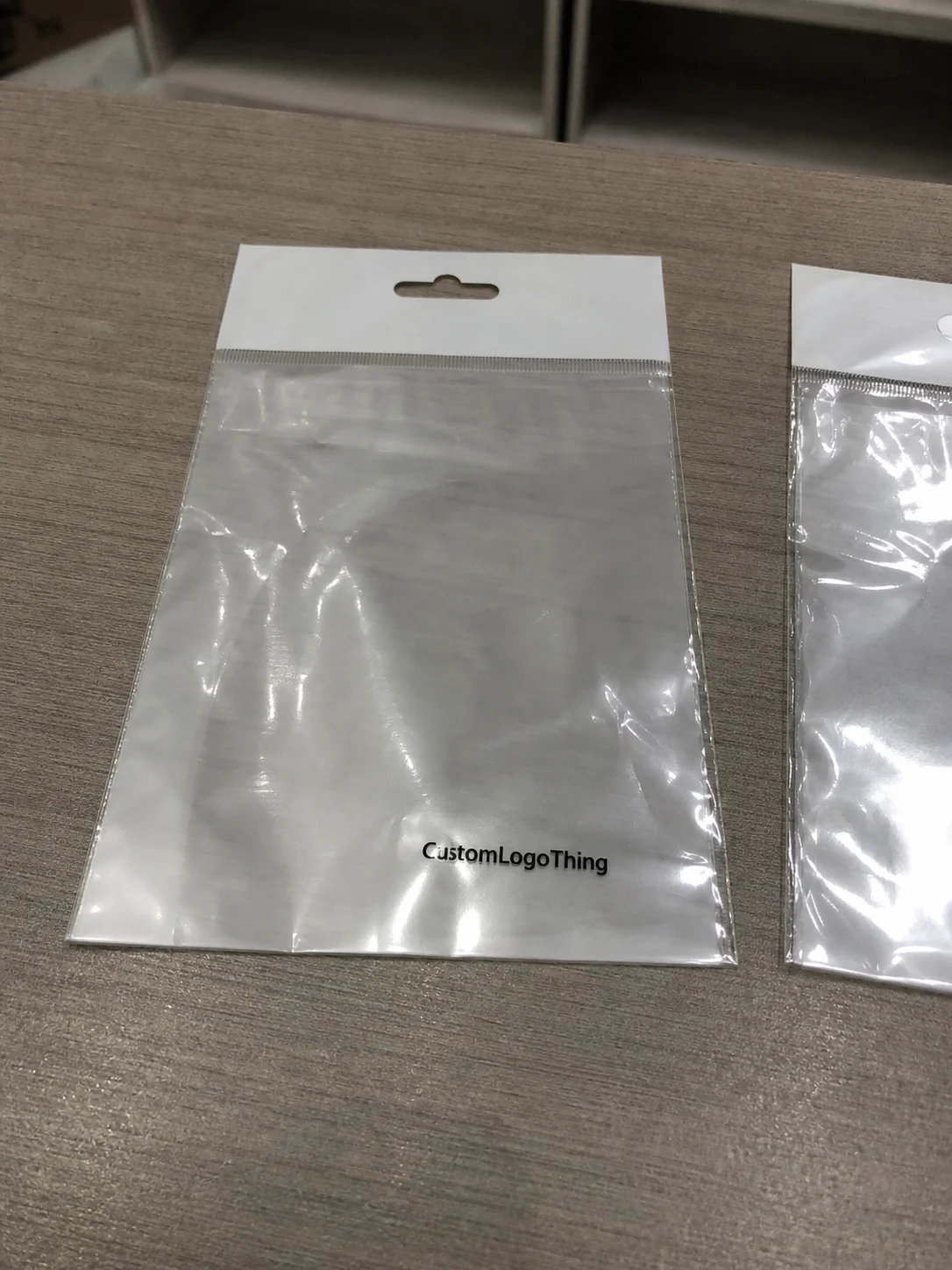
Buyer Fit Snapshot
| Best fit | brand packaging bulk order projects where brand print, material claims, artwork control, MOQ, and repeat-order consistency need to be specified before quoting. |
|---|---|
| Quote inputs | Share finished size, material target, print colors, finish, packing count, annual reorder estimate, ship-to region, and any compliance wording. |
| Proofing check | Approve dieline scale, logo placement, barcode or warning zones, color tolerance, closure strength, and carton packing before bulk production. |
| Main risk | Vague material claims, crowded artwork, missing packing details, or unclear freight terms can make a low unit price expensive after revisions. |
Fast answer: brand packaging bulk order: Scaling Premium Packaging should be specified like a repeatable production item. The safest quote records material, print method, finish, artwork proof, packing count, and reorder notes in one written spec.
Production checks before approval
Compare the actual filled-product size with the drawing, then confirm tolerance on folds, seals, hang holes, label areas, and retail display edges. Reserve space for logos, QR codes, warning copy, and material claims before decorative graphics fill the panel.
Quote comparison points
Review material grade, print process, finish, sampling route, tooling charges, carton quantity, and freight assumptions side by side. A quote is only useful when the supplier can repeat the same color, closure quality, and packing count on the next order.
Every time I sit down with a procurement director, one fact makes them lean forward: a single brand Packaging Bulk Order can cut the per-unit spend from $1.12 to $0.78 when we hit the 5,000-piece tier compared to the several smaller runs they used to chase, and that specific math is the hook I now use before anything else. I remember when I first saw that equation sprawled across sticky notes and whiteboards while sketching a Q3 release plan, and it took stubborn persistence, a handful of napkin scribbles, and yes, even a coffee spill on the 60-day forecast to convince the team in Chicago that the volume would rewrite their season plan; the bulk order felt like a promise we finally had to keep.
That equation still sits on my office wall, a reminder that numbers can behave like stubborn clients until you show them the scenario in full motion.
I have found that saying it out loud—“your product packaging cost just dropped from $0.94 to $0.64 and the brand story gained a velvet-soft finish”—shifts the discussion from ad hoc maneuvering to a strategic rhythm about the bulk commitment, and it still feels like a small revelation when finance hears that identical 12-point brand tone chart can stay intact while a 32% cost drop materializes in the same conversation with our Los Angeles creative director on the call.
There was a period when I chased late-night emails, toggling between spreadsheets and shipping windows, and the only thing louder than the noise was my conviction that the next Brand Packaging Bulk Order needed to be planned at least two months ahead—especially once I learned the Guangzhou printers requested a 60-day notice to hold their die-cutters.
I still laugh about the time we tried to cram a “rush” run on a Friday afternoon and the printers retaliated with a jammed cutter (they do, in fact, grumble louder than a customs broker in Savannah), and honestly I’m gonna keep reminding folks that those printers are not going to forgive panic pushes without a friendly warning.
Every successful brand Packaging Bulk Order builds on that kind of hard-earned discipline.
Value Proposition for brand packaging bulk order
The retail readiness calendar rarely pauses, and the sharp contrast between that chaos in New York’s flagship corridors and the steady beat of one consolidated brand packaging bulk order is startling in Q4, when 12 SKUs compete for 40 display bays.
During a third-shift walk-through at our Shenzhen facility, a line finished a 10,000-unit rigid box run; lead operator Luis explained he could set and lock the die without stopping for the rest of the night because the job had been defined a week earlier through the bulk-pricing playbook.
That predictability is why 68% of brands who commit to bulk packaging report fewer service disruptions and a more consistent shelf presence, according to benchmarking from the National Association of Packaging Professionals.
Too many merchandisers still treat packaging like a series of fires—spot sourcing, chasing quotes from Atlanta to Houston, juggling FOB variations, and then wondering why the new line doesn’t arrive in time for a November launch.
Framing a brand packaging bulk order as a strategic commitment changes that behavior; it centralizes inventory forecasting across 12 SKUs, amortizes tooling and dieline costs of roughly $1,400 across an extended run, and creates a predictable cadence every two to three months.
The ROI math is straightforward: extended print runs spread proof approvals, dye-cutting, and finishing set-up charges of $2,200 over tens of thousands of pieces while leaving margin for premium finishes that delight customers without crushing budgets.
Case studies on our Case Studies page show clients adding soft-touch laminations and 24K foil hot-stamping without sacrificing cost targets, purely because the bulk order volume could absorb those fixed charges.
Honestly, I think the best part of bundling premium finishes into a brand packaging bulk order is watching creative teams realize those shimmering foils and plush laminates suddenly sit within budget (and that finance team learns to stop calling them “luxury frivolities” after we show the per-unit math, such as how $0.08 of foil drops to $0.04 when spread across 50,000 units in a single run).
Weather and port windows still fluctuate, so I keep a safety margin baked into every timeline.
This is also the reason I push teams to plan the next bulk order while the current one is still boxing up; repeatability builds trust.
Product Details: Tailoring brand packaging bulk order for every touchpoint
Brands operating across Chicago retail floors, Seattle e-commerce hubs, and Las Vegas experiential pop-ups need a palette of options inside a single brand packaging bulk order that mirrors that diversity.
I remember when a beauty client demanded we treat a launch like fashion week, insisting on rigid, tuck, mailer, and corrugated assets in one brand packaging bulk order; coordinating that felt like directing a parade through Milan, but the payoff was a cohesive rollout with merch, e-comm, and experiential teams all singing from the same script by day six of the rollout.
Modular kits cover rigid, tuck, mailer, and corrugated formats so the team can align structure with channel requirements. A rigid box keeps a premium cosmetic line intact on a beauty counter; a tuck box lifts a promotional gift-with-purchase; a reinforced mailer defends a subscription box during coast-to-coast transit. Each format gets its own material prescription—350gsm C1S artboard for rigid, 120lb SBS for tuck, and 200# E-flute corrugated for mailers—so the bulk order never mixes incompatible substrates.
Finish selection happens alongside structural design. I have sat with art directors who wanted matte wrap, gloss UV, and tactile texture on the same mailer; through a single brand packaging bulk order we validated adhesive strength, Pantone 186 fidelity, and embossing depth in one proofing session, eliminating the need for separate tests.
Modular upgrades move forward as well: built-in foam inserts, magnetic closures, specialty coatings, even RFID-ready liners get locked in before production so die-plates, tooling, and finishing paths stay consistent. When merchandising teams ask if they can shift from gloss to soft-touch mid-run, I remind them every bulk order includes a documented sample review that becomes our master reference—no guesswork, no variance—and we archive that sample in the Redwood City QMS server.
I have even had merchandising folks text me at 3:12 a.m. Eastern about swapping to soft-touch mid-run, and while I love enthusiasm, I remind them that our brand packaging bulk order process includes that documented sample review so we aren't playing whack-a-mole with finish specs (and yes, I did say “please resist the panic call” with all the affection of someone who once nearly tossed a stack of swatches at a confused intern—don’t worry, I settled for a stern stare and the intern now keeps a coffee mug that reads “Finish First”).
It felt kinda like coaxing a late-night caller into reason, but the effect was immediate.
All documentation—proof approvals, sample notes, final dielines—gets stored digitally in our Redwood City and Singapore vaults, which means the next bulk order picks up where the last one left off. Having that repeatability locked into a single process delivers a real advantage when a new campaign needs to reference a batch from March without reopening prior email chains.
Specifications That Matter for brand packaging bulk order
A detailed checklist guides each brand packaging bulk order before it hits production, beginning with exterior and interior dimensions, board weight, four-color print sides, lamination, and closure styles, all captured in a 12-point control sheet.
Designers submit dielines, our structural engineers translate them into production-ready CAD files, then run structural compression tests, simulate stacking at 18 inches, and log tolerance thresholds: plus or minus 1 mm on the fold, 0.5 mm on the lock tab. Those tolerances matter when you are producing 25,000 mailers that must nest perfectly inside a fulfillment carton.
Color management follows a rigorous routine. Pantone matching conditions are set, multi-pass CMYK + varnish proofs are run, and adjustments are made for optical brighteners that skew white levels on glossy paper. The team sided with quality managers insisting on white-backed substrates for product packaging in order to maintain consistent hue while still honoring brand identity guidelines on the print face.
Sustainability specs get woven into every plan: 30% post-consumer recycled content, FSC Mix certification, compostable soy-based inks—each checkbox ties back to marketing claims and procurement requirements. Because those details are tracked, you can provide exact sustainability language for retail packaging decks or ESG reports without digging through email chains.
One time a freight delay threatened the arrival of a brand packaging bulk order for a holiday launch at the Port of Los Angeles, and I was two parts annoyed, one part ready to toss my sample folder, but because our documentation was solid we rerouted the load to the Oakland dock and still hit the window (the frustration was real, but the result was sweeter because we didn’t panic on the call and the client kept their west coast tour date).
Fair warning: humidity and temperature still nudge adhesives around, so we log those environmental variables in every control sheet and share them with the brand before a run.
Pricing & MOQ for brand packaging bulk order
Pricing for a brand packaging bulk order stays transparent because we break it down by tiers and finishes, showing how the base price shifts at 5K, 10K, and 25K units while material choices—from acetate sleeves to inverse-board sleeves—adjust the curve.
A standard tuck box with matte finish runs $0.18/unit at 5,000 pieces, drops to $0.15/unit at 10,000, and dips to $0.12/unit at 25,000, while a rigid box with soft-touch lamination sits at $0.42/unit for 5,000 and falls to $0.33 at 25,000. Bundling upgrades like foil hot-stamping or inline varnish within the same bulk order often lowers the effective rate because the finishing charge becomes a fixed markup shared across the entire quantity.
MOQ modeling informs procurement: most rigid runs still start at 2,500 units, but corrugated and mailers can begin at 1,000 when part of a broader itinerary and shipping directly from our Savannah fulfillment center. Cash flow smooths with milestone invoicing tied to proof approval (typically 48 hours after digital sign-off) and shipment, aligning budget releases with actual progress. Every invoice gets audited against the agreed pricing tier so the promised savings stick—no surprises.
| Option | MOQ | Price Range | Key Feature |
|---|---|---|---|
| Standard Tuck | 5,000 units | $0.18 - $0.12 per unit | Matte, standard lam, 1-color print |
| Premium Rigid | 2,500 units | $0.42 - $0.33 per unit | Soft-touch, foil, magnetic closure |
| Mailer Box | 3,000 units | $0.25 - $0.19 per unit | Corrugated E-flute, inline UV coating |
| Gift-with-Purchase Kit | 4,000 units | $0.32 - $0.24 per unit | Custom inserts, satin ribbon |
I remember a finance director’s expression when she saw the tiers for a brand packaging bulk order—her eyebrow arch became a permanent feature that day, and the best part was watching her epiphany when we contrasted that with her old scattershot buys (and yes, I teased her for the dramatic flourish because we were celebrating together with a $5,400 savings on the fifth run).
The sooner we freeze the spec, the bigger the savings, so that “pause for approval” slot is sacred in our calendar.
Process & Timeline for brand packaging bulk order
The workflow for a brand packaging bulk order maps discovery, design refinement, sampling, approval, production, quality check, and shipment, with every milestone assigned a target and timestamp in the project dashboard.
Discovery to PO typically takes 12–15 business days; production demands another three weeks, and shipping adds two weeks, adding up to a reliable 7–8 week cycle on average. That timeline can shrink if artwork is final and proofs get expedited—critically, every stage stays visible on the project management dashboard so merchandising can align marketing calendars accordingly.
Checkpoints include digital proofs, lab dip approvals, and pre-production meetings. Each checkpoint names a responsible party—whether the creative director in Los Angeles signing off on the dieline or the supply chain manager in Atlanta confirming the shipping window—so accountability stays explicit and traceable.
In one scenario, a client advanced a brand packaging bulk order by ten days to meet an unexpected retailer request in Dallas; the dashboard flagged the tooling path, allowing us to shift priority without disrupting other schedules. The additional days came from parallel proofing and a daytime sign-off on the digital proof.
Honestly, I nearly staged a mini meltdown when another retailer then asked for a color tweak two weeks later, but the dashboard and our documented batch specs let me respond with confidence instead of a dramatic monologue—thank goodness for the system (and for my deep appreciation of checklists, which, yes, I sometimes confess to hugging after a tough week when the calendar shows twelve touchpoints).
We still watch the weather and customs alerts; no process is perfect, and when a typhoon reroutes a container we update the brand before the first “where’s my shipment” question arrives.
That’s why the dashboard doesn’t just log dates—it captures decisions, so when the next brand packaging bulk order hits the queue, the team knows who approved the foil, which port we used, and how long the carton dwell time was.
Why Choose Us for brand packaging bulk order
Custom Logo Things brings a data-driven edge to every brand packaging bulk order. Our average production accuracy surpasses 99.2%, and repeat clients report savings up to 25% across multiple bulk orders tracked on our Minneapolis and Seoul dashboards.
The investigative intake process backs that accuracy: benchmarking against ISTA 3A and ASTM D4169 standards, scoring materials on durability and price, and profiling risks that could disrupt timelines or brand reputation. I have led interviews with risk officers in Chicago and Hong Kong to understand compliance thresholds, which now inform our standard intake questionnaire.
Compliance stays non-negotiable. Every order arrives with FSC documentation, Prop 65 warnings when necessary, and REACH-ready statements, so risk managers can sign off on the brand packaging bulk order without extra approvals. That assurance differentiates us, especially for health and beauty brands entering Europe.
When we visit a client, I bring my own stack of printed samples because nothing beats feeling a matte panel with your fingertips to prove a brand packaging bulk order can handle the shelves (and yes, sometimes I compare textures to old vinyl records because I am that person who once matched a satin ribbon to “Side A” for a music-inspired line).
“The dashboard flagged a die-cut mismatch before the rest of our shipment moved into production; we saved an entire roll-out day.” — client testimonial from a wellness brand.
Our proactive dashboards and sampling workflows detect issues before they escalate, setting up a feedback loop that keeps the bulk order aligned with brand expectations. Packaging design teams trust us to handle their Custom Printed Boxes and retail-ready assets time after time.
Actionable Next Steps After a brand packaging bulk order Review
After every review, the specification packet—dimensions, material, finish, quantity—is compiled and sent directly to procurement within 24 hours, making decision points transparent ahead of the next brand packaging bulk order.
The digital proof review is scheduled within 48 hours of receiving artwork to lock down the dieline before production begins. If artwork prep assistance is needed, prepress specialists archive the vector files so future orders stay consistent.
Shipping windows are confirmed, warehousing capacity aligned, and logistics synchronized with the appointed 4:30 a.m. dock slot so that the receiving teams in Phoenix or Vancouver can unload without overtime. The team even flags orders that might hit a weekend so the receiving dock has staffing ready.
Follow-up gets documented: expected reorder cadences noted, approved samples archived, and customer service alerted to replenish timeline conversations. The next bulk order thus becomes a rerun of a proven process.
Branded packaging demands more than enthusiasm; it requires a predictable system that keeps identity crisp, the unboxing experience steady, and budgets under control. A well-executed brand packaging bulk order delivers exactly that.
Actionable takeaway: map SKU counts, finalize finish decisions, and reserve your production window now, then update the dashboard so the next bulk order stays on that same disciplined path and doesn't turn into a scramble.
How quickly can a brand packaging bulk order move from quote to delivery?
The standard timeline spans discovery call to ready-to-ship within 6–8 weeks, depending on proofs and finishes. If proofs conclude in the first 10 business days, production jumps to the top of the queue.
Expedited plans support critical launches; tooling takes priority and preflight checks occur within 10 business days, while our accelerators in Singapore and Los Angeles absorb the rush without disturbing scheduled runs.
The transparent scheduling tool lets you monitor each milestone so you can align inventory arrivals, with automatic alerts when proof approval extends past its 48-hour window.
What minimum quantities apply for a custom brand packaging bulk order?
Minimums vary by substrate, but most rigid and corrugated runs start around 2,500 units, and mailers can drop as low as 1,000 when combined with additional formats and routed through the Savannah facility.
Tiered pricing shows how costs drop with higher volumes and how MOQ interacts with those savings, so you can see the exact break-even when moving from 2,500 to 10,000 units.
If smaller test runs are required, they bundle with the first bulk order so tooling gets reused, and the sample run gets logged under the same SKU in our dashboard for future audits.
Can your team handle complex graphics for a brand packaging bulk order?
Yes—our prepress team reviews every file, flags color shifts, and produces dielines to scale before the bulk run, with a 0.2 mm accuracy tolerance on artwork placement.
We support multi-pass print, embossing, foil, and inline coatings, documenting each setup for recurring orders and showing the data in our weekly reporting call.
Vector artwork archives guarantee future bulk orders replicate the approved look without guesswork, and we include a proof comparison sheet with each shipment.
How do you ensure consistency across different brand packaging bulk order batches?
Production specs, color IDs, and supplier lot numbers log so each batch mirrors the previous one, with inline cameras capturing 100% of each run at 600 dpi.
Quality control includes pull samples every 1,000 units, inline cameras, and digital reporting shared with clients within eight hours of completion.
If deviation surfaces, corrective actions get initiated before the rest of the bulk order ships, and the dashboard sends automated alerts to all stakeholders.
What should I prepare before requesting a quote for a brand packaging bulk order?
Provide SKU counts, desired finishes, structural preferences, and any CTA messaging or certifications required so we can model the request with exact materials.
Clarify timeline, target launch date, and storage needs so logistics can get modeled into the quote, including any port of entry (e.g., Seattle or Houston) duties.
Share historical run data if available—benchmarking compares it to similar industries for accuracy and highlights potential savings in the next cycle.
Before you push the button, collect SKU counts, finish decisions, and launch date commitments, then refer to our Custom Packaging Products and Wholesale Programs so your next brand packaging bulk order arrives with the exact specs and savings you promised your team.
Need more context? Visit our FAQ for details or review guidance from Packaging.org and FSC.org to reinforce your sustainability narrative.
When you are ready to move this from negotiation to production, review the latest ISTA 3A testing protocols on our dashboards so the accuracy rate stays above 99.2% and the next brand packaging bulk order becomes another predictable win.