Buyer Fit Snapshot
| Best fit | Branded Apparel Packaging Boxes projects where brand print, material claims, artwork control, MOQ, and repeat-order consistency need to be specified before quoting. |
|---|---|
| Quote inputs | Share finished size, material target, print colors, finish, packing count, annual reorder estimate, ship-to region, and any compliance wording. |
| Proofing check | Approve dieline scale, logo placement, barcode or warning zones, color tolerance, closure strength, and carton packing before bulk production. |
| Main risk | Vague material claims, crowded artwork, missing packing details, or unclear freight terms can make a low unit price expensive after revisions. |
Fast answer: Branded Apparel Packaging Boxes: What Really Matters should be specified like a repeatable production item. The safest quote records material, print method, finish, artwork proof, packing count, and reorder notes in one written spec.
Production checks before approval
Compare the actual filled-product size with the drawing, then confirm tolerance on folds, seals, hang holes, label areas, and retail display edges. Reserve space for logos, QR codes, warning copy, and material claims before decorative graphics fill the panel.
Quote comparison points
Review material grade, print process, finish, sampling route, tooling charges, carton quantity, and freight assumptions side by side. A quote is only useful when the supplier can repeat the same color, closure quality, and packing count on the next order.
A shirt can be beautifully cut, carefully printed, and still feel underwhelming if it lands in flimsy branded Apparel Packaging Boxes. That first touch matters more than many brands admit. Customers see the packaging before they handle the garment, and that first impression shapes how they read the product, the retail experience, and even the price point they are willing to accept.
Strong branded apparel packaging boxes do more than keep folded clothing in place. They support giftability, protect margins, strengthen resale value, and give people something worth posting without making the brand look forced or self-conscious. The right box can make a $38 tee feel considered. The wrong one can make a $180 hoodie look like it was dropped into whatever carton happened to be nearby.
Several formats show up again and again for a reason. Rigid boxes feel substantial and hold their shape well. Folding cartons keep shipping weight down and are easier to store. Mailer boxes suit direct-to-consumer orders because they stand up better in transit. Sleeves add a branding layer without much bulk. Inserts keep folded apparel from shifting and help the presentation feel cleaner. Each option can support branded packaging, but each one behaves differently once production, storage, and fulfillment enter the picture.
That difference matters because packaging design is never just decoration. It is structure, cost, handling, and customer experience working together in one decision. If you are comparing custom printed boxes for a launch, a reorder, or a seasonal line, a grounded view saves time and money. It keeps attention on the real outcome instead of a pretty rendering. For broader format comparisons, the catalog of Custom Packaging Products is a useful place to review structures before you lock in a direction.
The practical approach is simple: choose the box style around the garment, the shipping method, and the brand tier you want to signal. Then refine from there. The mistake is asking packaging to do ten jobs at once and hoping one structure can carry the load.
How branded apparel packaging boxes work from design to delivery
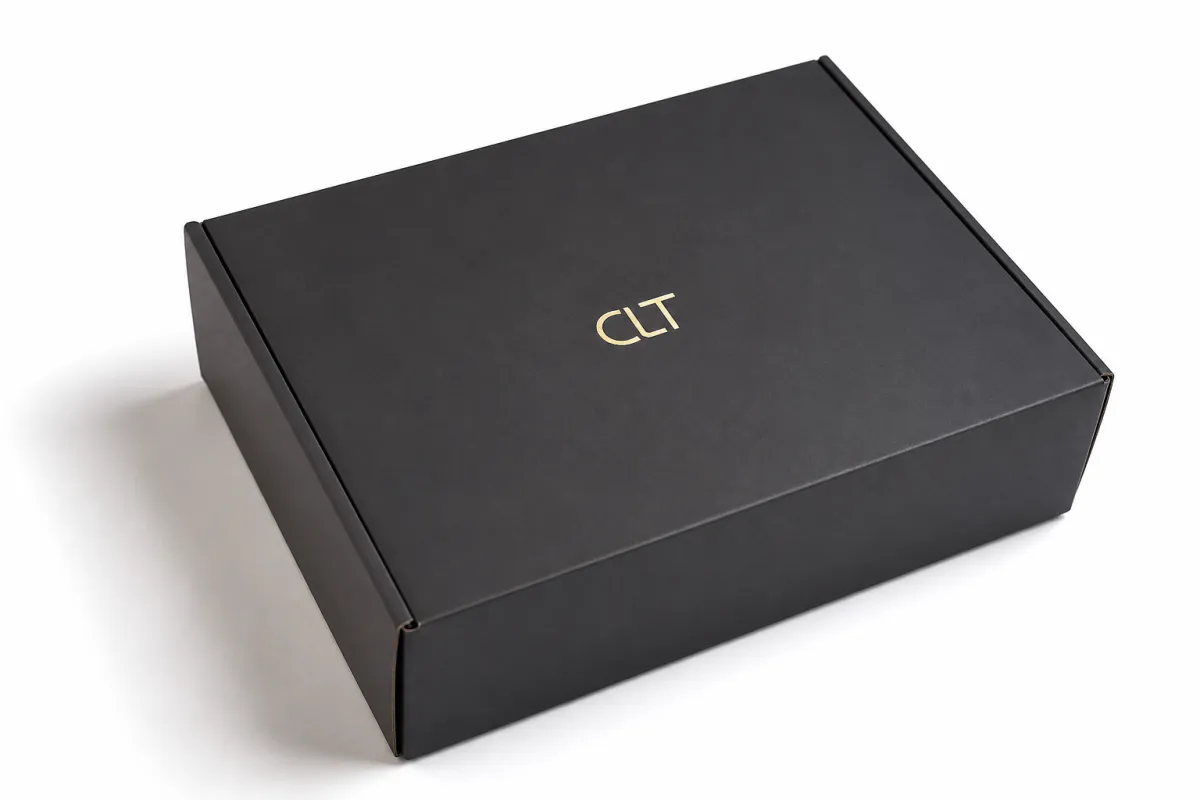
The production flow for branded apparel packaging boxes usually begins with a brief. A useful brief says what is being packed, how the garment is folded, whether the box will sit on a retail shelf or travel through parcel networks, what the target quantity is, and what the budget can actually support. Fuzzy inputs make every downstream step slower, more expensive, and harder to approve.
Next comes the dieline. That flat template shows folds, glue areas, bleed, and safe zones. Buyers sometimes treat it like a technical nuisance, though it is really the point where structure and artwork meet the real object. A logo that looks centered in a PDF can feel off once the lid overlap, fold line, or front flap lands in the finished box.
Artwork setup and proofing follow. Delays often surface here because the changes are usually small and practical rather than dramatic. A size note shifted after the first round, a barcode sat too close to a fold, a finish that sounded elegant on paper turned too glossy in hand. One round of corrections is normal. Three rounds usually means the scope was not defined tightly enough at the start.
The production path also changes by box type. Rigid branded apparel packaging boxes often involve board wrapping, cover lamination, and a fair amount of manual or semi-manual assembly. Folding cartons move through more automated equipment and usually turn around faster. Mailer boxes sit somewhere in the middle, with structural cutting, printing, then folding and packing. Sleeves are simpler, though only if the underlying box has already been resolved properly.
From a packaging buyer’s point of view, predictability matters more than drama. A good supplier should be able to explain where time is spent, which steps can run in parallel, and which approvals hold the schedule together. If that explanation feels vague, the timeline will probably drift right when it should be tightening. I have seen that happen often enough to trust the warning signs.
For brands comparing packaging design options, I usually recommend asking for a production map with these stages:
- Brief and dimensions — confirm garment type, fold style, and internal clearance.
- Dieline and artwork — build the layout around the actual structure.
- Proofing — review color, layout, and finish notes before production starts.
- Sampling — test the fit, closure, and visual balance with an actual sample.
- Production — print, cut, assemble, and finish the order.
- Packing and shipping — confirm carton counts, transit method, and receiving plan.
That is the cleanest way to keep branded apparel packaging boxes from turning into a guessing game.
Key factors that shape the look and performance
Material choice drives a large share of how branded apparel packaging boxes look and perform. Paperboard is common for folding cartons and sleeves because it prints cleanly and keeps weight low. Corrugated board makes sense for shipping mailers that need better crush resistance. Rigid chipboard sits at the premium end for giftable retail packaging and luxury apparel. None of those is automatically the best choice. The right answer depends on how far the box needs to travel and how much of the budget should stay with the garment itself.
Size matters more than most buyers expect. Oversized branded apparel packaging boxes waste freight space, create movement inside the box, and make folded clothing look less deliberate. Undersized boxes are even worse because they crush corners, wrinkle tissue, and force staff to wrestle the product during pack-out. If the box is too big, the garment slides around and the whole thing feels kinda loose. A practical sizing rule is straightforward: leave enough room for the folded garment plus tissue, but not so much room that the contents slide around. For shirts and lightweight knits, that usually means careful dimensional planning rather than extra filler.
Branding effects should support the structure, not fight against it. Embossing adds tactile depth. Foil stamping works well for logos and small accents. Spot UV creates contrast on coated surfaces. Full-color print opens up more flexibility, though it can look busy if the artwork lacks discipline. Interior printing is often overlooked, yet it can be one of the strongest uses of the box because the reveal happens exactly where the customer is paying attention.
Practical features matter too. Magnetic closures feel elevated, but they raise cost and can complicate storage or folding. Tear strips help in shipping, though not every apparel box needs one. Inserts improve presentation and reduce movement, though a poorly designed insert can slow packing more than it helps. Tissue paper and branded stickers are inexpensive touches, yet they often do more for the customer experience than a louder print treatment with no restraint.
If sustainability is part of the brief, say it clearly. FSC-certified paperboard, recycled content claims, and recyclable finishes all need to be checked against the actual construction, not just the marketing copy. For responsible sourcing language, the Forest Stewardship Council is a useful reference point at fsc.org. For transit durability expectations, packaging teams often look to test frameworks such as ISTA, especially when apparel orders move through rough parcel networks.
Branded apparel packaging boxes are never just a visual decision. They are a mix of packaging design, handling logic, and cost control. Get the material and structure right first, then add branding where it earns its place.
Branded apparel packaging boxes cost, pricing, and MOQ basics
Price usually comes down to a handful of variables: box style, dimensions, print coverage, finish complexity, quantity, and whether inserts or special closures are included. That is why two boxes that look similar on screen can land in very different price bands. A simple folding carton with one-color print is not competing with a rigid gift box that uses foil, soft-touch lamination, and a magnetic lid.
For branded apparel packaging boxes, low-volume runs cost more per unit because setup, tooling, and proofing get spread across fewer pieces. Bulk pricing behaves in the opposite direction. Once production is dialed in, the unit cost falls as quantity climbs. A startup ordering 500 boxes may pay far more per unit than a brand ordering 5,000, even if the artwork is identical. Nothing mysterious there, just the usual math of setup and scale.
MOQ means minimum order quantity. It is the smallest run a supplier will accept. For custom printed boxes, MOQ can be the difference between a practical test run and a commitment that hurts if the launch changes. A smaller brand introducing a capsule collection might accept a lower MOQ and a higher unit price. A larger apparel label that reorders monthly can usually push for better pricing by planning around one or two standard box sizes.
Here is a practical pricing comparison. These ranges are realistic for common apparel packaging, though exact numbers move with material, print coverage, labor costs, and shipping location.
| Box Type | Typical Use | Approx. Unit Cost at 1,000 | Approx. Unit Cost at 5,000 | Tradeoff |
|---|---|---|---|---|
| Folding carton | Retail packaging for tees, socks, accessories | $0.28-$0.65 | $0.14-$0.32 | Lightweight and efficient, but less premium feel |
| Mailer box | DTC shipping and subscription orders | $0.85-$1.60 | $0.42-$0.88 | Better transit protection, higher board usage |
| Rigid box | Luxury apparel, gifting, premium presentation | $2.20-$4.80 | $1.30-$2.90 | Strong brand signal, but more storage and labor |
| Sleeve + tray | Retail display and layered branding | $0.40-$0.95 | $0.22-$0.52 | Good for package branding, less protection than a full box |
Those ranges make one point obvious: the cheapest box is not always the cheapest packaging decision. If a lower-cost carton leads to crushed corners, longer pack-out time, or a weak unboxing experience, the real cost climbs quickly. That matters even more for branded apparel packaging boxes used in direct-to-consumer shipping, where the package itself becomes part of the product story.
A physical sample is worth the money more often than buyers want to admit. A prototype might cost $50-$250 depending on complexity, but that is still cheaper than discovering the fit is off by 6 mm after a full run. For apparel, a test fit often reveals whether the fold is too loose, whether the closure is too tight, and whether tissue or an insert actually keeps the item in place.
If you are trying to decide where to save and where to spend, the blunt answer is this: simplify the box before you simplify the structure. Dropping one finish is usually wiser than reducing board quality or ignoring closure mechanics. Fancy branding can wait. A box that collapses cannot.
Step-by-step process for branded apparel packaging boxes
A strong packaging brief keeps the whole job on rails. For branded apparel packaging boxes, the brief should include garment category, folded dimensions, quantity, shipping method, brand colors, finish preference, and the date the boxes actually need to arrive. Without that information, quotes become slippery and timelines become guesses. Nobody benefits from that arrangement.
Once the brief is set, request a dieline and ask whether the artwork should be built in CMYK, Pantone, or a combination. If the brand is strict about color, that needs to be clear early. If a navy must read deep and not washed out, say so before proof approval. Color correction after printing is the expensive way to learn a lesson.
Sampling should happen before full production, not after half the order is already committed. A sample or prototype lets you test the actual fold size, logo placement, closure tension, and how the box feels in hand. For branded apparel packaging boxes, that one test often exposes small issues that would otherwise hide inside a larger run.
Here is the approval checklist I would use:
- Confirm dimensions against the folded apparel and any inserts.
- Review artwork for margins, barcode placement, and fold-safe content.
- Check color against a reference sample or approved swatch.
- Test closure so lids, magnets, or tuck flaps behave properly.
- Run a pack-out test with tissue, stickers, or inner cards included.
- Verify shipping plan so cartons, pallet counts, and delivery timing are known.
Lead time is where expectations need to stay honest. Simple printed cartons can often move through proofing and production in about 10-15 business days after artwork approval, depending on the supplier and order size. More complex rigid branded apparel packaging boxes can take 18-30 business days or more, especially if you want soft-touch lamination, foil, custom inserts, or hand assembly. Shipping can add another 3-10 business days, sometimes more if the order crosses borders or requires freight handling.
Working backward from the launch date is the safest move, then adding padding for revisions. Not because suppliers are slow by default, but because revisions are real and people are part of the process. A box that looks simple from the outside can still hide several approval steps underneath.
For brands comparing suppliers, ask for sample photos, material specs, and a clear line between unit price and landed cost. The cheapest quote is often the one that quietly leaves out freight, duties, or extra finishing. Nobody likes a surprise invoice. Especially not from packaging.
Common mistakes with branded apparel packaging boxes
The biggest mistake is choosing a box because it looks expensive on a screen instead of because it works in real storage and shipping conditions. A rigid box can feel premium, sure. It can also hog shelf space, add pack-out labor, and drive freight costs higher if the brand does not need that level of presentation. Branded apparel packaging boxes should support the product model, not only the mood board.
Another common error is overdesigning. Too many finishes, too many colors, too much copy, too many visual ideas competing for attention. That usually increases cost without making the customer experience better. Good package branding is clear. It gives one or two strong signals and then gets out of the way. Restraint often reads more premium than clutter.
Skipping samples remains one of the easiest ways to waste money. Artwork on a screen does not tell you how the box closes, how the garment sits inside, or whether the finish scuffs in transit. With branded apparel packaging boxes, a sample often reveals whether the lid alignment feels solid or sloppy. That is not a small detail. It is the whole impression.
Weak branding hierarchy causes trouble too. If the logo is buried, the product name disappears, and every panel tries to do the same job, the box feels noisy. Customers should know what matters first. Usually that means the front face, then the inside reveal, then secondary messaging. Reversing that order makes the packaging work harder than it should.
Artwork files can be another mess. Low-resolution logos, missing die layers, and text placed too close to folds are all avoidable problems. A supplier can fix some of that, but not all of it, and every correction adds delay. Good packaging design starts with clean files and clear ownership. If nobody owns approval, everybody gets to be surprised later.
A pretty box that collapses in transit is not premium. It is expensive trouble.
There is also the customer-side mistake: forgetting the unboxing sequence. Think about what gets seen first, what gets removed second, and what lands in the hand last. That order matters. A thoughtful sequence can make mid-range branded apparel packaging boxes feel more polished than a louder box with no structure behind the reveal.
If you want a reality check, compare your current packaging against a few Case Studies. Seeing how other brands solved fit, finish, and shipping gives you a better benchmark than guessing from supplier mockups.
Expert tips and next steps for branded apparel packaging boxes
Start with your product list, not your wish list. A brand that ships folded tees, hoodies, and socks does not need three different packaging systems on day one. It needs one structure that covers the core volume cleanly, then maybe one premium format for gifting or launches. That is the smarter way to build branded apparel packaging boxes without burning through budget on options that only sound useful in a meeting.
Build a one-page spec sheet before requesting quotes. Include internal dimensions, board type, finish, print colors, insert needs, quantity, target date, and shipping destination. That one page can cut several email loops out of the process. It also makes it easier to compare suppliers apples to apples instead of comparing a stripped-down quote to one that includes the real requirements.
Compare at least two or three vendors on more than unit price. Look at sample quality, proof clarity, lead time, communication speed, and total landed cost. If one supplier is cheaper but cannot explain their process, the bargain may not hold up. In packaging, reliability is part of the price.
For apparel brands that care about premium retail packaging, a strong path often looks like this: pick one box style, keep the structure simple, and invest in one memorable detail such as foil, embossing, or an interior message. That gives the customer something to remember without stacking unnecessary cost into every carton. It also keeps reorders cleaner, which your operations team will appreciate even if they never say it directly.
If your order will move through parcel networks, ask whether the box can survive rough handling under basic ship-test expectations. The goal is not to overengineer every carton. The goal is to avoid a box that fails the first time a carrier has a hard day. Testing to a recognized method is useful here, and shipping-focused teams often reference ISTA-style thinking for exactly that reason.
Here is the short version I would give a buyer under deadline: choose the box that fits the product, choose the finish that fits the brand tier, and choose the supplier that can prove they understand both. That is how branded apparel packaging boxes stop being an afterthought and start doing real work for the business.
Packaging still matters after launch. Reorder consistency, storage efficiency, and customer feedback will tell you whether the current setup is earning its place. If it is not, simplify. If it is, tighten the spec and keep moving. The practical move is to lock the dimensions, sample the fold, confirm the finish, and approve only after the box proves it protects the garment and fits the route from warehouse to customer.
How do branded apparel packaging boxes help clothing brands sell more?
They make the product feel more premium before the customer opens it. They also improve giftability and raise the chance that people share the unboxing online, which is free visibility most brands would welcome. Just as useful, branded apparel packaging boxes help a small label look organized and intentional instead of generic.
What size should branded apparel packaging boxes be for folded shirts?
Choose a box that matches the folded garment plus a little room for tissue or inserts. Oversized boxes are a poor trade because they increase shipping costs and make the shirt feel loose inside. Ask for a dieline or sample so you can test the actual fold size before ordering.
What affects the cost of branded apparel packaging boxes the most?
Box style, material thickness, print coverage, and special finishes usually move price the fastest. Lower quantities also cost more per unit because setup costs are spread across fewer pieces. Custom inserts and premium closures can add cost quickly, so they need to earn their keep.
How long does production usually take for branded apparel packaging boxes?
Timing depends on whether you need simple printed cartons or more complex rigid boxes. Artwork approval, sample sign-off, and shipping method can all add days or weeks. Build in extra time if your launch date matters, because revisions are usually where schedules slip.
Are branded apparel packaging boxes worth it for small brands?
Yes, if packaging supports your price point and customer experience. Start with one strong box style instead of chasing every finish at once, then use samples and a tight spec sheet so you spend money on the parts customers actually notice. For many small brands, that is the difference between looking scrappy and looking intentional.


