Buyer Fit Snapshot
| Best fit | Branded Box Packaging MOQ projects where brand print, material claims, artwork control, MOQ, and repeat-order consistency need to be specified before quoting. |
|---|---|
| Quote inputs | Share finished size, material target, print colors, finish, packing count, annual reorder estimate, ship-to region, and any compliance wording. |
| Proofing check | Approve dieline scale, logo placement, barcode or warning zones, color tolerance, closure strength, and carton packing before bulk production. |
| Main risk | Vague material claims, crowded artwork, missing packing details, or unclear freight terms can make a low unit price expensive after revisions. |
Fast answer: Branded Box Packaging MOQ: Pricing, Specs, and Process should be specified like a repeatable production item. The safest quote records material, print method, finish, artwork proof, packing count, and reorder notes in one written spec.
Production checks before approval
Compare the actual filled-product size with the drawing, then confirm tolerance on folds, seals, hang holes, label areas, and retail display edges. Reserve space for logos, QR codes, warning copy, and material claims before decorative graphics fill the panel.
Quote comparison points
Review material grade, print process, finish, sampling route, tooling charges, carton quantity, and freight assumptions side by side. A quote is only useful when the supplier can repeat the same color, closure quality, and packing count on the next order.
Branded Box Packaging MOQ: Pricing, Specs, and Process
Planning a launch, a refresh, or a reorder usually starts with one practical number: branded box packaging moq. That number shapes cash flow, storage space, unit cost, artwork timing, and the amount of confidence a brand has before the first cartons leave the dock. Minimum order quantity is not just a factory rule. It reflects the real cost of materials, setup, finishing, and the inventory a business can actually hold without stretching too far.
Packaging buyers rarely need the absolute lowest MOQ. A better question is whether the order size supports a clean presentation, a workable price, and enough room to test demand without locking too much money into cartons. Branded box packaging moq matters because it gives the quote a frame, yet it still leaves room to adjust size, board grade, print method, and finishing so the order fits the product and the budget.
The sections that follow cover box styles, specs, pricing levers, and production steps that usually drive the decision. Buyers comparing product packaging, retail packaging, or custom printed boxes can use these details to request a quote with fewer gaps and a better sense of where unit cost comes from.
What Branded Box Packaging MOQ Means for Your Launch
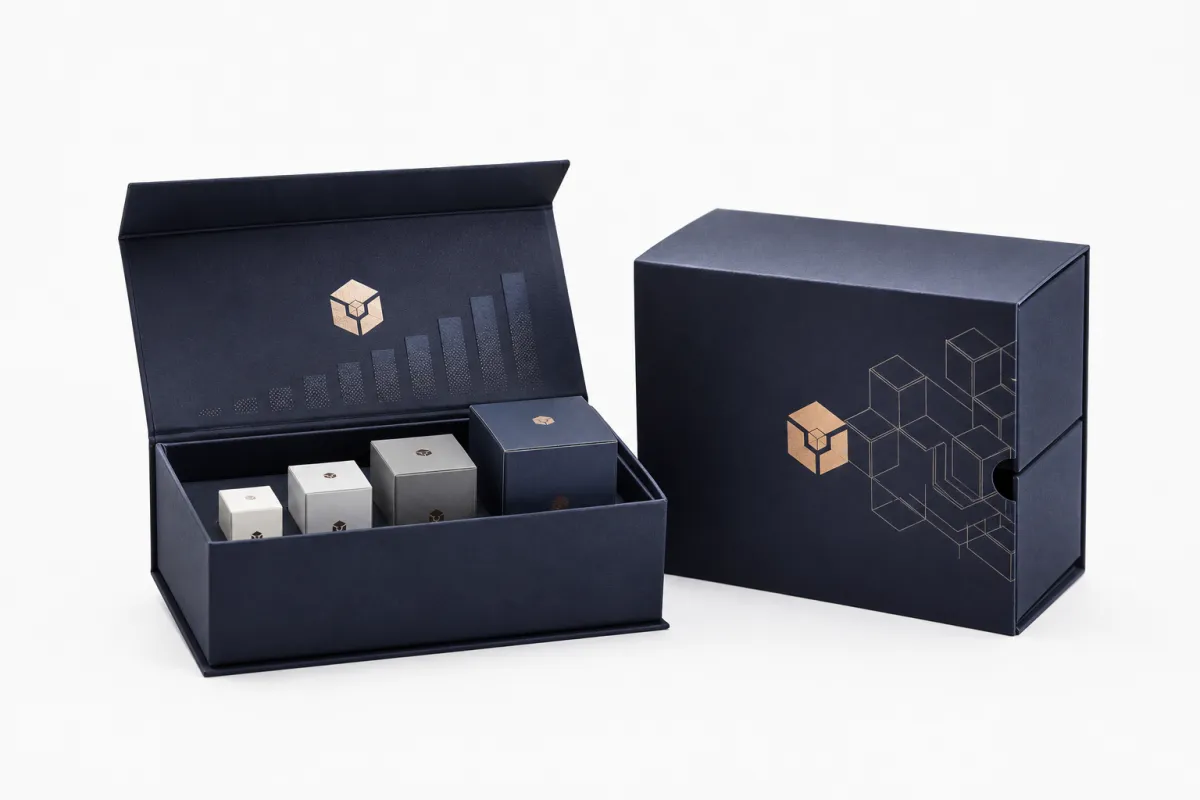
A low-cost box does not always carry a low MOQ, and that catches many buyers off guard. A standard structure in a common size often supports a lower branded box packaging moq because it takes less setup time, fewer production steps, and less board waste. Once the design adds unusual dimensions, full coverage printing, inserts, windows, foil, or specialty finishing, the economics shift quickly.
Launch planning makes branded box packaging moq feel especially important. The order has to cover demand, the package has to look right on the shelf or in the shipping box, and the inventory still needs to fit inside available storage. First orders tend to feel tighter than repeat runs because the brand wants enough cartons to support sales without filling the warehouse before the product has proven itself.
Structural tooling, print setup, and finishing all create work before the first usable carton appears. A custom die, print plates or digital setup, and a finishing pass each contribute to the fixed cost behind branded box packaging moq. The factory recovers those expenses through the order, which is why quantity affects pricing so directly.
A lower MOQ only helps when the carton still runs cleanly, stacks well, and protects the product during handling. A box that looks good but fails in transit carries a much higher real cost.
Brands opening a new line or adding a seasonal assortment can use branded box packaging moq to keep their packaging consistent across multiple runs. With the right plan, the same artwork, color profile, and structural fit can hold steady from one production cycle to the next. That consistency reduces waste, keeps fulfillment simpler, and gives the brand a stable look even as the product mix changes.
A lot of buyers begin with the wrong question. They ask how low the MOQ can go before they ask how much inventory they can store, how long the sales cycle runs, and whether the carton needs to perform on retail shelves or only in shipping. Those answers usually tell you whether branded box packaging moq should stay tight, shift toward a stock size, or rise enough to bring the unit cost into a workable range.
A common scenario starts with a brand wanting a premium carton while the product is still proving itself. In that case, branded box packaging moq should line up with forecast demand, carton dimensions, and the cash available for packaging. Buyers who plan around those realities tend to get cleaner launches than the ones who over-order because the piece price looked better on paper. I have seen that happen more than once, and it is never fun having half a pallet of boxes sit in storage while the product is still finding its footing.
If you want to see how box choices connect to real packaging programs, our Case Studies page is a useful place to compare structure, finish, and product fit. Quoting a carton is one step; seeing how the carton supports the product in actual use gives a much clearer picture.
Product Details: Box Styles, Materials, and Print Options
Branded box packaging moq ties directly to the style of box you choose. Mailer boxes, folding cartons, tuck-end cartons, rigid boxes, and sleeve packaging all move through production differently, and each one carries its own material flow and setup demands. A corrugated mailer for ecommerce shipping has very different economics from a small folding carton for cosmetics or a rigid presentation box for a gift set.
Common box styles usually fall into a few practical categories:
- Mailer boxes for ecommerce shipments, subscription programs, and strong unboxing presentation.
- Folding cartons for lightweight retail packaging, supplements, beauty items, and consumer goods.
- Tuck-end cartons for compact product packaging where shelf visibility matters.
- Rigid boxes for premium sets, electronics accessories, and high-value presentation packaging.
- Sleeve packaging for layered branding, product bundles, or wraps over a primary carton.
Board selection changes both appearance and performance. SBS, or solid bleached sulfate, gives a smooth print surface and often suits jobs where crisp graphics and a clean retail look matter. Kraft board brings a natural tone and can support an eco-minded brand message without heavy ink coverage. Corrugated board adds strength and cushioning, which is why it shows up often in branded box packaging moq conversations for ecommerce and shipping-heavy programs. Rigid chipboard is the material buyers reach for when the unboxing moment needs more weight and the carton should feel substantial in hand.
Print method matters just as much. Offset printing remains the workhorse for sharp detail, accurate color, and larger quantities. Digital printing often fits smaller branded box packaging moq orders, quick sampling, and short-run custom printed boxes with variable artwork or fast launches. Spot colors help keep a logo consistent when brand color accuracy matters, while CMYK gives more flexibility for full-image artwork and gradients. When artwork covers nearly every panel, the printer will pay close attention to ink coverage, drying behavior, and make-ready waste.
Finishing is where the package begins to feel more refined, and it also changes the production plan in a real way. Matte coating gives a softer, quieter look. Gloss adds shine and contrast. Soft-touch laminate creates a velvety surface, though it adds extra handling during production. Foil stamping, embossing, debossing, and spot UV each add texture or highlight selected areas, and each one increases setup complexity and can push branded box packaging moq upward.
The tradeoff is straightforward even if the decision is not. Premium details make the box more memorable, yet they also make the order more sensitive to registration, setup, and price. A lower-margin product may not support a fully finished rigid box, while a higher-ticket item may need exactly that level of presence to justify the purchase. The right branded box packaging moq depends on where your product sits in that range.
When comparing options for a new run, start with structure, then move to substrate, then finish. That order keeps the branded box packaging moq discussion tied to what the package has to do, not only how it looks in a mockup.
For more product categories and structure options, our Custom Packaging Products page is a straightforward place to review what can be built around your carton size and brand style.
| Box Type | Typical Use | Common MOQ Range | Approx. Unit Cost Range | Main Cost Drivers |
|---|---|---|---|---|
| Folding carton | Retail packaging for lightweight goods | 500-5,000 units | $0.18-$0.65 | Size, print coverage, coating, die cut |
| Mailer box | Ecommerce shipping and subscription packs | 250-3,000 units | $0.70-$2.20 | Corrugated grade, print sides, interior print |
| Rigid box | Premium gift sets and high-value packaging | 500-2,000 units | $1.20-$4.50 | Chipboard build, wrap material, inserts, finishes |
| Sleeve packaging | Bundles, wraps, and layered retail presentation | 1,000-10,000 units | $0.10-$0.45 | Print coverage, score lines, material choice |
Those numbers are planning ranges rather than promises. A detailed branded box packaging moq quote still depends on exact size, finish, product weight, and the manufacturing route. Even so, the table gives a useful sense of how the structure changes both the minimum and the unit cost.
Specifications That Change the Quote
Reliable branded box packaging moq pricing starts with a clear specification sheet. A quote based on "roughly this size" or "something premium-looking" almost always shifts once the actual dimensions and print needs are known. The more exact the brief, the cleaner the estimate.
Box size is the first detail that matters. Length, width, and height do more than define the carton; they affect board usage, dieline layout, shipping fit, pallet efficiency, and the amount of waste the manufacturer has to manage on press. Even a small change in one dimension can alter nesting and shift branded box packaging moq more than a buyer expects, especially when the carton needs inserts, partitions, or a more complex closure.
Board caliper, or thickness, comes next. A carton for a lightweight cosmetic item does not need the same board strength as one holding glass, metal, or dense product contents. If the package has to survive transit, a compression target or edge crush expectation may enter the discussion. For shipping cartons, ISTA test methods are often a strong reference point, and FSC certification can matter to brands that want clearer material traceability.
Before you ask for a branded box packaging moq quote, prepare these basics:
- Exact external and internal dimensions, if known.
- Product weight and whether the item shifts inside the box.
- Box style: mailer, folding carton, rigid box, sleeve, or tuck-end.
- Artwork file format, bleed, and safe area.
- Color expectations: one-color logo, spot colors, or full CMYK artwork.
- Finish preference: matte, gloss, soft-touch, foil, embossing, or spot UV.
- Need for inserts, dividers, windows, or tamper features.
- Target in-hand date and approximate quantity range.
Artwork details change the quote as well. A simple one-color mark with strong negative space is easier to print than a full-wrap design that places ink across nearly every surface. Bleed and safe area affect trimming tolerance, and the file type matters because a press-ready vector file is easier to work from than a low-resolution logo pulled from a website. Photography, gradients, and dense shadows add another layer of color control that needs to be handled carefully during production.
Another detail that often gets missed is whether the package must behave like retail packaging or shipping packaging. Retail packaging focuses on shelf presence, color accuracy, and tactile finish. Shipping packaging adds protection, stack strength, and predictable transit behavior. A branded box packaging moq can be very workable in one category and noticeably higher in the other because the performance goals are different.
One efficient way to speed up the quoting stage is to write a short checklist before sending the request. I usually tell buyers to think about what the box must hold, how it must look, and how it must move through fulfillment. That keeps branded box packaging moq requests focused and helps the supplier recommend the right board, structure, and finish without revising the quote several times.
For buyers who want a clearer starting point on common questions, the FAQ page is a useful companion, especially when comparing packaging design paths or deciding which specs matter most for the first order.
Branded Box Packaging MOQ: Cost, Pricing, and Unit Cost
Pricing usually comes from setup, material, print coverage, finishing, and quantity, not from the logo by itself. That is the part many first-time buyers miss. A small branded box packaging moq may sound efficient, but once the order asks for a custom size, specialty finishing, and heavy ink coverage, the unit cost can rise much faster than expected. A larger run often lowers the price per box because the fixed setup cost is spread across more cartons.
MOQ and unit cost move together. Higher branded box packaging moq orders typically offer better pricing because tooling, setup, and proofing get divided across more pieces. Lower quantities cost more per box, yet they can still be the right choice when the product is early stage, seasonal, or demand remains uncertain. In those cases, preserving cash flow matters more than chasing the lowest piece price.
Here are a few budget levers that often make the biggest difference:
- Simplify the finish. Matte coating is usually easier to run than layered specialty effects.
- Reduce the color count. One or two spot colors can cost less than full-wrap CMYK artwork.
- Use a stock size when possible. A size closer to an existing dieline can lower setup work.
- Choose the right board grade. Overbuilding the carton adds cost without helping the product.
- Limit inserts unless they are necessary. Custom inserts add material and assembly cost quickly.
The best quote is tied to an accurate brief. A vague branded box packaging moq request can hide cost swings later in the order, especially once the supplier confirms exact dimensions, print coverage, or finishing complexity. Freight can also change the landed cost if it is not included from the start. Inserts, special packing, and proofing may sound small, yet they often move the final number enough to matter.
Below is the kind of comparison I like to show buyers when they are choosing between a premium presentation box and a simpler construction:
| Option | Best For | Price Pressure | MOQ Behavior | Notes |
|---|---|---|---|---|
| Stock-size mailer | Fast launch, ecommerce shipping | Lower | Often lower | Good for branded box packaging moq control when fit is flexible |
| Custom folding carton | Retail shelves, light products | Moderate | Moderate | Good balance between appearance and unit cost |
| Rigid setup box | Gift sets, premium launches | Higher | Higher | More material and hand work, usually a stronger presentation |
| Fully wrapped sleeve + insert | Bundles and layered branding | Moderate to higher | Moderate | Useful when package branding matters but structure can stay simple |
One useful rule holds up across many projects: if the product price is relatively low, keep the packaging efficient. If the product price is higher, the box can carry more visual weight and still make financial sense. Branded box packaging moq should never be judged by itself. It needs to be measured against margin, sell-through speed, and the role the carton plays in the customer experience.
Material choice can affect both cost and buyer perception. FSC-certified paperboard, right-sized cartons, and less filler waste often support brand goals and operating efficiency at the same time. For a broader packaging policy reference, the EPA's Sustainable Materials Management resources help frame source reduction and waste prevention in practical terms.
My direct advice is simple: do not let a low starting price push you into ordering too many boxes. A smart branded box packaging moq protects cash, protects the product, and still gives the brand a finished look that fits the market position.
Process, Timeline, and Production Steps
Once the spec is set, the order flow usually follows a familiar path: inquiry, specification review, quoting, artwork prep, proof approval, production, and shipping. The sequence sounds simple, yet each stage carries its own timing pressure, and branded box packaging moq affects how quickly a job can enter the schedule. A cleanly defined order is easier to release into production than one that still has open questions about size, finish, or insert layout.
Turnaround depends more on print method and finishing than on the calendar alone. A straightforward digital run can move faster than a rigid box with foil and embossing, even when both orders carry similar branded box packaging moq numbers. Material availability, die cutting, gluing, and dry time all affect lead time. Approval speed matters too, because a delayed proof can hold the entire schedule even when the press is ready.
Common delay points include:
- Missing dieline files or unclear trim lines.
- Late artwork changes after proofing has started.
- Color corrections that require another round of proof approval.
- Unclear finish instructions, especially on foil or spot UV placement.
- Inserts or partitions that are added after the first quote.
If the brand has a launch date, build the packaging schedule backwards. Start from the shelf date or shipping date, then work back to proof approval and add buffer for production and freight. Brands often wait too long to connect packaging lead time to inventory planning, and then branded box packaging moq becomes a bottleneck at the exact moment demand starts to build. Seasonal products deserve even more planning, with reorder timing set before the first run gets too low.
Here is a practical way to think about the timeline. Simple custom printed boxes may take roughly 10 to 15 business days after proof approval, depending on quantity and finish. More complex cartons, especially rigid or highly finished packaging, can take longer because they involve more hand work and more opportunities for inspection. Those are planning ranges, not guarantees, but they reflect what usually happens on the production side.
It also helps to keep the fulfillment team in the loop. If cartons arrive flat, someone needs space to store them. If they arrive pre-assembled, someone needs labor to manage receiving and repacking. When a brand treats branded box packaging moq as part of the supply chain instead of a one-off print purchase, the order tends to move with fewer surprises.
For buyers who want to compare structure choices before placing a run, it can help to look at existing work and note what actually changed between concepts. Our Case Studies page is a good place to see how product packaging decisions affect the final result, especially when the box has to protect the item and still look polished on arrival.
In practice, the timeline is not only about speed. It is about predictability. A branded box packaging moq that fits the production schedule, the forecast, and the available warehouse space usually brings more value than a rushed order that saves a couple of days but creates weeks of internal stress.
Why Buyers Choose Us and What to Send Next
Buyers usually want the same three things: a box that fits, a price that makes sense, and a supplier who answers clearly. That matters even more in branded packaging, where the carton has to do more than hold product. It has to communicate quality, support package branding, and arrive in a way that does not create extra rework for the fulfillment team. A good supplier helps match appearance, durability, and budget instead of steering every project toward the most expensive finish available.
That is the practical value of a thoughtful branded box packaging moq conversation. It gives the buyer room to adjust the order around real constraints instead of guessing. If the target is a cleaner shelf display, the conversation can focus on print coverage and coating. If the target is transit protection, board strength and closure style matter more. If the target is cash control, size simplification or a stock structure may solve more than a lower piece price ever could.
Technical support matters because packaging rarely exists for looks alone. A carton may need to support a fragile item, preserve print consistency, stack well in storage, and still feel premium when the customer opens it. That is a lot of responsibility for one box. The better the supplier understands the product, the easier it is to align branded box packaging moq with actual performance instead of an abstract idea of luxury.
To move quickly from inquiry to quote, send these details:
- Exact box dimensions or a sketch with measurements.
- Product weight and whether inserts are needed.
- Preferred style, such as mailer, folding carton, rigid box, or sleeve.
- Artwork files, logo files, or current packaging design references.
- Finish preferences and any must-have branding elements.
- Quantity range and target branded box packaging moq.
- Desired in-hand date and any launch constraints.
Those details help confirm the right branded box packaging moq, refine the quote, and move from inquiry to production without needless revisions. They also make it easier to recommend the right board and finish on the first pass, which is where most of the real savings live. A clean brief often saves more money than a small discount ever could.
If you are still gathering your requirements, the FAQ can help sort out common questions before you send artwork. That is often the fastest way to reduce back-and-forth on size, proofing, and minimums.
Branded box packaging moq is more than a procurement number. It is a planning tool that helps protect margin, present the product well, and avoid overbuying before demand is proven. Accurate dimensions, realistic expectations, and a clear sense of what the box must do usually lead to a better order and a smoother launch. If you are narrowing the options, start with the product's real size, the level of finish it truly needs, and the quantity the business can carry without pressure; the right MOQ usually shows up pretty quickly after that.
FAQ
What is a typical branded box packaging MOQ?
It depends on box style, material, and print method, but many custom projects start at a few hundred units and rise as complexity increases. Rigid and highly finished boxes usually need a higher branded box packaging moq than simpler folding cartons or stock-size mailers.
Can I lower the branded box packaging MOQ by choosing a stock size?
Yes, using an existing size or structure often lowers setup work and can reduce the minimum order quantity. The tradeoff is less flexibility in fit and branding placement, so the box still needs to match the product well.
What affects branded box packaging pricing the most?
Board type, box size, number of print colors, special finishes, and the quantity ordered have the biggest impact on unit cost. Freight, inserts, and proofing can also change the final number, so they should be included in the quote request.
How long does branded box packaging production usually take?
Simple printed cartons can move faster than rigid boxes or heavily finished packaging, but approval speed matters too. Artwork sign-off, material availability, and the production queue all influence lead time, so timeline estimates should be confirmed early.
What should I prepare before requesting a branded box packaging quote?
Send exact dimensions, product weight, preferred box style, quantity range, artwork files, and any finish or insert requirements. A clear brief helps the supplier recommend the right material and branded box packaging moq without unnecessary revisions.


