Buyer Fit Snapshot
| Best fit | Branded Carton Boxes with Lamination projects where brand print, material claims, artwork control, MOQ, and repeat-order consistency need to be specified before quoting. |
|---|---|
| Quote inputs | Share finished size, material target, print colors, finish, packing count, annual reorder estimate, ship-to region, and any compliance wording. |
| Proofing check | Approve dieline scale, logo placement, barcode or warning zones, color tolerance, closure strength, and carton packing before bulk production. |
| Main risk | Vague material claims, crowded artwork, missing packing details, or unclear freight terms can make a low unit price expensive after revisions. |
Fast answer: Branded Carton Boxes with Lamination: Board, Finish, Dieline, and Unit Cost should be specified like a repeatable production item. The safest quote records material, print method, finish, artwork proof, packing count, and reorder notes in one written spec.
Production checks before approval
Compare the actual filled-product size with the drawing, then confirm tolerance on folds, seals, hang holes, label areas, and retail display edges. Reserve space for logos, QR codes, warning copy, and material claims before decorative graphics fill the panel.
Quote comparison points
Review material grade, print process, finish, sampling route, tooling charges, carton quantity, and freight assumptions side by side. A quote is only useful when the supplier can repeat the same color, closure quality, and packing count on the next order.
Branded carton boxes with lamination: Design, Cost, Tips. Branded carton boxes with lamination are the difference between packaging that looks polished on a screen and packaging that still looks intentional after a courier has thrown it around, stacked it badly, and left it sitting under fluorescent lights for half a day. If you are sourcing branded carton boxes with Lamination for Retail, subscription, or shipping, the real question is not whether the finish looks nice in a render. The real question is whether the box still holds up after ink rub, stacking pressure, fingerprints, warehouse handling, and a few rough conveyor belts.
At the core, branded carton boxes with lamination are printed cartons finished with a thin film on the outside surface. That film changes how the carton looks, how it feels, and how it behaves once it leaves the press. It will not save weak board, sloppy dielines, or a box that is too flimsy for the product inside. It does give you a cleaner face, better scratch resistance, and a more controlled first impression than an untreated carton. That is what people are paying for, even if they pretend they are only buying shine.
Buyers usually end up comparing gloss, matte, soft-touch, and anti-scratch because “premium” is not a spec sheet entry. The right finish depends on product weight, shipping path, shelf lighting, and how much abuse the carton will take before a customer opens it. Ignore those details and branded carton boxes with lamination become an expensive way to make the wrong choice look prettier. Which, honestly, is a pretty common mistake.
What Branded Carton Boxes with Lamination Actually Do
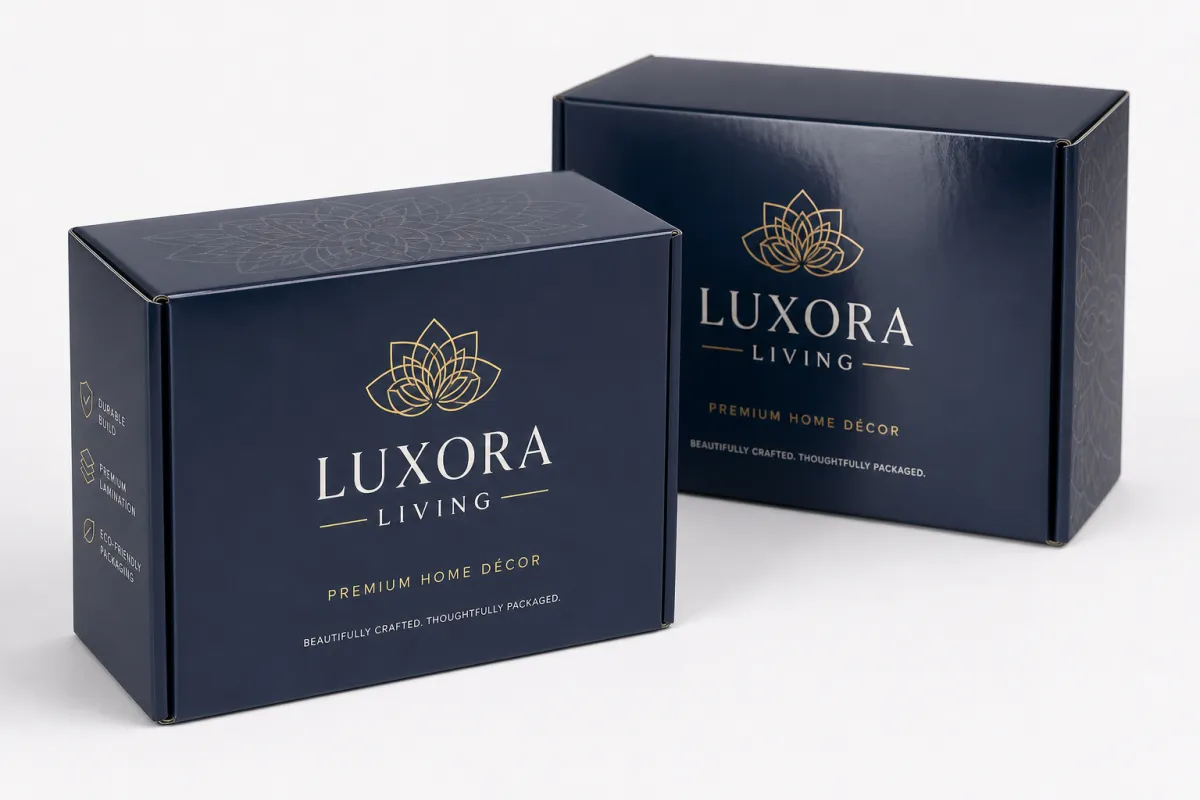
Branded carton boxes with lamination start as printed cartons. The print carries the brand graphics, product details, legal copy, barcodes, and whatever design language the team has been arguing over for weeks. The laminate is added after printing and sits on top of that surface as a protective layer. It changes the way the artwork holds up in the real world, which is less glamorous than a packaging pitch deck, but a lot more useful.
The practical upside is easy to see once you handle enough cartons. A laminated surface usually resists light scuffing better than an uncoated one, tends to keep color looking more consistent, and gives the box a cleaner appearance after it has moved through machines, pallets, tape, and actual human hands. For branded carton boxes with lamination, that matters because packaging is judged before the product is touched. A scuffed box suggests a cheaper product, even if the item inside is excellent.
What lamination is not matters just as much. It is not structure. It does not replace proper board selection, correct folding design, or accurate die cutting. It is also not the same thing as varnish or UV coating. Varnish is a lighter finish. UV coating is liquid-applied and cured under ultraviolet light. Lamination is a film layer, and that difference shows up in feel, durability, and price. If a carton is bending badly because the board is too weak, more laminate will not fix it. Physics stays stubborn.
A laminated carton should be judged in hand, under real light, after folding and handling. A glossy render is not a shipping test.
Buyers comparing branded carton boxes with lamination against plain cartons or cartons with a clear coat usually end up asking three things: does the finish improve shelf appeal, does it protect the print enough to justify the cost, and does it fit the brand voice? A luxury skincare carton may want soft-touch with foil stamping and a quiet matte feel. A snack box with bold color blocks may want gloss so the artwork looks louder. A shipping-first carton may need anti-scratch more than visual drama.
The packaging role matters too. Some cartons live on retail shelves, where appearance matters more than repeated friction. Others spend most of their life in corrugated shippers, fulfillment centers, and stockrooms, where abrasion matters more than reflection. Branded carton boxes with lamination can work in both settings, but the finish should match the route the carton actually takes, not the fantasy route in a presentation file.
Most bad outcomes start with the finish being chosen before the structure, board, and use case are locked. That is backwards. The printed finish should support the carton, not fight it. A gorgeous finish on a weak box is still a weak box. It just has better skin.
How Branded Carton Boxes with Lamination Work
The production flow for branded carton boxes with lamination is straightforward, but the order matters. Printing comes first, usually on a carton board such as SBS, CCNB, or coated artboard depending on the budget and the application. The laminate film is then applied to the printed sheet. After that, the sheet moves into die cutting, creasing, folding, and gluing. If the job includes embossing, foil stamping, or spot UV, those steps need to be built into the plan so the finish does not interfere with registration or adhesion.
Gloss lamination gives the loudest visual impact. It raises contrast, deepens dark colors, and makes reds, blues, and blacks feel more saturated. Matte lamination does the opposite in a good way: it reduces reflection and gives the carton a calmer, more controlled presence. Soft-touch adds a velvety feel that reads as premium the moment someone picks up the box. Anti-scratch film is the practical cousin. It is built for cartons that rub against each other, travel through warehouses, or get handled hard. Branded carton boxes with lamination are not one product. They are a set of surface choices with very different behavior.
Substrate quality matters more than many buyers expect. A laminate can only bond as well as the surface beneath it allows. If the printed sheet has poor coating, weak ink cure, or dust on the surface, the film may not sit evenly. Problems also show up at fold lines if the score depth is wrong. Tight folds, small panels, and heavy artwork at the crease are where cracking usually starts. A carton that looks fine in a flat proof can behave badly once it is folded and packed.
That is why branded carton boxes with lamination should be sampled in a way that reflects real use. A flat printed sheet tells you very little. A folded sample tells you more. A handled sample tells you even more. Under harsh retail lighting, a finish that looked elegant in a studio can turn too reflective. Shelf conditions, courier abrasion, and warehouse stacking are the real test, not the prepress monitor. I have seen more than one “perfect” approval fall apart the minute the first production sample got folded. Kind of a humbling moment.
Finish choices buyers usually compare
- Gloss: strong color pop, more reflection, easy to notice on shelf.
- Matte: lower glare, quieter look, often the safest all-around choice.
- Soft-touch: velvety hand feel, premium cue, usually higher cost.
- Anti-scratch: better for transit and repeated handling, especially on darker artwork.
Lead time changes with the finish. Simple branded carton boxes with lamination, using standard board and a common dieline, can move through production fairly quickly once artwork is approved. Add soft-touch, foil stamping, or a custom structural shape and the schedule stretches. More complex finishes usually mean more proofing, more setup, and more attention during conversion. If someone promises a premium finish, a custom structure, and a rushed deadline with no tradeoff, they are selling optimism, not packaging.
The cleanest way to think about it is simple. The film protects the printed face and shapes the first impression. It does not fix poor structure. Branded carton boxes with lamination work best when board, print, finish, and folding details all point in the same direction. Packaging gets easier once everyone stops treating the finish like magic.
Key Factors That Change Look, Durability, and Price
Board choice is the first variable that changes the result. Thicker board usually gives better rigidity, but thickness alone does not guarantee a better carton. Fiber quality, coating smoothness, and how the board takes ink all affect the final look. A premium board can make branded carton boxes with lamination feel tighter and cleaner, while a cheaper board may look flat, show grain, or crack sooner at the folds. In packaging, the substrate is not background noise. It is half the product.
Finish type changes both appearance and handling behavior. Gloss is often the easiest way to make artwork feel bold, especially on cartons with bright photography or dark solids. Matte looks more restrained and often hides minor handling marks better because it does not throw back as much light. Soft-touch feels richer, but it also shows a different kind of wear. Some buyers love the hand feel and hate how quickly it can look touched. Anti-scratch films are usually the practical choice for branded carton boxes with lamination that will move through higher-friction environments.
Artwork coverage matters too. Full-bleed printing, dark backgrounds, and dense color blocks reveal imperfections faster than light, airy layouts. Fingerprints, tiny scuffs, and edge inconsistencies are easier to see on dark surfaces. If the carton includes foil stamping or spot UV, the contrast can be sharp, but only if the base finish supports it. A matte base with spot UV gives a clean contrast. A glossy base with the same treatment can feel busy unless the design is controlled.
Handling environment is where the tradeoff becomes obvious. A box that sits on a shelf only needs enough protection to stay visually consistent. A box that ships in a corrugated master carton, gets packed by hand, then rides through courier networks needs more than good looks. For branded carton boxes with lamination, warehouse friction and repeated contact are usually the real enemies. The finish should be chosen with that route in mind, not with a mood board.
Brand fit matters more than people admit. A loud consumer electronics brand may want high-gloss surfaces because the shine matches the product language. A clean wellness brand may prefer matte or soft-touch because the visual tone is quieter. If the finish fights the brand, the box feels off even if it is technically well made. Branded carton boxes with lamination should support the message, not distract from it.
There is also a standards angle worth taking seriously. Buyers who want a more disciplined sourcing process often look at print consistency, transit durability, and board traceability together. Industry groups like packaging.org are useful for broader education, and transit testing references from ISTA help teams think about real shipping abuse instead of guessing. That matters because the cheapest-looking carton is not always the cheapest result once returns, reprints, and damaged goods enter the picture.
FSC-certified paperboard can also be part of the sourcing discussion. That does not change the finish decision directly, but it does affect supplier selection, documentation, and brand claims. Some buyers want a recycled content story. Others care more about shelf life and print quality. There is no single correct answer, only the tradeoff that fits the product and the sales channel.
Cost and Pricing for Branded Carton Boxes with Lamination
Pricing for branded carton boxes with lamination breaks into familiar pieces: board cost, printing, film, die cutting, creasing, gluing, packing, and freight. If the job needs specialty finishing, the quote can also include embossing, foil stamping, or spot UV. That is why a “simple box” is rarely simple on the invoice. The finish itself may only be one line item, but it influences the whole production chain.
Small runs cost more per unit because setup is fixed and the quantity is low. A supplier still needs to make plates, set up print, run the laminate line, and prepare die cutting whether the order is 500 pieces or 5,000. Spread those setup costs across fewer cartons and the unit price jumps fast. This is why branded carton boxes with lamination often look expensive at low volume and much more reasonable once the quantity climbs. The math is rude, but it is honest.
For a practical benchmark, many buyers will see the following rough pattern at around 5,000 units for a standard folding carton size: gloss lamination often adds about $0.03-$0.07 per unit, matte about $0.05-$0.10, soft-touch about $0.08-$0.16, and anti-scratch about $0.10-$0.18, depending on coverage, board, and shape. Increase the complexity, and those numbers move. Drop the quantity, and the unit price usually moves up. If the carton is oversized or heavily printed, add more again. There is no magic number hiding under the table.
| Finish | Typical added unit cost at 5,000 pcs | Best use case | Main caution |
|---|---|---|---|
| Gloss lamination | $0.03-$0.07 | Bright retail artwork, strong color contrast | Shows glare and fingerprints more easily |
| Matte lamination | $0.05-$0.10 | Refined branding, controlled shelf presentation | Can still show rub marks on dark solids |
| Soft-touch lamination | $0.08-$0.16 | Premium tactile feel, beauty and personal care | Higher cost and different wear behavior |
| Anti-scratch lamination | $0.10-$0.18 | Shipping-heavy products, warehouse handling | Usually the priciest standard option |
That table is not a quote. It is a buying lens. Real branded carton boxes with lamination should be priced against exact dielines, print coverage, board grade, and quantity. Ask for two or three quantity breaks so you can see where the unit price starts to fall. A quote for 1,000 units and a quote for 5,000 units tell very different stories, and the break point is often where the smartest purchasing decision lives.
Compare lamination against other finishing options, not just against a plain carton. In some cases, UV coating or spot UV can deliver the look you want for less money. In other cases, those finishes will not hold up as well as film lamination. If the carton is handled a lot, a slightly higher finish cost may save money by reducing damage, returns, or reprints. Cheap is only cheap if the job actually survives.
One more cost trap: complex artwork can hide production risk. Full coverage black, rich metallic-like colors, and fine detail near folds can increase spoilage or visual inconsistency. Branded carton boxes with lamination are best priced with a clear spec sheet that covers board, size, finish, print side, and target use. Otherwise, suppliers are forced to quote against guesswork, and guesswork is expensive in one direction or another.
Packaging buyers keep asking for side-by-side quotes for a reason. The numbers make the tradeoff obvious. If matte costs only a little more than gloss on one run, the decision is about brand tone. If soft-touch adds a meaningful premium, the question becomes whether that tactile feel is worth it on a product with a shorter shelf life or limited display time. Practical buying beats romantic packaging talk every time.
Step-by-Step Process and Timeline
Every strong carton job starts with a proper brief. For branded carton boxes with lamination, the brief should include product dimensions, box style, target quantity, artwork coverage, finish preference, shipping method, and any special brand requirements. If the carton needs to fit a tray, insert, or retail peg system, that should be on the sheet too. The more exact the brief, the cleaner the quote and the less chaos later.
Next comes the dieline and structure review. This is where the box is checked for fold behavior, panel size, locking tabs, and glue flaps. If the carton uses tight folds or unusual proportions, the laminate choice may need adjustment. A finish that works on a wide sleeve carton may behave differently on a small folding carton with heavy scoring. Branded carton boxes with lamination are much easier to approve when the structure is understood first.
Then comes artwork proofing. The print file needs to be checked for bleed, safe area, color build, barcode quality, and any finishing alignment. If the design includes embossing, foil stamping, or spot UV, those elements should be confirmed against the dieline before production begins. Sample approval matters here. A flat PDF is useful, but a physical sample is better because it shows how the finish, folds, and print interact in real space.
Lead times vary, but a realistic range is more useful than a fantasy promise. Simple branded carton boxes with lamination can often move in about 12-15 business days from proof approval, assuming the structure is standard and the artwork is locked. More complex jobs with custom dies, specialty film, or premium finishes can stretch to 3-4 weeks or more. If the supplier has to source a special board or match tricky color targets, add time. The schedule is only as fast as the slowest approval.
Production usually follows this sequence:
- Print the carton sheets.
- Apply the laminate film.
- Die cut and crease.
- Fold and glue.
- Inspect for scuffs, cracks, and registration issues.
- Pack and prepare for freight.
Each step can create its own delay. Artwork changes after proof approval are the classic problem. So are unclear finish decisions, late quantity changes, and surprise requests for tighter deadlines after the job is already in motion. Branded carton boxes with lamination are easier to manage when the finish is locked early. That one decision saves more schedule pain than most buyers realize.
Testing is worth the extra effort, especially for export or courier-heavy shipments. Buyers who want a more formal transit test route can look at ISTA procedures, while teams focused on materials and packaging practices can use resources from EPA recycling guidance to think through disposal and sustainability tradeoffs. The point is not to turn a carton quote into a science project. The point is to avoid paying for a finish that fails in the actual supply chain.
For branded carton boxes with lamination, one planning rule keeps paying off: lock the structure, then lock the finish, then lock the quantity. Reversing that order usually creates revisions, and revisions are where timelines go to die. Packaging people learn that lesson the easy way or the expensive way.
Common Mistakes That Ruin Laminated Cartons
The biggest mistake is choosing a finish before the board and structure are confirmed. That sounds harmless until the folded carton starts cracking at the score or the laminate refuses to sit cleanly on a sharply bent edge. Branded carton boxes with lamination need a structure that respects the finish. If not, the carton looks good for exactly as long as it takes someone to fold it.
A second common mistake is overusing matte or soft-touch because the sample feels premium in the hand. It does, but premium feel is not the only metric. On dark artwork, matte can still reveal scuffing. Soft-touch can show handling marks in a way that surprises buyers who only saw a flat sample. If the cartons move through a warehouse, get stacked, or ride in secondary packaging, the finish needs to be judged by friction, not just by touch.
Another problem is ignoring score depth and fold geometry. A laminate film needs room to bend. Tight scores, small tabs, and heavy coverage at the fold line can cause cracking or white break lines. That is especially true on branded carton boxes with lamination that use dense artwork close to the edge. A few millimeters of repositioned design can prevent a lot of ugly surprises. It is not glamorous, but it is cheaper than reprinting.
Some buyers also assume lamination makes the box “durable” in every sense. It does not. It improves the surface. It does not make weak board strong, protect a crushed corner, or fix bad inserts. If the carton will carry a product that shifts during transit, the board and internal fit matter more than the finish. Packaging fails as a system, not one layer at a time. That is why good suppliers keep asking about board, insert, and shipping method instead of just quoting the film.
Approval mistakes cause another pile of pain. Screen proofs hide a lot. They do not show the feel of soft-touch, the reflection of gloss, or the interaction between the laminate and dark print. If a buyer approves branded carton boxes with lamination without asking for a handled sample, they are trusting a computer image to explain a physical object. That is a shaky way to spend money.
Some brands also overpay for finish effects on cartons that spend most of their life in transit, not on display. If the box disappears into a corrugated shipper, the return on fancy surface treatment drops fast. In that case, a cleaner matte finish or a simpler UV coating might be the smarter call. Branded carton boxes with lamination should earn their keep. If the customer never sees the front panel, why spend like they will?
Expert Tips and Next Steps for Branded Carton Boxes with Lamination
Start with the end use, not the finish menu. If the carton is retail-facing and the artwork is bold, gloss may give the best visual lift. If the brand wants a calmer, more controlled look, matte is usually the safer bet. If the product needs a tactile cue that feels upscale, soft-touch can be the right move. Branded carton boxes with lamination work best when the finish choice matches the brand story instead of trying to rescue it.
Ask for finish swatches and a folded sample. Not a flat swatch alone. Not a render. A handled sample. That is the only way to see how branded carton boxes with lamination behave once they are creased, stacked, and seen under real light. If the job includes foil stamping, embossing, or spot UV, review those effects on the sample too, because surface treatments can change how the box reads from a short distance.
Request a scuff test or handling sample if the cartons will move through warehouses, retail stockrooms, or parcel networks. Even a simple rub check against a similar sample can reveal whether the finish is too fragile for the channel. Buyers who care about consistency should compare at least two finish options against the same artwork. One glossy, one matte. Or matte versus soft-touch. That side-by-side view usually settles the argument faster than a long call with three opinions and no sample in sight.
For sourcing, use your spec sheet to get quotes that are actually comparable. Same quantity. Same board. Same print coverage. Same die cutting requirements. Same film type. That is how you get a useful pricing read. If a supplier quotes a soft-touch carton on one board and a gloss carton on another, the numbers are already polluted. Branded carton boxes with lamination only become easy to buy when the inputs are controlled.
If you want to see how finish decisions show up on real projects, the Case Studies page is a better teacher than any sales pitch. And if you are still narrowing the structural options, the Custom Packaging Products catalog can help you sort through carton formats before you ask for finish quotes. That saves time and cuts down on revisions, which is always welcome in packaging and never accidental.
Here is the rule I trust: build the spec, compare two or three quotes, request samples, and choose the finish that survives the channel without making the brand look stiff or cheap. That is the whole game. If you are ordering branded carton boxes with lamination, lock the board, finish, and quantity first, then move into samples and pricing with clear eyes instead of hopeful ones. A little discipline here saves a lot of rework later.
Branded carton boxes with lamination are worth the extra planning when the finish supports the product, the shelf, and the shipping path. Skip the guesswork, compare the samples, and ask for the quote that matches the real carton, not the nicest render.
Are branded carton boxes with lamination worth it for shipping-heavy products?
Yes, if scuff resistance and a cleaner unboxing experience matter, because lamination protects the printed face from abrasion better than an uncoated carton. No, if the main goal is structural protection, because lamination does not replace stronger board, inserts, or better box design. For shipping-heavy products, anti-scratch or matte finishes usually hold up better than high-gloss surfaces that show wear fast. I have seen glossy cartons look tired before the product even reached the customer, which is not a great look.
Which lamination is best for branded carton boxes with lamination: gloss, matte, or soft-touch?
Gloss works best when you want color to look punchy and high-contrast, especially on retail packaging with bright artwork. Matte is a safer all-around choice when the brand wants a more refined, less reflective look and a cleaner shelf presentation. Soft-touch feels premium, but it is usually the most expensive and can show handling marks differently, so it is best used intentionally. If you are unsure, sample all three on the same artwork and compare them under the lighting your cartons will actually live under.
How much do branded carton boxes with lamination usually cost?
Pricing depends on size, quantity, board grade, print coverage, box complexity, and finish type, so there is no honest one-line price. Small runs cost more per unit because setup fees are spread across fewer boxes, while higher volumes usually reduce unit cost. Ask suppliers to quote the same design in two or three quantities so you can see where the price break actually starts. That makes the decision a lot less fuzzy, which is nice for everyone involved.
How long does production take for branded carton boxes with lamination?
Simple jobs can move quickly, but the schedule depends on artwork approval, sample turnaround, finish selection, and order size. Complex shapes, premium finishes, and custom samples usually add more time than a basic carton with standard gloss lamination. The fastest way to avoid delays is to lock the dieline, artwork, and finish choice before the job enters production. Otherwise, you are gonna spend time approving changes that should have been settled earlier.
Can branded carton boxes with lamination be recycled?
It depends on the local recycling stream and the type of laminate film used, because some facilities accept it and others do not. Paperboard plus plastic film is often harder to recycle than uncoated cartons, so sustainability requirements should be checked early. If recyclability matters more than the finish, compare lamination with water-based coatings or other lower-impact surface treatments. The honest answer is usually “sometimes,” and that depends more on local infrastructure than on the marketing copy.


