Buyer Fit Snapshot
| Best fit | branded carton sleeves for candles design for packaging buyers comparing material specs, print proof, MOQ, unit cost, freight, and repeat-order risk where brand print, material, artwork control, and repeat-order consistency matter. |
|---|---|
| Quote inputs | Share finished size, material target, print colors, finish, packing count, annual reorder estimate, and delivery region. |
| Proofing check | Approve dieline scale, logo placement, barcode or warning zones, color tolerance, and any recyclable or compostable wording before bulk production. |
| Main risk | Vague material claims, crowded artwork, or missing packing details can create delays even when the unit price looks attractive. |
Fast answer: Branded Carton Sleeves for Candles Design: Dieline, Finish, Proof, and Buyer Review should be specified like a repeatable production item. The safest quote includes material, print method, finish, artwork proof, carton packing, and reorder notes in one written spec.
What to confirm before approving the packaging proof
Check the product dimensions against the actual filled item, not only the sales mockup. Ask for tolerance on folds, seals, hang holes, label areas, and retail display edges. If the package carries a logo, QR code, warning copy, or legal claim, reserve that space before decorative graphics fill the panel.
How to compare quotes without losing quality
Compare board or film grade, print process, finish, sampling route, tooling charges, carton quantity, and freight assumptions side by side. A lower quote is only useful if the supplier can repeat the same color, closure quality, and packing count on the next order.
Branded Carton Sleeves for Candles: Design That Sells
Branded carton sleeves for candles do a simple job with a lot of payoff. They turn a plain jar into something that looks ready for a gift table, a boutique shelf, or a seasonal promo without changing the vessel itself. That is the appeal. You get a bigger visual surface, better shelf presence, room for product details, and a cleaner retail story while keeping filling, boxing, and shipping straightforward.
From a packaging buyer’s angle, the sleeve earns its keep quickly. It sells fragrance, signals quality, hides small scuffs, and gives the brand a flexible surface for seasonal art or limited editions. The strongest results usually come from treating the sleeve as part of the full pack, not a last-minute add-on after the candle line is already locked. That sounds obvious. It is also the step people skip right before they start paying for mistakes.
Why branded carton sleeves for candles get noticed fast
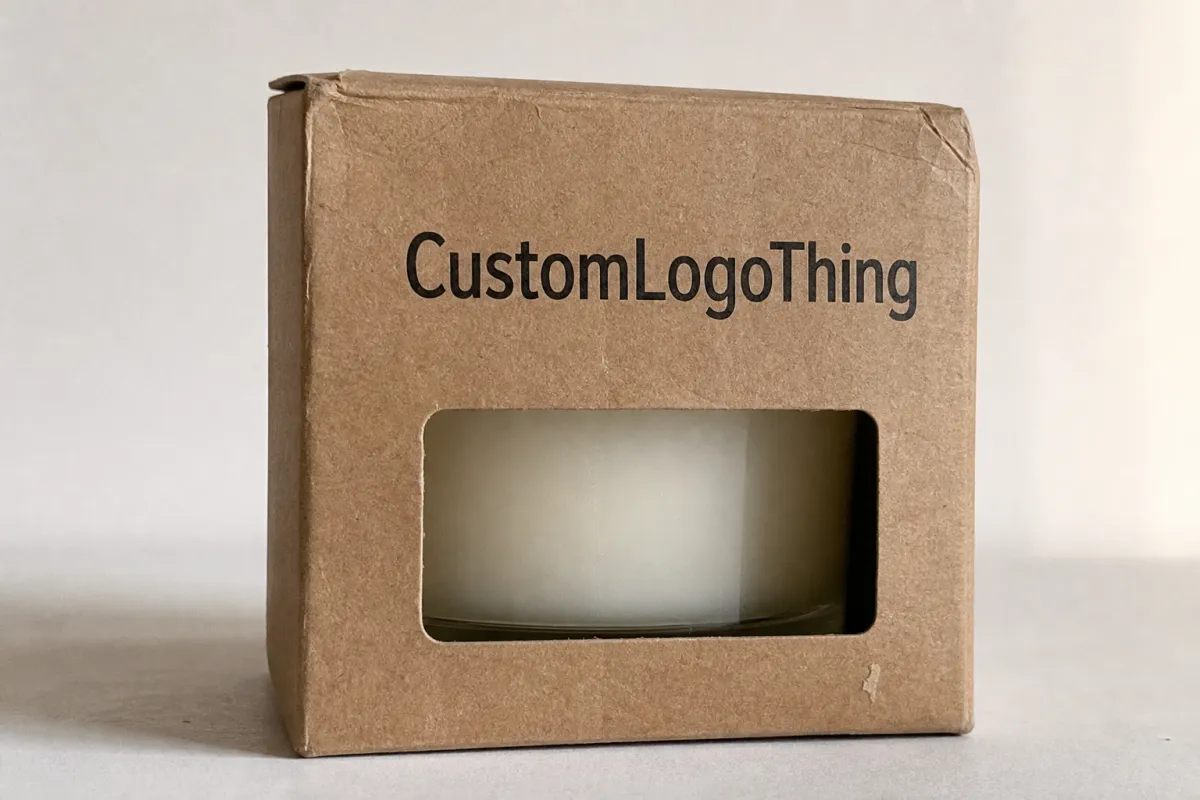
A candle does not get much time to prove itself. On a gift-shop shelf, a home-fragrance wall, or a pop-up table, buyers often decide in a blink whether a product feels worth a second glance. That is why branded carton sleeves for candles work so well. They change the first read without forcing a new jar, tin, or vessel. The sleeve gives the brand more exterior space, which means more room for typography, scent cues, color blocking, ingredient callouts, and a layout that can be understood from a few feet away.
There is a practical side to that visual lift too. A clear glass jar may be perfectly fine in production, but on shelf it competes with a lot of similar shapes. A well-built sleeve brings order to the pack, and order reads as intent. Matte black can feel restrained and modern. Warm kraft can hint at an artisan price point. A softly textured white board can lean clean and premium without trying too hard. None of that needs a new mold or a fancier vessel, which is one reason sleeves are such a useful move for growing candle brands.
Retailers like the flexibility as much as the brand team does. Seasonal graphics can move one candle line from winter into spring without changing the container. Gift shops can use the sleeve to flag scent families or premium tiers. Subscription brands can make the unboxing feel more polished while still folding the sleeve flat for storage. From a merchandising standpoint, the sleeve gives the package a front-facing story. That story is often what makes a customer slow down, read the scent name, and pick it up.
The best sleeves do not yell just because they can. They need impact, yes, but they also need discipline. Clean folds, clear copy, and balanced artwork matter once the sleeve is printed, cut, glued, and packed. Buyers notice finish quality. They notice edge alignment. They notice whether the structure feels easy in the hand. If the sleeve is too busy, too glossy, or too flimsy, the premium signal falls apart fast. If it is designed with production realities in mind, even a simple vessel can feel more considered.
For brands comparing packaging routes, it helps to study real examples of how structure changes affect shelf performance. Our candle packaging case studies show how a measured change in carton design can improve presentation without adding unnecessary complexity.
How branded carton sleeves for candles work on the package
A carton sleeve is usually a secondary paperboard structure that wraps around or slides over the primary candle vessel. The candle may sit in glass, metal, ceramic, or another container, while the sleeve gives the pack its printable exterior. That distinction matters. The sleeve is not replacing the container. It is shaping the visual and functional presentation around it. In practice, it can carry the brand story, support compliance copy, and create a more controlled retail look while the core candle pack stays the same.
Structural choices vary more than many buyers expect. Some sleeves are open-ended and slip over a jar with a friction fit. Others form a wraparound carton with a tuck flap or locked seam. Display windows can reveal part of the wax color or texture, which works well for collections that rely on visible product cues. Cutouts can expose a logo on the vessel or let a metal tin show through. Each style has tradeoffs. Open sleeves are faster and simpler. Wraparound cartons often feel more substantial. Windowed designs can add shelf intrigue, but they also bring tighter tolerances and extra tooling.
The dieline is where the structure becomes real. A sleeve that is even a little off can rub against a lid, catch on a warning label, or sit unevenly once the candle is assembled. Finished dimensions matter more than the nominal fill size on a sales sheet. The packaging team should measure jar diameter, total height, lid height, label position, and any insert or dust cover before artwork starts. If the candle has a tapered body, embossed glass, or an oversized lid, those details need to be on the drawing from the beginning.
There are benefits beyond branding. Paperboard sleeves can help guard against minor scratches during handling, reduce scuffing on printed vessels, and add a little protection when units move from filling to kitting to wholesale carton packing. For some e-commerce programs, the sleeve becomes part of a layered pack-out approach that helps the candle arrive looking finished. If the outer shipper or master carton is designed well too, the sleeve supports that process without adding much weight.
Think of the sleeve as one layer in a larger packaging stack. It may sit with inner trays, shrink bands, tamper-evident wraps, or a separate shipping carton. The right structure depends on how the candle is sold, how it is handled, and whether the brand needs retail readiness, gift presentation, or distribution efficiency. Candle packaging usually works best when every layer has a clear job instead of repeating the work of the layer next to it.
Teams moving through a packaging program often benefit from reviewing structure choices early with a packaging partner instead of waiting until artwork is nearly done. That is the point where seam placement, board grain direction, and opening orientation can be confirmed before they turn into expensive fixes.
Material and design factors that affect performance
Material choice is where appearance meets performance. Paperboard thickness changes how the sleeve stands up, how it folds, and how it feels in the hand. A thinner board can lower material cost and may be enough for lightweight candles or short-run seasonal promos, but it can also flex more easily and lose the crisp, premium feel many fragrance brands want. Heavier board usually holds shape better and gives the sleeve more presence, though it can raise cost and may need tighter fit checks so the structure does not feel bulky around the candle.
Surface finish matters just as much as board caliper. A matte aqueous coating reads soft and current. Gloss can make colors pop, though it can also throw glare under retail lighting. Soft-touch coatings add a tactile note that buyers often connect with premium personal care or boutique home fragrance. Foil stamping, embossing, and debossing can raise the front panel quickly, but each one adds print complexity and should be used with restraint so the sleeve still feels balanced. For a broader look at paperboard behavior and package construction, industry resources from the Paperboard Packaging Council are useful reference points.
Print method changes the result too. CMYK process work can handle full-color imagery, gradients, and seasonal photography. Spot colors give tighter control over brand hues, which matters for fragrance lines with strict identity standards. A single metallic accent, a small foil mark, or a varnish contrast can make the pack feel more deliberate without crowding the composition. The goal is not to use every effect on the menu. The goal is to choose the few that support the scent story and the price point.
Dimensions are where a lot of projects either move cleanly or hit a wall. Candle sleeves need to account for jar diameter, sleeve depth, lid height, wick clearance, and any label or warning panel that changes the finished profile. If the candle has a tall wooden lid, a rounded shoulder, or a heavy base, the sleeve should be built around those measurements rather than a generic “8 oz” or “12 oz” label. A small miss can make the sleeve too tight to open, too loose to stay in place, or visually off-center when displayed upright.
Sustainability now sits in the design conversation for most candle brands, but it needs precision rather than slogans. Recyclable paperboard, reduced ink coverage, FSC-certified stock, and simpler finishing all support a cleaner environmental story if they are chosen with care. If that story matters to your brand, use certified paper sources and document the chain of custody where it applies. The Forest Stewardship Council is a useful starting point when buyers need help understanding certification language and supplier claims.
Design also has to leave room for mandatory copy. Warning text, barcode placement, scent description, burn-time statements, and any required regulatory information cannot be treated like leftovers. If the panel gets overloaded, the pack starts to look cramped and less trustworthy. Strong sleeve layouts usually reserve one clean side for the brand story, another for product facts, and a separate area for compliance. That split keeps the design attractive while making it easier for retail staff and customers to read the pack quickly.
| Build option | Typical stock | Visual effect | Indicative unit cost at 5,000 pcs | Best use case |
|---|---|---|---|---|
| Simple wrap sleeve | 14pt-16pt SBS or similar board | Clean, lightweight, efficient | $0.16-$0.24 | Core line, volume programs, price-sensitive retail |
| Premium friction-fit sleeve | 18pt-24pt board with matte coating | More rigid, more substantial in hand | $0.22-$0.38 | Boutique collections, gift sets, gift shop shelf display |
| Windowed sleeve | 18pt board with die-cut window and insert | Product visibility with controlled branding | $0.28-$0.46 | Color-led collections, retail displays, higher visual engagement |
| Decorative premium sleeve | Thicker board with foil, emboss, or soft-touch | High perceived value, strong gift appeal | $0.38-$0.75+ | Limited editions, holiday lines, premium fragrance tiers |
A table like this is only a starting point. Final pricing still depends on the exact board grade, coverage, tool complexity, and finish stack. That said, it makes one thing obvious fast: the same candle can land in very different cost brackets depending on how the sleeve is built. A cleaner structure with fewer finish effects usually keeps production easier. A more decorative sleeve can justify a higher price if the market position supports it.
Production process and timeline for branded carton sleeves for candles
The cleanest sleeve projects usually start with a brief that does not leave room for guessing. Exact candle dimensions, target quantity, artwork status, finish preferences, and the retail channel all belong in the first conversation. Once those basics are set, the production flow gets much easier to manage. The next step is confirming the dieline so the designer and printer are working from the same structure. After that, the artwork is placed, copy is checked, and the sleeve is reviewed for visual balance and structural fit.
Proofing should not be rushed. Digital proofs catch copy errors, barcode issues, layout problems, and color expectations. If the structure has a window, a tuck flap, or a tricky opening behavior, a physical sample is often the safer call before a full run. That sample stage can show whether the candle slides smoothly, whether the lid catches, or whether the board thickness creates friction at the seam. A few extra days here can save a bigger delay later in the press schedule.
Production usually includes file setup, printing, finishing, die cutting, inspection, and packing. In a straightforward run, lead time may be driven more by proof approval and press availability than by the sleeve complexity itself. More detailed jobs, especially those with foil, embossing, multiple spot colors, or custom inserts, need a longer schedule because each step adds setup and quality checks. If the brand is aiming for a seasonal launch, that buffer matters. Art revisions and sample corrections can chew up the calendar faster than most teams expect.
For shipping-heavy programs, it helps to think past the sleeve alone. The final pack still has to work inside outer cartons and master cases. If the candle line is meant for e-commerce, a distribution test may be worth the effort. Organizations such as ISTA publish testing standards commonly used to evaluate package durability and transport performance. That does not mean every candle needs a formal test plan, but it does mean the packaging team should understand the route before signing off on the final structure.
One useful rule: speed improves when everyone agrees on the construction early. The brand team, operations team, packaging supplier, and designer should all know whether the sleeve is a simple wrap, a friction-fit shell, or a more decorative retail carton. If those choices drift too late, production can still happen, but the project usually needs more back-and-forth and may miss the smoothest part of the schedule.
A realistic timeline for a custom sleeve project often breaks down like this:
- Brief and measurements: 1-3 business days if product specs are complete.
- Dieline and artwork setup: 2-5 business days, depending on revisions.
- Proofing and sample review: 3-10 business days for digital, longer if physical samples are required.
- Production and finishing: often 7-15 business days for standard runs, longer for specialty work.
- Packing and freight: varies by destination, order size, and consolidation method.
Those ranges are practical, not absolute. A short, uncomplicated run can move faster. A seasonal launch with multiple SKUs and layered finishes can take longer. The best planning habit is to work backward from the launch date and leave room for one revision cycle, not zero.
Cost, pricing, and MOQ factors that shape your quote
Pricing for candle sleeves usually comes from a mix of material, labor, tooling, and finishing. The stock itself is one part of the total, but rarely the only part that matters. Heavier board costs more than lighter board. Full-coverage printing costs more than a restrained single-panel layout. Foil, embossing, specialty coatings, and die-cut windows all add steps. Custom tooling or an unusual shape can also affect the quote because the line has to be set up for that exact structure. None of that is mysterious; it is just the result of more work, more material, or more setup time.
Quantity changes the picture in a pretty predictable way. Once setup costs are spread across more units, the unit price usually drops. That is why a 10,000-piece run often looks much more efficient than a 1,000-piece run, even with the same art. Bigger does not always mean better value, though. If you are testing a new fragrance, launching a holiday edition, or serving a small retail channel, a shorter run may be the smarter business move because it protects cash flow and lowers inventory risk.
Minimum order quantities can feel annoying when a brand wants to move quickly, but there is a reason they exist. Turning a flat sheet into a custom sleeve takes setup, calibration, and quality control. A supplier has to balance that work against the number of finished units being produced. The lower the MOQ, the higher the piece price tends to be. The higher the quantity, the more efficient the unit cost becomes, especially on repeat collections where the same dieline and print method can be reused.
Quote accuracy improves when the request includes more than a rough idea. Helpful details include the exact outer dimensions, whether the candle ships with a lid on or off, the target quantity range, the finish preferences, the number of print colors, and any compliance copy that must fit on the sleeve. A supplier can usually respond faster when the brief is complete because there is less guesswork and fewer follow-up questions. If the packaging team has a sample or even a blank mock-up, that helps too.
Budgeting should also cover the quieter costs. Sample revisions may need extra freight. Finished sleeves may require temporary storage before assembly. If the brand handles kitting in-house, labor goes into folding and fitting the sleeve. If the sleeves ship to a third-party fulfillment center, that location may have receiving rules or labeling requirements. Those costs do not always show up in the first quote, but they can affect the total program spend as much as the printed unit itself.
Here is the simplest way to think about value: the sleeve is not just decoration. It may improve shelf conversion, cut down on surface damage, and create a more giftable presentation. If the pack sells better or survives handling more cleanly, a slightly higher unit price can still make sense. The question is not whether the cheapest sleeve exists. The question is whether the right sleeve supports the business model for that candle line.
Common mistakes when ordering branded carton sleeves for candles
The biggest mistake is sizing the sleeve from the candle name instead of the actual finished dimensions. A jar labeled 8 oz or 12 oz can vary more than people expect, especially across different vessel suppliers. If the sleeve is built around a nominal size instead of the physical product, it may sit too loosely, squeeze too tightly, or look off once assembled. That is a small paperwork miss with a big production consequence.
Artwork overload is another common problem. Candle sleeves need breathing room. If the front panel has a logo, scent family, fragrance notes, icons, burn instructions, and legal text all competing for space, the package starts to look busy and less premium. A cleaner layout is usually stronger because it gives the main message room to land. Shoppers should be able to find the scent name quickly, read the brand identity right away, and still have enough visual calm to trust the pack.
Many teams also forget to account for the full assembled candle. Lids, seals, warning labels, wicks, dust covers, and insert cards all affect how the sleeve sits. A lid that is only a few millimeters taller than expected can create rubbing. A label that wraps too far up the jar can change the visible height. Even a small adhesive bead can affect fit if the sleeve is engineered tightly. Those details are easy to miss on a screen, which is why a physical check matters before a full print run.
Finish choice can cause trouble when style is picked without production context. Heavy ink coverage on certain boards may need longer drying or a different coating strategy. Foil can look excellent, but if it sits too close to a fold or thin edge, quality can suffer. Soft-touch coatings feel great in the hand, yet they can show scuffing or fingerprints if the handling environment is rough. None of these finishes are bad choices. They just need to be selected with the full production path in mind.
Skipping a sample is another avoidable risk. A sleeve can look great in a flat proof and still behave differently once folded, glued, and placed on the candle. Retail programs and gift sets are especially sensitive to this because shelf presentation is judged immediately. If the fit is off by even a little, customers notice. If the opening feel is awkward, staff notice. A sample costs less than a rerun, and it gives the team a chance to correct the structure before the order is locked in.
Finally, some buyers overlook what happens after the sleeve leaves the printer. If the pack has to survive transit, distribution, store handling, and customer unboxing, the structure needs to be durable enough for the whole route. An elegant sleeve that slides off too easily or tears at the corner is not finished packaging. It is just a good-looking problem waiting for the next touchpoint.
A sleeve can look premium on a proof and still fail in the hand. Fit, opening feel, and board behavior matter just as much as color and finish.
Expert tips and next steps for a smoother sleeve launch
Start with a packaging brief that is specific enough to kill guesswork. Exact dimensions, quantity range, artwork status, finish preferences, compliance copy, and retail channel are the core details. If the candle is going to wholesale, DTC, or a holiday market, say so up front. Each channel puts different pressure on the sleeve. Wholesale buyers may care most about shelf presence and stackability. DTC programs often need stronger ship performance. Gift collections may need a richer tactile finish to justify the emotional price point.
Build the design around one clear brand message first. A strong logo, a distinct scent cue, or a clean collection system usually does more work than a crowded front panel packed with decorative elements. Once that core message is in place, texture and finish can be added where they support the story. A restrained foil accent or a blind emboss can feel more premium than a design stuffed with effects.
Request the dieline early. That one step saves time because it gives designers and printers the same blueprint. It also helps avoid the common trap where artwork looks right on screen but cannot fold around the candle the way it should. Early dieline review is especially useful for sleeve windows, locking tabs, or anything with a nonstandard opening. Even simple wrap sleeves benefit from a clear structural drawing before the final layout gets approved.
Before you commit to the full run, ask for a sample review if the candle matters to the launch. Check the fit with the finished vessel, the opening feel, the print clarity, and the way the sleeve sits under real lighting. Put it next to the actual jar, not just on a desk. Candle packaging is usually judged beside other products in a retail setting. That side-by-side check can show whether the pack really holds its own.
Coordinate inventory planning with the launch calendar. A sleeve for a holiday scent should arrive early enough to allow for assembly, boxing, and distribution. If the order is tied to a retail reset, leave room for freight delay, a reprint if needed, and any in-house kitting time. A good sleeve is not just a printed object. It is a schedule item that needs to land before shelf date, not after it.
If you are comparing programs or gathering ideas for a new line, review real packaging examples and translate what works into your own structure. Our packaging case studies are useful for that kind of planning because they show how design, board selection, and finish choices affect the final result. That review can also help you decide whether the next step should be a simple wrap sleeve, a premium retail carton, or a more decorative gift-ready build.
The cleanest path forward is simple: measure the candle, gather artwork, choose the quantity, compare finish options, and ask for a production-ready quote. That is usually the point where the project stops feeling abstract and starts becoming manageable. Branded carton sleeves for candles work best when structure, art, and budget are aligned before the press is booked. Get those pieces in place and the sleeve can do what it should: make the candle easier to notice, easier to trust, and easier to sell.
FAQ
What materials work best for branded carton sleeves for candles?
Most brands choose a paperboard that has enough stiffness to hold shape, print cleanly, and survive handling without adding unnecessary bulk. The best material depends on whether the sleeve should feel lightweight and efficient, gift-ready and premium, or strong enough for heavier retail and fulfillment use. In many cases, 14pt to 24pt board is the practical range, with the final choice driven by candle size, finish, and the shelf impression you want.
How much do branded carton sleeves for candles usually cost?
Pricing usually depends on board grade, print coverage, quantity, finishing effects, and whether the sleeve needs custom tooling or an unusual shape. A larger order often lowers the unit price because setup costs are spread across more pieces, while short runs and specialty finishes usually raise the per-piece cost. For planning, many projects land somewhere between about $0.16 and $0.75 per sleeve depending on complexity and volume.
What is a normal lead time for candle carton sleeve production?
Lead time usually includes proofing, setup, printing, die cutting, finishing, inspection, and packing, so the final schedule depends on how complete the project is at the start. Simple runs can move quickly once the dieline and artwork are approved, while seasonal launches, sample revisions, and specialty finishes can add time. A good approach is to build in extra buffer instead of assuming every stage will move at top speed.
Do branded carton sleeves for candles need special sizing for lids or inserts?
Yes. The sleeve should be measured against the fully finished candle, not just the jar body, because lids, seals, inserts, labels, and decorative tops all affect fit. A sleeve built around the wrong reference point can rub, slide, or sit unevenly once the candle is assembled. Checking the complete product early is one of the simplest ways to avoid fit issues later.
Can you order short runs of branded carton sleeves for candles?
Short runs are possible, especially for launches, seasonal promotions, limited editions, or testing a new fragrance line before scaling up. The main tradeoff is that the unit price is usually higher because setup work is divided across fewer pieces. For many brands, that is still the right call when speed, flexibility, or inventory control matters more than the lowest possible per-piece cost.
For candle brands that want a cleaner shelf story, better perceived value, and a structure that still respects real production constraints, branded carton sleeves for candles remain one of the most practical packaging upgrades available. With the right measurements, board choice, finish, and timing, the sleeve can support both the look and the business case of the product from first glance to final sale.